The Tank Museum
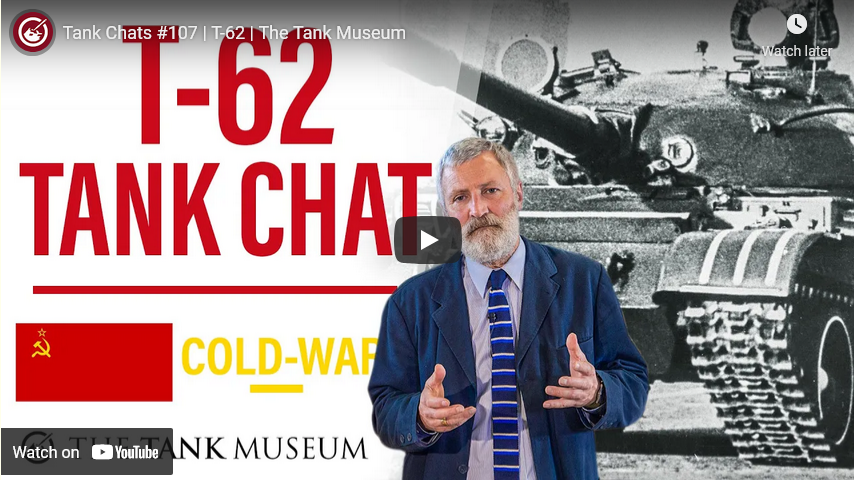
Published 14 Aug 2020Here Curator David Willey discusses the T-54, and its successor the T-55, tanks which can source their roots back to the Second World War and are probably the most produced tanks of all time.
Support the work of The Tank Museum on Patreon: ► https://www.patreon.com/tankmuseum
Visit The Tank Museum SHOP & become a Friend: ► tankmuseumshop.orgTwitter: ► https://twitter.com/TankMuseum
Instagram: ► https://www.instagram.com/tankmuseum/
#tankmuseum #tanks
April 21, 2021
Tank Chats #104 | T-54 & T-55 | The Tank Museum
April 20, 2021
QotD: The Atlantropa project
Ever heard of Atlantropa? Probably not. It was a nutty scheme hatched by a nutty guy, and it never had even the remotest chance of ever coming to pass. In the 1920s, Europe was suffering from a myriad of post–World War I problems. There was a refugee crisis, the result of the shifting borders and population transfers that occurred at the war’s end. There was an energy crisis, and a serious shortage of natural resources. And, of course, there was the economic depression. Several years before a madly gesticulating Austrian with a wacky mustache would rise to power with his own solution to the continent’s ills, a plucky architect from Bavaria named Herman Sörgel proposed a different one: Drain the Mediterranean! Dam the Med and partially drain it, in order to form a contiguous body of land between Europe and Africa. A new continent that would be called Atlantropa. To Sörgel, this would cure Europe of all that ailed her. The dammed Mediterranean would create hydroelectric power plants to relight Europe’s recently dimmed lamps, and the elimination of pesky ocean crossings would allow millions of European refugees to stream into Africa, where they would take their rightful place as lord and master. Better still, this newly conquered African land would be ripe with fertile soil, minerals, and a plethora of natural resources for the taking.
Oh, Herman Sörgel, you pie-in-the-sky dreamer! You were the Elon Musk of your day (but slightly more grounded). The idea never took off, not just because of the fact that it was batshit insane, but also because, at that time, the left’s intellectual elite — the League of Nations crowd, the “forward-thinkers” — understood that you don’t cure one nation or one continent’s refugee problem by sending all of the huddled, wretched refuse to another people’s nation or continent. Back then, the left understood that this would pose serious problems for the host nation or continent. And the left was right. Atlantropa would have been a nightmare for native Africans, and eventually, there would have been a Rhodesia- or South Africa-style reckoning.
In the 1920s, if anyone had suggested that the specter of millions of European refugees streaming into Africa did not constitute an invasion, that person would have been dismissed as a lunatic, because of course it would have been an invasion. Those in favor of Atlantropa, and those against it, all got that point. The European refugees would not have been content to live like Africans, or to live under African rule. Europe’s refugee crisis would have become Africa’s domination crisis. So to the liberal elites, the best solution was to tell the refugees to stay put.
David Cole, “When Refugees Were Conquerors”, Taki’s Magazine, 2018-10-29.
April 18, 2021
America Strikes Back – Tokyo in Flames – WW2 -138 – April 18 1942
World War Two
Published 17 Apr 2021The Doolittle Raid is just a little bombing raid over Tokyo that doesn’t do that much physical damage. It does, however, have big repercussions — partly in terms of future offensive plans for the Japanese fleet, and partly in terms of the thousands of Chinese lives taken in reprisals for allowing the US bombers to land in China. There is small scattered action on the Eastern Front, more Japanese advances in Burma, and a French VIP escapes captivity in Germany and heads for Switzerland and freedom.
Join us on Patreon: https://www.patreon.com/TimeGhostHistory
Or join The TimeGhost Army directly at: https://timeghost.tvFollow WW2 day by day on Instagram @ww2_day_by_day – https://www.instagram.com/ww2_day_by_day
Between 2 Wars: https://www.youtube.com/playlist?list…
Source list: http://bit.ly/WW2sourcesWritten and Hosted by: Indy Neidell
Director: Astrid Deinhard
Producers: Astrid Deinhard and Spartacus Olsson
Executive Producers: Astrid Deinhard, Indy Neidell, Spartacus Olsson, Bodo Rittenauer
Creative Producer: Maria Kyhle
Post-Production Director: Wieke Kapteijns
Research by: Indy Neidell
Edited by: Iryna Dulka
Sound design: Marek Kamiński
Map animations: Eastory (https://www.youtube.com/c/eastory)Colorizations by:
– Mikołaj Uchman
– Norman Stewart – https://oldtimesincolor.blogspot.com/Sources:
– Stan S. Katz
– IWM: IND 3595
– Image of ‘The Fortress of Königstein from the North-West’ by Bernardo Bellotto, © National Gallery of Art, WashingtonSoundtracks from the Epidemic Sound:
– Rannar Sillard – “Easy Target”
– Howard Harper-Barnes – “London”
– Jo Wandrini – “Dragon King”
– Dream Cave – “The Beast”
– Reynard Seidel – “Rush of Blood”
– Wendel Scherer – “Out the Window”
– Brightarm Orchestra – “On the Edge of Change”
– Gunnar Johnsen – “Not Safe Yet”
– Johan Hynynen – “Dark Beginning”
– Philip Ayers – “Trapped in a Maze”Archive by Screenocean/Reuters https://www.screenocean.com.
A TimeGhost chronological documentary produced by OnLion Entertainment GmbH.
Boys Mk I Anti-Tank Rifle at the Range
Forgotten Weapons
Published 2 Jan 2021http://www.patreon.com/ForgottenWeapons
https://www.floatplane.com/channel/Fo…
Cool Forgotten Weapons merch! http://shop.bbtv.com/collections/forg…
(Edit: Tungsten carbine is, of course *denser* than steel, not lighter. Sorry.)
I have done several previous videos on the Boys antitank rifle, but never actually fired one — until today! We’re out at the range with a MkI Boys and five rounds of its .55 Boys ammunition. So let’s see if it’s as painful to shoot as people say …
Contact:
Forgotten Weapons
6281 N. Oracle #36270
Tucson, AZ 85740
April 17, 2021
Neoclassical Architecture
Overly Sarcastic Productions
Published 16 Apr 2021You asked, I deliver: the Neoclassicism tangent receives the full-video spotlight it deserves. But there’s plenty more architectural and art-historical analysis where that came from. So if this kind of thing seems fun, please comment and let me know!
SOURCES & Further Reading: Francesco’s Venice by Francesco Da Mosto, A History of Venice by John Julius Norwich, “Renaissance Architecture” via Britannica, and many many many hours spent staring at buildings in Italy.
This video was edited by Sophia Ricciardi AKA “Indigo”. https://www.sophiakricci.com/
Our content is intended for teenage audiences and up.
PATREON: https://www.Patreon.com/OSP
PODCAST: https://overlysarcasticpodcast.transi…
DISCORD: https://discord.gg/osp
MERCH LINKS: http://rdbl.co/osp
OUR WEBSITE: https://www.OverlySarcasticProductions.com
Find us on Twitter https://www.Twitter.com/OSPYouTube
Find us on Reddit https://www.Reddit.com/r/OSP/
April 16, 2021
Following Bienville: The Founding of New Orleans
Atun-Shei Films
Published 15 Apr 2021The origin story of New Orleans is a tale of rampant corruption, unchecked greed, fiendish vice, and gross incompetence – not much has changed!
Join me on an epic journey of discovery as I trace the route of the first French explorers to this area by paddling down Bayou St. John and walking overland to the French Quarter, exploring the geography and history of the city along the way.
Support Atun-Shei Films on Patreon ► https://www.patreon.com/atunsheifilms
Leave a Tip via Paypal ► https://www.paypal.me/atunsheifilms
Buy Merch ► teespring.com/stores/atun-shei-films
#NewOrleans #Louisiana #History
Maps by Carl Churchill ► https://twitter.com/Cchurchili
Reddit ► https://www.reddit.com/r/atunsheifilms
Twitter ► https://twitter.com/atun_shei
~REFERENCES~[1] B.F. French. Historical Collections of Louisiana and Florida, Including Translations of Original Manuscripts Relating to Their Discovery and Settlement (1875). Albert Mason, Page 24-25
[2] Lawrence N. Powell. The Accidental City: Improvising New Orleans (2012). Harvard University Press, Page 11-15
[3] Philomena Hauck. Bienville: Father of Louisiana (1998). Center for Louisiana Studies, University of Louisiana at Lafayette, Page 12-13
[4] Richard Campanella. “Link to the Past: From French Colonists to the Beginnings of Jazz, Spanish Fort Traces its History Across Three Centuries” (2019). Times Picayune/New Orleans Advocate https://richcampanella.com/wp-content…
[5] Hauck, Page 23-25
[6] Hauck, Page 6
[7] Hauck, Page 44-57
[8] Powell, Page 25-32
[9] Richard Campanella. Bienville’s Dilemma: A Historical Geography of New Orleans (2008). Center for Louisiana Studies, University of Louisiana at Lafayette, Page 109-110
[10] Campanella, Page 77-78
[11] Andrea P. White. “Archaeology of the New Orleans Area.” 64Parishes https://64parishes.org/entry/archaeol…
[12] Campanella, Page 111
[13] Powell, Page 43-51
[14] Powell, Page 68-73
[15] Karen Ordahl Kupperman. A True and Exact History of the Island of Barbados by Richard Ligon (2011). Hackett Publishing Company, Page 19
[16] Hauck, Page 89
[17] Powell, Page 56-58
“Students will find in Shakespeare absolutely no moral compass”
Sky Gilbert responds more than adequately to a demand to “Cancel Shakespeare” that also appeared in The Line recently:

This was long thought to be the only portrait of William Shakespeare that had any claim to have been painted from life, until another possible life portrait, the Cobbe portrait, was revealed in 2009. The portrait is known as the “Chandos portrait” after a previous owner, James Brydges, 1st Duke of Chandos. It was the first portrait to be acquired by the National Portrait Gallery in 1856. The artist may be by a painter called John Taylor who was an important member of the Painter-Stainers’ Company.
National Portrait Gallery image via Wikimedia Commons.
Allan thinks that Shakespeare’s language is difficult and old fashioned, and that students today find analyzing the complexities of his old-fashioned rhetoric boring and irrelevant. Yes, Shakespeare essentially writes in another language (early modern English). And reading or even viewing his work can be a tough slog. Not only did he invent at least 1,700 words (some of which are now forgotten today), he favoured a befuddling periodic syntax in which the subject does not appear until the end of a sentence.
But a study of Shakespeare’s rhetoric is important in 2021. There is one — and only one — exceedingly relevant idea that can be lifted from Shakespeare’s congested imagery, his complex, sometimes confusing metaphors — one jewel that can be dragged out of his ubiquitous references to OVID and Greek myth (references which were obviously effortless for him, but for most of us, only confound). And this idea is very relevant today. Especially in the era of “alternate facts” and “fake news.”
This idea is the only one Shakespeare undoubtedly believed. I say this because he returns to it over and over. Trevor McNeely articulated this notion clearly and succinctly when he said that Shakespeare was constantly warning us the human mind “can build a perfectly satisfactory reality on thin air, and never think to question it.” Shakespeare is always speaking — in one way or another — about his suspicion that the bewitching power of rhetoric — indeed the very beauty of poetry itself — is both enchanting and dangerous.
Shakespeare lived at the nexus of a culture war. The Western world was gradually rejecting the ancient rhetorical notion that “truth is anything I can persuade you to believe in poetry” for “truth is whatever can be proved best by logic and science.” Shakespeare was fully capable of persuading us of anything (he often does). But his habit is to subsequently go back and undo what he has just said. He does this so that we might learn to fundamentally question the manipulations of philosophy and rhetoric — to question what were his very own manipulations. Shakespeare loved the beautiful hypnotizing language of poetry, but was also painfully aware that it could be dangerous as hell.
In fact, Shakespeare’s work is very dangerous for all of us. That’s why students should — and must — read it. Undergraduates today hotly debate whether The Merchant of Venice is anti-Semitic, or whether Prospero’s Caliban is a victim of colonial oppression. Education Week reported that “in 2016, students at Yale University petitioned the school to ‘decolonize’ its reading lists, including by removing its Shakespeare requirement.”
It’s true that Shakespeare is perhaps one of the oldest and whitest writers we know. (And sometimes he’s pretty sexist too — Taming of the Shrew, anyone?). But after digging systematically into Shakespeare’s work even the dullest student will discover that for every Kate bowing in obedience to her husband, there is a fierce Lucrece — not only standing up to a man, but permanently and eloquently dressing him down. (And too, the “colonialist” Prospero will prove to be just as flawed as the “indigenous” Caliban.) William Hazlitt said: Shakespeare’s mind “has no particular bias about anything” and Harold Bloom said: “his politics, like his religion, evades me, but I think he was too wary to have any.”
The Bataan Death March Begins – WAH 032 – April 1942, Pt. 1
World War Two
Published 15 Apr 2021Malta and British cities are victim to German bombs, while the Japanese advance in Burma causes a refugee crisis. In the Philippines, 80,000 Allied POWs walk the Bataan Death March.
Join us on Patreon: https://www.patreon.com/TimeGhostHistory
Or join The TimeGhost Army directly at: https://timeghost.tvFollow WW2 day by day on Instagram @ww2_day_by_day – https://www.instagram.com/ww2_day_by_day
Between 2 Wars: https://www.youtube.com/playlist?list…
Source list: http://bit.ly/WW2sourcesHosted by: Spartacus Olsson
Written by: Spartacus Olsson and Joram Appel
Director: Astrid Deinhard
Producers: Astrid Deinhard and Spartacus Olsson
Executive Producers: Astrid Deinhard, Indy Neidell, Spartacus Olsson, Bodo Rittenauer
Creative Producer: Maria Kyhle
Post-Production Director: Wieke Kapteijns
Research by: Joram Appel
Edited by: Miki Cackowski
Sound design: Marek Kamiński
Map animations: Miki Cackowski and Eastory (https://www.youtube.com/c/eastory)Colorizations by:
Mikołaj Uchman
Election1960 https://commons.wikimedia.org/wiki/Fi…Sources:
IWM C 4743, CL 2377
Bundesarchiv
From the Noun Project: Watchtower by EliriconSoundtracks from the Epidemic Sound:
Johan Hynynen – “Dark Beginning”
Fabien Tell – “Weapon of Choice”
Wendel Scherer – “Defeated”
Philip Ayers – “Trapped in a Maze”
Cobby Costa – “From the Past”
Cobby Costa – “Flight Path”
Wendel Scherer – “Growing Doubt”
Jon Bjork – “For the Many”Archive by Screenocean/Reuters https://www.screenocean.com.
A TimeGhost chronological documentary produced by OnLion Entertainment GmbH.
From the comments:
World War Two
3 days ago (edited)
Under our previous episode I told you about how YouTube has been age restricting these videos, effectively censoring them and turning the format into an echo chamber that doesn’t reach beyond the viewers who already know about it. As I explained we feel that it’s a great disservice to education and remembrance, and it has affected me deeply personally making me question why we do this. Two things happened:1. You collectively gave us the most amazing reception and reminded us of how important the work we do is. I can’t thank you enough for the amazing comments, many of them where kind, supportive, and motivating far beyond what I feel we deserve. You lifted my spirits and brought me out of the slump I was in, cementing, and confirming that what we do matters. In the name of the entire team: thank you so much, it is an immense honor to have you all with us.
2. YouTube did not age restrict the video, and even cleared it for monetization, leading to that it once again reached a viewership like before the string of age restrictions we were struck with. We haven’t heard any explanation from YouTube and we won’t. Furthermore, I am painfully aware that these decisions depend completely on the whims of the individuals at Google who review the videos. We also know that these individuals are different for every video, so I fear that that this state of affairs will not remain. Already, this video was judged as “not suitable for all advertisers” and will therefore be recommended to viewers less often in YouTube’s system. Hence, although it pains us, and is against the principles we stand for, we have also prepared a version of this video with all images documenting the atrocities we expose blurred out – we can only hope that we don’t need it.
I’d like to end with an anecdote out of my motivation to create this series. Many, many moons ago, when I was in senior high at boarding school in Sweden, Elie Wiesel – author, chronicler of the Holocaust, and survivor of Auschwitz and Buchenwald came to our school. It was in 1986, the same year that he received the Nobel Peace Prize for his work, and if I remember correctly he had connected a lecture tour to his reception of the award.
In any case — I had the privilege of speaking to Mr. Wiesel in a small group. He explained something that has stayed with me ever since. To him, his experiences were not defeating, the entire Holocaust was not a defeat, not only had humanity been victorious in the end, but he and others had survived to tell the tale — which to him was a special kind of victory that came with the responsibility of sharing and educating.
Mr. Wiesel, a kind, warm hearted man, full of humor and life despite the horrors he had lived, passed five years ago. It is for him, for the other survivors of every ethnicity faced by any kind or terror, and for those who didn’t make it through that we do this — to celebrate their life and continue turning their suffering from defeat into victory by remembering even after they are gone.
Yours,
Spartacus
Shakespeare Summarized: King Lear
Overly Sarcastic Productions
Published 22 Jul 2014Sorry it’s been a while. Summer vacation plays merry hell with both my work ethic and my voice. *discreetly hacks up a lung*
King Lear! He’s not a very good king, and he’s not a very good father! Good thing that, by the end, he’s neither of those things.
April 15, 2021
Eichmann in Budapest
Alexander Faludy outlines the horrific “success” of Adolf Eichmann’s activities in Hungary in 1944:

SS-Obersturmbannführer Adolf Eichmann (1906–1962), head of Reichssicherheitshauptamt (RSHA, Reich Security Central Office) Department IV B4 (Jewish affairs), who organized the deportation of Jews to the Auschwitz concentration camp in German-occupied Poland during the Holocaust. Taken in or around 1942, this appears to have been Eichmann’s official RSHA ID photograph.
Photographer unknown, public domain image via Wikimedia Commons.
SS Obersturmbannführer (Lt. Col.) Adolf Eichmann, head of Reich Security Main Office IV.B.4 (Jewish Affairs), arrived at Budapest’s Keleti railway station together with 19 subordinates on 21 March 1944. Just 48 hours had passed since German troops had marched into the country, and a car was waiting to take Eichmann to the city’s Astoria Hotel close to the Pest riverbank. From these incongruously elegant surroundings Eichmann would commence the most feverous episode in the Final Solution of the Jewish question in Europe: the destruction of the Jews of Hungary, the only chapter in its history he was to supervise in person and in full.
For speed and scale the deportations went unmatched: 424,000 people were despatched by train in just 52 days, from 14 May to 9 July. In this fleeting window Hungarian Jews became the single largest group gassed at Auschwitz. The crematoria couldn’t cope with such “over-supply”, and Commandant Rudolf Höß ordered special fire pits dug — filling the camp with noxious smoke. According to Primo Levi, “there were weeks when only Hungarian was heard in Auschwitz”.
Physical annihilation was undergirded by Eichmann’s elaborate psychological strategy. Sophisticated Budapest Jews who might escape or resist were pacified by newspaper reports that only “ost Juden” from Hungary’s nether regions were being removed as “undesirables”. Many only saw through the lie, if at all, when deportations reached Budapest’s outer suburbs in early July — just before Admiral Miklós Horthy, Hungary’s Head of State, halted them under diplomatic pressure from the Western Allies and neutrals.
Throughout the deportations, and across Hungary’s length, Eichmann deluged Jews with ever more complex regulations covering the minutiae of daily life. These instilled a false sense of permanence which inhibited hiding or escape: “why would the authorities go to all this trouble if they were just going to get rid of us?”
Even as deportations rolled on, Eichmann conducted elaborate negotiations for fanciful “rescue schemes” including, but not limited to, the infamous “Blood for Trucks” project involving Rudolf Kastner — the proposed barter of one million Jewish lives for 10,000 Western motor vehicles for use on the Eastern front against the USSR. The aim, Eichmann later acknowledged, was not just to split Western powers from the Soviets, but also to distract Hungary’s Jewish leaders from counter-organising: keeping minds busy and hopes alive.
All the while Eichmann treated Jewish leaders in Budapest to flashes of menace. One day he promised them a return to normality “after the war”, the next he would snarl “Do you know who I am? I am a bloodhound!” With studied cruelty Eichmann arranged the ghettoisation of Hungary’s Jews to begin on Sunday, 16 April: the first day of Passover, 1944.
Eichmann did many things in Hungary; the one thing he did not do was simply “obey orders” — indeed over time he defied them with gathering frequency. That autumn as inevitable defeat became ever more apparent Eichmann, helped by local enthusiasts, intensified his efforts, instigating newly inventive means of eliminating Jews in Hungary and the Balkans through “death marches” and localised killing sprees. In doing so, Eichmann subverted instructions from Himmler who ordered cessation as part of a delusional plan to negotiate with the allies.
This “Eichmann in Budapest” should be recalled while contemplating the later Eichmann in Jerusalem.
Britain Goes From Trainer to Competition: the No 8 Mk I
Forgotten Weapons
Published 18 Jun 2018http://www.forgottenweapons.com/brita…
http://www.patreon.com/ForgottenWeapons
Cool Forgotten Weapons merch! http://shop.bbtv.com/collections/forg…
Initially intended to be used only by the British Army (the Land Service), in 1950 the No8 rifle’s role was expanded to cover all three services. Unlike the other trainers made up to this point, the No8 MkI was designed as a target and competition rifle, instead of a service rifle reduced in caliber. It has a heavy barrel, a nice trigger converter to cock on open, and a heavy competition type stock. Adopted in 1948 or 1949 (sources differ), a whopping 76,000 were ordered and manufactured by BSA and Fazackerly — they remained in service until finally declared obsolescent by the British in 2014.
If you enjoy Forgotten Weapons, check out its sister channel, InRangeTV! http://www.youtube.com/InRangeTVShow
Contact:
Forgotten Weapons
6281 N Oracle #36270
Tucson, AZ 85704
April 14, 2021
War Stories We Didn’t Get to Tell – WW2 – Reading Comments
World War Two
Published 13 Apr 2021Another edition of Across the Airwaves, where Indy, Sparty, and Astrid look at interesting and unique comments from our videos. In this episode, some amazing war stories that we didn’t get to tell.
Join us on Patreon: https://www.patreon.com/TimeGhostHistory
Or join The TimeGhost Army directly at: https://timeghost.tvFollow WW2 day by day on Instagram @ww2_day_by_day – https://www.instagram.com/ww2_day_by_day
Between 2 Wars: https://www.youtube.com/playlist?list…
Source list: http://bit.ly/WW2sourcesHosted by: Indy Neidell, Spartacus Olsson, and Astrid Deinhard
Director: Astrid Deinhard
Producers: Astrid Deinhard and Spartacus Olsson
Executive Producers: Astrid Deinhard, Indy Neidell, Spartacus Olsson, Bodo Rittenauer
Creative Producer: Maria Kyhle
Post-Production Director: Wieke Kapteijns
Edited by: Karolina Dołęga
Sound design: Marek Kamiński
Map animations: Eastory (https://www.youtube.com/c/eastory), Karolina DołęgaSources:
– Bundesarchiv
– Library of Congress
– Australian War Memorial
– Icons from the Noun Project: Boat by Richard Cordero, captain by Gan Khoon Lay, Mine Ship by Luke Anthony Firth, Wrench by Gregor Cresnar
– Explosion animation by Ignisium from YouTube
– Uboat.net, picture of SS Oklahoma courtesy of Texaco ArchivesSoundtracks from Epidemic Sounds:
– “Other Sides of Glory” – Fabien Tell
– “London” – Howard Harper-Barnes
– “Deflection” – Reynard Seidel
– “The Inspector 4” – Johannes Bornlöf
– “What Happens in the Park” – Claude SignetArchive by Screenocean/Reuters https://www.screenocean.com.
A TimeGhost chronological documentary produced by OnLion Entertainment GmbH.
From the comments:
World War Two
2 hours ago (edited)
Day in day out, we review thousands of comments from people across the world. It’s always heartening to come across the ones that are particularly interesting, educational, touching, or even funny. This format, “Across the Airwaves”, is a great way for us to interact directly with our community and in this episode, Indy, Sparty and Astrid mainly look at comments from people offering extra details and analysis that we didn’t have the chance to include in our regular content.Hope you enjoy hearing them. A big thanks to our community, especially our TimeGhost Army members.
Tank Chat #103 | Laird Centaur | The Tank Museum
The Tank Museum
Published 15 May 2020David Fletcher looks at this curiosity from the 1970’s, a Land Rover with tracks. Currently housed in The Tank Museum’s Vehicle Conservation Centre.
Support the work of The Tank Museum on Patreon: ► https://www.patreon.com/tankmuseum
Visit The Tank Museum SHOP & become a Friend: ► tankmuseumshop.orgTwitter: ► https://twitter.com/TankMuseum
Instagram: ► https://www.instagram.com/tankmuseum/
Tiger Tank Blog: ► http://blog.tiger-tank.com/
Tank 100 First World War Centenary Blog: ► http://tank100.com/
#tankmuseum #tanks
April 13, 2021
The Washington Naval Treaty – The parties, the motives, the negotiations, the loophole abuse…
Drachinifel
Published 10 Feb 2021Today we look at the Washington Naval Treaty, why it came to be, the broad aspects of negotiation, what it meant and how people turned it into a legal pretzel.
Sources:
http://www.ibiblio.org/pha/pre-war/19…
www.amazon.co.uk/dp/B00KIXWLE2
www.amazon.co.uk/Kaigun-Strategy-Technology-Imperial-1887-1941-ebook/dp/B01DRYEMH2
www.amazon.co.uk/Treaty-Cruisers-RE-ISSUE-International-Competition/dp/1526748509
www.amazon.co.uk/Naval-Policy-Between-Wars-Anglo-American/dp/1473877407Free naval photos and more – www.drachinifel.co.uk
Want to support the channel? – https://www.patreon.com/Drachinifel
Want a shirt/mug/hoodie – https://shop.spreadshirt.com/drachini…
Want a poster? – https://www.etsy.com/uk/shop/Drachinifel
Want to talk about ships? https://discord.gg/TYu88mt
Want to get some books? www.amazon.co.uk/shop/drachinifelDrydock
Episodes in podcast format – https://soundcloud.com/user-21912004
From the comments:
Gamebook
2 months ago (edited)
The Americans didn’t want to build the ships, but could have afforded to do so.
The Japanese did want to build the ships, but couldn’t have afforded to do so.
The French wanted other people to think that they wanted to build the ships and could afford to do so, but in fact they didn’t want to and couldn’t have afforded to do so.
The Italians did not want the French to build the ships, and thought they had prevented them from doing so, but in fact see above. The Italians themselves could not afford to build the ships any more than the French could.
The British sort of wanted to build the ships, and could sort of have afforded to do so, but would rather everyone just restrained themselves as that would leave the Royal Navy in a better position than they could have paid for in the event of another naval arms race.