
World War Two
Published 1 Jun 2021In the wrong hands, propaganda is a powerful tool that can trick whole countries into supporting a dictator, go to war, or even commit genocide.
(more…)
June 2, 2021
How Hitler Manipulated Germany into Committing Genocide – WW2 Special
Comments Off on How Hitler Manipulated Germany into Committing Genocide – WW2 Special
Prototype Ross “H5” from 1909
Forgotten Weapons
Published 22 Feb 2021http://www.patreon.com/ForgottenWeapons
https://www.floatplane.com/channel/Fo…
Cool Forgotten Weapons merch! http://shop.bbtv.com/collections/forg…
The Ross MkII (aka Ross 1905) was a reasonably successful rifle design, but it lacked a few elements that the Canadian military would have preferred. Most significantly, it was not compatible with the charger clip that was introduced for the Lee Enfield rifles in 1907. The rifle we have today is a toolroom prototype Ross from about 1909 that was an experiment in adding clip compatibility. The receiver is a 1905/MkII type, but with a combination stripper clip guide and rear sight screwed onto the rear of the action. It has a 5-round staggered Mauser-type magazine box, a Lee Enfield style buttstock, a 1903 Springfield type bolt stop, and a thinner profile barrel than either the MkII or eventual MkII Ross patterns. The only marking on the rifle is the designation “H5” on the receiver and bolt. Ultimately, virtually none of this rifle’s unique features were included in the finalized MkIII Ross.
Contact:
Forgotten Weapons
6281 N. Oracle #36270
Tucson, AZ 85740

Comments Off on Prototype Ross “H5” from 1909
QotD: The evolution of theory-of-mind
Theory-of-mind is our intuitive model of how the mind works. It has no relation to intellectual theories about how the mind is made of cognitive algorithms or instantiated on neurons in the brain. Every schoolchild has a theory-of-mind. It usually goes like this: the mind is an imaginary space containing things like thoughts, emotions, and desires. I have mine and you have yours. I can see what’s inside my mind, but not what’s inside your mind, and vice versa. I mostly choose the things that are in my mind at any given time: I will thoughts to happen, and they happen; I will myself to make a decision, and it gets made. This needs a resource called willpower; if I don’t have enough willpower, sometimes the things that happen in my mind aren’t the ones I want. When important things happen, sometimes my mind gets strong emotions; this is natural, but I need to use lots of willpower to make sure I don’t get overwhelmed by them and make bad decisions.
All this seems so obvious to most people that it sounds like common sense rather than theory. It isn’t; it has to be learned. Very young children don’t start out with theory of mind. They can’t separate themselves from their emotions; it’s not natural for them to say “I’m really angry now, but that’s just a thing I’m feeling, I don’t actually hate you”. It’s not even clear to them that people’s minds contain different things; children are famously unable to figure out that a playmate who has different evidence than they do may draw different conclusions.
And the learning isn’t just a process of passively sitting back observing your own mind until you figure out how it works. You learn it from your parents. Parents are always telling their kids that “I think this” and “What do you think?” and “You look sad” and “It makes me feel sad when you do that”. Eventually it all sinks in. Kids learn their parent’s theory-of-mind the same way they learn their parents’ language or religion.
When in human history did theory-of-mind first arise? It couldn’t have been a single invention – more like a gradual process of refinement. “The unconscious” only really entered our theory-of-mind with Freud. Statements like “my abuse gave me a lot of baggage that I’m still working through” involves a theory-of-mind that would have been incomprehensible a few centuries ago. It’s like “I’m clicking on an icon with my mouse” – every individual word would have made sense, but the gestalt would be nonsensical.
Still, everyone always assumes that the absolute basics – mind as a metaphorical space containing beliefs and emotions, people having thoughts and making decisions – must go back so far that their origins are lost in the mists of time, attributable only to nameless ape-men.
Scott Alexander, “Book Review: Origin Of Consciousness In The Breakdown Of The Bicameral Mind”, Slate Star Codex, 2020-06-01.
Comments Off on QotD: The evolution of theory-of-mind
June 1, 2021
What Orwell wrote about in The Road to Wigan Pier applies just as well to the modern Labour Party
David Starkey points out that while the best contemporary analysis of the collapse of the Labour vote may come from Rod Liddle, he is in many ways just echoing the words of George Orwell in The Road To Wigan Pier:
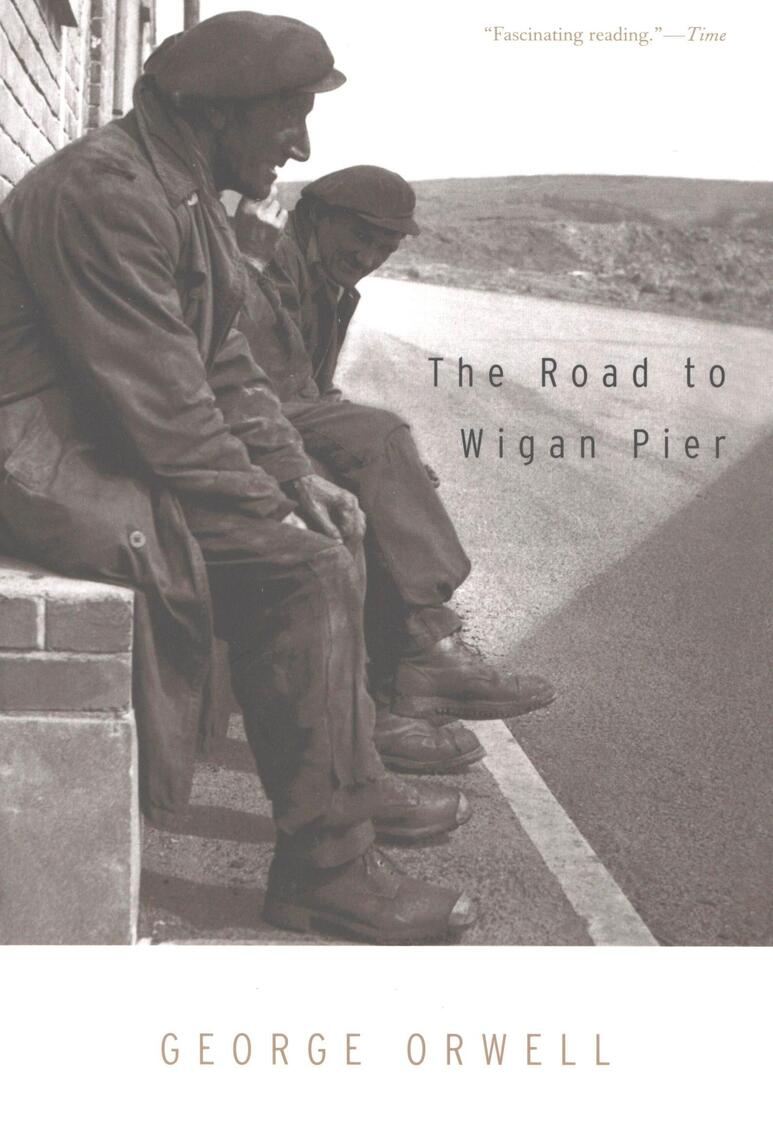
“The first thing that must strike any outside observer,” Orwell’s analysis begins, “is that Socialism in its developed form is a theory confined entirely to the middle classes.” “The typical Socialist is not”, he explains, “a ferocious-looking working man with greasy overalls and a raucous voice. He is either a youthful snob-Bolshevik … or, still more typically, a prim little man with a white-collar job … [and] a social position which he has no intention of forfeiting.”
He — and even more it must be said she — is also likely to be odd. Here Orwell is unsparing. And spot on. “There is,” Orwell declares, “the horrible — the really disquieting — prevalence of cranks wherever Socialists are gathered together.” “One sometimes get the impression,” he continues, “that the mere words ‘Socialism’ and ‘Communism’ draw towards them with magnetic force every fruit-juice drinker, nudist, sandal-wearer, sex-maniac, Quaker, ‘Nature Cure’ quack, pacifist, and feminist in England.”
Oh and vegetarians. And beards. And “high-minded women”. And homosexuals, like the two “dreadful-looking old men”, clad “in pistachio-coloured shirts and khaki shorts into which their huge bottoms were crammed so tightly that you could study every dimple”, whom Orwell encountered on a bus in Letchworth. And so — effortlessly out-Liddling Liddle — on.
Above all, Orwell identified the same disdain for the working class. “Are these mingy little beasts,” he reflected after attending one Socialist conventicle, “the champions of the working class?”
“For every person there”, he recalled, “bore the worst stigmata of snobbish middle-class superiority. If a real working man, a miner dirty from the pit, for instance, had suddenly walked into their midst, they would have been embarrassed, angry and disgusted; some, I should think, would have fled holding their noses”.
“The truth is,” Orwell concludes, “that to many people calling themselves Socialists, revolution does not mean a movement of the masses with which they hope to associate themselves; it means a set of reforms which ‘we’, the clever ones, are going to impose upon ‘them’, the Lower Orders.”
But Orwell was writing in 1937. Not 2021. So how on earth did the Labour party, with even then such a freakish, repellent cadre at its core, survive and thrive as the great mass movement that, for a time, it became and whose passing Liddle laments?
Comments Off on What Orwell wrote about in The Road to Wigan Pier applies just as well to the modern Labour Party
Rise and Fall of the Sikh Empire explained in less than 7 minutes
Epimetheus
Published 8 Oct 2019Rise and Fall of the Sikh Empire explained in less than 7 minutes Sikh history documentary
This video covers Sikh history from the Guru Nanak till the fall of the Sikh Empire.
This video and others like it are sponsored by my Patrons over on patreon.
https://www.patreon.com/Epimetheus1776
Comments Off on Rise and Fall of the Sikh Empire explained in less than 7 minutes
May 31, 2021
The History of HSTs in the West
Ruairidh MacVeigh
Published 29 May 2021Hello again! 😀
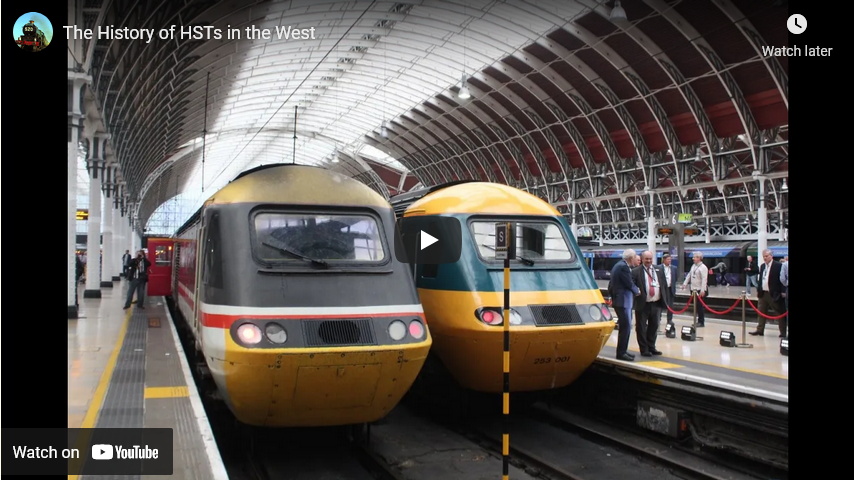
With the recent withdrawal of the last HST operations into London, I wanted to make a series of videos chronicling the history of these mighty trains in terms of their years of each region they were assigned to, the Great Western, East Coast, Midland, West Coast and Cross Country Routes.
With that in mind, we start with the first of the BR Regions to employ the venerable HST, but also the first to withdraw them from long distance services, the Great Western, a line that, since its inception under the auspices of Brunel, has played host to many different types of trains, but none have had greater impact that the superb HSTs.
All video content and images in this production have been provided with permission wherever possible. While I endeavour to ensure that all accreditations properly name the original creator, some of my sources do not list them as they are usually provided by other, unrelated YouTubers. Therefore, if I have mistakenly put the accreditation of “Unknown”, and you are aware of the original creator, please send me a personal message at my Gmail (this is more effective than comments as I am often unable to read all of them): rorymacveigh@gmail.com
The views and opinions expressed in this video are my personal appraisal and are not the views and opinions of any of these individuals or bodies who have kindly supplied me with footage and images.
If you enjoyed this video, why not leave a like, and consider subscribing for more great content coming soon.
Thanks again, everyone, and enjoy! 😀
References:
– 125Group (and their respective sources)
– Wikipedia (and its respective references)
Comments Off on The History of HSTs in the West
May 30, 2021
Rommel’s Desert Dash – The Whole Bloody Afrika Korps! – Gazala – WW2 – 144 – May 30, 1942
World War Two
Published 29 May 2021Erwin Rommel begins his surprise new offensive with “Rommel’s Moonlight Ride”, bringing all of his mighty mobile units to the fray in North Africa, while in the Pacific, dozens of warships and tens of thousands of men set sail from Japan — their mission? Attack the Aleutian Islands and Midway Island, but above all, destroy the US Pacific Fleet!
(more…)
Comments Off on Rommel’s Desert Dash – The Whole Bloody Afrika Korps! – Gazala – WW2 – 144 – May 30, 1942
The Stanford Prison “Experiment”
In another of the anonymous book reviews at Scott Alexander’s Astral Codex Ten, a look at the infamous Stanford Prison Experiment:
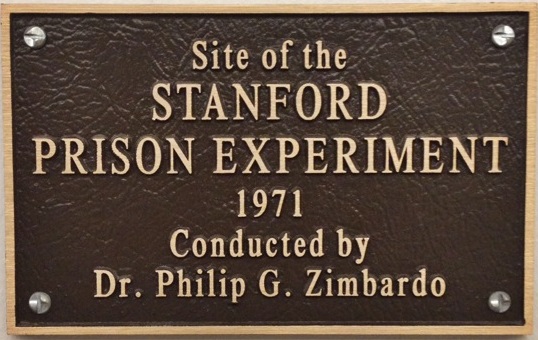
The second most famous psychology experiment in history is the Stanford Prison experiment. Philip Zimbardo split a group of undergrads at random into prisoners and guards. The guards were left free to choose how they would manage the prisoners, and within days the whole thing had to be called off as it had descended into a sadistic torture camp. At least that’s how Zimbardo has described it for the last 50 years. In fact, everything I just said is completely false. The undergrads were not split at random — the scheme had actually been dreamt up by an undergrad called David Jaffe who had run a previous experiment himself on abusing prisoners in a fake jail. He was carefully placed into the guards group. Nor were the guards left to choose their methods, instead they were briefed by Zimbardo and Jaffe that the purpose of the experiment (for which they were being well renumerated) was to see how people cracked under pressure. The experiment would be a failure unless they could put the prisoners under terrible stress. Even Douglas Korpi’s prisoner breakdown on day two, which, captured on camera, became the cinematic face of the experiment, was a fake he put on after discovering he wouldn’t be able to spend the time in jail revising, and being told he would only be allowed to quit if he suffered some sort of serious mental or physical breakdown.
Despite the pressure from Zimbardo and Jaffe, two thirds of the guards refused to take part in sadistic games, and much to their frustration a third continued to treat the prisoners with kindness. Nonetheless when Zimbardo came to write up the experiment about the effects on the prisoners, he realised it would be a much more compelling story if he turned it on its head, and made it about the guards instead. The truth of guards carefully drilled to be sadistic was swept away with a lie of ordinary people spontaneously becoming cruel when dressed in a uniform and given a position of power.
For years no one replicated the experiment — given the results first time round it was thought unethical, but in 2001 the BBC in search of new reality television commissioned a repeat (turns out reality television runs to different ethics than the average psychology department). Now unlike normal reality TV they didn’t bother manipulating the participants to be at each other’s throats — there was no need, in days it was going to be a bloodbath.
The result is the four most boring hours of television ever recorded. Nothing happens. The guards sit around chatting. When tensions arise with the prisoners, they defuse them by talking to them nicely. On day 6 some prisoners escaped. They headed over to the guards’ canteen and all had a smoke together. On day 7 they voted in favour of turning the whole thing into a commune.
Comments Off on The Stanford Prison “Experiment”
The History of the English Flag
History With Hilbert
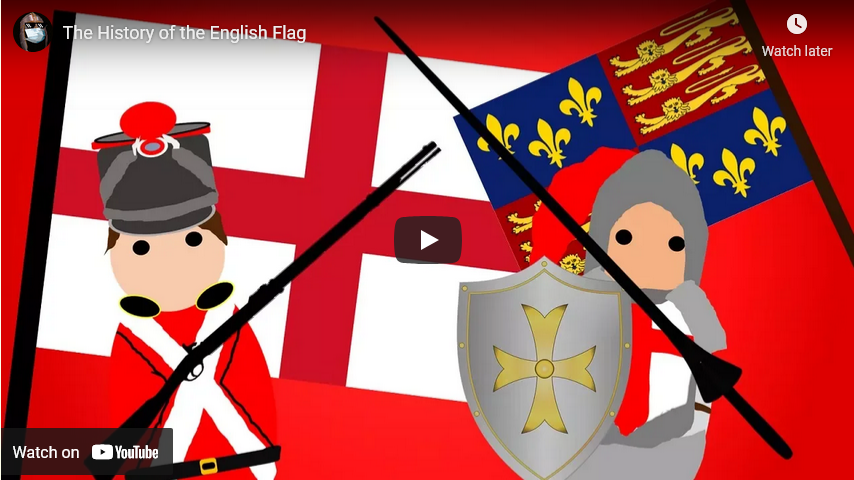
Published 13 Apr 2018Most people know that the Union Flag (sometimes incorrectly called the Union Jack by normies) is made up of the various flags of the United Kingdom combining things like the Scottish Saltire and the English Saint George’s Cross. But what is the history behind these symbols and why were they adopted by these nations, and what is more, why these flags, and what about the competitors who if history had been different might have come to symbolise these nations. In today’s episode, I’m going to explore the history and symbolism behind England’s flag, the Saint George’s Cross, as well as the other banners that were once seen as being representative of the English people.
Music Used:
“Sneaky Snitch” – Kevin MacLeod
“Pippin the Hunchback” – Kevin MacLeod
“Angevin” – Kevin MacLeod
“Gregorian Chant” – Kevin MacLeod
“Ever Mindful” – Kevin MacLeod
“Ever Mindful” – Kevin MacLeod (incompetech.com)
Licensed under Creative Commons: By Attribution 3.0 LicenseAll images are from the Public Domain of Wikimedia Commons and Pixabay.
Comments Off on The History of the English Flag
May 29, 2021
History Buffs: Midway Part Two
History Buffs
Published 28 May 2021As promised here is Part Two of my Midway review. Hope you guys enjoy it 🙂
You can join Nebula today and get Curiosity Stream at 26% off for a year! Click on the link below
http://curiositystream.com/historybuffs
Part Two of this review will be out next Friday on the 28th of May!● Follow us on Twitter: https://twitter.com/HistoryBuffs_
Comments Off on History Buffs: Midway Part Two
Prototype Jungle Carbine: A No1 MkV Becomes a No5 MkI
Forgotten Weapons
Published 17 Feb 2021http://www.patreon.com/ForgottenWeapons
https://www.floatplane.com/channel/Fo…
Cool Forgotten Weapons merch! http://shop.bbtv.com/collections/forg…
When the British began developing a shortened version of the No4 Lee Enfield in 1943 (which would become the No5 MkI “Jungle Carbine”), the development process included work with some rather older rifles. What we have here is a 1922 production No1 MkV rifle cut down as a trials prototype for the carbine development program. The No1 MkV was a trials gun itself from the early 1920s which basically gave a rear aperture sight to the classic MkIII SMLE. Unfortunately, I don’t have any specific details on the testing or use of this particular example, but I think it is a fascinating example!
Contact:
Forgotten Weapons
6281 N. Oracle #36270
Tucson, AZ 85740

Comments Off on Prototype Jungle Carbine: A No1 MkV Becomes a No5 MkI
May 28, 2021
Justin Trudeau apologizes for WW2 detainment of card-carrying Fascists by Mackenzie King’s government
As Colby Cosh notes in the latest NP Platformed newsletter, it is hard to reconcile the mythological events the Prime Minister is busy apologizing for with the actual, documented facts of the case as recorded in a book published by three Italian-Canadian academics about 20 years ago:
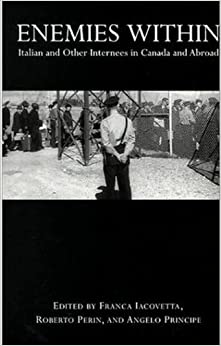
What they found was that the 500 people, singled out from 112,000 Italian-Canadians by the government in 1940, were scarcely the victims of racial hysteria. They were, in fact, a hardcore fraction of 3,000 or so literal card-carrying Fascists in Canada. They hadn’t been thrown into camps willy-nilly, as Canada’s Japanese would be later; most had Fascist ties and sympathies that had been carefully investigated, abundantly documented and double-checked by the RCMP.
The internees had mostly been members of overtly pro-Fascist “fraternal organizations”, whose loyalty they later protested in the face of the facts. As that young reporter’s review observed, many of those groups reported directly to the Italian government, all were devoted to promoting the idea of Mussolini’s near-godhood and some helped finance Italy’s Fascist (and racist) 1935 invasion of Ethiopia, which annihilated the League of Nations security apparatus and set the table for further fascist aggression in Europe. Although the impugned Italians were detained without trial, none lost their homes or property as Japanese internees later would, and in fact none were held beyond the end of 1942.
That review was just about the only notice Enemies Within received anywhere in the Canadian press. The author, whose alliterative name you can probably guess by now, interviewed (now emeritus) Prof. Perin and was told the book had “fallen into a big black hole”. The revisionist account of Italian-Canadian internment as an out-of-control racial panic directed at anyone whose name ended in a vowel had long since taken hold in Canadian schools, and has never lost its grip.
Today, the prime minister, attentive to his nose for votes, apologized officially in the House of Commons for the “unjustified” detentions. And opposition parties are competing vigorously to out-apologize the apologizer-in-chief. One wonders what our present-day anti-fascists, who favour street beatings for anyone wearing the wrong hat, make of this laborious grieving for honest-to-God anti-Fascist action. As Michael Petrou argued courageously in the Globe and Mail on May 3, we shouldn’t be consecrating a falsehood for the sake of anyone’s political advantage. (And the CBC, to its credit, gives some attention to the historically informed side of the debate.)
Comments Off on Justin Trudeau apologizes for WW2 detainment of card-carrying Fascists by Mackenzie King’s government
The Plot to Kill Hitler’s Hangman – Operation Anthropoid – WAH 035 – May 1942, Pt. 2
World War Two
Published 27 May 2021Arthur Harris and his RAF Bombers carry out a massive bombing raid on Cologne. Meanwhile, one of the architects of the Holocaust, Reinhard Heydrich is the target of a spectacular assassination attempt.
(more…)
Comments Off on The Plot to Kill Hitler’s Hangman – Operation Anthropoid – WAH 035 – May 1942, Pt. 2
Tank Chats #108 | M48 | The Tank Museum
The Tank Museum
Published 23 Oct 2020Tank Museum Historian David Fletcher discusses the M48 “Patton”, an American first generation Main Battle Tank introduced in 1952. Throughout its service life, the M48 has been very successful and has seen service with many countries including the Americans in Vietnam and the Israel Defense Forces.
Support the work of The Tank Museum on Patreon: ► https://www.patreon.com/tankmuseum
Visit The Tank Museum SHOP & become a Friend: ► tankmuseumshop.orgTwitter: ► https://twitter.com/TankMuseum
Instagram: ► https://www.instagram.com/tankmuseum/
#tankmuseum #tanks

Comments Off on Tank Chats #108 | M48 | The Tank Museum
May 27, 2021
“Are you an ally of an all-powerful white supremacist, colonialist apartheid regime led by baby-killing oppressors, the likes of whose evil the world has never seen?”
Why, yes. Yes I am, Barbara Kay. And you should be too:
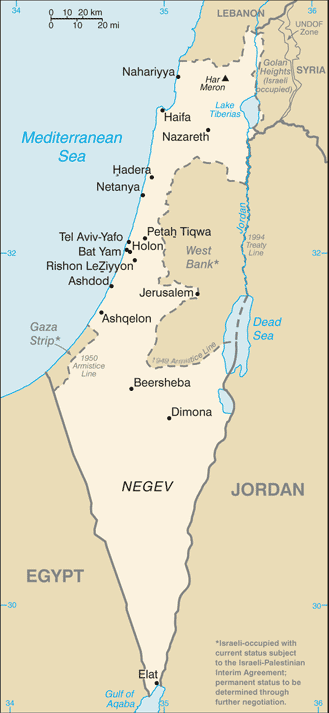
Nobody with eyes to see can press on with the myth that this is a political conflict. The anti-Semitism that lurks behind obsessive Israel-bashing can no longer be credibly passed off as “criticism of Israel”. It’s not about Israel and never was. It’s about those maddening Jews. Wherever they are, they make trouble. What is it with their stubborn insistence on their right to live and flourish in their homeland, when they know they are not wanted there?
Never mind the historical facts surrounding Jews’ indigenous rights, or the painstaking legal journey to national sovereignty (along with other newly minted Middle Eastern countries like Iraq and Syria, both of which have appalling human rights records, but never have their right to exist questioned). Treaties and international law are too dull, nuanced and complex. They take time and effort to understand. It’s very taxing for the brain. Narrative, though, takes no time at all to absorb. Stories of good and evil are simple, unnuanced and satisfyingly emotive.
If you attend to the myth-mongering on social media, it seems your choice is stark. Are you an ally of an all-powerful white supremacist, colonialist apartheid regime led by baby-killing oppressors, the likes of whose evil the world has never seen? Or are you a decent, compassionate human being, committed to social justice and ready to lend your support to those infamous Zionist monsters’ powerless, oppressed, racialized victims, who are languishing in their open-air prisons?
It’s a tough choice for progressive Jews. Before 1967, living with oneself as a Jew was easy. Socialist Israel was little David then and the massed hostile Arab states were Goliath. Even Bernie Sanders enjoyed his time on a kibbutz in 1963. (Mind you, that particular kibbutz, Sha’ar Ha’amakim, was so far left, one of its members was convicted of spying for the Soviet Union.)
Then those upstart Jews dared to win a war against incredible odds and had the chutzpah to take back territory that had been stolen from them in the 1948 War of Independence. The pivot from victim to victor, from powerlessness to power, was the kiss of death for their support from the left.
Comments Off on “Are you an ally of an all-powerful white supremacist, colonialist apartheid regime led by baby-killing oppressors, the likes of whose evil the world has never seen?”


