
… you know I’m always up for the humiliation of a dominant scientific paradigm. I especially like examples where that paradigm in its heyday replaced some much older and unfashionable view that we now know to be correct. It’s important to remind people that knowledge gets lost and buried in addition to being discovered.
The wonderful thing about ancient DNA is it gives us an extreme case of this. Basically, the first serious attempt at creating a scientific field of archaeology was done by 19th century Germans, and they looked around and dug some stuff up and concluded that the prehistoric world looked like the world of Conan the Barbarian: lots of “population replacement”, which is a euphemism for genocide and/or systematic slavery and mass rape. This 19th century German theory then became popular with some 20th century Germans who … uh … made the whole thing fall out of fashion by trying to put it into practice.
After those 20th century Germans were squashed, any ideas they were even tangentially associated with them became very unfashionable, and so there was a scientific revolution in archaeology! I’m sure this was just crazy timing, and actually everybody rationally sat down and reexamined the evidence and came to the conclusion that the disgraced theory was wrong (lol, lmao). Whatever the case, the new view was that the prehistoric world was incredibly peaceful, and everybody was peacefully trading with one another, and this thing where sometimes in a geological stratum one kind of house totally disappears and is replaced by a different kind of house is just that everybody decided at once that the other kind of house was cooler. The high-water mark of this revisionist paradigm even had people saying that the Vikings were mostly peaceful traders who sailed around respecting the non-aggression principle.
And then people started sequencing ancient DNA and … it turns out the bad old 19th century Germans were correct about pretty much everything. The genetic record is one of whole peoples frequently disappearing or, even more commonly, all of the men disappearing and other men carrying off the dead men’s female relatives. There are some exceptions to this, but by and large the old theory wins.
I used to have a Bulgarian coworker, and I asked him one day how things were going in Bulgaria. He replied in that morose Slavic way with a long, sad disquisition about how the Bulgarian race was in its twilight, their land was being colonized by others, their sons and daughters flying off to strange lands and mixing their blood with that of alien peoples. I felt awkward at this point, and stammered something about that being very sad, at which point he came alive and declared: “it is not sad, it is not special, it is the Way Of The World”. He then launched into a lecture about how the Bulgarians weren’t even native to their land, but had been bribed into moving there by the Byzantines who used them as a blunt instrument to exterminate some other unruly tribes that were causing them trouble. “History is all the same,” he concluded, “we invaded and took their land, and now others invade us and take our land, it is the Way Of The World.”
Even a cursory study of history shows that my Bulgarian friend was correct about the Way Of The World. There’s a kind of guilty white liberal who believes that European colonization and enslavement of others is some unique historical horror, a view that has now graduated into official state ideology in America. But that belief is just a weird sort of inverted narcissism. I guess pretending white people are uniquely bad at least makes them feel special, but white people are not special. Mass migration, colonization, population replacement, genocide, and slavery are the Way Of The World, and ancient DNA teaches us that it’s been the Way Of The World far longer than writing or agriculture have existed. It wasn’t civilization that corrupted us, there are no noble savages, “history is all the same”, an infinite history of blood.
Land acknowledgments always struck me as especially funny and stupid: like you really think those people were the first ones there? What about acknowledging the people that they stole it from? Sure enough one of the coolest parts of Reich’s book is his recounting the discovery that there were probably unrelated peoples in the Americas before the ancestors of the American Indians arrived here, and that a tiny remnant of them might even remain deep in Amazonia. So: what does it actually mean to be “indigenous”? Is anybody anywhere actually “indigenous”?
Jane Psmith and John Psmith, “JOINT REVIEW: Who We Are and How We Got Here, by David Reich”, Mr. and Mrs. Psmith’s Bookshelf, 2023-05-29.
September 2, 2023
QotD: Ancient DNA
September 1, 2023
How the term “the Deep State” morphed from left-wing to (extreme, scary, ultra-MAGA) right-wing jargon
Matt Taibbi wants to track the changes in political language in US usage, starting today with “Deep State”:
In July of last year David Rothkopf wrote a piece for the Daily Beast called, “You’re going to miss the Deep State when it’s gone: Trump’s terrifying plan to purge tens of thousands of career government workers and replace them with loyal stooges must be stopped in its tracks.” In the obligatory MSNBC segment hyping the article, poor Willie Geist, fast becoming the Zelig of cable’s historical lowlight reel, read off the money passage:
During his presidency, [Donald] Trump was regularly frustrated that government employees — appointees, as well as career officials in the civil service, the military, the intelligence community, and the foreign service — were an impediment to the autocratic impulses about which he often openly fantasized.
This passage portraying harmless “government employees” as the last patriotic impediment to Trumpian autocracy represented the complete turnaround of a term that less than ten years before meant, to the Beast‘s own target audience, the polar opposite. This of course needed to be lied about as well, and the Beast columnist stuck this landing, too, when Geist led Rothkopf through the eye-rolling proposition that there was “something fishy, or dark, or something going on behind the scenes” with the “deep state”.
Rothkopf replied that “career government officials” got a bad rap because “about ten years ago, Alex Jones and the InfoWars crowd started zeroing in on the deep state, as yet another of the conspiracy theories …”
The real provenance of deep state has in ten short years been fully excised from mainstream conversation, in the best and most thorough whitewash job since the Soviets wiped the photo record clean of Yezhov and Trotsky. It’s an awesome achievement.
Through the turn of the 21st century virtually no American political writers used deep state. In the mid-2000s, as laws like the PATRIOT Act passed and the Bush/Cheney government funded huge new agencies like the Department of Homeland Security, the word was suddenly everywhere, inevitably deployed as left-of-center critique of the Bush-Cheney legacy.
How different was the world ten years ago? The New York Times featured a breezy Sunday opinion piece asking the late NSA whistleblower Thomas Drake — a man described as an inspiration for Edward Snowden who today would almost certainly be denounced as a traitor — what he was reading then. Drake answered he was reading Deep State: Inside the Government Secrecy Industry by Marc Ambinder, whose revelations about possible spying on “eighteen locations in the Washington D.C. area, including near the White House, Congress, and several foreign embassies”, inspired the ACLU to urge congress to begin encrypting communications.
On the eve of a series of brutal revelations about intelligence abuses, including the Snowden mess, left-leaning American commentators all over embraced “deep state” as a term perfectly descriptive of the threat they perceived from the hyper-concentrated, unelected power observed with horror in the Bush years. None other than liberal icon Bill Moyers convinced Mike Lofgren — a onetime Republican operative who flipped on his formers and became heavily critical of the GOP during this period — to compose a report called “The Deep State Hiding in Plain Sight“.
Will the Resistance Smash Nazism or Build Communism? – War Against Humanity 112
World War Two
Published 31 Aug 2023The hour of resistance is here. Across Western Europe, armies of resistance fighters rise up to meet the Allied armies and sabotage the Axis war machine. In Slovakia, a secret army fights to restore Czechoslovak independence. But against this hopeful backdrop, the Axis forces strike back hard. And, all around, the spectre of communism strikes fear in the Western Powers.
(more…)
August 31, 2023
The Double Agent Saving London From the V-1 – WW2 Documentary Special
World War Two
Published 30 Aug 2023The Germans are assaulting London with waves of V-1 flying bombs. But Eddie Chapman, a career criminal, serial womaniser, and masterful double agent working for MI5’s Double Cross is fighting a secret battle to beat the bombs. When he’s done with that, he pulls the wool over the Reich’s eyes to help Britain beat the Kriegsmarine. This is Agent Zigzag.
(more…)
The sciences have replication problems … historians face similar issues
In the latest Age of Invention newsletter, Anton Howes considers the history profession’s closest equivalent to the ongoing replication crisis in the sciences:
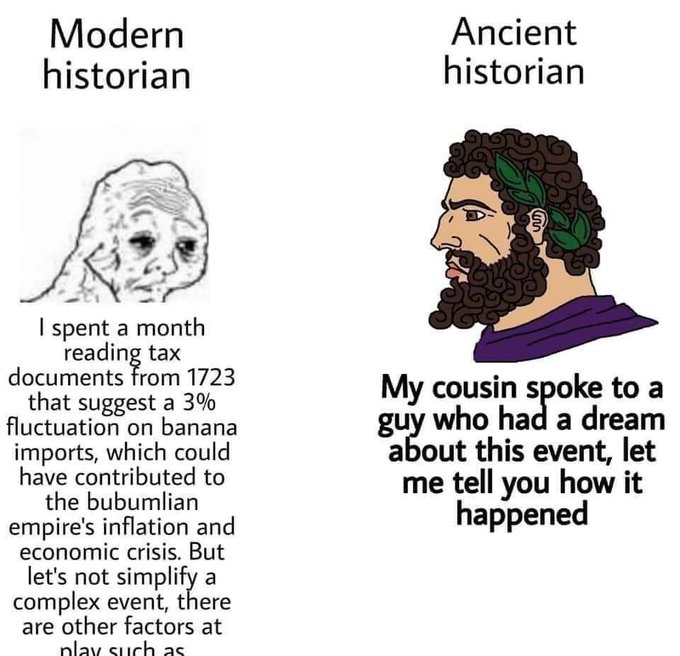
… I’ve become increasingly worried that science’s replication crises might pale in comparison to what happens all the time in history, which is not just a replication crisis but a reproducibility crisis. Replication is when you can repeat an experiment with new data or new materials and get the same result. Reproducibility is when you use exactly the same evidence as another person and still get the same result — so it has a much, much lower bar for success, which is what makes the lack of it in history all the more worrying.
Historical myths, often based on mere misunderstanding, but occasionally on bias or fraud, spread like wildfire. People just love to share unusual and interesting facts, and history is replete with things that are both unusual and true. So much that is surprising or shocking has happened, that it can take only years or decades of familiarity with a particular niche of history in order to smell a rat. Not only do myths spread rapidly, but they survive — far longer, I suspect, than in scientific fields.
Take the oft-repeated idea that more troops were sent to quash the Luddites in 1812 than to fight Napoleon in the Peninsular War in 1808. Utter nonsense, as I set out in 2017, though it has been cited again and again and again as fact ever since Eric Hobsbawm first misled everyone back in 1964. Before me, only a handful of niche military history experts seem to have noticed and were largely ignored. Despite being busted, it continues to spread. Terry Deary (of Horrible Histories fame), to give just one of many recent examples, repeated the myth in a 2020 book. Historical myths are especially zombie-like. Even when disproven, they just. won’t. die.
[…]
I don’t think this is just me being grumpy and pedantic. I come across examples of mistakes being made and then spreading almost daily. It is utterly pervasive. Last week when chatting to my friend Saloni Dattani, who has lately been writing a piece on the story of the malaria vaccine, I shared my
mounting paranoiahealthy scepticism of secondary sources and suggested she check up on a few of the references she’d cited just to see. A few days later and Saloni was horrified. When she actually looked closely, many of the neat little anecdotes she’d cited in her draft — like Louis Pasteur viewing some samples under a microscope and having his mind changed on the nature of malaria — turned out to have no actual underlying primary source from the time. It may as well have been fiction. And there was inaccuracy after inaccuracy, often inexplicable: one history of the World Health Organisation’s malaria eradication programme said it had been planned to take 5-7 years, but the sources actually said 10-15; a graph showed cholera pandemics as having killed a million people, with no citation, while the main sources on the topic actually suggest that in 1865-1947 it killed some 12 million people in British India alone.Now, it’s shockingly easy to make these mistakes — something I still do embarrassingly often, despite being constantly worried about it. When you write a lot, you’re bound to make some errors. You have to pray they’re small ones and try to correct them as swiftly as you can. I’m extremely grateful to the handful of subject-matter experts who will go out of their way to point them out to me. But the sheer pervasiveness of errors also allows unintentionally biased narratives to get repeated and become embedded as certainty, and even perhaps gives cover to people who purposefully make stuff up.
If the lack of replication or reproducibility is a problem in science, in history nobody even thinks about it in such terms. I don’t think I’ve ever heard of anyone systematically looking at the same sources as another historian and seeing if they’d reach the same conclusions. Nor can I think of a history paper ever being retracted or corrected, as they can be in science. At the most, a history journal might host a back-and-forth debate — sometimes delightfully acerbic — for the closely interested to follow. In the 1960s you could find an agricultural historian saying of another that he was “of course entitled to express his views, however bizarre.” But many journals will no longer print those kinds of exchanges, they’re hardly easy for the uninitiated to follow, and there is often a strong incentive to shut up and play nice (unless they happen to be a peer-reviewer, in which case some will feel empowered by the cover of anonymity to be extraordinarily rude).
Why New York Destroyed 3 Iconic Landmarks | Architectural Digest
Architectural Digest
Published 6 Apr 2023Michael Wyetzner of Michielli + Wyetzner Architects returns to AD, this time to look at the history and creation of three New York City landmarks that have since been demolished — but are far from forgotten. From the once (and future?) majesty of Penn Station to the New York Herald building and the original 19th-century Madison Square Garden, Michael gives expert insight into these three historic architectural landmarks, why they were laid to ruin, and what came to replace them.
(more…)
QotD: A typical polis
In any case there certainly were a lot of them. The Polis Center’s inventory counts just over a thousand archaic and classical poleis (it does not extend into the Hellenistic period), of which probably around 800-900 existed at one time. Now our vision of these poleis is necessarily a bit skewed: most were very small and leave little evidence, while the two most prominent poleis in our sources by far, Athens and Sparta, were both very unusual in their size and governing structures. That said while most poleis were very small, it doesn’t follow that most Greeks lived in very small poleis; M.H. Hansen notes ((2006), 83) that by his estimates 80% of all of the poleis housed around 35% of the polis-living population, while the top 10% largest poleis housed roughly 40%.
But the smallest poleis could be very small. A touch over 200 poleis in the inventory had territories of less than 100km2. A small polis like that might have a total population of just a few thousand, with an even smaller subset of that population consisting of adult citizen males. On the other hand, very large poleis like Athens or Sparta might have hundreds of thousands of inhabitants, though as M.H. Hansen notes in the inventory these sorts of massive poleis with territories in excess of 1,000km2 were very rare: there are just thirteen such known.
But crucially for this survey, what we’re going to see is that there some fairly common and standard polis institutions, which seem fairly common regardless of size. Indeed, the language and thinking of our Greek sources is often informed by a sort of idea of an ideal or standard polis, from which every real polis deviates in certain ways. These little communities had institutions which resembled each other, to the point that the difference between “oligarchic” or “democratic” or even “tyranical” poleis could be surprisingly slight. So that’s what we’re going to look at here: a basic sense of what a polis notionally was. And we’ll begin by looking at the parts that comprised a polis, which is going to be quite important as we go forward, since the way one structures a government depends on how one imagines the component parts being governed.
Bret Devereaux, “Collections: How to Polis, 101: Component Parts”, A Collection of Unmitigated Pedantry, 2023-03-10.
August 30, 2023
The endless search for the “Easy mode” in military conflict
CDR Salamander on the search for shortcuts to military excellence, despite literal millennia of evidence that there are no such shortcuts:

As the Russo-Ukrainian War reaches its 20th month, I hope everyone has been sufficiently sobered up to stand firmly against those promoting the “72-hour War” or spin an attractive story about some transformational secret sauce that provides an “easy button” for those tasked to do the very hard work of preparing a nation for war should, and if, it were to come.
See the Battle of Hostomel if you need a recent example of where buying this wishcasting can get you.
There is a reason we have continually railed against this Potomac Flotilla mindset for the better part of two decades here — it is the self-delusion of faculty lounge theories running up against the Gods of the Military Copybook Headings reality what we have thousands of years of experience to reference.
We are not smarter than previous generations. There is no secret weapon or war winning technology — or magic beans — that will allow us to skip past the hard work of a viable strategy backed up by a properly resourced industrial capacity to build, maintain, deploy, and sustain a fighting force on the other side of the Pacific for years if needed.
Not 24-hours. Not 72-hours. Think 72-weeks to 72-months and you have your mind right.
[…]
We do no one any good allowing free run towards the national security version of the prosperity gospel, a branch of the transformationalist cult, and their “name it and claim it” attitude towards solving hard problems.
From LCS to DDG-1000, to optimal manning, to six-sigma supply nightmares, to 100-hour workweeks, to 72-hour war CONOPS, to the “Deter by Punishment,” to “1,000 ship navy,” to the offset of this POM cycle, to counter-historical excuses for … again … not doing the hard work that takes so long to bear fruit that someone else will get credit for it.
Every time we have our top leaders — smart hard working professionals with the best intentions — step up to sound more like this guy — the worse we will all be.
It degrades them and endangers everyone.
We don’t need to sell the utility of small drones being used down to the lowest levels of responsibility — it is demonstrated every day.
What we do need sold is Congress’s need to fund a revitalization of our defense industrial capacity and a focus on the naval and aerospace forces that will do most of the fighting in any expected war west of the International Dateline.
Supported by swarms of drones of all shapes and sizes.

QotD: Hairstyles of the late Ancien Régime
As the industrial revolution and various other shifts (including truly disastrous harvests) robbed those whose income came from hereditary landholding of their ancient riches and prominence, even while the court demanded a complex set of “dancing attendance” for royal favor (A policy started and encouraged by Louis XIV in part to rob the nobility of wealth and prominence, not to mention keeping their minds off rebellion) the nobility felt insecure. The fact that its ranks were being penetrated by people from the bourgeoisie, who married their children or “simply” franked the nobility’s lavish lifestyles, made the nobles feel they were losing control. Even though rank remained a thing of birth, they were in fact, in the real world, losing rank.
The response were fashions so extravagant that they make us go “Wait, what?” and must have given people headaches.
You can see where wigs came from and were fashionable, in a society without running water and/or decent shampoos. It was easier to keep your hair ridiculously short and wear wigs, which is why they’ve been part of human fashion since ever.
But it took the French revolution to come up with wigs on armatures (or hair extensions, ditto) and hairstyles that incorporated ships and, at one point, bird cages with live, singing birds.
To look at drawings or read descriptions is to go “uh, what? who ever thought that was attractive?” and also “Boy their heads must have hurt”.
Yet the competition for the most elaborate and showy hairstyle, no matter how insane, did not stop until those heads fell to Madame Guillotine thereby stilling forever their status anxiety.
Sarah Hoyt, “Is That A Ship On Your Head?”, Libertarian Enterprise, 2019-09-01.
August 29, 2023
The noble reasons New Jersey banned self-service gas stations
Of course, by “noble reasons” I mean “corrupt crony capitalist reasons“:

“Model A Ford in front of Gilmore’s historic Shell gas station” by Corvair Owner is licensed under CC BY-SA 2.0


New Jersey’s law, like Oregon’s, ostensibly stemmed from safety concerns. In 1949, the state passed the Retail Gasoline Dispensing Safety Act and Regulations, a law that was updated in 2016, which cited “fire hazards directly associated with dispensing fuel” as justification for its ban.
If the idea that Americans and filling stations would be bursting into flames without state officials protecting us from pumping gas sounds silly to you, it should. In fact, safety was not the actual reason for New Jersey’s ban (any more than Oregon’s ban was, though the state cited “increased risk of crime and the increased risk of personal injury resulting from slipping on slick surfaces” as justification).
To understand the actual reason states banned filling stations, look to the life of Irving Reingold (1921-2017), a maverick entrepreneur and workaholic who liked to fly his collection of vintage World War II planes in his spare time. Reingold created a gasoline crisis in the Garden State, in the words of New Jersey writer Paul Mulshine, “by doing something gas station owners hated: He lowered prices”.
In the late 1940s, gasoline was selling for about 22 cents a gallon in New Jersey. Reingold figured out a way to undercut the local gasoline station owners who had entered into a “gentlemen’s agreement” to maintain the current price. He’d allow customers to pump gas themselves.
“Reingold decided to offer the consumer a choice by opening up a 24-pump gas station on Route 17 in Hackensack,” writes Mulshine. “He offered gas at 18.9 cents a gallon. The only requirement was that drivers pump it themselves. They didn’t mind. They lined up for blocks.”
Consumers loved this bit of creative destruction introduced by Reingold. His competition was less thrilled. They decided to stop him — by shooting up his gas station. Reingold responded by installing bulletproof glass.
“So the retailers looked for a softer target — the Statehouse,” Mulshine writes. “The Gasoline Retailers Association prevailed upon its pals in the Legislature to push through a bill banning self-serve gas. The pretext was safety …”
The true purpose of New Jersey’s law had nothing to do with safety or “the common good”. It was old-fashioned cronyism, protectionism via the age-old bootleggers and Baptists grift.
Politicians helped the Gasoline Retailers Association drive Reingold out of business. He and consumers are the losers of the story, yet it remains a wonderful case study in public choice theory economics.
The economist James M. Buchanan received a Nobel Prize for his pioneering work that demonstrated a simple idea: Public officials tend to arrive at decisions based on self-interest and incentives, just like everyone else.
The Souls of Black Folk by W.E.B. Du Bois “runs so fantastically counter to the entire ideology of ‘decolonise'”
In Spiked, Brendan O’Neill finds himself surprised at the inclusion of a very unusual book on a list demanded by those pushing for “decolonization” of university curricula:
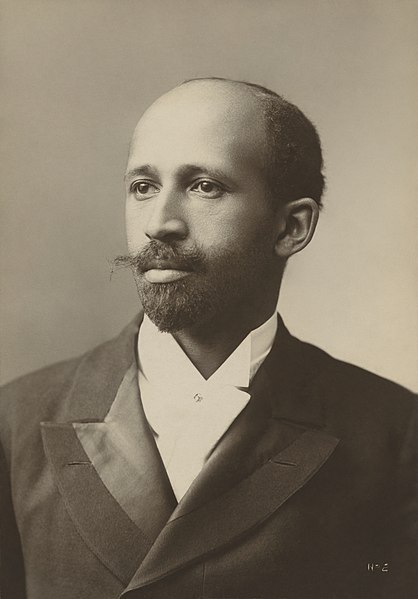
W.E.B. Du Bois by James E. Purdy, 1907, gelatin silver print, from the National Portrait Gallery which has explicitly released this digital image under the CC0 license.
Wikimedia Commons.
“Decolonise the curriculum” is a movement that wants university courses to focus less on dead white European males and more on writers of colour. Its argument is that black students need texts that speak directly to them. They need books by authors who look like them. They need books about experiences and ideas they can more readily relate to than they can the stuff written about in “high white culture”. Black students must be able to recognise themselves in what they study, we’re told, or else they’ll feel cheated and demeaned.
I was surprised to find that one of the leading decolonise movements, at the University of Edinburgh, was arguing for WEB Du Bois’ 1903 book, The Souls of Black Folk, to be included on the English curriculum. The activists said it was unreasonable to expect black students to engage with so many white authors. They also need to engage with people like Du Bois, in whose work they might “recognise themselves”. I was surprised, not because I think The Souls of Black Folk shouldn’t be on more university courses – absolutely it should. No, it’s because The Souls of Black Folk runs so fantastically counter to the entire ideology of “decolonise”. It made me wonder if these activists have even read it. Du Bois’ book contains some of the finest arguments you will ever read against the idea that high culture is a white thing that others cannot connect with.
One of my favourite passages in the book, from the chapter on what kind of education black men are fit for, touches on this very question. Here Du Bois makes his critique of those in his own time who were arguing that blacks only require basic education and industrial training. He describes his own experience of higher learning, writing:
I sit with Shakespeare and he winces not. Across the colour line I move arm in arm with Balzac and Dumas … From out the caves of evening that swing between the strong-limbed earth and the tracery of the stars, I summon Aristotle and Aurelius and they come all graciously with no scorn or condescension.
That passage, Du Bois’ moving belief that Shakespeare does not wince at him, captures a central thread of his writing: universalism. Du Bois agitates against accommodating to segregation or low expectations, and argues for the rights of “black folk” to assimilate into the spoils of civilisation; to become, as he puts it, “co-workers in the kingdom of culture”. To those in the late 1800s and early 1900s who argued that black people needed a targeted form of culture, one specific to their needs and capacities, Du Bois said: “We daily hear that an education that encourages aspiration, that sets the loftiest of ideals and seeks as an end culture and character rather than breadwinning, is the privilege of white men, and the danger and delusion of black men.”
Du Bois insisted that it is only through assimilation into the “kingdom of culture” that self-knowledge and self-improvement can truly occur. As he wrote: “Wed with Truth, I dwell above the veil.” The veil he’s referring to is the veil of colour, the one that separated blacks from whites in post-slavery America. For Du Bois, that veil was best lifted via assimilation into the American republic’s political universe and its realm of culture.
Du Bois’ critique of the notion that high culture was for white men, and would prove mystifying to black men, has sadly been superseded by an “anti-racism” with an entirely different outlook. Now, the supposedly radical stance is to believe that high culture is disorientating for black people, and possibly even damaging to their self-esteem, and therefore they require something more targeted. In short, they need release from the kingdom of culture. That, in essence, is what the decolonise movement desires: the “liberation” of non-white peoples from the cultural gains of Western civilisation. Behold the crisis of universalist belief.
A Rare World War One Sniper’s Rifle: Model 1916 Lebel
Forgotten Weapons
Published 28 Feb 2018Unlike Great Britain and Germany, the French military never developed a formal sniper doctrine during World War One — they had no dedicated schools or instruction manuals for that specialty. The three major arsenals did produce scoped sniping rifles, however, with models of 1915, 1916, and 1917 (and a post-war 1921 pattern). We have a model 1916 example here today.
The rifles were completely ordinary off-the-rack Lebels, modified simply to add scope mounts. The 1916 pattern mount used a round peg on the side of the rear sight and a bracket wrapped around the front of the receiver, which allowed the scope to be quickly and easily detached for carry in a separate pouch (similar to what other nations did, to protect the optic from damage when not in use). The rifles were issued only in small numbers (2 per company, or even 2 per battalion) and it was left to the unit commander to decide how to employ them.
This particular scope has some neat provenance of being brought home by a US soldier after the war — it came back wrapped in a period copy of Stars and Stripes magazine. The rifle is of the appropriate type, but the “N” marks on the barrel and receiver indicated French overhaul in the 1930s, precluding it from being the original rifle this scope was mounted on.
(more…)
August 28, 2023
The Last Chance | Dorktown
Secret Base
Published 15 Aug 2023The Minnesota Vikings of the 1970s were among the greatest football teams ever assembled. Entering 1974, Bud Grant’s teams had reached two Super Bowls, but lost them both. The good times don’t last forever. It’s time to cash in.
Written and directed by Jon Bois
Written and produced by Alex Rubenstein
Rights specialist Lindley Sico
Secret Base executive producers Will Buikema and Jon BoisKnown goofs:
• At about the 42-minute mark, Jon says Fran Tarkenton held a 45-8-1 record as starter between 1973 and 1976. His record across these years was actually 43-10-1.
(more…)
Why Britain Advanced Before Other European Nations | Thomas Sowell
Thomas SowellTV
Published 17 Dec 2021
(more…)
August 27, 2023
The Liberation of Paris – WW2 – Week 261 – August 26, 1944
World War Two
Published 26 Aug 2023Paris is liberated by the Allies, a symbolic act that causes the world to rejoice. Something far more important to the course of the war, though, happens this week in Romania. The Allies continue to advance in the south of France and begin a new offensive in Italy, though the Pacific War has quietened down once again.
(more…)


