
Quick, ask the Boomers what was so great about The Sixties™. I hope you’ve got a few months to spare, but if you boil it all down, it’s “the spirit”. They really thought they were fundamentally transforming the world, and may God have mercy on all our souls, they were right. Same thing with the WWII generation, the Progressive Era, whatever. Even those who wax nostalgic for the 80s will talk about the feeling of the age — “the last golden Indian summer of America”, as someone quoted in the comments yesterday, and doesn’t it break your heart?
Not to get all Classical Rhetoric up in here, but for prior generations, things like “The Beatles” are synecdoche. They’ll go to their graves insisting that The Beatles were “the greatest band ever”, but if you press them on it, most of them are honest enough to admit that Ringo et al weren’t such great shakes, musically. At their best, The Beatles’ songs are musically simplistic and lyrically gibberish; at their worst, they’re “Rocky Raccoon”. The Beatles are “great” because they were innovators, not so much musically but because they were so goddamn pretentious. They wanted to be not mere entertainers, but artistes, and we indulged them, and that combo — pretentiousness and indulgence — became The Spirit of the Sixties.
Thus if you answer “The Beatles” to the question “What’s so great about The Sixties?”, it’s a synechdoche for “the spirit of the age”.
Severian, “Why the 90s Was the Worst Decade Ever”, Rotten Chestnuts, 2021-07-04.
October 20, 2024
QotD: The “Spirit of the Sixties”
October 19, 2024
QotD: From blackberry picking to Bible verses
It’s pretty trite by now to point out that Biblical metaphors that would have made perfect sense for an agricultural society are opaque to a modern audience for whom vineyards are about the tasting room and trimming your wick extends the burn time of your favorite scented candle. There’s probably whole books out there exploring the material culture of first century Judaea to provide context to the New Testament.1 But at least pruning is a “known unknown”: John 15:2 jumps out as confusing, and anyone who does a little gardening can figure out the answer. Plenty of things aren’t like that at all. Even today, few people record the mundane details of their daily lives; in the days before social media and widespread literacy it was even more dramatic, so anyone who wants to know how our ancestors cleaned, or slept, or ate has to go poking through the interstices of the historical record in search of the answers — which means they need to recognize that there’s a question there in the first place. When they don’t, we end up with whole swathes of the past we can’t really understand because we’re unfamiliar with the way their inhabitants interacted with the physical world.
Jane Psmith, “REVIEW: The Domestic Revolution by Ruth Goodman”, Mr. and Mrs. Psmith’s Bookshelf, 2023-05-22.
1. Are they any good? Should I read them? I’ve mentally plotted out a structure for one of my own, where each chapter is themed around the main image of one of the parables — oil, wine, seeds, fish, sheep, cloth, salt — and explores all the practicalities: the wine chapter would cover viticulture techniques but also land ownership (were the vintners usually tenants? what did their workforce look like?), seeds would cover how grain was planted, harvested, milled, and cooked, etc. The only problem is that I don’t actually know anything about any of this.
October 18, 2024
Operation Keelhaul: The Allies’ Final War Crime
World War Two
Published 17 Oct 2024After the war, millions of Soviet citizens are left over in Germany. Some of them are traitors, some are prisoners, some women and children. Stalin wants them back and the Western Allies are happy to help.
(more…)
Belton Repeating Flintlock: A Semiautomatic Rifle in 1785
Forgotten Weapons
Published Jul 1, 2024In 1785, Joseph Belton (an American inventor) and William Jover (an English gunmaker) sold 560 repeating flintlock rifles to the British East India Company. The guns were a very remarkable design which used a detachable magazine tube of 7 rounds stacked in series with a seven sequential touch holes. When the first round was fired, the flintlock ignited a piece of “portfire” slow match that would burn for about one minute. Pulling the trigger would move the portfire rearward one touch hole at a time, firing each in sequence as long as it remained burning. In this way, Belton advertised the gun as being able to fire 21 rounds in a single minute (using three preloaded magazine tubes). If the portfire burned out, it could be replaced and the flintlock reprimed and recocked. This was a truly impressive technological feat in 1785!
Belton had been working on firearms designs since 1758, and he actually got an order for 100 roman-candle-type repeaters from the American Continental Congress in 1777 — but there were pricing disputes and the order was never fulfilled. The British military examined the guns, but declined to purchase any. The 560 guns made for the East India Company (200 muskets, 160 carbines, and 100 pairs of pistols) were shipped from England in 1786, half to Madras and half to Bengal. Unfortunately, no further record of their performance has been found and we don’t know how well they worked in practice. This example is one of the muskets, with a .665″ bore and a 39 inch barrel.
(more…)
October 17, 2024
Historian Reacts to Canada and the Scheldt Campaign
OTD Military History
Published 8 Oct 2024My reaction to the @LEGIONMAGAZINE’s video on the Battle of the Scheldt. This campaign was one of the toughest ever fought by Canada in World War 2.
Canada and the Scheldt Campaign from Legion Magazine
• Canada and the Scheldt Campaign | Nar…
(more…)
Historian Answers Google’s Most Popular Questions About Ancient Sparta
History Hit
Published Jun 26, 2024Were the Spartans actually the best warriors? Did they really throw their babies off cliffs? Did they … HUNT their slaves? Ancient Greek historian Roel Konijnendijk answers your most googled questions about the Spartans.
00:00 Intro
00:35 When did the Spartans live?
01:00 Were the Spartans Greek?
01:30 Were the Spartans a professional army?
03:00 Were the Spartans the best warriors?
04:46 How did the Spartans train?
06:43 Did the Spartans throw babies off cliffs?
07:42 Did the Spartans practise eugenics?
09:55 Did the Spartans steal food?
10:21 Were the Spartans vegetarian?
11:18 Were the Spartans better than Athens?
12:54 Did Sparta have a navy?
13:15 Why didn’t Sparta have walls?
14:22 Did the Spartans hunt their slaves?
15:30 Did the Spartans get their slaves drunk?
16:42 Did the Spartans have a king?
17:57 Was Sparta a democracy?
19:13 Why did the Spartans fight at Thermopylae?
19:45 Why did the Spartans only send 300?
21:30 Were the Spartans betrayed at Thermopylae?
22:42 Did the Spartans beat the Persians?
24:00 Were the Spartans muscular?
25:40 Did the Spartans have long hair?
26:25 Did the Spartans have same sex relationships?
28:27 Were the Spartan women equal?
(more…)
QotD: Soldiers and warriors
[…]
But why? The etymologies of the words can actually help push us a bit in the right direction. Warrior has a fairly obvious etymology, being related to war (itself a derivative of French guerre); as guerre becomes war, so Old French guerreieor became Middle English werreior and because that is obnoxious to say, modern English “warrior” (which is why it is warrior and not “warrer” as we might expect if it was regularly constructed). By contrast, soldier comes – it has a tortured journey which I am simplifying – from the sold/sould French root meaning “pay” which in turn comes from Latin solidus, a standard Late Roman coin. So there is clearly something about pay, or the lack of pay involved in this distinction, but clearly it isn’t just pay or the word mercenary would suit just as well.
So here is the difference: a warrior is an individual who wars, because it is their foundational vocation, an irremovable part of their identity and social position, pursued for those private ends (status, wealth, place in society). So the core of what it is to be a warrior is that it is an element of personal identity and also fundamentally individualistic (in motivation, to be clear, not in fighting style – many warriors fought with collective tactics, although I think it fair to say that operation in units is much more central to soldiering than the role of a warrior, who may well fight alone). A warrior remains a warrior when the war ends. A warrior remains a warrior whether fighting alone or for themselves.
By contrast, a soldier is an individual who soldiers (notably a different verb, which includes a sense of drudgery in war-related jobs that aren’t warring per se) as a job which they may one day leave behind, under the authority of and pursued for a larger community which directs their actions, typically through a system of regular discipline. So the core of what it is to be a soldier is that it is a not-necessarily-permanent employment and fundamentally about being both in and in service to a group. A soldier, when the war or their term of service ends, becomes a civilian (something a warrior generally does not do!). A soldier without a community stops being a soldier and starts being a mercenary.
Incidentally, this distinction is not unique to English. Speaking of the two languages I have the most experience in, both Greek and Latin have this distinction. Greek has machetes (μαχητής, lit: “battler”, a mache being a battle) and polemistes (πολεμιστής, lit: “warrior”, a polemos being a war); both are more common in poetry than prose, often used to describe mythical heroes. Interestingly the word for an individual that fights out of battle order (when there is a battle order) is a promachos (πρόμαχος, lit: “fore-fighter”), a frequent word in Homer. But the standard Greek soldier wasn’t generally called any of these things, he was either a hoplite (ὁπλίτης, “full-equipped man”, named after his equipment) or more generally a stratiotes (στρατιώτης, lit: “army-man” but properly “soldier”). That general word, stratiotes is striking, but its root is stratos (στρατός, “army”); a stratiotes, a soldier, for the ancient Greeks was defined by his membership in that larger unit, the army. One could be a machetes or a polemistes alone, but only a stratiotes in an army (stratos), commanded, presumably, by a general (strategos) in service to a community.
Latin has the same division, with similar shades of meaning. Latin has bellator (“warrior”) from bellum (“war”), but Roman soldiers are not generally bellatores (except in a poetic sense and even then only rarely), even when they are actively waging war. Instead, the soldiers of Rome are milites (sing. miles). The word is related to the Latin mille (“thousand”) from the root “mil-” which indicates a collection or combination of things. Milites are thus – like stratiotes, men put together, defined by their collective action for the community (strikingly, groups acting for individual aims in Latin are not milites but latrones, bandits – a word Roman authors also use very freely for enemy irregular fighters, much like the pejorative use of “terrorist” and “insurgent” today) Likewise, the word for groups of armed private citizens unauthorized by the state is not “militia”, but “gang”. The repeated misuse by journalists of “militia” which ought only refer to citizens-in-arms under recognized authority, drives me to madness).
(I actually think these Greek and Latin words are important for understanding the modern use of “warrior” and “soldier” even though they don’t give us either. Post-industrial militaries – of the sort most countries have – are patterned on the modern European military model, which in turn has its foundations in the Early Modern period which in turn (again) was heavily influenced by how thinkers of that period understood Greek and Roman antiquity (which was a core part of their education; this is not to say they were always good at understanding classical antiquity, mind). Consequently, the Greek and Roman understanding of the distinction probably has significant influence on our understanding, though I also suspect that we’d find distinctions in many languages along much the same lines.)
Bret Devereaux, “Collections: The Universal Warrior, Part I: Soldiers, Warriors, and …”, A Collection of Unmitigated Pedantry, 2021-01-29.
October 16, 2024
The Korean War 017 – The Americans invade North Korea! – October 15, 1950
The Korean War by Indy Neidell
Published 15 Oct 2024The American forces — and British Commonwealth ones — join the South Koreans in crossing the 38th parallel and invading North Korea this week, though large scale resistance by the North Korean forces has to a large extent dissolved. This means that the planned Allied amphibious operation against the port of Wonsan — already delayed by minefields — is no longer really useful, since the South Koreans take the port already this week. And even as American brass meets on Wake Island and discounts the thought of Communist Chinese troops helping the North Koreans, Mao Zedong is preparing for an invasion of his own.
(more…)
Roman Historian Rates 10 Ancient Rome Battles In Movies And TV | How Real Is It? | Insider
Insider
Published Jun 18, 2024Historian Michael Taylor rates depictions of ancient Rome in Gladiator, Spartacus, and Indiana Jones and the Dial of Destiny.
(more…)
October 15, 2024
Czech Sa vz. 26 SMG
Forgotten Weapons
Published Aug 10, 2015The Czech Samopal vz. 26 was one of a family of submachine guns (the vz 23-26) that pioneered the use of bolts telescoped out forward over the barrel, allowing guns to have much better ratios of barrel to receiver length than before. The guns actually have quite a few interesting mechanical details, although in my opinion they fail to make it a particularly desirable gun for actual shooting.
QotD: The Mandela Effect
Your memories may be different from mine, but not as different as Fiona Broome’s. I remember watching the live TV footage of Nelson Mandela walking to freedom after 27 years in captivity, while Broome, an author and paranormal researcher, remembers Nelson Mandela dying in prison in the 1980s.
When Broome discovered that she was not the only person to remember an alternative version of events, she started a website about what she dubbed “the Mandela Effect”. On it, she collected shared memories that seemed to contradict the historical record. (The site is no longer online but, never fear, Broome has published a 15-volume anthology of these curious recollections.)
Mandela, of course, did not die in prison. On a recent trip to South Africa, I visited Robben Island, where he and many others were incarcerated in harsh conditions, to speak to former prisoners and former prison guards, and to wander around a city emblazoned with images of the smiling, genial, elderly statesman. How could it be that anyone remembers differently?
The truth is that our memories are less reliable than we tend to think. The cognitive psychologist Ulric Neisser vividly remembered where he was when he heard that the Japanese had launched a surprise attack on Pearl Harbor on December 7 1941. He was listening to a baseball game on the radio when the broadcast was interrupted by the breaking news, and he rushed upstairs to tell his mother. Only later did Neisser realise that his memory, no matter how vivid, must be wrong. There are no radio broadcasts of baseball in December.
On January 28 1986, the Challenger space shuttle exploded shortly after launch; a spectacular and highly memorable tragedy. The morning after, Neisser and his colleague Nicole Harsch asked a group of students to write down an account of how they learnt the news. A few years later, Neisser and Harsch went back to the same people and made the same requests. The memories were complete, vivid and, for a substantial minority of people, completely different from what they had written down a few hours after the event.
What’s stunning about these results is not that we forget. It’s that we remember, clearly, in detail and with great confidence, things that simply did not happen.
Tim Harford, “The detours on memory lane”, Tim Harford, 2024-06-20.
October 14, 2024
Quality v Quantity? | Panzer IV v M4 Sherman | Tank V Tank – Normandy, 1944
The Tank Museum
Published Jun 14, 2024Normandy, 1944: in the dense bocage countryside, two tanks, the US-built M4 Sherman and the German PzKpfw IV go head-to-head in the fighting around the Allied bridgehead. Both are similar in capabilities but which will prevail?
In this film, Chris Copson compares the armour protection, firepower and mobility of the two designs, and we recount the events of a specific engagement fought at Mouen near Caen on 28th June, 1944.
00:00 | Intro
01:45 | Meet the Tanks
03:08 | Armour
07:37 | Firepower
12:19 | Mobility & Operation
13:29 | Tank Crews
16:37 | Summary
17:15 | Mouen, Normandy, 28 June 1944
23:10 | ConclusionThis video features archive footage courtesy of British Pathé.
#tankmuseum
October 13, 2024
The Soviet Union’s surplus of math nerds
The most recent review from Mr. and Mrs. Psmith’s Bookshelf is John Psmith’s musings on Math from Three to Seven: The Story of a Mathematical Circle for Preschoolers by Alexander Zvonkin, and he starts by talking about something the Soviets did better than the west:
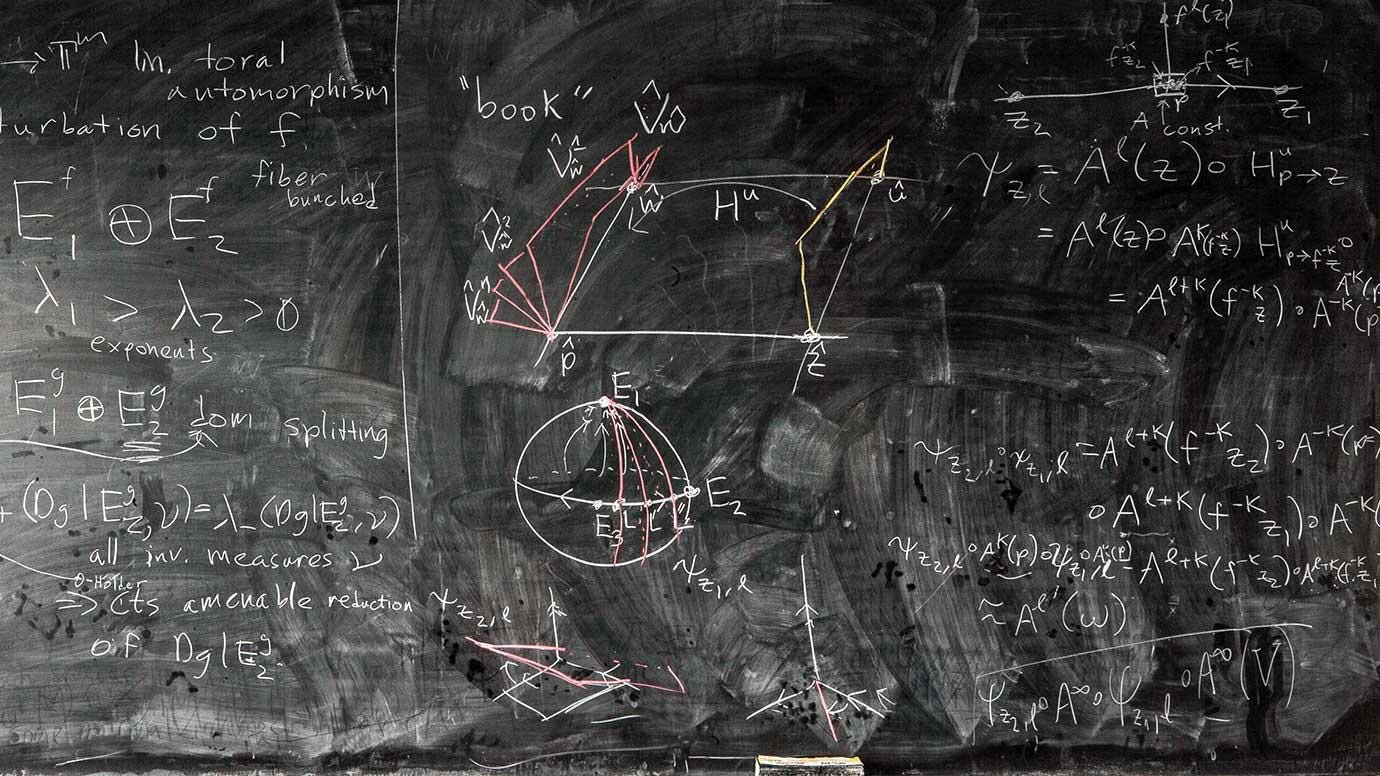
To me, one of the greatest historical puzzles is why the Cold War was even a contest. Consider it a mirror image of the Needham Question: Joseph Needham famously wondered why it was that, despite having a vastly larger population and GDP, Imperial China nevertheless lost out scientifically to the West. (I examined this question at some length in this review.) Well, with the Soviets it all went in the opposite direction: they had a smaller population, a worse starting industrial base, a lower GDP, and a vastly less efficient economic system. How, then, did they maintain military and technological parity1 with the United States for so long?
The puzzle was partly solved for me, but partly deepened, when those of us who grew up in the ‘90s and ‘00s encountered the vast wave of former Soviet émigrés that washed up in the United States after the fall of communism. Anybody who played competitive chess back then, or who participated in math competitions, knows what I’m talking about: the sinking feeling you got upon seeing that your opponent had a Russian name. These days, the same scenes are dominated by Chinese and Indian kids. But China and India have large populations — the Russians were punching way above their weight, demographically speaking. Today, those same Russians are all over Wall Street and Silicon Valley and Ivy League math departments, still overrepresented in technical fields. What explains it? Are Russians just naturally better at math and physics?
When I related these questions to an Ashkenazi-supremacist friend of mine, he immediately suggested that “maybe it’s because they’re all Jewish”. (I’ve noticed that the most philosemitic people and the most antisemitic people sometimes have curiously similar models of the world, they just disagree on whether it’s a good thing.) My friend’s question wasn’t crazy, since there are definitely times when asking “were they all Jewish?” yields an affirmative answer. But in this case I had to disappoint him with the knowledge that many of these Russian math and chess superstars were gentiles.2 What’s more, by the ’60s and ’70s the Soviets had an entire discriminatory apparatus dedicated to keeping Jews out of the scientific establishment, so it would be impressive indeed if they were the foundation of its success.
Another possible explanation actually hinges on the relative poverty of the Soviet Union. Assume there are a lot of people out there with natural mathematical talent, but who given their druthers would major in underwater basket-weaving instead. The United States, because it’s so wealthy, can afford to “waste” a huge proportion of our talented population on humanities, arts, and other stuff that doesn’t involve you sitting in the school library until 3am. In other words, not going into a technical field is a form of luxury, which America can afford to consume. The Soviets, rather like the Chinese today, were forced by their underdog status to allocate human capital more efficiently (and had the authoritarian means to do so by force if necessary). This theory is related to the curious fact that, on average, the more feminist your society, the fewer women there are in math and science — which makes total sense if you assume that on average women are good at math but uninterested in it.
The thing is, the émigré superstars I encountered didn’t seem at all grudging or resentful about their studies. If anything it was the opposite. I’ve previously complained about how much I hate Russian mathematician Edward Frenkel’s3 book, but one thing it gets across well is just how important passion is to being a great mathematician, and passion was the thing the émigrés seemed to have a surfeit of. In college, the joke was that seminars by American professors would last an hour, whereas seminars by Russian professors would turn into boisterous debates lasting all night. People have been writing for centuries about Russians having a tendency towards “maximalism” — whether aesthetic or ideological or anything else. Maybe a culture-wide commitment to not doing anything by half-measures explains it?
1. There are scientific sub-disciplines where even at the end the Soviets had a clear lead, including several fields of math. Even crazier, there are sub-disciplines where we have not yet gotten back to where the Soviets were (for instance phage therapy).
2. Undeterred, my friend pointed out that many modern Russian gentiles have significant Jewish ancestry. The Soviets actively promoted mixed marriages, to the point where in some cities the average urban gentile Russian is as much as 25% Jewish. I still don’t think this explains Soviet scientific prowess, but it’s an interesting data point because the most highly urbanized areas are the ones where most of the mathematicians (and most of the émigrés) came from.
3. Before you ask, I looked it up and Frenkel is half Jewish, half gentile. I will leave it to you whether you count that as evidence for or against my friend’s theory.
Occupation of Germany, Plunder and Enslavement?
World War Two
Published 12 Oct 2024The Allies’ occupation of Germany was marked by competing visions for its future, ranging from France’s focus on security to the Soviet push for reparations. This episode dives into the complex negotiations that determined Germany’s borders, industrial disarmament, and economic management, all of which would shape Europe’s post-war order and fuel the East-West divide.
(more…)
Bismarck, Moltke, and the Kaiser’s General Staff
From Bruce Gudmundsson’s weekly Milstack recommendations, here’s part of an essay on Kaiser Wilhelm and some of the important men in his government in the lead-up to the First World War:
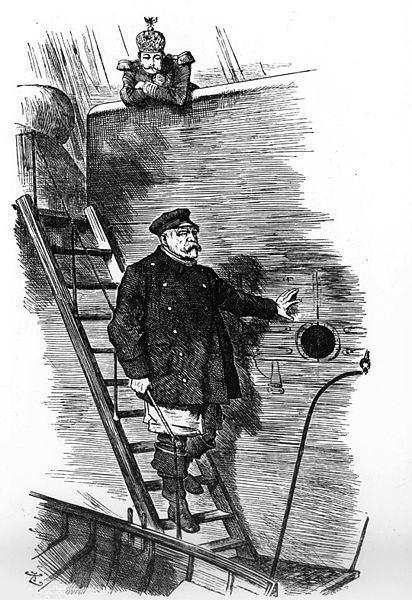
“Dropping the Pilot”. Caricature by Sir John Tenniel (1820-1914), first published in the British magazine Punch, March 1890. Showing German Emperor Wilhelm II and the departing Chancellor Otto von Bismarck.
By the 1870s, Germany was the dominant land power in Europe. It had defeated the preeminent powers on the continent and seemed poised for an era of dominance not seen since Napoleon. However, how quickly Germany’s power was checked and ultimately fell is a cautionary tale about the limits and consequences of the predominance of the military profession. Victories in the war had propelled the Prussian Officer Corps to the status of “demigods” that now held “unquestioned authority and legitimacy” in German politics and society.1 But this status meant they had carte blanche over war planning and became increasingly influential in politics. This produced a civil-military relationship in which, “leaders subordinated political ends to military ends; considerations of war dominated considerations of politics”.2 The German General staff was rapidly departing from Clausewitz’s teachings regarding the primacy of policy.
By the 1880s, Otto von Bismarck and Helmuth von Moltke, the key architects of German unification both politically and militarily, were nearing the end of their distinguished careers. Now, a younger generation of German nationalists and military officers were chomping at the bit to further expand Germany’s power and formed the engine of what some have called, “a political doomsday machine”.3 The militarists believed preemptive war was the uniform solution to the rising power of Germany’s neighbors. Likewise, success in the wars of unification had led nationalists to dream of a greater Germany “from Berlin to Baghdad”.4 Even in his late career, Bismarck had the experience and gravitas to stymie attempts to initiate a “preventative” war. For instance, in 1887, the senior military leadership cooked up a scheme to convince the Kaiser to declare war on Russia on a whim; they also encouraged Austria-Hungary to do the same. Bismarck stopped it before it became a crisis. But it was a bad omen and showed how the military leadership was increasingly out of control.
Bismarck and Moltke had their issues, but they eventually built a strong relationship, leading the Chief of the General Staff to discuss prospective war plans with the Chancellor, something that had not occurred regularly before and a sign of good civil-military relations. Moltke continued to hold his role until 1888 when he retired. His thinking in his late career had evolved beyond the axiomatic focus on total victory.5 The Battle of Sedan was as complete a victory as one could imagine, yet it did not end the Franco-Prussian War. The ensuing experience of the Volkskrieg (“People’s War”) which encompassed fighting a tough insurgency in France had disillusioned him with the idea of a short war. In one of his final speeches in the Reichstag in 1890, he stated of the next war that,
If this war breaks out, then its duration and its end will be unforeseeable. The greatest powers of Europe, armed as never before, will be going into battle with each other; not one of them can be crushed so completely in one or two campaigns that it will admit defeat, be compelled to conclude peace under hard terms, and will not come back, even if it is a year later, to renew the struggle. Gentlemen, it may be a war of seven years or thirty years’ duration — and woe to him who sets Europe alight, who [first] puts the fuse to the powder keg!6
Moltke now conceded the need for diplomacy to find a resolution after the army did what it could. “Total victory” was no longer the objective. Unfortunately, by then, the aged Field Marshal was isolated in his work on operational plans and studies. The General Staff had been educated in his original concepts which had been inculcated in the official histories of the wars of unification. Moltke’s genius, shown in the breadth of his thinking, was never absorbed by the institution.
German military historian Gerhard Ritter would distinguish Moltke from his successors for his lack of fatalism. While the Elder Moltke often pressed for preventative war, he made the argument from the military point of view, i.e. that war would be more advantageous now rather than later.7 Moltke was not overly disturbed when Bismarck quashed proposals of preventative war. In contrast to his successors, Moltke was confident in his ability to meet the challenges of war whenever it arrived. He did not view the political situation as intractable. If the statesman did not want to utilize an opportunity for an easy victory in a preventative war, that was the business of the statesman. In other words, Moltke accepted Bismarck’s “right to be wrong”. A working relationship was therefore possible with the statesman who described his policy as “the most dangerous road last”.8
In the final years of their careers, both Bismarck and Moltke foresaw the dangers of a Germany where military prerogatives began to overshadow political ones. Bismarck, the architect of Germany’s rise, understood that the state’s survival hinged not just on military prowess but on the balancing of diplomatic relationships and restrained use of force. Moltke, though a staunch advocate of military autonomy, ultimately recognized the futility of unchecked military power in the context of modern warfare. Their eventual departures left a vacuum, filled by more aggressive military leaders, weak chancellors, and a feckless Kaiser. The political flexibility that had defined Germany’s rise came to be disregarded. As the officer corps grew more entrenched in its dominance, the military’s rigid and totalizing mindset contributed to Germany’s plunge into one of the most destructive conflicts in human history.9
1. Jack Snyder, “Civil-Military Relations and the Cult of the Offensive, 1914 and 1984”. International Security 9 (1) (1984).
2. Keir A. Lieber, “The New History of World War I and What It Means for International Relations Theory”. International Security 32 (2) (2007): 161.
3. Henry Kissinger, Diplomacy (New York: Simon & Schuster, 1995), 168.
4. For more on ultranationalist critique of the German government see Stig Förster, Der Doppelte Militarismus: Die Deutsche Heeresrüstungspolitik Zwischen Status-Quo-Sicherung Und Aggression, 1890-1913, Institut Für Europäische Geschichte Mainz: Veröffentlichungen Des (F. Steiner Verlag Wiesbaden, 1985).
5. For further detail, see Gerhard P. Gross, The Myth and Reality of German Warfare: Operational Thinking from Moltke the Elder to Heusinger.
6. Stig Förster, “Dreams and Nightmares: German Military Leadership and the Images of Future Warfare, 1871-1914”. In Anticipating Total War, The German and American experiences, 1871-1914, 343-376 (Cambridge: Cambridge University Press. 2013), 347.
7. A preventative war, in this context, is a conflict initiated to preemptively counter an anticipated future threat or to prevent a rival power from becoming stronger in the long term.
8. Gerhard Ritter, The Sword and the Scepter: The Problem of Militarism in Germany (Coral Gables: University of Miami Press, 1973), vol. 1 of 4, 243.
9. For more on Imperial German military culture, see Isabel Hull, Absolute Destruction: Military Culture and the Practices of War in Imperial Germany (Ithaca, NY: Cornell University Press, 2005).


