
Tasting History with Max Miller
Published 25 Feb 2025The original Girl Scout sugar cookies, some round, some cut with my 1950s Girl Scout cookie cutter (post-baking)
City/Region: United States of America
Time Period: 1922During the early years of Girl Scout cookies, the girls would bake the cookies themselves. This recipe, from The American Girl, the magazine published by the Girl Scouts, is from the first year of the official cookie sales in 1922. The scouts would continue to bake the cookies they sold for 12 more years until the task was turned over to commercial bakeries in 1934.
These are fairly standard sugar cookies, but they are delicious. They bake up nice and crispy, and the sugar sprinkled on top is a lovely touch. I could easily see myself eating dozens of them without even noticing.
ATTENTION SCOUTS! FORWARD MARCH! BAKE! SELL!
This is your chance to show how much Scouting means to you.
GIRL SCOUT COOKIES
1 cup of Butter, or substitute
1 cup of sugar
2 tablespoons of milk
2 eggs
1 teaspoon of vanilla
2 cups of flour
2 teaspoons of baking powderCream butter and sugar, add well beaten eggs, then milk, flavoring, flour and baking powder. Roll thin and bake in quick oven. (Sprinkle sugar on top.) This amount makes six to seven dozen.
— The American Girl magazine, 1922.
July 29, 2025
The Original Girl Scout Cookie Recipe from 1922
July 19, 2025
Pineapples – The Most Expensive Fruit in History
Tasting History with Max Miller
Published 18 Feb 2025Mini tarts with a buttery crust and syrupy pineapple and wine filling
City/Region: England
Time Period: 1736For hundreds of years, the pineapple was a status symbol for the very wealthiest of European royalty and nobility. A single pineapple could cost $10,000 in today’s money, and pineapples turned up in architecture, tableware, paintings, clothing, and accessories. Many knew what pineapples looked like, but few had actually tasted one.
And that’s a real shame, because these tarts are absolutely delicious. The crust is good, but the real showstopper is the filling. Pineapple is the main flavor, but the wine gives it a wonderful complexity. You could even make just the filling and serve it with some whipped cream or ice cream and it would be amazing. If you have any leftover syrup, it would go great in some cocktails.
To make Paste. From Mrs. Peasly.
…If you would have a sweet Paste; then take half a Pound of Butter, and rub it into about a Pound of Flour, with two or three Ounces of double-refined Sugar powder’d, and make it a Paste, with cold Milk, some Sack and Brandy. This is a very good one.To make a Tart of Ananas, or Pine-Apple. From Barbadoes.
Take a Pine-Apple, and twist off its Crown: then pare it free from the Knots, and cut it in Slices about half an Inch thick; then stew it with a little Canary Wine, or Madera Wine, and some Sugar, till it is thoroughly hot, and it will distribute its Flavour to the Wine much better than any thing we can add to it. When it is as one would have it, take it from the Fire; and when it is cool, put it into a sweet Paste, with its Liquor, and bake it gently, a little while, and when it comes from the Oven, pour Cream over it, (if you have it) and serve it either hot or cold.
— The Country Housewife and Lady’s Director by R. Bradley (6th Edition), 1736
July 12, 2025
Feeding Emperor Augustus Caesar – Handmade Roman Cheese
Tasting History with Max Miller
Published 11 Feb 2025Fresh handmade cheese as Augustus might have enjoyed it with some bread and figs
City/Region: Rome
Time Period: 1st CenturyAugustus, a man meticulous about his public image and about consolidating power as the first emperor of Rome, had rather simple tastes when it came to food. Suetonius, a Roman historian from the first and second centuries, wrote in The Lives of the Twelve Caesars that Augustus “preferred the food of the common people, particularly the coarse sort of bread, small fishes, fresh, moist, hand-pressed cheese, and green figs of the second crop”.
This recipe from the first century does indeed make a fresh, moist, hand-pressed cheese that is slightly nutty and is a clear predecessor to modern mozzarella. It’s just as historically accurate if you make it with goat, sheep, or cow milk, you just need to make sure that the milk is pasteurized, not ultra-pasteurized, and that it’s non-homogenized.
Note that this recipe is vegetarian if you use vegetable rennet.
Cheese should be made of pure milk which is as fresh as possible … It should usually be curdled with rennet obtained from a lamb or a kid … and equally well with fresh sap from a fig-tree … The least amount of rennet that a pail of milk requires weighs a silver denarius … It is sprinkled with pounded salt … Some crush green pine nuts and mix them with the milk and curdle it in this way … Their method of making what we call “hand-pressed” cheese is the best-known of all: when the milk is slightly congealed in the pail and still warm, it is broken up and hot water is poured over it, and then it is shaped by hand.
— De re rustica by Columella, 1st century
July 5, 2025
Surviving a Medieval Winter
Tasting History with Max Miller
Published 4 Feb 2025Hearty wheat berry porridge thickened with egg yolks and tinted with saffron
City/Region: France
Time Period: c. 1300There was little in the way of fresh food during a medieval winter. Meat, if you could get it, was salted, brined, or smoked (or some combination of the three). During some particularly harsh winters in the beginning of the 1300s, rivers froze for months at a time, making it impossible for water-powered mills to grind wheat into flour.
At such a time, this hearty porridge would be just the ticket. Everyone ate frumenty during the Middle Ages, from royalty to peasants, though wealthier people would add expensive spices and sugar and serve it with venison.
This frumenty is made of whole wheat berries and is a rib-sticking, satisfying meal all by itself. The wheat berries retain some wonderful texture so that it’s not just a mush, and egg yolks add richness and flavor. It’s more flavorful than I thought it would be, but I’d add some cinnamon and sugar.
Formentee
Take wheat, prepare it, wash it very well, and cook it in water. When it is cooked, drain it. Take cow’s milk and bring it to a boil, add the wheat, and boil it again stirring frequently. Remove it from the fire, stir often, and add in plenty of beaten egg yolks, and it should not be too hot when they are added. Some people add spices, a little saffron and venison stock. It should be yellowish and quite thick.
— Le Viandier de Taillevent by Guillaume Tirel, c. 1300
July 3, 2025
Nicolas Romero, the inventor who introduced “Spag Bol” to England
In the latest Age of Invention newsletter, Anton Howes describes the career of a most inventive man, Signior Nicolas Romero originally of Naples … maybe:
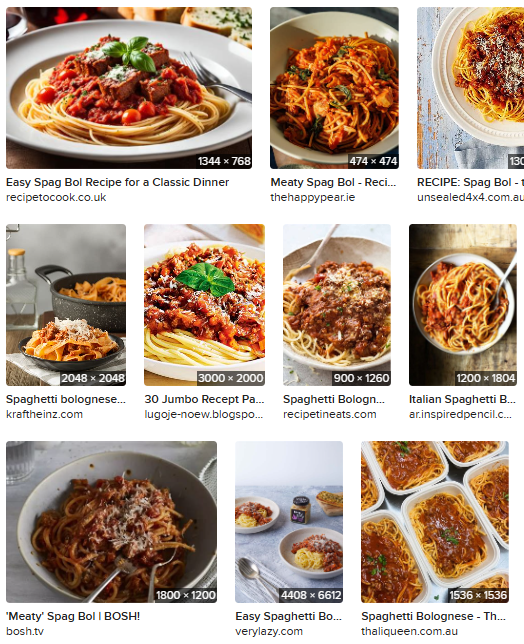
The British interpretation of Spaghetti Bolognese — widely known as “spag bol” — is a pasta dish with a meat and tomato sauce.
The person who tried to bring these coal balls or briquettes to London was one Nicolas Romero — a name that has been almost entirely and undeservedly forgotten. Indeed, the one other historian to have ever noticed a handful of his achievements was unable to find his first name. And so I get the pleasure of being able to give a few glimpses of his remarkable story for the first time in over four hundred years.
Nicolas Romero seems to have originally hailed from the Spanish Habsburg possessions in Italy, most probably Naples. He was personally acquainted with Cardinal Granvelle, who was the regent in Naples from 1570 to 1575, and may have been involved in the Spanish attack on Tunis in 1573-4, where he picked up some siege techniques used by the Ottoman Turks. Romero then moved to Spanish-ruled Milan, where he was apparently the close confidant of one “Dr Sirnige” or “Dr Siring” (as it sounded to an English ear), who received a hefty reward for discovering a “defensative” or preventative treatment against a plague that killed some 15% of the city’s population in 1576-8. Then, Romero appears to have gone to the Low Countries, much of which was in outright revolt against Spain, where he picked up the details of how coal balls were made at Liège.
Then, astonishingly, he suddenly switched sides. Perhaps having fallen afoul of the Inquisition, or perhaps having converted to Protestantism, from some point in the 1580s he was only ever involved with the manifold enemies of Spain. He moved to England, even partaking — and I suspect investing — in its unsuccessful invasion of Spanish-ruled Portugal in 1589, where he was captured and held in “a very cruel prison” for ten months until managing to escape.
Somehow making his way back to London, Romero there befriended the barrister, alchemy enthusiast, and wannabe inventor Hugh Plat. It was via Plat, who plied all of his acquaintances for their technological know-how, and recorded his sources in his manuscripts, that Romero introduced various innovations to England.
Romero told him of how mere bags of linen or canvas, when filled with whatever dirt or sand was to hand, could be used to instantly create a “musket-proof” trench — in essence, the modern sandbag — which had been used by the Turkish army in their successful siege of La Goleta near Tunis. Plat saw a wider potential too, hoping to use these sandbags in reclaiming land from both marsh and sea.
In 1593, when a deadly plague gripped London, Romero gave Plat the recipe of Dr Sirnige’s defensative pills, as used in Milan, and together with the apothecary John Clarke they produced and distributed hundreds of them, including to Queen Elizabeth I and her entire Privy Council, apparently with great success. Clarke published their case notes under the boastful title The Trumpet of Apollo Sounding out the Sweet Blast of Recovery in 1602, though it was a little premature. Just a year later plague returned to London with a vengeance.
Most enduringly of all, Romero told Plat the details of making pasta, which Plat then made and marketed as a cheap and long-lasting food for the English armed forces. What Plat called his “macaroni” even won plaudits from Sir Francis Drake, and in 1594 he published the first known depiction of a pasta extruder. To Nicolas Romero, then — a name never mentioned by even specialist historians — belongs the considerable distinction of introducing the English to pasta. He is the patron saint of “Spag Bol” (if you are Italian, and do not wish to suffer a heart-attack, under no circumstances should you look up this term).
Romero was full of other ideas too. Romero gave Plat his methods for preserving wine, chestnuts, butter, turnips, and quince. He revealed to him the principle behind the diving bell; how to make a metal rotisserie oven; how to catch crayfish; how to engrave glass; how to make vellum paper translucent; how to keep snow from melting over the course of a year by storing it underground; and how few drops of sulphuric acid might be added to a ship’s water supply to keep it fresh for longer. Along with various recipes for Italian salads, and how to make smoke grenades, he even told him how to raise water using atmospheric pressure — perhaps the earliest record in England of what would eventually be developed into the steam engine. In papers seized by the government from the soldier Sir Thomas Arundel, who was arrested for being a Catholic in 1597, are mentions of not just of Romero’s sandbag “trench”, but “also his bridge, his boat to go without wind or sail, and his device against horsemen” — which according to Plat’s manuscripts was a kind of rest for muskets that could also serve as a pike.
Throughout the 1590s, Plat tried to commercialise some of Romero’s inventions, including a method to replace the expensive copper vessels for boiling water for home-brewing with a supposedly more efficient tub made of treated wood; some kind of light, portable water pump; and the Liège-style coal balls or briquettes. But with little success. By 1594 Romero was running low on money and had given up on trying to make it in England, having apparently passed up various opportunities to serve some German princes. So he left Plat in London to keep trying to sell his inventions, while he himself went to Holland to become an engineer in the service of Count Maurice of Nassau, who was fighting to free the Netherlands from Spanish rule.
While in the Netherlands Romero patented his water pump and the wooden boiling tub — an invention apparently “very much needed in the present time of cities under siege”, for whom fuel supplies were scarce. And having gained Count Maurice’s trust and backing, he wrote to one of Elizabeth I’s favourites, the Earl of Essex, in a fresh bid to get the two inventions, along with the coal balls, patented in England. Naturally, Hugh Plat served as his go-between.
Despite such allies, however, they once again failed. Romero would patent more inventions in the Netherlands in 1598 — a means of reducing the friction on the axles of carts and carriages, and a winch for more easily lifting heavy items like anchors and cannon — but he wasn’t to get a patent in England until ten years later in 1608. Just months before Plat’s death, Romero, with one James Jackson, presumably an investor, was finally granted an English patent for some kind of universally-applicable method of saving fuel. Unfortunately, the wording of the patent gives no indication whatsoever of what it involved.
I’ve traced no further record of Romero — if anyone is familiar with German, Dutch, Italian or Spanish sources and has ever come across the name, please do get in touch
June 28, 2025
The Original Beef Stroganoff of Imperial Russia
Tasting History with Max Miller
Published 28 Jan 2025Tender cubes of beef seasoned with allspice and served with a delicious sour cream and mustard sauce
City/Region: Russia
Time Period: 1871Beef stroganoff has certainly gone through a lot of changes since this recipe was printed in 1871. Nowadays mushrooms are often added, and the allspice has pretty much disappeared, but I think it’s a delicious and unusual flavor for modern palates. The mustard flavor is present in the sauce without being super mustardy, and the beef is tender and flavorful.
This tasty dish comes together fairly quickly after the meat has rested with the seasonings, so I definitely recommend giving this a try.
Two hours prior to cooking take two funts of tender beef, cut in small cubes, and sprinkle with salt and allspice; take 30 grams butter and 1 tablespoon of flour and mix, lightly fry in a skillet, then mix with 2 glasses of stock, add 1 teaspoon of Sarepska mustard, a little bit of pepper, mix well, bring to a boil, then strain and add 2 tablespoons of the best fresh sour cream. Then fry the beef in butter, then add it to the sauce, boil again, and serve.
— Podarok molodym khozyaykam (A Gift to Young Housewives) by Elena Molokhovets, 1871
June 21, 2025
Cheese Gnocchi from Medieval Italy
Tasting History with Max Miller
Published 21 Jan 2025Groove-less cheese-based gnocchi from before potatoes were introduced
City/Region: Italy
Time Period: 14th CenturyGnocchi has been around for hundreds of years, and unsurprisingly, the gnocchi of the 14th century was quite a bit different from what we’re used to today. Before the potato was even a twinkle in Italy’s eye, cheese was a common base for the dough.
The first mention of grooves on gnocchi isn’t until 1570 when Bartolomeo Scappi writes about them, so this gnocchi is groove-less. The texture is very different from modern versions. It’s more crumbly, but that could depend on the kind of cheese that you use. Whatever you use, make sure it’s a cheese that you like, because this is essentially boiled cheese held together with some flour and egg. I may not eat a whole bowl of this, but it’s still quite nice.
If you want gnocchi. Take fresh cheese and pound it; then take flour and mix it with egg yolk in the manner of migliacci. Put a pot filled with water on the fire and when it boils, put the mixture on a board and spoon it off into the pot, and when they are cooked, place them on dishes and sprinkle on plenty of grated cheese.
— Fragment of a book on cooking from the 14th century
June 18, 2025
Canada’s Supply Management system – protecting us from cheaper milk, eggs, and chicken
On the social media site formerly known as Twitter, The Food Professor celebrates the latest achievement in Canada’s omni-competent supply management system:
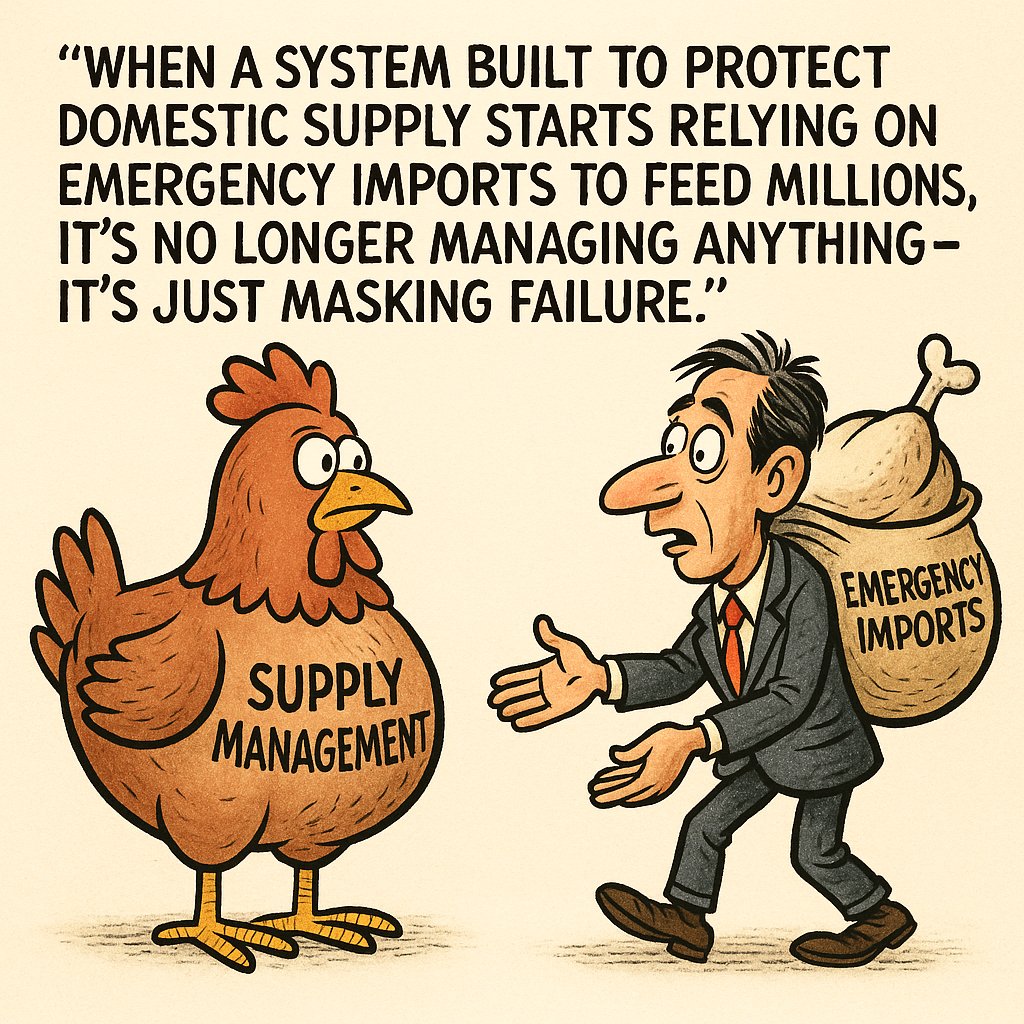
The Chicken Crisis Supply Management Won’t Admit
Canada’s supply management system—once heralded as a pillar of food security and agricultural self-sufficiency—is failing at its most basic function: ensuring reliable domestic supply.
According to the latest figures from the Canadian Association of Regulated Importers (CARI), Canada imported over 66.9 million kilograms of chicken as of June 14 — a 54.6% increase from the same period last year. To put that in perspective, this volume could feed 3.4 million Canadians for an entire year, based on per capita poultry consumption. That’s roughly 446 million individual meals — meals that, under a tightly managed quota system, were meant to be produced domestically.
To be fair, the avian influenza outbreak in Canada has disrupted poultry production, and it partially explains some of the shortfall. But even accounting for that disruption, the numbers are staggering. Imports under trade quotas established by the WTO, CUSMA, and CPTPP are all running at or near pro-rata levels, signaling not just opportunity — but urgency. Supplementary import permits — meant to be emergency tools — have already surpassed 48 million kilograms, exceeding the total annual import volumes of some previous years. This is not a seasonal hiccup. It is systemic failure.
Canada’s poultry sector is supposed to be insulated from global volatility through supply management. Yet internal shocks — like the domestic avian flu outbreak — have shown how fragile the system truly is. When emergency imports become routine, we must ask: what exactly is being managed?
The original intent of supply management was to align production with domestic demand while stabilizing prices and farm incomes. But that balance is clearly off. The A195 production period, ending May 31, 2025, showed one of the worst underproduction shortfalls in more than 50 years. Producers remain constrained by rigid quota allocations, while consumers continue to face rising poultry prices. More imports. Higher costs. Diminished confidence.
Some defenders will insist this is an isolated event. It’s not. This is the second week in a row Canada has reached pro-rata import levels across all chicken categories. Bone-in and processed poultry products — once minor parts of emergency programs — are now central to keeping the market supplied.
The dysfunction extends beyond chicken. Egg imports under the shortage allocation program have already topped 14 million dozen, up 104% from last year. Just months ago, Canadians were criticizing high U.S. egg prices — yet theirs have fallen. Ours haven’t.
All this in a country with $30 billion in quota value, intended to protect domestic production and reduce reliance on imports. Instead, we are importing more — and paying more.
Meanwhile, Bill C-202, now before the Senate, aims to shield supply management from future trade negotiations, making it even harder to adapt or reform. So we must ask: is this what we’re protecting? A system that fails to meet demand, relies on foreign supply, and costs Canadians more at the checkout?
Our trading partners are seizing the moment. Chile, for instance, has increased its chicken exports to Canada by over 63%, now representing nearly 96% of CPTPP-origin imports. While we double down on rigidity, others are gaining long-term footholds in our market.
It’s time to face the facts. Supply management no longer guarantees supply. And when a system meant to ensure resilience becomes the source of fragility, it’s no longer an asset — it’s an economic liability.
May 25, 2025
Comparing Japan’s supply management system to the Canadian version
Colby Cosh considers the fate of a Japanese government minister who accidentally told the truth about a subject near and dear to Japanese consumers’ hearts (well, stomachs, actually):
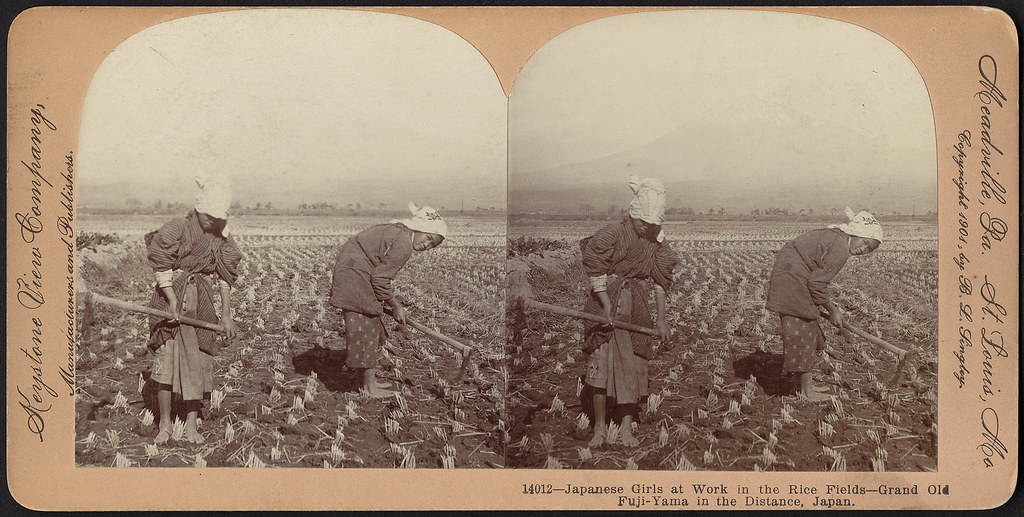
“Japanese Girls at Work in the Rice Fields – Grand Old Fuji-Yama in the Distance, Japan” by Boston Public Library is licensed under CC BY 2.0 
 .
.
I’m sure some of you saw Wednesday’s NP headline for an Associated Press wire story: “Japan’s agriculture minister resigns after saying he ‘never had to buy rice’” AP’s Mari Yamaguchi explained this international-news nugget. A cabinet minister in a shaky minority government made a flippant comment indicating that he was light-years out of touch with ordinary people facing high grocery costs in a developed country.
Taku Eto’s political survival thus became impossible within a matter of hours, and his prime minister hastily swapped a congenial young star into the agriculture portfolio. Japan is a constitutional monarchy with a system of parliamentary government more or less like ours, so there’s nothing incomprehensible about any of this to a Canadian …
… but, of course, one almost couldn’t help flashing back to our recent election campaign, wherein the prime minister had half-boasted to a Radio-Canada reporter that he doesn’t buy his own groceries and has no earthly idea how the stuff in his fridge gets there. It struck me at the time that this was a classic mistake for an electoral neophyte like Mark Carney. Fans of the legendary American columnist Michael Kinsley will surely think of it as a “Kinsley gaffe”, i.e., an obviously true statement that is nevertheless bound to get a politician in trouble.
[…]
Eto was talking about rice because the prices for it in Japan have gone through the roof, the clouds and the stratosphere. And rice plays a role in the Japanese culture and diet for which there is no analogue in omnivorous Canada. For precisely that reason, rice is supply-managed there in much the same way our dairy, eggs and poultry are — i.e., through confiscatory tariffs on foreign products, along with a mafia of politically powerful producer cooperatives who operate under supply quotas.
If you read Canadian news, you can recite the effects of this, whether or not you’re capable of finding Japan on a map of Japan. Their supply-management system is, like ours, a major headache for counterparties in trade negotiations. Their farmers, like Canada’s, are dwindling in number and aging out of the business. They are sometimes paid to destroy crops. Farm costs for machinery and supplies are subject to inflation. And sometimes the system for domestic demand forecasting blows a tire.
It’s a constant high-wire act for Japanese governments, who still have official responsibility for the national rice supply under wartime statute. If store-shelf prices get too high, and consumers start to make trouble, the cabinet must consider loosening tariff barriers and releasing rice from the national strategic reserve. The LDP ministry has done both these things in the face of hallucinatory prices, and so the farmers are now just as ticked off as the buying public.
May 19, 2025
QotD: Food for Medieval English peasants
The most common everyday sort of meal in wood-burning Britain was what we might call pottage or frumenty, a thick moist dish in which whole grains or pulses are brought to a boil and then simmered until as much liquid as possible has been absorbed. Think risotto but with less stirring. The simplest version was very simple indeed — wheat or barley or peas cooked in water with whatever fresh vegetables or herbs were available — but if you had the means you could add anything that was in season: meat, fish, butter or cheese, milk or cream, eggs, and even delicacies like sugar, almonds, or imported dried fruits.1 In fact most medieval dishes were thick and sticky, exactly the sort of thing I like to give my toddlers because it stays on even the most inexpertly wielded spoon, and they’re extremely well-adapted to cooking over wood. Just get your pot boiling over a big fire, then as the flames die down your dinner will simmer nicely. You’ll have to stir it, of course, to keep it from sticking to the pot, but you have to come back anyway to feed the fire. You can cook like this over coal, but it’s difficult: a coal fire stays hot much longer, so moderating the temperature of your frumenty requires constantly putting your pot on the grate and taking it off again. It’s far simpler to just add more liquid and let it all boil merrily away, with the added bonus that the wetter dish needs much less stirring to keep it from sticking. With the switch to coal, boiled dinners — soups, meats, puddings, and eventually potatoes — became the quintessentially English foods.2
Jane Psmith, “REVIEW: The Domestic Revolution by Ruth Goodman”, Mr. and Mrs. Psmith’s Bookshelf, 2023-05-22.
1. We’re used to thinking of plants as being seasonal, but until quite recently animal products were seasonal too: chickens won’t lay in the winter without artificial lighting, cows stop giving milk when their calves reach a certain age, and generally one would only slaughter an animal for its meat at the right time of year. Geese, for instance, were typically eaten either as a “green goose”, brought up on summer grasses and slaughtered as soon as it reached adult size around the middle of July, or a “stubble goose”, fattened again on what remained in the fields after harvest and eaten for Michaelmas (in late September). Feeding a goose all autumn and half the winter only to eat it for Christmas would have been silly.
2. It’s also typical of New England, which makes sense; the New Englanders by and large came from East Anglia, which is right on the Newcastle-London coal route and a region that adopted coal cookery relatively early.
May 13, 2025
Gout – The Disease of Kings
Tasting History with Max Miller
Published 7 Jan 2025Sliced roast venison with a spiced red wine sauce and a sprinkling of salt
City/Region: England
Time Period: 1723Gout has plagued people for thousands of years, but mostly the rich people. It often follows an indulgent diet full of red meat and alcohol, so for a long time only the rich had regular access to a gout-inducing food.
This recipe from 1723 is delicious, as well it ought to be as it flies in the face of the rules you should follow to prevent gout with venison (red meat) served with a wine sauce (alcohol). Venison is best when it’s not cooked past medium, and this recipe is tender and flavorful with the rosemary coming through. The sauce could really go on anything, and you could swap out the red wine for something different. Port would be delicious, though I would reduce the amount of sugar a bit.
I don’t expect most people will have a larding needle on hand, and I think you could probably skip the larding and still end up with a flavorful, tender dish.
To roast a Haunch of Venison.
First lard it with Bacon, and stick it thin with Rosemary; then roast it with a brisk Fire; but let it not lye too near it; bate it with fresh Butter; then boil a Pint of Claret with a little beaten Ginger, Cinnamon and Sugar, with a half a dozen whole Cloves, and some grated bread; and when they have boil’d enough, put in a little Salt, Vinegar and fresh Butter; dish your Venison, strew Salt about the Dish, and serve it with this Sauce.
— The Cooks and Confectioners Dictionary: Or, the Accomplish’d Housewives Companion by John Nott, 1723
April 28, 2025
Making School Cafeteria Pizza from the 1980s & ’90s
Tasting History with Max Miller
Published 24 Dec 2024A rectangular slice of cheese pizza, part of a complete meal in 80s and 90s schools in the US.
City/Region: United States of America
Time Period: 1988Food in US schools from when I was growing up in the 80s and 90s were, to put it mildly, not the healthiest. Either there was actual fast food available, or many meals mimicked fast food favorites, like this cheese pizza.
One bite of this pizza brought back a flood of memories. It is almost exactly how I remember it from middle school, and I highly recommend making it to anyone who has rectangle pizza nostalgia. I chose to make it with the pourable crust because I was intrigued, but after tasting it, I’m convinced it was the same one that my school used.
(more…)
April 26, 2025
Lies, damned lies and government statistics
Francisco at Small Dead Animals linked to this interesting examination of the difference between the official inflation rate and the actual inflation ordinary Canadians are coping with:

Great news! We’ve brought inflation back under control and stuff is now only costing you 2.4 percent more than it did last year!
That’s more or less the message we’ve been hearing from governments over the past couple of years. And in fact, the official Statistics Canada consumer price index (CPI) numbers do show us that the “all-items” index in 2024 was only 2.4 percent higher than in 2023. Fantastic.
So why doesn’t it feel fantastic?
Well statistics are funny that way. When you’ve got lots of numbers, there are all kinds of ways to dress ‘em up before presenting them as an index (or chart). And there really is no one combination of adjustments and corrections that’s definitively “right”. So I’m sure Statistics Canada isn’t trying to misrepresent things.
But I’m also curious to test whether the CPI is truly representative of Canadians’ real financial experiences. My first attempt to create my own alternative “consumer price index”, involved Statistics Canada’s “Detailed household final consumption expenditure“. That table contains actual dollar figures for nation-wide spending on a wide range of consumer items. To represent the costs Canadian’s face when shopping for basics, I selected these nine categories:
- Food and non-alcoholic beverages
- Clothing and footwear
- Housing, water, electricity, gas and other fuels
- Major household appliances
- Pharmaceutical products and other medical products (except cannabis)
- Transport
- Communications
- University education
- Property insurance
I then took the fourth quarter (Q4) numbers for each of those categories for all the years between 2013 and 2024 and divided them by the total population of the country for each year. That gave me an accurate picture of per capita spending on core cost-of-living items.
Overall, living and breathing through Q4 2013 would have cost the average Canadian $4,356.38 (or $17,425.52 for a full year). Spending for those same categories in Q4 2024, however, cost us $6,266.48 – a 43.85 percent increase.
By contrast, the official CPI over those years rose only 31.03 percent. That’s quite the difference. Here’s how the year-over-year changes in CPI inflation vs actual spending inflation compare:
As you can see, with the exception of 2020 (when COVID left us with nothing to buy), the official inflation number was consistently and significantly lower than actual spending. And, in the case of 2021, it was more than double.
Since 2013, the items with the largest price growth were university education (57.46 percent), major household appliances (52.67 percent), and housing, water, electricity, gas, and other fuels (50.79).

April 17, 2025
Canadian labelling regulations save us from “too many vitamins”
In the National Post, Jesse Kline points out that Canadian food label regulations have become so nit-picky that they prevent safe and accurately labelled foods from Australia, Britain, and other countries from being sold here:
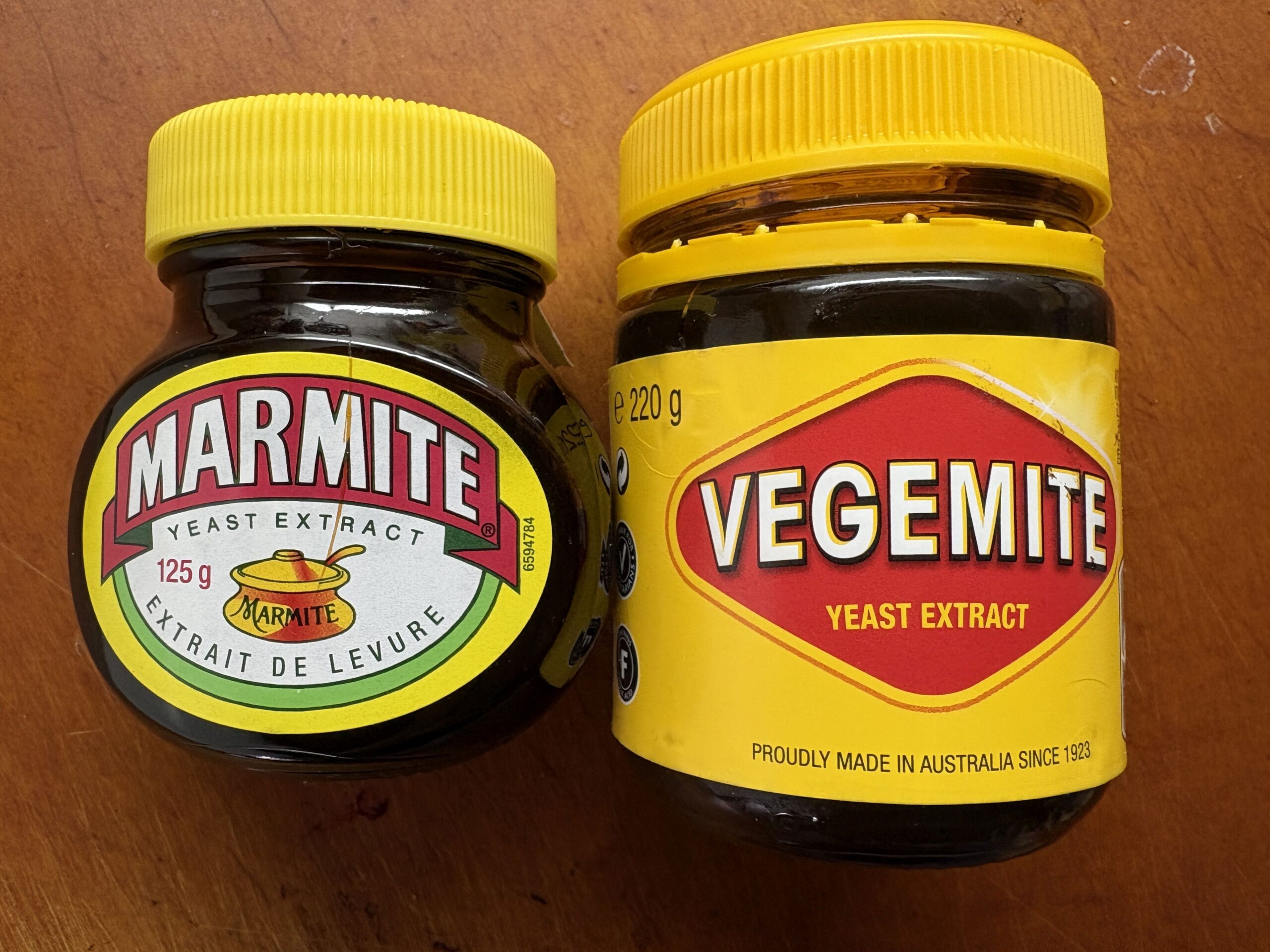
Marmite from the UK and Vegemite from Australia, two of the products at risk of Canadian over-regulatory twitches.
Shortly after winning the Liberal leadership, Mark Carney travelled to Paris and London to shore up our trading relationship with our European allies.
Yet it is noteworthy that Canada is one of only two countries that has not yet ratified the United Kingdom’s accession into the CPTPP, meaning that we don’t enjoy the benefits of free trade with the country with whom we share a system of government and a King. Meanwhile, France is one of a handful of countries that has yet to ratify the free-trade agreement between Canada and the EU.
If we can’t even agree to implement trade deals that have already been negotiated and agreed upon with countries that have such deep historical ties to Canada, what hope do we have of improving trade with our other partners around the world?
Part of the problem is that Canada refuses to follow the example of countries like Australia and New Zealand, which successfully phased out their own systems of supply management years ago with great success.
As a result, supply management has proven to be a sticking point in virtually every trade negotiation we’ve entered into, and is a constant source of tension even among countries we have free-trade deals with.
But we have also fallen into the trap, along with our European friends, of over-regulation. Modern bureaucratic states impose so many restrictions on commercial enterprises, it often becomes uneconomic to market their products in other countries.
Canada, for example, imposes stringent labelling requirements to ensure product information is available in both English and French, and that nutritional information conforms to our very specific requirements.
None of this is necessary, especially in an age in which we can hold a phone up to a box of French crackers to see what it says. But the problem extends far beyond language or disagreements over the recommended daily intake of fibre.
As the CBC reported on Monday, Leighton Walters, an expat from Down Under who owns several Australian-themed coffee shops in the Greater Toronto Area, was told earlier this year by the Canadian Food Inspection Agency (CFIA) that he was no longer allowed to sell the roughly $8,000 worth of Vegemite he had imported because it contains … too many vitamins.
Under current regulations, only a select list of products are allowed to contain added vitamins. Vitamin B-rich spreads like Vegemite and its British equivalent Marmite are not among them because … well, just because.
A similar situation arose a decade ago when reports that the government had ordered Marmite and the Scottish drink Irn-Bru to be taken off the shelves of a British supermarket in Saskatoon caused outrage on both sides of the pond.
The CFIA later clarified that only versions of those products formulated specifically to meet Canadian requirements — i.e., those that don’t contain added vitamins or a specific type of food colouring — are allowed to be sold in this country. Because heaven forbid we trust that other advanced Commonwealth nations would have reasonable enough food safety standards.
We have quite literally regulated ourselves into a corner. We can’t even import spreads like Marmite and Vegemite — which have been staples of British and Australian diets for decades — not because they’re unhealthy or unsafe, but because they don’t conform to our nit-picky regulations.
April 16, 2025
Food in the Japanese-American Internment Camps of World War 2
Tasting History with Max Miller
Published 3 Dec 2024Tuna noodle casserole made with spaghetti, and rice with canned apricots for dessert
City/Region: Topaz War Relocation Center, Utah
Time Period: 1943In 1942, anyone of Japanese ancestry in the United States was forcibly sent to live in incarceration camps. Food was often in the form of leftover military rations that was augmented by crops grown by the people living in the camps, but there were also canteens that sold food and sundries. These items were great luxuries as the Japanese Americans living in the camps made only about 1/5 of a typical wage and included things like Ovaltine, apple juice, and canned tuna.
This recipe, from a newspaper printed in the Topaz War Relocation Center, makes a tasty, if basic, tuna noodle casserole. I would add more of the paprika, or really some more spices in general, but I really like the lightly crunchy texture of the bread crumbs and the celery.
If you’d like to serve this forth with dessert, as I did, then you simply need some cooked white rice and some canned apricots with syrup.
(more…)


