Quotulatiousness

August 11, 2020

Napoleon’s greatest foe

Filed under: Britain, Europe, France, History, Middle East, Military — Tags: , , , , , , , — Nicholas @ 02:00

Lindybeige
Published 18 Jan 2018

Support me on Patreon: https://www.patreon.com/Lindybeige

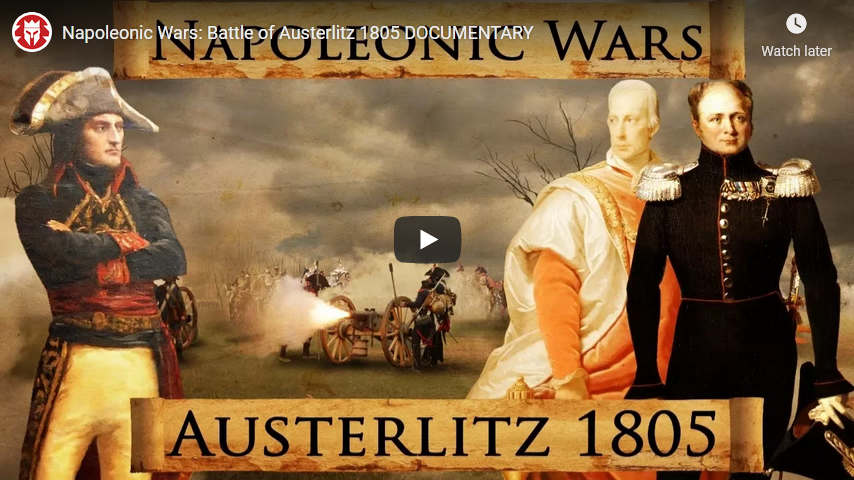
Possibly I did too much research for this one. Trying to stay on-topic when the subject is so vast and so interesting was not easy, hence the rather long video. I didn’t mean to say quite so much about what an utter £$%&*! Napoleon was, but he was so thoroughly vile that it proved impossible not to include some details about the man who won his promotion in the army by mowing down civilian protesters in the streets of Paris with grapeshot from his artillery batteries. Anyway, here are tales of bravery and virtue, as well as horrendous some of brutality, lies, and death.

Correction: The battle against the Russian fleet is called Svensksund (Swedish sound, as in channel), not Svenksund. I missed out an S in my haste.

Buy the music – the music played at the end of my videos is now available here: https://lindybeige.bandcamp.com/track…

Lindybeige: a channel of archaeology, ancient and medieval warfare, rants, swing dance, travelogues, evolution, and whatever else occurs to me to make.

▼ Follow me…

Twitter: https://twitter.com/Lindybeige I may have some drivel to contribute to the Twittersphere, plus you get notice of uploads.

website: http://www.LloydianAspects.co.uk

QotD: Our culture shapes what we can see

One of the things I keep trying to explain to my “woke” colleagues, when they stand tall and righteous and put their shoulders back and say that Heinlein was racisthomophobicsexist or that great authors of the past should have been better than to follow the prejudices of their time, is that when you’re immersed in your time, you don’t see the prejudices and the blind spots.

I have a little more insight into how culture shapes what’s possible to think, because I changed my culture as an adult. While this can be done (obviously) and immigrants should be encouraged to do it, (or go home), the acculturation is never complete. What happens is that you acquire a sort of cultural double vision. Depending on how far your acculturation goes, you’ll see the defects in thought or at least the unquestioned assumptions in one of the countries better, but also have a strong feeling of being outside enough to see some flaws in your dominant culture. In my case, for instance, I see the flaws in Portugal very clearly, like the obsession with speed over diligence or being decisive over being right, but I still see some in the US which is why sometimes I say “what people born and raised here don’t see.”

I have, of course, even more insight, due to being a conservative in the US, in a culture and profession (the arts/publishing) that is not only majority left, but majority extreme left. For many years, the only way to stay at least plausibly under cover was to see what they were seeing, and what they expected.

But without that, most people are blind to the … ah, unconscious or unthinking parts of their culture. Heck, even with what I’ve been through, I still tend to accept a lot of things unconsciously, unless I step back and go “Now wait a minute.”

Sarah Hoyt, “Slouching Into Shackles”, According to Hoyt, 2018-04-27.

August 10, 2020

The Rise of Carthage

Invicta
Published 13 Mar 2020

Support the channel by downloading Rise of Kingdoms: http://patron.me/Invicta, New users can use the code seyfpw6fxu and claim these prizes: GEM 200, Silver Key x2, 50000 Food x2, 50000 Wood x2

Today Carthage is remembered only in the context of its dramatic fall at the end of the Punic Wars between Rome and Carthage. We all know about Hannibal and the Battle of Cannae but how about the daily life of Carthage. There is much more to this ancient civilization than the dust and ashes left to us by history. Today we will be exploring the Rise of Carthage and dive into the fascinating details of their civilization.

The history documentary begins by covering the ancient Phoenicians who planted colonies across the Mediterranean. Carthage emerged from this trade network to become the leader of the Phoenicians in the west and eventually come to forge an empire when its mother colony Tyre declined. The history documentary then turns to cover the government, economy, culture, and military of ancient Carthage.

Sources and Suggested Reading:
Carthage: A History by Serge Lancel
The Carthaginians by Dexter Hoyos
Carthage’s Other Wars by Dexter Hoyos
Carthage Must be Destroyed by Richard Miles

#History
#Documentary
#Carthage

Russia in Asia (for now)

Filed under: Asia, China, Government, History, Russia — Tags: , , , — Nicholas @ 05:00

Ted Campbell looks at some long-frozen geopolitical forces that may become more active in coming years:

The Jamestown Foundation, which some experts describe as mainly non-partisan and relatively unbiased, has published an interesting article by Paul Goble in which he reminds us that “Russia east of the Urals comprises more than two-thirds of the Russian Federation but has only about one-fifth of that country’s population. It is where most of Russia’s natural resources are to be found, though the earnings from their extraction largely go to Moscow and not to local people. The region is located three to ten time zones east of Moscow and is linked to the center by few roads or rail lines. Its people are far closer to China and other Pacific rim countries — including the United States — than to the core of the Russian Federation. Because of their roots in explorers, those fleeing oppression, and those sent there by the state for punishment, eastern Russians have always been more independent minded and entrepreneurial than Russians in central and western Russia. Perhaps the most important measure of this cultural divide is that Protestant faiths dominate the religious scene there, not the Russian Orthodox Church of the Moscow Patriarchate.”

It is related to something I have been saying for a long time: Siberia (essentially everything East of the Yenisei River (some say everything East of the Urals) is Asia …

… while Russia, per se, is an Eastern European country.

[…]

A few years ago a couple of middle-ranked Chinese officials suggested to me that one of China’s long-term strategic plans was (and I’m guessing still is) to encourage separatist movements in Siberia which, they hoped, will succeed in creating three or four (maybe even five or six) “autonomous” states in Siberia which will, like Mongolia, look, primarily to China for trade and support.

China covets needs the resources, including water, that Siberia has. I have, in the past, forecast a Sino-Russian “Water War” in Siberia. But, speaking broadly and generally, the Chinese don’t like wars: they are expensive and unpredictable. They would much rather play a modest, behind the scenes role in creating a handful of weak, independent Siberian states with which they can trade to their advantage. They do not, I was told, wish to annex Siberia ~ some Chinese feel that the Qing Dynasty (1644 to 1912) went too far when it annexed what is now the Xinjiang Uyghur Autonomous Region (新疆维吾尔自治区) in 18th century.

(Tibet is a different matter and most of the Chinese people I know who might wish that Xinjiang was a more autonomous place, more like Kyrgyzstan, for example, believe that Tibetans are Chinese (and Uighurs are not) and Tibet is a “natural” part of China.)

I said a couple of days ago, that “Russia is a pariah state that is flailing about as it withers and dies.” But Putin is flailing about in the wrong directions. The Chinese are, I believe, cultivating and fertilizing Siberian separatist movements with a view to dismembering Russia and “liberating” Siberia. When that happens, and I’m confident that it is NOT an IF, the world will be a much different place.

Donald MacLean: The First of the Cambridge Five

The Cold War
Published 22 Jun 2020

Our historical documentary series on the history of the Cold War continues with a video on the famous Cambridge Five and Donald Maclean in particular — a real Cold War-era spy story

Support us on Patreon: https://www.patreon.com/thecoldwar or Paypal: http://paypal.me/TheColdWar

✔ Merch store ► https://teespring.com/stores/thecoldwar
✔ Instagram ► http://www.instagram.com/thecoldwartv

#ColdWar #Maclean #CambridgeFive

August 9, 2020

Tanks, but no Tanks – Hitler Hinders the Blitzkrieg – WW2 – 102 – August 8, 1941

Filed under: China, Germany, History, Japan, Military, Russia, WW2 — Tags: , , , , , , — Nicholas @ 04:00

World War Two
Published 8 Aug 2020

In Japan those in power are divided as to what to do as war with the Western powers looks more and more likely. Meanwhile in the USSR the war gets deadlier and deadlier, but also more and more confusing with leadership conflicts on both sides of the front.

Join us on Patreon: https://www.patreon.com/TimeGhostHistory
Or join The TimeGhost Army directly at: https://timeghost.tv
Check out our TimeGhost History YouTube Channel: https://www.youtube.com/c/timeghost?s…

Follow WW2 day by day on Instagram @World_war_two_realtime https://www.instagram.com/world_war_two_realtime
Between 2 Wars: https://www.youtube.com/playlist?list…
Source list: http://bit.ly/WW2sources

Written and Hosted by: Indy Neidell
Director: Astrid Deinhard
Producers: Astrid Deinhard and Spartacus Olsson
Executive Producers: Astrid Deinhard, Indy Neidell, Spartacus Olsson, Bodo Rittenauer
Creative Producer: Joram Appel
Post-Production Director: Wieke Kapteijns
Research by: Indy Neidell
Edited by: Iryna Dulka
Sound design: Marek Kamiński
Map animations: Eastory (https://www.youtube.com/c/eastory)

Colorizations by:
– Olga Shirnina, a.k.a. Klimbim – https://klimbim2014.wordpress.com/
– Carlos Ortega Pereira, BlauColorizations – https://www.instagram.com/blaucoloriz…
– Norman Stewart – https://oldtimesincolor.blogspot.com/
– Julius Jääskeläinen – https://www.facebook.com/JJcolorization/
– Jaris Almazani (Artistic Man) – https://instagram.com/artistic.man?ig…

Sources:
– Mil.ru
– Narodowe Archiwum Cyfrowe
– FDR Presidential Library & Museum
– rgakfd.ru
– Yad Vashem: 10470_17, 5138_98
– Bundesarchiv, CC-BY-SA 3.0: Bild_101III-AhrensA-020-31A, Bild_101I-138-1091-07A
– papers icon by Pauline from the Noun Project

Archive by Screenocean/Reuters https://www.screenocean.com.

A TimeGhost chronological documentary produced by OnLion Entertainment GmbH.

From the comments:

World War Two
2 days ago
This war is getting bigger and bigger, and bloodier and bloodier. When we started out on this mega project we already anticipated this, and immediately started to cover the war on multiple fronts to provide the fullest coverage possible,

As Indy says in the episode we publish an essential event of the war every day on our Instagram WW2 Day by Day feed. Often these are events that Indy might not have place to cover here in the weekly videos.

Likewise we cover the humanitarian crisis created deliberately, and by collateral effects that the war has on the world population in our War Against Humanity series that is now coming out every second week to keep up with the increasing pace of terror. So, to get the full experience of the chronological developments, follow those formats too:

WW2 Day by Day on Instagram: https://www.instagram.com/world_war_two_realtime/
War Against Humanity playlist: https://www.youtube.com/playlist?list=PLsIk0qF0R1j4cwI-ZuDoBLxVEV3egWKoM

MGB 81, the Spitfire of the Seas | World War II gunboat review | Motor Boat & Yachting

Filed under: Britain, History, Military, Weapons, WW2 — Tags: , — Nicholas @ 02:00

Motor Boat & Yachting
Published 16 Jan 2019

We have the immense privilege of getting behind the wheel (and guns) of MGB 81, the Spitfire of the seas.

Filmed by Paul Wyeth: http://www.pwpictures.com/

► For the latest reviews, new gear launches and tour news, visit our website here – http://www.mby.com

►Follow us on Twitter here – https://twitter.com/mbytimeinc

QotD: The economic concept of “revealed preferences”

Filed under: Britain, Economics, Government, Media, Quotations — Tags: , , — Nicholas @ 01:00

Economists have a handy term called “revealed preferences”. In colloquial English it means “look at what people do, not what they say, and certainly never take notice of what they say others should do”.

Now, you can’t help but notice that there is a disparity between those who say that taxes should be higher and those who act as if they should be. Clearly, an individual who really believes that the Government is more effective at spending his money would voluntarily offer up more than the legal minimum of taxation. That we have fewer people acting in this manner than are to be found writing columns and making speeches calling for higher taxation shows a certain gap, does it not, between public utterances and private actions? Why, we could make such donations a litmus test for those believers in higher taxation and state spending who want to compel all of us to pay more. Only those who show their commitment by sending a cheque to the Treasury should be treated seriously.

Cheques, by the way, should be made out to “The Accountant, HM Treasury”, and sent to 1 Horse Guards Road, London SW1A 2HQ. A 2nd-class stamp is sufficient and you are encouraged to add a covering note so that your donation is spent in the way you like.

Tim Worstall, “Show us your cheques”, Times of London, quoted in Continental Telegraph, 2020-05-07.

August 8, 2020

The Cold War & Decolonization — History Summarized

Overly Sarcastic Productions
Published 7 Aug 2020

Keep safe and stylish with a Red-And-Blue facemask from Volante Design, or DONATE to help students in public schools receive high-quality masks for free — https://bit.ly/2DwE9O7

August of 2020 marks the 75th anniversary of the end of the Second World War. So I wanted to make a video about that. That was a bad idea…

What do you get when a Classically-Minded historian ventures about 2,000 years outside of their comfort zone? A mess. A well-intentioned mess is what you get. BUT a mess that we can learn from! So join me as we dig into the aftermath of the Second World War to analyze the origins of the Cold War and the decolonization of European Empires.

SOURCES & Further Reading: The Cold War by Gaddis, The Wars of French Decolonization by Clayton, British decolonization, 1946-1997 by McIntyre, The Cold War’s Killing Fields by Chamberlin, The Cold War: A Very Short Introduction by McMahon, and “Crash Course European History [Parts 42-47]” by Green.

This video was edited by Sophia Ricciardi AKA “Indigo”. https://www.sophiakricci.com/
Our content is intended for teenage audiences and up.

DISCORD: https://discord.gg/kguuvvq

PATREON: https://www.Patreon.com/OSP

MERCH LINKS: https://www.redbubble.com/people/OSPY…

OUR WEBSITE: https://www.OverlySarcasticProductions.com
Find us on Twitter https://www.Twitter.com/OSPYouTube
Find us on Reddit https://www.Reddit.com/r/OSP/

From the comments:

Overly Sarcastic Productions
1 hour ago (edited)
Some clarifications:
North Africa did of course see conflict, the Pacific did get occupied — even the places that didn’t (eg: India) still paid for the war. Damn double-negatives.

That weird Romania-Hungary-Russia border is a holdover from WWII. The border lasted until 1946 and was changed in 1947. Later in the video you’ll see the more familiar borders.

Indonesia declared Independence in 1945 (Like Vietnam), but the Netherlands didn’t withdraw until 1949, hence my mention of ’49.

Tank Chats #77 Jagdtiger | The Tank Museum

Filed under: Germany, History, Military, Weapons, WW2 — Tags: , , , — Nicholas @ 02:00

The Tank Museum
Published 14 Jun 2019

David Willey, Curator at The Tank Museum, presents a Tank Chat on the mighty WW2 German Jagdtiger.

Support the work of The Tank Museum on Patreon: ► https://www.patreon.com/tankmuseum

Visit The Tank Museum SHOP: ► https://tankmuseumshop.org/

Twitter: ► https://twitter.com/TankMuseum
Instagram: ► https://www.instagram.com/tankmuseum/
Tiger Tank Blog: ► http://blog.tiger-tank.com/
Tank 100 First World War Centenary Blog: ► http://tank100.com/ #tankmuseum #tanks #tankchats

QotD: The British Empire

Filed under: Britain, Economics, History, Quotations — Tags: , — Nicholas @ 01:00

Security empires come and go. While they serve a purpose, their citizens are willing to pay the cost. When they become too expensive to maintain, they simply fold, or get ground under. They work to purpose, or stop.

Conquest empires rarely outlive their founders, or only last a few generations. Alexander’s generals, or Charlemagne’s children and grandchildren, dividing and subdividing into smaller and smaller units, is the norm for such empires. (If not straight collapse when the dictator holding it all together vanishes.)

The only “conquest” empires that have held up are those that send settlers into the lands of hunter-gatherers or nomads. The United States, Russia and Australia being good examples. (But the only reason they can hold up is if the captured territory can be converted into a functional part of the state and society … something the US and Australia have largely managed … Russia’s attempts to enforce this unity by repression of its more developed conquered peoples have not been so successful over the last few centuries, and it is unlikely that China will do much better long-term no matter how much repression it introduces into its recent conquests of established societies like Tibet and the Uyghurs.)

Which leaves only trade empires as potentially successful long term options. And only because their success is not measured by sustaining the political unity of the “empire”, but by sustaining its economic goals.

The most successful empire in world history is the British empire, which could delightedly declare itself obsolete in the 1920s, and again (after having to work mostly co-operatively to fight World War Two) in the 1950s. Both times it encouraged the member states to go look after themselves (some successfully and some less so), and yet it still managed to leave an almost completely secure legacy for its existence … relatively safe international free trade routes. (The almost complete elimination of both piracy and slavery worldwide just being minor side benefits of the British Empire.)

For an empire developed “in a fit of absent mindedness”, and as a byproduct of trying to develop free trade around the world: the measure of success has to be the Commonwealth of Nations – comprising 54 nations with about 1/3 of the world’s population, getting together to play cricket every year and hold a Commonwealth Games every 4 years.

This is not an empire that copllapsed, or was destroyed. This is an empire that over a century or so (from granting independent Dominion status to Canada in 1886 [Canadians stoutly maintain it was 1867], Australia 1901, New Zealand and South Africa pre-Great War, Ireland and Egypt interwar, India and Pakistan post war, large parts of Asia and Africa in the 60s and 70s etc.); nonetheless developed and secured the international free trade system that the world has embraced. (Including a re-integration by an early exit-er from the empire … the 13 out of 35 British north American colonies that became the United States … and who finally inherited the title of world policeman when the rest of the Commonwealth nations had got sick of the whole thing.)

Nigel Davies, “Types of Empires: Security, Conquest, and Trade”, rethinking history, 2020-05-02.

August 7, 2020

A Career Anti-Fascist – George Orwell – WW2 Biography Special

World War Two
Published 6 Aug 2020

George Orwell is one of the most famous English writers in the modern age. But how did he become the man who would coin so many of the words we still use in our political debates?

Join us on Patreon: https://www.patreon.com/TimeGhostHistory
Or join The TimeGhost Army directly at: https://timeghost.tv

Follow WW2 day by day on Instagram @World_war_two_realtime https://www.instagram.com/world_war_two_realtime
Between 2 Wars: https://www.youtube.com/playlist?list…
Source list: http://bit.ly/WW2sources

Hosted by: Indy Neidell
Written by: Rune Væver Hartvig
Director: Astrid Deinhard
Producers: Astrid Deinhard and Spartacus Olsson
Executive Producers: Astrid Deinhard, Indy Neidell, Spartacus Olsson, Bodo Rittenauer
Creative Producer: Joram Appel
Post-Production Director: Wieke Kapteijns
Research by: Rune Væver Hartvig
Edited by: Mikołaj Cackowski
Sound design: Marek Kamiński
Map animations: Eastory (https://www.youtube.com/c/eastory)

Colorizations by:
Cassowary https://www.flickr.com/photos/cassowa…
Klimbim https://www.flickr.com/photos/2215569…

Sources:
Wellcome Images V0014461
Bundesarchiv
Narodowe Archiwum Cyfrowe
From the Noun Project: Pig by supalerk laipawat, Horse by supalerk laipawat, Goat by Laymik, Sheep by Laymik, Cow by supalerk laipawat, Chicken by supalerk laipawat, Farmer by Symbolon, Podium by Focus Lab

Soundtracks from the Epidemic Sound:
Howard Harper-Barnes – “London”
Johannes Bornlof – “Deviation In Time”
Johannes Bornlof – “The Inspector 4”
Skrya – “First Responders”
Jo Wandrini – “Puzzle Of Complexity”

Archive by Screenocean/Reuters https://www.screenocean.com.

A TimeGhost chronological documentary produced by OnLion Entertainment GmbH.

From Medieval Letters Patent to our modern patents, by way of Venice

Filed under: Britain, Europe, History, Law, Technology — Tags: , , , , , — Nicholas @ 05:00

In the latest Age of Invention newsletter, Anton Howes traces the lines of descent from the Letters patent of the Middle Ages, through Venetian legal innovations, to what began to resemble our modern patent system:

Letters Patent Issued by Queen Victoria, 1839
On 15 June 1839 Captain William Hobson was officially appointed by Queen Victoria to be Lieutenant Governor General of New Zealand. Hobson (1792 – 1842) was thus the first Governor of New Zealand. This position was renamed in 1907 as “Governor General”. Hobson arrived in New Zealand in late January 1840, and oversaw the signing of te Tiriti o Waitangi only a few days later. By the end of 1840, New Zealand became a colony in its own right and Hobson moved the capital of the colony from the Bay of Islands to Auckland. He served as Governor until his death in 1842 after he suffered a stroke at the age of 49.
Constitutional Records group of Archives NZ via Wikimedia Commons.

Patents for invention — temporary monopolies on the use of new technologies — are frequently cited as a key contributor to the British Industrial Revolution. But where did they come from? We typically talk about them as formal institutions, imposed from above by supposedly wise rulers. But their origins, or at least their introduction to England, tell a very different story.

England’s monarchs had long used their prerogative powers to grant special dispensations by letters patent — that is, orders from the monarch that were open for all the public to see (think of the word patently, from the same root, which means openly or clearly). For the most part, such public proclamations had been used to grant titles of nobility, or to appoint people to positions in various official hierarchies — legal, religious, and governmental. And, of course, letters patent could be used to promote the introduction of new technologies.

[…]

Monopolies in general, of course, over particular trades or industries had been granted for centuries, by rulers all across Europe. They granted such privileges to groups of merchants, artisans, and city-dwellers, giving them rights to organise and regulate their own activities as guilds or as city corporations. Inherent to all such charters was the ability of the in-group to restrict competition from outsiders, at least within the confines of their city. And the ruler, in exchange for granting such privileges, typically received a share of the guild’s or corporation’s revenues. But such monopolies were very rarely given to individuals. When they were, it was often so unpopular as to be almost immediately overturned. And they were rarely used to encourage innovation.

With one exception: Italy. Throughout the fifteenth century, some Italian city guilds had begun to forbid their members from copying newly-invented patterns for silk and woollen cloth, effectively granting a monopoly over those patterns to the individual inventors. In Venice, a 50-year monopoly was granted in 1416 to one Franciscus Petri, of Rhodes, to introduce superior fulling mills. In Florence, the famous architect and engineer Filippo Brunelleschi was granted a monopoly in 1421 for a vessel he designed for transporting heavy loads of marble, in exchange for revealing the secrets of his design. The printing press was also introduced to Venice using such a privilege, with a 5-year monopoly granted in 1469 to Johannes of Speyer, though he died only a few months after receiving it. And these ad hoc grants were made with increasing frequency, such that in 1474 Venice legislated to make them more systematic, declaring that 10-year monopolies could be obtained for all new technologies, either invented or imported (though it continued to also grant ad hoc patents, with the terms and durations decided on a case-by-case basis as before). Under the 1474 law, Venice was soon granting patent monopolies to the introducers of various mills, pumps, dredges, textile machines, printing techniques, and even special kinds of lasagna. It granted over a hundred patents in the first half of the sixteenth century, with many more thereafter.

From Venice, the use of patent monopolies as an instrument of policy spread abroad, with the initiative coming from the would-be introducers of novelties themselves. In the mid-fifteenth century, for example, a French inventor who had acquired patents in Venice was also successfully lobbying for similar privileges from the archbishop of Salzburg, the duke of Ferrara, and the Hapsburg Holy Roman Emperor. The use of patent monopolies thus soon diffused to the rest of Italy, to Germany, and to the various dominions of the Spanish emperor — including Spain itself, its American colonies, and the Low Countries.

And, eventually, to England. But not in the way we might expect. In 1496, the Venetian explorer Zuan Chabotto (aka John Cabot) acquired a patent monopoly from Henry VII over the trade and products of any lands he was to discover — a legal procedure unlike anything that earlier English explorers had attempted (they had merely been granted licenses). Cabot’s grant even differed from the agreements made by Christopher Columbus with the Spanish crown, or by earlier explorers for the Portuguese. Columbus, for example, was effectively granted a patent of nobility — the hereditary titles of viceroy, admiral, and governor. He and the Portuguese explorers were direct agents of the crown, with military and justice-dispensing responsibilities over any newly conquered lands — a model derived from the Christian conquests of Muslim Iberia. Columbus effectively became a marcher lord, a custodian and defender of Spain’s new borderlands.

“40:1” Pt. 2 – Another Polish Last Stand – Sabaton History 079 [Official]

Filed under: Europe, Germany, History, Media, Military, Russia, WW2 — Tags: , , , — Nicholas @ 04:00

Sabaton History
Published 6 Aug 2020

At the end of September 1939, Poland was burning. Trapped in an ever shrinking corridor between the Wehrmacht and the Red Army, the last remaining Polish forces were still holding out. Isolated, short of ammunition and supplies, and without hope for relief. The last Polish Army, the SGO Polesie, was making its way towards the Vistula, as it was cut off by German motorcycle troops. Determined to sell their lives dearly, the SGO Polesie dug in and prepared for a last stand.

Support Sabaton History on Patreon: https://www.patreon.com/sabatonhistory

Listen to “40:1” from the album The Art Of War:
https://music.sabaton.net/TheArtOfWar

Watch the Official Music Video of “40:1” here:
https://www.youtube.com/watch?v=epeQw…

Listen to Sabaton on Spotify: http://smarturl.it/SabatonSpotify
Official Sabaton Merchandise Shop: http://bit.ly/SabatonOfficialShop

Hosted by: Indy Neidell
Written by: Markus Linke and Indy Neidell
Directed by: Astrid Deinhard and Wieke Kapteijns
Produced by: Pär Sundström, Astrid Deinhard and Spartacus Olsson
Creative Producer: Joram Appel
Community Manager: Maria Kyhle
Executive Producers: Pär Sundström, Joakim Broden, Tomas Sunmo, Indy Neidell, Astrid Deinhard, and Spartacus Olsson
Post-Production Director: Wieke Kapteijns
Edited by: Karolina Dołęga
Sound Editing by: Marek Kaminski
Maps by: Eastory – https://www.youtube.com/c/eastory
Archive by: Reuters/Screenocean https://www.screenocean.com
Music by Sabaton.

Sources:
Paul Otto courtesy Glenn Jewison
University of Wisconsin-Milwaukee Libraries
Bundesarchiv
Imperial War Museums: HU106375
Museum of Warsaw
Narodowe Archiwum Cyfrowe
Centralne Archiwum Wojskowe

An OnLion Entertainment GmbH and Raging Beaver Publishing AB co-Production.

© Raging Beaver Publishing AB, 2019 – all rights reserved.

From the comments:

Sabaton History
2 days ago (edited)
Once again the time has come for the Polish people to show what they’re made of.

This time they’re facing a gargantuan two-headed monster of an enemy and are outnumbered many many times over.

They may not win, they may not even live to see another day — but The Polish will not give up without giving their all.

Spirit of Spartans
Death and glory
Soldiers of Poland
Second to none

So come, bring on all that you’ve got
Come hell, come high water — never stop!

With the help of Indy and the TimeGhost team you can learn more about the Soviet invasion of Poland and the last days of The Polish Defensive War in these two episodes of the “World War Two In Real Time” series:

“The Russians are Coming! – The Soviet Invasion of Poland” – WW2 – 004 – September 22, 1939
https://youtu.be/8vjBp-qyNVE

“Poland is Crushed” – WW2 – 005 – 29 September, 1939
https://youtu.be/OOPiUaakSXM

August 6, 2020

Rhodes: A Short History

History Time
Published 2 Mar 2017

*****This was one of the first videos I ever made.
******Subscribe for much better narration on the newer videos and tons more historical awesomeness*****

Situated at a crossroads between East and West, in a strategic location between the Aegean and the Mediterranean, Rhodes has long been fought over by the surrounding powers. As a result, Rhodes is one of the most historic sites on Earth.

If you liked this video and have as little as a dollar to spare then please consider supporting me on Patreon for more and better content in the future:- http://www.patreon.com/historytimeUK

Are you a budding artist, illustrator, cartographer, or music producer? Send me a message! No matter how professional you are or even if you’re just starting out, I can always use new music and images in my videos. Get in touch! I’d love to hear from you.

I’ve also compiled a reading list of my favourite history books via the Amazon influencer program. If you do choose to purchase any of these incredible sources of information, many of which form the basis of my videos, then Amazon will send me a tiny fraction of the earnings (as long as you do it through the link) (this means more and better content in the future) I’ll keep adding to and updating the list as time goes on:-
https://www.amazon.com/shop/historytime

I try to use copyright free images at all times. However if I have used any of your artwork or maps then please don’t hesitate to contact me and I’ll be more than happy to give the appropriate credit.

—Join the History Time community on social media:-
Instagram:-
https://www.instagram.com/historytime…
Twitter:-
https://twitter.com/HistoryTimePete

« Newer PostsOlder Posts »

Powered by WordPress