
Forgotten Weapons
Published 9 Feb 2016In the 1920s Poland began looking for a new standard military pistol, and tested a variety of compact .380s. The representative from FN brought along an early iteration of the High Power (along with their other entry) even though it was much too large and heavy to meet the Polish requirements. After a couple iterations of testing, it became clear to the Polish Ordnance officers that the High Power was a much more effective service pistol than the compact guns they had been instructed to look for.
Lo and behold, the ultimate choice was a domestic design based largely on the High Power (a direct deal with FN was not an option after Poland’s relationship with FN had suffered through problems with the wz.28 version of the BAR). Toss in a delay to redesign the early decocking mechanism to satisfy the Cavalry (who didn’t realize that the decocker wasn’t actually meant to be used, but rather to just add another claim to the patent), and by 1935 the pistol was finished and formally adopted.
The Vis 35 is one of the best automatic pistols of WWII in terms of both handling and quality. In total 46,000 were made pre-war for Poland’s military, and German occupation forces built another 300,000+ during the war.
(more…)
September 21, 2022
Radom’s Vis 35: Poland’s Excellent Automatic Pistol
September 20, 2022
Hannah Arendt in postwar Germany
In Quillette, Roger Berkowitz discusses what Hannah Arendt found when talking to Germans after the Second World War, which she characterized as their collective “escape from reality”:
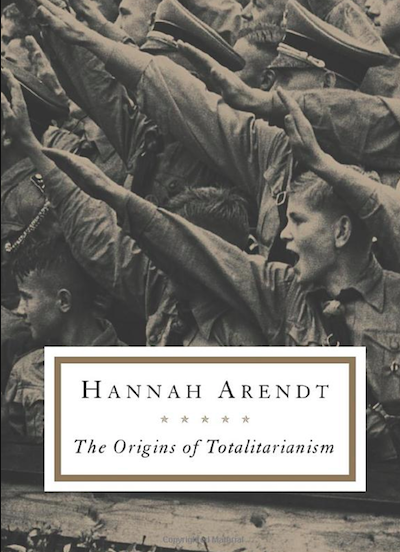
In 1949, when Hannah Arendt (1906–1975) went to Germany as part of the New York-based Jewish Cultural Reconstruction Commission, she was struck by the way the Germans showed an “at times vicious refusal to face and come to terms with what really happened”. This “escape from reality”, as Arendt named it, meant that the reality of the Holocaust and the death factories was spoken of as a hypothetical. And when the truth of the Holocaust was admitted, it was diminished: “The Germans did only what others are capable of doing”.
The Germans, at times, simply denied the facts of what had happened. One woman told Arendt that the “Russians had begun the war with an attack on Danzig”. What Arendt encountered was a “kind of gentleman’s agreement by which everyone has a right to his ignorance under the pretext that everyone has a right to his opinion”. The underlying assumption for such a right is the “tacit assumption that opinions really do not matter”. Opinions are just that, mere opinions. And facts, once they are reduced to opinions, also don’t matter. Taken together, this led to a “flight from reality”.
The focus of Arendt’s lifelong engagement with the human flight from reality was her encounter with ideologies, specifically Nazism and Bolshevism. In The Origins of Totalitarianism and other texts (especially her essay, “On the Nature of Totalitarianism“), Arendt defines an ideology as a system that seeks to explain “all the mysteries of life and the world” according to one idea. Nazism is an ideology that blames economic disaster, political loss, and the evils of modernity on the Jews — inhuman flotsam who must be exterminated to allow a master race to flourish. Bolshevism, on the other hand, “pretends that all history is a struggle of classes, that the proletariat is bound by eternal laws to win this struggle, that a classless society will then come about, and that the state, finally, will wither away”. The bourgeoisie are not simply class traitors, they are a dying class, and killing them only supports a law of history. As ideologies, both Nazism and Bolshevism insist on explaining the events of the world according to theories “without further concurrence with actual experience”. The result, Arendt argues, is that such ideologies bring about an “arrogant emancipation from reality”.
Because an ideology “looks upon all factuality as fabricated”, it “no longer knows any reliable criterion for distinguishing truth from falsehood”. As reality recedes, ideologies organize society to transform their ideas into living reality. If antisemitism as an ideology says that all Jews are beggars without passports, the fact of wealthy and established Jews must be eliminated. If Bolshevism says that the bourgeoisie are corrupt, they must admit their corruption or be killed. The realization of such ideological realities can be accomplished, of course, through terror.
But even before a totalitarian movement takes power and mobilizes the secret police in the machinery of terror, ideological movements can employ propaganda to deny and nullify facts, or change them. The Nazis, she writes, “did not so much believe in the truth of racism as desire to change the world into a race reality”. Similarly, the Bolshevist ideology that classes were dying was not something real, but something that had to be made real. The purges and terror that Stalin unleashed were supposed to “establish a classless society” by exterminating all social groups that might develop into classes. In both instances, the purpose of the ideology was to transform a mere opinion — race consciousness or class consciousness — into the “the lived content of reality”.
The point, as Arendt concludes, is that “ideological consistency reducing everything to one all-dominating factor is always in conflict with the inconsistency of the world, on the one hand, and the unpredictability of human actions, on the other”. What ideology demands is that man — an unpredictable and spontaneous being — cease to exist as such, that all humans be subjected to laws of development that follow ideological truth. That is why the turn from an unreliable reality to coherent fantasy requires an absolute elimination of human spontaneity and freedom.
September 19, 2022
Albania – Hitler’s Latest Ally? – WAH 078 – September 18, 1943
World War Two
Published 18 Sep 2022The German Nazi Genocide of the Jews surpasses four million deaths, while the Soviet Union and US step up oppression against some their own citizens.
(more…)
September 18, 2022
Jailbreak! Mussolini on the Loose Again! – WW2 – 212 – September 17, 1943
World War Two
Published 17 Sep 2022
(more…)
September 15, 2022
Italy Switches Sides in World War Two – WAH 077 – September 11, 1943
World War Two
Published 14 Sep 2022When Italy leaves WW2, The Nazi German Reich immediately begins occupying the country, and the occupied nations it has held until now.
(more…)
September 14, 2022
QotD: The Wars of Religion and the (eventual) Peace of Westphalia
Thomas Hobbes blamed the English Civil War on “ghostly authority”. Where the Bible is unclear, the crowd of simple believers will follow the most charismatic preacher. This means that religious wars are both inevitable, and impossible to end. Hobbes was born in 1588 — right in the middle of the Period of the Wars of Religion — and lived another 30 years after the Peace of Westphalia, so he knew what he was talking about.
There’s simply no possible compromise with an opponent who thinks you’re in league with the Devil, if not the literal Antichrist. Nothing Charles I could have done would’ve satisfied the Puritans sufficient for him to remain their king, because even if he did everything they demanded — divorced his Catholic wife, basically turned the Church of England into the Presbyterian Kirk, gave up all but his personal feudal revenues — the very act of doing these things would’ve made his “kingship” meaningless. No English king can turn over one of the fundamental duties of state to Scottish churchwardens and still remain King of England.
This was the basic problem confronting all the combatants in the various Wars of Religion, from the Peasants’ War to the Thirty Years’ War. No matter what the guy with the crown does, he’s illegitimate. It took an entirely new theory of state power, developed over more than 100 years, to finally end the Wars of Religion. In case your Early Modern history is a little rusty, that was the Peace of Westphalia (1648), and it established the modern(-ish) sovereign nation-state. The king is the king because he’s the king; matters of religious conscience are not a sufficient casus belli between states, or for rebellion within states. Cuius regio, eius religio, as the Peace of Augsburg put it — the prince’s religion is the official state religion — and if you don’t like it, move. But since the Peace of Westphalia also made heads of state responsible for the actions of their nationals abroad, the prince had a vested interest in keeping private consciences private.
I wrote “a new theory of state power”, and it’s true, the philosophy behind the Peace of Westphalia was new, but that’s not what ended the violence. What did, quite simply, was exhaustion. The Thirty Years’ War was as devastating to “Germany” as World War I, and all combatants in all nations took tremendous losses. Sweden’s king died in combat, France got huge swathes of its territory devastated (after entering the war on the Protestant side), Spain’s power was permanently broken, and the Holy Roman Empire all but ceased to exist. In short, it was one of the most devastating conflicts in human history. They didn’t stop fighting because they finally wised up; they stopped fighting because they were physically incapable of continuing.
The problem, though, is that the idea of cuius regio, eius religio was never repudiated. European powers didn’t fight each other over different strands of Christianity anymore, but they replaced it with an even more virulent religion, nationalism.
Severian, <--–>”Arguing with God”, Rotten Chestnuts, 2020-01-20.
September 13, 2022
The Greatest Escapes of World War Two – WW2 Special
World War Two
Published 12 Sep 2022This is an intimate story inspired by real events (notably inspired by the story of a member of the Danish resistance and grandmother of Hans von Knut Skovfoged, Head of Development at PortaPlay. A story told not on the front line, but in the intimate setting of a small Danish village.
(more…)
September 11, 2022
The Allies’ Latest Victory – WW2 – 211 – September 10, 1943
World War Two
Published 10 Sep 2022Dwight Eisenhower publicly announces the secret armistice signed last week, and Italy is now officially out of the war. The Italian fleet sails for Malta and Allied captivity. The Allies have landed in force in Southern Italy and they do face some heavy opposition from German forces — who have no intention of giving up Italy. In the USSR, though, the Soviets continue liberating territory all over Ukraine as they force the Germans back to the Dnieper River.
(more…)
September 10, 2022
QotD: “Working toward the Führer“
This had several big advantages. First, it’s in line with Nazi philosophy. The Nazis were Social Darwinists. Social Darwinists hold that “survival of the fittest” applies not only to humans as a whole, but to human social groups as well. Any given organization, then, must exist to do something, to advance some cause, to reach some goal. Ruthless competition between groups, and inside each group, is how the goal works itself out (you should be hearing echoes of Hegel here). The struggle refines and clarifies what the group’s goal is, even as the individual group members compete to reach it. The end result gets forced back up the system to the Führer, such that, dialectically (again, Hegel), “National Socialism means X” now encompasses the result of the previous struggle.
[…]
As with philosophy, “working towards the Führer” fit well with German military culture. Auftragstaktik is a fun word that means “mission-type tactics.” In practice, it delegates authority to the lowest possible level. Each subordinate commander is given an objective, a force, and a due date. High command doesn’t care how the objective gets taken; it only cares that the objective gets taken. Done right, it’s a wonderfully efficient system. It’s the reason the Wehrmacht could keep fighting for so long, and so well, despite being overpowered in every conceivable way by the Allies. The Allies, too, were constantly flabbergasted by their opponents’ low rank — corporals and sergeants in the Wehrmacht were doing the work of an entire Allied company command staff (and often doing it better).
Consider the career of Adolf Eichmann. In the deepest, darkest part of the war, this man pretty much ran the Reich’s rail network. Say what you will about the Nazi’s plate-of-spaghetti org chart, that’s some serious power. He was a lieutenant colonel.
The final great advantage of “working towards the Führer” is “plausible deniability”. Let’s stipulate Atrocity X. Let’s further stipulate that we’re in the professional historian’s fantasy world, where every conceivable document exists, and they’re all clear and unambiguous. It’s a piece of cake to pin Atrocity X on someone … and that someone would, in all probability, be a corporal or a sergeant. Maybe a lieutenant. What you wouldn’t be able to do is trace it up the chain any higher. Everyone from the captain to Hitler himself could / would give you the “Who, me?” routine. “I didn’t tell Sergeant Schultz to execute those prisoners. All I said was to go secure that objective / defeat that army / that National Socialism means fighting with an iron will.”
*I’m deliberately conflating them here — to make it clearer how confusing this could be — but in talking about this stuff the terminology is crucial. Adolf Hitler, the man, played the role of The Führer. What Hitler the man wanted was often in line with what the Führer role required, of course, but not always. This is one of the footholds Holocaust deniers have. Did Hitler-the-man actually put his name to a liquidation order? No. Did Hitler-the-man actually want it to happen? Unquestionably yes, but like all men, Hitler-the-man vacillated, had second thoughts, doubted himself, etc., and you can find documented instances of that. But The Führer very obviously wanted it to happen, and it was The Führer that motivated the rank-and-file. The man created the role, but very soon the role started playing the man …
Severian, “Working Towards the Deep State”, Rotten Chestnuts, 2020-01-06.
September 8, 2022
Surprise! Liz Truss can successfully locate Canada on a map!
In UnHerd, Marshall Auerback details some of the Canadian connections of Britain’s new PM:

British Prime Minister Liz Truss, 1 May 2022.
Official portrait via Wikimedia Commons.
Faced with soaring costs of living, increased collateral damage from the war in Ukraine, and widening national inequality, Liz Truss seemed curiously optimistic in her first speech as Prime Minister. What could possibly be driving such bullishness? Absent any sign of a coherent plan of action, we might find her motivation in an Instagram post from 2018, where Truss cited the time she spent in Canada as a teenager as “the year that changed my outlook on life … #pioneercounty #optimism #maplespirit”.
As profound an impact as that year might have had on Truss’s optimistic psyche, she would do well to look more closely at Canada’s faltering “success story” in recent years. Today, the country is no longer the land of milk and honey (even if it does still produce a fair amount of maple syrup), but suffers many of the same problems as the UK, and a number that are significantly worse: rising inflation, profound income inequality, the challenges posed by climate change, and an increasing host of social problems — not least the mass stabbing spree last weekend in Saskatchewan that left 10 people dead.
However, to the extent that the Trudeau Administration has attempted to remedy some of these problems, there are clear lessons for Truss. Unlike in the UK, many of Canada’s energy problems are largely self-inflicted, a result of a progressive government ignoring its comparatively resource-rich environment, even as its European allies (including the UK) suffer severe consequences of being cut off from Russian gas supplies and the corresponding rise in energy prices.
A few weeks ago, German Chancellor Olaf Scholz visited Canada to secure more gas for his country. This being Canada, the German Chancellor was treated politely, but the underlying plea for Ottawa to increase liquefied natural gas (LNG) production to offset the loss of Russian gas was given short shrift. The Canadian government, one of the biggest producers of natural gas in the world, has misgivings about whether becoming an even bigger producer and exporter would actually be profitable.
Leaving aside the broader debate as to whether the dangers of man-made climate change have been confounded with natural weather and climate variability, natural gas, although a fossil fuel, emits roughly half the amount of carbon dioxide when combusted in a new, efficient natural gas power plant. This would suggest that Canada’s absolutist stance is not only a major geopolitical mistake, but also an economic own goal. The country is foregoing a major growth opportunity, which would both alleviate global inflationary pressures by increasing the supply of natural gas to the global markets, while simultaneously enhancing the prospect for a plethora of new high-paying jobs that would buttress Canada’s declining middle class.
Canada is also home to substantial supplies of copper, nickel, lithium, and cobalt — all of which will be essential to producing the infrastructure required to transition from fossil fuels to greener sources of energy, such as wind and solar. But mining itself remains a “brown” industry, one that creates substantial carbon emissions and environmental degradation. It seems conceivable, then, that the Trudeau government’s green energy purity could soon discourage the increased mining activity needed to facilitate this energy transition.
[…]
Yet in many respects, Canada’s problems are more easily resolved, given that so many are self-inflicted. And not only are there ample natural resources to offset the current energy crisis, but also broad institutional mechanisms to alleviate regional inequalities. Canada, then, cannot provide all the solutions that Truss needs. For all her boosterism, Britain remains a country fatigued by her party’s ongoing political churn and the non-stop travails still emanating from Brexit. If she is to succeed, Truss must begin by removing her rose-tinted view of Canada. The Great White North can certainly serve as an inspiration — but that is all. Canada may have changed Truss’s “outlook on life”. But if Britain is to “ride out the storm”, as she suggested yesterday, an entirely new approach is needed.
September 5, 2022
Amon Göth: The Super Nazi – WAH 076 – September 4, 1943
World War Two
Published 4 Sep 2022While the Allies give up on the first Battle of Berlin, Amon Göth goes on a murderous rampage in the Tarnow Ghetto.
(more…)
September 4, 2022
The War is Four Years Old this week – WW2 – 210 – September 2, 1943
World War Two
Published 3 Sep 2022Four years of war and no real end in sight, but as the week ends the Allies land their first troops on Italy, actively committing themselves to a front in Western Europe. In the USSR the Soviets are taking heavy casualties but still pushing back the enemy with big partisan help and in Pacific plans are made for offensive against yet more Japanese held islands.
(more…)
September 2, 2022
Alliance For Peace (1951) North Atlantic Treaty Organization Promo Film
PeriscopeFilm
Published 14 May 202sProduced by NATO and the Signal Photographic Service of the U.S. Army, this black & white film is about the formation of NATO and its importance in the defense of the free world. Copyright 1951. The film features a score by William Alwyn. The film dates from the time when Gen. Dwight Eisenhower was supreme commander of NATO (1950-52), a post he left in order to run for President of the United States.
(more…)
September 1, 2022
Rheinmetall MG42/59: The Slow-Fire Commercial MG42
Forgotten Weapons
Published 4 May 2022After World War Two, when West Germany was allowed to reconstitute its army and join NATO, it needed small arms. The new Bundeswehr chose the MG42 as its standard GPMG, and the Rheinmetall firm undertook the project of recreating the technical data package to build them. The work was completed in 1958, and the company began making new MG42s in 7.62 NATO for the commercial export market as well as for the Bundeswehr (which designated the gun the MG1). Rheinmetall made a number of iterative improvements to the design, including nearly doubling the bolt weight (from 550g/1.2lb to 950g/2.1lb) for their MG42/59 model to bring the rate of fire down to a reasonable 700-900 rpm. The bolt (and its associated heavy buffer) was not adopted by the Bundeswehr, but was bought by other clients.
The MG42/59 also includes many of the other upgrades that would be implemented on the final MG3 version adopted by the military. These include:
– Top cover hinge that holds the cover in a raised position
– Feed tray to mount modern belt boxes and prevent belts from falling out when opened
– Integrated AA rear sight
– New muzzle booster designThis particular one is a beautiful example made in 1964 and brought to the US early enough to be a registered, transferrable, C&R piece.
(more…)
August 31, 2022
Tank Chats #153 | Jagdpanther | The Tank Museum
The Tank Museum
Published 6 May 2022Discover the origins of Jagdpanther with Curator David Willey and learn more about this German tank destroyer.
(more…)


