
Published on 20 Nov 2008
Treaty of Westphalia
August 10, 2017
The Treaty of Westphalia
Comments Off on The Treaty of Westphalia
August 6, 2017
The allure of fine wines
Dan Rosenheck recounts his first encounter with one of those mysterious Premier Cru wines:
If it sounds too good to be true, it probably is. So say those who have never had a whiff of 1998 Château Lafite Rothschild. In late 2011 I had been an aspiring wine connoisseur for about a year, long enough to have learned the names of the world’s most exalted beverages, but not to have tried more than a handful. Like many novices, I started out on Bordeaux, memorising the 1855 classification of the region’s reds into price tiers – called crus, or “growths” – and developing a childlike reverence for the premiers crus (“first growths”) at the top. Although there were no sub-rankings within each class, Lafite was listed first because it was the most expensive tipple in the France of Napoleon III, and my drinking buddies told me it was still considered the premier premier cru today. Chinese drinkers certainly thought so: they had bid it up at auctions to stratospheric heights after deciding, for still-obscure reasons, that Lafite and only Lafite made for an impressive gift – perhaps because its name was easy to pronounce in Mandarin, or because the estate had stuck the character for the lucky number eight on the label of its 2008 vintage.
So when a friend in the wine trade snuck me into Wine Spectator magazine’s “Grand Tasting” in New York that November, I made a beeline for the Lafite table. They were pouring the 1998: a middling harvest overall for Cabernet Sauvignon, which Messieurs Primi Inter Pares had nonetheless turned into a masterpiece. As a Frenchwoman doing her best to smile sprinkled her elixir among the parched mob, I made off with a couple of thimblefuls, and scurried to the corner of the room to stand watch over my booty.
The perfume wafted into my nostrils before I had time to lift my glass. “zomfg,” began my tasting note. (The “o”, “m” and “g” stand for “oh my God”, you can guess what the “f” is, and the “z” comes out when exuberance makes you miss the shift key.) The scents were so intense, so focused, so easy to distinguish: ripe blackcurrants quivering on the branch; cedar that conjured up a Lebanese hillside; tobacco or thyme leaves floating on the wind. How could a wine be this powerful and yet this elegant? At the tender age of 13, the 1998 Lafite did not yet offer much complexity, and its firm, astringent tannins left me puckering after every sip – the punishment a fine young Bordeaux inflicts on impatient drinkers who disturb its slumber prematurely. But oh…that smell. “I smelled this across the room,” I wrote. “I smelled this at the bar afterwards. I smelled this even when I was shoving pizza down my throat at 3am. And then I smelled it in my dream.”
My first experience of a premier cru was at an LCBO tasting in downtown Toronto. I had developed an interest in wine a few years before, so I was very excited to try some of the well-known wines for the first time. Here’s what I wrote on the old blog (no longer online) in 2008: “That’s not wine … it’s an ostentatious status symbol”
At some point, an expensive bottle of wine stops being just wine and starts being primarily a status symbol. Case in point:
Staff were delighted at the sale and the three customers were eager to taste the £18,000 magnum of Pétrus 1961 — one of the greatest vintages of one of the greatest wines in the world — which they had reserved from the cellars several weeks before.
Unfortunately, the guests at Zafferano in Knightsbridge proved to be a little too discerning.
As the magnum was uncorked, they declared it to be a fake, refused to touch the bottle and sent it back.
I enjoy wine, and I’m usually able to appreciate the extra quality that goes with a higher price tag … up to a limit. The most expensive wine I’ve tasted was a $400 Chateau Margaux, which was excellent, but (to my taste anyway) not as good as a $95 bottle I sampled on the same evening (a Gevry-Chambertin). Wine is certainly subjective, so my experiences can’t be easily generalized, but I think it would be safe to say that the vast majority of wine drinkers would find that their actual appreciation of the wine tapers off beyond a certain price point.
If you normally drink $15-20 bottles of wine, you’ll certainly find that the $30-40 range will taste better and have more depth and complexity of flavour. Jumping up to the $150-200 range will probably have the same relative effect, but you’ve gone to 10 times the price for perhaps 2-4 times the perceived quality. Perhaps I’m wrong, and the $1,000+ wines have transcendental qualities that peasants like me can’t even imagine, but I strongly doubt it. Any wine over $500 has passed the “quality” level and is from that point onwards really a “prestige” thing.
Update: A commenter at Fark.com offered this link as counter-evidence:
“Contrary to the basic assumptions of economics, several studies have provided behavioral evidence that marketing actions can successfully affect experienced pleasantness by manipulating non-intrinsic attributes of goods. For example, knowledge of a beer’s ingredients and brand can affect reported taste quality, and the reported enjoyment of a film is influenced by expectations about its quality,” the researchers said. “Even more intriguingly, changing the price at which an energy drink is purchased can influence the ability to solve puzzles.”
This is why wines are generally tasted blind for comparative purposes (that is, with no indication of the wine’s identity provided). It’s a well-known phenomena that people expect to enjoy more expensive things than cheaper equivalents.
You can try this one for yourself: next time you’re pouring a beer or a wine for a guest, hide the container and tell them that what you’re pouring is much more rare/expensive/unusual than what it really is. Most people, either from politeness (they don’t want to be rude) or fear of being thought ignorant (that they can’t actually perceive this wonderful quality) or genuine belief in what you’ve said, will go along with the host’s deception and praise the drink as being so much better than whatever they normally drink.
Human beings are wonderful at rationalizing … and self-deception.
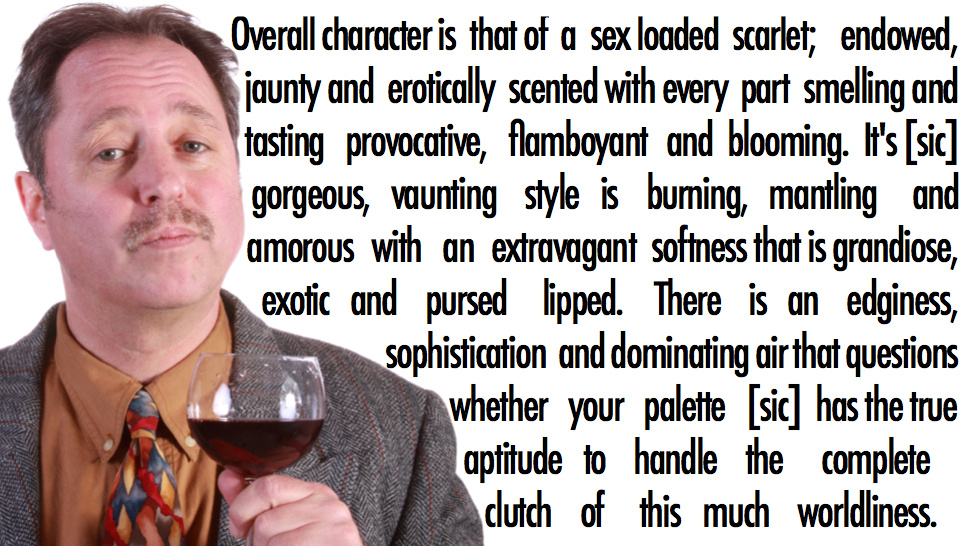
H/T to Colby Cosh for the original link.
Comments Off on The allure of fine wines
July 24, 2017
Great Blunders of WWII: The German Blunder At Dunkirk 1
Published on 4 Nov 2016
From the History Channel DVD series “Great Blunders of WWII”
Comments Off on Great Blunders of WWII: The German Blunder At Dunkirk 1
July 23, 2017
Fake Paris – Female Soldiers – Naval Warfare I OUT OF THE TRENCHES
Published on 22 Jul 2017
It’s time for the Chair of Wisdom again and this week Indy talks about fake Paris, female soldiers and the rules of naval warfare.
Comments Off on Fake Paris – Female Soldiers – Naval Warfare I OUT OF THE TRENCHES
July 22, 2017
Dunkirk Myth vs. Reality – Operation Dynamo
Published on 7 Jul 2017
The evacuation of British, Belgian, and French troops at Dunkirk – Operation Dynamo – was a crucial event in the early stages of the Second World War. Although the Allies were ultimately severely beaten in the Battle of France, the events at Dunkirk were mostly portrayed and perceived as a victory for the British. Quite naturally various myths surround this event.
» SOURCES «
Palmer, Alice: Dunkirk: The Defeat That Inspired a Nation
http://repository.wellesley.edu/cgi/viewcontent.cgi?article=1014&context=library_awardsAlexander, Martin S.: French grand strategy and defence preparations. In: Cambridge History of the Second World War, Volume I
Frieser, Karl-Heinz: The war in the West, 1939-1940: an unplanned Blitzkrieg. In: Cambridge History of the Second World War, Volume I
Amazon.com link (affiliate): http://amzn.to/2tuFtuMGardner, W.J.R. Gardner: The Evacuation from Dunkirk: ‘Operation Dynamo’, 26 May-June 1940 (Naval Staff Histories)
Amazon.com link (affiliate): http://amzn.to/2uoqMFVHistory of The Association of Dunkirk Little Ships
http://www.adls.org.uk/t1/content/history-association-dunkirk-little-shipsMrs. Miniver
https://en.wikipedia.org/wiki/Mrs._Miniver
July 20, 2017
Latest warnings about climate change to mean higher wine prices … maybe
London’s local Metro newspaper recently published a scary article about rising temperatures in wine regions across the world and the likelihood of driving wine prices much higher. Colour me skeptical, frankly. Also of a doubting disposition, Paul Austin Murphy indulges in a good, old-fashioned fisking of the alarmist article:
Now here, in all its glory, is a supremely tangential link (found in a Metro article called ‘Global warming is now messing with wine, so can you PLEASE STOP WRECKING THE WORLD‘):
Global warming is “going to up the price of wine across the board”.
Readers may want to know the details about this fatal connection between man-created global warming and the high price of wine. Though — it must be said straight away — this can’t always the case at present. It must surely depend on which wines you like and where you buy your wine from.
Anyway, this is the hard science bit; so pay attention and put your white coats on. Here goes:
“Researchers have suggested that rising temperatures in Europe are likely to increase the cost of labour in vineyards, noting that as heat rises in August, a month when a significant amount of the harvest is brought in, there’s a 15% drop in the amount of time labourers are able to work.
“There’s also a drop in productivity, slowing down the wine production process.”
That’s odd. On average heat always rises in August in most European countries. Metro doesn’t really make it clear if these natural — as well as annual — increases have themselves increased. It also says that “[r]esearchers have suggested”. Yes, they’ve suggested. That’s a very loose word. Though it’s obviously a very precise and important word if you like your wine and you’re also against man-caused global warming.
It’s also the case that in several European wine-producing countries, cold weather is much more of a problem for the wine industry than hot weather (France, in particular). A “hot” vintage in France is very often associated with extremely high quality wine from that vintage.
Another study has admitted that this catastrophic effect on wine production hasn’t been replicated elsewhere. Metro says:
“Andreas Flouris of the School of Exercise Science at the University of Thessaly reckons that the results of the small-scale study could easily repeat in California, across Europe, and in Australia — so all our wine could be set to hike up in price.”
Now if this wine catastrophe hasn’t yet happened in “California, across Europe, and in Australia” — then where, exactly, has it happened? The initial study mentioned that “most European countries” have been effected by it. (Which ones?) This other study says that it hasn’t yet occurred “across Europe.” How do we make sense of these two seemingly contradictory phrases?
It’s not just about cost. (Though, for Metro, it’s mainly about the cost!) This is also about taste. Metro tells us that
“[i]ncreased heat is also affecting the taste of wine, damaging the quality of grapes across Europe and shortening the growing season”.
All this — if true — will also affect prices. Shorter growing seasons will certainly affect the price of wine — or at least certain wines from certain countries. This is strange. One main reason why the United Kingdom doesn’t produce much wine is its shortage of warm weather. (British wine makes up 1% of the domestic market.) Yet if temperatures keep on increasing, then surely more wine will be produced in England. That will also have a positive effect on the price of wine! Why doesn’t Metro mention that?
Now what’s all this going to do to London’s dinner-party circuit? I mean Metropolitans are already suffering from severe “austerity”. Add 50 pence (or less) to a bottle of wine and then what have you got? Massive poverty among London’s professional political Pharisees (who also like wine).
It’s fascinating that the Metro author tries to imply that hot weather in (parts of) Europe will somehow have a knock-on effect in California and Australia, isn’t it? The two latter wine-producers are known for their consistency between vintages, because they are warm-weather regions where the grapes are generally able to mature to full ripeness every year almost without fail. Cool climate regions (like Ontario, for example) have much greater variation from vintage to vintage because the local weather varies significantly and the grapes are not always able to fully ripen before they have to be picked (this is more true of red than white grapes, which tend to ripen sooner and can be picked earlier than the red grapes).
July 9, 2017
German Defences In The Meuse-Argonne Region I THE GREAT WAR Special
Published on 8 Jul 2017
Tour the Meuse-Argonne region with Jean-Paul: http://bit.ly/MeuseArgonneTours
Indy and Jean-Paul from the Romagne 14-18 museum explore the German defence works in the region. These bunkers were used from 1914 till 1918 and saw heavy action during the American Meuse-Argonne Offensive later in the war.
Comments Off on German Defences In The Meuse-Argonne Region I THE GREAT WAR Special
July 4, 2017
The Destroyed Villages Of France – Fleury I THE GREAT WAR Special
Published on 3 Jul 2017
Fleury has a mayor and you can find it on a map. But the official population is: 0. The village has been completely destroyed during the Battle of Verdun and his now a memorial place. Indy walks the blasted landscape where you can still see the craters from constant bombardment.
Comments Off on The Destroyed Villages Of France – Fleury I THE GREAT WAR Special
June 23, 2017
The Disillusionment of Lawrence of Arabia I THE GREAT WAR Week 152
Published on 22 Jun 2017
Almost a year after the secret signing of the Sykes-Picot-Agreement, British intelligence officer and guerrilla fighter T.E. Lawrence learns about the deal. He learns how the French, British and Russians are carving up the Middle East while officially supporting the Arab Revolt. Lawrence is increasingly frustrated with this double crossing behaviour and warns his superiors about the consequences.
Comments Off on The Disillusionment of Lawrence of Arabia I THE GREAT WAR Week 152
June 10, 2017
The Articles of Confederation – II: Ratification – Extra History
Published on 13 May 2017
The Continental Congress sent the Articles of Confederation to the thirteen states for ratification, but Maryland insisted on changes that Virginia rushed to oppose. Meanwhile, the American Revolutionary War raged on.
Comments Off on The Articles of Confederation – II: Ratification – Extra History
June 6, 2017
Where was the Luftwaffe on D-Day? – German Response to Operation Overlord, Normandy
Published on 26 May 2017
The 73 Anniversary of D-Day is nearly upon us so let us talk about the Luftwaffe‘s involvement in the Battle of Normandy!
Comments Off on Where was the Luftwaffe on D-Day? – German Response to Operation Overlord, Normandy
D-Day in Colour
Published on 1 May 2017
(c) D-Day in Colour (2004), narrated by John Hurt
D-Day, 6th June 1944: the launch of Operation Overlord. The battle that began the liberation of Europe. The last moment the German Army might have rescued the fate of Adolf Hitler. The beginning of the end of the Second World War. D-Day is a date permanently etched in our nation’s memory.
From the makers of Britain At War In Colour, this documentary takes an in-depth look at the events and experiences of the greatest sea-borne invasion in history, focusing on the personal stories of those involved including not only the men in combat but also the family and friends anxiously awaiting news of their loved ones.
Narrated by John Hurt, D-Day In Colour relives the events of those decisive yet perilous days and reflects on the private triumphs and personal tragedies that proved crucial to the outcome of the Second World War. It provides an intimate first-hand account of the arduous months and crucial hours that shaped the future peace of the civilised world. The vivid colour film and personal witness material combine with original sound archive to illustrate the reality of battle, the complexity of human emotions and the sacrifices that were made in the fateful summer of 1944.
Comments Off on D-Day in Colour
June 4, 2017
Exploring the Romagne 14-18 Museum in France I THE GREAT WAR Special
Published on 3 Jun 2017
Check out Jean-Paul’s museum or book him as a guide if you want to explore the Verdun or Meuse-Argonnes region: http://www.romagne14-18.com/index.php/de/
This winter we went to the Meuse region in France and explored the battlefield of Verdun and the Meuse-Argonne Offensive. Jean-Paul was our guide there and also showed us his impressive collection of WW1 relics that he all found in the area over the last decades.
Comments Off on Exploring the Romagne 14-18 Museum in France I THE GREAT WAR Special
June 2, 2017
French Mutinies – Tunnels Under Messines Ridge I THE GREAT WAR Week 149
Published on 1 Jun 2017
The casualties and lack of success during the Nivelle Offensive were too much for the French Army and now the breaking point was reached. While parts of the French Army are in open mutiny, British Commander Douglas Haig is already planning the next offensive at Ypres. This time he wants to combine it with an amphibious landing along the Belgian coast.
Comments Off on French Mutinies – Tunnels Under Messines Ridge I THE GREAT WAR Week 149
May 28, 2017
Indochina – Cyprus – Puerto Rico I OUT OF THE TRENCHES
Published on 27 May 2017
What do Indochina, Cyprus and Puerto Rico have in common? They are all featured in our newest episode of Out of The Trenches where Indy answers all your questions about World War 1.
Comments Off on Indochina – Cyprus – Puerto Rico I OUT OF THE TRENCHES


