
R4OfficialChannel
Published on 27 Dec 2015
October 29, 2017
Renault 4’s history: reviewed by James May on Top Gear
Comments Off on Renault 4’s history: reviewed by James May on Top Gear
October 2, 2017
The Collapse of the Carolingian Empire – Echoes of History – Extra History
Extra Credits
Published on 30 Sep 2017The empire built by Charlemagne would end up divided by his grandsons, all of whom wanted to rule their own piece of it. But the division worked poorly, and may have set a precedent that shaped wars in Western Europe for centuries to come.
Comments Off on The Collapse of the Carolingian Empire – Echoes of History – Extra History
September 18, 2017
5 Medieval Dynasties That Still Exist Today
Published on 18 Aug 2017
The medieval period produced a lot of powerful dynasties which fought for influence and wealth in Europe. These families where once the most powerful people on the planet, but who and where are they today? Here are 5 Medieval dynasties that still exist today.
Comments Off on 5 Medieval Dynasties That Still Exist Today
September 13, 2017
The Thirty Years War
Published on 10 Nov 2014
The Thirty Years’ War was fought from 1618-1648 (Thirty Years!) in the Holy Roman Empire. It began as a conflict between Catholics and Protestants in Bohemia, but grew to involve Denmark, Sweden, and France. After the French began helping Gustavus Adolphus, the Protestant king of Sweden, the lines became blurry and the war became more about the balance of power in Europe than about religion. The Peace of Westphalia paved the way for France to become the dominant power in Western Europe and for the permanent decline of the Holy Roman Empire as a political institution.
If you like this lecture, check out my other lectures for AP European History and Western Civilization!
September 9, 2017
The Seven Years’ War
Published on 19 Nov 2016
The Seven Years’ War essentially comprised two struggles. One centered on the maritime and colonial conflict between Britain and its Bourbon enemies, France and Spain; the second, on the conflict between Frederick II (the Great) of Prussia and his opponents: Austria, France, Russia, and Sweden. Two other less prominent struggles were also worthy of note. As an ally of Frederick, George II of Britain, as elector of Hanover, resisted French attacks in Germany, initially only with Hanoverian and Hessian troops but from 1758 with the assistance of British forces also. In 1762, Spain, with French support, attacked Britain’s ally Portugal, but, after initial checks, the Portuguese, thanks to British assistance, managed to resist successfully.
Comments Off on The Seven Years’ War
September 5, 2017
Georges Guynemer – The Flying Icon of France I WHO DID WHAT IN WW1?
Published on 4 Sep 2017
George Guynemer was one of the top scoring flying aces of the entire First World War with 54 aerial victories. In his lifetime, he was celebrated as a hero, an icon and an inspiration in France. When he went missing 100 years ago, in September 1917, it was a great shock to the nation and to this day his death is not fully understood.
Comments Off on Georges Guynemer – The Flying Icon of France I WHO DID WHAT IN WW1?
September 3, 2017
Battlefield 1 Historical Analysis – In The Name Of The Tsar – They Shall Not Pass I THE GREAT WAR
Published on 2 Sep 2017
WW1 Armoured Trains: https://www.youtube.com/watch?v=e5Jl5KdG-Tc
WW1 China: https://www.youtube.com/watch?v=TofCRaOBWZ0
Women’s Battalion: https://www.youtube.com/watch?v=cndgoEd3fkkTwo new expansions for Battlefield 1 dropped in the past few months and they introduced two of the most important factions of World War 1: France and Russia. And since you guys liked our other trailer analysis videos, we decided to review the existing trailer footage and give you some background.
Please send your comments about the mistaken General Liu rifle to: allww1erarifleslookthesametous@thegreatwar.tv
Comments Off on Battlefield 1 Historical Analysis – In The Name Of The Tsar – They Shall Not Pass I THE GREAT WAR
September 1, 2017
The Moscow State Conference – Black Sea Revolutionaries I THE GREAT WAR Week 162
Published on 31 Aug 2017
The political factions that oppose the rise of Bolshevism in post-revolutionary Russia come together for a conference this week 100 years ago. But apart from the Moscow State Conference, some people in the military actually aim for a military dictatorship to restore order in Russia and continue the war. At the same time the 2nd Battle of Verdun comes to an end with a French victory and revolutionary fever also spreads across the Black Sea Fleet.
Comments Off on The Moscow State Conference – Black Sea Revolutionaries I THE GREAT WAR Week 162
August 28, 2017
Heavy Machine Guns of the Great War
Published on 14 Aug 2015
Check out The Great War’s complete playlist here for your easy binge-watching enjoyment:
https://www.youtube.com/playlist?list=PLB2vhKMBjSxMK8YelHj6VS6w3KxuKsMvT
I have been really enjoying The Great War series, so I figured I ought to take advantage of an opportunity to look at several WWI heavy machine guns side by side. This is a video to give some historical context to the guns, and not a technical breakdown of exactly how they work (that will come later). These really were the epitome of industrialized warfare, and they wrought horrendous destruction on armies of the Great War.
The guns covered here are the German MG08, British Vickers, and French Hotchkiss 1914.
Hammer Prices:
Vickers: $20,000
MG08: $11,000
Hotchkiss 1914: $7,000Other heavies used in the war include the Austrian Schwarzlose 1907/12, the Russian 1905 and 1910 Maxims, the Italian Fiat-Revelli, and the American Browning 1895. The book I was quoting from towards the end was Dolf Goldsmith’s unmatched work on the Maxim, The Devil’s Paintbrush.
Comments Off on Heavy Machine Guns of the Great War
August 25, 2017
The 2nd Battle Of Verdun – Lost Opportunities On The Isonzo River I THE GREAT WAR Week 161
Published on 24 Aug 2017
The 11th Battle of the Isonzo river continued this week and the Italians manage to break through parts of the Austro-Hungarian lines, they hesitate to exploit the breakthrough though and the opportunity is lost. Meanwhile the French break through the German lines at Verdun and Herbert Plumer comes up with a plan to defeat the German Hindenburg Line.
Comments Off on The 2nd Battle Of Verdun – Lost Opportunities On The Isonzo River I THE GREAT WAR Week 161
August 23, 2017
One definite success from the Dieppe raid
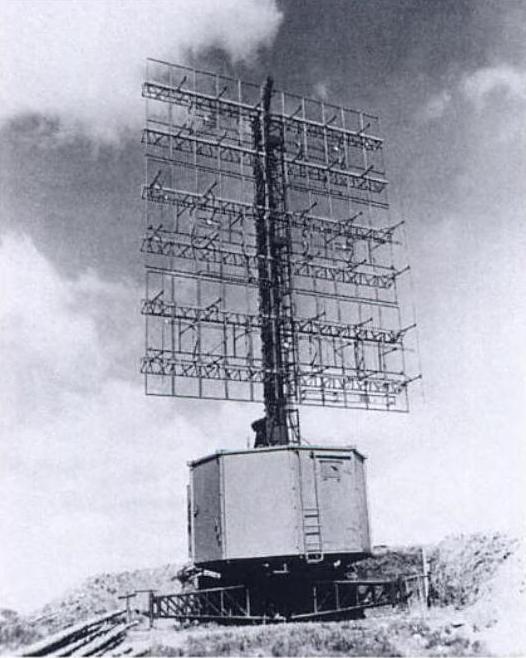
The allied attack on Dieppe in August, 1942 was an operational failure: nearly 60% of the raiding force were killed, wounded or captured and the tactical objectives in the harbour area were not achieved. I’ve mentioned the speculations on an Enigma side-operation (which does not seem to be given credence by most historians), using the main Canadian attack as cover for an attempt to snatch the latest German encryption device from one or more high-security locations within the target area. A second side-mission was also conducted to capture one of the newest German radar stations at Pourville, just down the coast from Dieppe:
Aerial reconnaissance photos indicated that one of these new Freya radar sets had been installed at Pourville-sur-Mer, near Dieppe. A military raid on Dieppe, to test British and Canadian plans for an amphibious invasion, was already being planned. Senior officers immediately added a sub-plan to the Dieppe raid: a small force would be detached to attack the Pourville radar station. There, a radar expert would dismantle the station’s vital equipment and transport it back to the UK for analysis.
Nissenthall, a Jewish cockney who had a lifelong fascination with electronics and radio technology, had joined the Air Force as an apprentice in 1936. By the outbreak of the war in 1939 he was assigned to RAF radio direction finding stations (RDF, the short-lived original term for radar) and rapidly built up a reputation as a competent and technically skilled operator. Before the war he had also worked directly with Robert Watson-Watt, widely regarded today as the father of radar.A German FuMG 401 “Freya LZ” radar station of the type installed at Pourville. (US National Archives and Records Administration image, via Wikimedia)
[…]
More than 5,000 soldiers of the First Canadian Division set off from the south coast of England in the early hours of 19 August 1942. Embedded with A Company of the South Saskatchewan Regiment, Nissenthall’s 11-man bodyguard landed on French soil – but on the wrong side of the Scie River from the radar station.
After finding their way to their intended starting point, the team ran into stiff German resistance. Casualties soon mounted up as they probed the area, looking for a way into the radar station.
Thanks to the Bruneval raid six months previously, the Germans had beefed up their defences around coastal radar stations. This, combined with the naivete of the Allied planners back in Britain, had left the Canadians exposed and vulnerable. Though Nissenthall’s team had just about reached the radar station, there was no hope they would be able to get inside it, much less examine it, dismantle it and take away the most valuable parts of the Freya set inside.
Comments Off on One definite success from the Dieppe raid
August 21, 2017
Top Five Tanks – Indy Neidell
Published on 11 Aug 2017
For the fourth in our Top 5 series, Great War Channel presenter Indy Neidell came to The Tank Museum to share his 5 favourite tanks. https://www.youtube.com/TheGreatWar
It’s all about opinions, so please feel free to agree or disagree in the comments below.
Whose Top 5 would you like to see next?
Comments Off on Top Five Tanks – Indy Neidell
August 19, 2017
Dieppe Raid 19 August, 1942 – Assault, escape and aftermath
Published on 22 Mar 2009
The Dieppe Raid was one of the costliest days for the Canadian Army in the entire Second World War. 907 Canadians were killed, in addition more than 2,500 were wounded or captured, all on August 19 of 1942.
At the BBC site: Julian Thompson’s summary of the Dieppe Raid.
Comments Off on Dieppe Raid 19 August, 1942 – Assault, escape and aftermath
August 16, 2017
Canadian War Museum highlights the six Canadian VCs won at the Battle of Hill 70
On August 15th, 1917, the Canadian Corps began a planned attack on German positions near Lens in northern France, to relieve pressure on the larger British and Imperial operations at Passchendaele. During the vicious fighting around the feature designated as “Hill 70”, the valour of six Canadians was deemed deserving of the highest military honour the British Empire could bestow, the Victoria Cross. From the institution of the medal in 1856, only 96 Canadians have been awarded a VC. David Pugliese reports for the Ottawa Citizen:
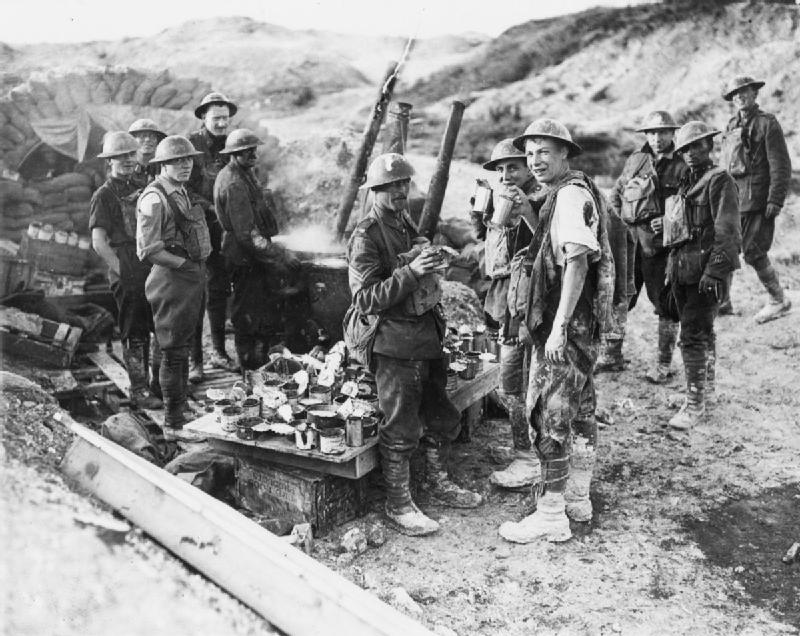
IWM caption : Hill 70 (Lens) 15-25 August: A group of Canadians, standing with mugs at a soup kitchen set up on boards “100 yards from Boche lines” during the push on Hill 70 (via Wikimedia)
The Canadian War Museum is marking the centenary of the Battle of Hill 70 with a special display highlighting the six Canadian soldiers who received Victoria Cross decorations as a result of their courageous actions. The Battle of Hill 70, which includes portraits of the recipients and some of their medals, will be on view from August 15 until Remembrance Day, according to the Canadian War Museum.
“Sir Arthur Currie described the Battle of Hill 70 in August 1917 as ‘altogether the hardest battle in which the Corps has participated,’” Stephen Quick, Director General of the Canadian War Museum, said in a news release. “It’s remarkable that this 11-day battle, fought four months after Vimy Ridge, resulted in six Canadian soldiers of varying backgrounds and ranks being awarded the highest honour for military valour in the British Empire.”
Here the Canadian War Museum also provides details about the battle and the Victoria Cross winners:
The Canadian Corps, under the command of Sir Arthur Currie, launched an attack on the German-held city of Lens in northern France on August 15, 1917. His strategy was to capture the high ground overlooking the town, forcing the enemy to counterattack. This prevented German units from reinforcing formations facing Allied troops struggling to gain ground at Passchendaele in Flanders. By August 25, the Canadians had withstood 21 failed counterattacks and suffered 9,000 casualties at Hill 70, but they had killed, wounded or taken as prisoner about 12,000 Germans. It was a significant and costly tactical victory for the Allies.
The Battle of Hill 70 introduces visitors to Sergeant Frederick Hobson, Corporal Filip Konowal, Private Harry Brown, Private Michael James O’Rourke, Acting Major Okill Massey Learmonth and Sergeant-Major Robert Hill Hanna. They are among only 96 Canadian recipients of the Victoria Cross since its introduction during the Crimean War in 1856.
Comments Off on Canadian War Museum highlights the six Canadian VCs won at the Battle of Hill 70
August 13, 2017
War-Weariness I THE GREAT WAR Summary Part 10
Published on 12 Aug 2017
In this special Recap Episode we summarize the events from May to July 1917. Two major Allied spring offensives at Arras and on the Aisne come to an end with mixed results. The Macedonian Front flares up again as does the 10th Battle of the Isonzo. Mutiny in the French army. A stunning British victory at the Battle of Messines. A vicious battle on the heights of Mount Ontigara. The first American troops are landing in France. July sees the great strides of the Kerensky offensive featuring the Russian Women´s Battalion of Death. A showdown between the Bolsheviks and the Provisional Government. The first usage of the dreaded Mustard Gas.
Comments Off on War-Weariness I THE GREAT WAR Summary Part 10


