Heinlein’s very popular novel had a significant short-term effect on the culture when it came out but a negligible long-term effect, beyond adding “grok” to the language. Its most radical message was the idea of group marriage of a particular sort. The nests it described were stable high trust families formed with minimal search and courtship. You looked into someone’s eyes, recognized him or her as a water brother, and knew you could trust each other forever after. It was a naively romantic picture, possibly workable with the assistance of the protagonist’s superpowers, risky in the real world but fitting well into the naively romantic hippy culture of the time. Quite a lot of people tried to implement it; for some it may have worked. When I spoke on a panel at a science fiction convention some years ago, one audience member made it reasonably clear that she had joined a nest, was still in it, and was happy with the result.
Sexual mores changed but not, for most, in that direction. Living in southern California in the eighties, the view that seemed most common among young adults — many of those I associated with would have been people I met through the SCA,1 a subculture that had noticeable overlap with both science fiction fandom and hippiedom — was very different. The ideal pattern was stable monogamy but who could be so lucky? Insofar as it had been replaced it was mostly by the increasing acceptability and practice of casual sex.
There has been some development since Stranger was published, in practice and theory, along the lines of group marriage of a somewhat different sort. Polyamory is more self-conscious and, at least in theory, more structured than what we see in Stranger. Partners are classified as primary or secondary and a good deal of attention paid to what those terms mean and what behavior they imply. The result is in theory closer to the Oneida Commune of the 19th century, on a much smaller scale, than to the nest described in Stranger.2
This fits not only what happened in the real world but what happened in Heinlein’s fictional worlds. Consider a more sophisticated version of group marriage, the line marriage in The Moon is a Harsh Mistress. It is highly organized, with new members brought in at the low age end on a regular pattern of alternating gender. There is extensive search/courtship. And the protagonist offers a plausible explanation of its social role, why the institutions developed and what purposes it served.
Finally, consider Friday, a later novel. The protagonist, surprisingly naive given her profession — secret agent — joins a group marriage, makes a substantial commitment to it and is booted out, her share of the assets stolen, when it is discovered that she is an artificial person, the superior product of genetic engineering. Her much later commitment to a second group marriage follows more careful research.
David D. Friedman, “Odds and Ends”, David Friedman’s Substack, 2023-04-29.
1. The Society for Creative Anachronism, a historical recreation organization I have been active in for a very long time.
2. The practice sometimes ends up as open marriage, monogamous for purposes of producing and rearing children but with no obligation to sexual exclusivity — an option made possible by reliable contraception.
July 31, 2023
QotD: Stranger in a Strange Land at 50
July 30, 2023
“Give me Andrea Dworkin’s anti-fella fury over this matrician tripe any day of the week”
Brendan O’Neill clearly doesn’t think Caitlin Moran’s new book What About Men? is worth reading:
Men, I have bad news: Caitlin Moran is coming for us. She comes not to man-bash, not to holler: “All men are rapists!” It’s worse than that. She feels sorry for us. “I’m violently opposed to the branches of feminism that are permanently angry with men”, she writes at the very start of her very bad book. Instead she pities us. She frets over our toxic stoicism, our inability to be vulnerable, our unwillingness to be open about our fat bodies and small cocks. She wants to save us from all the “rules” about “what a man should be”. From all that “swagger” and “the stiff upper lip”. By the end I found myself pining for some good ol’ angry feminism. Give me Andrea Dworkin’s anti-fella fury over this matrician tripe any day of the week.
What About Men? is, I’m going to be blunt, rubbish. I knew it would be from the very first page where Moran says that “when it comes to the vag-based problems, I have the bantz”. Imagine using the word bantz unironically in 2023. What she means is that she’s done all the vagina stuff. She’s completed feminism. She’s known as “the Woman Woman”, she says, in an arrogant timbre that puts to shame those cocksure blokes who stalk her nightmares. She wrote the bestselling pop-feminist tome, How To Be a Woman (2011), which contained such gems of wisdom as “don’t shave your vagina” because it’s better to have a “big, hairy minge”, a “lovely furry moof”, “a marmoset sitting in [your] lap”, than a bald cooch. (Emmeline Pankhurst, I’m so sorry.) So now, naturally, she’s turning her attention to men. She’s discovered there is “a lot to say” about “men in the 21st-century”. Lucky us.
What she says about us is almost too daft for words. You realise by about page 22 that she’s never met a bloke from outside the media-luvvie, ageing rock-chick, “Glasto”-loving circle she famously inhabits. (I almost died of second-hand embarrassment when she said in How To Be a Woman that she lives an edgy existence, “like it’s 1969 all over again and my entire life is made of cheesecloth, sitars and hash”. Maam, you write a celebrity column for hundreds of thousands of pounds for The Times.)
Even her cultural references in What About Men? are off, as befits a woman who is essentially a square person’s idea of a cool person. She laments that young men are in “the grip of a fad” for super-skinny jeans. Jeans so tight they look “sprayed-on”. Jeans so tight that the poor lad’s balls end up “crushed against the crotch seam, in vivid detail”. Really? It’s not 2006. Bloc Party aren’t in the charts. I’m no follower of fashion but even I know most young men haven’t been wearing bollock-squashing jeans for a few years now. My nephews wear baggy jeans, à la Madchester. Pretty much the only time you see unyielding denim these days is on the portly thigh of a mid-life-crisis middle-class dad. The kind of men, dare I say it, that Ms Moran mixes with.
Her commentary on t-shirts is a dead giveaway, too. The only fashion flare the tragic male sex is allowed to enjoy is the tee, she says. Especially past the age of 40. You’ll see fortysomething fellas in “band t-shirts, slogan t-shirts, t-shirts with swearing on”, she says. Will you? Where? Again, only in the knowingly dishevelled privileged set Moran exists in. Every man in his forties I know always manages to put a shirt on. So desperate are emotionally repressed men to express themselves, says Moran, that some even buy t-shirts “from the back pages of Viz” that say things like “Breast Inspector” or “Fart Loading: Please Wait”. Not once in my life have I seen a man in a Viz tee. The problem here isn’t men – it’s Moran’s man-friends. She could have saved herself the trouble of this entire book by befriending some normal blokes.
That Moran’s pool of men is shallow is clear from the fact that all the men she talks to for the book seem to be as steeped as she is in chattering-class orthodoxy. She includes a transcript of long chats with male acquaintances and, honestly, reading it feels like being stuck in a lift with craft-beer wankers who do IT for the Guardian. At one point she informs her readers that her male friends are mostly “middle-aged, middle-class dads who know about wine, recycle, have views on thoughtful novels” and would probably “cry if they saw a dog struggling with a slight limp”. Writing a book about men from the perspective of men like that is like writing a book about women from the perspective of Princess Anne.
QotD: Thomas Hobbes and Leviathan
… I’m not trying to cast Thomas Hobbes, of all people, as some kind of proto-Libertarian. The point is, for Hobbes, physical security was the overriding, indeed obsessive, concern. Indeed, Hobbes went so far as to make his peace with Oliver Cromwell, for two reasons: First, his own physical safety was threatened in his Parisian exile (a religious thing, irrelevant). Second, and most importantly, Cromwell was the Leviathan. The Civil Wars didn’t turn out quite like Hobbes thought they would, but regardless, Cromwell’s was the actually existing government. It really did have the power, and when you boil it down, whether the actually existing ruler is a Prince or a Leviathan or something else, might makes right.
One last point before we close: As we’ve noted here probably ad nauseam, modern English is far less Latinate than the idiom of Hobbes’s day. Hobbes translated Leviathan into Latin himself, and while I’m not going to cite it (not least because I myself don’t read Latin), it’s crucial to note that, for the speakers of Hobbes’s brand of English, “right” is a direction – the opposite of left.
I’m oversimplifying for clarity, because it’s crucial that we get this – when the Barons at Runnymede, Thomas Hobbes, hell, even Thomas Jefferson talked about “rights”, they might’ve used the English word, but they were thinking in Latin. They meant ius – as in, ius gentium (the right of peoples, “international law”), ius civile (“civil law”, originally the laws of the City of Rome itself), etc. Thus, if Hobbes had said “might makes right” – which he actually did say, or damn close, Leviathan, passim – he would’ve meant something like “might makes ius“. Might legitimates, in other words – the actually existing power is legitimate, because it exists.
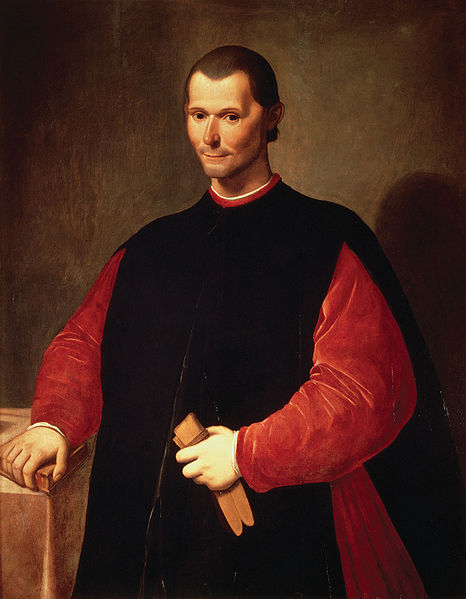
We Postmoderns, who speak only English, get confused by the many contradictory senses of “right”. The phrase “might makes right” horrifies us (at least, when a Republican is president) because we take it to mean “might makes correct” – that any action of the government at all is legally, ethically, morally ok, simply because the government did it. Even Machiavelli, who truly did believe that might makes ius, would laugh at this – or, I should say, especially Machiavelli, as he explicitly urges his Prince, who by definition has ius, to horribly immoral, unethical, “illegal” (in the “law of nations” sense) behavior.
So let’s clarify: Might legitimates. That doesn’t roll off the tongue like the other phrase, but it avoids a lot of confusion.
Severian, “Hobbes (II)”, Founding Questions, 2020-12-11.
July 29, 2023
QotD: How pre-modern cities shaped the surrounding landscape
When it comes to shaping the landscape outside of the city – our main point of investigation – the key element of the pre-modern city that matters is the intense demand it creates for agricultural products that the non-farmers who live in the city cannot produce themselves, chiefly (but not exclusively!) food. The intensity of that demand scales with the size of the city. A small town might only really shape land-use and farming patterns out a few miles; a huge mega-city like first century Rome (c. 1m people) re-shapes land patterns for hundreds of miles, its economic influence intruding into the territory of other, smaller cities.
Every town or city, of course, will be different. For agricultural societies especially, local terrain sharply constrains possible land uses. Some land is simply too wet or dry or rough or rocky or infertile for this or that purpose. In a modern city, apartments or factories or offices can be built almost anywhere; the sort of land suitable for intensive farming is more limited. This is even more true for pre-modern societies working without modern fertilizer, without electric-powered irrigation and without the industrial technology to massively reshape terrain (draining swamps, filling ravines, flattening hills, irrigating the desert, etc – some of these can be done with hand tools, but not to the extent we can today).
Still, we want to begin thinking about how cities impact the land around them without all of these difficult and confusing variables. We want to image a city, isolated and alone in the middle of an endless, flat and featureless plain. This is exactly what J. H. von Thünen did in The Isolated State (Der isolierte Staat). This kind of exercise can give us a baseline of what the landscape around a decent sized city might look like, which we can then modify to respond to different terrain, technology and social organization.
(Note: I would be remiss if I didn’t note that my discussion of these ideas owes heavily to Neville Morley’s Metropolis and Hinterland (1996), where he applied this very method to the city of Rome and its hinterland (and also first introduced me to von Thünen’s ideas). That book and also his Trade in Classical Antiquity are both great books to give a read if you want to begin building a sense of how pre-modern economies work).
The key factor von Thünen looks at is transportation costs. For a society without trains or trucks, moving bulk materials of any kind over long distances is extraordinarily expensive. Moving grain overland, for instance, would cause its cost to double after 100 miles. Thus land close to our theoretical city is extremely valuable for production, while land far away is substantially less valuable (because the end goal is transporting the agricultural production of that land to the city). As a result, transit costs – and thus distance – dominates how cities influence land-use patterns (along with population, which determines the intensity of the city’s influence).
Bret Devereaux, “Collections: The Lonely City, Part I: The Ideal City”, A Collection of Unmitigated Pedantry, 2019-07-12.
July 25, 2023
Chris Rufo, enemy of the [legacy media] people
Last week, Richard Hanania posted this review of Chris Rufo’s new book America’s Cultural Revolution: How the Radical Left Conquered Everything:
Some facts are so shocking that you don’t want to believe them. And if you do believe them, there’s a tendency to forget, downgrade their importance, and often have to be reminded of them again. Here’s one fact that falls into this category: The American education system, or at least the field of education itself, was taken over by literal communists. Those entrusted to teach children and young adults have as their greatest intellectual inspirations lunatics who would clearly have massacred their fellow Americans if they had the chance.
We know this because during the Cold War, some of the leading lights of modern academia were openly in favor of distant regimes that were engaging in mass killings in the name of equality. Some of them, like members of the Weather Underground and Angela Davis, personally participated in violent acts themselves. Instead of locking these people up and throwing away the key, we made them into tenured professors, and some of the most highly cited scholars in the world. They now are major intellectual figures in education schools, which train future teachers and administrators and ultimately control what kids learn, along with the DEI bureaucracies that exert so much control from within our most powerful institutions.
What does one do with these facts? Chris Rufo’s work over the last several years has been about taking them seriously. Tomorrow, he is publishing his first book, America’s Cultural Revolution: How the Radical Left Conquered Everything, which explains the history behind and intellectual foundations of modern wokeness. It serves as a wakeup call as to how bad things are. Many of the facts presented may be familiar to the reader, but taken together, they tell a story that serves as a searing indictment of the American establishment.
Rufo’s book is built around intellectual biographies of four activist-scholars: Herbert Marcuse, Angela Davis, Paulo Freire, and Derrick Bell. He traces their influence through political organizing and propaganda efforts. Marcuse was the intellectual godfather of the New Left. Davis’ Black Panther movement can be considered the precursor to BLM. Freire’s Pedagogy of the Oppressed “became the bible of teachers colleges throughout the United States and created a cottage industry in academic publishing,” with the author’s research having garnered about half a million citations. Finally, Derrick Bell was the force behind Critical Race Theory, a movement that seems to have been resisted and laughed at by most of the academic legal establishment before it wore its opponents down and gained a foothold in top law schools.
I can’t help but feeling a certain parallelism between Rufo’s work and my own. We both started becoming well known for writing about wokeness in the last few years. We both make extensive use of Twitter and longform writing to communicate to the world, and we both have books coming out two months apart with the same publisher trying to explain the origins of the radical ideas and concepts that have taken over American institutions. He’s exactly one year and two days older than me, so we’ve lived through the same formative political and cultural experiences, watching “white” become an epithet and homosexuals go from being a leper class when we were in high school to individuals having a preference that seems almost quaint in the era of public celebration of trans and the alphabet people.
Of course, an important difference is that Rufo has maintained a laser-like focus on wokeness and avoided alienating natural allies as he’s built a broad coalition within the conservative movement to take on the enemy. And his accomplishments have been quite impressive. Rufo was almost single-handedly responsible for Trump banning Critical Race Theory in the federal government, as he’s also developed close working relationships with Ron DeSantis and other politicians. Today, when Republican-controlled states ban gender transitions for minors, forbid the discussion of Critical Race Theory in schools, or abolish DEI offices in public universities, Rufo is serving as an intellectual inspiration to decision makers when he’s not directly involved in the policy process himself. If wokeness is ever defeated, one can imagine a leftist in thirty years writing a book on the career and activities of Rufo the way he writes about Marcuse and others today.
July 24, 2023
QotD: The Duke and Duchess of Windsor after the abdication
The author laces his chapters with some memorable phraseology. Of the wedding of David and Wallis in France on 3 June 1937, we are reminded, “Only the most cynical could have begrudged the pair their happy ending, although it remained ambiguous as to who was the dashing prince and who the swooning maiden.” With another coronation in the offing this year, [The Windsors at War author Alexander] Larman dwells on that of George VI (known hitherto at Bertie) at Westminster Abbey on 12 May 1937. All the time, we are reminded that the new king loathed the debonair confidence of “the king across the water”, fearing that if he made a hash of the kingship he never wanted, his scheming elder brother might return. This is one theme that runs throughout Larman’s fine scholarship.
We are reminded that the king’s much-rehearsed coronation speech was a success. “Millions of his subjects sat at home listening to the broadcast, willing him to succeed whilst knowing of his stammer and the difficulties that even speaking a few short sentences publicly had caused him … Yet fortunately for the coronation ceremony, the king’s nerves seemed to vanish on the day, aided by his sincere religious faith: another characteristic absent from his brother’s life.”
[…]
One trait that runs through this important book is the personal weakness of the Duke and the compelling strength of his bride. Larman makes it plain that both Baldwin and Chamberlain were aware that it was Wallis who was passing state secrets to German intelligence, although her husband also expressed sympathies for Hitler’s regime. Cecil Beaton, photographer of the David-Wallis wedding in France, noted in his diary that the Duchess “not only has individuality and personality, but [she] is a strong force”. Even as he praised her intelligence and admiration for the Duke, Beaton offered the judgement that she “is determined to love him, though I feel she is not in love with him” — an interesting reflection on the woman for whom her husband had abandoned his throne. In 2015, Andrew Morton dwelt in great detail on Wallis’s treachery in 17 Carnations: The Windsors, The Nazis and The Cover-Up.
Throughout Larman’s compelling read, we are offered evidence of how tone-deaf the Duke was to international protocol, the interests of Britain and the sufferings of others. Anthony Eden, as Foreign Secretary, observed how the pair felt they should be “treated abroad by ambassadors and dignitaries, rather as they would a member of the royal family on a holiday”. This came to a head when friends of the Duke organised a visit to Germany over 11–23 October 1937. They met several leading Nazis, including Hess, Goebbels (who called the Duke “a tender seedling of reason”) and Göring, as well as renewing their acquaintance with Ribbentrop, still then ambassador to Britain. It was Ribbentrop, according to Morton’s book, who had sent Wallis 17 carnations daily “each one representing a night they had spent together”.
On the penultimate day, the Windsors met Hitler at Berchtesgaden. Larman reasons that the visit was as much to show that the Duke and his bride were still relevant in the wider world, as to form a bond with the Führer to avoid future war. As with many public figures of the era, David feared communism far more than fascism, for which he saw the best antidote in an alliance with Germany. We are left wondering whether the Duke observed in Hitler’s authoritarian state all that he admired and wished for Britain, but was now denied.
A subtext to The Windsors at War is just how much anxiety David caused the King, his younger brother, during the run up to war and during it. For most of the period, the Duke badgered for money, confirmation of his status and a royal title for Wallis. Whilst the first was forthcoming, amounting to a financial settlement of £25,000 a year (generous by any standards, considering the Windsors spent their days sofa-surfing and sponging off their rich friends), neither of the latter were. Chamberlain was forced to write that “in addition to letters of protest he had as Prime Minister … all classes stood against him. In addition to the British not wanting him to return, residents of Canada, New Zealand and America wished him to remain in exile”.
Yet, writes Larman, the Duke would not simply “languish in exile and be denied the opportunity to contribute his thoughts on the international situation. This arrogance made him both unpredictable and, with the outbreak of war drawing closer, dangerous. At a time when it was crucial that the loyalties of prominent public figures were transparent, his inclinations remained opaque”.
Peter Caddick-Adams, “The other one”, The Critic, 2023-04-18.
July 21, 2023
QotD: War elephant weaknesses against Roman troops
The best way to think about the weaknesses of war elephants is to look at the question with a specific context, so we are going to narrow in on one of the two key areas where war elephants did not last as a weapon system: the Roman world (both the period of the Republic and the Empire). [B]y the Imperial period, the Romans seem to have decided that elephants were not worth the trouble and discontinued their use. Roman military writers routinely disparage elephants (we’ll see why) as weapons of war and despite the fact that Rome absorbed not one but three states which actively used elephants in war (Carthage, the Ptolemaic and Seleucid Kingdoms) – and thus we may assume three sets of capture, training and breeding programs for maintaining the animals – they did not continue their use. It is one thing not to adopt a foreign weapon, it is quite another to inherit the entire production complex and still say, “no, not for me”.
So today we’re going to ask, “why?” We’ve answered that question in the immediate term – to quote Trautmann (2015) on the point, “the Roman refusal of the war elephant … was based upon a low estimate of its value” (250). To put another way, they thought they sucked. We know elephants could be quite potent in battle, so the answer must be a touch more complicated. We’ll look at this two ways: first (because it’s me) in terms of logistics, and then in terms of anti-elephant tactics, to see why elephants could not succeed against (or with) Rome. I am also going to speculate – just a touch – on which of these factors might explain the other major area elephant warfare did not penetrate: China.
Roman Elephants
But first, a necessary caveat to an objection no doubt already brewing in the minds of some: but didn’t the Romans use elephants sometimes? Yes, though Roman employment of elephants was at best uneven (this is a point, I’d like to note, where Trautmann (2015) shows its value over, for instance, J. M. Kistler’s War Elephants (2006) – the latter’s reading of Roman use of war elephants bends the evidence to serve an argument, rather than the other way around). Nevertheless, the Romans did use war elephants during the last two centuries of the Republic.The Romans had some war elephants (just 20) at Cynocephelae (197 B.C.) against Macedon – these had been drawn from the kingdom of Numidia, which had sided with Rome against Carthage in the Second Punic War. Plutarch (Flam. 8.2-5) leaves the animals out of the battle narrative, but Livy (who is the better source; Liv. 33.9) notes their use to break up the Macedonian right wing, which was not yet even in fighting formation. It’s not clear the elephants were necessary for the Roman victory here and the key action was actually a flanking attack by infantry.
The Romans brought elephants to Magnesia (190 B.C.), but left them in reserve; the Romans only had a few, whereas their Seleucid opponents had brought many more. Moreover, the Roman elephants were smaller African elephants, effectively useless against the large Asian elephants the Seleucids used. Pydna (168 B.C.) against the Macedonians again, is harder to assess because the sources for it are poor (part of Livy’s narrative of the battle is mostly lost). Plutarch (Aem. 19-22) leaves the elephants out again, whereas Livy notes that Perseus’ dedicated elephant-fighting corps was ineffective in fighting the Roman elephants on the right wing, but attributes success there to the socii infantry rather than the elephants (Liv. 44.41.4-6). Kistler reads this as a notable elephant success, but Livy does not say this, instead crediting the socii on the right and the legions breaking up the Macedonian center.
The Romans did find elephants useful in places like Spain or southern Gaul (modern Provence) where just a handful could bewilder and terrify opponents completely unused to and unprepared for them. The last gasp of true Roman war elephants came in 46 B.C., where Julius Caesar defeated a Roman army led by Metellus Scipio which had sixty elephants in it. The elephants lost and one of Caesar’s legions (my personal favorite, Legio V Alaudae (Larks!)) took the elephant as a legionary symbol in commemoration of having beaten them.
So absolutely yes, the Romans of the Middle and Late Republic made some use of war elephants, but it was hardly a distinguished run. As Trautmann notes – quite correctly, in my view – the Romans were always more interested in ways to defeat elephants than to use them.
Bret Devereaux, “Collections: War Elephants, Part II: Elephants against Wolves”, A Collection of Unmitigated Pedantry, 2019-08-02.
July 20, 2023
The Fights for Assoro & Leonforte with Mark Zuehlke
OTD Military History
Published 19 Jul 2023Join me as I have Mark Zuehlke back on the channel to discuss the fights for Assoro and Leonforte during the campaign in Sicily.
(more…)
July 19, 2023
July 18, 2023
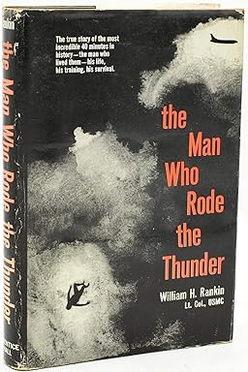
Life lessons from Thomas Sowell’s memoir
Rob Henderson took a lot away from his recent reading of Thomas Sowell’s A Personal Odyssey, including some fascinating lessons from Sowell’s time in the US Marine Corps:
Trust people who value being honest more than being nice.
As the Korean War intensified, Sowell was drafted into the Marine Corps. He notes that color did not matter, as all new recruits were treated with equal disdain. Sowell describes his life in the Marine barracks in Pensacola. There were two non-commissioned officers permanently stationed to oversee the young marines. One was Sergeant Gordon, “a genial, wisecracking guy who took a somewhat relaxed view of life”. The other was Sergeant Pachuki, “a disciplinarian who spoke in a cutting and ominous way” and was always “impeccably dressed”.
Sowell and his peers preferred Sergeant Gordon, as he was more easygoing. Sowell had to go into town to pick up a package. Sowell asked his Chief Petty Officer if he could leave the base to retrieve his package. Sowell received permission.
Later, while Sowell was not on base, he was marked as absent and was accused of being AWOL (absent without leave), a serious offense. Sowell knew Sergeant Gordon, the nice one, had overheard him asking for permission to leave the base. Gordon denied having heard anything, and told Sowell, “You’re just going to have to take your punishment like a man”. Gordon fretted that if he crossed the higher-ups, he would be reassigned to fight in Korea.
But unasked, Sergeant Pachuki came forward and spoke with the colonel, explaining the situation. As a result, Sowell was exonerated and returned back to his duties.
Referring to Gordon, the “nice” sergeant who betrayed him, Sowell writes, “People who are everybody’s friend usually means they are nobody’s friend”.
A “free good” is a costless good that is not scarce, and is available without limit.
Sowell would regularly needle Sergeant Grover, another member who outranked him.
Here’s the excerpt:
Some were surprised that I dared to give Sergeant Grover a hard time, on this and other occasions, especially since he was a nasty character to deal with. Unfortunately for him, I knew that he was going to give me as hard a time as he could, regardless of what I did. That meant it didn’t really cost me anything to give him as hard a time as I could. Though I didn’t realize it at the time, I was already thinking like an economist. Giving Sergeant Grover a hard time was, in effect, a free good and at a zero price my demand for it was considerable.
Sowell learned he could receive something he enjoyed (pleasure at provoking Grover) in exchange for nothing.
Much of what you see has been carefully curated with an agenda in mind.
One of Sowell’s assignments in the Marine Corps was as a Duty Photographer on base. One day after submitting some of his photos, Sowell had the following exchange with the public information office sergeant:
“They are good pictures, he said. “But they do not convey the image that the public information office wants conveyed.”
“What’s wrong with them?” I asked.
“Well, take that picture of the reservists walking across the little wooden bridge carrying their duffle bags.”
“Yeah. What’s wrong with it?”
“The men in that picture are perspiring. You can see the damp spots on their uniforms.”
“Well, if you carry a duffle bag on a 90-degree day, you are going to sweat.”
“Marines do not sweat in public information photographs.”
“Okay, what was wrong with the picture of the reservists picking up shell casings after they had finished firing? That was one of my favorites.”
“Marines do not perform menial chores like that, in our public relations image.”
“But all these photos showed a very true picture of the reservists’ summer here.”
“We’re not here to tell the truth, Sowell,” he said impatiently. “We are here to perpetuate the big lie. Now, the sooner you understand that, the better it will be for all of us.”
When I visited the Air Force recruiter in high school, I saw the brochures with images of well-groomed airmen in their dress blues graduating from basic training. I had no knowledge that much of that training would involve mind-numbing minutia. I suppose this is true for other career fields too. You see radiant coverage of academic research in legacy media outlets, or fun twitter threads outlining interesting research findings. You see the brand new hardcover book with all the glowing blurbs and reviews. You don’t see all the drudgery of research or writing behind the scenes.
Sometimes, it doesn’t pay to have too big a reputation.
Sowell and his fellow marines would sometimes have impromptu boxing matches around the barracks on base. One day Sowell was up against another guy and threw a sloppy right hand. The guy stumbled back, tripped, and fell to the ground. Although Sowell had swung and missed, witnesses thought he had knocked the other guy out.
Later, Sowell went up against another guy named Douglas. Douglas relentlessly came at Sowell and gave him a serious beating. Douglas told Sowell afterwards that the reason he was so aggressive was that he feared Sowell’s “one punch” could turn the fight around at any time. “Sometimes,” Sowell writes, “it doesn’t pay to have too big a reputation.”
July 13, 2023
Bill Slim’s plan for the Battle of Meiktila in March 1945
Dr. Robert Lyman on the subject of his most recent book, The Reconquest of Burma 1944-45: From Operation Capital to the Sittang Bend:
When I was writing my latest book with General Lord Dannatt he said to me, “Rob, if I’ve got one criticism of A War of Empires it’s that you don’t emphasise enough the role of Bill Slim in coming up with the plan for victory in 1945, and executing it perfectly.” Fair. As Slim’s military biographer, I told Richard that I didn’t want to be accused of rewriting that book again. I was conscious of this problem as I was writing A War of Empires.
But it is fair criticism. It may be that I underplayed Slim’s role when I was considering all the other critical features in this great campaign. The idea behind the dramatic victory by 14th Army in Burma in 1945 was Slim’s and Slim’s alone. He pursued his own plan through to its remarkable conclusion.
[…]
Slim’s original plan was to fight the main strength of the Japanese army on the Shwebo Plain, a dry, flat plain between the loops of the Chindwin and Irrawaddy. Not only would the terrain be well suited to the deployment of armour, for which the Japanese had little effective reply, but the Japanese would be trapped with the river-line at their back. Slim had assumed that the Japanese would be unprepared to make a voluntary withdrawal. The scene was set for Slim to be able to deploy his superior mobility and firepower to destroy the main Japanese army in Burma.
By the end of the year, however, it became apparent that the Japanese were not going to conform to Slim’s plan for the battle, and General Kimura had seen the trap which his forces would be caught in if they attempted to stand and fight in the Shwebo Plain. Showing unusual flexibility and moral courage Kimura promptly withdrew his reconstituted 15th Army behind the Irrawaddy. Kimura hoped, not without reason, to be able to smash Slim’s army as it attempted to cross the river, which in itself presented an immense obstacle to the British. He would then counter-attack and destroy Slim as the British withdrew during the monsoon to the Chindwin.
Kimura’s move behind the Irrawaddy destroyed at a stroke Slim’s plan. Undaunted, and recognising the supreme importance of destroying Kimura’s army rather than taking ground for its own sake, Slim came up with another plan. In basic outline, his new plan (Operation Extended Capital) entailed crossing the Irrawaddy and fighting the decisive battle in February in the plain around Mandalay and the low hills around Meiktila, the key enemy air and supply base in Central Burma. Both the road and rail links between Mandalay and Rangoon ran through Meiktila. If Meiktila fell, the whole structure of the Japanese defence of Central Burma would collapse.
July 11, 2023
“Howard hit upon an ingenious solution: take the coolest parts of history, file off the serial numbers, and do with them as you will”
Jane Psmith reviews Robert E. Howard’s The Coming of Conan the Cimmerian:
Know, oh prince, that between the years when the oceans drank Atlantis and the gleaming cities, and the years of the rise of the Sons of Aryas, there was an Age undreamed of, when shining kingdoms lay spread across the world like blue mantles beneath the stars — Nemedia, Ophir, Brythunia, Hyperborea, Zamora with its dark-haired women and towers of spider-haunted mystery, Zingara with its chivalry, Koth that bordered on the pastoral lands of Shem, Stygia with its shadow-guarded tombs, Hyrkania whose riders wore steel and silk and gold. But the proudest kingdom of the world was Aquilonia, reigning supreme in the dreaming west. Hither came Conan, the Cimmerian, black-haired, sullen-eyed, sword in hand, a thief, a reaver, a slayer, with gigantic melancholies and gigantic mirth, to tread the jeweled thrones of the Earth under his sandalled feet.
Robert E. Howard’s Conan stories are everything I have ever wanted in fantasy literature — decadent cities bowed under the weight of the ages, wicked sorcerers, gushing arterial blood, lurking antediluvian horrors, red-handed buccaneers, strange magics that have slumbered beneath the sands for untold centuries, glorious cavalry charges into the teeth of death, arcane jewels the size of ostrich eggs, monstrous ape-like demons with slavering jaws, captive princesses, steely thews — and this is the way to read them. For years they were only available in heavily-edited versions, interspersed with “posthumous collaborations”,1 and, worst of all, presented in chronological order (has Narnia taught us nothing?). These editions, though — there are two more volumes — give us Howard’s texts, in the order Howard wrote them, and beautifully illustrated.2 They’re a great pleasure to read, and you should, so I promise not to spoil any major plot points.
Howard got his professional start with boxing stories, but his great authorial love was historical fiction. “There is no literary work, to me, half as zestful as rewriting history in the guise of fiction,” he wrote in 1933. “I wish was I able to devote the rest of my life to that kind of work.” He published stories set during the Crusades (see, for example, Hawks of Outremer, which has some notable similarities to his later work on Conan) and the eras of Mongol and Islamic conquest, and failed to sell tales of ancient Irish warriors. Unfortunately, the markets were slim (more or less only Oriental Stories, which only ran for four years) and the demands of research high: “I could never make a living writing such things, though,” he went on. “[I]t takes me so long to complete one. I try to write as true to the actual facts as possible, at least, I try to commit as few errors as possible. I like to have my background and setting as accurate and realistic as I can …” In his Hyborian Age, the setting for his Conan stories, Howard hit upon an ingenious solution: take the coolest parts of history, file off the serial numbers, and do with them as you will. As a bonus, it means you can combine eras and civilizations that could never have coexisted (or, indeed, existed at all) in real history: the Hyborian Age has 13th century France (or its imagined version of Charlemagne and his Paladins) in the streaming banners of Aquilonia, the Old Kingdom of Egypt in the necromantic rituals of Stygia, warring Assyrian city-states in the lands of Koth, the hill tribesmen of Afghulistan and the tent-dwelling Shemite nomads and the wild pillaging Picts, all immediately recognizable. Howard paints in broadest of strokes, with none of the specifics that would obsess, say, me — there’s no fussing about why classical Greece is next door to the Timurids or why you have the Bronze Age one place and the Middle Ages elsewhere — but it works. Here’s a sweeping picture of rumor spreading across his world in Black Colossus:
Rumors drifted up through the meadowlands, into the cities of the Hyborians. The word ran along the caravans, the long camel-trains plodding through the sands, herded by lean hawk-eyed men in white kaftans. It was passed on by the hook-nosed herdsmen of the grasslands, from the dwellers in tents to the dwellers in the squat stone cities where kings with curled blue-black beards worshipped round-bellied gods with curious rites. The word passed up through the fringe of hills where gaunt tribesmen took toll of the caravans. The rumors came into the fertile uplands where stately cities rose above blue lakes and rivers: the rumors marched along the broad white roads thronged with ox-wains, with lowing herds, with rich merchants, knights in steel, archers and priests.
You know immediately what he’s gesturing at with all these peoples and places. H.P. Lovecraft, Howard’s friend and frequent correspondent, complained about his “incurable tendancy to devise names too closely resembling actual names,” but that was precisely the point. Why waste pages establishing the culture and character of an imaginary people with no emotional valence to anyone but the author when you can simply call a real people to mind in a few choice words? We already have a wealth of associations and baggage with the real world; it just makes sense to use them when you can. This is true on the small scale — as game designer and writer Kenneth Hite points out, your reader will have a much more powerful reaction to the shocking revelation that the queen is a vampire if it’s Elizabeth I rather than Lots’apostrae’fiis VII, to whom they were introduced three pages ago3 — but it’s even more useful when your fictional world has a wide scope. And indeed, Howard’s strategy works so well that it’s been copied by a great deal of subsequent fantasy literature: A Song of Ice and Fire is full of it, as is the world of Warhammer Fantasy. Even Tolkien, widely considered the master of secondary world fiction, works best for me when he draws most directly on the real world: on a recent re-read of Lord of the Rings, I cheered for the Rohirrim but had trouble caring about the Dúnedain and the line of Elendil until I started mentally substituting “Atlantis” for Númenor.
1. This is what they call it when you’re dead and someone else writes a story based on your notes, because they think “raping a corpse” isn’t very catchy.
2. They make wonderful audiobooks, too, if that’s your jam, but do take a peek at the illustrations if you can.
3. Actually, Elizabeth II would be even more fun.
July 9, 2023
Imperial Rome
In UnHerd, Freddie Sayers talks to historian and podcaster Tom Holland about his latest book, Pax:
To his army of ardent followers, Tom Holland has a unique ability to bring antiquity alive. An award-winning British historian, biographer and broadcaster, his thrilling accounts offer more than a mere snapshot of life in Ancient Greece and Rome. In Pax — the third in his encyclopaedic trilogy of best-sellers narrating the rise of the Roman Empire — Holland establishes how peace was finally achieved during the Golden Age, with a forensic recreation of key lives within the civilisation, from emperors to slaves.
This week, Holland came to the UnHerd club to talk about Roman sex lives, Christian morality, and the rise and fall of empires. Below is an edited transcript of the conversation.
Freddie Sayers: Let’s kick off with the very first year in your book.
Tom Holland: It opens in AD 68, which is the year that Nero committed suicide: a key moment in Roman history, and a very, very obvious crisis point. Nero is the last living descendant of Augustus, and Augustus is a god. To be descended from Augustus is to have his divine blood in your veins. And there is a feeling among the Roman people that this is what qualifies you to rule as a Caesar, to rule as an emperor. And so the question that then hangs over Rome in the wake of Nero’s death is: what do we do now? We no longer have a descendant of the divine Augustus treading this mortal earth of ours. How is Rome, how is its empire, going to cohere?
FS: It seemed to me, when I was reading Pax, that there was a recurring theme: a movement between what’s considered decadence, and then a reassertion of either a more manly, martial atmosphere, or a return to how things used to be — to the good old days. With each new emperor in this amazing narrative, it often feels like there’s that same kind of mood, which is: things have gotten a bit soft. We’re going to return to proper Rome.
TH: It’s absolutely a dynamic that runs throughout this period. And it reflects a moral anxiety on the part of the Romans that has been characteristic of them, really, from the time that they start conquering massively wealthy cities in the East — the cities in Asia Minor or Syria or, most of all, Egypt. There’s this anxiety that this wealth is feminising them, that it’s making them weak, it’s making them soft — even as it is felt that the spectacular array of seafood, the gold, the splendid marble with which Rome can be beautified, is what Romans should have, because they are the rulers of the world.
That incredible tension is heightened by class anxieties. There’s no snob like a senatorial snob. They want to distinguish themselves from the masses. But at the same time, there’s the anxiety that if they do this in too Greek a way, in too effeminate a way, then are they really Romans? And so the whole way through this period, the issue of how you can enjoy your wealth, if you are a wealthy Roman, without seeming “unRoman”, is an endearing tension. And of course, there is no figure in the empire who has to wrestle with that tension more significantly than Caesar himself.
FS: The 100-odd years that you’re covering in this volume is a period of great peace and prosperity and power, and yet at each juncture, it feels like there’s this anxiety. That’s what surprised me as a reader. There’s this sense of the precariousness of the empire — maybe it’s become softer, maybe it’s decadent, or maybe it needs to rediscover how it used to be.
TH: And, you see, this is the significance of AD 69, “the Year of the Four Emperors”, because the question is, are the cycles of civil war expressive of faults? Of a kind of dry rot in the fabric of the Empire that is terminal? Of the anger of the gods? And whether, therefore, the Romans need to find a way to appease the gods so that the whole Empire doesn’t collapse. This is an anxiety that lingers for several decades. It looks to us like this is the heyday of the Empire. They’re building the Colosseum, they’re building great temples everywhere. But they’re worrying: “Have the gods turned against us?”
And of course, there is a very famous incident, 10 years after the Year of the Four Emperors, which is the explosion of Vesuvius. And this is definitely seen as another warning from the gods, because it coincides with a terrible plague in Rome, and it coincides with the incineration (for the second time in a decade) of the most significant temple in Rome — the great temple to Jupiter on the Capitol, the most sacred of the seven hills of Rome.
Romans offer sacrifice to the gods or you pay dues to the gods rather in the way that we take out an insurance policy. And if the gods are busy burying famous towns on the Bay of Naples beneath pyroclastic flows, or sending plagues, or burning down temples, then this, to most, is evidence that the Roman people have not been paying their dues. So a lot of what is going on — certainly in the imperial centre — in this period, is an attempt to try and get the Roman Empire back on a stable moral footing.
July 8, 2023
QotD: The amputation of the soul
Reading Mr Malcolm Muggeridge’s brilliant and depressing book, The Thirties, I thought of a rather cruel trick I once played on a wasp. He was sucking jam on my plate, and I cut him in half. He paid no attention, merely went on with his meal, while a tiny stream of jam trickled out of his severed œsophagus. Only when he tried to fly away did he grasp the dreadful thing that had happened to him. It is the same with modern man. The thing that has been cut away is his soul, and there was a period — twenty years, perhaps — during which he did not notice it.
It was absolutely necessary that the soul should be cut away. Religious belief, in the form in which we had known it, had to be abandoned. By the nineteenth century it was already in essence a lie, a semi-conscious device for keeping the rich rich and the poor poor. The poor were to be contented with their poverty, because it would all be made up to them in the world beyound the grave, usually pictured as something mid-way between Kew Gardens and a jeweller’s shop. Ten thousand a year for me, two pounds a week for you, but we are all the children of God. And through the whole fabric of capitalist society there ran a similar lie, which it was absolutely necessary to rip out.
Consequently there was a long period during which nearly every thinking man was in some sense a rebel, and usually a quite irresponsible rebel. Literature was largely the literature of revolt or of disintegration. Gibbon, Voltaire, Rousseau, Shelley, Byron, Dickens, Stendhal, Samuel Butler, Ibsen, Zola, Flaubert, Shaw, Joyce — in one way or another they are all of them destroyers, wreckers, saboteurs. For two hundred years we had sawed and sawed and sawed at the branch we were sitting on. And in the end, much more suddenly than anyone had foreseen, our efforts were rewarded, and down we came. But unfortunately there had been a little mistake. The thing at the bottom was not a bed of roses after all, it was a cesspool full of barbed wire.
It is as though in the space of ten years we had slid back into the Stone Age. Human types supposedly extinct for centuries, the dancing dervish, the robber chieftain, the Grand Inquisitor, have suddenly reappeared, not as inmates of lunatic asylums, but as the masters of the world. Mechanization and a collective economy seemingly aren’t enough. By themselves they lead merely to the nightmare we are now enduring: endless war and endless underfeeding for the sake of war, slave populations toiling behind barbed wire, women dragged shrieking to the block, cork-lined cellars where the executioner blows your brains out from behind. So it appears that amputation of the soul isn’t just a simple surgical job, like having your appendix out. The wound has a tendency to go septic.
The gist of Mr Muggeridge’s book is contained in two texts from Ecclesiastes: “Vanity of vanities, saith the preacher; all is vanity” and “Fear God, and keep His comandments: for this is the whole duty of man”. It is a viewpoint that has gained a lot of ground lately, among people who would have laughed at it only a few years ago. We are living in a nightmare precisely because we have tried to set up an earthly paradise. We have believed in “progress”. Trusted to human leadership, rendered unto Caesar the things that are God’s — that approximately is the line of thought.
Unfortunately Mr Muggeridge shows no sign of believing in God himself. Or at least he seems to take it for granted that this belief is vanishing from the human mind. There is not much doubt that he is right there, and if one assumes that no sanction can ever be effective except the supernatural one, it is clear what follows. There is no wisdom except in the fear of God; but nobody fears God; there fore there is no wisdom. Man’s history reduces itself to the rise and fall of material civilizations, one Tower of Babal after another. In that case we can be pretty certain what is ahead of us. Wars and yet more wars, revolutions and counter-revolutions, Hitlers and super-Hitlers — and so downwards into abysses which are horrible to contemplate, though I rather suspect Mr Muggeridge of enjoying the prospect.
George Orwell, “Notes on the Way”, Time and Tide, 1940-03-30.
July 4, 2023
Shock! Horror! Apparently you can’t trust that Abraham Lincoln quote about not believing what you read on the internet!
As a long-time collector of quotations, I almost had to take to my fainting couch when it became clear that President Lincoln never said anything about the internet being a tissue of lies. My original quotations collection (webbed here, but no longer actively maintained) was not particularly well-policed in the sense of ensuring that the quotations were both accurate and properly attributed. This is because I began collecting them before the internet was a thing for most people. When I began the blog, I tried to ensure that anything I quoted could at least be traced back to the site I found it on (which isn’t a particularly rigorous chain of evidence, but at the least it ensured I couldn’t be accused of making shit up).
In James Delingpole’s article on this topic, I was sorry to find that the very first fake quote he listed is indeed one that I had included in my original collection:
Only the dead have seen the end of war – Plato
I became aware of this marvellous quotation – so wise, pithy and dark – on one of my frequent trips to the Imperial War Museum. It’s one of a series inscribed on the wall beside the ramp leading down to the World War I/trench section. Another of my favourites is attributed to Thucydides: “There were great numbers of young men who had never been in a war and were consequently far from unwilling to join in this one.”
The Plato quote is so good it has been used many times since, inter alia by General Douglas MacArthur in a speech at West Point in 1962, as an aphorism apparently oft-cited by grunts in the ‘Nam, and by Ridley Scott in Black Hawk Down. But the quote is fake. Or at least its attribution is.
In fact it derives not from the Classical Age but from the early 20th century. It was invented by the Madrid-born philosopher, poet and later Harvard professor George Santayana. He clearly had a gift for this sort of thing for he also coined another of those phrases which you’ve always thought was devised by someone much more famous: “Those who cannot remember the past are condemned to repeat it.” Usually this is attributed, in various forms, to Edmund Burke or Winston Churchill. But the former didn’t say it and the latter – as I suspect he quite often did – plagiarised it.
Fake quotes, whether genuine sayings that have been misattributed or fabrications which have been lent authenticity by putting them in the mouths of someone famous, have been a bugbear of mine for a while. I can probably date this to the time someone called me out on my favourite George Orwell quote: “In times of universal deceit, truth-telling becomes a revolutionary act”.
Annoyingly, I had used it a good half dozen times in articles and in internet chats before I learned that Orwell had never said it. I felt cheated and also foolish: surely as an English literature graduate I ought to have known such a thing, in the way that film buffs know that Ingrid Bergman never said “Play it again, Sam”.
But these are easy mistakes to make now that fake quotes are everywhere. Probably, this has always been the case but they have definitely proliferated with the advent of the internet, the shortening of attention spans (which make us more susceptible to gnomic verities that appear to sum everything up and obviate the need for further thought) and the corresponding appetite for meme-friendly aphorisms.
Many of these fake quotes, I’ve noticed, are printed over photographs or images of the alleged author. It’s a cheap trick but an effective one. No one ever is going to be fooled by a joke quote like: “Don’t believe everything you read on the internet. Abraham Lincoln, 1865.” But shove it on top of a picture of the 16th president with those familiar features – the wart, the chin beard, the lined skin and sunken eyes – and for a fraction of a second, the subconscious is taken in.
He finishes off the article thusly:
I’m reminded here, somewhat, of the introductory talk that Mark Crispin Miller used to give his students when he was still allowed by New York University to conduct his course on Propaganda. I paraphrase – you really should listen to this podcast interview for the full account – but essentially Miller warned his audience: “Be prepared to be very upset. You may be shocked to discover how many of the ideas you imagined to be your own are in fact the result of propaganda.”
It would definitely have come as a shock to the younger me. When you’ve had what you consider to be a superb education, steeped in classical literature, you tend to kid yourself that you are just too damn clever, too well-read, to fall for the kind of cheap confidence tricks that fool the unwashed masses.
Which, when you think about it, is what makes the faking of those classical quotes so cunning. They deviously exploit one of one of the cultural assumptions most deeply embedded in both the “educated” and “uneducated” classes alike: this idea that if one of the Ancient Greeks or Romans said it, it must be true because there’s almost nothing about the world that they didn’t know. Another thing they exploit is that the “educated” are rarely as clever as we pretend to be. For example, presented with a vaguely plausible quote with a fancy classical name attached, passing few of us are going to go: “Hang on a second. Did he really say that? Let me check …” Instead, we’ll go “Ah. The great Thucydides. He was the Greek general who wrote Anabasis. The sea! The sea!” and congratulate ourselves on what marvellously well-informed people we are.
Did you catch that palmed card there? Thucydides didn’t write Anabasis because he was far too busy writing the Commentarii de Bello Gallico!