Quotulatiousness

June 8, 2025

Managerialism – threat or menace?

Filed under: Bureaucracy, Business, Government, USA — Tags: , , , , — Nicholas @ 05:00

In the New York Times (don’t worry … link is to an archived version), Nathan Levine explains to NYT readers why there is such a push back against the over-mighty technocratic organizations that have been running more and more of our fading civilization:
It is the culmination of a once marginalized, now transformative strand of political thought about who really holds power in the modern American system. Namely, that our democracy has been usurped by a permanent ruling class of wholly unaccountable managers and bureaucrats.

Anti-managerialism is back. Well positioned to answer decades of frustration with mainstream conservatives’ failure to deliver results, this old idea has become the central principle of the new right.

In fact, much of what is commonly called “populist” politics can be more accurately described as part of an anti-managerial revolution attempting to roll back the expansion of overbearing bureaucratic control into more and more areas of life.

Though it has so far met with limited success amid stiff resistance, grasping the nature of this anti-managerialism is essential to understanding the Trump administration’s effort to transform America’s institutional landscape, from government to universities and major corporations.

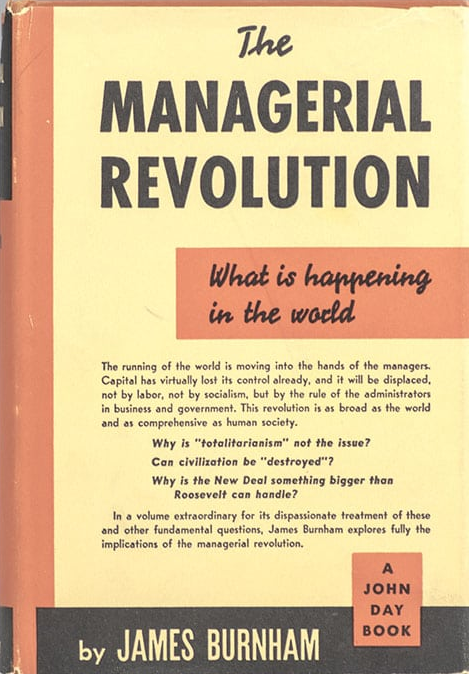
The idea’s intellectual history begins with the political philosopher James Burnham, who argued in his seminal 1941 book, The Managerial Revolution, that the aristocratic capitalist class was in the process of being overthrown by a revolution — just not, as the Marxists predicted, by the working class.

Instead, the exponential growth of mass and scale produced by the Industrial Revolution meant that in both corporation and state it was now those people cleverest at applying techniques of mass organization, procedure and propaganda — what he called the managerial class — who effectively controlled the means of production and would increasingly come to dominate society as a new technocratic oligarchy.

The book made an especially significant impression on George Orwell, who remarked that a managerial class consisting of “scientists, technicians, teachers, journalists, broadcasters, bureaucrats, professional politicians: in general, middling people”, hungry for “more power and more prestige”, would seek to entrench “a system which eliminates the upper class, keeps the working class in its place, and hands unlimited power to people very similar to themselves”.

Orwell was particularly struck by Burnham’s observation that the major political systems of the day — fascism, Communism and New Deal-era social democracy — were fundamentally similar in their turn toward the bureaucratic management of society. He observed that everywhere “laissez-faire capitalism gives way to planning and state interference” and “the mere owner loses power as against the technician and the bureaucrat”. Believing that accelerating managerial control risked dragging every society inexorably into totalitarianism, Orwell made Burnham’s ideas the basis of his novel 1984.

While the Cold War persisted, the view that America’s government might share some traits with the Soviet Union unsurprisingly proved unpopular, especially among Washington’s conservative establishment.

Nonetheless, the managerial class continued to grow, regardless of which political party controlled the government. Cold War defense budgets drove a relentless expansion of security state bureaucracy and the military-industrial complex. The advent of Great Society welfare programs and the Civil Rights Act demanded a re-engineering of social relations, prompting a dramatic proliferation of lawyers, regulatory bureaucrats and corporate compliance officers throughout much of public and private life. An ever-greater proportion of Americans began funneling through the credentialing machinery of higher education, inflating demand for yet more upper-middle-class managerial jobs.

Day Two – Panzers Stuck in Europe‘s Biggest Traffic Jam! – Ten Days in Sedan

Filed under: France, Germany, History, Military, WW2 — Tags: , , , , , — Nicholas @ 04:00

World War Two
Published 7 Jun 2025

May 11, 1940: Our WW2 documentary continues as the Battle of France rages and German Panzers rumble through the Ardennes. The Battle of Sedan is on the horizon and Heinz Guderian has one objective: break the French defences! But all is not well for the Germans as Europe’s largest-ever traffic jam threatens to stall the Blitzkrieg.

00:00 Intro
00:51 The Ardennes Advance
08:55 The Air War
15:05 Conclusion
(more…)

“If the New York Times notices the Buddha, the enlightened one has already left town”

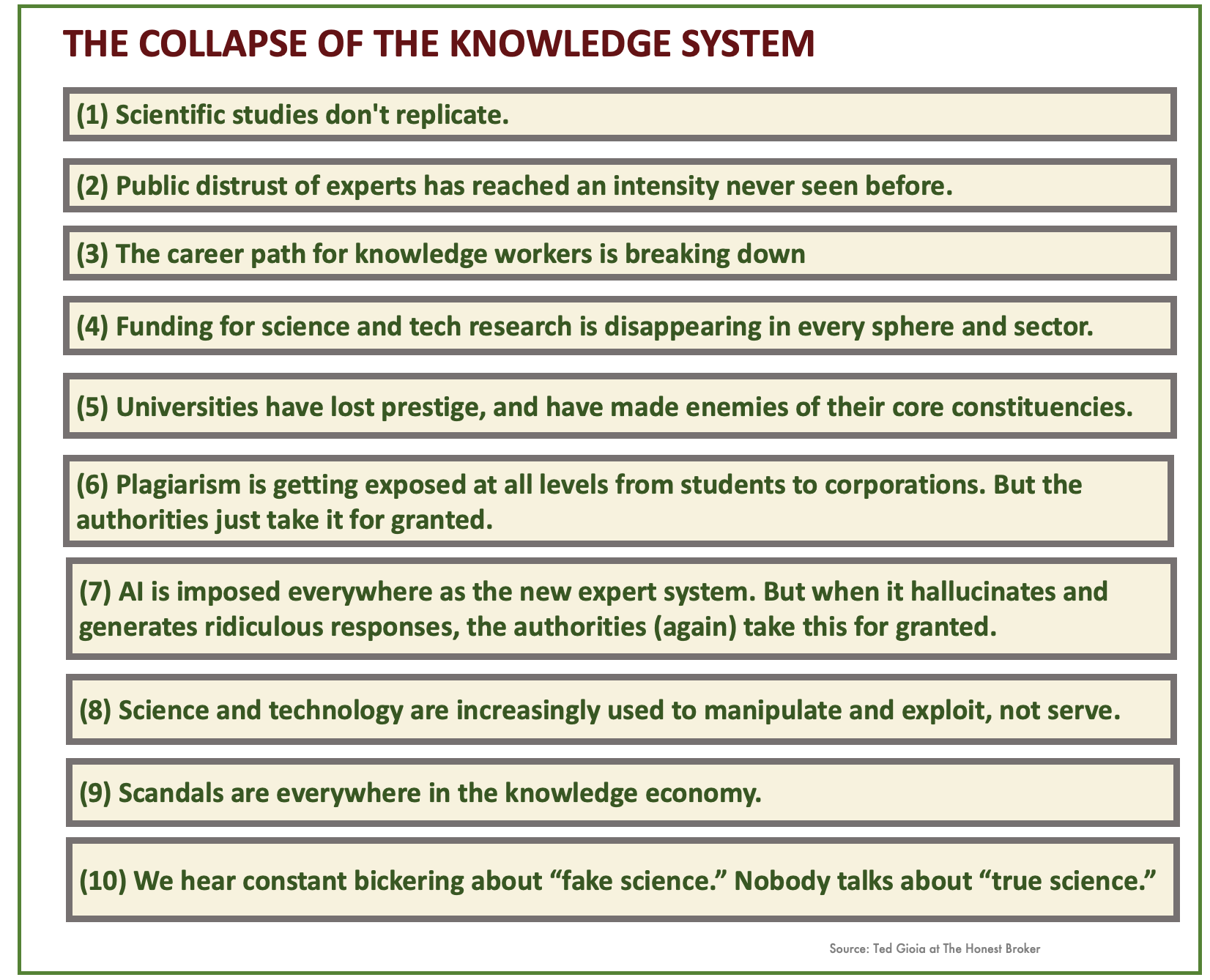
Ted Gioia points out that momentous changes in society are not often noticed until they’ve taken place, and provides ten warning signs of such a change happening right now:

Would you believe me if I told you that the biggest news story of our century is happening right now — but is never mentioned in the press?

That sounds crazy, doesn’t it?

But that is often the case when a bold new worldview appears.

  • How long did it take before the Renaissance got mentioned in the town square?
  • When did newspapers start covering the Enlightenment?
  • Or the collapse in mercantilism?
  • Or the rise of globalism?
  • Or the birth of Christianity or Islam or some other earthshaking creed?

The biggest changes often happen long before they even get a name. By the time the scribes notice, the world is already reborn.

You can take this to the bank: If the New York Times notices the Buddha, the enlightened one has already left town.

For example, the word Renaissance got introduced two hundred years after the start of the Renaissance. The game was already over.

The same is true of most major cultural movements — they are truly the elephants in the room. And the elites at the epicenter of power are absolutely the last to notice.

Tiberius may run the entire Roman Empire, but he will never hear the Good News.

There’s a general rule here — the bigger the shift, the easier it is to miss.

We are living through a situation like that right now. We are experiencing a total shift — like the magnetic poles reversing. But it doesn’t even have a name — not yet.

So let’s give it one.

Let’s call it: The Collapse of the Knowledge System.

We could also define it as the emergence of a new knowledge system.

In this regard, it resembles other massive shifts in Western history — specifically the rebirth of humanistic thinking in the early Renaissance, or the rise of Romanticism in the nineteenth century.

In these volatile situations, the whole entrenched hierarchy of truth and authority gets totally reversed. The old experts and their systems are discredited, and completely new values take their place. The newcomers bring more than just a new attitude — they turn everything on its head.

That’s happening right now.

The knowledge structure that has dominated everything for our entire lifetime — and for our parents and grandparents — is collapsing. And it’s taking place everywhere, all at once.

If this were just an isolated situation — a problem in universities, or media, or politics — the current hierarchy could possibly survive. But that isn’t the case.

The crisis has spread into every sector of society which relies on clear knowledge and respected authority.

The ten warning signs

The Canadian Retribution at Normandy | History Traveler Episode 196

Filed under: Cancon, France, Germany, History, Military, WW2 — Tags: , , , — Nicholas @ 02:00

The History Underground
Published 16 Feb 2022

Throughout the Battle of Normandy, the Canadians of the 3rd Infantry Division and the Germans of the 12th SS Panzer Division found themselves locked in a battle of attrition that would mark some of the most vicious fighting of the entire campaign. After suffering a blow at Buron and Authie (as seen in the last episode) the fight shifted over to a place that has now become legendary in Canadian military history: Bretteville-l’Orgueilleuse. In this episode, we’re joined by Paul Woodadge of ‪@WW2TV‬ to show a small part of one of the most epic fights in the battle to take Normandy.
(more…)

QotD: The ratchet effect

It’s well known that the people at the tippy top are raging SJWs, of course, but as anyone who has ever even tangentially worked for a GloboHomoCorp knows, the Big Bosses don’t know jack shit about even very high level stuff going on in their own companies. Big Boss, and several layers of management below Big Boss, are mainly concerned with greasing politicians and other CEOs. They have absolutely no idea what’s even going on with the North American Branch of the Customer Service Division, let alone what any individual person is up to … so those flunkies and fart catchers and butt boys way down the chain have to kiss ass on their own.

What ends up happening is a kind of “ratchet effect” on steroids. The “ratchet effect”, you’ll recall, was Margaret Thatcher’s explanation for how the Left kept winning on policy even though the Right kept winning at the polls (ah, God love ya, Maggie, and give you peace). When the Left is in power, they get whatever they want. When the Right is in power, they consolidate the Left’s gains, as this is now “the new normal”. Since The Right exists only to twiddle the knobs and levers of the Leviathan State in a more efficient, cost-effective, low-tax way, the “right-wing” “reformers” find jury-rigged quasi-solutions to the problems the Left’s insanity creates.

In a very real way, then, the “ratchet effect” means the so-called “Right” ends up doing the Left’s job for them, much better than they themselves could’ve.

Same deal inside the divisions of GloboHomoCorp. Same deal inside the Third Reich, which is why “working towards the Führer” turned so murderous, so fast. Since the only way to get noticed by the next higher-up level of “management” was to be more obnoxiously ruthless than everybody else at doing what the Führer seemed to be hinting that he wanted …

In the corporate world, then, I theorize, super-aggressive, ultra-obnoxious SJW-ism is a ground-up phenomenon. Does the Big Boss really want mandatory anti-Whiteness training across all divisions? Maybe … but maybe not. And though it’s tempting to say “He’s the Big Boss, he must know at least broadly what the big divisions are up to”, do I even have to ask if you’ve ever been in a situation where that’s true? Big Bosses the world over, in any field, be they CEOs or Generals or Chief Medical Officers or what have you, don’t have the slightest clue what’s happening structurally inside their commands.

All they know is what the next-lower level of management tells them is happening.

Severian, “On Selling Out”, Founding Questions, 2021-11-26.

June 7, 2025

The US President Saves Germany – Rise of Hitler 18 – June 1931

Filed under: Britain, France, Germany, History, USA — Tags: , , , , , — Nicholas @ 04:00

World War Two
Published 5 Jun 2025

In June 1931, Germany teeters on the edge of collapse — facing riots, unemployment, and a banking crisis. Amidst chaos and international pressure, US President Herbert Hoover offers a dramatic moratorium on war debts, giving Germany a critical lifeline. Can this American intervention stabilize the Weimar Republic, or is disaster still on the horizon? Explore how global politics, economic turmoil, and desperate diplomacy shape a nation’s fate.
(more…)

Doctor Who fades further

Filed under: Britain, Media, Politics — Tags: , , , , , — Nicholas @ 03:00

I still have vague affection for the British TV show Doctor Who, but I certainly wouldn’t call myself a fan of more recent times. “My” Doctor was William Hartnell and then Patrick Troughton, with a few look-ins from Jon Pertwee and Tom Baker later on. I certainly haven’t been closely following the show as it became more and more woke, so I can’t comment on the news that the show is being, if not technically cancelled, at least given an indefinite pause in production:

This wasn’t a finale it was a funeral, and the undertaker wired the corpse to be giving his mourners two middle fingers

The show isn’t canceled because technically it has never been canceled, it’s just being given another “rest.” Besides you couldn’t possibly use the word “canceled” when you go as far off the Woke deep-end as Doctor Who did. That wouldn’t be an admission of failure, it would be an admission of complete rejection.

Disney Doctor Who felt like a parody from the start. It was Doctor Who as written by Jon Waters. It genuinely felt like Russel T. Davies was making fun of his own time on the show, in the 2000s. Truth be told I don’t think he has anywhere near enough talent for that. In 2005 he came to the show wanting to use it as a platform to tell his stories about the Doctor. In 2024 he returned to it to use it as a political platform.

This season of Doctor Who was so politically driven that even leftie newspapers were saying, lay off the Woke crap.

When you have a show that is this far off the rails it means that the company that bought it, while financially obligated to keep paying for it, has written it off so completely that no one is bothering to read the scripts anymore. The last three episodes were so bad that I’m not sure anyone was bothering to write them either. It had all of those weird little ticks of verbal dyskinesia that strongly indicate the script was mostly written by an AI that Russel T Davies had trained with last season’s scripts. It’s a pity he didn’t use his first season’s scripts; it would have been a much better show. This season was purest clown world. If I was making a sarcastic, mocking sendup of what I thought a completely Woke Doctor Who would be like, I am not sure I could have done better.


I’m in this really bad position of trying to make fun of something that is so bad that nothing I can say will get more laughs than what I saw. I can’t even make jokes about him being gay because it’s old hat at this point, the last four Doctors introduced have been gay. Whitaker, Tenant (2), Gatwa and they brought back Jo Martin for one scene to make her a lesbian.

This season did have an objective; to attack the longtime fans of the show, it was the Joker II of Doctor Who. That is what the final eight episodes of Doctor Who did, attack the long-time fans of the show who hated the fact that people like Russel T. Davies and Chris Chibnall had utterly ruined it. Granted, Davies is now by far the more hated.

Even the BBC, you know the company that actually owns Doctor Who, condemned it as “nothing but an intolerant program”.

[…]

This wasn’t a finale it was a funeral, and the undertaker wired the corpse to be giving his mourners two middle fingers.

In the end, this wasn’t just bad Doctor Who — it was anti-Doctor Who. A shrill, directionless, AI-scripted fever dream written by a man who now seems to loathe the franchise’s history and its fans. What was once clever, charming, and strange was in the end loud, smug, and hollow. The Doctor hasn’t just wandered back into the wilderness — he’s been abandoned there to be eaten by Bad Wolf.

I never thought I’d say this about Doctor Who but given its raw hatred of its fanbase and blithering narrative incompetence I have no choice but to pronounce my doom upon it.

The Dark Herald Says Avoid Doctor Who Like the Plague. (0/5)

As you might expect, The Critical Drinker also feels the show needs to take a nice, long regenerative vacation. Ten years? That might be enough.

The 12th SS Massacre of the Canadians in Normandy | History Traveler Episode 195

Filed under: Cancon, France, Germany, History, Military, WW2 — Tags: , , , , , — Nicholas @ 02:00

The History Underground
Published 9 Feb 2022

In the days after D-Day, the Canadians of the 3rd Infantry Division found themselves up against the German 12th SS Panzer Division as they were making their way south through Normandy. Tragically, some of these men would find themselves as the victims of one the battle’s worst atrocities at a place called Abbey Ardenne. In this episode, we’re joining Paul Woodadge of ‪@WW2TV‬ as we retrace the final steps of these men as they made their way to a tragic fate at the hands of Kurt Meyer and a division of the most fanatical fighters that Germany threw into the Battle of Normandy.
(more…)

QotD: The decline and fall of the Soviet experiment

Filed under: Economics, History, Quotations, Russia — Tags: , , , — Nicholas @ 01:00

One of the most remarkable and perhaps most relevant aspects of communism is how it regressed from an idealistic and inspirational world view to nothing more than a deeply flawed engineering project. Communism started out as a set of beliefs about liberating mankind to reach its full potential. It was not about material goods or political power, but human accomplishment. By the time the Soviet empire collapsed at the end of the 20th century, it was about making enough toilet paper and boots.

The early communists, including Marx, looked at work and the pursuit of material goods as a burden on mankind. Capitalism turned men into slaves to their own desires for wealth and property. This crude desire for material goods made them easy to exploit by the capital class. The point of overthrowing the capitalist system and replacing it with communism was to free man from that burden. The resulting material prosperity of communism would allow mankind to reach its full creative potential.

The Soviet empire that emerged from the Second World War was noticeably short on talk about mankind reaching its full potential. The practical necessity of feeding, housing and clothing its people consumed the regime. The great dream of a post-scarcity world of mankind united in brotherhood had given way to figuring out how to produce enough necessities to prevent rebellion. The last half of the 20th century was communism trying to keep pace with capitalism in the production of consumer goods.

The Z Man, “Human Progress”, The Z Blog, 2020-04-27.

June 6, 2025

Marc Garneau, the first Canadian in space, RIP

Filed under: Cancon, Media, Military, Politics, Space — Tags: , , , — Nicholas @ 05:00

The career of Marc Garneau is summarized by Tom Spears for The Line:

Astronaut Marc Garneau, with a camera in hand, floats in the hatchway that leads from Unity to Pressurized Mating Adapter-3 (PMA-3), which leads to Endeavour. Garneau, STS-97 mission specialist representing the Canadian Space Agency (CSA), and his four crew mates went into the International Space Station (ISS) following hatch opening. The photograph was taken with a digital still camera, 8 December 2000.
NASA photo via Wikimedia Commons.

Marc Garneau died Wednesday, at the age of 76. His passing was announced by his wife, Pam, who said that he’d been surrounded by family at the end, and had received excellent care during an unspecified short illness. (Other reports have cited cancer as the ailment.) The news was met with an immediate outpouring of grief from Canadians from across the political spectrum, as befitted a man of his profile and stature.

He had earned that profile gradually over the decades. Back in 1983 Garneau was a young naval officer with a fine pedigree — graduate of Royal Military College, PhD in electrical engineering from Imperial College London — but unknown to most Canadians. Then he joined our country’s first group of astronauts, becoming an instant celebrity.

Even more sudden was his first assignment. He was named to a space shuttle crew that would fly the following year — lightning-fast career advancement, considering he had not yet undergone the usual training as a mission specialist in NASA’s astronaut school.

That vaulted him ahead of many more senior astronauts, and he felt it keenly. He told the Ottawa Citizen years later that he felt his colleagues’ eyes “boring holes in my back” as he walked by them. Crewmate Dave Leestma later recalled how the rookie gained the respect of those around him through quiet competence.

Indeed, Garneau always looked calm, but his mother, Jean, said as he prepared for a second flight in 1996: “There’s a lot of controlled excitement there, and happiness … He figures he’s very, very lucky.”

[…]

“Everybody was always brutally honest about how they screwed up … about how we let the team down,” Garneau says. “If we’re not going to be very honest with each other, if we’re going to find excuses … Nobody tries to evade responsibility.”

Given his background and experience, I wonder how he was able to handle being a member of the Liberal government of the day, where evading responsibility was perhaps their top competency.

“All the Little Ships” (1964 – CBC Telescope)

Filed under: Britain, Cancon, History, Military, WW2 — Tags: , , , — Nicholas @ 04:00

Royal Canadian Navy / Marine Royale Canadienne
Published 5 Jun 2025

🇨🇦 Honouring 80 Years of Courage at Sea ⚓

To mark the 80th anniversary of the end of the Second World War and the Battle of the Atlantic, the Hamilton Naval Association is proud to reintroduce a long-lost Canadian treasure: “All the Little Ships”.

Originally aired in 1964 on CBC’s Telescope, this rare film features recently retired Admiral Harry DeWolf aboard HMCS Haida as he tells tales not only of HMCS Haida but of “All the Little Ships” of the wartime RCN. Never-before-seen footage shot by Bill Pugsley, a wartime officer who resigned his commission so he could serve two years on the lower deck, as a gunner, and document it.

🎥 A story of sacrifice, memory, and Canada’s naval legacy — rediscovered. A special thank you LCdr Doug Martin (Ret’d, former CO of HMCS Star).

The opinions expressed in this video are those of the original creators and do not necessarily reflect the official policy or position of the Royal Canadian Navy. Any references to outside organizations, products, or services do not constitute endorsement or affiliation.

#WeTheNavy #CanadaRemembers #HelpLeadFight

Former Putin advisor claims nuclear strike is an appropriate reaction to Ukraine attacks

Filed under: Europe, Military, Russia, Weapons — Tags: , , , , — Nicholas @ 03:00

Mark Steyn surveys the media reaction to Sergey Markov’s foaming-at-the-mouth threats of nuclear escalation in the Russo-Ukraine conflict:

Here’s a cheery headline from the Russian press:

    Markov: an attack on Russia’s strategic aviation is grounds for the use of nuclear weapons.

That would be Sergey Markov, former advisor to Tsar Vlad, who admittedly is somewhat partial to nuke-rattling: in the early stages of the Ukraine war, he threatened to nuke the UK, for what reason I forget — the exciting new Islamic blasphemy laws? the paedo rape gangs?

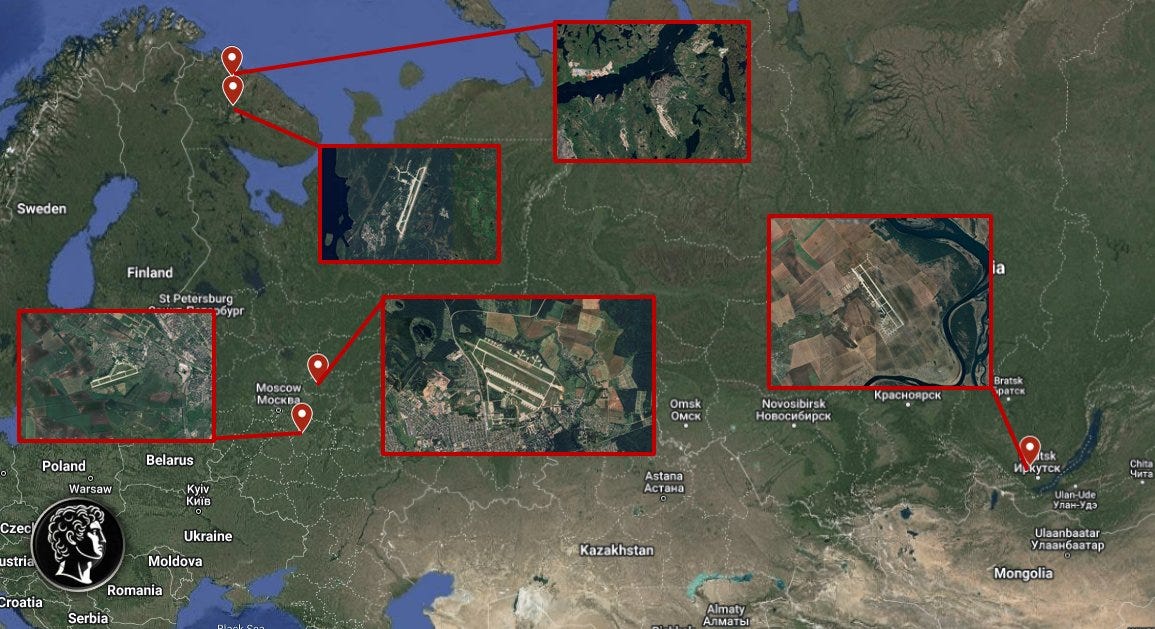
This time, however, Mr Markov was responding to the weekend’s Ukrainian drone strike deep inside Russia. By “deep”, I mean Siberia. Which supposedly took out forty of Putin’s 120 strategic bombers using drones smuggled into the country via trucks which then fanned out and parked within range of various air bases.

Which is brilliant and innovative, in the sense that Castro blowing up a third of the USAF during the Cuban missile-crisis negotiations would have been. Right now, the only thing standing between the planet and the Third World War is Vladimir Putin’s forbearance. And, as all the smart people assured us in the spring of 2022, the Russian not-so-strongman was “dying” (Christopher Steele, sole proprietor of Dossiers R Us) or dead, either of which condition can make one’s nuclear-war judgment a little erratic. Headline from the UK Daily Mirror, almost exactly three years ago:

    Vladimir Putin may already be dead with body double taking his place, MI6 chiefs claim

That headline is 100 per cent accurate if you remove the words “Vladimir” and “Putin” and replace them with “Joe” and “Biden” respectively. Incidentally, analyse each nation’s advances in body-double technology by comparing “Biden”‘s ability to host a G7 with “Putin”‘s ability to host a BRICS summit. That’s the way to bet if it comes to World War Three. Sen. Lindsey Graham (R – Zakarpattia), was in Kiev to meet with Zelenskyyyy the day before Operation Bring It On. He had the affect of a chap who knew what was coming — although one notes he has yet to make good on his comparatively less ambitious pledge to sink Greta Thunberg’s Gaza boat.

Forty years ago, everybody claimed to be super-worried about imminent mushroom clouds. A bestselling poster of the day:

Anyone care to remake the above with Senator Graham and Victoria Nuland, She-Wolf of the Donbass? Ah, but maybe it doesn’t work as well with Deep State non-household-names in the leads. It’s not so long since Lindsey was telling Zelenskyyyy to resign, but he’s apparently back on board. And, more generally, most western media were happy to report the drone strike as more of a poke in the eye to Trump than to Putin. Headline from National Review:

    Country That Allegedly Had No Cards to Play Keeps Finding New Cards to Play

This is in reference to Trump’s jibe from February that Ukraine had “no cards to play”. The question then arises: Where did Z find these “new cards”? When Pete Hegseth took over as US Defence Secretary, he quickly confirmed what every sentient creature had long suspected — that the Pentagon had been micro-managing Ukraine’s end of the war for the previous three years. Are they still doing so? In defiance of their nominal commander-in-chief?

Juno Beach Landings | D-Day Normandy June 6, 1944

Filed under: Cancon, France, Germany, History, Military, WW2 — Tags: , , — Nicholas @ 02:00

World War II – Epic Battles
Published 30 Jun 2021

Juno Beach was assigned to the 3rd Canadian Infantry Division and the 2nd Canadian Armoured Brigade. It was one of the five invasion beaches of Normandy on D-Day and the second deadliest beach after Omaha.
(more…)

QotD: D-Day landing on Sword Beach

Filed under: Britain, France, Germany, History, Military, Quotations, WW2 — Tags: , , — Nicholas @ 01:00

A few hours before the Canadians aboard the Prince Henry climbed into that landing craft, 181 men in six Horsa gliders took off from RAF Tarrant Rushton in Dorset to take two bridges over the River Orne and hold them until reinforcements arrived. Their job was to prevent the Germans using the bridges to attack troops landing on Sword Beach. At lunchtime, Lord Lovat and his commandos arrived at the Bénouville Bridge, much to the relief of the 7th Parachute Battalion’s commanding officer, Major Pine-Coffin. That was his real name, and an amusing one back in Blighty: simple pine coffins are what soldiers get buried in. It wasn’t quite so funny in Normandy, where a lot of pine coffins would be needed by the end of the day. Lord Lovat, Chief of Clan Fraser, apologized to Pine-Coffin for missing the rendezvous time: “Sorry, I’m a few minutes late,” he said, after a bloody firefight to take Sword Beach.

Lovat had asked his personal piper, Bill Millin, to pipe his men ashore. Private Millin pointed out that this would be in breach of War Office regulations. “That’s the English War Office, Bill,” said Lovat. “We’re Scotsmen.” And so Millin strolled up and down the sand amid the gunfire playing “Hieland Laddie” and “The Road to the Isles” and other highland favorites. The Germans are not big bagpipe fans and I doubt it added to their enjoyment of the day.

There was a fair bit of slightly dotty élan around in those early hours. As I mentioned during On the Town, I knew a chap who was in the second wave of gliders from England, and nipped out just before they took off to buy up the local newsagent’s entire stack of papers — D-Day special editions, full of news of the early success of the landings. He flew them into France with him, and distributed them to his comrades from the first wave so they could read of their exploits.

But for every bit of dash and brio there were a thousand things that were just the wretched, awful muck of war. Many of those landing craft failed to land: They hit stuff that just happened to be there under the water, in the way, and ground to a halt, and the soldiers got out waist-deep in the sea, and struggled with their packs — and, in the case of those men on the Prince Henry, with lumpy old English bicycles — through the gunfire to the beach to begin liberating a continent while already waterlogged and chilled to the bone.

The building on the other side of the Bénouville Bridge was a café and the home of Georges Gondrée and his family. Thérèse Gondrée had spent her childhood in Alsace and thus understood German. So she eavesdropped on her occupiers, and discovered that in the machine-gun pillbox was hidden the trigger for the explosives the Germans intended to detonate in the event of an Allied invasion. She notified the French Resistance, and thanks to her, after landing in the early hours of June 6th, Major Howard knew exactly where to go and what to keep an eye on.

Shortly after dawn there was a knock on Georges Gondrée’s door. He answered it to find two paratroopers who wanted to know if there were any Germans in the house. The men came in, and Thérèse embraced them so fulsomely that her face wound up covered in camouflage black, which she proudly wore for days afterward. Georges went out to the garden and dug up ninety-eight bottles of champagne he’d buried before the Germans arrived four years earlier. And so the Gondrée home became the first place in France to be liberated from German occupation. There are always disputes about these things, of course: some say the first liberated building was L’Etrille et les Goélands (the Crab and the Gulls), subsequently renamed — in honour of the men who took it that morning — the Queen’s Own Rifles of Canada house. But no matter: the stylish pop of champagne corks at the Café Gondrée was the bells tolling for the Führer‘s thousand-year Reich.

Arlette Gondrée was a four-year old girl that day, and she has grown old with the teen-and-twenty soldiers who liberated her home and her town. But she is now the proprietress of the family café, and she has been there every June to greet those who return each year in dwindling numbers […] The Bénouville Bridge was known to Allied planners as the Pegasus Bridge, after the winged horse on the shoulder badge of British paratroopers. But since 1944 it has been called the Pegasus Bridge in France, too. And in the eight decades since June 6th no D-Day veteran has ever had to pay for his drink at the Café Gondrée.

Mark Steyn, “June 6th, 1944”, SteynOnline, 2024-06-06.

June 5, 2025

German judges seem to be dedicated to ensuring that the government never changes policy, regardless of voter preference

Filed under: Germany, Government, Law, Media, Politics — Tags: , , , , , , — Nicholas @ 05:00

The times I despair of the pathetic Canadian government, I look to Germany where eugyppius helpfully explains that German judges are even more dedicated to thwarting the will of the voters than Canadian judges are (and that’s a major achievement):

“German flag” by fdecomite is licensed under CC BY 2.0 .

At the start of May, CSU Interior Minister Alexander Dobrindt effectively abolished asylum as a path into Germany, empowering federal police to push back all illegal migrants at our national borders.

There ensued a period of messaging chaos, in which Chancellor Friedrich Merz assured our neighbours and the EU that nothing much was happening, while Dobrindt quietly insisted that yes, indeed, he was serious. He gave police orders to step up border checks and to send back all illegal migrants regardless of asylum claims – save for pregnant women, the underage and the sick.

These new borders policies have yet to exercise any significant influence on asylum statistics. It is relatively easy to cross into Germany despite the police spot checks, and we don’t yet know how many asylees are managing to evade them.

The deeper legal issues are much more significant right now. We want to know whether Dobrindt’s intervention is workable in theory, and whether our judges will swallow it. Unfortunately, he is already under siege from asylum advocates on the left and the broader migration industry, who have set and sprung a very telling trap, with the aim of getting courts to overturn even these preliminary and quite meagre interventions.

To understand the issues here, we need a brief legal primer: According to German law (the so-called Asylgesetz), foreigners who enter Germany from “secure” states do not get to claim asylum. They are to be sent straight back to wherever it is they came from. Because Germany is surrounded entirely by secure states, that should really be the end of this insane problem. Alas, this sensible law has been superseded since 1997 first by the Dublin Convention, and later by the Dublin II and now the Dublin III Regulation. The latter forbids the Federal Republic from using her own laws, holding that foreigners entering Germany from secure third states must be welcomed pending a procedure to establish which EU member state is actually responsible for them. Effectively, this means that almost all of these aspiring asylees remain in Germany indefinitely, because deporting people who do not belong here is beyond the meagre capacities of our enormous bureaucracy.

Dobrindt sought to get around Dublin by appealing to Article 72 of the Treaty on the Functioning of the European Union (TFEU), which allows member states to set aside EU regulations when this is necessary to maintain order and security.

Many have eyed this Article 72 strategy for a long time, but nothing is easy, particularly not in countries unduly enamoured of “the rule of law”, which is a lofty euphemism for “the rule of obscure crazy people in robes for whom nobody ever voted and who enjoy lifetime appointments”. These days the government cannot do anything at all except what it was already doing (and sometimes not even that), or unless it is obviously stupid, expensive and inadvisable, because lurking around every corner is a clinically insane judge eager to explain why sensible things are not allowed. In recent years, our extremely learned and far-sighed judiciary has explained why combating climate change is anchored in the German constitution and why basically everybody is entitled to exorbitant social welfare. All that remains for them is to explain why everybody on earth is also entitled to live in Germany and draw benefits from the state, and they will have completed their suicidal triad.

On Monday, 2 June, the Berlin Administrative Court struck the first blow in this direction. Effectively, they called the whole basis for Dobrindt’s new border policy into question, issuing what amounts to a preliminary injunction in the case of three Somalis (two men and one woman) who had crossed from Poland into Germany on 9 May. Federal police intercepted the trio at the train station in Frankfurt an der Oder; they claimed asylum and the police, in line with Dobrindt’s order, sent them back to Poland anyway. Lawyers from the advocacy organisation Pro Asyl then helped them bring suit in Berlin, and the court intervened in their favour. They get to be professional asylees in Germany now.

« Newer PostsOlder Posts »

Powered by WordPress