
Quotulatiousness

June 6, 2025

Marc Garneau, the first Canadian in space, RIP

Filed under: Cancon, Media, Military, Politics, Space — Tags: , , , — Nicholas @ 05:00

The career of Marc Garneau is summarized by Tom Spears for The Line:
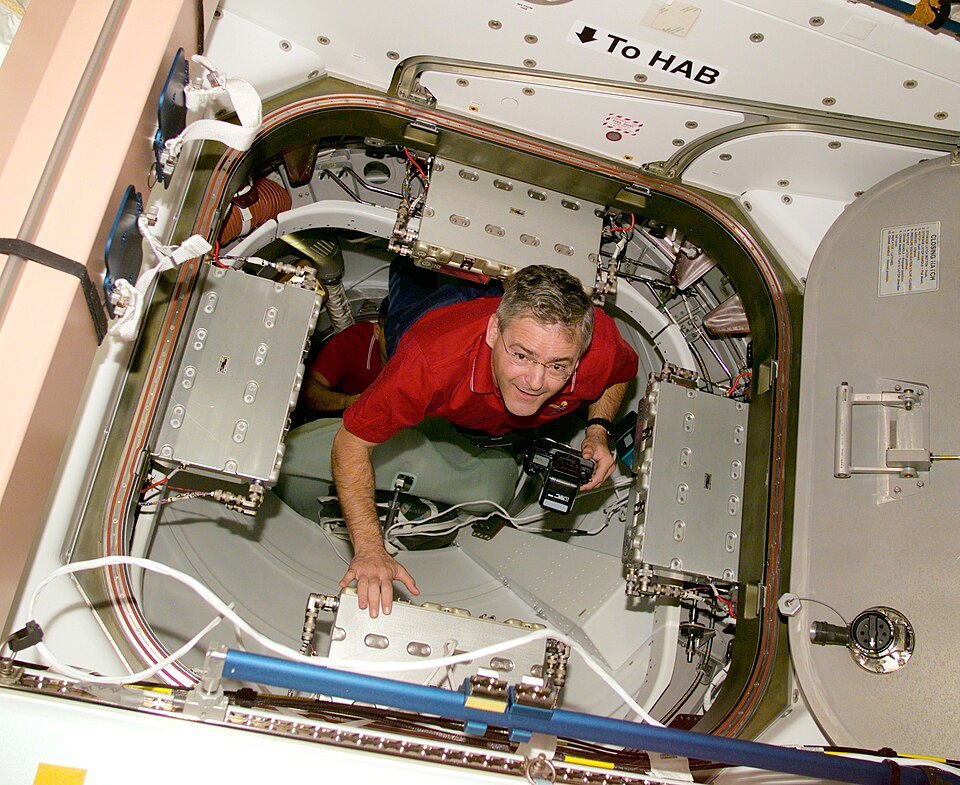
Astronaut Marc Garneau, with a camera in hand, floats in the hatchway that leads from Unity to Pressurized Mating Adapter-3 (PMA-3), which leads to Endeavour. Garneau, STS-97 mission specialist representing the Canadian Space Agency (CSA), and his four crew mates went into the International Space Station (ISS) following hatch opening. The photograph was taken with a digital still camera, 8 December 2000.
NASA photo via Wikimedia Commons.

Marc Garneau died Wednesday, at the age of 76. His passing was announced by his wife, Pam, who said that he’d been surrounded by family at the end, and had received excellent care during an unspecified short illness. (Other reports have cited cancer as the ailment.) The news was met with an immediate outpouring of grief from Canadians from across the political spectrum, as befitted a man of his profile and stature.

He had earned that profile gradually over the decades. Back in 1983 Garneau was a young naval officer with a fine pedigree — graduate of Royal Military College, PhD in electrical engineering from Imperial College London — but unknown to most Canadians. Then he joined our country’s first group of astronauts, becoming an instant celebrity.

Even more sudden was his first assignment. He was named to a space shuttle crew that would fly the following year — lightning-fast career advancement, considering he had not yet undergone the usual training as a mission specialist in NASA’s astronaut school.

That vaulted him ahead of many more senior astronauts, and he felt it keenly. He told the Ottawa Citizen years later that he felt his colleagues’ eyes “boring holes in my back” as he walked by them. Crewmate Dave Leestma later recalled how the rookie gained the respect of those around him through quiet competence.

Indeed, Garneau always looked calm, but his mother, Jean, said as he prepared for a second flight in 1996: “There’s a lot of controlled excitement there, and happiness … He figures he’s very, very lucky.”

[…]

“Everybody was always brutally honest about how they screwed up … about how we let the team down,” Garneau says. “If we’re not going to be very honest with each other, if we’re going to find excuses … Nobody tries to evade responsibility.”

Given his background and experience, I wonder how he was able to handle being a member of the Liberal government of the day, where evading responsibility was perhaps their top competency.
“All the Little Ships” (1964 – CBC Telescope)

Filed under: Britain, Cancon, History, Military, WW2 — Tags: , , , — Nicholas @ 04:00

Royal Canadian Navy / Marine Royale Canadienne
Published 5 Jun 2025

🇨🇦 Honouring 80 Years of Courage at Sea ⚓

To mark the 80th anniversary of the end of the Second World War and the Battle of the Atlantic, the Hamilton Naval Association is proud to reintroduce a long-lost Canadian treasure: “All the Little Ships”.

Originally aired in 1964 on CBC’s Telescope, this rare film features recently retired Admiral Harry DeWolf aboard HMCS Haida as he tells tales not only of HMCS Haida but of “All the Little Ships” of the wartime RCN. Never-before-seen footage shot by Bill Pugsley, a wartime officer who resigned his commission so he could serve two years on the lower deck, as a gunner, and document it.

🎥 A story of sacrifice, memory, and Canada’s naval legacy — rediscovered. A special thank you LCdr Doug Martin (Ret’d, former CO of HMCS Star).

The opinions expressed in this video are those of the original creators and do not necessarily reflect the official policy or position of the Royal Canadian Navy. Any references to outside organizations, products, or services do not constitute endorsement or affiliation.

#WeTheNavy #CanadaRemembers #HelpLeadFight

Former Putin advisor claims nuclear strike is an appropriate reaction to Ukraine attacks

Filed under: Europe, Military, Russia, Weapons — Tags: , , , , — Nicholas @ 03:00

Mark Steyn surveys the media reaction to Sergey Markov’s foaming-at-the-mouth threats of nuclear escalation in the Russo-Ukraine conflict:

Here’s a cheery headline from the Russian press:

    Markov: an attack on Russia’s strategic aviation is grounds for the use of nuclear weapons.

That would be Sergey Markov, former advisor to Tsar Vlad, who admittedly is somewhat partial to nuke-rattling: in the early stages of the Ukraine war, he threatened to nuke the UK, for what reason I forget — the exciting new Islamic blasphemy laws? the paedo rape gangs?

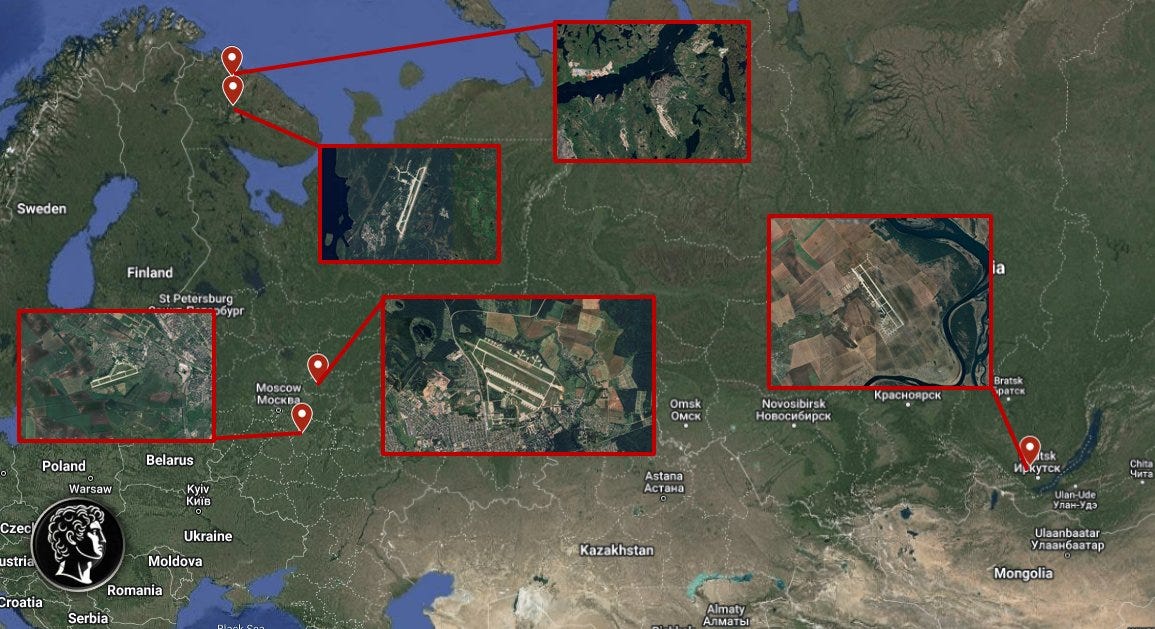
This time, however, Mr Markov was responding to the weekend’s Ukrainian drone strike deep inside Russia. By “deep”, I mean Siberia. Which supposedly took out forty of Putin’s 120 strategic bombers using drones smuggled into the country via trucks which then fanned out and parked within range of various air bases.

Which is brilliant and innovative, in the sense that Castro blowing up a third of the USAF during the Cuban missile-crisis negotiations would have been. Right now, the only thing standing between the planet and the Third World War is Vladimir Putin’s forbearance. And, as all the smart people assured us in the spring of 2022, the Russian not-so-strongman was “dying” (Christopher Steele, sole proprietor of Dossiers R Us) or dead, either of which condition can make one’s nuclear-war judgment a little erratic. Headline from the UK Daily Mirror, almost exactly three years ago:

    Vladimir Putin may already be dead with body double taking his place, MI6 chiefs claim

That headline is 100 per cent accurate if you remove the words “Vladimir” and “Putin” and replace them with “Joe” and “Biden” respectively. Incidentally, analyse each nation’s advances in body-double technology by comparing “Biden”‘s ability to host a G7 with “Putin”‘s ability to host a BRICS summit. That’s the way to bet if it comes to World War Three. Sen. Lindsey Graham (R – Zakarpattia), was in Kiev to meet with Zelenskyyyy the day before Operation Bring It On. He had the affect of a chap who knew what was coming — although one notes he has yet to make good on his comparatively less ambitious pledge to sink Greta Thunberg’s Gaza boat.

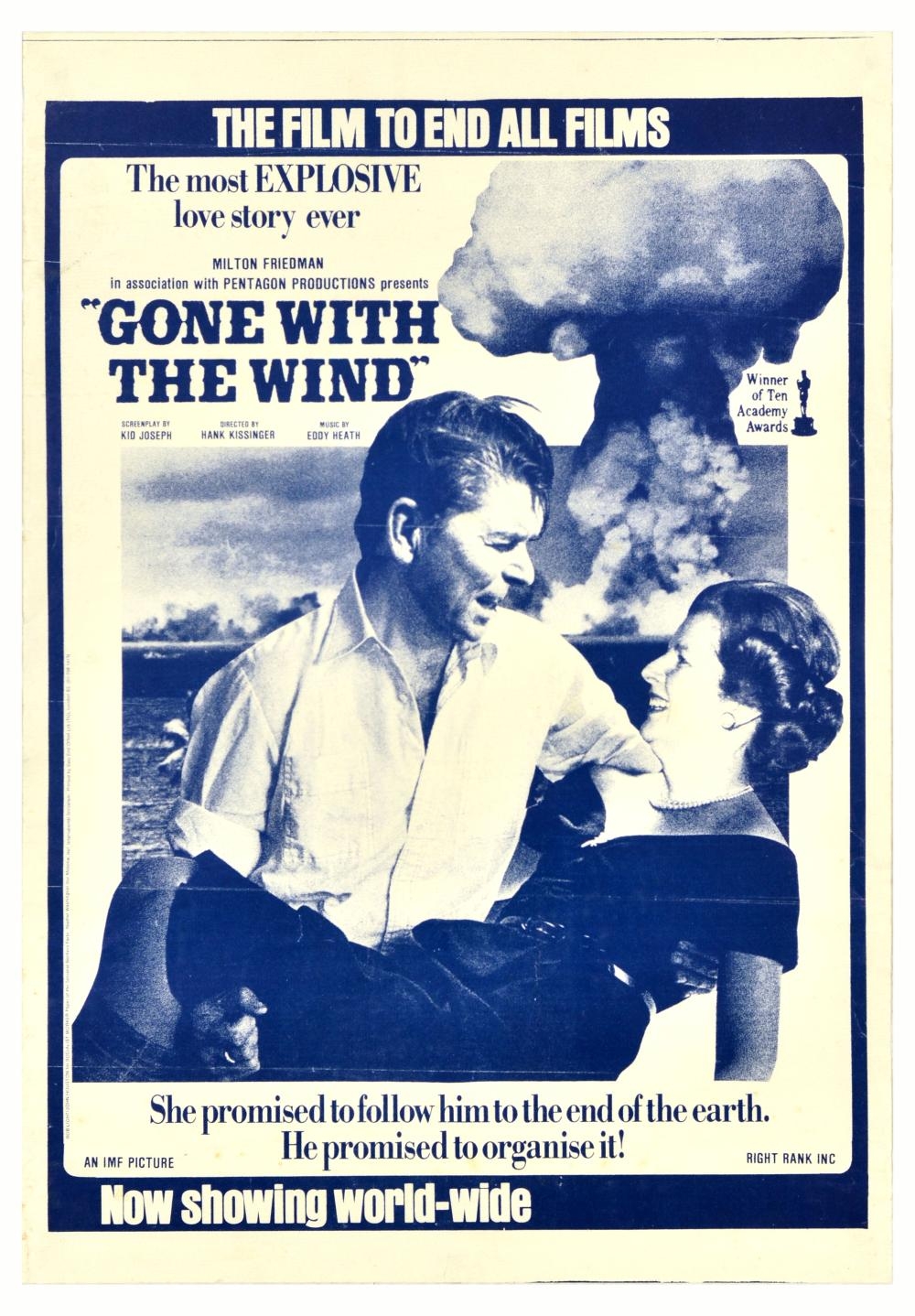
Forty years ago, everybody claimed to be super-worried about imminent mushroom clouds. A bestselling poster of the day:

Anyone care to remake the above with Senator Graham and Victoria Nuland, She-Wolf of the Donbass? Ah, but maybe it doesn’t work as well with Deep State non-household-names in the leads. It’s not so long since Lindsey was telling Zelenskyyyy to resign, but he’s apparently back on board. And, more generally, most western media were happy to report the drone strike as more of a poke in the eye to Trump than to Putin. Headline from National Review:

    Country That Allegedly Had No Cards to Play Keeps Finding New Cards to Play

This is in reference to Trump’s jibe from February that Ukraine had “no cards to play”. The question then arises: Where did Z find these “new cards”? When Pete Hegseth took over as US Defence Secretary, he quickly confirmed what every sentient creature had long suspected — that the Pentagon had been micro-managing Ukraine’s end of the war for the previous three years. Are they still doing so? In defiance of their nominal commander-in-chief?

Juno Beach Landings | D-Day Normandy June 6, 1944

Filed under: Cancon, France, Germany, History, Military, WW2 — Tags: , , — Nicholas @ 02:00

World War II – Epic Battles
Published 30 Jun 2021

Juno Beach was assigned to the 3rd Canadian Infantry Division and the 2nd Canadian Armoured Brigade. It was one of the five invasion beaches of Normandy on D-Day and the second deadliest beach after Omaha.
(more…)

QotD: D-Day landing on Sword Beach

Filed under: Britain, France, Germany, History, Military, Quotations, WW2 — Tags: , , — Nicholas @ 01:00

A few hours before the Canadians aboard the Prince Henry climbed into that landing craft, 181 men in six Horsa gliders took off from RAF Tarrant Rushton in Dorset to take two bridges over the River Orne and hold them until reinforcements arrived. Their job was to prevent the Germans using the bridges to attack troops landing on Sword Beach. At lunchtime, Lord Lovat and his commandos arrived at the Bénouville Bridge, much to the relief of the 7th Parachute Battalion’s commanding officer, Major Pine-Coffin. That was his real name, and an amusing one back in Blighty: simple pine coffins are what soldiers get buried in. It wasn’t quite so funny in Normandy, where a lot of pine coffins would be needed by the end of the day. Lord Lovat, Chief of Clan Fraser, apologized to Pine-Coffin for missing the rendezvous time: “Sorry, I’m a few minutes late,” he said, after a bloody firefight to take Sword Beach.

Lovat had asked his personal piper, Bill Millin, to pipe his men ashore. Private Millin pointed out that this would be in breach of War Office regulations. “That’s the English War Office, Bill,” said Lovat. “We’re Scotsmen.” And so Millin strolled up and down the sand amid the gunfire playing “Hieland Laddie” and “The Road to the Isles” and other highland favorites. The Germans are not big bagpipe fans and I doubt it added to their enjoyment of the day.

There was a fair bit of slightly dotty élan around in those early hours. As I mentioned during On the Town, I knew a chap who was in the second wave of gliders from England, and nipped out just before they took off to buy up the local newsagent’s entire stack of papers — D-Day special editions, full of news of the early success of the landings. He flew them into France with him, and distributed them to his comrades from the first wave so they could read of their exploits.

But for every bit of dash and brio there were a thousand things that were just the wretched, awful muck of war. Many of those landing craft failed to land: They hit stuff that just happened to be there under the water, in the way, and ground to a halt, and the soldiers got out waist-deep in the sea, and struggled with their packs — and, in the case of those men on the Prince Henry, with lumpy old English bicycles — through the gunfire to the beach to begin liberating a continent while already waterlogged and chilled to the bone.

The building on the other side of the Bénouville Bridge was a café and the home of Georges Gondrée and his family. Thérèse Gondrée had spent her childhood in Alsace and thus understood German. So she eavesdropped on her occupiers, and discovered that in the machine-gun pillbox was hidden the trigger for the explosives the Germans intended to detonate in the event of an Allied invasion. She notified the French Resistance, and thanks to her, after landing in the early hours of June 6th, Major Howard knew exactly where to go and what to keep an eye on.

Shortly after dawn there was a knock on Georges Gondrée’s door. He answered it to find two paratroopers who wanted to know if there were any Germans in the house. The men came in, and Thérèse embraced them so fulsomely that her face wound up covered in camouflage black, which she proudly wore for days afterward. Georges went out to the garden and dug up ninety-eight bottles of champagne he’d buried before the Germans arrived four years earlier. And so the Gondrée home became the first place in France to be liberated from German occupation. There are always disputes about these things, of course: some say the first liberated building was L’Etrille et les Goélands (the Crab and the Gulls), subsequently renamed — in honour of the men who took it that morning — the Queen’s Own Rifles of Canada house. But no matter: the stylish pop of champagne corks at the Café Gondrée was the bells tolling for the Führer‘s thousand-year Reich.

Arlette Gondrée was a four-year old girl that day, and she has grown old with the teen-and-twenty soldiers who liberated her home and her town. But she is now the proprietress of the family café, and she has been there every June to greet those who return each year in dwindling numbers […] The Bénouville Bridge was known to Allied planners as the Pegasus Bridge, after the winged horse on the shoulder badge of British paratroopers. But since 1944 it has been called the Pegasus Bridge in France, too. And in the eight decades since June 6th no D-Day veteran has ever had to pay for his drink at the Café Gondrée.

Mark Steyn, “June 6th, 1944”, SteynOnline, 2024-06-06.

Powered by WordPress



