Safetyism is a disposition that has been gaining strength for decades and is having a triumphal moment just now because of the virus. Public health, one of many institutions that speak on behalf of safety, has claimed authority to sweep aside whole domains of human activity as reckless, and therefore illegitimate.
I suspect the ease with which we have lately accepted the authority of health experts to reshape the contours of our common life is due to the fact that safetyism has largely displaced other moral sensibilities that might offer some resistance. At the level of sentiment, there appears to be a feedback loop wherein the safer we become, the more intolerable any remaining risk appears. At the level of bureaucratic grasping, we can note that emergency powers are seldom relinquished once the emergency has passed. Together, these dynamics make up a kind of ratchet mechanism that moves in only one direction, tightening against the human spirit.
Acquiescence in this appears to be most prevalent among the meritocrats who staff the managerial layer of society. Deferring to expert authority is a habit inculcated in the “knowledge economy”, naturally enough; the basic currency of this economy is epistemic prestige.
Among those who work in the economy of things, on the other hand, you see greater skepticism toward experts (whether they make their claim on epistemic or moral grounds) and less readiness to accept the adjustment of social norms by fiat – whether that means using new pronouns or wearing surgical masks. I am regularly in welding supply stores, auto parts stores and other light-industry venues. Nobody is wearing masks in these places. They are very small businesses: an environment largely free of the moral fashions and corresponding knowledge claims that set the tone in large organisations. There is no HR in a welding shop.
A pandemic is a deadly serious business. But we would do well to remember that bureaucracies have their own interests, quite apart from the public interest that is their official brief and warrant. They are very much in the business of tending and feeding the narratives that justify their existence. Further, given the way bureaucracies must compete for funding from the legislature, each must make a maximal case for the urgency of its mission, hence the necessity of its expansion, like a shark that must keep moving or die. It is clearer now than it was a few months ago that this imperative of expansion puts government authority in symbiosis with the morality of safetyism, which similarly admits no limit to its expanding imperium. The result is a moral-epistemic apparatus in which experts are to rule over citizens conceived as fragile incompetents.
But what if this apparatus were revealed to be not very serious about safety, the very ideal that underwrites its authority? What then?
May 18, 2020
Safetyism
May 15, 2020
Wuhan Coronavirus muzzles mandated by “politicians who are completely-fall-down-drunk on Chateau d’House Arrest”
Laura Rosen Cohen at Steyn Online:
Hello again, and welcome to week eleventy billion gazillion of CCP-Style Lockdown in the Allegedly Free World.
Another week of hypocrisy from the politicians who are completely-fall-down-drunk on Chateau d’House Arrest.
And another week of me feeling like I look rather like this penguin when attempting to articulate how disgusted I am with the governments of western countries – my own country and province in particular.
I don’t want any more “we’re all in this together” e-mails. I don’t want to hear “Covid-19” uttered in a morose, yet sadistically gleeful, tone with odd, demonic-like smiles. I don’t want to see any more playgrounds taped up. I don’t want to see any more “Stay Home” notices. And I most certainly will refuse the “new normal” being offered to us by the power-drunk politicians and nanny-craving, safe space lunatic multitudes.
I was talking to my wonderful and brilliant partner-in-crime Kathy Shaidle about why we hate masks. (Oh go on, just admit it, you hate them as well). First of all, like with the WuFlu, we have no exact science about them, and the reasons for wearing or not wearing keep changing, just like the reasons for continued lockdown. For a while now, I’ve been looking at them as a kind of pandemic virtue signalling device. Like a Health & Safety Boy Scout badge. But I couldn’t articulate exactly what else was bothering me about them. She sent me this:
Testing is futile. It could never be extensive or fast enough to find out anything useful in time. Compulsory muzzles, symbolic of subjection, loss of identity and muteness, are indeed oppressive. https://t.co/w84bWTApuv
— Peter Hitchens (@ClarkeMicah) May 10, 2020
and said ‘leave it to a Hitchens to articulate it’. Bingo.
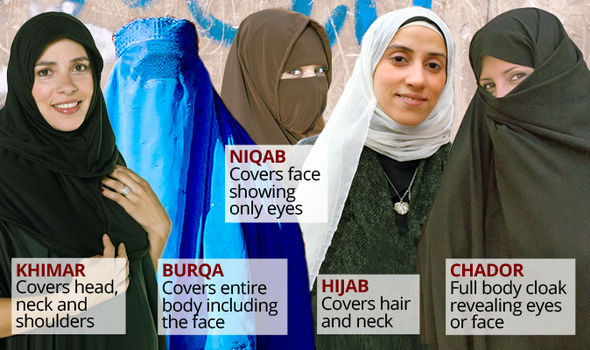
I replied to my dear Kathy that they are indeed like a burkah, something that anonymizes you and that renders normal civil discourse and interaction, like smiles, conversation and flirtation impossible. She added that they are also a kind of affront, a dare to others who you imply are inferior for not wearing yours. Then I saw this: indeed it is, the Corona Niqab. Nuts to that. And if you think I’m pissed, I urge you to listen to this interview with novelist Lionel Shriver who puts it better than I ever could. Shriver delivers the outstanding righteous fury we need to hear, a level of outrage matched and raised to a new level each day by my gracious and prophetic host himself.
January 2, 2020
October 3, 2019
The Puritans, then and now
Severian thinks on churchiness and churchianity in our times:
The most striking fact about the Middle Ages from a modern perspective is their love of lists, categories, forms. This is partly practical — Church art all looks the same because it has to communicate a consistent message to the aforesaid illiterate peasantry — but lots of it isn’t. They were simply obsessed with forms, with outward order, to the point that even the few true individuals were hard to tell apart — William of Ockham and Thomas Aquinas were as different as two thinkers could possibly be, but unless you’re a subject matter expert, their writings look identical.
“The Crucible” by Len Radin is licensed under CC BY-NC-SA 2.0
“Individuality,” on the other hand, comes from inward experience. What, if anything, did the medieval peasant believe when he went to Mass? Impossible to say, but one of the reasons that’s so is because the form of his “piety” was so all-encompassing. Some years back, a Jew wrote a funny book about trying to live his life by the letter of the Mosaic law. One could do the same thing with medieval Catholicism. Take a gander at the liturgical year — hardly a day goes by without a feast, a commemoration, a celebration. Do all of that, and you’ll hardly have time for anything else. They were so focused on the outward show, at least in part, because there was so much showing to do.
When the Reformation shitcanned all that, piety turned inward. There are zillions of sources for what the Reformed believed (or, at least, said they believed), because the Reformation was a middle-class pursuit and the middle classes were literate … and, crucially, had the free time to be literate. I’m guessing here, but since people are people and always have been, I’m pretty sure that your medieval peasant loved the show of his religion, because it gave him a little much-needed time off from his hourly grind of back-breaking, ragged-edge-of-survival physical labor.
Your middle-class incipient Calvinist, on the other hand, was bored to tears with stuff like “creeping to the cross” — all those billable hours lost (surely no one is surprised that Calvin, Knox, et al were all lawyers or merchants). In their vanity, they insisted it wasn’t enough to seem pious; you actually had to be pious, which meant putting the time you would’ve spent doing public penance into contemplating the state of your soul. Check out The New England Mind — once you fight through prose, you’ll see that the vaunted Puritan piety was little more than Special Snowflakism with a New Testament twist. They’re “individuals,” all right, but only because they’re as obsessed as Tumblrinas with their very own pwecious widdle selves.
The point of this isn’t just to bash Puritans, fun as that is (and as richly as they deserve it). The point is that, as Current Year America is a thoroughly Puritan nation, we have to realize just how historically contingent Puritanism really is in order to beat them.
Puritans desperately wanted to be individuals in a world that couldn’t support very many individuals. You need a lot of free time to be a Puritan, and in the 16th century free time was almost inconceivably expensive. Whatever else it was, Puritanism was gross conspicuous consumption — Puritans announced to the world that they alone had the free time to indulge in expensive educations, books, Bible study, and the endless hours worrying about whether or not it’s Biblically justified to paint the altar. In a world where most everyone still knows someone who knows someone who starved to death, that’s one hell of a statement.
September 11, 2019
Environmental virtue signalling – it’s other people who need to change, not me
Heather Mac Donald notes that, as with so many other things, young people who like to virtue signal about their environmental concerns don’t consider it incumbent on them to change … it’s always other people whose habits must be changed, by force if necessary:

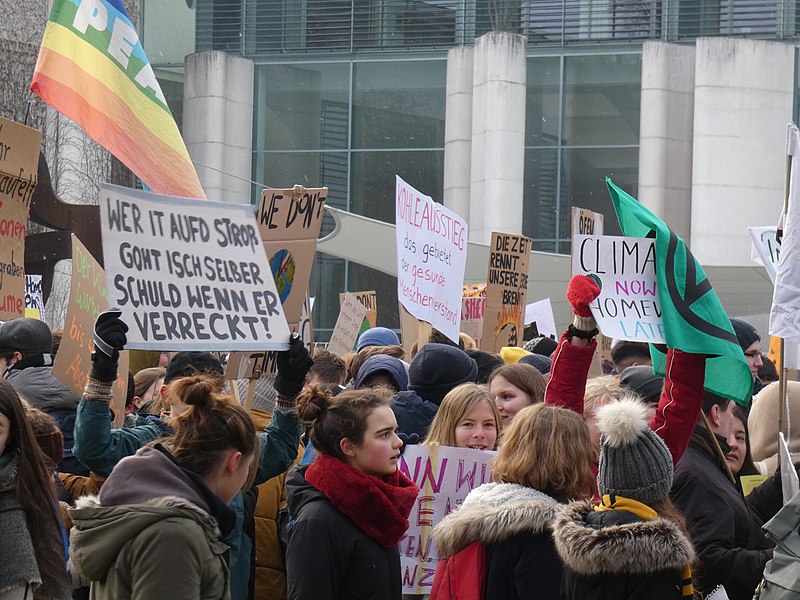
FridaysForFuture Demonstration, 25 January 2018 in Berlin.
Photo by C. Suthorn via Wikimedia Commons.
The claim about youth’s transformative commitment to radical environmental change is — based on informal observation — bunk. The cardinal rule when it comes to environmental virtue-signaling is that people give up what they’re willing to give up. Young people are no different. If being environmentally sound required sacrificing anything that a self-described environmental warrior actually valued, the conversation would quickly change to a different topic. One’s own habits are necessary; it’s everyone else’s that need to change.
This always-unreached threshold for environmental sacrifice is particularly notable on the part of celebrity Greens, with their fortress-like SUVs, multiple residences, and massive carbon footprints — whether it’s the cavalcade of yachts and private jets that brought such luminaries as Leonardo DiCaprio, Mark Zuckerberg, and Katy Perry to Google’s three-day climate-change summit in Sicily this July; environmental crusaders Prince Harry and Meghan Markle jetting off to Elton John’s French estate; or Reliable Sources host Brian Stelter’s “quick day trip” to Los Angeles from New York just ahead of the CNN climate-change debate. A police caravan drives New York City mayor Bill de Blasio 11 miles from his mayoral mansion in Manhattan to his favorite gym in Brooklyn. “Everyone in their own life has to change their own habits to start protecting the earth,” he has intoned, but taking the subway is not one of those changes appropriate for him.
Most young people have not yet reached such a flamboyant level of energy use, but if they could, they undoubtedly would, with as little sense of anachronism as that of Al Gore in his energy-guzzling mansion. These are the consumers who keep football fields of computer servers buzzing round the clock to support their social media habits. If being green meant turning off one’s phone for 22 hours a day or foregoing the latest smartphone upgrade, the reasons why such sacrifices are not required would spout from every Gen Z-er and millennial’s lips. Students from the University of California, Irvine, constantly run their air-conditioners in the apartment complex where I spend summers, regardless of how cool the temperature outside is. They drive with their windows sealed and the car AC on, no matter how fresh the day (this is the new driving norm for almost everyone now). The meteoric rise of food-delivery apps, producing torrents of plastic and paper waste and a constant circulation of cars and electric bikes, has been fueled by young people’s demand for convenience and instant gratification. Cooking is apparently unthinkable. At best, one buys precut and washed food in the inevitable plastic containers. A daily Starbucks habit is deemed consistent with railing against environmentally destructive corporate greed.
New York’s tap water is among the purest in the world. Yet a young neighbor of mine in New York, like progressives throughout the city, receives towering deliveries of bottled water, entailing huge energy outlays to package and transport, not to mention generating flotillas of discarded plastic. The swim team members in my gym turn on their showers in the locker room, then walk away or do nothing other than chat as water gushes down the drain. Uber drivers in college towns report that students regularly call a car to get to class, rather than walk or ride a bike.
June 28, 2019
What does £1 trillion buy you?
Not much, apparently:
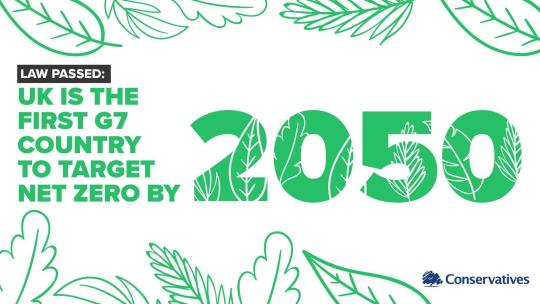
Tory MPs have been told by CCHQ to share this graphic boasting about their new commitment to make the UK carbon-neutral by 2050. No other major country has committed to the pledge although Theresa May is planning a desperate attempt at the G20 to talk other leaders into it. The fact that developed countries going ‘net zero’ simply means they’ll outsource all their emissions to the developing world instead seems to be completely lost on her…
The pledge will cost the UK at least £1 trillion, much of which will be borne by individuals and businesses rather than the exchequer, we don’t know the true cost as May hasn’t even done a proper Treasury analysis. Eco-fanatics love to talk about the burden this generation is placing on children and grandchildren. For a fleeting PR stunt Tory MPs are being told to boast about piling on mountains of economic harm for future generations by a leader who won’t be in office to deal with the consequences…
This is exactly the sort of virtue signalling that Justin Trudeau indulges in … I imagine he’s quite miffed that Theresa May got there first.
June 27, 2019
“Raise our taxes!” cried the hypocritical virtue signallers
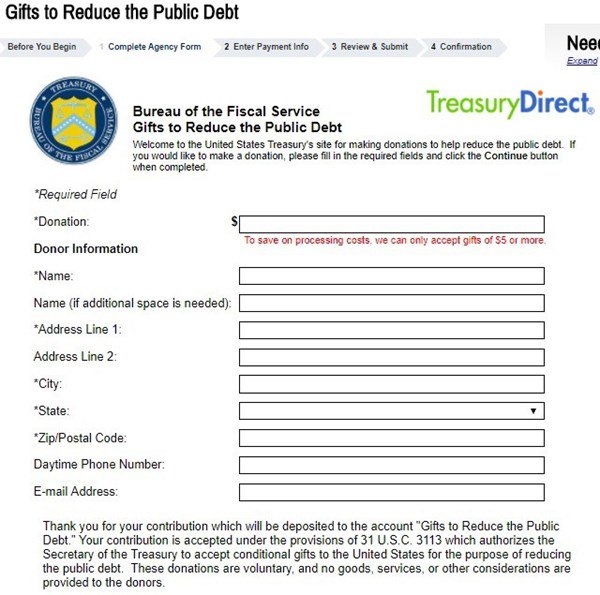
We’ve been over this ground before. Some very rich people are getting fawning media coverage for their “selfless”, “virtuous” demand that the government raise their taxes. Except they’re far from selfless: they’re demanding that other people be forced to pay more tax, but they’re very much not putting their own money where their bleating mouths are. Most governments are happy to accept more money from you than your formal tax liabilities:
- The Canadian federal government
- The British government
- The US federal government
- The province of Ontario
- The City of Toronto
… are all very eager to accept your contributions. But most people don’t take advantage of this mechanism, especially the ones garnering headlines for their “altruism”. Because they’re virtue signalling, and almost certainly don’t actually want to be taxed more. Don’t believe what people merely say they want, watch what they actually do (economists call this “revealed preference“). Hypocrites, the lot of them.
June 17, 2019
“We’ve reached peak identitarian bollocks”
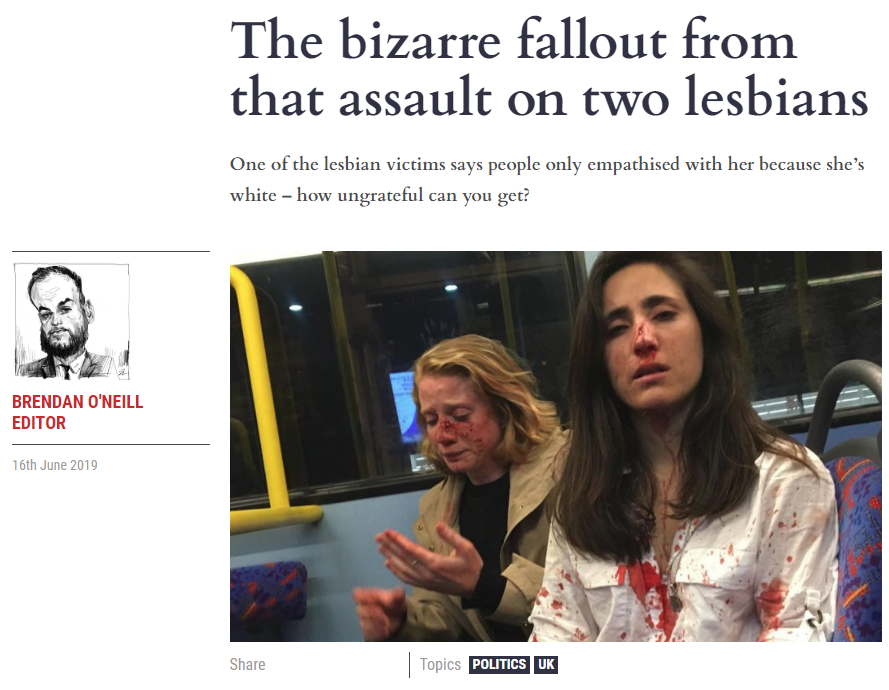
Brendan O’Neill follows up on the disturbing story of two lesbians who were physically assaulted on a London bus:
Talk about ungrateful. Brits, and people around the world, offered empathy and solidarity to the two gay women who were battered by thugs on a London bus. And yet now one of the women has turned around and told us we only care about them because they are white. It’s only because they are “two attractive, white, cisgender women” that so many people and organisations gave a damn about them and tweeted about them, apparently. Thanks a bunch. We offer our human concern for your wellbeing and you tell us we’re being racist. We’ve reached peak identitarian bollocks.
The woman in question, who goes only by the name “Chris”, has written a piece for the Guardian. Natch. The intro lets us know what we’re in for: “The photo of me and my date went viral – but only as we’re white, feminine and cisgender.” Translation: you racist, transphobic idiots wouldn’t have cared half as much if this had been two bloodied and bruised black women or trans women. The “commodification” of “my face” came at the “expense of other victims whose constant persecution apparently does not warrant similar moral outrage”, says Chris.
What is most striking about her piece is that she flagellates herself for her privilege. Yes, this woman who last month was badly beaten allegedly on account of her sexuality is now beating herself up in the national press over her privileged identity. She says she has “evaded much of the violence and oppression imposed on so many others by our capitalist, white-supremacist, patriarchal system because of the privileges I enjoy by dint of my race, health, education, and conventional gender presentation”. What a strange, self-hating mindset it must take to be victimised for your sexuality and then to say: “God, I’m SO privileged.”
Chris even does us the service of providing a list of people who are far less privileged than her and who us phoney empathisers should finally start noticing. It is “open season”, she says, on “people of colour, indigenous people, transgender people, disabled people, queer people, poor people, women and migrants”. This is classic virtue-signalling. She is engaging in the Oppression Olympics while making it clear she doesn’t deserve any gold medals in said Olympics because she is white, educated, cisgender, etc. A masterclass in identitarian showboating.
June 12, 2019
QotD: Militant Islam and the Western media
Mark Steyn is a brave man. He doesn’t talk about his death threats or his security measures, but his public life speaks for itself. For the fifth anniversary of the Muhammad cartoon controversy, he stood on a stage in Copenhagen with the Danes who were not yet in hiding along with Lars Vilks, the Swedish cartoonist who had survived physical attacks, arson, at least three assassination plots, and an Al Qaeda hit list. Steyn returned for the tenth anniversary observance, a few months after the Charlie Hebdo massacre, but by then no cartoonists were left — they were all in hiding, including Vilks, after yet another attempt on his life.
“I’m always willing to stand with the guys in Denmark,” says Steyn. “But the reason all these left-wing Europeans end up on a stage with an eccentric right-wing Canadian like me is that no real A-list stars will agree to be there. At the tenth anniversary both the American State Department and the British Foreign Office even issued official warnings to their citizens to stay away from the Danish Parliament, where we were holding the ceremony. What kind of signal does that send? Why don’t the artists show up for these things? Why aren’t the movie stars there? When Theo Van Gogh was assassinated, no one at the Oscars had a word to say about it. They didn’t even put him in the obituary montage. And yet they congratulate themselves on their moral courage. George Clooney wears a Je suis Charlie Hebdo pin. Helen Mirren wears a brooch. But they were not with Charlie. Those guys died alone. This is gesture politics. No one would stand with them. I honour the genuine courage of Ayaan Hirsi Ali. Ayaan’s point is absolutely right — in the end you have to share the risk. Charlie Hebdo supported the Danish cartoonists, but the rest of the world didn’t. If every newspaper had published those cartoons, there would have been no point in killing anyone because there would have been too many people to kill. Instead, nobody stands with them, and so the small publication that does ends up massacred. The writer of the comic strip Doonesbury in America [Garry Trudeau] attacked the decision of PEN to honour Charlie Hebdo. Well, they were lying on the floor, bleeding and dying. I don’t think they noticed.”
The Danish cartoon controversy was actually the first moment the American press had been challenged by Islam and could do something in response — and their reaction was a spectacular failure of will and principle. In several countries around the world, it was actually against the law to publish the Danish cartoons, but many editors stepped up, published them anyway, and suffered the civil and criminal consequences. In the United States — where there was no such law — no major publication would print them.
Mark Steyn, interviewed by John Bloom, “Mark Steyn, Cole Porter and Free Speech”, Quadrant, 2017-05-11.
June 9, 2019
People who call for higher taxes are almost always hypocrites
And the numbers prove it:
There are many people who tell us that taxation in the UK is too low. Just think of all the gorgeously bureaucratic things that could be done if only the government had more money! Then there’s the number of people who actually do pay more tax on the basis that they think the government should have more money. The second being a rather smaller number than the first.
Which does bring us to that basic point that economists do insist upon making. Revealed preferences are a much better guide to what people do in fact believe than are expressed. Or, as folk wisdom has it, talk is cheap. That many shout that taxes should be higher – usually to insist that them over there should be taxed more – is interesting and amusing. But the actual number of people who really believe taxes should be higher is the number of people who voluntarily offer up more of their own hard earned to the government.
Which means that, according to the aggregate views and actions of the population of Britain taxes last year were too low by exactly the amount of £11,069. Everyone else is just virtue signalling:
Donations to the Treasury have dwindled in recent years, however, even as the country’s debt remains relatively high. There were just 14 donations and bequests to reduce the national debt in the 2018-19 tax year, totalling £11,069, the UK Debt Management Office said.
That is the revealed preference of us all in aggregate.
It’s not just the UK where the number of people demanding higher taxes don’t actually put their own money where their mouths are — it’s true in Norway, the USA, and even the City of Toronto.
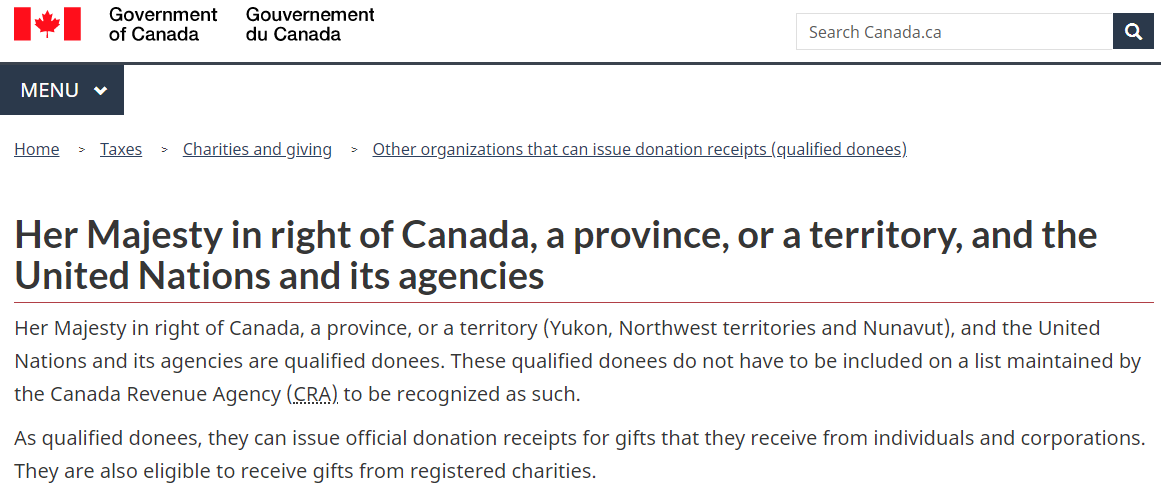
For ultra generous Canadians, Her Majesty will happily accept your donations here. To prove that you’re even more devoted to the challenge, you can even forego the tax credit, too!
June 8, 2019
The sad economics of recycling
Kim du Toit on the actual economic value of most recycling efforts:
Turns out that aluminum cans are actually worth recycling — in that they are 100% recyclable (requiring nothing other than melting and reformulating) and it costs less — much less — to recycle than to produce new aluminum.
That’s almost true of newsprint too, except that while pulping it is fine — hardly any energy is used for that — the pulp also has to be bleached, and in the pulping / bleaching process, about 15% of the original paper is lost. And as raw paper production (i.e. from logged wood) has become more efficient over the years, and as trees can be grown to replace those felled, the only real benefit from recycling paper is that overall paper production is less vulnerable to hiccups in supply of fresh wood — such as caused by forest fires, disease and drought.
And, he added, when it comes to recycling other stuff, glass is little better than plastic — which surprised me, but it actually costs much more to recycle glass than simply to produce it new. And the old “plastic into park benches” spiel is likewise stupid, because it costs so much to produce such stuff, and creates so much atmospheric pollution thereby, that it’s easier just to toss plastic into a properly-lined landfill and let nature take its course.
Knowing all that, I’ve always been skeptical of the benefits of recycling — it’s always been about feeewings rather than utility
April 29, 2019
Banning single-use plastics won’t make much (if any) difference
My local high school is suddenly all about the proposed ban on single-use plastics — where student-made posters used to proclaim their dedication to gender equality, they’re now all about the evils of plastics. It’s almost like it’s a co-ordinated campaign that originated somewhere else…
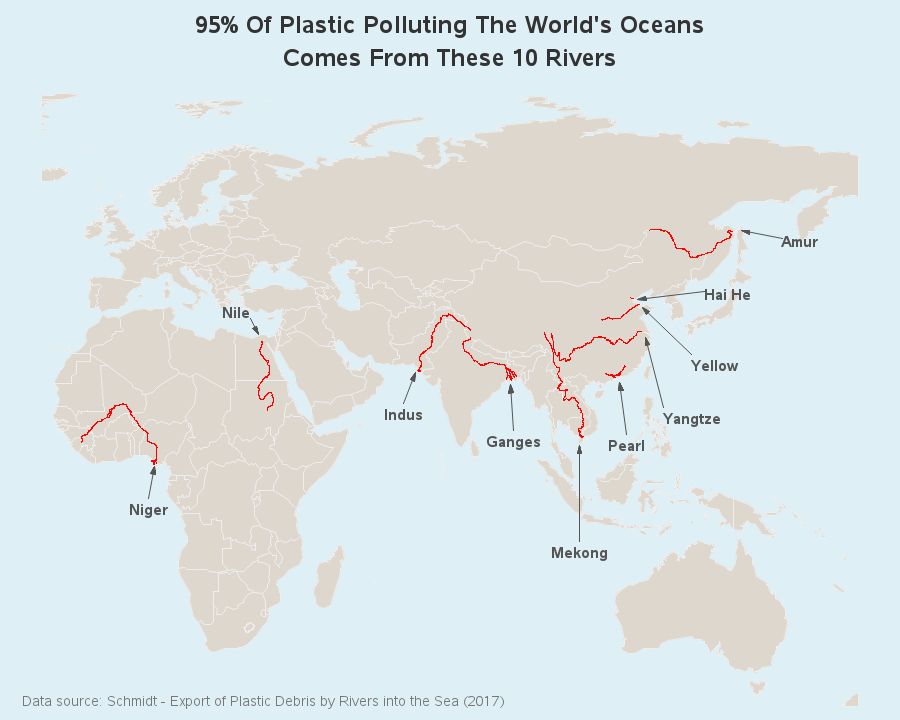
But despite the students’ new-found environmental awareness, the ban they favour would make little or no difference to plastic items ending up in the oceans, because the vast majority of the plastic there comes from only ten rivers, none of them in North America (this is from a World Economic Forum report). Jason Unrau reports on his trip up the Yangtze River in China twenty years ago that illustrates the breadth of the problem:
Beginning in Shanghai in the summer of 1999, I boarded a large flat-bottom boat with around 300 other passengers. It would be the first of about a dozen different vessels, that over two weeks ferried me 2500 kilometres to Chongqing.
After taking my first meal in the ferry’s mess hall, served in a Styrofoam box, I searched everywhere for a garbage can. There were none – passengers simply tossed their garbage overboard and without an alternative, I joined in the littering.
The banks of the Yangtze are home to more than 200 million Chinese who treat the waterway as commuter corridor and as I soon discovered, a dump. I took the trip to get a glimpse the fabled Three Gorges, before a hydro-electric project and dam would change the watershed forever. As my trip progressed, however, so did my treatment of this historic river as trash receptacle.
The closer I got to Chongqing, the narrower the river became and the smaller the ferries got. About 10 days into the trip, I exited the dining hall of a different vessel to engage in the daily ritual of reckless Styrofoam abandonment, but to my surprise there was a garbage bin.
Delighted at the prospect that my littering ways on the Yangtze were through, enthusiastically I added my box to a near overflowing bin. As if on cue a kitchenhand exited the dining hall, gathered up the bag and heaved the entire thing overboard.
Like I experienced and begrudgingly participated in creating, the World Economic Forum’s report describes “rivers of plastic” – its analyses of respective outputs and comparisons to garbage island and other samples, could be traced back to their source.
According to the economic forum eight of these rivers are in Asia: the Yangtze; Indus; Yellow; Hai He; Ganges; Pearl; Amur; Mekong; and two in Africa – the Nile and the Niger.
February 26, 2019
Laissez-faire versus “Fairtrade”
In the Guardian, a sad tale of the fading bright hopes of the (relatively small number of) affluent westerners who passionately supported the “Fairtrade” movement:
When, in 2017, Sainsbury’s announced that it was planning to develop its own “fairly traded” mark, more than 100,000 people signed a petition condemning the move. Today, on the eve of Fairtrade Fortnight, the fact that most supermarkets have moved away from the standards developed by the Fairtrade Foundation is worrying.
While some grocery chains have sought the foundation’s stamp of approval, many have gone their own way. This means most consumers have little sense of which organisation is doing what to protect the wages and rights of developing world workers. Over the next two weeks, the foundation plans to focus its publicity efforts on cocoa farmers in west Africa and the way the Fairtrade mark can improve their lives.[…]
That is a sad situation. After the great financial crash of 2008, a commodity boom that lasted from 2013 to 2017 turned into a slump that has robbed farmers and developing world governments of vital cash. Just as they were managing to stabilise their finances and set aside money to invest, the world price tumbled and wiped out their profit. Fairtrade practices protect farmers from this sort of setback and allow them to plan for the future.
Of course they have their critics. These are most mostly from the US – people who favour unfettered markets and seek to undermine the Fairtrade ideal, saying it is a form of protectionism that dampens innovation and ultimately ruins farms.
Theirs is an almost religious adherence to the free market that discounts the gains in stability and security that Fairtrade provides, and the scope of the community premium to promote universal education and the rights of women.
But without large employers making strides to adopt the standardised and transparent Fairtrade practices put forward by the foundation, it will be left to consumers to drive the project forward.
At the Continental Telegraph, Tim Worstall responds:
The Guardian tells us that the Great White Hope of global trade, Fairtrade, isn’t in fact working. On the basis that no one seems to be doing very much of it. To which the answer is great – for the only fair trade is laissez faire.
This does not mean that Fairtrade should not have been tried – to insist upon that would be to breach our basic insistence upon the value of peeps just getting on with doing what they want, laissez faire itself. But the very value of that last is that we go try things out, see whether they work and if they don’t we stop doing them. If they do then great, we do more of them.
[…]
So, trying out Fairtrade, why not? Let’s go see how many other people feel the same way? In exactly the same way we find out whether people like Pet Rocks, skunk or Simon Cowell. Product gets put on the market we see whether it adds to human welfare or not. If people value it – and revealed preferences please, by actually buying it – at more than the use of those scarce resources in other uses then that’s adding to human welfare and long may it thrive. If it doesn’t, if it’s subtracting value from the human experience, then we’ll stop doing it as those trying go bust.
This is not an aberration of the system it is the system and it’s why laissez faire works. Peeps get to do whatever and we keep doing more of what works, less of what doesn’t.
Fairtrade? No, I never thought it was going to work as anything other than virtue signalling for Tarquin and Jocasta but that’s fine. Why shouldn’t Tarquin and Jocasta gain their jollies by virtue signalling? As it turns out, now that we’ve tried it, no one else gives a faeces*. So, we can stop. Except, obviously enough, for those specialist outlets like the Co Op where the odd can still gain their jollies. It being that very mark of a laissez faire, liberal, society that the jollies of the odd are still catered to in due proportion to the desire for them.
*From Gibbon, all the fun stuff’s in Latin.
September 6, 2018
Trans-partisan planning
At Coyote Blog, Warren Meyer offers a plan to address man-made climate change, pitched to avoid being dismissed as “typical” of one or the other side:
While I am not deeply worried about man-made climate change, I am appalled at all the absolutely stupid, counter-productive things the government has implemented in the name of climate change, all of which have costly distorting effects on the economy while doing extremely little to affect man-made greenhouse gas production. For example:
- Corn ethanol mandates and subsidies, which study after study have shown to have zero net effect on CO2 emissions, and which likely still exist only because the first Presidential primary is in Iowa. Even Koch Industries, who is one of the largest beneficiaries of this corporate welfare, has called for their abolition
- Electric car subsidies, 90% of which go to the wealthy to help subsidize their virtue signalling, and which require more fossil fuels to power than an unsubsidized Prius or even than a SUV.
- Wind subsidies, which are promoting the stupidist form for power ever, whose unpredictabilty means fossil fuel plants still have to be kept running on hot backup and whose blades are the single largest threat to endangered bird species.
- Bad government technology bets like the massive public subsidies of failed Solyndra
Even when government programs do likely have an impact of CO2, they are seldom managed intelligently. For example, the government subsidizes solar panel installations, presumably to reduce their cost to consumers, but then imposes duties on imported panels to raise their price (indicating that the program has become more of a crony subsidy for US solar panel makers, which is typical of these types of government interventions). Obama’s coal power plan, also known as his war on coal, will certainly reduce some CO2 from electricity generation but at a very high cost to consumers and industries. Steps like this are taken without any idea of whether this is the lowest cost approach to reducing CO2 production — likely it is not given the arbitrary aspects of the program.
These policy mess is also an opportunity — it affords us the ability to substantially reduce CO2 production at almost no cost.
August 7, 2018
Grasping at straws to virtue signal
Richard Morrison points out just how banning plastic straws will not do anything meaningful to save the environment, but will definitely have a negative impact on consumers:
Of all the consumer products one might have expected to become a flashpoint for political controversy, the humble plastic drinking straw is an unlikely contender. Leap into the headlines it has, though, with communities like Seattle and San Francisco recently enacting bans on disposable straws. The city council of Santa Barbara, California, initially voted for a ban that would have punished restaurant workers with up to six months of jail time for giving out a disposable plastic straw, but city officials agreed to revisit the ordinance when it appeared to also ban the sale of straws at supermarkets.
[…] the case against the plastic straw is exceedingly weak. There aren’t as many plastic straws thrown away as claimed, and only a tiny portion of U.S. straws end up anywhere near the oceans — the vast majority of municipal solid waste in this country ends up either buried in landfills, recycled, or burned up in incinerators, far from any congested sea turtles.
The vast majority of plastic waste in oceans actually comes not from advanced countries like the U.S. but from countries like China and Indonesia that consume a large volume of plastic products but lack our modern waste collection infrastructure. Much of their plastic waste ends up washed into major river systems that empty into the oceans. A study published last year in the journal Environment Science & Technology by three German researchers found that 90 percent of the plastic debris found in the world’s oceans is dumped there by just ten of the world’s rivers — none of which are in the Western Hemisphere, much less the United States.
Beside the fact that U.S. consumers are contributing very little to the ostensible problem is the other side of the equation: the benefits of the straws themselves. I suspect many Americans who were initially receptive to the idea of a ban were genuinely surprised to learn that disposable drinking straws are very important to people with certain disabilities. British disability rights activist Penny Pepper recently commented in the Guardian about how she depends on plastic straws — and other single-use, disposable products like baby wipes — writing “I don’t have the luxury of a plastic-free life.” The durability, convenience, cleanliness, low price, and resistance to heat of disposable plastic straws make them irreplaceable to people with many different physical limitations.
Vancouver, as any Canadian would have guessed, was the first Canadian city to pick up on this particular variant of virtue signalling.