Quotulatiousness

July 23, 2018

QotD: The revolution of the proletariat wouldn’t play out the way Marx imagined

Filed under: Politics, Quotations — Tags: , , , — Nicholas @ 01:00

I remember a friend telling me that multi-culti was knocked out of his young skull when he got a job as a construction worker for the summer. Marxism too. He said if revolution came from the proletariat, the resulting society would view wife beating as a sort of little hobby, on the side, nothing bad, just a little indulgence on Saturday night. (Mind you this was not in the US. The US working class is by and large better than this.) And all those prejudices against other races/sexual orientations/etc? Yeah, the working class had no problems with those. Only a privileged twit like Marx could think that the working class all over the world wanted to unite. They tend to be rather more nationalistic than their “betters” after all. More all sorts of “ists” too (racist, sexist and homophobic[ist for completism]). It’s what works at their level, and virtue signaling buys them nothing.

Sarah Hoyt, “A Very Diverse Cake”, According to Hoyt, 2016-08-31.

May 11, 2018

The impact of universities on Generation X

Filed under: Business, Education, USA — Tags: , , , , — Nicholas @ 05:00

Last month, Aaron Clarey explained why (in his view) the 1980s were so much better than the 1990s:

For example if you went to the gas station you would buy gas there. If you went to Target you bought staples and everyday supplies. If you went to the coffee store they would serve you coffee. And if you went to a movie theater they would show you a movie. They were simpler times and it made my halcyon childhood days very enjoyable. But then something started happening in the 90’s that would end these blissful, innocent times.

College.

Well, not college unto itself necessarily, but the propaganda…err..umm… “education” my generation (Gen X) would receive in college. For you see, while we were all told we “had to go to college” because it was necessary for us to have any sort of career or professional life at all, at the same time some very conscious and very intentional people in academia had a political agenda. And it was to make sure that we not so much had skills that would land us jobs in the future, but more importantly (to them anyway) that we placed more value on social and political agendas than profit, production, efficiency and reality. So that by the time Gen X graduated from college, and inevitably started taking over the reigns of control of the economy (which we have), we would not be so much concerned with offering the best product at the best prices possible, but what I like to call “Profit Plus Purpose.”

Politics Politics Everywhere! In Your Soup and in Your Hair!

You see this “Profits Plus Purpose” every day in western economies. It is literally unavoidable. If you go to a hotel there is always a sign asking you to “save the planet” by reusing your towels. If you go to a coffee store they cannot help themselves from bragging about their organicfairtradefreetradegaiaunicorn credentials. When you walk into a Target they’re always bragging about how they give back 5% to the community. Even British Petroleum tells you about how environmentally friendly they are at their gas pumps, while Exxon Mobil actually has a “corporate social responsibility page.” Matter of fact, this propaganda is so thorough and so complete Generation Z will be the first generation to be brought up where there has ALWAYS been some kind of secondary political message forcefully embedded into nearly every product and service sold in America.

The reason “Profits Plus Purpose” propaganda was so COMPLETE and UNIVERSALLY successful can be found in its genius genesis. It capitalizes on the egotistical and lazy nature of human beings. Leftist academics and politicians started propagandizing Generation X in college with the beginnings of things like “diversity,” “feminism,” “environmentalism,” “global warming,” etc. (you could almost pinpoint it to the date Captain Planet first aired). Whether you believe in the veracity of these “isms” or not is moot, because their ulterior purpose was to give then-naïve-and-egotistical Gen X’ers immediate gratification, purpose, morality, and ego in exchange for their life-long leftist political loyalty and further advancing said political agendas well into the future.

Why, you weren’t just some rank and file Mechanical Engineering major. You were an environmentalist Mechanical Engineering major.

Why, you weren’t some mass produced business major. You were an empowered, feminist, future business leader.

You weren’t some worthless, math-avoidant liberal arts degree major. You were a pro-refugee activist utterly unemployable liberal arts degree major.

Thus, whereas learning a real skill from a real degree took deterring work, effort, and rigor, immediately subscribing to some kind of moral leftist political crusade was effortless, yet provided immediate value and agency. Gen X couldn’t sign up fast enough and thus virtue signaling and Social Justice Warriors were born.

H/T to SDA for the link.

March 26, 2018

QotD: Virtue signalling

Filed under: Media, Politics, Quotations — Tags: , , , — Nicholas @ 01:00

It’s noticeable how often virtue signalling consists of saying you hate things. It is camouflage. The emphasis on hate distracts from the fact you are really saying how good you are. If you were frank and said, ‘I care about the environment more than most people do’ or ‘I care about the poor more than others’, your vanity and self-aggrandisement would be obvious, as it is with Whole Foods. Anger and outrage disguise your boastfulness.

One of the occasions when expressions of hate are not used is when people say they are passionate believers in the NHS. Note the use of the word ‘belief’. This is to shift the issue away from evidence about which healthcare system results in the greatest benefit for the greatest number of people. The speaker does not want to get into facts or evidence. He or she wishes to demonstrate kindness — the desire that all people, notably the poor, should have access to ‘the best’ healthcare. The virtue lies in the wish. But hatred waits in reserve even with the NHS. ‘The Tories want to privatise the NHS!’ you assert angrily. Gosh, you must be virtuous to be so cross!

Comedians make use of virtue signalling of the vituperative kind. With the right audience they can get laughs scorning the usual suspects: Ukip, the Daily Mail, Eton, bankers and the rest. The audience enjoys the caricaturing of all of these, sneering at them and, in the process, joining together as a congregation of the righteously contemptuous. What a delight to display your virtue, feel confirmed in your views, enjoy a sense of community, let off some anger and have a laugh all at the same time! It is so easy, too!

No one actually has to do anything. Virtue comes from mere words or even from silently held beliefs. There was a time in the distant past when people thought you could only be virtuous by doing things: by helping the blind man across the road; looking after your elderly parents instead of dumping them in a home; staying in a not-wholly-perfect marriage for the sake of the children. These things involve effort and self-sacrifice. That sounds hard! Much more convenient to achieve virtue by expressing hatred of those who think the health service could be improved by introducing competition.

James Bartholemew “The awful rise of ‘virtue signalling’: Want to be virtuous? Saying the right things violently on Twitter is much easier than real kindness”, The Spectator, 2015-04-18.

February 27, 2018

Many Americans feel that the elites have “betrayed and abandoned them for a mess of virtue signaling and glib ideologizing”

Filed under: Politics, USA — Tags: , , , , , — Nicholas @ 05:00

ESR on the fraught subject of US immigration policy:

Crime is a real issue. Legal immigrants have a slightly higher criminal propensity than the native born (the difference is small enough that its significance is disputed) but illegals’ propensity is much higher, to the point that 22% of all incarcerees are illegals (that’s 92% of all jailed immigrants).

But the elephant in the room is the impact of illegal immigration on social trust.

Diversity erodes social trust, trust being that extremely valuable form of social capital that enables people to make handshake deals, leave their doors unlocked, and trust institutions to treat them fairly. Sociologist Robert Putnam was so shocked to discover this that he sat on his results for seven years before publishing. In diverse communities trust drops not only between ethnolinguistic groups but within them. It’s insidious and very harmful – low-trust societies are bad, bad places to live.

The U.S. has a proud tradition of assimilating legal immigrants into a high-trust society, but it succeeds in this by making them non-diverse – teaching them to assimilate folk values and blend in. Putnam’s work suggests strongly that without the ability to rate-limit immigration to be within some as yet undetermined maximum, the harm from erosion of trust would exceed the benefits of immigration.

We are probably above the optimal legal immigration rate – the highest compatible with avoiding net decrease in social trust over time – already (later in this post it will become obvious why I believe this). There is little doubt that we would greatly exceed it without immigration controls.

Anyway, even if ending border enforcement were a good idea (and I conclude that it is not, despite my libertarian reflexes) it’s a political nonstarter in the U.S. Trump got elected by appealing to sentiment against illegals, and beneath that is a phenomenon one might call Putnam backlash; everywhere outside a few blue-state enclaves, Americans sense the erosion of social trust and have connected it to illegal immigration.

And on the very strong divergence of opinion between the elite (very pro-immigration) and non-elite (becoming much more anti-immigration over time):

One of the major forces currently poisoning our politics is a breakdown in trust between people like you and me – the cognitive elites – and the rest of America. Deplorables. Flyover country. Brexit, and Trump’s election, slapped me upside the head. I’ve been forced to confront some uncomfortable truths.

They think we’ve betrayed and abandoned them for a mess of virtue signaling and glib ideologizing. On the left: identity politics, PC, and open borders justified on multiculturalist grounds. On the right: free trade and open borders justified on laissez-faire principle.

They have a point. I’m seeing that now.

I mean, I might still think free trade is a good idea and have lots of arguments for it. But my arguments don’t mean fuck-all to a Rust-Belt steelworker who’s watched his livelihood get exported and the community around him wither and has nothing left but a cheap high on opioids. Nor to an unskilled black or legal-immigrant urbanite who can’t get a job because the restaurants can hire illegals for cheaper.

We owe these people more than we have given them. What we owe can’t mainly be paid in money. It’s compassion; a fair hearing. Respect. Not dismissing them as trash or troglodytes because they don’t love the brave new globalized world that gives us options but – too often – closes off theirs.

I don’t have easy solutions to these problems. But is it too much to ask that people like you and me should stop being arrogant assholes about them?

December 31, 2017

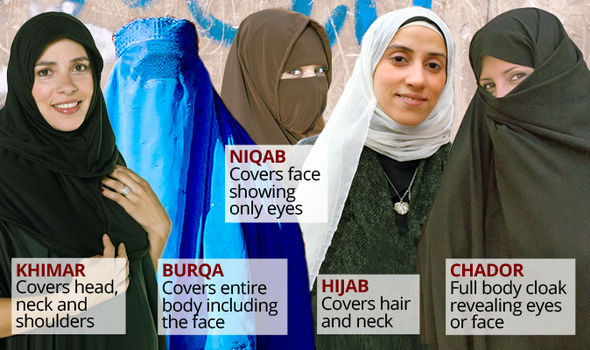
A contrarian view of hijabs, niqabs, and burqas

Filed under: History, Middle East, Religion — Tags: , , , — Nicholas @ 03:00

Western views of full-coverage clothing, including hijabs, niqabs, and burqas, may be concealing a hidden benefit to those who choose to wear such clothes voluntarily:

Hijabs, niqabs, and burqas — different sorts of coverings worn by Islamic women — are divisive apparel in the West, associated with patriarchal oppression, cultural outsiders, and even suicide bombers. Yet few accounts actually discuss the experiences of the women wearing the veils, and the freedom and anonymity coverings can afford if worn voluntarily.

Born in Pakistan and educated in America, Rafia Zakaria is the author of Veil, a new book which explores the history and shifting meanings of female coverings in Islamic countries and Western secular society. In a wide-ranging conversation, she talks with Reason‘s Nick Gillespie about the theological underpinnings of veils, their use as a means of controlling female sexuality, and how they have become markers of socio-economic status and virtue signaling.

Veils present a particular conflict for Western feminists. On the one hand, veils — especially burqas — are emblematic of regimes that are particularly oppressive to women. Feminists and others have moved to ban the wearing of veils in public in the name of female empowerment. But if a Muslim women wants to wear one, is she endorsing patriarchy and setting back the women’s rights movement or simply owning her own choices, especially in a culture that might itself be anti-Islamic?

September 26, 2017

When virtue signalling is more important than tens of thousands of jobs

In Spiked, Brendan O’Neill slams the (mostly left-leaning) critics of Uber for their blatant two-faced attitudes:

The satire writes itself these days. For the past 16 months, ever since voters said No to the EU, the supposed liberal set has been signalling its virtue over migrant workers. These Remainer types have filled newspaper columns and dinner-party chatter with sad talk about foreigners losing the right to travel to and work in Britain. Yet now these same people have chortled as London mayor Sadiq Khan and his pen-pushers at Transport for London (TfL) have refused to renew Uber’s licence in the capital. Which means 30,000 people will lose work. Many of them migrants. They cry over migrant workers one day, and laugh as they lose their livelihoods the next.
Anyone would think their overriding concern is less with migrants’ right to work than with their own insatiable need to engage in political posturing. And right now, when it’s trendy to be anti-capitalist, to sneer at Silicon Valley fat-cats who make apps that employ people in far from ideal conditions, the posture that guarantees one’s spot in liberal circles is to be Uberphobic. Sticking it to Uber, making a spectacle of one’s haughty disdain for the vagaries of life in 21st-century capitalist society, takes precedence over concern for workers themselves. Welcome to 2017, where it’s cool to be anti-capitalist but not pro-worker.

[…]

One of the ugliest sentiments behind Uberphobia is the idea that this service is a threat to the public, especially women. Darkly, the new left is at one with the anti-migrant hard right on this question: both have cheered Uber’s licence loss on the basis that women of London must be protected from unregulated drivers. Let’s get this into perspective. Last year it was revealed that between February 2015 and February 2016 there were 32 allegations of sexual assault against Uber drivers in London. There were a total of 154 allegations against all taxi and car firms, meaning Uber made up a minority of complaints. What’s more, there are millions of Uber journeys in London every year, so the chances of assault are minuscule. It’s the same in the US. There was scandal when it was revealed that Uber had received complaints from women who said they had been raped by drivers. It received five complaints between 2012 and 2015, which means 0.0000009% of car journeys involved an alleged act of rape. Uber is very safe indeed.

It is hard to avoid the conclusion that, from both leftish feminists and the hard right, the panic about Uber is driven partly by fear of unregulated foreign men driving around our cities. The state must regulate, they say — and they mean it must regulate both business and foreigners, both fat cats and untrustworthy outsiders, both moneymen and migrants. Cheering as migrant workers lose their work and being complicit in the depiction of migrant drivers as a rapacious threat: sections of the liberal-left have really exposed their prejudices through their posturing against Uber. The tragedy of Uberphobia is that it confirms that even anti-capitalism is now virtue-signalling. It is no longer a serious call to improve working people’s lives; it is just the fleeting thrill of shouting ‘Down with Uber!’ without ever letting the issue of its drivers’ livelihoods cross your pristine, virtuous mind.

December 21, 2016

Mapping the new western caste system

Filed under: India, Politics, USA — Tags: , , , , , — Nicholas @ 03:00

An interesting re-map of India’s caste system to modern day western society:

I move professionally in circles where lib-left “virtue signaling” is taken for granted, especially inside the US. (Academia outside the US, while no less in the grip of a collective moral superiority complex, at least tolerates dissenters to some degree.)

As I was perusing Trump’s cabinet list in the Times of London the other day, I was struck not so much by the names — some ‘feck yeah!’, some ‘well, OK’, some ‘meh’ — as by what wasn’t there. The ‘Brahmandarins™’ had been left behind, as it were. Allow me to expand.

Traditional society in India has myriad little jatis (“births”, freely: castes), but they ultimately derive from four (plus one) major varnas (“colors”, freely: classes). While caste membership and profession are more fluid than generally assumed by Westerners, these five major groupings do exist to the present day, and are mostly endogamous. From top to bottom, the varnas are:

  1. Brahmins (scholars)
  2. Kshatryas (warriors, rulers, administrators)
  3. Vaishyas (merchants, artisans, and farmers)
  4. Shudras (laborers)
  5. Finally, the Dalit (downtrodden, outcasts — the term “pariah” is considered so offensive it has become “the p-word”) are traditionally considered beneath the varna system altogether, as are other “Scheduled Castes” (a legal term in present-day India, referring to eligibility for affirmative action).

The upper three varnas bear some resemblance to the three Estates of the French ancien régime: clergy, nobility, and the bourgeoisie (le tiers état, the Third Estate). American society used to be a byword for social mobility (“the American dream”) — but a stratification has set in, and it takes little imagination to identify strata of Dalit, Shudras, and Vaishyas in modern American society. The numerically small subculture of military families could be identified as America’s Kshatryas. So where are the Brahmins? (No, I’m not referring to the old money Boston elite.) And why am I using the portmanteau “Brahmandarins” for our New Class?

In India one was, of course, born into the Brahmin varna, and they actually delegated the messy business of governance to the varna below them. In China’s Middle Kingdom, on the other hand, not only was the scholarly Mandarin caste actually the backbone of governance, but in principle anyone who passed the civil service exams could become a Mandarin.

Originally, these exams were meant to foster a meritocracy. Predictably, over time, they evolved to select for conformity over ability, being more concerned with literary style and knowledge of the classics than with any relevant technical expertise.

Hmm, sounds familiar? Consider America’s “New Class”: academia, journalism, “helping” professions, nonprofits, community organizers, trustafarian artists,… Talent for something immediately verifiable (be it playing the piano, designing an airplane, or buying-and-selling,… ) or a track record of tangible achievements are much less important than credentials — degrees from the right places, praise from the right press organs,…

August 14, 2016

When virtue signalling became the dominant form of social media content

Filed under: Media, Politics, Quotations — Tags: , , , — Nicholas @ 02:00

Dan Sanchez explains why political “discussions” on social media tend to be worse than useless:

When children are free to learn from undirected experiences, they learn to conceive of truth as something that guides the successful pursuit of their own goals. But in the domineering, tightly-directed environments of school and the modern household, we condition our children to conceive of truth as received wisdom handed down by authority.

Children are largely deprived of the noble joy of discovering truths as revealed by successful action. Instead they are left with the ignoble gratification of pleasing a taskmaster by reciting an answer that is marked “correct.” And this goes far beyond academics. For the modern child, learning “good behavior” is not about discovering through trial and error what kinds of behaviors are conducive to thriving socially. Instead, it’s about winning praise and avoiding censure from authority figures.

Thanks to this conditioning, we have all become approval-junkies, always on the lookout for our next fix of external validation: for the next little rush of dopamine we get whenever we are patted on the head by others for being a “good boy” or a “good girl,” for exhibiting the right behavior, for giving the right answer, for expressing the right opinion.

This is why the mania for virtue signalling is so ubiquitous, and why orthodoxies are so impervious. Expressing political opinions is not about hammering out useful truths through the crucible of debate, but about signaling one’s own virtue by “tattling” on others for being unvirtuous: for being crypto-commies or crypto-fascists; for being closet racists or race-traitor “cucks;” for being enemies of the poor or apologists for criminals.

Much of our political debate consists of our abused inner children basically calling out, “Teacher, teacher, look at me. I followed the rules, but Johnny didn’t. Johnny is a bad boy, and he said a mean word, too. Teacher look what Trump said. He should say sorry. Teacher look what Hillary did. You should give her detention.”

You can’t expect much enlightenment to emerge from this level of discourse.

January 25, 2016

Virtue signalling

Filed under: Media, Politics — Tags: , , , , — Nicholas @ 02:00

At Acculturated, Mark Judge outlines one of the more irritating ways that the “great and the good” show how much better they are than us uncultured, boorish masses:

British author James Bartholomew has secured his place in history. Recently, he invented the perfect phrase for our times: “virtue signaling.”

Virtue signaling is the popular modern habit of indicating that one has virtue merely by expressing disgust or favor for certain political ideas, cultural happenings, or even the weather. When a liberal goes on a tirade about how dumb and dangerous Senator and Republican presidential candidate Ted Cruz is — a tirade devoid of specific examples of Cruz’s mendacity — that person is actually signaling to others that he or she is virtuous. It has very little to do with Cruz’s actually personality or record.

Celebrities who publicly express panic about the environment without knowing much about science are virtue signaling. So are those who seize on current events to publicize their supposedly virtuous feelings, as Facebook founder Mark Zuckerberg did recently when he wrote on Facebook: “If you’re a Muslim in this community, as the leader of Facebook I want you to know that you are always welcome here and that we will fight to protect your rights and create a peaceful and safe environment for you.” Well, that’s a relief—Facebook won’t be banning Muslims.

[…]

The New Left of the 1960s was more about rage than reason, and they passed their anger down to their Millennial offspring. Often the entire front page of left-leaning websites like Slate and Salon are nothing but virtue signaling, the headlines all variations of: Celebrity/Politician/Activist A Just Destroyed the Homophobic/Sexist/Racist Idiocy of Politician B. Usually the articles are jeremiads without much reporting. If research is going to buzzkill your virtue signaling, well then, to hell with research.

But then, virtue signaling is not about journalism. It’s a way to vent your anger.

« Newer Posts

Powered by WordPress