Quotulatiousness

September 24, 2021

From Handmaid’s Tale cosplay to eco-terrorism

Filed under: Britain, Environment, Media, Politics — Tags: , , , , — Nicholas @ 05:00

Connor Tomlinson outlines the many performative and disruptive projects of Roger Hallam:

Insulate Britain gluing themselves to the M25 for a week has already produced a four-car collision, with victims airlifted to hospital, and delayed a mother’s treatment, leaving her paralysed by a stroke. Despite these events, activists claim they “don’t accept that we put lives at risk”. It’s vital that legal and cultural action is taken to insulate Britons from this dangerous brand of eco-extremism.

As Dan Wootton’s interview with activist Liam Norton explained, the endangerment of lives to exercise political pressure would classify Insulate Britain as ecological terrorists. The action Insulate Britain wishes to force government to take is “to produce within four months a legally binding national plan to fully fund” the insulation of all Britain’s 29 million homes with taxpayer cash. Essentially, they’re sitting in the motorway, blocking your work commute, so the state can take and spend more of your pay-check.

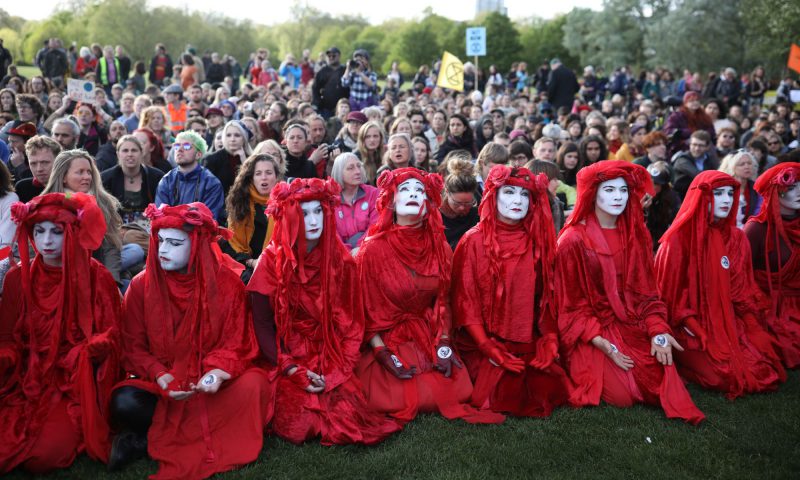
Insulate Britain is another in a long line of activist vanity projects engineered to make headlines by founder Roger Hallam. Starting with “Stop Killing Londoners” in 2017, Hallam went on to co-create Extinction Rebellion; before being ousted over his comments concerning the Holocaust. But Hallam’s alarmist and extremist rhetoric preceded this insensitive remark. In, 2019, Hallam said “forcing the governments to act” or “bring[ing] them down and create[ing] a democracy fit for purpose” will require “some [to] die in the process”. This “democracy” would, paradoxically, be a “socialist project”, with Hallam in the ideological driving seat.

Hallam’s prior protests demonstrated a similar indifference to human suffering. Hallam was arrested at Heathrow Airport for aiming to fly drones into active airspace and ground commercial flights. His “Heathrow Pause” protests constituted a terror threat, in that drones could cause flights to be grounded or collide and crash. Again, Hallam was willing to risk lives to make headlines.

All of these movements claim the sole solutions to apocalyptic emergencies are the appointment of Hallam himself to a position of public power which lets him implement whichever solutions he deems necessary. His PhD at Kings College on “civil disobedience” exposes Hallam’s own egoism in comparing himself to MLK and Gandhi. This was also an indictment of modern university radicalism; echoed by Dr. Charlie Gardner of the University of Kent making the same comparison in a lecture, calling himself “a hero of our times”, and refusing to disavow Hallam when I challenged him on it.

When I first heard of the M25 protests, I thought they’d be allowed to carry on for a token amount of time to get their actions into the media and then they’d be cleared off by the police. I was quite astonished to find that they were permitted to stay in place for several hours and that the police were being quite solicitous of their health and protecting them from any attempt at counter-protest by the stranded motorists. I’m now worried that the next time they try this, the motorists will have learned that the police aren’t there to enforce the law and be tempted to take it into their own hands.

September 18, 2021

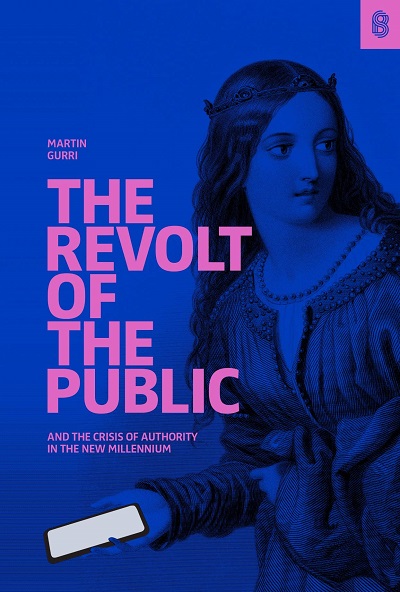
“Martin Gurri’s The Revolt Of The Public is from 2014, which means you might as well read the Epic of Gilgamesh

Filed under: Books, Media, Politics — Tags: , , , , , — Nicholas @ 03:00

In another of his interesting series of book reviews, Scott Alexander looks at a book from 2014 that seems to have done a great job of predicting the situation today, but doesn’t help in looking forward from today:

… It has a second-edition-update-chapter from 2017, which means it might as well be Beowulf. The book is about how social-media-connected masses are revolting against elites, but the revolt has moved forward so quickly that a lot of what Gurri considers wild speculation is now obvious fact. I picked up the book on its “accurately predicted the present moment” cred, but it predicted the present moment so accurately that it’s barely worth reading anymore. It might as well just say “open your eyes and look around”.

In fact, I can’t even really confirm whether it predicted anything accurately or not. Certainly everything it says is true. Anyone who wrote it in 2000 would have been a prophet. Anyone who wrote it in 2020 would have been stating the obvious. Was writing it in 2014 a boring chronicle of clear truths, or an achievement for the ages? I find my memories are insufficiently precise to be sure. It’s like that thing where someone who warned about the coronavirus on March 1 2020 was a bold visionary, but someone who warned about it on March 20 was a conformist bandwagoner — except about the entire history of the 21st century so far. Maybe the best we can do with it is read it backwards, as an artifact of the era when the public was only ambiguously revolting, to see how the knowledge of the coming age arose and spread.

We remember the Arab Spring, those few months in 2011 when revolts spread across various Arab countries and longstanding regimes were toppled by protesters with smartphones and Twitter accounts. Gurri hits the relevant beats, but doesn’t limit himself to the Middle East.

In Spain, a vague formless group called the indignados (or Real Democracy Now, or Youth Without A Future) took to the streets. For months, they filled public squares, streets, and tent cities. Some protests attracted tens of thousands of participants; a few, hundreds of thousands. Some of them were vaguely socialist, but it wasn’t exactly a socialist protest; in fact, the government they were protesting was dominated by the Socialist Workers Party. They were just sort of vaguely angry. From their manifesto:

    Some of us consider ourselves more progressive, others more conservative. Some are believers, others not. Some have well-defined ideologies, others consider ourselves apolitical … but all of us are worried and outraged by the political, economic, and social landscape we see about us. By the corruption of the politicians, businessmen, bankers …

And so on.

At the same moment, hundreds of thousands of people were marching through the streets of Israel. The apparent trigger was a 25-year-old video editor named Daphni Leef who couldn’t afford an apartment near her job. She started a Facebook page saying people should protest the cost of living, one thing led to another, and soon 300,000 people were marching through the streets of Israel and Leef was a national hero.

[…]

Gurri argues all of this was connected, and all of it was a sharp break from what came before. These movements were essentially leaderless. Some had charismatic spokespeople, like Daphni Leef in Israel or Tahrir-Square-Facebook-page-admin Wael Ghonim in Egypt, but these people were at best the trigger that caused a viral movement to coalesce out of nothing. When Martin Luther King marched on Washington, he built an alliance of various civil rights groups, unions, churches, and other large organizations who could turn out their members. He planned the agenda, got funding, ran through an official program of speakers, met with politicians, told them the legislation they wanted, then went home. The protests of 2011 were nothing like that. They were just a bunch of people who read about protests on Twitter and decided to show up.

Also, they were mostly well-off. Gurri hammers this in again and again. Daphni Leef had just graduated from film school, hardly the sort of thing that puts her among the wretched of the earth. All of these movements were mostly their respective countries’ upper-middle classes; well-connected, web-savvy during an age when that meant something. Mostly young, mostly university-educated, mostly part of their countries’ most privileged ethnic groups. Not the kind of people you usually see taking to the streets or building tent cities.

Some of the protests were more socialist and anarchist than others, but none were successfully captured by establishment strains of Marxism or existing movements. Many successfully combined conservative and liberal elements. Gurri calls them nihilists. They believed that the existing order was entirely rotten, that everyone involved was corrupt and irredeemable, and that some sort of apocalyptic transformation was needed. All existing institutions were illegitimate, everyone needed to be kicked out, that kind of thing. But so few specifics that socialists and reactionaries could march under the same banner, with no need to agree on anything besides “not this”.

August 27, 2021

QotD: Music corporations, musicians, and hypocrisy

Filed under: Business, Media, Politics, Quotations — Tags: , , , , — Nicholas @ 01:00

“A good song should make you wanna tap your feet and get with your girl. A great song should destroy cops and set fire to the suburbs. I’m only interested in writing great songs.”

So says Tom Morello, guitarist for the Los Angeles-based band Rage Against the Machine. He and his bandmates are not simply against cops and the suburbs, of course. They also stand for the Zapatistas and the Shining Path, for freeing Mumia Abu-Jamal and Leonard Peltier, for giving California back to Mexico, and for destroying stores where rich people like themselves shop.

That’s pretty strong stuff coming from work-for-hire employees of one of the great cogs in the global capitalist machine, the megaconglomerate Sony, which wholly owns and distributes Rage’s music and even is a co-owner of the group’s publishing. Since 1992, Rage has sold nearly 7 million records, and it’s safe to say that nobody has benefitted more from that commerce than the band’s unabashedly capitalist paymaster.

Brian Doherty, “Rage On: The strange politics of millionaire rock stars”, Reason, 2000-10.

August 17, 2021

Early American Whiskey

Filed under: Economics, Government, History, USA — Tags: , , , , — Nicholas @ 02:00

Townsends
Published 3 Apr 2017

Today Brian Cushing from Historic Locust Grove takes us on a tour of their new distillery and its history. #townsendswhiskey

Locust Grove Website ▶▶ http://locustgrove.org/

Help support the channel with Patreon ▶ https://www.patreon.com/townsend ▶▶

Twitter ▶ @Jas_Townsend
Instagram ▶ townsends_official

August 9, 2021

The modern-day threat of being made an “unperson” is real and very dangerous

Sean Gabb explains why even libertarians need to consider the non-state power in the hands of corporations that can — and does — force people out of their jobs, their homes, and even deprive them of the ability to communicate or to access financial services merely for expressing unpopular opinions. As I said in a different venue, it’s a short step from “no fly lists” to “no eat lists”, especially when the enforcing entity is a nominally private organization:

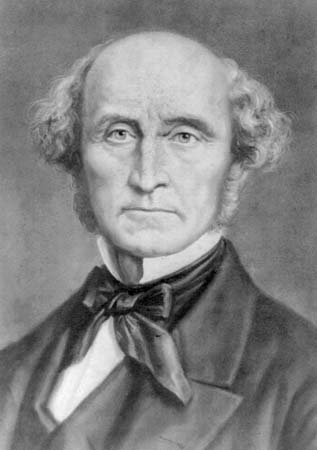
John Stuart Mill (1806-1873)

The old pressures to conform were wrong. So are the new. And they are wrong simply because they are pressures to conform. I find myself at last appreciating a part of Mill’s essay On Liberty for which I never used to have much time. Until recently, I would insist that the only real oppression was by the State: all else was the working of private choice. If the authorities fined a man £5 for having sex with another man, that was outrageous tyranny. If his tastes became public knowledge, and he was unable to find work, that was merely unfortunate. This is, I still believe, essentially true. Indeed, I could argue that, without a State having centralised and corporatised powers of discrimination that ought to be widely distributed, there would be no problem — or there would be a problem that was bearable. But these powers were centralised and corporatised a long time ago. They are now being used to achieve a uniformity of opinion outside the home in which the formal organs of compulsion have no obvious part. This is not the “tyranny of the majority” that worried Mill. I find it inconceivable that anything close to a majority could believe the insane drivel pouring from the regime media. Neither, though, is it the kind of oppression against which liberal bills of rights have traditionally been written. Because of this —

    when society is itself the tyrant …, its means of tyrannising are not restricted to the acts which it may do by the hands of its political functionaries. Society can and does execute its own mandates: and if it issues wrong mandates instead of right, or any mandates at all in things with which it ought not to meddle, it practises a social tyranny more formidable than many kinds of political oppression, since, though not usually upheld by such extreme penalties, it leaves fewer means of escape, penetrating much more deeply into the details of life, and enslaving the soul itself. Protection, therefore, against the tyranny of the magistrate is not enough: there needs protection also against the tyranny of the prevailing opinion and feeling; against the tendency of society to impose, by other means than civil penalties, its own ideas and practices as rules of conduct on those who dissent from them …

    (J.S. Mill On Liberty, 1859, “Introductory“)

We need protection indeed. But the protection we need is not yet another law telling the police to leave dissidents alone. We already have a stack of these, and they are protections against a threat that largely does not exist. The answer, I suggest, is an amendment to the anti-discrimination laws to outlaw discrimination on the grounds of what may be loosely called political opinion.

I say hardly anyone read my original essay. Sadly, most of those who did read it stand in the more wooden reaches of the libertarian movement, and these set up a cry that I had become a Communist. I was suggesting that private organisations should be coerced in their choices of whom and whom not to employ, and even in their choices of customer and supplier. I had abandoned the non-aggression principle. Here, briefly expressed, is my answer to these claims.

I run the Centre for Ancient Studies. This provides a range of tuition services in Greek and Latin. It is a sole tradership. As such, I reserve the unconditional right to decide what services I offer and to whom. If I dislike the colour of your face, or the status of your foreskin, or your tastes in love, or anything else that I may think relevant, it should be my right not to do business with you. It may be that only a fool turns away customers with money to spend, and I am not that sort of a fool. Even so, I do claim at least the theoretical right, and I ground it on my right to do as I please with my own. But I claim these rights as a human individual. A limited company is not a human individual. Whatever entrepreneurship may exist in them, these companies are artificial persons and creatures of the State. Their owners have the privilege of limited liability. That is, they have the right, in the event of insolvency, not to pay the debts of a company if these are greater than the assets of the company. If this were not a valuable right, there would not be so many limited companies. There are almost no large companies, and none lasting more than a single generation, that do not have limited liability.

This being so, limited companies benefit from a grant of privilege from the State, and are legitimate subjects of regulation by the State for as long as they are receipt of this privilege. No doubt, some forms of state regulation are bad in their objects, or bad as regards the means to their objects. But regulation is not in itself an aggression by the State. It follows that, whether or not we can get it, libertarians should not feel barred from demanding laws to prevent limited companies from discriminating against their employees on the grounds of political opinion, and to require them to do business with customers and suppliers regardless of political opinion.

I appreciate that I am asking for more than the regulation of limited companies. The anti-discrimination laws we have make no distinction between incorporated and unincorporated associations. Even so, the extension of these laws to cover political opinion would mainly affect only the larger limited companies. At the same time, there is an obvious and overriding public interest in the protection of political opinion. People are now scared to speak their minds. Whether intended or just revealed, this is part of the strategy. The reason why the collapse of both freedom and tradition is gathering pace is because no one dares stand up and protest. In the absence of protest, everything will carry on as it is. Given a restored right of protest, there is a chance of stopping the collapse. The only way to lift the blanket of fear that now lies over all but approved opinion is somehow or other to get a law making it clear that no one who speaks his mind can be loaded with shadow punishments.

“Somehow or other!” In a sense, I am making a fool of myself. I am asking the politicians to make a law against what they themselves may not be doing, but that has no effect on their main reason for being in politics, which is to fill their pockets. I am asking them to take on the entire mass of the non-elected Establishment. I am asking a lot of these people. On the other hand, the politicians still need to be elected, and that was the weak point in the Establishment’s plan to stay in the European Union. We had to spend four years voting and revoting, but we did eventually get what we wanted. It is conceivable that, if enough of us call loudly enough for protection, some kind of protection will be granted.

Short of that, we are lost.

July 7, 2021

The “Squirrel!” distractions will end when it’s convenient for certain people and groups

Jay Currie considers the constant barrage of distractions that appear to be preventing most people from noticing what is actually going on in Canada:

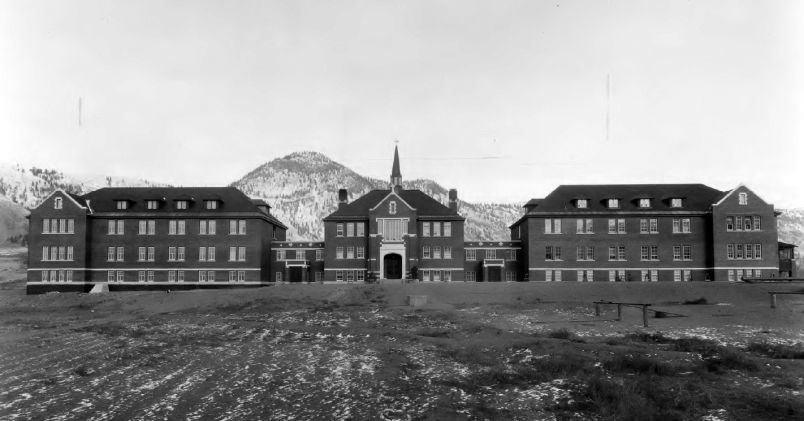
Kamloops Indian Residential School, 1930.
Photo from Archives Deschâtelets-NDC, Richelieu via Wikimedia Commons.

The remarkable thing about all of these little snippets of news is that they seem to be regarded as business as usual. Being taxed by an inflation rate which is well into the double digits does not cut through the COVID hype. Vandalism and arson purportedly in rage over residential school deaths which we have known about for decades attracts very little comment – though many First Nations people are not very happy that reservation churches which have served their communities for years are being burnt. People seem to shrug off the heat wave deaths and ambulance delays.

I expect very little from government at any level. A reasonably sound currency, a degree of public order and emergency services which can deal with the inevitable surges in demand.

The emergency services issue is probably the most easily fixed. Yes, having more para-medics is part of the solution but planning a reponse to these sorts of surge emergencies which tries to avoid the need for an ambulance in the first place is important too. Most of the dead were old, in many cases, very old. It should not be impossible to identify those older people and have a plan for these sorts of emergencies. Something as simple as a “Helpful Neighbour” program on a voluntary basis would be a good first step.

Restoring public order is more complicated. First, you have to have the political will to actually take on the problem. As we saw a couple of years ago, when it comes to people purporting to act on behalf of First Nations/environmental causes that will is absent. But even if the politicians decided that enough was enough there needs to be an investigation and an understanding of how the “spontaneous” vandalism and arson and blockades are driven. That is going to require rooting around in the activist community which will be, to say the least, difficult. The people who are actually creating the public disorder pay close attention to operational and communications security. Suffice to say this stuff is not being organized on a Facebook page.

Restoring order is also going to require a look at who benefits from disorder. To take an example: was it co-incidence that the sad fact of the Kamloops residential school graveyard came up just as the inquiry into Canada’s Winnipeg Lab’s connection to the Wuhan virology lab was heating up? The fact of there being a graveyard had been know for decades. The ground radar was being used to determine the boundaries so a new fence could be built. Yet, somehow, the number of bodies became headline news. I suspect, but cannot prove, that this was no accident. Public order will be restored when disorder is no longer in anyone’s interest.

June 8, 2021

If you were trying to destroy American cities from within … what would you be doing differently?

Sarah Hoyt’s latest Libertarian Enterprise post considers the state of US urban areas after more than a year of Wuhan Coronavirus lockdowns, social controls, and medically “justified” repression:

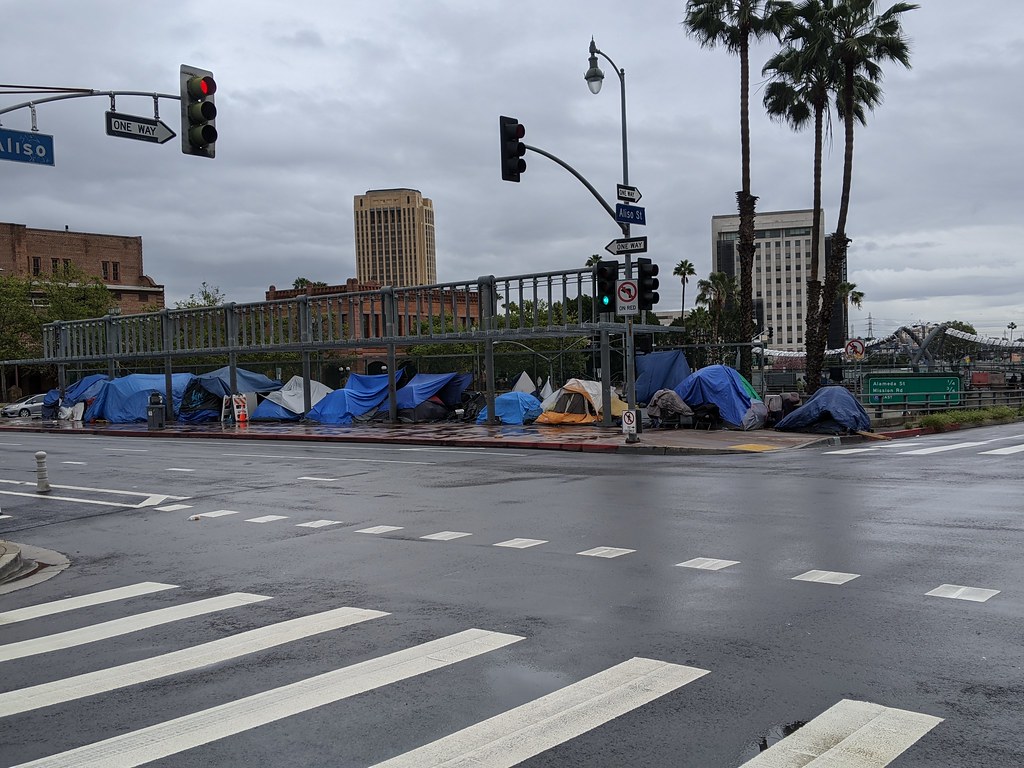
“Homeless encampment above the 101 @ Spring” by Steve Devol is licensed under CC BY-NC-SA 2.0

Look, I’m sure this was suggested by China, and the dunderheads are totally buying it under their Compleate Illusions system.

Sure climate change. Climate change can justify anything. If we told them they needed to burn people alive to prevent climate change, they’d already been building the pyres.

But that’s just sort of a reflexive thing, like a Moslem saying “Insh Allah“. It’s not actually involved in their thinking as such. Or their thinking is not involved in it. whichever.

The truth is that they realized that the Covidiocy has destroyed the cities.

You see they had everything planned. They were going to force more and more of us into the city, because they were going to make running an internal combustion engine so hard. So if you had a job, you’d live in the city. Where you’re more easily controlled. And where they could make you believe bullshit like overpopulation and that — look at all the homeless — we needed more and more welfare. Their idea of their perfect world is the 1930s version of the future. Just megalopolisis, isolated, with people completely controlled. It has the bonus of leaving pristine wilderness outside that, for the elites to build their dachas.

And part of the problem is that they never understand other people have agency and respond to circumstances.

I don’t know what they expected when they went full fashboots and — in the case of Polis, and I bet not the only one — gave homeless the right to camp in every public land, and defecate in public as well as freeing a bunch of felons.

Did they expect this would just scare people more, and they’d lock themselves in, in fear and trembling, allowing the idiots to design society.

Instead, people left. Americans are on the move. I swear half of my friends are moving from more locked to less locked, from bluer to redder. Some demographers have caught on, seeing through the smoke and mirrors, and are confused — most of them being leftist — because Americans are in the middle of a full migration. As full and as all pervading as the movement west. Or after the civil war the movement of black people North.

Some of this must have penetrated the granite-like heads of the ruling left. Or at least the planning left.

They somehow didn’t expect—possibly because they don’t really get technology. I mean, I have my moments, but I swear most democrats were disappointed when laptops started being made with no “cup holders”. They’re at that level of stupid — that a tech that hasn’t been fully implemented, giving us the ability to work from home, would be kicked into high gear from the covidiocy.

I guess they expected people who work mostly from their computers to sit at home watching panic porn on TV and not work?

More importantly, I don’t think they expected people who have to work in person to follow that migration because, well … if you owned a restaurant that the covidiocy killed, you might, for instance, pay heed to the fact people are driving everywhere because, duh, masks on planes, and therefore build a roadside diner or perhaps find a small town that’s underserved and start anew there.

Oh … a lot of people are changing jobs too, and the jobs are no longer binding them to big cities.

Honestly, the only way for big cities to save themselves is to become touristic centers. NYC was halfway there when the covidiocy hit. Only not fully there because lefty governance sucks at making a city safe.

If I were a lefty governor or mayor right now, I’d aim the fashboots at crime and disorder, get rid of the homeless, spruce up the place, and go all out in courting tourism. Then people would move in to cater to the tourists, and eventually other businesses would move in, because that’s where people are.

But leftists don’t think that way. Carrot and incentive is beneath them (of course.) Their idea is rather that they will force those unwashed peasants to do what they want.

May 24, 2021

The hard core of “mostly peaceful protest” activists

Filed under: Media, Politics, USA — Tags: , , , , , , — Nicholas @ 03:00

In the most recent Libertarian Enterprise, Sarah Hoyt explains why the same people seem to show up at “mostly peaceful” riots protests in so many different cities and even in the rare cases they’re arrested, are quickly bailed out again:

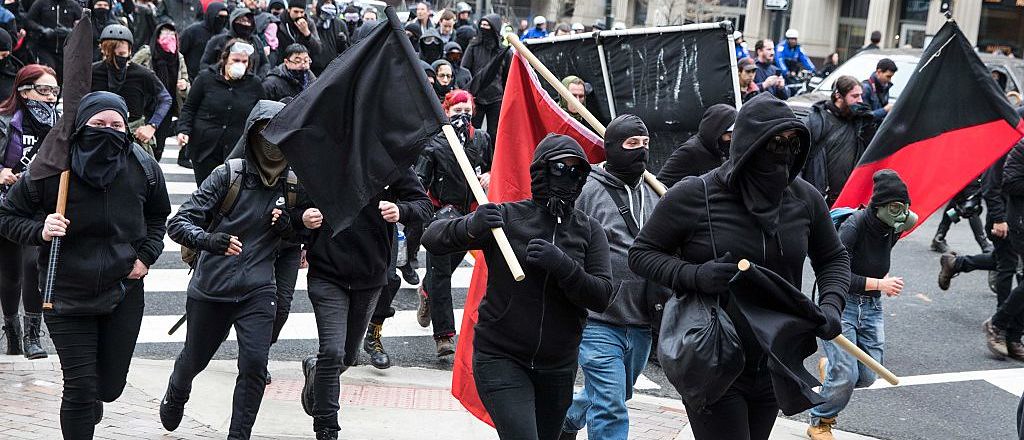
“antifa 8973ag” by cantfightthetendies is licensed under CC BY 2.0

One of the advantages of the collectivists is that they organize like nobody’s business, while we liberty minded … Well — pats heads all around — well, you guys are adorable, but the individualists failed to organize, okay.

Now, while many of you translate this to a paramilitary clash and panic, don’t. Most of their supporters aren’t nor will they commit violence, unless the can do it when no one is looking, sneakily, and against someone old, disabled, frail or very young.

Most of their supporters are in fact the “go alongs to get along” who just want to be “nice people” by siding with lunatics who want to put a boot on their necks. Oh, they also want to be smart because their college professors told them every “very smart” person believes in Marxism. This is why at the back of their brains every single one of the infantile “activists” thinks he or she will be in charge and not one of the lumpenpoletariat. No, they have never looked at actual communist countries, and if they did, as their panic at the Xi-flu proved, they don’t get statistics or numbers at all.

So, yeah, the people they are using and weaponized-and-paid psychopaths, whom they bus from city to city. They’re armed and well organized partly because they do this all time and are given weapons and training. They’re very fearsome FOR ONE CITY AT A TIME.

In other words they are a Potemkin army, raging across the country to intimidate the citizens. Which is why they have to punish Kyle Rittenhouse, because he pierced the paper silhouette. And why blue states refuse to arrest the rioters. They have very few of them. They’re the precious.

It does work on corporations and — apparently — Supreme Court Judges who, being in a highly social profession just buy what the news tell them and don’t investigate anything for themselves.

Look, I don’t think this bullshit will hold. And it’s part of the reason I think we’re going to have a brief, intense, localized clash.

This is not the seventies. They really had a majority of the indoctrinated youth then, and the youth then were a majority. With the attendant side effect that the youth then hadn’t been raised as little emperors, because they were the all-too-precious single offspring.

Those were the real Marxist riots. This is the Memorex. And like Chinese troops clashing with Indian troops, their rank and file are more likely to cry for their mommies, if they meet real opposition.

They have the psychos they train and bus around and which have a rap sheet long as their arm, and then they have the daft survivals of the sixties, at protests with their oxygen bottles and walkers.

And they have the get alongs. Who are useless in battle, but quite good at coordinated action on other fronts.

May 23, 2021

Portlanders “have developed rituals, devotions, and self-criticisms to fight ‘systemic racism’ and ‘white supremacy'”

Filed under: Education, Politics, USA — Tags: , , , , — Nicholas @ 05:00

In City Journal, Christopher F. Rufo talks about the “child soldiers of Portland”:

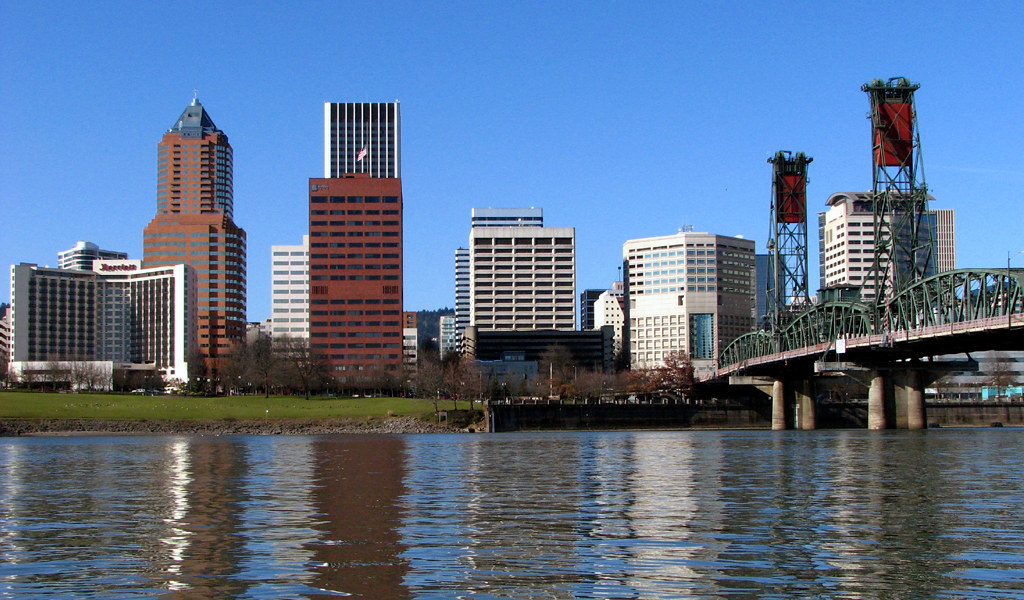
“Portland, Oregon” by Ben Amstutz is licensed under CC BY-NC 2.0

There are only a few places on earth where radicals and their children ritualistically burn the American flag and chant “Death to America”: Tehran, Baghdad, Beirut, Kabul, Ramallah — and Portland, Oregon.

The City of Portland, a cloud-covered metro on the south bank of the Columbia River, has become known for its political protesters. Anarchists, Communists, ecofascists, and various other agitators regularly denounce the police, politicians of both parties, and America itself, and flag-burning has become part of the protesters’ liturgy. Last summer, protesters associated with Antifa upped the ante with chants of “Death to America” and participated in months of violent protests to avenge the death of George Floyd while he was in police custody in Minneapolis. Children as young as four marched with the crowd to the federal courthouse, raising the Black Power fist and chanting “Fuck the Police!”

Famously the “whitest city in America”, Portland has become the unlikely headquarters of race radicalism in the United States. The city has elevated white guilt into a civic religion; its citizens have developed rituals, devotions, and self-criticisms to fight “systemic racism” and “white supremacy”. The culminating expression of this orthodoxy is violence: street militias, calling themselves “antiracists” and “antifascists”, smash windows and torch the property of anyone transgressing the new moral law.

We might be tempted to dismiss this as the work of a few harmless radicals “keeping Portland weird”, but in recent years, their underlying ideology on race has become institutionalized. The city government has adopted a series of Five-Year Plans for “equity and inclusion”, shopkeepers have posted political slogans in their windows as a form of protection, and local schools have designed a program of political education for their students that borders on propaganda.

I have spent months investigating the structure of political education in three Portland-area school districts: Tigard-Tualatin School District, Beaverton School District, and Portland Public Schools. I have cultivated sources within each district and obtained troves of internal documents related to the curriculum, training, and internal dynamics of these institutions. We can best understand the political education program in Portland schools by dividing it into three parts: theory, praxis (or practice), and power. The schools have self-consciously adopted the “pedagogy of the oppressed” as their theoretical orientation, activated it through a curriculum of critical race theory, and enforced it through the appointment of de facto political officers within individual schools, generally under the cover of “equity and social-justice” programming. In short, they have begun to replace education with activism.

The results are predictable. By perpetuating the narrative that America is fundamentally evil, steeping children in race theory, and lionizing the Portland rioters, they have consciously pushed students in the direction of race-based “revolution”. In the language of the Left, the political education programs in Portland-area districts constitute a “school-to-radicalism pipeline”: a training ground for child soldiers. This is not hyperbole: some of the most active and violent anarchist groups in Portland are run by teenagers, and dozens of minors were arrested during last year’s riots. These groups have taken up the mantle of climate change, anticapitalism, antifascism, and Black Lives Matter — whatever provides a pretext for violent “direct action”.

Contrary to those who believed that the end of the Trump presidency would bring a “return to normalcy”, the social and political revolution in Portland has only accelerated under President Joe Biden. On Inauguration Day, teenage radicals marched through southeast Portland, smashing the office windows of the state Democratic Party and unfurling large banners with hand-painted demands: “We don’t want Biden, we want revenge”; “We are ungovernable”; “A new world from the ashes”. Intoxicated by revolution and enabled by their elders, Portland’s kids are not all right.

February 11, 2021

“… the entire Canadian constitution boiled down to the government saying, essentially, ‘trust us'”

Filed under: Cancon, Government, History — Tags: , , , , , , , , — Nicholas @ 03:00

Andrew Potter on the interesting and almost certainly unCanadian notion that the Prime Minister actually accept responsibility for things that happen on his watch:

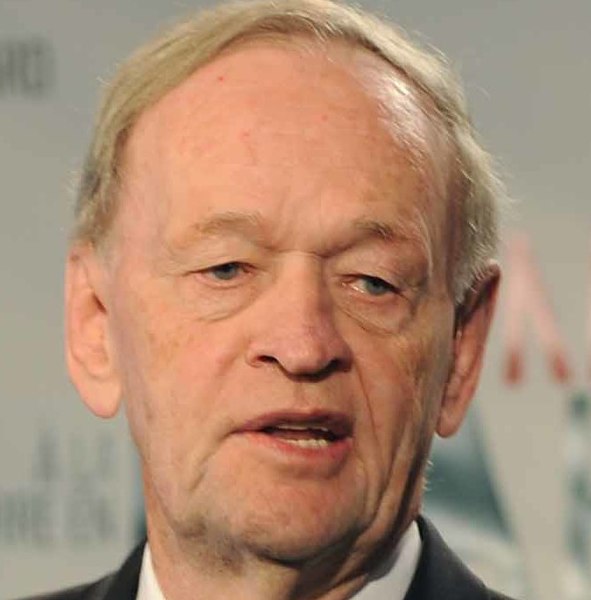
Former Prime Minister Jean Chrétien speaking at the “No to the war in Iraq: 10 years later” colloquium, 15 March 2013.
Detail of a photo by Gopmtl1 via Wikimedia Commons.

The late UBC law professor Wesley Pue once remarked that the entire Canadian constitution boiled down to the government saying, essentially, “trust us.” He was speaking in the wake of the release of the Hughes Report into the APEC affair.

A refresher: In 1997 it was Canada’s turn to host the annual APEC summit, a free trade and cooperation gabfest for countries in the Pacific Rim. Prime Minister Jean Chrétien decided to hold the meeting on the campus of UBC. Given that it is probably one of the most gorgeous pieces of real estate in the country, Chrétien probably thought he was being a good host. But some UBC students objected to the presence of Indonesian dictator Suharto at their school, and so they marched, held up signs, blocked campus roads and exits, chanted slogans, the usual student protest stuff.

Chrétien was clearly embarrassed, and orders went out from the PMO to clear the roads. The Mounties started telling students their campus was now a “Charter-free zone,” arresting a bunch of them. In a notorious incident captured by CBC cameras, RCMP Staff Sgt. Hugh Stewart walked amongst the students hosing them down with pepper spray. (Asked about the incident at a press conference, Chrétien made a joke.)

The only proper investigation into the affair was led by commissioner Ted Hughes, who issued his report in the summer of 2001. Hughes found that the RCMP had behaved by turns incompetently and unprofessionally and that they had systematically violated the Charter rights of the students. Further, Hughes found that they had done so under direction from the PMO — in particular at the behest of its director of operations, Jean Carle. While Chrétien himself escaped direct censure (Hughes could find no evidence that Carle had acted on Chrétien’s explicit orders), Pue pointed out that the fundamental principle of responsible government requires that the prime minister accept responsibility for what happened. Yet Chrétien did not. He neither accepted personal responsibility, nor did he throw Carle under the bus. Instead, what happened was typically Canadian: the matter simply went away.

The APEC affair serves as a useful reminder of a fundamental truth about our system of government. As Pue noted, there are virtually no effective parliamentary or legal checks on a prime minister’s authority, and as a result it is pretty much impossible to hold our executive branch to account. We need to just trust them.

[…]

It’s worth rehearsing all of this because we are going through a rather extended “just trust us” phase in Ottawa. After shuttering parliament last spring, ostensibly to focus their energies on fighting the COVID-19 pandemic, Justin Trudeau’s Liberals spent the summer dreaming of “building back better” while fighting a ferocious rearguard action to keep MPs from finding out the truth about payments to Trudeau’s family by a charity. Trudeau has since spent the better part of the last six months governing by press conference from the front steps of his cottage, but even as the extreme levels of federal spending continue, and even as scandals and reports of gross mismanagement pile up, the Liberals have been brazenly testing the waters for a spring election.

December 27, 2020

QotD: Charles Dickens

Filed under: Books, History, Quotations, Religion — Tags: , , , , — Nicholas @ 01:00

… That I was, unparadoxically, also trying to put in the reader’s head, that Dickens has contributed to the demoralization of our world, was on the surface of my essay. In this respect, I was acknowledging this author’s great power. The reduction of hard moral fact, to mushy simper and what we now call “empathy,” was partly his doing. I detect it even in the unpleasant vibrations of BLM rioters, and other agents of our Left.

They “protest” things that, indirectly, they learnt to protest from the kind-hearted Dickens; subjective hysterias about the world being unfair. Of course it is unfair, as it has always been, and to everyone who has been living in it. But unfairness is a whim, compared to sound moral judgements, and the reticence that should accompany them. We cannot make the world “more fair” by rioting. Dickens, incidentally, agrees with me on that.

He was among the writers (and artists generally) who contributed subtly to our post-Christian worldview, based on emotion, not remorseless thought. Who made, say, Christmas about giving presents to little children, rather than centrally about the birth of Christ. That doesn’t mean his works should be suppressed. On the contrary, they should be read and enjoyed, with this thought in mind. He moralizes, but in a way that may actually subvert morality, by substituting “feelings” for the hard truths, which are to die for.

David Warren, “Retractiones”, Essays in Idleness, 2020-07-29.

September 27, 2020

“It is a Chestertonian paradox which Chesterton himself never wrote: a government changing the nature of the state successfully and without opposition because nobody can believe what they are seeing, and so everybody politely ignores it.”

In The Critic, Peter Hitchens on the many civil institutions that have been seriously wounded — not so much by the Wuhan Coronavirus, but by government responses to it:

David Icke about to speak at Piers Corbyn’s 20 August anti-masking demonstration in Trafalgar Square.
Screencap from YouTube video – https://www.youtube.com/watch?v=DOZQ58uTWdw

The long retreat of law, reason and freedom has now turned into a rout. It was caused by many things: the mob hysteria which flowered after the death of Princess Diana; the evisceration of education; the spread of intolerant speech codes designed to impose a single opinion on the academy and journalism; the incessant state-sponsored panics over terror; the collapse and decay of institutions and traditions.

These have all at last flowed together into a single force, and we seem powerless against it. Absurdly, the moment at which they have achieved maximum power is accidental, a wild, out of-proportion panic response to a real but limited epidemic.

Outside total war and its obscenities, we have not seen what we are living through now. To list the constitutional events of the last few months is to ask the complacent chattering classes of Britain what it reminds them of: the neutering of parliament into a rubber stamp controlled by the executive; the death of political pluralism; the introduction of government by decree; the disappearance of the last traces of an independent civil service; the silence in the face of these events of media and courts; the subjection of the police to state edicts rather than to law.

[…]

Documents of this kind are not supposed to get out. In better times than these, with active and critical media, this particular passage — with its clear implication that it was the task of the state to scare us into compliance — might have led to the fall of the government. As it is, you will struggle to find mentions of it in the British national press. They are there, but they are hard to find and not on any daily front pages. This is not because of censorship or because of any kind of collective action.

It is because most people, having lived all their lives in relaxed freedom, are quite unable to believe what is in front of their eyes. It is a Chestertonian paradox which Chesterton himself never wrote: a government changing the nature of the state successfully and without opposition because nobody can believe what they are seeing, and so everybody politely ignores it.

This could not have happened, in my view, 60 years ago. Rigorous education, especially of the elite, had at that time created a significant class of people who knew how to think, and how to assess evidence. There would always have been someone, whether it was a Tam Dalyell or a Churchill, to point out the true direction of events and warn against them, prominently. Much of the press would have given this dissent house room, rather than obediently conforming (in order to #ProtectOurNHS). But in the intervening years such rigorous schooling has been replaced by an egalitarian education system which teaches its students what to think, not how to think. Criticism of the past is obligatory, but any cold-eyed assessment of the present — in which new ideas benevolently rule — is disliked and ignored.

As well as this, there have been the various spasms of panic and emotion which convulsed the country after the Cold War ended. These were profound attacks on reason. They were also attacks on limited government and the rule of law, which rest largely on the power of reason. Most people quite like being afraid of something, and many dislike freedom and the responsibility that comes with it. The honest among us all admit it.

Once, before Charles Darwin, Ypres and the Somme, the Christian religion answered those needs. The Fear of the Lord was the Beginning of Wisdom, and the devoted service of Christ was perfect freedom. Faith offered eternal life and helped people to accept temporal death as normal. This belief helped to sustain earthly liberty because, as Edmund Burke pointed out, the man who truly fears God will fear nothing else. No despot can get very far if there are such men around in any number.

September 20, 2020

Andrew Sullivan on the politically deranging effects of social media addiction

Filed under: Media, Politics, Technology, USA — Tags: , , , , , — Nicholas @ 03:00

In his latest Weekly Dish installment, Andrew Sullivan decries the extreme polarization of the US electorate and points an accusing finger at social media for making things much worse:

An Electoral College victory for Trump, if he loses the popular vote again, would, in this new elite consensus, prove beyond doubt the centuries’ long grip of “white supremacy”. Some are already calling such a victory illegitimate, even though it would be completely constitutional, under the rules everyone has agreed to. The sickening street violence that the far left has downplayed, and permitted to run riot in major cities could be a mere taste of what is to come — along with ever-stronger white nationalist gangs instigating or responding in kind. (Trump’s toleration of this dangerous right-extremism in the past four years is as unforgivable as the left’s excuses for murderous violence.) But the upshot is the same: we will be lucky if the country doesn’t erupt in large-scale civil violence by the end of all this.

And the reason this dystopian scenario is so credible is not just the fault of these political actors. It’s ours too — thanks to the impact of social media. I think we’ve under-estimated just how deep the psychological damage has been in the Trump era — rewiring the minds of everyone, including your faithful correspondent, in ways that make democratic discourse harder and harder and harder to model. The new Netflix documentary, The Social Dilemma, is, for that reason, a true must-watch. It doesn’t say anything shockingly new, but it persuasively weaves together a whole bunch of points to reveal just how deeply and thoroughly fucked we are. Seriously, take a look.

The doc effectively shows how the information system necessary for democratic deliberation has, in effect, been jerry-rigged in the last decade to prevent any reasoning at all. It’s all about the feels, and the irrationality, and the moment, which is why Trump is so perfectly attuned to his time. And what’s smart about the documentary is that it shows no evil genius behind this unspooling, no sinister plot deliberately to destroy our system of government. One of the more basic motives in American life — making money — is all you now need, the documentary shows, to detonate American democracy at its foundation.

For Facebook and Google and Instagram and Twitter, the business goal quickly became maximizing and monetizing human attention via addictive dopamine hits. Attention, they meticulously found, is correlated with emotional intensity, outrage, shock and provocation. Give artificial intelligence this simple knowledge about what distracts and compels humans, let the algorithms do their work, and the profits snowball. The cumulative effect — and it’s always in the same incendiary direction — is mass detachment from reality, and immersion in tribal fever.

With each passing second online, news stories, graphic videos, incendiary quotes, and outrages demonstrate their stunning utility to advertisers as attention seizers, are endlessly tweaked and finessed by AI to be even more effective, and thereby prime our brains for more of the same. They literally restructure our minds. They pickle us in propaganda. They use sophisticated psychological models to trap, beguile, outrage, and prompt us to seek more of the same.

[…]

And online is increasingly where people live. My average screen time this past week was close to ten hours a day. Yes, a lot of that is work-related. But the idea that I have any real conscious life outside this virtual portal is delusional. And if you live in such a madhouse all the time, you will become mad. You don’t go down a rabbit-hole; your mind increasingly is the rabbit hole — rewired that way by algorithmic practice. And you cannot get out, unless you fight the algorithms to a draw, or manage to exert superhuman discipline and end social media use altogether.

But the thing about algorithms and artificial intelligence is that they don’t rest, they have no human flaws, they exploit every weakness we have, and have already taken over. This is not a future dystopia in which some kind of AI robot takes power and kills us all. It is a dystopia already here — burrowed into our minds, literally disabling the basic mental tools required for democracy to work at all.

If you watch video after video of excessive police force against suspects, for example, and your viewing habits are then reinforced by algorithms so you see no countervailing examples, your view about the prevalence of such excessive force will change, regardless of objective reality. A new study shows how this happens. Watching the videos, even more than reading text about them, raises the percentage of white liberals who believe the cops frequently or always use excessive force by around 20 percentage points. The actual data are irrelevant. The BLM movement this summer was less a racial reckoning, as we’re constantly lectured, than a moment of web-induced mass hysteria.

September 4, 2020

“They have insurance”

Filed under: Business, Economics, Government, Politics, USA — Tags: , , , — Nicholas @ 03:00

Brad Polumbo debunks the notion that it’s somehow “okay” to loot and vandalize businesses “because they have insurance” and that somehow means that nobody suffers.

A building burning in Minneapolis following the death of George Floyd.
Photo by Hungryogrephotos via Wikipedia.

Since the death of George Floyd in late May, violent riots and looting have broken out in many major cities, eventually overshadowing peaceful protests and calls for criminal justice reform. From Portland to Chicago to Kenosha, rioters have smashed windows, lit fires, attacked government properties, assaulted people in the streets, and looted storefronts.

In Minneapolis alone, vandals have destroyed at least 1,500 properties, many of them minority-owned businesses, and caused billions of dollars in property damage. Many people have been injured or killed during the chaos.

[…]

Even if all the affected property was fully insured — and it wasn’t — rioting has taken a vast human toll as well.

Consider that at least 15 people were killed during the initial riots after Floyd’s death, and that more have died in the unrest since. When arson and looting consume the streets, people inevitably get hurt and caught in the crossfire. That’s why the Minneapolis police found a burnt corpse in a pawn shop days after arsonists had passed through.

Insurance might fund that property’s restoration, but it can’t bring a dead man back to life.

[…]

Big companies like Walmart and Target generally have expensive, premium insurance plans. But many of the mom-and-pop enterprises and small businesses targeted in the riots didn’t have expensive insurance plans. In some cases, their more modest plans don’t cover damage from riots or don’t cover it in full.

“Situations where there’s a lot of devastation like this, a lot of times people find they’re underinsured and don’t have enough coverage,” Illinois Insurance Association Hotline President Janet Patrick told CBS Minnesota. “And so once the damage has been done, it’s too late. You can’t buy more coverage.”

According to Insurance Journal, 75 percent of US businesses are under-insured. And according to the New York Times, about 40 percent of small businesses have no insurance at all.

September 1, 2020

“John from America” and the South Pacific cargo cults

Filed under: Books, Economics, History, Pacific, Religion, WW2 — Tags: , , , , — Nicholas @ 03:00

Steven W. Aunan responds to Vicky Osterweil’s recent book on the joy of looting (which was clearly informed by her almost total innocence of any economic understanding) and also tells the story of the perhaps mythical “John from America” and the cargo cults of islanders in the South Pacific during and after World War II:

Ceremonial cross of John Frum cargo cult, Tanna island, New Hebrides (now Vanuatu), 1967.
Photo by Tim Ross via Wikimedia Commons.

In 1940, or so goes the myth, a man who identified himself as “John from America” appeared in a native village in the New Hebrides Islands with a message: Rebel against the colonizers, their missions, their schools, their laws, and John would reward them with free housing, clothing, food, and transportation.

The result was the “John Frum Cargo Cult” that persists to this day in the modern-day South Pacific nation of Vanuatu.

Frum’s message was remarkably similar to Vicky Osterweil’s message: rebel against settler domination, against the history of whiteness, and someone will reward you with all the free stuff you need.

Like Osterweil’s chaotic myth of impossibly contradictory Marxist worlds, we can’t be sure who the mythical John Frum was, how or when he arrived, whether he was a man or a spirit-being, if he lived in the U.S. or in the island’s active volcano, or if he first appeared as a tiger on an island where no tigers live, as a black man with a moustache, or as a white man who magically spoke the native language.

You can pick your own truth about Frum, because Marxists will tell you it’s no better than anyone else’s truth.

And, like every other false promise spoken by the fork-tongued followers of the dead white male devil Karl Marx, John Frum brought with him a vision of the future in which the old social order is violently dismantled, a new world is born, and the people emerge with material wealth, happiness, hope, and success.

After Frum left the islands, large numbers of Americans in their flying machines immediately and miraculously followed, building military airstrips and bringing in enormous quantities of cargo. Everything came to pass just as John Frum had promised.

The residents of the islands, of course, did not understand modern manufacturing or transportation, or that World War II was underway. The cargo simply arrived at the airstrip in the jungle, apparently by magic.

Kind of like the Target stores around the country that are repeatedly looted only to be magically restocked by the invisible hand of an invisible genius named John Galt.

« Newer PostsOlder Posts »

Powered by WordPress