
Quotulatiousness

July 2, 2018

The holy book of Marx and the religion of progress

Filed under: Europe, History, Politics, Religion, USA — Tags: , , — Nicholas @ 03:00

In the latest Libertarian Enterprise, Sarah Hoyt discusses the religious nature of progressive thought in the western world:

While the left not only filled every nook and cranny of twentieth century “narrative industries” to the point the only way a conservative could work in one of those was under deep, deep cover, the engineers made the internet.

The left didn’t even know it really had any serious opposition left. You can’t blame them too much. Even those of us who were very opposed and very disgusted kept it polite in public and treated them as retarded children who couldn’t take opposition.

Would it have made any difference if we’d talked back, say 30 years ago?

I doubt it.

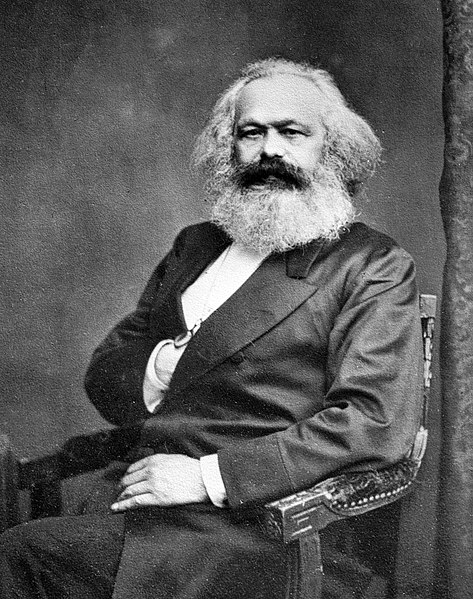
You see, leftism is as much as anything else a religion. The crazy Marx with his vision of the future created an entire narrative from paradise (pre-capitalism, i.e. it never existed, guys, not even as apes. Apes, as we now know, trade) through fall into capitalism to eventual paradise again, where the New Man (what used to be called the Soviet Man) will be so altruistic and communally oriented that a government isn’t needed. (Like the peace of Islam, there’s only one way to obtain that, and no. Just no. Worldwide species extinction is as fantastical as the idea of that primordial paradise. Humans are humans, and someone will survive. I’m just not interested in letting them send us back ten thousand years.)

You hear it in the talk of the left — particularly the rather intellectually inbred fourth generation, who ate the pap the older people fed them and never had an original thought in their lives — stuff like calling us “reactionaries” (when they’re the ones in power, and have been for a long time, and the ones knee-jerk reacting) and talking about “the future” as belonging utterly to them, and the arrow of history, as though history were the chart in their book, with an arrow beneath.

Their faith doesn’t align particularly well with reality. For instance there’s the whole thing of them talking about us — always — as though we were the ones in power, when they have all the gatekeeping positions and all the contacts.

This dissonance has required them to make up invisible monsters that give us all the power: Patriarchy (a laughable idiocy in America and weak everywhere in the west. While they refuse to see it in the Middle East and Latin America where it actually exists in spades.) Micro aggressions. White privilege (which is so strong that it gives an edge to concentration camp survivors.)

All the while they refuse to admit the real privilege: Leftist privilege. The fastest way to rise in the narrative fields is to be lefter-than-thou. Because they’re in charge and that’s how the system is setup, so they can stay in charge.

Unfortunately this has created their isolation. You see, every song, every movie, ever history book, every fictional book, assures them they’ll win. They know that “the people united shall never be defeated.” They also know that though held back by patriarchy, racism, sexism and all the micro aggressions, the people really are with them. HAVE TO BE, because they’re ideology of the future, and history’s arrow points to their paradise. Every book, movie, etc. says so either subtly or openly. So they KNOW. Everybody knows.

June 30, 2018

QotD: In government regulations, complexity is a subsidy to existing companies

One of the major themes of the book I’m working on should be familiar to longtime readers of this “news”letter. It boils down to a simple insight: Complexity is a subsidy. The more complex you make the rules, the more you reward people with the cognitive, material, or social resources necessary to get around them. Big corporations tend not to object to more burdensome regulations because they can afford to comply with them. Dodd-Frank was great for the “too big to fail” crowd. But it has been murder on community banks that don’t have the resources to comply. As Lloyd Blankfein, the CEO of Goldman Sachs, put it:

    It’s very hard for outside entrants to come in and disrupt our business simply because we’re so regulated. We hear people in our industry talk about the regulation, and they talk about it with a sigh about the burdensome of regulation. But in fact in some cases the burdensome regulation acts as a bit of a moat around our business.

But you’ve been hearing this stuff from me for years. Let’s get back to the arrogance thing. It seems to me a big part of the problem with progressive elites these days is that they lack self-awareness. That elites arrange affairs for their own self-interest is an insight that was already ancient when Robert Michels penned his Iron Law of Oligarchy. But ever since the progressives concocted their theories of “disinterestedness,” they’ve convinced themselves that they are not in fact a self-serving elite. Give feudal aristocrats their due: They were a self-dealing crop of rent-seekers and exploiters, but at least they were open about the fact that they believed they had a divine right to sit atop the social pyramid. Today’s progressive aristocracy is largely blind to the fact that their cult of expertise isn’t really about expertise; it’s about organizing society in a way that reinforces their status and power.

Well, most of them are blind to it. Occasionally the mask slips. Jonathan Gruber, one of the chief architects and financial beneficiaries of the health-care “reform,” told audiences that Obamacare was designed “in a tortured way” to hide the fact that “healthy people pay in and sick people get money.” They had to do it this way to get around the inconvenient “stupidity of the American voter.” A feudal lord who talked this way about his serfs wouldn’t get any grief for it. But in America such honesty gets you rendered an un-person.

Jonah Goldberg, “The Consequences of Overpromising on Obamacare”, National Review, 2016-10-08.

June 22, 2018

QotD: The “narrative” and social media

Filed under: Media, Politics, Quotations — Tags: , , , — Nicholas @ 01:00

The Times piece brought to its conclusion a dialectic that has increasingly consumed the news media in the age of Twitter. A narrative generated on social media is fed back into the “mainstream” press, and then in turn fed back into Twitter in the form of reporting that appears to confirm the pre-existing narrative. It acquires along the way the force of sanction, rewarding those who participate in the dissemination of the narrative, and punishing those who dissent from it in the form of mob-style attacks and ostracism. This machinery for the spontaneous coordination of orthodoxy exploits vulnerabilities in our evolved psychology. “Confirmation bias” is the tendency to lower our threshold of proof for claims that conform to what we are already primed by habit, familiarity, and the desire to believe. “The availability heuristic” is the tendency to mistake the vividness of an occurrence for its frequency. Use these quirks of the mind to feed the bias held by partisans that the only people that could possibly oppose them are knaves and fools, and you can gaslight even otherwise bright and skeptical people into accepting and repeating blatant falsehoods.

Wesley Yang, “The Shocking Truth About Jordan Peterson”, Tablet, 2018-05-28.

May 27, 2018

The Decreasing Viability of YouTube as a Platform for Independent Creators

Filed under: Law, Liberty, Media, Technology — Tags: , , , , — Nicholas @ 04:00

Computing Forever
Published on 25 May 2018

Woke-ism, the new religion of progressives

Filed under: Politics, Religion, USA — Tags: , , , , — Nicholas @ 03:00

John McWhorter notes the strong parallels between Christianity and woke-ness:

Over the past several years, for instance, whites across the country have been taught that it isn’t enough to understand that racism exists. Rather, the good white person views themselves as the bearer of an unearned “privilege” because of their color. Not long ago, I attended an event where a black man spoke of him and his black colleagues dressing in suits at work even on Casual Fridays, out of a sense that whites would look down on black men dressed down. The mostly white audience laughed and applauded warmly—at a story accusing people precisely like them of being racists.

This brand of self-flagellation has become the new form of enlightenment on race issues. It qualifies as a kind of worship; the parallels with Christianity are almost uncannily rich. White privilege is the secular white person’s Original Sin, present at birth and ultimately ineradicable. One does one’s penance by endlessly attesting to this privilege in hope of some kind of forgiveness. After the black man I mentioned above spoke, the next speaker was a middle-aged white man who spoke of having a coach come to his office each week to talk to him about his white privilege. The audience, of course, applauded warmly at this man’s description of having what an anthropologist observer would recognize not as a “coach” but as a pastor.

I have seen whites owning up to their white privilege using the hand-in-the-air-palm-out gesture typically associated with testifying in church. After the event I have been describing, all concerned deemed it “wonderful” even though nothing new had been learned. The purpose of the event was to remind the parishioners of the prevalence of the racist sin and its reflection in themselves, and to offer a kind of forgiveness, this latter being essentially the function of the black people on the panel and in the audience. Amen.

[…]

The self-affirming part is the rub. This new cult of atonement is less about black people than white people. Fifty years ago, a white person learning about the race problem came away asking “How can I help?” Today the same person too often comes away asking, “How can I show that I’m a moral person?” That isn’t what the Civil Rights revolution was about; it is the product of decades of mission creep aided by the emergence of social media.

What gets lost is that all of this awareness was supposed to be about helping black people, especially poor ones. We are too often distracted from this by a race awareness that has come to be largely about white people seeking grace. For example, one reads often of studies showing that black boys are punished and suspended in school more often than other kids. But then one reads equally often that poverty makes boys, in particular, more likely to be aggressive and have a harder time concentrating. We are taught to assume that the punishments and suspensions are due to racism, and to somehow ignore the data showing that the conditions too many black boys grow up in unfortunately makes them indeed more likely to act up in school. Might the poverty be the key problem to address? But, try this purely logical reasoning in polite company only at the risk of being treated as a moral reprobate. Our conversation is to be solely about racism, not solutions — other than looking to a vaguely defined future time when racism somehow disappears, America having “come to terms” with it: i.e. Judgment Day. As to what exactly this coming to terms would consist of, I suppose only our Pastor of White Privilege knows.

May 22, 2018

“[Hamas] knows there is a market for stories of Palestinian pain, and it is happy to flood that market”

Filed under: Media, Middle East — Tags: , , , , , , , — Nicholas @ 05:00

In Spiked, Brendan O’Neill explains why Hamas is so willing to literally sacrifice Palestinian lives for media coverage:

A 2007 map of the West Bank and Gaza, showing Israeli settlements
Via Wikimedia Commons

It is becoming increasingly clear that Hamas pushes Gaza’s people into harm’s way because it knows their suffering will strike a chord across the West. Because it knows images of their hardship will be shared widely, wept over, and held up as proof of the allegedly uniquely barbarous nature of the Jewish State. Hamas knows there is a hunger among the West’s so-called progressives for evidence of Palestinian pain, and by extension of Israeli evil, and it is more than willing to feed this hunger.

The clashes at the Gaza border, in which more than 60 Palestinians were killed and hundreds injured, cannot be viewed in isolation from Western liberals’ peculiar and disproportionate obsession with Israel. It now seems undeniable that this was no instinctive, grassroots protest, but rather one that was carefully orchestrated by Hamas. As a New York Times reporter described it, after midday prayers clerics and leaders of Hamas ‘urged thousands of worshippers to join the protests’. And Hamas’s urging was littered with false claims. It told people ‘the fence had already been breached’ and Palestinians were ‘flooding into Israel’. This was a lie. A Washington Post reporter details how Hamas’s leaders told people to keep attacking the border fence because ‘Israeli soldiers [are] fleeing their positions’. In truth, as Hamas knew only too well, the IDF was reinforcing its positions.

Israel had made clear, including in an airdrop of leaflets, that anyone who sought to dismantle the fence in Gaza, the de facto border between this part of Palestine and Israel, risked coming to harm. And still Hamas encouraged the protesters to strike at the fence. Still it sought to swell the angry ranks by pleading with people to go from their mosques to the border. Why would it do this? Why would the governing party of a territory knowingly put that territory’s citizens into serious danger?

This is the rub. This is the central question. And the answer is a disturbing one: Hamas does this because it knows it will benefit politically and morally if Palestinians suffer. It knows there is a market for stories of Palestinian pain, and it is happy to flood that market.

Writing in the New York Times last week, Matti Friedman, a former AP desk editor in Jerusalem, touched upon this trade in Palestinian horror. He said that during his years reporting from the Middle East he even developed a certain respect for Hamas’s ‘keen ability to tell a story’. Hamas’s great insight was to recognise that the vast majority of the Western media wanted ‘a simple story about villains and victims’, says Friedman. Most Western reporters and commentators weren’t interested in nuance and certainly not in any reading of events that might seek to understand the Israeli position. No, they wanted stories of ‘dead human beings’, made dead by ‘unwarranted Israeli slaughter’, says Friedman.

May 15, 2018

Larry Correia gets the instant “unperson” treatment from Origins

Filed under: Books, Gaming, Liberty, Media — Tags: , , , — Nicholas @ 05:00

Science fiction writer Larry Correia was (briefly) the guest of honour at Origins. People threw tantrums and made unfounded accusations and the con chair melted:

So I’m no longer the writer guest of honor at Origins. My invitation has been revoked. It was the usual nonsense. Right after I was announced as a guest some people started throwing a temper tantrum about my alleged racist/sexist/homophobic/whatever (of course, with zero proof or actual examples), and the guy in charge (John Ward) immediately folded. He didn’t even talk to me first. He just accepted the slander and gave me the boot in an email that talked about how “inclusive” they are. I actually heard about it on facebook before I even saw the email.

Oh well.

They did this to John Ringo at ConCarolinas a little while ago, and took a lesson from it. This is just another new way for bullies to target people who disagree with them. Throw a fit, make up some accusations, and cry about how you feel unsafe. Now that they know it works, it is just another tool in their tool box.

For the record, I’m not any of the things they accuse me of. Despite writing a whole bunch of books, and a ton of political articles, and all of my many personal interactions with fans (I’ve done up to 15 cons and events in one year), none of these people can ever find any actual examples of me being sexist, racist, or homophobic (and the Guardian looked hard and still came up with nothing).

That’s because in reality, I’m a libertarian who does not give a shit who you are, or what you do, and it is none of my business, as long as you stay off my lawn. 🙂

This time they kept calling me a “rape apologist”. They dug up that classic that John Scalzi created about me several years ago. It’s total nonsense. I spent many years teaching self defense to women, and I’m all in favor of every rape attempt ending with the rapist receiving a couple hollow points to the chest. But that just goes to show the power of lies, rumor, and narrative.

So years later, complete strangers come out of the woodwork to talk about how evil I am. Yeah… That does get tiresome. It is wearying.

I’m really sorry for any fans who were planning on seeing me at Origins. Hopefully I’ll get to meet you at some other event.

For me personally, meh. I go to enough events. I’ll just do something else fun that weekend.

The saddest person in all of this is my son, who was my plus one. He was looking forward to playing a bunch of games, and then we were going to go to the zoo on Sunday. (They have manatees there!).

May 14, 2018

Progressophobia

Filed under: Liberty, USA — Tags: , , — Nicholas @ 05:00

Coleman Hughes discusses the inability of many progressives to accept that progress actually has been made in many key areas:

The prevailing view among progressives today is that America hasn’t made much progress on racism. While no one would argue that abolishing slavery and dissolving Jim Crow weren’t good first steps, the progressive attitude toward such reforms is nicely summarized by Malcolm X’s famous quip, “You don’t stick a knife in a man’s back nine inches and then pull it out six inches and say you’re making progress.” Aside from outlawing formalized bigotry, many progressives believe that things haven’t improved all that much. Racist attitudes towards blacks, if only in the form of implicit bias, are thought to be widespread; black men are still liable to be arrested in a Starbucks for no good reason; plus we have a president who has found it difficult to denounce neo-Nazis. If racism still looms large in our social and political lives, then, as one left-wing commentator put it, “progress is debatable.”

But the data take a clear side in that debate. In his controversial bestseller Enlightenment Now, Harvard psychologist Steven Pinker notes a steep decline in racism. At the turn of the 20th century, lynchings occurred at a rate of three per week. Now, racially-motivated killings of blacks occur at a rate of zero to one per year. What’s more, racist attitudes that were once commonplace have now become fringe. A Gallup poll found that only 4 percent of Americans approved of marriages between blacks and whites in 1958. By 2013, that number had climbed to 87 percent, prompting pollsters to call it “one of the largest shifts of public opinion in Gallup history.”

Why can’t progressives admit that we’ve made progress? Pinker’s answer for what he dubs “progressophobia” is two-fold. First, our intuitions about whether trends have increased or decreased are shaped by what we can easily recall — news items, shocking events, personal experience, etc. Second, we are more sensitive to negative stimuli than we are to positive ones. These two bugs of human psychology — called the availability bias and the negativity bias, respectively — make us prone to doomsaying, inclined to mistake freak news events for trends, and blind to the slow march of progress.

[…]

It’s a sign of the poverty of our discourse on racial progress and inequality that the rarest findings are thought to be normal, and the most common findings are thought to require special explanation.

Indeed, it is rare to find any two ethnic groups achieving identical outcomes, even when they belong to the same race. A cursory glance at the mean incomes of census-tracked ethnic groups shows Americans of Russian descent out-earning those of Swiss descent, who out-earn those of British descent, who out-earn those of Polish descent, who out-earn those of French descent in turn. If the disparity fallacy were true, then we ought to posit an elaborate system that is biased towards ethnic Russians, then the Swiss, followed by the Brits, the Poles and the French. Yet one never hears progressives make such claims. Moreover, one never hears progressives say, “French-Americans make 79 cents for every Russian-American dollar,” although the facts could easily be framed that way. Similar disparities between blacks and whites are regularly presented in such invidious terms. Rather than defaulting to systemic bias to explain disparities, we should understand that, even in the absence of discrimination, groups still differ in innumerable ways that affect their respective outcomes.

May 11, 2018

The impact of universities on Generation X

Filed under: Business, Education, USA — Tags: , , , , — Nicholas @ 05:00

Last month, Aaron Clarey explained why (in his view) the 1980s were so much better than the 1990s:

For example if you went to the gas station you would buy gas there. If you went to Target you bought staples and everyday supplies. If you went to the coffee store they would serve you coffee. And if you went to a movie theater they would show you a movie. They were simpler times and it made my halcyon childhood days very enjoyable. But then something started happening in the 90’s that would end these blissful, innocent times.

College.

Well, not college unto itself necessarily, but the propaganda…err..umm… “education” my generation (Gen X) would receive in college. For you see, while we were all told we “had to go to college” because it was necessary for us to have any sort of career or professional life at all, at the same time some very conscious and very intentional people in academia had a political agenda. And it was to make sure that we not so much had skills that would land us jobs in the future, but more importantly (to them anyway) that we placed more value on social and political agendas than profit, production, efficiency and reality. So that by the time Gen X graduated from college, and inevitably started taking over the reigns of control of the economy (which we have), we would not be so much concerned with offering the best product at the best prices possible, but what I like to call “Profit Plus Purpose.”

Politics Politics Everywhere! In Your Soup and in Your Hair!

You see this “Profits Plus Purpose” every day in western economies. It is literally unavoidable. If you go to a hotel there is always a sign asking you to “save the planet” by reusing your towels. If you go to a coffee store they cannot help themselves from bragging about their organicfairtradefreetradegaiaunicorn credentials. When you walk into a Target they’re always bragging about how they give back 5% to the community. Even British Petroleum tells you about how environmentally friendly they are at their gas pumps, while Exxon Mobil actually has a “corporate social responsibility page.” Matter of fact, this propaganda is so thorough and so complete Generation Z will be the first generation to be brought up where there has ALWAYS been some kind of secondary political message forcefully embedded into nearly every product and service sold in America.

The reason “Profits Plus Purpose” propaganda was so COMPLETE and UNIVERSALLY successful can be found in its genius genesis. It capitalizes on the egotistical and lazy nature of human beings. Leftist academics and politicians started propagandizing Generation X in college with the beginnings of things like “diversity,” “feminism,” “environmentalism,” “global warming,” etc. (you could almost pinpoint it to the date Captain Planet first aired). Whether you believe in the veracity of these “isms” or not is moot, because their ulterior purpose was to give then-naïve-and-egotistical Gen X’ers immediate gratification, purpose, morality, and ego in exchange for their life-long leftist political loyalty and further advancing said political agendas well into the future.

Why, you weren’t just some rank and file Mechanical Engineering major. You were an environmentalist Mechanical Engineering major.

Why, you weren’t some mass produced business major. You were an empowered, feminist, future business leader.

You weren’t some worthless, math-avoidant liberal arts degree major. You were a pro-refugee activist utterly unemployable liberal arts degree major.

Thus, whereas learning a real skill from a real degree took deterring work, effort, and rigor, immediately subscribing to some kind of moral leftist political crusade was effortless, yet provided immediate value and agency. Gen X couldn’t sign up fast enough and thus virtue signaling and Social Justice Warriors were born.

H/T to SDA for the link.

May 3, 2018

“[T]hose who cry ‘cultural appropriation’ are merely whingers with too much time on their hands”

Filed under: Britain, Liberty, Politics, USA — Tags: , , , — Nicholas @ 05:00

Naomi Firsht rightly calls cultural appropriation “the ultimate first world problem”:

If ever there was an entirely invented problem, it is ‘cultural appropriation’. No one had even heard of it five years ago. Now it pops up in news stories on an almost weekly basis.

Mansfield College at Oxford University cancelled a cannabis-themed party a few weeks ago because some students feared it could lead to cultural appropriation. It seems some were concerned that the team organising the event drew on the music and culture of the Caribbean in its invitation.

That anyone could care so much as to complain about an event that encouraged students to ‘Get creative with puns’ for fancy-dress ideas – ‘Ganjalf’, ‘The Grim Reefer’ and ‘Ganja Claus’ were among the suggestions – is just sad.

The people most likely to denounce others for their “cultural appropriation” are also the ones most likely to suffer at the sight (or thought) of anyone having fun. They’re modern-day Puritans with tattoos, piercings, and multi-coloured hair.

Let’s be honest, those who cry ‘cultural appropriation’ are merely whingers with too much time on their hands. Not only is this a non-problem, it is also an inherently First World, middle-class problem. Just take a look at Teen Vogue’s article on this year’s Coachella – the annual music and arts festival held in California.

Writer Dillon Johnson complains about ‘appropriative fashion’ at the festival, including bindis, box braids and warbonnets. ‘It’s never okay to wear someone’s culture as a costume, especially not for the sake of getting double taps’, writes Johnson, before generously offering to ‘inform and educate those that are willing to learn’.

Considering a ticket to this year’s Coachella cost a minimum of $429 (and that’s before you’ve paid for accommodation, travel and food), it’s unlikey the festival-goers’ fashion choices will be of much importance to most people.

One of the greatest things about culture is its unifying power. One group borrowing cultural aspects of another is a sign of a diverse society that is proud and admiring of its many influences. As an Ashkenazi (of Eastern Europe descent) Jew, I take immense pleasure in hearing Yiddish words (the language of my grandparents and great-grandparents) being used so liberally in the US. You’d be hard pressed to find a New Yorker who doesn’t know words like schmuck, bubbe and chutzpah. And the liberal littering of Yiddish phrases in Hollywood films always makes me smile. It breathes new life into an old language.

The rage against cultural appropriation sucks the fun out of culture, and, even worse, encourages a new kind of segregation. We should encourage cultural sharing – it enriches our society. Only a schmuck would think otherwise.

April 9, 2018

The Triangle Shirtwaist Fire – Horror in Manhattan – Extra History

Filed under: History, USA — Tags: , , , , , — Nicholas @ 04:00

Extra Credits
Published on 7 Apr 2018

A throwaway cigarette landed on a pile of cloth. 146 workers died from the resulting fire. But this tragedy motivated citizens and politicians to take a stand from workers’ rights, creating a far safer world that we still live in over a century later.

April 8, 2018

QotD: Just and unjust profits

Filed under: Business, Economics, Quotations — Tags: , , , — Nicholas @ 01:00

“Progressives’” hostility to free trade would be amusing were its consequences less baneful: deeply distrustful of the motives of business people, and convinced that profits are ethically suspect, Sandersnistas and many other “Progressives” are in the front lines of the troops who are intent on using trade restrictions to protect business people from competition and, thus, to enhance business people’s prospects of earning excess profits – profits that truly are ethically unjust because they are the fruits of the forced removal from consumers of choices on how they, consumers, may spend their own money. (Of course, the very same economically damaging and ethically unjust consequences spring from trade restrictions supported by Trumpkins and many other conservatives. The tales that each of these economically ignorant groups tell to each other to justify their mercantilist policies differ, but the policies and the harmful results are identical.)

Don Boudreaux, “Quotation of the Day…”, Café Hayek, 2016-07-30.

March 30, 2018

QotD: “Progressive” eugenicists

Filed under: Economics, Government, History, Quotations — Tags: , , — Nicholas @ 01:00

Although their ethics were appalling, “Progressive” eugenicists of the late 19th and early 20th centuries at least got their economic analysis correct: they understood that forcibly raising employers’ cost of employing certain kinds of labor would reduce the quantity of that labor that is employed. This correct economic understanding was at the foundation of these “Progressives’” support for minimum wages; these “Progressives” explicitly wanted to keep people that they regarded as ‘undesirable’ from working.

I say (and believe) that these “Progressives’” ethics were appalling. Yet I’m quite sure that they did not see themselves as monsters. They surely believed themselves to be enlightened, humane, and highly ethical. They believed that they worked for a larger cause – “social reform” – and saw eugenics, minimum wages, and other uses of state force as progressive means of improving humankind through social engineering. One lesson here is that people convinced that they have a mission to improve society by helping forcibly to re-arrange that society so that it conforms to some pre-conceived image are dangerous brutes (if ones that wear suits) whose brutality is hidden from them by their consciously held good intentions and masked from their contemporaries, ironically, by the grand scale (‘society’) upon which they propose to implement their schemes. (If Bill pokes a gun at his neighbor Betty and threatens to shoot Betty if she pays any of her workers less than $7.25 per hour, Bill is rightly recognized as a brute who belongs in prison. Yet if Bill persuades a uniformed and well-armed gang to threaten to shoot, not just Betty, but everyone in the state who employs workers at wages lower than $7.25 per hour, Bill is celebrated as a humane social reformer who belongs in public office. It’s damn bizarre.)

Don Boudreaux, “Quotation of the day…”, Café Hayek, 2016-07-16.

March 25, 2018

QotD: America’s “read-only” activists

Outside, unbeknownst to those of us on the panel, the individuals who left said things like, “even the women in there have been brainwashed!” and “Nazis are not welcome in civil society.”

When banal observations like “men and women are different heights” prompts the accusation that I’m both brainwashed and a Nazi, it’s clear that this was not good faith protest.

It is true that the authoritarian-left is denying biology, but the deeper truth of the situation is perhaps even more concerning. The incoherence of the protesters’ responses and the fact that the walkout was scheduled in advance suggests something darker: the protesters are “read-only,” like a computer file that cannot be altered. They will not engage ideas — they will not even hear ideas — because their minds are already made up. They have been led to believe that exposure to information is in and of itself dangerous.

Scientists, philosophers, and scholars of all sorts have effectively been accused of thoughtcrimes before it is even known what we’re going to say. The very concept of thoughtcrime, as Orwell himself well understood, is the death knell to discourse, to discovery, to democracy.

Heather Heying, “On the dangers of read-only activism”, Medium.com, 2018-03-02.

March 21, 2018

QotD: “Woke”

Filed under: Humour, Politics, Quotations — Tags: , — Nicholas @ 01:00

In case you were unaware, “woke” is a term used by urban teens to describe a mental state in which one believes they are cognizant of how the world really works but instead wouldn’t have a clue if it slapped them in the face. Saying that someone is “woke” is a hip way of saying that they suffer from Dunning-Kruger effect.

Jim Goad, “The Problem With White Guys These Days”, Taki’s Magazine, 2018-02-26.

« Newer PostsOlder Posts »

Powered by WordPress


