Quotulatiousness

January 30, 2024

How did Justice Mosley manage to avoid mentioning the huge pachyderm in the room?

Filed under: Cancon, Government, Law, Media, Politics — Tags: , , , , — Nicholas @ 04:00

Donna LaFramboise on the amazing ability of people in power here in Canada to avoid noticing or acknowledging the most salient facts of a situation:

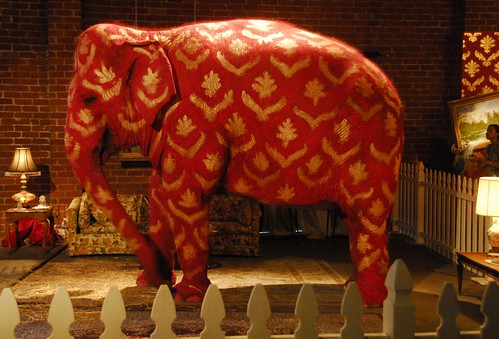
“The Elephant in the Room” by BitBoy is licensed under CC BY 2.0 .

In the recent court ruling against Justin Trudeau’s use of the Emergencies Act, the elephant in the room was once again ignored.

Justice Richard Mosley is well aware that the Act is intended to be “a tool of last resort.” He says so twice in his decision, on pages 78 and 86. He also does a conscientious job of describing the arguments each side presented during various stages of the court battle.

Yet there is no indication, not even the slightest hint, that the bloody obvious received five minutes of the court’s attention: No government can claim to have exhausted all other avenues if it hasn’t even had a conversation with protesters.

It doesn’t matter who is doing the protesting, or what their cause happens to be. If you haven’t arranged a meeting, if you haven’t sat down and listened to people’s concerns, if you haven’t even tried to negotiate a resolution, it is not OK to reach for a last resort, nuclear option. That is beyond unreasonable. It is absurd.

In India, between November 2020 and November 2021, farmers protested three new pieces of agricultural legislation that were eventually repealed. Justin Trudeau publicly criticized the Indian government during that time. So let us compare and contrast.

According to the Indian Express, farmers unions called for a march to Delhi, the national capital, on November 26th and 27th. Delhi police said protesters wouldn’t be permitted to enter the city due to COVID restrictions, but the farmers came anyway. Water cannon and tear gas were used against them, but they eventually arrived in the north-west part of the capital.

On November 28th a cabinet minister “offered to hold talks with the farmers as soon as they vacate Delhi borders”. The farmers didn’t budge. The first round of talks with government took place, nonetheless, on December 3rd — a week after the Delhi protest began. Two days later, more talks took place. By December 30th, six rounds of negotiations had taken place.

In Canada, the government treated the truckers like mangy dogs rather than citizens. Not a single cabinet minister pursued dialogue. Not a single representative of the federal government met with the truckers between the time they began arriving in Ottawa on January 28th, 2022 and when police violently shut down the protest on February 18th and 19th. Get lost, peasants! was the government’s official position.

January 10, 2024

“[T]he prime minister is either three spins into a profound self-destructive spiral: or he really just does not care”

Filed under: Cancon, Media, Politics — Tags: , , , — Nicholas @ 05:00

The Line returns from the holidays with a solid betting pool on what the hell Prime Minstrel Justin Trudeau is thinking:

We at The Line have two theories, each championed by its respective editor; the prime minister is either three spins into a profound self-destructive spiral: or he really just does not care.

Theory 1: Trudeau is constitutionally incapable of stepping away from his current role. There are no viable leadership alternatives, and his party has been so centralized into a cult of personality that the Liberals may not not be able to recover from his departure.

At the same time, Trudeau is neither particularly capable as a prime minister, nor does he actually enjoy the role very much. After almost a decade in power, he’s been unable to champion a real vision for the country and he struggles to get anything done — long gone are the days of bold promises, replaced now by time extensions granted by the epically borked NDP. This has left him grasping for legacy policy changes that are largely superficial (and sometimes unconstitutional), if well meaning.

Most of Trudeau’s term has been reactionary, in the value-neutral sense that he has been forced to react to events and crises beyond his control or making, from the election of Trump and COVID, to the Trucker Convoy. Clearly, this job has taken a toll on him and his family and, at least subconsciously, he doesn’t actually want to do it anymore. But he just can’t bring himself to step aside and appear the coward before Pierre Poilievre.

So, essentially, this theory goes — he’s engaging in self sabotage. Consciously or otherwise, he’s replaying his previous poor judgment and ethical lapses because, deep in his heart, he wants to be fired.

If that’s a little too much pop psych for you all, the second theory is that Trudeau simply DGAF. He got away with all of those previous fancy holidays. Why not get away with this one? The usual partisans will scream and whine for a few days and we’ll all move on. He’ll get a nice vacation, and if it pleases the ex and makes the kids happy, well, all the better. Trudeau doesn’t care about optics or ethics because he doesn’t have to care; his critics don’t matter, and his supporters have clearly signalled that they are along for the ride no matter what he does.

Both of these theories may be true or wrong, but it will be interesting to ponder as 2024 plays out whether Trudeau’s greatest bane proves to be self-sabotage or indifference.

Your Line editors are opening the betting table now.

December 29, 2023

QotD: The Hanoverian “reverse takeover of the British monarchy by the Germans”

Filed under: Britain, Germany, History, Quotations — Tags: , , , , , , — Nicholas @ 01:00

Why, though, did Germans feel such a special affinity with “die Königin“? The most obvious reason is that the Royal Family is, to a great extent, of German extraction. The connections go back more than a thousand years to the Anglo-Saxons, but in modern times they begin with George I and the House of Hanover. This reverse takeover of the British monarchy by the Germans transformed the institution in countless ways. They may be summarised in four words: music, the military, the constitution and Christmas.

Music was a language that united the English and the Germans. The key figure was, of course, Handel — the first and pre-eminent but by no means the last Anglo-German composer. Born in Halle, Georg Friedrich Händel had briefly been George I’s Kapellmeister in Hanover yet had already established himself in England before the Prince Elector of Hanover inherited the British throne in 1714.

In London — then in the process of overtaking Paris and Amsterdam to become the commercial capital of Europe — he discovered hitherto undreamt-of possibilities. There he founded three opera companies, for which he supplied more than 40 operas, and adapted a baroque Italian art form, the oratorio, to suit English Protestant tastes.

His coronation music, such as the anthem, “Zadok the Priest”, imbued the Hanoverian dynasty with a new and splendid kind of sacral majesty. But he also added to its lustre by providing the musical accompaniment for new kinds of public entertainment, such as his Music for the Royal Fireworks: 12,000 people came to the first performance.

Along with music, the Germans brought a focus on military life. Whereas for the British Isles, the Civil War and the subsequent conflicts in Scotland and Ireland had been something of an aberration, war was second nature to German princes. Among them, George II was not unusual in leading his men into battle, although he was the last British monarch to do so.

Still, the legacy of such Teutonic martial prowess was visible in the late Queen’s obsequies: uniforms and decorations, pomp and circumstance, accompanied by funeral marches composed by a German, Ludwig van Beethoven. Ironically, the German state now avoids any public spectacle that could be construed as militaristic, yet most Germans harbour boundless admiration for the way that the British monarchy enlists the ceremonial genius of the armed services.

Even more important was the German contribution to the uniquely British creation of constitutional monarchy.

Each successive dynasty has left its mark on the monarchy’s evolution: from the Anglo-Saxons and Normans (the common law) to the Plantagenets (Magna Carta and Parliament) and Tudors (the Reformation). Only the Stuarts failed this test, at least until 1688. Even after the Glorious Revolution, the Bill of Rights and other laws that conferred statutory control over the royal prerogative, the constitutional settlement still hung in the balance when Queen Anne, the last Stuart ruler, died in 1714.

Coming from a region dominated by the theory and practice of absolute monarchy, the Hanoverians had no choice but to adapt immediately and seamlessly to the realities of politics in Britain, where their role was strictly limited. Robert Walpole and the long Whig ascendancy, during which the doctrine of parliamentary sovereignty embedded itself irrevocably, could not have taken place without the acquiescence and active support of the new dynasty.

George III has been accused of attempting to reverse this process. The charge is unjust. Rather, as Andrew Roberts demonstrates in his new biography, he was “a monarch who understood his extensive rights and duties under the constitution”. He still had the right to refuse royal assent to parliamentary bills, but in half a century he never once exercised his veto (the last monarch to do so was the Stuart, Queen Anne in 1708).

At a time when enlightened despotism was de rigueur on the Continent, the Hanoverians were content to participate in an unprecedented constitutional experiment in their newly acquired United Kingdom. It was neither the first Brexit, nor the last, but it happened courtesy of a Royal Family that was still very German.

Daniel Johnson, “Why Germany mourned our Queen”, The Critic, 2022-10-30.

December 19, 2023

Henry Dundas, cancelled because he didn’t do even more, sooner to abolish slavery in the British Empire

Toronto’s usual progressive suspects are still eager to rename Dundas Street because (they claim) Henry Dundas was involved in the slave trade. Which is true, if you torture the words enough. His involvement was to ensure the passage of the first successful abolitionist motion through Parliament by working out a compromise between the hard abolitionists (who wanted slavery ended immediately) and the anti-abolitionists. This is enough, in the views of the very, very progressive activists of today to merit our modern version of damnatio memoriae:

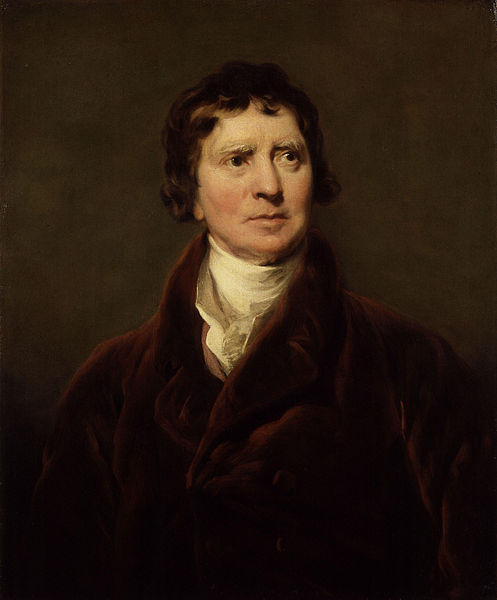
Henry Dundas, 1st Viscount Melville.
Portrait by Sir Thomas Lawrence. National Portrait Gallery via Wikimedia Commons.

Henry Dundas never travelled to British North America and likely spent very little of his 69 years ever thinking about it. He was an influential Scottish career politician whose name adorns the street purely because he happened to be British Home Secretary when it was surveyed in 1793.

But after 230 years, activists led an ultimately successful a push for the Dundas name to be excised from the 23-kilometre street. As Toronto Mayor Olivia Chow said in deliberations over the name change, Dundas’s actions in relation to the Atlantic slave trade were “horrific“.

Was Dundas a slaveholder? Did he profit from the slave trade? Did he use his influence to advance or exacerbate the business of slavery?

No; Dundas was a key figure in the push to abolish slavery across the British Empire. The reason activists want his name stripped from Dundas Street is because he didn’t do it fast enough.

[…]

The petition was piggybacking off a similar anti-Dundas movement in the U.K. – which itself seems to have been inspired by Dundas’s portrayal as a villain in the 2006 film Amazing Grace, a fictionalized portrayal of the British anti-slavery movement.

Dundas was responsible for inserting the word “gradually” into an iconic 1792 Parliamentary motion calling for the end of the Atlantic slave trade. A legislated end to the trade wouldn’t come until 1807, followed by an 1833 bill mandating the total abolition of slavery across the British Empire.

The accusation is that – if not for Dundas – the unamended motion would have passed and the British slave trade would have ended 15 years earlier.

But according to the 18th century historians who have been brought out of the woodwork by the Cancel Dundas movement, Henry Dundas was a man working within the political realities of a Britain that wasn’t yet altogether convinced that slavery was a bad thing.

The year before Dundas’ “gradual” amendment secured passage for the motion, the House of Commons had rejected a similar motion for immediate abolition.

“Dundas’s amendment at least got an anti-slavery statement adopted — the first,” wrote Lynn McDonald, a fellow of the Royal Historical Society, in August. McDonald added that, in any case, it was just a non-binding motion; any actual law wouldn’t have gotten past the House of Lords.

The parliamentary record from this time survives, and Dundas was open about the fact that he “entertained the same opinion” on slavery as the famed abolitionist William Wilberforce, but favoured a more practical means of stamping it out.

“Allegations … that abolition would have been achieved sooner than 1807 without his opposition, are fundamentally mistaken,” reads one lengthy Dundas defence in the journal Scottish Affairs.

“Historical realities were much more nuanced and complex in the slave trade abolition debates of the 1790s and early 1800s than a focus on the role and significance of one politician suggests,” wrote the paper, adding that although Wilberforce opposed Dundas’ insertion of the word “gradually,” the iconic anti-slavery figure “later admitted that abolition had no chance of gaining approval in the House of Lords and that Dundas’s gradual insertion had no effect on the voting outcome.”

Meanwhile, the British abolition of slavery actually has some indirect ties to the road that bears Dundas’s name.

The road’s construction was overseen by John Graves Simcoe, the British Army general that Dundas had picked to be Lieutenant Governor of the colony of Upper Canada.

The same year he started building Dundas Street, Simcoe signed into law an act banning the importation of slaves to Upper Canada – and setting out a timeline for the emancipation of the colony’s existing slaves. It was the first anti-slavery legislation in the British Empire, and it was partially intended as a middle finger to the Americans’ first Fugitive Slave Act, passed that same year.

December 17, 2023

QotD: When “factions” coalesce into “parties”

Filed under: Britain, Government, History, Politics, Quotations, USA — Tags: , , , — Nicholas @ 01:00

Madison, Hamilton, and Jay got it wrong. If you recall your high school civics class from back when that was a thing, you’ll remember that the authors of The Federalist Papers thought that geographic expansion would be a check on what they called “faction”, which meant something like “proto political party”. Back in Britain, the “Whigs” and the “Tories” weren’t parties in the modern sense; they were groups of men of a similar outlook that coalesced around a dominant personality, a kind of bastard feudalism for the parliamentary age. But since there are always more clever, ambitious men than there are places for them in such a system, Britain’s “party” system was always tearing itself apart — that’s a big reason the rebellion started in the first place, and one reason the Colonials won the war.

Geographic expansion keeps that in check, the Federalist guys thought, because clever, ambitious men who feel themselves blocked by the Old Boys’ Network can always head west, to try their luck in one of the burgeoning frontier communities. Which worked — that’s the part the Federalist guys got right — but enough clever, ambitious men stayed back East that “factions” transformed into something much worse: Actual political parties.

Severian, “Real Federalism Has Never Been Tried”, Rotten Chestnuts, 2021-05-03.

December 11, 2023

QotD: The Palace of Westminster

Filed under: Architecture, Britain, Government, History, Media, Politics, Quotations — Tags: , , , — Nicholas @ 01:00

Work outwards from this change and you will begin to have some idea of how much Britain has altered. The bits you don’t or can’t see are as unsettlingly different as those tattoos. Look up instead at the Houses of Parliament, all pinnacles, leaded windows, Gothic courtyards and cloisters, which look to the uninitiated as if they are a medieval survival. In fact they were completed in 1860, and are newer than the Capitol in Washington, D.C. The only genuinely ancient part — not used for any governing purpose — is the astonishing chilly space of Westminster Hall, faintly redolent of the horrible show trial of King Charles I, still an awkward moment in the national family album. But those who chose the faintly unhinged design wanted to make a point about the sort of country Britain then was, and they were very successful. Gothic meant monarchy, Christianity, and conservatism. Classical meant republican, pagan, and revolutionary, and mid-Victorian Britain was thoroughly wary of such things, so Gothic was chosen and the Roman Catholic genius Augustus Welby Pugin let loose upon the design. Wherever you are in the building, it is hard to escape the feeling of being either in a church, or in a country house just next to a church. The very chimes of the bell tower were based upon part of Handel’s great air from The Messiah: “I know that my Redeemer liveth”.

I worked for some years in this odd place. It is by law a Royal Palace, so nobody was ever officially allowed to die on the premises, in case the death had to be inquired into by some fearsome, forgotten tribunal, perhaps a branch of Star Chamber. Those who appeared to have deceased were deemed to be still alive and hurried to a nearby hospital where life could be pronounced extinct and an ordinary inquest held. We were also exempt from the alcohol laws that used in those days to keep most bars shut for a lot of the time, and if the drinks were not free they were certainly amazingly cheap.

In my years of wandering its corridors and lobbies, of hanging about for late-night votes and dozing in committee rooms, I came to loathe British politics and to mistrust the special regiment of journalists (far too close to their sources) who write about it. I had hoped for a kingdom of the mind and found a squalid pantry in which greasy, unprincipled deals were made by people who were no better than they ought to be.

But I came to love the building. Once you had got past the police sentinels, who knew who everyone was, you could go everywhere, even the thrilling ministerial corridor behind the Speaker’s chair, from which Prime Ministers emerged to face what was then the genuine ordeal of Parliamentary questions, twice a week. There was a rifle range beneath the House of Lords, set up during World War I to make sure honorable members of both Houses would be able to shoot Germans accurately if they ever met any. There was a room where they did nothing but prepare vast quantities of cut flowers, and which perfumed the flagstone corridor in which it lay. There was a convivial staff bar (known to few) where the beer was the best in the building and politicians in trouble would hide from their colleagues. The Lords had a whole half of the Palace, with lovely murals illustrating noble moments of our history, and the Chief Whip’s cosy, panelled office where reporters would be summoned once a week for dangerous gossip and perilously large glasses of whisky or very dry sherry, generously refilled. And high up in the roof, looking down over the murky Thames, was the room where the government briefed us, in meetings whose existence we were sworn never to reveal. Now they are pretty much public, so the real briefings must happen somewhere else, I suppose.

Peter Hitchens, “An Empty Parliament”, First Things, 2017-10-03.

November 14, 2023

Australian voters rejected “The Voice”, fearing “they were being sold a pig in a poke”

Theodore Dalrymple on the recent failure of the Austrialian government to install a nebulous and ill-defined advisory body for Australian Aboriginal and Torres Strait Islander representation to Parliament:

Uluru Dialogue co-chair Pat Anderson in an early ad for “The Voice” referendum.
Screen capture from YouTube.

Among my wife’s family papers dating from the Occupation of France are a couple of certificates of aryanité issued to her forebears, that they might continue to be employed and not deported. In Australia, people apply for certificates of aboriginality, in order that they might receive various advantages, subventions, etc.

The former is bad racism, the latter good, at least for those who believe in positive racial discrimination. Unfortunately, it is logically impossible to believe in positive racial discrimination without also believing in the negative kind, irrespective of one’s supposed good intentions.

Australia recently held a referendum on a proposed race-based amendment to the constitution. The amendment proposed something called “The Voice” to be inscribed in the constitution: an advisory body composed of Aborigines who would advise parliament on matters specifically affecting Aborigines. The details of the proposed body — how it was to be chosen or appointed, its purpose, its powers, its duties, its emoluments — were not specified, and those in favour of it, up to and including the Prime Minister, Anthony Albanese, were either unwilling or unable to specify further, relying entirely on the Australian emotional equivalent of Noel Coward’s famous song, “Don’t Let’s Be Beastly to the Germans”. The latter was not much of a policy.

Australian voters, initially favourable to the proposal, rejected it by a large majority, suspecting, rightly in my view, that they were being sold a pig in a poke. They also suspected, I surmise, that what was being proposed was a corrupt and corrupting bureaucratic pork barrel that would reward a small class of Aboriginal Al Sharptons. Far from improving the situation of Australian Aborigines, which is sometimes but not always tragic, the Voice would permanently raise the ideological temperature and prevent measured debate about practical improvements. Benefits would be received without gratitude and, would never, virtually by definition, be sufficient. And of course, the Voice would be the end of the ideal of racial equality. Australia would join the old South Africa in its inscription of race in its constitution.

The abysmal intellectual level of the proponents of the Voice was very well instantiated in an article by Thomas Keneally, the famous Australian novelist, in the Guardian newspaper. It began as follows:

    Last Sunday, many in Australia profoundly mourned the loss of the Indigenous voice to parliament referendum, the greatest kindly Amendment ever to be proposed for the Australian constitution, those dreary old articles of association by which our states and territories rub along together in far-flung federation.

I will overlook the use of the word profoundly in this context: I think the words superficially, self-satisfactorily, and exhibitionistically would have been better. But note that, even if the loss were deeply mourned, only the grossest of sentimentalists would claim that such mourning would have any bearing on the rightness or otherwise of the loss that was mourned. Many Nazis and many communists mourned the loss of Nazi Germany and Soviet Russia far more deeply than any Australian mourned the loss of the referendum, but no one, I think, would sympathise with them because of the depth of their sorrow.

November 13, 2023

Lessons for Canada from the Australian referendum on “The Voice”

Filed under: Australia, Cancon, Government, History, Media, Politics — Tags: , , — Nicholas @ 05:00

Conrad Black contrasts the experiences of First Nations in Australia and Canada after contact with European explorers and settlers and the recent attempt to create a formal role for Aboriginal representation in the Australian Parliament.

Uluru Dialogue co-chair Pat Anderson in an early ad for “The Voice” referendum.
Screen capture from YouTube.

Canadians should perhaps pay more attention than we have to the referendum in Australia on Oct. 14 on the subject of the Aboriginal peoples. There are just under one million designated Aboriginals in Australia, slightly below four per cent of Australia’s 25 million people. The roughly corresponding figures in Canada are that Indigenous Canadians, including in both countries a good number of mixed ancestry, are slightly under five per cent — just, at under two million in a population of 40 million. The issue in the referendum was a proposed amendment to the Australian Constitution by which a federal advisory body comprised of native people would be set up which would have only a consultative role. How this body would be selected and its recommendations presented would be dealt with later. The idea was just to give Aboriginal people, in the wording of the referendum, a “voice” in the politics of the country.

The history of the white settlers of Australia and the natives whom they encountered there is fairly parallel to the Canadian experience. Initial contact was friendly enough, but there was a native vulnerability to certain diseases to which the Australian natives had had no occasion to develop an immunity. Their lands were gradually encroached upon although the inconvenience to them was for a time not as great as it was in Canada where the conversion of huge tracts of arable land on the prairies into immensely productive grain producing farms made it steadily more difficult for our native people to maintain that part of their diet based on the buffalo. Australian Aboriginals had less difficulty, at least for some time, retreating to places that did not especially attract the settlers, and where it was comparatively possible to maintain a traditional life.

However, there was soon inevitably interaction, some of it successful intermarriage, and some of it outright racial friction with not infrequent outbursts of violence, though nothing on the scale of the Riel rebellions in this country, let alone the outright warfare of the American Indian Wars. But eventually, reservations were created for some Australian Aboriginals. In contrast to this country, there was practically no attempt to help formally educate them or to assist them in integrating into the larger Australian society. They were gradually pushed to the nether regions of the immense country, almost as large as Canada and with a greater habitable area, and the provision of health and education services to the natives was greatly less generous in the amounts of money and numbers of personnel involved than the corresponding efforts in Canada.

Gradually the theory developed and took hold in Australia that perhaps the early settlers and the autonomous government of Australia created by the British in 1901, could have been more generous and thoughtful. As these matters tend to do, the issue gnawed somewhat at the conscience of white Australia and finally in 2008, the government of Australia passed through both houses of its Parliament an apology and expression of regret for past injustices. There was nothing remotely like the orgy of self-defamatory penitence backed by stupefying amounts of money that has flowed in this country like the Niagara River onto the native people.

Shortly after the new Labor government in Australia was elected in 2022, it proceeded with its declared intention to hold a referendum on the issue of giving the Aboriginal peoples a “voice”. And soon after this campaign began, it became clear that the proposed measure was going to have a rocky ride with the country. The predominant opinion among Australians above the age of 45 was that the native had the opportunity to participate fully in Australian life and that there were some substantial gestures of assistance made to them that the more purposeful native people took up.

November 10, 2023

Canadian media’s self-immolation an object lesson for British media

Marc Edge discusses how Canada’s legacy media joined together in a virtual suicide-pact to force Google and Facebook to give them millions in unearned revenue:

The best-laid plans of Canada’s biggest media owners went badly awry this summer, when Meta began blocking news across the country on its social media networks Facebook and Instagram in response to the Online News Act passed in June. Newspaper publishers lobbied the federal government relentlessly to force Google and Meta to compensate them for supposedly “stealing” their news stories by carrying links to them. But instead of bringing them hundreds of millions of dollars a year from the digital giants, as a similar law has in Australia, their campaign backfired badly in what has been described as “a massive policy blunder“, and “the most spectacular legislative failure in Canada’s living political memory“.

Not only will publishers not be getting any money from Meta, they likely won’t get any from Google either, as they have threatened to similarly block news in Canada when the law comes into effect in December. Ironically, publishers will instead lose millions instead, as the agreements they already have with at least Meta will be cancelled, and probably those with Google as well. The knock-on effect makes it a triple-whammy when you also consider the traffic that news media will lose to their websites from the platforms. Worst affected will be online-only publications which have depended on that traffic to build an audience. Most did not want the Online News Act and many spoke out against it, but they were drowned out by the newspaper lobby led by industry association News Media Canada. It is dominated by the country’s two largest chains, which are now owned by a private equity firm and US hedge funds.

The Online News Act is the second in a series of bills designed to regulate the Internet, which, when taken together, include many of the same elements as the UK’s omnibus Digital Markets, Competition and Consumers Bill now before Parliament. An Online Streaming Act passed in April will tax and regulate digital video services in Canada, which are mostly owned by U.S. companies such as Netflix, Disney, and Amazon. A so-called Online Harms Act designed to combat hate speech and online bullying was introduced in 2021 but died on the order paper with an election call. It was criticised by civil libertarians for potentially prohibiting otherwise lawful speech and was thus being revised, but so far it has not been re-introduced. Legislation aimed at increasing online privacy and consumer rights is also planned.

One of these things, on closer scrutiny, is not quite like the other ones, and a realisation is growing in Canada that the government may have been co-opted in its enthusiasm to regulate the Internet to participate in what has been called a “shakedown” of the digital giants. Canada’s news media have literally been on the dole for the past five years since they lobbied the government for a five-year $595-million bailout that expires next spring. This has prompted publishers to adopt Rupert Murdoch’s successful strategy in Australia of persuading the government to force the digital giants to share their advertising revenues with newspapers.

Canadian publishers lobbied for the Online News Act in part by running blank front pages for a day and also spiked several opinion articles by academics that had been accepted for publication by editors. Canada has long had one of the free world’s highest levels of media ownership concentration, along with Australia. It went to another level in 2000 with the “convergence” of newspaper and television ownership, against which Canada had no regulatory safeguards, unlike most other countries. The multimedia business model collapsed with the 2008-09 recession, when advertising revenues dropped sharply, and Canada’s news media have been lurching from bad to worse ever since. The country’s largest newspaper chain, Postmedia Network, was acquired out of bankruptcy in 2010 by a consortium of US hedge funds which had bought much of its previous owner’s high-interest debt on the bond market for pennies on the dollar. They have since taken more than $500 million out of the company in debt payments. The country’s second-largest chain, Torstar, was bought from its owning families at the outset of the pandemic in 2020 by private equity firm NordStar Capital, which has been similarly stripping the company with closures, redundancies, and asset sales.

November 5, 2023

Guy Fawkes and The Gunpowder Plot 1605

Filed under: Britain, History, Religion — Tags: , , , , , , , — Nicholas @ 02:00

The History Chap
Published 4 Nov 2022

The story behind Guy Fawkes and the Gunpowder Plot, the audacious plan to kill the king of England. It is also the complicated story behind our annual Bonfire Night celebrations.

In 1605 a group of dissident Catholics came within a whisker of one of the greatest assassination coups in history — blowing up the King of England, and his government as he attended parliament in London. 36 barrels of gunpowder (approximately 1 tonne of explosives) had been placed directly under where he would open parliament. Experts estimate that no one within 300 feet would have survived.

Had it succeeded it would have rivalled 9/11 in its audacity and would have changed English (& arguably world) history forever. But who were the plotters, what were they trying to achieve and how close did they really come to success? Were they freedom fighters or 17th century terrorists? And why is only one conspirator, Guy Fawkes, remembered when he wasn’t even the brains behind the operation?

After years of persecution by England’s Protestants, a small group of Catholic nobles under Robert Catesby (aka Robin Catesby) decided to take matters into their own hands and blow up the king (King James I of England / James VI of Scotland) whilst he attended parliament in London.

Guy Fawkes (aka Guido Fawkes) smuggled 36 barrels of gunpowder into a cellar directly beneath the hall where parliament would meet in the Palace of Westminster. In the early hours of 5th November 1605, he was arrested by guards who had been tipped off about the gunpowder plot. After three days of torture in the Tower of London, Guy Fawkes finally broke and named his fellow conspirators.

The conspirators, under Robert Catesby, had fled London for the English midlands where they hoped to abduct the king’s daughter and organise a catholic rising. Both failed to materialise and Catesby’s small band were surrounded by a government militia at Holbeach House, just outside Kingswinford in Staffordshire. A brief shoot-out resulted in the death of some of the Catholic rebels (including their leader, Catesby) and the arrest of the others.

The surviving gunpowder plotters (including Guy Fawkes) were executed in London at the end of January 1606, by the grisly execution reserved for traitors — Hanged, drawn and quartered (quite literally a “living death”).

The Gunpowder Plot of 1605 was a complete failure but the event is still celebrated on the 5th November every year on Bonfire Night.
(more…)

October 28, 2023

QotD: Deposing King Charles I

It’s 1642, and once again the English are contemplating deposing a king for incompetence. Alas, the Reformation forces the rebels to confront the issue the deposers of Edward II and Richard II could duck: Divine sanction. The Lords Appellant could very strongly imply that Richard II had lost “the mandate of heaven” (to import an exoteric term for clarity), but they didn’t have to say it – indeed, culturally they couldn’t say it. The Parliamentarians had the opposite problem – not only could they say it, they had to, since the linchpin of Charles I’s incompetence was, in their eyes, his cack-handed efforts to “reform” religious practice in his kingdoms.

But on the other hand, if they win the ensuing civil war, that must mean that God’s anointed is … Oliver Cromwell, which is a notion none of them, least of all Oliver Cromwell, was prepared to accept. Moreover, that would make the civil war an explicitly religious war, and as the endemic violence of the last century had so clearly shown, there’s simply no way to win a religious war (recall that the ructions leading up to the English Civil War overlapped with the last, nastiest phase of the Thirty Years’ War, and that everyone had a gripe against Charles for getting involved, or not, in the fight for the One True Faith on the Continent).

The solution the English rebels came up with, you’ll recall, was to execute Charles I for treason. Against the country he was king of.

Severian, “Inertia and Incompetence”, Founding Questions, 2020-12-25.

October 4, 2023

Douglas Murray – “Canada today looks like a nation of ignoramuses”

Filed under: Cancon, History, Media, Politics, WW2 — Tags: , , , , , , , — Nicholas @ 03:00

Writing in the National Post, Douglas Murray flays the Canadian Parliament for their shameful ignorance put on display by publicly honouring a former Waffen SS officer:

Reichsführer Heinrich Himmler (in the foreground) visiting the 14th Grenadier Division of the Waffen SS “Galizien” in May 1943.
Narodowe Archiwum Cyfrowe photo via Wikimedia Commons.

Perhaps I should say straight away that I love Canada. Some of my best friends are Canadian. That minimal throat-clearing aside, let me say — as a friendly outsider — that Canada today looks like a nation of ignoramuses.

The incident in Parliament the other week is just one case in point. Standing ovations are very rare things. They should be very special things. When a whole House stands to applaud someone they had better be very sure who they are applauding.

I know that Speaker Anthony Rota has now resigned. But here is the thing. Anybody who knows anything about the Second World War knows that if you were fighting the Soviets in Ukraine in the 1940s you were most likely fighting with the Nazis. It does not require a fine-tuned expert in the era to know this. Almost anybody could have guessed this. If almost anyone knew anything.

It seemed to be the assumption not just of Speaker Rota but of the whole Canadian Parliament that there existed in the 1940s some proto-anti-Putin fighting force and that the great cause of this moment has some direct lineage back to the fight of the 1940s. Ukrainian President Volodymyr Zelenskyy almost certainly guessed this. But it was the Canadian Parliament who was hosting him, the Canadian Parliament who embarrassed him and the Canadian Parliament who have handed the most magnificent propaganda victory to the Kremlin. In a war which Putin pretended to start in order to “de-Nazify” Ukraine, how much help has Canada given by your entire Parliament standing to applaud an actual Nazi?

What makes this worse is that this all comes after a period in which Prime Minister Justin Trudeau has been perfectly happy to call decent, ordinary Canadians Nazis. To use measures like the de-banking of his critics in moves that have horrified most of the other democracies in the West. When a bank in my country of birth — Britain — was recently found to have de-banked a politician (Nigel Farage) for what turned out to be political reasons not only did the head of the bank resign, but politicians in Britain from across the political system condemned the bank. Such moves are unlikely to be taken by another bank in Britain again. But in Canada it seems to be perfectly acceptable, because at any time the Canadian prime minister and deputy prime minister can claim that their critics are homophobes, xenophobes, racists, Nazis, misogynists and all of the rest.

The world — especially America — has looked on in horror as the Canadian government has tried to curtail speech in the country, and looked on with ever-more horror as Canadians seem willing to go along with this. It seems to be the view of the Canadian authorities that they are capable of deciding at the merest glance who is and is not allowed to speak, what is and is not acceptable speech, what any Canadians can and cannot read and who is and who is not a “Nazi”. These being the same authorities who apparently cannot even perform the most basic Google searches on their guests.

I know that Canadians often like to look down on Americans. But as someone who spends most of his time in America I can tell you that it is the American public who now wonder at what on earth is happening with our neighbour in the north.

September 26, 2023

Matt Taibbi – “Canada’s Prime Minister solidifies his status as the world’s most nauseating pseudo-intellectual”

Filed under: Cancon, History, Media, Politics — Tags: , , , — Nicholas @ 05:00

It’s hard to come up with ways to justify Canada’s PM and Parliament for giving a standing ovation for a fucking Waffen SS veteran, and Matt Taibbi doesn’t even try:

Let me get this straight:

A year and a half ago, Canadian Prime Minister Justin Trudeau denounced a Jewish member of parliament named Melissa Lantsman for standing with “people who wave swastikas“. Lantsman had criticized Trudeau for fanning “the flames of an unjustified national emergency” in response to the “Freedom Convoy” trucker protests. The “swastikas” Trudeau referenced were, as even Snopes conceded, virtually all “pictured on signs as a way of mocking and protesting government restrictions”, comme ça:

By saying Lantsman stood with “people who wave swastikas”, in other words, Trudeau really meant she was standing with “people who called me a Nazi”. He declined to apologize, which of course is his prerogative.

This week, both Trudeau and House of Commons Speaker Anthony Rota are under fire after Rota invited, and Trudeau applauded, a 98-year-old former soldier from the 14th Waffen-SS Grenadier Division named Yaroslav Hunka to attend an address by Ukrainian president Volodymyr Zelensky. Rota praised Hunka as a “Canadian hero” from his time fighting the Soviets in World War II when, not that it matters, they were allies to the United States and Canada. Leaving the elderly Hunka out of this for the moment, these politicians could easily have turned up the man’s blogs about joining Hitler’s army, making the applause scene at least approach the max on the cringe scale:

Amid the subsequent outcry, Trudeau squeaked out a handful of sentences that collectively gave off least a faint aroma of apology, though he personally didn’t apologize for anything, and invoked “mistakes were made” phrasing …

September 7, 2023

The not-at-all hidden authoritarian desires of the climate activists

Brendan O’Neill on the increasingly blatant wish of the comfortable greenies to impose actual judicial punishment on those who disagree with their agenda:

Greens have been dreaming about jailing “climate criminals” for a very long time. Climate-change deniers in particular will “one day have to answer for their crimes”, said eco-author Mark Lynas a few years back. Well, Gaia’s authoritarian army might finally be getting its way. The new Energy Bill currently before the UK House of Commons provides for “the creation of criminal offences”, possibly including jail time, where there is “non-compliance” with energy-saving regulations. Shorter version: keep the lights on for too long and you could end up in the slammer.

The Telegraph is reporting that property owners who fail to adhere to “energy-performance regulations” could “face prison” under the government’s crazy plans. There is concern that homeowners, landlords and business bosses could be whacked with fines of up to £15,000 or a year behind bars if they fall foul of regulations on energy consumption. The government says it has no plans to make it a crime to be an eco-unfriendly user of light and heat, but the bill allows for the creation of such crimes. And this has rattled some MPs. They’re concerned that ministers would be able to “create new offences with limited parliamentary scrutiny” thanks to the new bill.

What is the aim of all this tightening of the screws on energy use? Of the possible future criminalisation of us thieves of heat and light? To help Britain reach its Net Zero targets, of course. Like other Western nations, we’re committed to achieving Net Zero emissions by 2050. And if that means strongarming the little folk into reducing their energy use, so be it. Let’s be clear about what the new bill’s provision for the creation of crimes really represents: the state threatening to punish anyone who refuses to convert to the religion of Net Zero and to sacrifice their energy to the jealous god of environmentalism.

We can now see the iron fist in the green glove. There’s been a creeping criminalisation of eco-disobedient behaviour for some time now. In the UK, we’ve had “rubbish police” looking through people’s bags of trash and slapping them with a £100 fine if they are not properly recycling plastic and paper. Under Low Traffic Neighbourhood schemes, officious local councils erect eyesore bollards to stop people from driving on certain roads, and fine them if they fail to comply. In recent years, more than a million such fines have been served on defiers of the LTN regime, raising more than £100million for the Net Zero cultists who rule over us.

Then there’s London mayor Sadiq Khan’s Ultra Low Emission Zone (ULEZ), now expanded to cover every inch of London. Hundreds of cameras have been installed across the capital, a vast infrastructure of Stasi-like watchmen, to ensure that drivers of “dirty” vehicles have paid the daily ULEZ toll of £12.50. A fine of £500 awaits any driver of a sinful car who hasn’t. To those saying “Of course the government isn’t going to fine people for un-green behaviour!”, wake up – officialdom has been doing this for years.

June 3, 2023

“Rather than having a culture of transparency, we have a culture of secrecy”

Filed under: Bureaucracy, Cancon, Government — Tags: , , — Nicholas @ 03:00

In The Line, Philippe Lagassé writes about Canada’s remarkably non-transparent approach to classified information and the very limited ability of our elected representatives to see anything the government chooses to deem “a secret”:

Institutions are tough to change, Canadian institutions especially. But change is possible. Gradual change can happen when we reinterpret existing rules or add new ones on top of old ones that are deeply entrenched. In other cases, a crisis happens that leads to rapid and significant change. These crises either destroy old ways of doing things, or they open a window of opportunity to shake things up. Revelations of Chinese interference in Canadian elections, and David Johnston’s first report on the matter, have opened one of these windows when it comes to Parliament and classified information.

Two sets of Canadian parliamentarians have access to classified information: Privy Councillors (though usually only those currently serving as ministers of the Crown), and those who sit on the National Security and Intelligence Committee of Parliamentarians (NSICOP). In both cases, they have access to classified information in an executive capacity, not their parliamentary capacity. Put differently, they have access to this information by virtue of an executive office they hold in addition to their parliamentary one. Parliament doesn’t have a body that has access to classified information, nor do parliamentarians have access to that information unless they hold an executive office.

Keeping classified information squarely within the executive, or in limited cases within the judiciary, reflects deep-seated Canadian pathologies. As our pathetic Access to Information system highlights, the Canadian government over-classifies things or deems too many of them subject to cabinet confidence. Rather than having a culture of transparency, we have a culture of secrecy. This secrecy culture exists for a number of reasons. Public servants don’t want their ministers to be embarrassed. Information is power within the bureaucracy and giving it out easily diminishes its value. Risk aversion is rewarded and admitting failure is frowned upon. We can’t disclose anything that might rub an ally the wrong way. The list goes on.

Above all, though, Canadian government encourages the strange notion that our secrets are super-super-secret. What do I mean by that? When you look at our allies, Canadian is an outlier in terms of what we disclose and to whom we disclose it. Canadian officials have convinced themselves that they are applying a well-established set of norms around classified and sensitive information, when in fact we’re an outlier. This is particularly notable with it comes to sharing national security information with Parliament.

In the United Kingdom, there’s a statutory committee of Parliament that has access to classified information, called the Intelligence and Security Committee. Since the United Kingdom’s Public Accounts Committee is also expected to oversee all the government’s spending, the chair of that committee has had access to classified information as well to review secret agency budgets. Australia has a similar committee, the Parliamentary Joint Committee on Security and Intelligence. This is a very active and important body. It allows Australia to regularly update its national security legislation to meet new threats and to ensure that the powers conferred on the executive are not abused. New Zealand has a parliamentary Intelligence and Security Committee, too. The Kiwi committee is a bit of an odd duck, since it’s chaired by the prime minister and has the leader of the official opposition as a member. Given that New Zealand is probably one of the most zealous countries when it comes to government transparency, though, it isn’t too surprising. They release stuff that would lead the Privy Council Office to have a collective head explosion if we did the same.

« Newer PostsOlder Posts »

Powered by WordPress