Quotulatiousness

January 28, 2024

Adolescence is “a profoundly unnatural life-stage”

Filed under: Business, Education, Europe, Health, Media, USA — Tags: , , , , , , , — Nicholas @ 03:00

Sarah Hoyt on the plight of the younger Millennials and the Gen Z kids in our over-supervised safety-at-all-costs culture today:

Child labour laws did generally get younger children out of dangerous places like mines, mills, and factories. Modern child labour laws instead keep young adults from gaining work experience in many cases.
Photo of pre-teen children working in a mill in Macon, Georgia in 1909. Photo NCLC.01581, Library of Congress via Wikimedia Commons.

Mostly, it gets attributed to “kids these days” but unless you have kids, these days, you don’t know how they are bound. And even if you do, you might not realize it, because all you see is the infantilization of a generation, and not that they, themselves, aren’t the ones doing the infantilizing, but all those “good rules” and regulations and laws are doing it.

I realized about 10 years ago that my son’s generation was about 10 years behind where we were. In their mid twenties they were doing things we did in our teens. It was disconcerting. And even I had no idea why, other than too much regimentation in school, too much of a never end of button counting, and not enough room or freedom to think or be on their own.

Since then … I’ve seen more. And a lot of the reason they are younger than we were is that the entire world is geared not to let them grow up. I mean, let’s be glad that — unprepared or not — they’re legal adults at 18, or people would be denouncing them for walking alone down the street, without an “adult” at 25.

There’s also … adolescence is in some ways a profoundly unnatural life-stage, and more or less invented in the 20th century. In the past, sure, people were children, and people grew to be adults, but there wasn’t this protracted time period where they were adults in size and at least some ability, but weren’t allowed to be adults: they weren’t allowed to earn or spend, or make their own decisions, for years.

The earn or spend thing is important. Kids used to grow along with their tasks. Read Tudor or colonial memoirs, and you find four year olds looking after cows or horses, or learning Latin, or other unlikely things even for twelve year olds in our time.

Mom went to work at 10 and started getting a salary. It wasn’t much, and 90% of it went to her parents’ budget. But she was working, holding down a job, doing things that were maybe not at adult level, but could lead to it, eventually, if she applied herself. This was normal for her generation. In my own generation, amid the working class, most people went to work at 10. Heck, amid the middle class, most people went to work at 15 or so, after 9th grade. Were they more mature than the rest of us that went all the way to college?

I wouldn’t have thought that at the time, but yes, of course they were. Most of my elementary school classmates were married, with kids by the time my biggest worries were final exams. Of course, with my intellectual pride I looked down on them but now I understand they were managing a very difficult job, which at the time I could not have done.

I always feel stunned and shocked when someone says the kids should be “holding down two jobs like I was at 16” or “working to pay their way through college”. (That last is a giggle as it has two impossibilities. Finding a job that pays enough after college which has a lot of make-work expectations, and making a full-time middle-class salary, which is what college costs these days.) Two Jobs. At 16. The difficulties in giving work to 16 year olds, increasingly restriction of hours, etc. combined with chaotic scheduling in the only unskilled jobs remaining (mostly just retail) means that until recently none of them could find A job. Let alone two. And the recently was during Covid. I haven’t seen so many little 16 year olds cashiering, or serving at tables recently. And that’s because most people I’m seeing are around my age: I guess unemployment is biting hard.

But you know, all these strong rules against “child labor” mean that most kids hit 18 or, if they’re going to college, 22 or — more likely, as most degrees (remember make work?) are taking 6 or 7 years — 24, with absolutely no job experience. Which means their applications aren’t even looked at. Not seriously.

Honestly, almost every young person — particularly young men — I know who found a job, and is doing relatively well, did so through contacts. Through friends of friends. Through knowing someone.

This is a bad sign, because it’s how Portugal functions, and it is not in any way shape or form meritocracy, which in turn contributes to other things falling apart.

But more and more what I’m seeing is young people hitting their mid twenties lost, and doing this, and doing that, and trying this and trying that, and nothing ever gels. To make things worse, they don’t have the habits mom had by 10, because they haven’t been allowed to acquire them.

There was a similar generation — one, while here we’re well into two — in Portugal, where unemployment was so bad (the generation before mine) that most people weren’t “established” on a path till their mid thirties. I’d guess about half of them never got the knack of it: of the day to day of working, fulfilling the work duties, just … the unglamorous day to day that makes us adults.

December 27, 2023

Eating like a Lighthouse Keeper from the 1800s

Filed under: Food, History, USA — Tags: , , , , , — Nicholas @ 02:00

Tasting History with Max Miller
Published 19 Sep 2023
(more…)

November 24, 2023

More than 1,500 new jobs thanks to federal and provincial subsidies … except the jobs are for South Koreans

Filed under: Asia, Business, Cancon, Government — Tags: , , , , , — Nicholas @ 03:00

Tristin Hopper applauds the great job creation scheme that the federal and Ontario governments have put in place … if you ignore the inconvenient fact that most of the newly created jobs aren’t even going to Canadians:

When the Ontario and federal governments greenlit one of the biggest corporate subsidy payouts in Canadian history last summer, their main pitch was the deal would create jobs.

“The governments of Canada and Ontario are partnering to attract once-in-a-generation projects that will anchor our auto manufacturing sector and keep good jobs in Canada,” reads the opening line of a July 6 joint statement announcing a record-breaking $28 billion in government “performance incentives” to secure two foreign-owned EV battery factories in Southern Ontario.

The subsidy-per-job ratio was never great. Even according to the most optimistic estimates of government spokespeople, the two factories — one operated by Volkswagen, the other by Stellantis — would create about 5,500 jobs. Per job, that’s roughly $5 million in lifetime subsidies and tax credits.

But now, it appears that many of those jobs may not even go to Canadians.

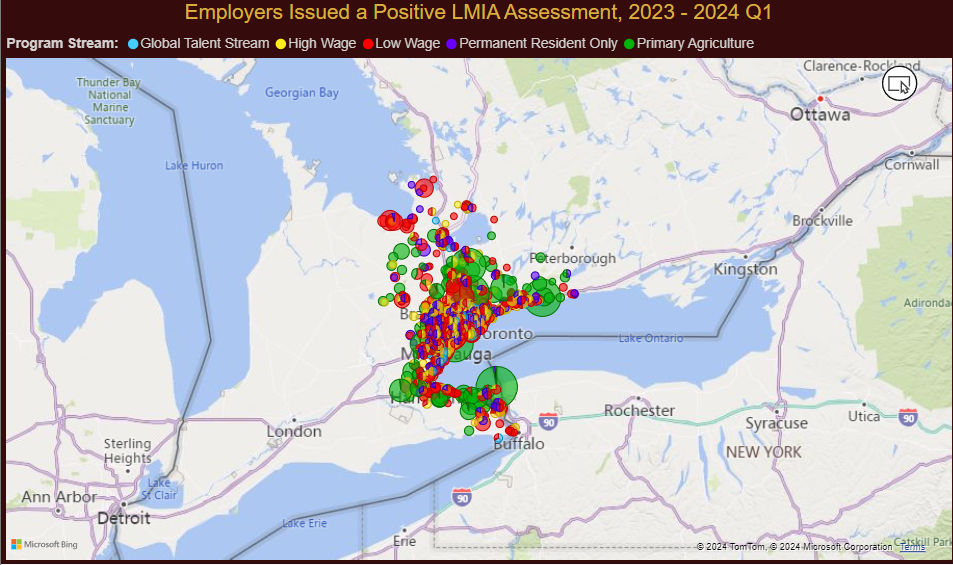
Last week, during a visit by South Korean Ambassador Woongsoon Lim to Windsor, Ont., a social media post by the Windsor Police casually mentioned that “1,600 South Koreans” would soon be arriving in the community to staff the Stellantis plant, which is set to open next year.

    With the new LGEngergy Solutions battery plant being built, we expect approximately 1,600 South Koreans traveling to work and live in our community in 2024.

    — Windsor Police (@WindsorPolice) November 16, 2023

The CEO of NextStar — the Stellantis joint venture operating the factory — hasn’t confirmed the 1,600 figure, but said in a statement that the “equipment installation phase of the project requires additional temporary specialized global supplier staff”. He added that the company was “committed” to hiring Canadians to fill the 2,500 full-time jobs at the completed plant

The revelation has sparked a wave of confusion and finger-pointing among the very officials who, mere months ago, were championing the plant as an unalloyed triumph for Canadian manufacturing jobs.

When the subsidy arrangement was first announced in July, Ontario Economic Development Minister Vic Fedeli called it a “historic deal” and “a great agreement” that “protects the thousands of jobs quite frankly that were at stake”.

September 28, 2023

QotD: “Tenure Track” positions in an American university

Filed under: Bureaucracy, Education, Quotations, USA — Tags: , , — Nicholas @ 01:00

But before we dive into the range of non-tenure track positions which make up the majority of college professors today, we should talk about the tenure track because, again, this is how the system is supposed to work and also generally how the public imagines the system does work (even though it really doesn’t anymore). So let’s first look at that, how the system is supposed to work.

A tenure-track position begins with a national (or international) search and a fairly long hiring process (from job-posting to job-offer usually takes around 6-8 months). A newly hired professor is an assistant professor, which means they are on the tenure track but do not yet have tenure. Instead, after about five to six years, they’ll go up for tenure review, where a committee of faculty in their department along with some external reviewers will look at all of the work the professor has done since their appointment and either recommend them for tenure or not; the university leadership structure typically has a role in confirming a grant of tenure but this is generally a rubber-stamp role. By far the most important part of tenure review at large universities is research; this is the part of the system that is “publish or perish”.1 Untenured tenure-track faculty (so, assistant professors) represent roughly 9% of all faculty members in the United States, according to the AAUP.

A professor that passes tenure review becomes an associate professor, which confers tenure (making it difficult to fire them) as well as a bump in pay. After another few years, they can go up for review again for promotion to the next rank, simply professor (often termed “full professor” for clarity), which comes with another bump in pay. This second transition is different from the first though; whereas the review from assistant to associate professor is an “up or out” moment (you either get tenure and stay or get rejected for tenure and leave the department), some professors can and do remain associate professors forever. Finally, a handful of professors who really distinguish themselves may wind up with an endowed chair and we tend to call these folks distinguished professors, though their actual job title will usually be something like “the so-and-so Professor/Chair of this-and-that” where the ‘so-and-so’ is the name of the donor that endowed the money being used for the distinguished professorship. Tenured professors represent roughly 24% of all university professors according to the AAUP, meaning that the total slice of tenured or tenure-eligable professors in higher education is just 33% – one third.

Let me say that again: only one third of all faculty work the way all of you think all faculty works. Just one third. This is a big part of what I mean when I say that the United States’ university system is being pillaged without the public knowing; if you told most people “only one third of college instructors are actually professors, most of your little Johnny’s classes are taught by non-professors now“, they’d be shocked! But that’s the current situation.2

Tenure-track professors generally teach a fixed course-load, expressed in most cases as a load over semesters, so a “2/2” (pronounced “two-two”) load is four courses a year (two in each semester). Tenure-track faculties at research-focused universities (which are all of the flagship state schools) generally teach a 2/2 load; mixed research/teaching schools (your third-string state schools and less well-funded private schools) often have 3/3 loads. Teaching-focused institutions may have 4/4 or 5/5 teaching loads (or more) and of course fractional loads (like a 2/3, etc.) do exist, but are less common.

In addition to teaching, tenure-track faculty are expected to publish research and do “service”. We’ll talk in another post more about these demands (indeed, we’ve talked about research already), but they deserve a few words here. The amount of research demanded varies by the level of institution; at an R1 the general expectation for a faculty member going for tenure in a humanities department is that their book is out3 and they have a good number of articles and other publications besides. At less research-focused universities, you might see instead that tenure is set at a certain number of articles and the book is instead at the jump to full professor.

Meanwhile “service” refers to all of the non-teaching roles faculty fill in a department. The university is predicated on self-governing departments of academics (“colleges” in the literal sense of an association of colleagues) and so departments are effectively run by committees and faculty appointed to do various key roles: student advising, graduate admissions committees, hiring committees, committees on teaching, and of course department chair (and possibly vice or assistant chairs) who steers the department. Of course faculty are assisted in those roles by the department staff who handle much of the paperwork, compliance and book-keeping. Some, but by no means all, of these service jobs come with a “course release” which is to say the faculty member teaches less in order to do the extra service, but there is an expectation of a certain amount of service work always being part of the workload mix.4

Finally, the more important service positions are often restricted to either associate or full professors – you have to get tenure first before you get a particularly loud voice in the running of the department. Nevertheless, even assistant professors are going to be “in the room” when decisions about courses, resource allocation, scheduling, and so on are made, which matters quite a lot. Moreover, because even assistant professors are expected to become permanent members of the department, their interests tend to be considered because, well, frankly, the tenured professors have to live with them for the next few decades, so you might as well be friends. This fact is really important for understanding why departments can be so callous to anyone not on the tenure-track (and why tenure-track faculty can be so oblivious to how callous they are being), because NTT faculty are usually not in the room when decisions are made.

Bret Devereaux, “Collections: Academic Ranks Explained Or What On Earth Is an Adjunct?”, A Collection of Unmitigated Pedantry, 2023-04-28.


    1. A phrase that I am sick to death of hearing, but it seems to be functionally the only thing most people in the public know about academia and also the thing that select members of the public seem to think we need repeated to us at every possible opportunity, as if we’re not aware. It’s useless in any case, in history at least. Which hiring numbers being what they are now, by far the most common career path is in fact, “publish and then perish”.

    2. In fact, COVID made these numbers look better than they had in the years previously, not because universities hired more tenure-line professors (they didn’t), but because they fired a lot of non-tenure line professors due to COVID, taking advantage of their lack of job protection.

    3. In yesteryear, a book simply forthcoming was good enough. These days, that might not even be good enough to get hired as this entire system breaks down. By the end of 2022, I had actually qualified for tenure at the institutions which did not hire me in 2020; I still do not have a tenure track job.

    4. So for instance being department chair often comes with a course release, but being on a committee or serving as an undergraduate or graduate advisor often doesn’t.

September 20, 2023

QotD: The structure of an American university

Filed under: Bureaucracy, Education, Quotations, USA — Tags: , , — Nicholas @ 01:00

We need to start by outlining the structure of the university and all of its employees. Universities are very big. Even many small liberal arts colleges will have several hundred (if not many hundreds) of employees and large state universities have thousands; UNC-Chapel Hill has 19,743 undergraduates and 12,961 total staff members, for instance. I should note that while there are many small liberal arts colleges (SLACs) in the USA, the enormous size of large, public R1s1 means that collectively they make up more than half of the US university system by both faculty and students, so this is a case in which the big schools have become typical because they are so big to swamp everything else. That said, smaller institutions matter and what I am going to say here should apply broadly; I will note where conditions differ for different kinds of institutions.

So let’s start dividing all of those employees down so we know what we’re dealing with. We can start by splitting the university into faculty and staff (with student-workers as a third group we’ll not discuss this week); faculty teach and do research whereas staff are all of the supporting administrators and workers that make the university function. We’re not going to talk much about staff, but briefly we can divide them quickly into four big groups: leadership (chancellors, deans, and assistant deans of various kinds; of old these used to be professors pulled into leadership temporarily but these days these are professional managers),2 department staff (who work within academic departments handling the scheduling, paperwork and other essential support services), university staff (who staff the university-wide bureaucracies like the registrar or bursar) and finally what I’ll call – somewhat imprecisely – facilities staff (a wide category covering all of the folks who do a lot of the physical work that keeps a university running; repair, grounds-keeping, janitorial tasks, running dining areas, etc. etc.). All of these people are important, but this week’s post isn’t about them; I break them up here so that when I do mention them, you understand who I mean.

Faculty are divided as well into two large groups: tenure track and non-tenure track. Tenure-track jobs are what most people are familiar with, at least in a vague way. The tenure track was supposed to be (and pre-aughts, was) the “standard” career path for an academic at a university. That’s the system everyone knows, if they know a system. But another system was made.3 And that brings us to non-tenure track positions, both permanent and temporary, full-time and (fake) part-time (which are often actually full time), which will consume most of this post. We’re going to break these up primarily between full-time non-tenured or teaching track positions and notionally “part time” or adjunct appointments, but there are a few other types thrown in there. Crucially, this other system makes up the majority of university teachers, around 67% and rising.

Bret Devereaux, “Collections: Academic Ranks Explained Or What On Earth Is an Adjunct?”, A Collection of Unmitigated Pedantry, 2023-04-28.


    1. R1 is a term from the Carnegie Classification of Institutions of Higher Education, which classifies colleges and universities by the degrees they grant and how research oriented they are. An “R1” classification indicates the highest level of research focus; nearly all of the large flagship state schools are R1 institutions.

    2. Whose stewardship of their universities is somehow almost uniformly worse than what was accomplished by amateur professors who’d rather not have been asked.

    3. Please read with the voice of Cate Blanchett intoning, “but another ring was made”.

September 14, 2023

Canadians’ opinions have flipped on the immigration issue this summer

Filed under: Cancon, Government, Media, Politics — Tags: , , , , — Nicholas @ 03:00

Tristin Hopper covers the rapid change in public opinion from majority in favour of the Liberal government’s expanded immigration targets to majority opposed in recent polling:

A billboard in Toronto in 2019, showing PPC leader Maxime Bernier and an official-looking PPC message.
Photo from The Provincehttps://theprovince.com/opinion/columnists/gunter-berniers-legitimate-position-on-immigration-taken-down-by-spineless-billboard-company/wcm/ecab071c-b57d-4d93-b78c-274de524434c

A majority of Canadians now seem to think that immigration is too high, according to a recent Nanos poll. Of respondents, 53 per cent said that the government’s plan to accept 465,000 new permanent residents was too high. It’s a sharp turnaround from just a few months prior, when a similar Nanos poll in March found that only 34 per cent of Canadians thought immigration was too high.

Canada has long been one of the most pro-immigration countries on earth, and since at least the 1990s the mainstream Canadian position on immigration levels was that they were just fine. On the eve of Justin Trudeau’s election as prime minister in 2015, an Environics poll found that a decisive 57 per cent of Canadians disagreed with any notion that there is “too much immigration in Canada.”

But if this sentiment is changing, it might be because Ottawa has recently dialled up immigration to the highest levels ever seen in Canadian history. Below, a quick guide to just how many people are entering Canada these days.

Immigration is nearly double what it was at the beginning of the Trudeau government (and way more when you count “non-permanent” immigrants)

In 2014 — the last full year before the election of Justin Trudeau — Canada brought in 260,404 new permanent residents. This was actually rather high for the time, with Statistics Canada noting it was “one of the highest levels in more than 100 years”.

But last year, immigration hit 437,180, and that’s not even accounting for the massive spike in “non-permanent” immigration. When the estimated 607,782 people in that category are accounted for, the Canadian population surged by more than one million people in a single calendar year. Representing a 2.7 per cent annual rise in population, it was more than enough to cancel out any per-capita benefits from Canada’s GDP rise for that year.

It’s about on par with the United States (a country which is eight to 10 times larger)

Proportionally, Canada has long maintained higher immigration than the United States. But in recent months immigration has gotten so high that Canada is even starting to rival the Americans in terms of the raw number of newcomers.

Last year, while Canada marked one million newcomers, the U.S. announced that its net international migration was about the same. Given the size of the U.S. (331 million vs. 40 million in Canada), this means that Canada is absorbing migrants at a rate more than eight times that of the Americans.

When these trends first began showing themselves in early 2022, CIBC deputy chief economist Benjamin Tal credited it with driving down Canadian wage growth. “The last time I checked, the U.S. is 10 times larger than we are,” he said.

August 26, 2023

“Email jobs”, as defined by Freddie deBoer

Filed under: Bureaucracy, Business, Government, USA — Tags: , , , — Nicholas @ 04:00

Freddie deBoer offers some notes on what he calls “a book I’ll probably never write”:

When I talk to people about college-educated workers, even informed people, there’s a constant tendency to immediately think of doctors, lawyers, engineers, data scientists … Reflexively, people seem to think of educated labor in terms of college graduates who a) tend to go on to some sort of graduate study, b) work in fields that directly utilize domain-specific knowledge from their majors or graduate education, and c) are generally high-income relative to the economy writ large. These professions, combined, are a healthy slice of our labor force, and there’s nothing wrong with paying an appropriate amount of attention to them. But I think the amount of attention they’re given in the educational and economic discourse is in fact disproportionate. And I also think that there’s a kind of profession that is intuitively very understandable but which (despite considerable effort on my part) remains very difficult to classify and thus to quantify. Though it has many names, I think my preferred term is “email job”.

[…]

To me, prototypical email jobs

  • Depend, naturally, on email and other digital communicative tools like video conferencing, online calendars, and networked workspaces for the large majority of their actual productive capability
  • Are staffed almost entirely by people with college degrees, but while they do take advantage of time management and organizational skills that can be developed in college, almost never call on domain-specific knowledge related to a particular major
  • Dedicate a considerable amount of time not to the named productive goals of the job themselves but to meta-tasks that are meant to facilitate those goals (scheduling, coordinating, assigning responsibility, “touching base”, enhancing productivity, ensuring compliance with various HR-mediated job requirements and odd whims of the boss)
  • Have no immediate observable impact on the material world; an email job might involve coordinating or supporting or assessing a project that will eventually move some atoms around, but the email job itself results only in the manipulation of bits
  • Cannot be considered creative in any meaningful sense — they do not entail the production of new stories, scripts, code, images, video, blueprints, patents, research papers, etc — but may involve the creation of materials that are subsidiary to larger administrative goals, such as PowerPoint presentations, reports, postmortems, or white papers
  • May or may not be partially or fully remote but could likely be performed fully remotely/on a “work from home” basis without issue
  • Can involve supervising lower-level workers, even teams, but these positions are not themselves fundamentally supervisory and the holder of an email job is rarely the only “report” for anyone; these positions, in other words, are not executive or executive-track, though some may escape the email job track and gain entry to the executive track
  • Tend to top out at middle management, and often have a salary range (with a great deal of wiggle) between $50,000 and $200,000/year.

Doctors do not have email jobs because the human bodies they treat exist in the world of atoms, not the world of bits, and their work involves domain-specific knowledge. There are some lawyers who are effectively in email jobs, as their law credentials are used for hiring purposes but their actual task is handling particular kinds of paperwork that a non-lawyer could complete, but most lawyers are not in email jobs as their work involves various functions at courthouses and otherwise away from the computer, and anyway their work too involves domain-specific knowledge. Most accountants and actuaries are not in email jobs as their jobs require domain-specific knowledge that they acquired in formal education. Architects create new things that will someday exist in the world of atoms and utilize domain-specific knowledge they learned in college. Programmers take advantage of skills gained in college to create new things that exist for their own purpose, rather than to satisfy other administrative functions. Professors don’t have email jobs, even those who work at online colleges, as working with students takes place in the world of atoms and they are constantly accessing domain-specific knowledge they learned in formal education. Screenwriters create something new; engineers move atoms and usually get graduate degrees; CEOs don’t have email jobs because they’re on the executive track and enjoy the ability to delegate most of the email work to subordinates. I could go on.

So who does have an email job? Take someone who works in accreditation at a college in a large public university system. He or she didn’t get a major in accreditation (there is no such major) and is unlikely to have majored in education, and even if they did they would have learned about pedagogy and “theory” and assessment rather than anything having to do with their daily work lives. Essentially everything they do for work takes place within the confines of their laptop screen, and the exception is various in-person meetings that accomplish nothing beyond delegating various tasks, defining roles, critiquing past performance, and otherwise reflecting on how to do a better job of supporting the tasks that other people do. A person in this job might have a secretary or lower-level administrative functionary that reports to them, but they are not on a track that makes advancement likely — becoming a VP somewhere will likely require many years of service and going on the job market to get a job at another school. A person in this position will never interact with students in any real capacity, demonstrating the psychic distance between email jobs and the actual function of their institutions. Though they have a clear and defined set of responsibilities written into their job description, their overall impact on the day-to-day functioning of their college is nebulous, and far more time is spent on administrivia than their “real” duties. They live between the 50th and 75th percentile for individual income in their state.

August 13, 2023

A Deep Dive Into Victorian Servants

Filed under: Britain, History — Tags: , , , — Nicholas @ 02:00

J. Draper
Published 9 May 2022

Content warning: mentions of sexual abuse, suicide.

Yes, it is awkward being next-door neighbours with THE ACTUAL SUN, thank you for asking.
(more…)

August 12, 2023

QotD: Scientific management and the work-to-rule reaction

Filed under: Bureaucracy, Business, Government, History, Quotations, USA — Tags: , , , , — Nicholas @ 01:00

Scientific management, a.k.a. “Taylorism”, was all the rage around the turn of the 20th century. At its crudest (and I’m only exaggerating a little), you’ve got some dork with a stopwatch and a camera standing behind you while you do your job, and after some observations and a little math, the dork tells you you’re pulling the lever wrong. There’s a scientifically optimized way to pull that lever, one that shaves 0.6 seconds off each of your work “processes”, and henceforth you shall be required to do this exact sequence of steps, every time … and if you disagree, too bad, why do you hate science? Similar regulations follow, until the whole plant is “scientifically” optimized.

And since this is the great age of “Progress”, you’ve got umpteen government regulations to deal with now, too. And then as now, the august personages in Congress wouldn’t dream of soiling even their shoes, let alone their hands, by going anywhere near anyplace labor is actually performed, so all these regulations have been promulgated ex cathedra. Suddenly the straightforward, mindless job of lever-pulling — the one that was already so insulting to the human spirit, so “alienating”, as Marx put it, something to be endured because one has no choice — is bound up with reams of regulations, too. If you don’t like it, build your own factory.

But in this, the workers saw opportunity. You’re going to tell me how to do my job? Fine, but you’d better tell me how to do all of it. Is there anything the Policies and Procedures manual leaves unexplained? Where to place my feet as I stand in front of the lever, for example? I’d better not do anything until the manager tells me exactly what to do, in writing, in a fully-vetted update to the P&P, and have you run that by Compliance, sir? Perhaps the lawyers in the Environmental Division should take a gander, too, since who knows what might contribute to Global Warm … errrrr, whatever, you get the point. It turns out that even back then, when there was no such thing as OSHA or the EPA or the rest of the Federal alphabet soup, the “scientific managers”, let alone Congress, simply weren’t able to envision the nuances of everyone’s day-to-day job. Or, for that matter, the very basics of everyone’s job. Work ground to a halt because everyone was following the rules.

Severian, “A History Lesson”, Rotten Chestnuts, 2021-01-14.

August 10, 2023

“… most boys start being treated as second class citizens around middle school … boys are treated as defective girls”

Filed under: Business, Education, USA — Tags: , , , , , — Nicholas @ 04:00

Sarah Hoyt on the plight of boys and young men these days:

It’s far worse for the kids, because most of them are not even working at what they trained for. Or if they are, they are working at a level as though they were never trained.

But there is a bigger problem: most boys start being treated as second class citizens around middle school. If you’re older than me, you might think I lost my mind. Heck, if you’re younger than me, and never looked closely at what your kids’ school is doing, or you have no kids, you might think I’m nuts.

Well, I might be nuts but not on this. Starting at about middle school, boys are treated as defective girls. Because women are the majority and treated like a protected minority, every school is afraid of not “treating them fairly” which means giving them primacy. Now just your boy’s behavior as a boy will be punished, but assignments are geared for how girls/women think (which means they also annoy the living daylights of atypical females like myself), they are oriented to group work (which by and large punishes males, though again, atypical females ain’t too happy either), and they’re geared to at least external compliance (which again is a female trait.) Most of the teachers are not just women, but they’re women indoctrinated in a system that tells them that male work is superior and that women are unfairly discriminated against for “being kept out of it.”

If at this point you’re puzzled over my referring to male and female characteristics, and to male work, let’s take the gloves off and speak like adults, instead of the mush most of us have been fed our entire lives.

While we’re rational, thinking creatures, and creatures with our own will power, and therefore can work on a lot of our characteristics and change them: there are differences between men and women. Innate, inborn differences, starting in the uterus with the “hormone baths” that guide development of different sexes. Period.

No real scientist would ever deny that, unless of course he/she feared for his/her job.

… and because we live in retarded times, let me explain that though our bodies and brains are completely different and run on two models, yes, how much that difference manifests is a spectrum. First, because development has glitches. I.e. some people don’t get the right hormones at the right time, and might outright have a brain that leans more the way opposite their body. This is very rare. It is also, btw, not covalent with gender dysphoria. It’s mostly 100% living frustrated by the rest of humanity and assumptions made. But there are other issues. Other types of characteristics might emphasize/mitigate/mimic the way of thinking of the opposite sex. Autistic females tend to think more like males (go figure) and ADHD women might appear to (though it’s not necessarily true.)

Also, like every gendered characteristic, there is a spectrum. Gender doesn’t exist on a spectrum (mostly because it’s a grammatical construct and those are very binary/trienary) but GENDER EXPRESSING CHARACTERISTICS do. Every adult knows tall, hairy men with deep voices, and slight, almost hairless males who are tenors. And every combination thereof. This without regard to maleness/fertility/orientation. And every adult knows vavaboom females that look like they should be painted on the nose of WWII planes, and tall, broad shouldered, practically no hips or breasts females and every combination in between. And these women might or might not be straight/fertile without regard to those combinations.

And yes, all of us know strong women and weak males, though testosterone unreasonably favors males from early development.

[…]

Look, to level set: if you have a son, even a relatively high performing one, chances are he’s working under a level of throttling-down. And most boys are checked out. They no longer care. They’ve been told they’re oppressors and evil by reason of being born male from the moment they were conscious of being male. They no longer care. They no longer want to do anything. Burned out before they even start their lives.

And under it, because they’re males, with testosterone, there’s a level of anger that women will never understand, unless they live surrounded by males and really, really work at understanding. This means that this treatment of boys is creating that much ballyhooed “toxic masculinity” which idiots confuse with “being male”.

Yes, some boys are finding their way into professions the feminists have no interest in, and bless Mike Rowe, whatever his issues, for showing the way to a bunch of males.

But that’s not going to solve our problems as a society in general. Because, sure, we need machinists and HVAC technicians. But we also need engineers who are more fascinated with the “thing” that is the main part of their job, than with office politics. We need researchers who will work hard at figuring the problem, and not spend most of their time figuring out on whom to step to get higher. We need doctors who are gruff and not particularly good at “customer service” but view disease as an enemy to be conquered. (I could go for days about medicine. I’m not going to. But part of our favoring women in medical school is that we are importing most of the people involved in actual day to day doctoring — a dirty, unpalatable position educated women tend to disdain — from countries without the same standards of training. This is one of the idiotic consequences of denying biology in favor of bizarre Marxist social engineering. And not that, yes, I have several female doctors among the regulars. Yes, females can be good and passionate doctors. And several of them are. But those who read here are old enough they were admitted on an equal footing with males. No one was trying to make it 80% female, which is what I’m complaining about. That level of discrimination distorts everything down the line.)

We are INTENTIONALLY blocking males from pursuing their interests and talents, while pushing women to pursue what are traditionally male interests and talents.

This extends from professions to modes of behavior. Women are encouraged to join the hook up culture, with no emotional attachments and behave like BAD and IRRESPONSIBLE men of the 50s (or at least the popular image of those. None of us lived them. Wait. Some of you did. But I didn’t. And those who did as adults are, at this point, a minority.)

The only possible conclusion is that our culture has gone insane and thinks that male modes of work, and male modes of social behavior are VASTLY superior to females. And that females would normally behave like males, unless they were prevented. So, women must have been prevented for MILLENNIA. MILLENNIA. And now, we’re taking revenge for all those oppressed women, by making men behave like women and women like men. Ah. See how they like being oppressed!

Stated like this, openly, it sounds completely insane. It’s like these people are bizarrely misogynistic aliens, who never met a human. Which is largely true. They’re Marxists, for whom every human is a widget, interchangeable with every other human.

July 16, 2023

“A school is a hole we fill with money”

Filed under: Education, USA — Tags: , — Nicholas @ 03:00

One of the readers of Scott Alexander’s Astral Codex Ten has contributed a review of The Educated Mind: How Cognitive Tools Shape Our Understanding by Kieran Egan. This is one of a few dozen anonymous reviews that Scott publishes every year with the readers voting for the best review and the names of the contributors withheld until after the voting is finished:

I got a master’s degree in something like educational theory from a program whose name looked good on paper, and when I was there, one of the things that I could never quite make sense of was my professors’ and fellow students’ rock-solid assumption that schools are basically doing a good job.

Egan disagrees. He opens his book by laying that out:

    Education is one of the greatest consumers of public money in the Western world, and it employs a larger workforce than almost any other social agency.

    The goals of the education system – to enhance the competitiveness of nations and the self-fulfillment of citizens – are supposed to justify the immense investment of money and energy.

    School – that business of sitting at a desk among thirty or so others, being talked at, mostly boringly, and doing exercises, tests, and worksheets, mostly boring, for years and years and years – is the instrument designed to deliver these expensive benefits.

    Despite, or because, the vast expenditures of money and energy, finding anyone inside or outside the education system who is content with its performance is difficult.

Q: Oh, can it really be that bad?

Imagine a group of 100 American adults, chosen at random. They’ve sat through years of science lessons, so you decide to ask them some basic questions. What will they know?

Bryan Caplan, in his book Against Education, cites surveys of what Americans know about basic scientific concepts. Here’s what they find:

  • of the hundred adults, 76 know that the center of the Earth is hot (this is good!)
  • only 54 know that the Earth goes around the Sun
  • only 50 know that not all radioactivity is man-made
  • only 29 know that ordinary (as opposed to GMO) tomatoes have genes

Q: Well, those are facts, not understanding — and that’s just looking at American adults in general! Surely good schools are doing a better job educating than that?

Caplan cites a famous study by the educational psychologist Howard Gardner:

    Researchers at Johns Hopkins, M.I.T., and other well-regarded universities have documented that students who receive honor grades in college-level physics courses are frequently unable to solve basic problems and questions encountered in a form slightly different from that on which they have been formally instructed and tested.

Q: Okay, but schools teach reading, writing, and math … right?

Basic literacy and numeracy: yes. Adult-level: no.

If you gave someone two editorials that clashed over interpreting economic evidence, what percent of American adults could compare the editorials? One U.S. Department of Education study that Caplan cites finds: just 13%.

And while 78% could “calculate the cost of a sandwich and a salad, using prices from a menu”, only 13% could “calculate an employee’s share of health insurance costs for a year, using a table that shows how the employee’s monthly cost varies with income and family size”.

Q: I’m afraid to ask about reasoning abilities.

Caplan quotes from a study that looked into how well college students were at applying academic learning to everyday life. The authors write:

    The results were shocking. Of the several hundred students tested … the overwhelming majority of responses received a score of 0. Fewer than 1% obtained the score of 2 that corresponded to a “good scientific response”.

America isn’t so much of an outlier; numbers across the rest of the world are comparable. The 4.7 trillion-dollar question is why.

July 8, 2023

Iowa votes to re-impose child labour in ways that violate federal labour laws

Filed under: Business, Government, Law, Politics, USA — Tags: , , , — Nicholas @ 05:00

Chris Bray covers the breathless excitement of national media covering recent changes to Iowa labour laws:

Suddenly, though, this message is all over social media:

These messages are not exactly false, and not entirely true. They take note of a real development, but strip away all the limits and caveats to fake up the creation of a 21st-century Upton Sinclair novel. But the effects of this successful legislation — this is where it gets complicated.

Start here (or here) with Iowa Senate File 542: signed into law in May, took effect on July 1. A bunch of the first-glance shocking details are more complicated than the outrage-farming Twitter takes suggest: 16 year-olds can serve alcohol in restaurants, with at least two adults to supervise, but not in bars; 15 year-olds can work on assembly lines in school-based work training programs, with parental permission; teenagers can work until 11 p.m. in the summer, but not during the school year. Allowing a 16 year-old coffee shop waitress to bring you a beer strikes me as … not the end of the world?

But all of those details aside, the new Iowa law expands child labor (while ending some earlier measures allowing even younger workers to do a few jobs like migrant farm labor), and will, in fact, put 14 year-olds to work in what will look a great deal like adult settings. So red state legislatures are expanding child labor at the moment they’re banning gender mutila— uh, gender-affirming medical care for teenagers, and making that latter choice on the highly defensible grounds that teenagers lack the maturity to make decisions like that. So a 15 year-old working in a factory lacks the maturity to make adult decisions, is where we end up when we put all of this together.

June 21, 2023

QotD: Working online

Filed under: Business, Quotations, USA — Tags: , , , , — Nicholas @ 01:00

After a bit of a rocky start, most people I know who suddenly found themselves doing their “work” online quickly realized little work they actually did — and, by extension, since they were the conscientious ones, how trivially little work so many of their coworkers did. Hard on the heels of that was the realization that “work” in a physical workplace, for the vast majority of people, really means “socializing”. There are a LOT of jobs in which one person actually working from home can accomplish in one day what it takes an entire “customer service” department a week to do under “normal” — meaning, “in the office” — conditions.

[…]

For lots of people, the office was their only social outlet. Coffee breaks, water cooler chatter, happy hours … for lots of people, that was pretty much it, socially. “Work/life balance” was always a joke, because all your friends are work friends, so even if you’re “socializing” and not “working”, it’s with the same people from the office, talking about office stuff. And the longer you stayed in the same job, the higher up the corporate ladder you got, the more specialized your position, the worse it got – your rookie customer service reps still had buddies from college to hang out with, but junior managers tended to hang out exclusively with other junior managers, etc. The “professions”, of course, are famously clannish — the only ways to talk to a lawyer or doctor are to hire one, or be one.

Severian, “More Scattered Thoughts”, Rotten Chestnuts, 2020-10-13.

June 11, 2023

QotD: The revolt against “meritocracy”

Filed under: Education, Media, Politics, Quotations, USA — Tags: , , , , — Nicholas @ 01:00

As with almost every one of these crusades the left goes on, it ain’t what they’re saying it is. And those of us on the right(ish) who think that it’s all part of a master plan to destroy society so the great communist utopia appears automagically aren’t precisely right. I mean, most people on the left would welcome collapse, because, yes, they believe a communist matriarchy is ONLY waiting for the “oppressors” who create capitalism and patriarchy to vanish (oblivious to the fact that “capitalism” is trading, which seems to be a natural condition of the human monkey and not eradicable by any regime real or imaginary; and that “patriarchy” doesn’t exist in the west.) But that’s not the point, because they don’t think they’re bringing about collapse. They think they’re fighting injustice.

When we say “merit” and “meritocracy” they think we’re using “code words” to say “white males”. There are reasons for this, besides the fact that the left is heavily into Manichaean thought systems that go something like: identify problem — find a person who MIGHT be responsible for/benefits from the system as it exists — assume that if that person were removed, the problem would be gone. See, French Revolution.

The initial confusion on the left arises from the fact that they might never, in fact, have witnessed meritocracy in their dealings or those of people around them.

This is because, as part of the long march, and to secure absolute control of all fields and institutions, the left has a mythology (the Manichaean thing again) that anyone who disagrees with them is evil. And of course, you don’t hire evil people.

The problem with that type of hiring is that you’re NOT hiring the best. And most people know they’re not the best. And hire someone less bright than they are. This in four generations takes you to the level of management/operation that takes monarchies twenty generations of inbreeding to achieve.

Right now, in everything but the hard sciences and STEM (and they’ve gotten into some of those, and can’t always be routed around.) the people in power would consider pouring piss out of a boot with the instructions written on the sole a feat of unachievable genius.

Most of them are so vacuous they don’t even know they’re incompetent. Or, like Michelle Obama in her essay on why everyone was mean to her at Harvard, they assume everyone else is just as incompetent.

The reason they get hired, stay hired and continue to get push/accolades/power is that they have the “right picture in head” by which you should understand “the left picture in head”. They view the world exactly as they were taught to view it by their Marxist teachers and professors. Reality is Manichean, and if there is any issue at all, you find the person who might be causing it (hint, usually you find the person who is a heretic to the left, even if in a minor thing) and you attack that person. If the person is not immediately obvious, you look for deviationism or examples of hidden thought crime.

It’s appalling, and in a society with no protection for the individual, it fills mass graves, but it is the way their minds — for lack of a better term — operate. They’ve been trained to operate that way. Not to look at human nature, or the conditions in the world, or even the limits of engineering and materials (what’s holding us back on batteries, for instance. They prefer to think oil executives, personally, are holding back the all-electric solar cars we should already have.) No. “Find the culprit” “Eliminate him/her” “Everything is beautiful in the garden”. Seen in this light, the Green Nude Heel makes “perfect sense”. And is a genius work in scope. Which is why she got all upset at criticism and thought that it only meant people wanted her to find all the little subculprits and work out all the details of the pogroms necessary to make it work. Not getting that people were saying “Not in this world, not with these humans, not in this REALITY”.

Sarah Hoyt, “Just Deserts”, According to Hoyt, 2019-06-06.

May 28, 2023

QotD: Karl Marx and the “excess labour” problem

Filed under: Economics, History, Quotations — Tags: , , , , , — Nicholas @ 01:00

In short: If you want to know what kind of society you’re going to have, look at labor mobility.

This is not to say that slavery is the only answer. There are lots of ways to absorb excess labor. Ever gone shopping in the Third World? There’s one guy who greets you at the door. Another guy follows you around the store, helpfully suggesting items to buy. A third guy rings up your purchases, which are packed up by a fourth guy, and a fifth guy carries them out (or arranges delivery by a sixth guy). And none of those guys are actually the shopkeeper. They’re all his cousins and whatnot, fresh from the sticks, and all of them are working four jobs with four other uncles at different places in the city.

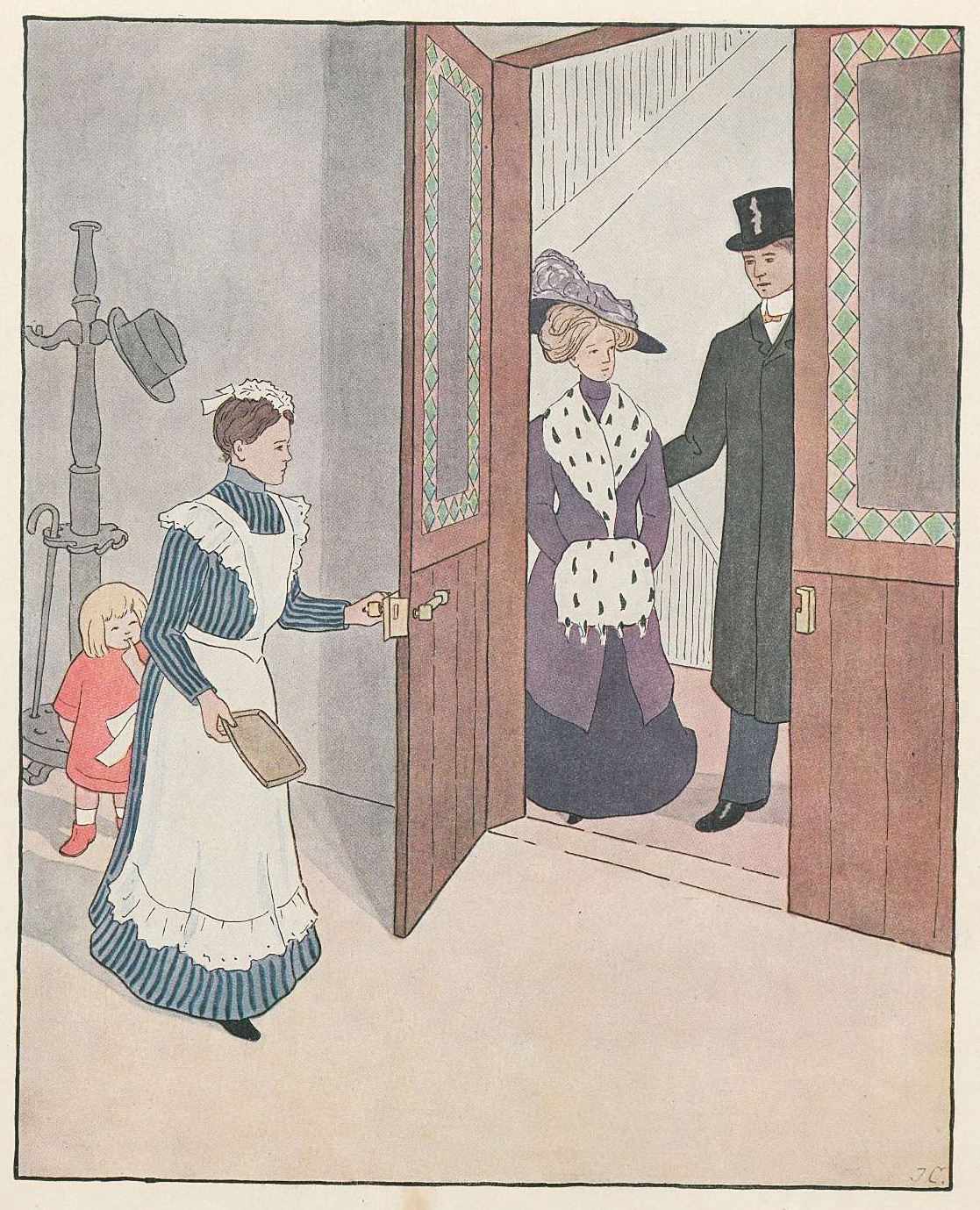
Nor is it just a Third World thing. Basic College Girls love that Downton Abbey show, so I’d use that to illustrate the point if BCGs were capable of comprehending metaphors. George Orwell wrote eloquently about growing up on the very ragged edge of “respectability” at the turn of the century. He knew all about servants, he said, and the elaborate codes of conduct in dealing with them, even though his family could afford only one part-time helper. Your real toffs, of course, had battalions of servants to do every conceivable job for them. What else is that, old bean, but an elegant solution to labor oversupply?

Note also, since I’m giving you very basic Marxist history here, that we’ve just discovered the foundations of Feminism. Though Karl Marx was — of course — a total asshole to both his wife and his domestic help (of course he had “help”; the tradition of using and abusing servants while bemoaning the plight of the proletariat comes straight from the Master himself), he realized that his theories had a hard time accounting for the very real economic effects of domestic labor. Hence Engels’s The Origin of the Family, Private Property and the State, which proves that even lemon-faced termagants with three degrees and six cats pulling down $100K per year shrieking about Feminism are MOPEs. You can cut the labor supply in half by shackling single gals to the Kinder, Küche, Kirche treadmill.

Severian, “Excess Labor”, Rotten Chestnuts<, 2020-07-28.

« Newer PostsOlder Posts »

Powered by WordPress