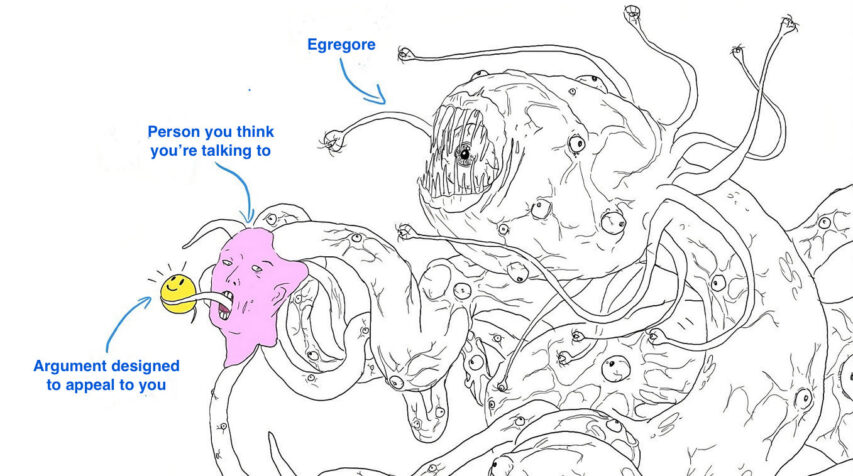
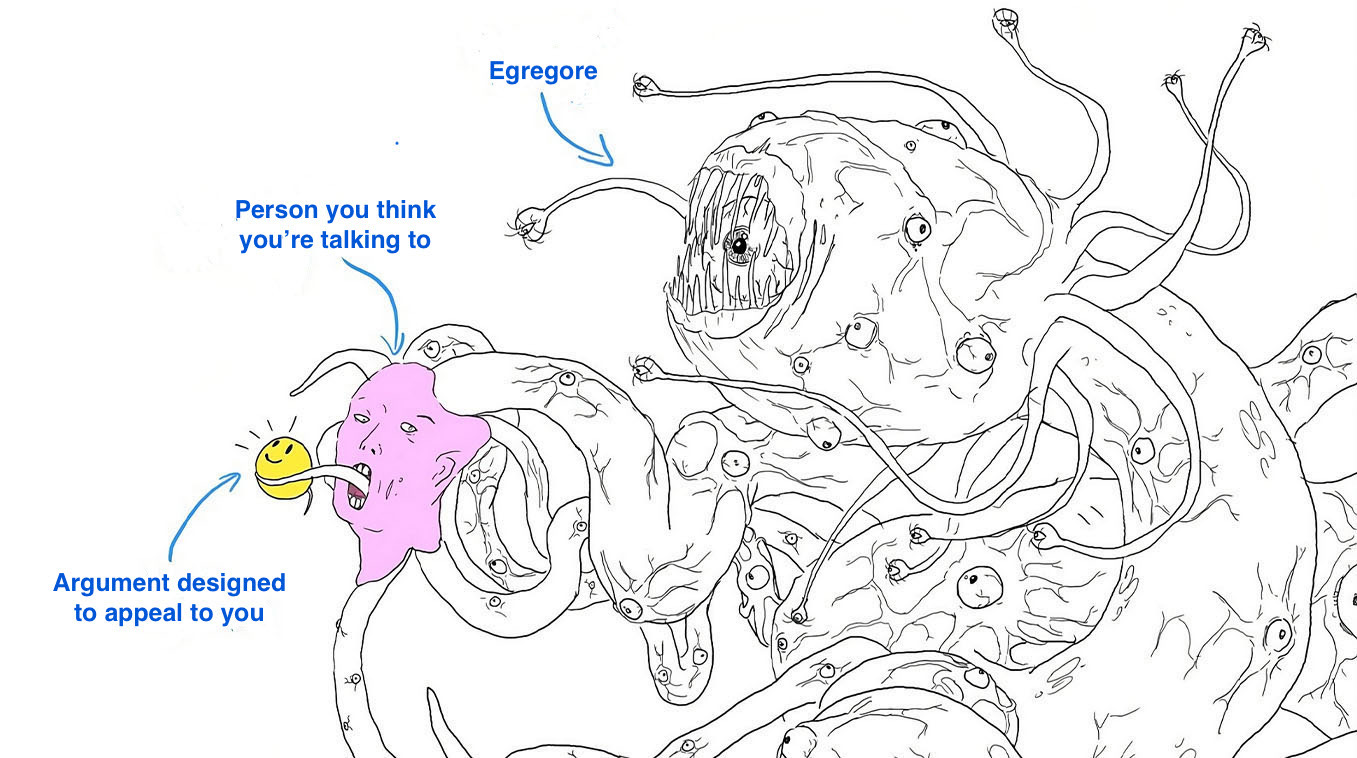
- If you were smart enough to understand what I’m saying, you’d be a liberal, too
- You aren’t smart enough to understand it, because you’re not a liberal
- And yet here I am, arguing with you anyway.
So who, exactly, is the dumb one?
Severian, “Alienation II”, Rotten Chestnuts, 2020-10-30.
June 9, 2023
May 15, 2023
Paul Wells – “Unworkable and swiftly-disavowed tinpot dictatorship is, statistically, one of the least damaging forms of tinpot dictatorship”
Paul Wells follows up last week’s rather disturbing report that the Liberal Party’s big gathering in Ottawa extruded a resolution to get “The Government” to work toward forcing journalists (and those peasant bloggers like Paul Wells) to only publish things that the sources informing it could be “traced” by that same authority:
Last Friday I wrote about a policy resolution at the big Liberal Party of Canada national convention that was, in my opinion, bad. This was the resolution that would have the party “request the government explore options” to “hold on-line information sources accountable” by requiring that they “limit publication only to material whose sources can be traced”.
How do you limit publication to traceable sources? I have to assume you clear the sources. “This resolution has no meaning,” wrote I, “unless it means I would be required to clear my posts through the federal government, before publication, so the ‘traceability’ of my sources could be verified.”
Some people disagreed, but I had a hard time getting them to describe what it could mean if it wasn’t what I thought. I was careful to note that party conventions aren’t binding on governments. Commenters sympathetic to the Trudeau government latched onto all the this-might-mean-nothing language, the stuff about “request” and “explore options.” At their convention, a tiny minority of registered Liberal delegates attended a “policy workshop” at which nothing was debated. Amid considerable confusion about where these resolutions were in the party’s own process — Althia Raj covered it on Twitter; go look if you like — this resolution became party policy with no discussion at all. That was on Saturday.
On Tuesday, Justin Trudeau went before reporters and said no Liberal government would ever implement this Liberal policy. Other cabinet ministers followed suit, and one MP who didn’t benefit from the counsel of the Monday-morning issues-management call had a rougher time executing the U-turn.
Look, I think the amount of self-inflicted ballistic damage to the government’s own foot here is minor. Unworkable and swiftly-disavowed tinpot dictatorship is, statistically, one of the least damaging forms of tinpot dictatorship.
But I want to let everyone in on a secret of my journalism, and indeed of most journalism: Criticism of politicians is often advice to politicians. I actually don’t spend a lot of time hoping governments and opposition parties will keep pursuing self-destructive and country-destructive choices indefinitely. I always hope a bit of mockery, especially pre-emptive mockery, will help inform their choices. If it stings when Wells writes it, it might sting worse when everyone is saying it.
Ministers of the Crown who didn’t need to wait for the Monday-morning issues-management meeting to tell them what to think could have spent the weekend thinking for themselves. They might even have invited their own staffs, riding executives, and Liberals at large to think for themselves. A dozen or so hardy souls, out of 3,500 registered delegates, might then have showed up to the policy workshop willing to debate.
“Uh, Paragraph Two looks hinky. How would a government enforce that?”
“Well, it doesn’t apply to reputable journalists.”
“Great, thanks. Remind me who decides who’s reputable? Any thought on who’ll be making those calls once we’re no longer in government?”
Maybe somebody would have added a friendly amendment. “For greater clarity, nothing in this paragraph impinges …”
I can even imagine a cabinet minister showing up for those floor debates and influencing the party’s direction single-handed. I’ve seen it happen in other parties. But I had Liberal friends over the weekend explain to me that no such thing ever happens. Fine, it’s your funeral. Basically we’re watching a party choose between two different models of public-policy deliberation:
OPTION 1: Smart people think and talk.
OPTION 2: Everybody in the party defends rickety thinking until it blows up in their faces.
I’m not kidding when I tell you most people in political communications would defend Option 2. We’re living in a time that values message over thinking. But folks can’t say I didn’t warn them.
May 13, 2023
QotD: The inherent absurdity of “Canadian content”
Lately some have reminded us of the inherent difficulties in defining Canadian content, especially where a work is the product of several collaborators. Is a movie Canadian by virtue of its actors? Director? Crew? Location? Theme? Even as applied to individuals: Should citizenship be the criterion? Birthplace? Residency? Subject matter?
But the real folly of CanCon is not that it is impractical, or prone to abuse, or even unnecessary, though it is all of those things. It is rather that it is nonsensical at its root, in its very purpose – again, so far as anyone can define it. Is the point, after all, artistic or political? But it cannot be artistic: there is no theory of aesthetics that prefers that Canadian artists should make Canadian art that teaches Canadians how Canadian they are.
It is, rather, a political project: the inculcation of national feeling in the public, for the purpose of creating a political community, separate and distinct from the colossus to the south. Without the Maginot Line of CanCon quotas, it is suggested, we would be overwhelmed: first the artists, then the country.
But note the assumptions built into this emotive appeal: that a separate nationality cannot be maintained without cultural difference; that our cultural differences with the Americans are both sufficient in themselves to justify our statehood and yet so fragile as to be washed away in an instant; that, left to their own choices, Canadians would unhesitatingly choose the products of an incomprehensibly alien culture over their own; and that, by virtue of this diet of foreignism, we would no longer be Who We Are as Canadians. Therefore we must not be left to our own choices.
Which is nonsense, because we would still be Who We Are, even in that hypothetical dystopian future: it might not be Who We Were, but so what? The Who We Are we are now at such pains to preserve is itself vastly different from Who We Were before.
And who, in the end are we? As the comedian Martin Short once put it: “we’re the people who watch a lot of American TV”. The wholesale ingestion of a foreign culture – albeit much of it made by expat Canadians – is an integral part of our distinct national identity, an irony that must forever elude our cultural nationalists.
Andrew Coyne, “The concept of CanCon is pure folly. That’s the problem at the heart of Bill C-11”, The Globe and Mail, 2023-02-08.
May 9, 2023
How to destroy an industry with one simple trick
Ted Gioia on the precipitous rise and calamitous decline of the clickbait journalism model:
I was going to call this story the “tragedy of American journalism”. But when you dig into the details, it’s more a farce.
Let’s start with act one of this comedy. I could almost begin anywhere, but I picked an especially ridiculous case study — just wait until you learn the reason why.
Did that catch your attention?
It was supposed to. And I learned that from a now (mostly) forgotten website called Upworthy.
Almost exactly 10 years ago, Upworthy was “the fastest growing media site of all time”, according to Fast Company. They had turned news into a science. Upworthy was the future of journalism.
“Upworthy is known for its use of data to drive growth, testing up to 16 different headlines for a single story,” enthused that bright-eyed reporter for Fast Company. The end result was headlines so irresistible, millions of people clicked on them.
Here are some examples:
- A Gorgeous Waitress Gets Harassed By Some Jerk. Watch What Happens Next.
- A Teacher Ran to a Classroom to Break Up a Fight, but What She Found Was the Complete Opposite.
- It’s Twice The Size Of Alaska And Might Hold The Cure For Cancer. So Why Are We Destroying It?
- If You Could Press A Button And Murder Every Mosquito, Would You? Because That’s Kinda Possible.
You get the idea. The headline is in two parts — and it’s just a come-on. You have no idea what the article is about until you click on the link.
That was the whole point. But just wait until you learn the problem with this.
Facebook and other social media sites eventually discovered that people clicked on these links, but didn’t spent much time with the Upworthy articles — and rarely gave them likes and shares.
The stories just weren’t very good — and certainly not as interesting as the headlines. So the algorithms started to punish clickbait articles of this sort.
The Upworthy empire collapsed as quickly as it had risen.
In retrospect, the problem with this gimmicky strategy is obvious. If you trick people into clicking on garbage, your metrics are impressive for a few months. But eventually people can smell the garbage without even clicking on it.
There’s also a deeper reason for this collapse — which I’ll get to in a moment. And it helps us understand the current problems with journalism. But first we need to look at a couple more case studies.
May 6, 2023
The federal Liberals want even more control over the internet
Paul Wells notes that a policy proposal at the Liberal conference this week indicates just how much the Liberal Party of Canada wants to control free expression on the internet:
Here on the 2023 Liberal convention’s “Open Policy Process” page are links to “Top 20 Resolutions” and “Fast-Tracked Resolutions”. The latter go straight to the plenary floor, the former go through a smaller preliminary debate and, if they pass, then on to the plenary. These things move fast because, in most cases, Liberals are paying only listless attention to the discussions. Policy is for New Democrats. Well, I mean, it used to be.
But sometimes words have meaning, so this morning I’m passing on one of the Top 20 Resolutions, from pages 12 and 13 of that book. This one comes to us from the British Columbia wing of the party.
It’s in two screenshots simply because it spreads across two pages. This is the entire resolution.
BC Liberals want “on-line information services” held “accountable for the veracity of material published on their platforms” by “the Government”. The Government would, in turn, “limit publication only to material whose sources can be traced”.
This resolution has no meaning unless it means I would be required to clear my posts through the federal government, before publication, so the “traceability” of my sources could be verified. I don’t suppose this clearance process would take too much more time than getting a passport or a response to an access-to-information request. Probably only a few months, at first. Per article.
After publication, “the Government” would hold me accountable for the veracity of my material, presumably through some new mechanism beyond existing libel law.
I’m not sure what “the Government” — I’m tickled by the way it’s capitalized, like Big Brother — would have made of this post, in which I quote an unnamed senior government official who was parked in front of reporters by “the Government” on the condition that he or she or they not be named. But by the plain meaning of this resolution, I would not have to wonder for long because that post would have been passed or cleared by the Government’s censors before publication, and I’m out of recourse if that process simply took longer than I might like.
May 5, 2023
May 1, 2023
“And I, for one, welcome our new CRTC internet overlords”
In this week’s Dispatch from The Line, among other maple-flavoured items is the discussion of how the newly passed Bill C-11 will impact Canadians’ everyday online experience:
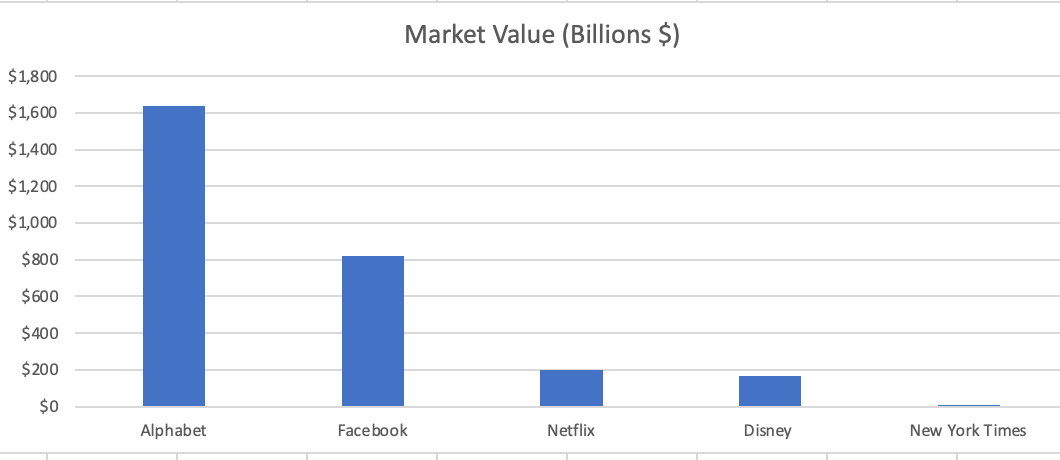
We at The Line have spent a lot more time trashing Bill C-18 than its cousin, C-11; the reason for that is fairly simple, if unflattering. Both bills are unwieldy little monsters, rife with competing agendas and we only have so much time and energy to spare. Of the two, though, C-18 affects us and our business more directly as it attempts to force Big Tech companies into secret negotiations to prop up dying legacy media outlets.
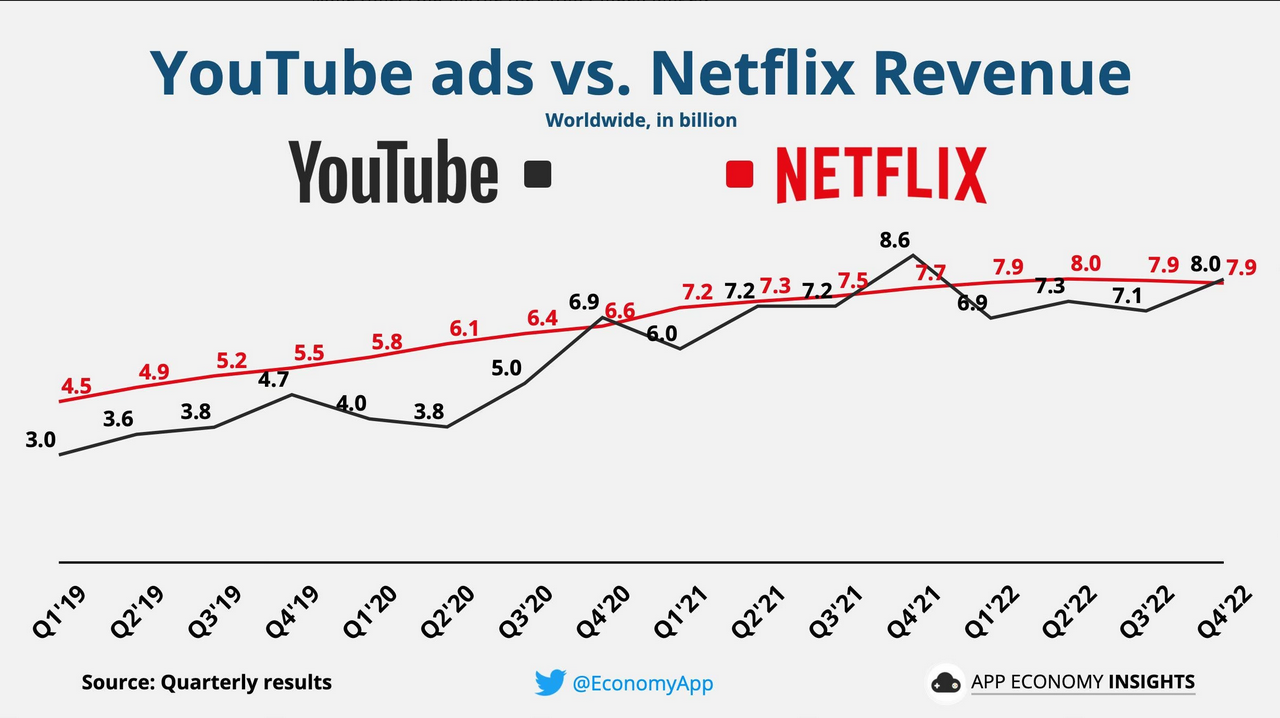
C-11, which passed this week, is the Liberals’ attempt to overhaul the Broadcasting Act to bring major streaming services like YouTube and Netflix under the heel of the CRTC. This is generally a pretty bad idea — and we’ll get into that in a second. But the passing of the first major overhaul of the act since the ’90s will, we expect, be heralded by the usual suspects of CanCon leeches who see in the legislation an opportunity to siphon evil Big Tech profit while forcing major platforms to force-feed Canadians into consuming more home-grown shite.
Anyway, part of the bill, it is hoped, will force online streamers to feature more Canadian content for Canadian users, particularly content that highlights the usual progressive checkboxes. And while this does make us roll our eyes a bit — just make good stuff and let people choose what they want for themselves! — we admit that this provision is the less objectionable aspect of C-11.
After this, matters get much more dicey. The attempts to force tech companies to pay for more CanCon will almost certainly backfire in the long run: companies like YouTube have already promised that they will comply with legislation by creating pass-through fees for their creators. In other words, if the government forces YouTube to pay a percentage of its profits into a CanCon fund, YouTube will generate that revenue the only way it can — by skimming more cash from its content creators and re-directing some to the creation of Canadian shows that are then commercialized by major broadcasting networks like Rogers. Seems fair!
Where the bill goes off the rails is over years-long battle over user-generated content protections. Upon hitting the upper chamber, the senate actually advocated for amendments that would ensure that Joe Blow YouTuber wasn’t going to fall under the auspices of CRTC regulation — changes that were rejected by the House. How the CRTC defines a content generator worthy of its regulation, or uses any of its new powers, is now up for consideration by the CRTC itself.
Obviously, we at The Line are concerned about how a regulator is going to employ poorly defined and vaguely stipulated legislative powers to control how Canadians are presented which content, and by whom. We are open to the hopeful possibility that the CRTC is so completely in over their heads that all of the concerns about the bill prove fruitless and overblown. But as a rule, we don’t like to rely on the incompetence of our betters to assure our protections and freedoms.
And that brings us to the major philosophical problems with C-11; the first is that legislation should generally not generate more confusion and uncertainty. As a rule, we think that our laws should be written in such a way that an ordinarily intelligent person with a standard education should be able to understand the laws that govern them. By this measure, the Broadcasting Act — like many others — fail a very basic test. C-11 is written so poorly that even experts seem to disagree about the scope of the bill and how our media landscape will be affected by it in the years to come.
[…]
There is, arguably, no reason for the CRTC, nor for the Broadcasting Act in its current form, to exist anymore. Digital space isn’t finite. Canadians can easily find news and entertainment that is relevant to them. We don’t need the government to ensure that Canadian content is produced and funded. Or, if some government intervention is deemed necessary, it need not amount to anything more complicated than a simple tax, with revenues diverted to one of this country’s myriad granting agencies to aid production. Instead, we have a government that seems hellbent on extending the power of a regulator at the very moment in history that this regulator is most redundant.
Given that we’re being led by an increasingly insular government that equates all criticism to disingenuous misinformation, and seems to want to stamp out the evils of wrong opinions on the Internet in the coming Online Harms bill, well, let’s just say we’re increasingly concerned and perturbed.
April 23, 2023
From the Encyclopedia Britannica to Wikipedia
In the latest SHuSH newsletter, Ken Whyte recounts the decline and fall of the greatest of the print encyclopedias:
I remembered all this while reading Simon Garfield’s wonderful new book, All the Knowledge in the World: The Extraordinary History of the Encyclopedia. It’s an entertaining history of efforts to capture all that we know between covers, starting two thousand years ago with Pliny the Elder.
The star of Garfield’s show, naturally, is Encyclopedia Britannica, which dominated the field through the nineteenth and twentieth centuries. By the time of its fifteenth edition in 1989, the continuously revised Britannica was comprehensive, reliable, scholarly, and readable, with 43 million words and 25,000 illustrations on a half million topics published over 32,640 pages in thirty-two beautifully designed Morocco-leather-bound volumes. It was the greatest encyclopedia ever published and probably the greatest reference tool to that time. It was sold door-to-door in the US by a sales force of 5,000.
Just as the glorious fifteenth edition was going to press, Bill Gates tried to buy Encyclopedia Britannica. Not a set — the whole company. He didn’t want to go into the reference book business. He believed that the availability of a CD-ROM encyclopedia would encourage people to adopt Microsoft’s Windows operating system. The Britannica people told Gates to get stuffed. They were revolted by the thought of their masterpiece reduced to an inexpensive plastic bolt-on to a larger piece of software for gimmicky home computers.
Like the executives at Blockbuster, the executives at Britannica eventually recognized the threat of digital technology but couldn’t see their way to abandoning their old business model and their old production standards and the reliable profits that came with large sets of big books. CD-ROMs seemed to them like a child’s toy.
Even as more of life moved online and the company’s prospects for growth dwindled, the Britannica executives could still not get their heads around abandoning the past and favoring a digital marketplace. They figured that their time-honored strategy of guilting parents into buying a shelf of books in service of their kids’ education would survive the digital challenge, not recognizing that parents would soon be assuaging their guilt by buying personal computers for their kids.
By the time Britannica brought out an overly expensive and not-very-good CD-ROM version of its encyclopedia in 1994, Gates had launched Encarta based on the much inferior Funk & Wagnalls. It might not have been the equal of the printed Britannica, but with its ease of use and storage, its much lower price point, and its many photos and videos of the Apollo moon landing and spuming whales, Encarta made a splash. It was selling a million copies a year in its third year of production — a number that no previous encyclopedia had come close to matching.
As it turned out, Britannica‘s last profitable year was 1990 when it sold 117,000 bound sets for $650 million and a profit of $40 million. With the launch of Encarta, its annual sales were reduced to 50,000 sets and it was laying off masses of employees.
Encarta‘s own life was relatively short. It closed in 2009, at which point it was selling for a mere $22.95. The world now belonged to Wikipedia.
April 20, 2023
It’s not your imagination, you really did just hear that song again … and again … and again
Ted Gioia on some sort of scam-like activity going down on Spotify and other large web platforms:
Adam Faze kept hearing the same song on Spotify over and over again.
Such things aren’t unusual. Hit songs get played repeatedly—although this one seemed more annoying than most.
But in this case, something even more bizarre was happening.
When Adam looked to see the name of the song, it was always different. The titles were a wild assortment—almost as if a random word generator had been used to pick them:
- “Trumpet Bublefig”
- “The Proud Dewdrop Amulet”
- “Thorncutter”
- “Viper Beelzebub”
- “Whomping Clover”
- Etc. etc.
But the music was always the same.
Even stranger, the artist was also different in each instance. And if you clicked on the writer credits, those were all different too.
How could the same track be attributed to dozens of different musicians? How could the same song be written by dozens of different composers?
Adam started compiling a playlist, and adding each new iteration of this song when he found it. When he got to 49 versions, he shared the playlist on social media. “I’ve officially stumbled upon the weirdest thing I’ve ever seen”, he announced.
A Twitter user, alerted by this, quickly discovered another 10 iterations of the same song. This banal tune was everywhere. The use of multiple aliases made it difficult to gauge the full extent of the deception, but Spotify was pushing this track so aggressively that it was impossible to hide the charade they were playing.
When asked how it was possible to find so many examples, Adam replied: I’m completely serious when I say it was starting to be every other song after a while.”
The song itself is just 53 seconds. And you’re glad when it’s over, because this tune is a loser — almost a Frank-Ocean-at-Coachella level of bad. Even call centers have better taste in their on-hold music.
April 15, 2023
QotD: When the pick-up artist became “coded right”
When did pickup artistry become criminal? Relying on online sex gurus for advice on persuading women into bed used to be seen as a fallback for introverted, physically unprepossessing “beta males”. And for this reason, in the 2000s, the discipline was promoted by the mainstream media as a way of instilling confidence in sexually-frustrated nerds. MTV’s The Pickup Artist shamelessly broadcast its tactics, with dating coaches encouraging young men to prey upon reluctant women, hoping to “neg” and “kino escalate” them into “number closes“. Contestants advanced through women of increasing difficulty (picking-up a stripper was regarded as “the ultimate challenge”) with the most-skilled “winning” the show.
Today, the global face of pickup artistry is Andrew Tate: sculpted former kickboxing champion, self-described “misogynist”, and, now, alleged human trafficker. Whatever results from the current allegations, his fall is a defining moment in the cultural history of the now inseparable worlds of the political manosphere and pickup artistry, and provides an opportunity to reflect upon their entangled history.
Pickup artistry burst onto the scene in the 2000s, propelled by the success of Neil Strauss’s best-selling book The Game. More a page-turning potboiler cataloguing the mostly empty lives of pickup artists (PUAs) than a how-to guide (though Strauss wrote one of those too), the methods in the book had been developed through years of research shared on internet forums. The “seduction underground”, as the large online community of people doing this research was called, then became the subject of widespread media attention. Through pickup artistry, the aggressive, formulaic predation of women was normalised as esteem boosting, and men such as those described in Strauss’s The Game could be viewed in a positive light: they had transformed from zero to hero and taken what was rightfully theirs.
The emergence of PUAs generated a swift backlash. The feminist blogs of the mid-to-late 2000s internet, of which publications like Jezebel still survive as living fossils, rushed to pillory them. The attacks weren’t without justification, but the world of PUAs during this period, much like the similarly wild-and-woolly bodybuilding forums, had no obvious political dimension beyond some sort of generic libertarianism. It was only after these initial critiques that it began to be coded as Right-wing by those on the Left. Duly labelled, PUAs and other associated manosphere figures drifted in that direction. MTV’s dating coaches were not part of the political landscape, merely feckless goofballs and low-level conmen capable of entertaining the masses. But their successors would be overtly political actors.
Oliver Bateman, “Why pick-up artists joined the Online Right”, UnHerd, 2023-01-08.
April 2, 2023
March 31, 2023
Bill C-11 should properly be called the “Justin Trudeau Internet Censorship Bill”
In The Free Press, Rupa Subramanya explains why the federal government’s Bill C-11 is a terrible idea:
Canada’s Liberals insist the point of Bill C-11 is simply to update the 1991 Broadcasting Act, which regulates broadcasting of telecommunications in the country. The goal of the bill, according to a Ministry of Canadian Heritage statement, is to bring “online broadcasters under similar rules and regulations as our traditional broadcasters”.
In other words, streaming services and social media, like traditional television and radio stations, would have to ensure that at least 35 percent of the content they publish is Canadian content — or, in Canadian government speak, “Cancon”.
The bill is inching toward a final vote in the Canadian Senate as soon as next month. It’s expected to pass. If it does, YouTube CEO Neal Mohan said in an October blog post, the same creators the government says it wants to help will, in fact, be hurt.
[…]
If you’re confused by all this — if you’re wondering why the Liberal Party and its allies in these quasi-governmental organizations are suddenly so worried about Canada’s national identity — that’s understandable.
In a 2015 interview with The New York Times, Trudeau proudly declared, “There is no core identity, no mainstream in Canada.” Canada, he explained, is “the first postnational state”. The authorized, two-volume biography of Trudeau’s father, former prime minister Pierre Trudeau, is called Citizen of the World. Pablo Rodriguez maintains dual citizenship — in Canada and in Argentina, where he was born.
So why is Trudeau, of all people, championing this legislation? There’s an easy explanation — and it has nothing to do with borders or culture.
“Bill C-11 is a government censorship bill masquerading as a Canadian culture bill,” Jay Goldberg, a director at the conservative Canadian Taxpayers Federation, told me. Referring to the Canadian Radio-television and Telecommunications Commission, Goldberg said, “The government is intending to give the power to the CRTC to be able to filter what we see in our news feeds, what we see in our streaming feeds, what we see on social media.”
Supporters of Bill C-11 emphasize it would affect only YouTube, Netflix, Amazon, TikTok, and other Big Tech platforms; the Heritage Ministry statement notes “the bill does not apply to individual Canadians”. But the language is so vague that it’s unclear how it would actually be implemented.
For example, it would be up to CRTC regulators to decide what constitutes “Canadian” content. The singer The Weeknd was born in Toronto but now mostly lives in Los Angeles. Does he still count as Canadian? What about rock n’ roller Bryan Adams, who was born in Kingston, Ontario, and spends a great deal of time in Europe?
March 30, 2023
“Nothing is as permanent as a temporary government program” … except those few that make your life easier
At Astral Codex Ten, Scott Alexander reacts to the US government’s new moves to make telehealth less useful for as many people as possible:
Telemedicine is when you see a doctor (or nurse, PA, etc) over a video call. Medical regulators hate new things, so for its first decade they ensured telemedicine was hard and inconvenient.
Then came COVID-19. Suddenly important politicians were paying attention to questions about whether people could get medical care without leaving their homes. They yelled at the regulators, and the regulators grudgingly agreed to temporarily make telemedicine easy and convenient.
They say “nothing is as permanent as a temporary government program”, but this only applies to government programs that make your life worse. Government programs that make your life better are ephemeral and can disappear at any moment. So a few months ago, the medical regulators woke up, realized the pandemic was over, and started plotting ways to make telemedicine hard and inconvenient again.
The first fruit of their labor is DEA-407, which makes it hard for telemedicine doctors to prescribe controlled substances. Controlled substances are drugs like Adderall, Ritalin, Xanax, or Ambien that the government has declared to be potentially addictive. The new rules say that telemedicine doctors can no longer prescribe these (or, in some cases, can prescribe them one time in an emergency).
Why don’t I like this decision? I am a telepsychiatrist. I work with about a hundred psychiatric patients who, for one reason or another, prefer online to physical appointments:
- Some live in small towns that don’t have psychiatrists of their own
- Some have agoraphobia, chronic pain, or some other condition that makes it hard for them to go to an office.
- Some move around a lot and like to be able to see their psychiatrist whether they’re in LA or SF.
- Some live hundreds of miles away from me, but know and trust me for some reason, and would rather see me than someone closer to them.
- Some appreciate the fact that I charge lower rates than psychiatrists who have offices, because I don’t have to pay for Bay Area commercial real estate and pass those costs on to my patients.
- Some work during work hours, and like being able to see me from their office instead of taking half the day off to travel to my location.
- Some like convenience and dislike inconvenience
As a psychiatrist, a big part of my job is prescribing controlled substances. For example, most guidelines agrees that the first-line treatment for severe ADHD is stimulant medications (eg Adderall or Ritalin). And although psychiatrists hate to admit it, the first-line treatment for temporary crisis anxiety, especially when it’s so bad that the patient isn’t able to listen to your clever plans to solve it with therapy, is benzodiazepines (eg Valium or Klonopin). You can’t be a good well-rounded psychiatrist without the option to sometimes prescribe these drugs.
“Well, your patients will have to find a different psychiatrist, or transition off of them”. Nobody ever finds different psychiatrists. Some of my patients are a bad match for my style or areas of expertise, and I’ve tried very hard to find them different psychiatrists, and it never works. Maybe there are no other psychiatrists in their area. Maybe the psychiatrists in their area don’t take the right insurance, or are too far away from mass transit. Maybe the psychiatrists have six month long wait lists. Sometimes it’s just that my ADHD patients get distracted and forget they were supposed to find new psychiatrists, and I can’t hold their hand literally all the time. As for transitioning off the medications, some patients absolutely cannot function at all without them. Did I mention that if you come off of some of them too quickly, you can literally die?
March 27, 2023
March 20, 2023
“It amounts to nothing less than a declaration of all-out war between the government and the Big Tech companies”
The editors of The Line have strong opinions on the federal government’s decision to batter Google, Facebook, and other online “giants” over their opposition to the proposed internet legislation in bills C-11 and C-18:
As a result of C-18, both Google and Meta have considered dropping news distribution from their platforms, or have outright promised to do so. To which we have responded: “Well, no shit, Sherlocks.” We have, in fact, warned all of the parties involved with this misguided bill that that’s exactly what was going to happen.
Nonetheless, the dim-witted government officials and corporate media barons who have pinned their hopes of survival to the apparent money spigot of Big Tech didn’t believe us. So when Meta came right out and said it would drop news last week, the ashen-faced Minister of Heritage accused them of using “intimidation and subversion” tactics. And, thus, these demands for private correspondence appear to have been drafted.
It amounts to nothing less than a declaration of all-out war between the government and the Big Tech companies — and, by extension, the many independent media creators like ourselves.
Well. Okey Dokey then.
*cracks knuckles*
Let’s start with two very obvious points: firstly, we at The Line don’t object to forcing these tech companies to disclose funding to third parties for the purpose of opposing C-18 et al. That is perfectly reasonable, in our minds. Further, if these companies are being accused of anything illegal, by all means, investigate away — after you get a warrant.
The rest of these demands are nothing short of banana crackers; it’s an extraordinary interpretation of the committee’s mandate. It’s the kind of overbroad dragnet that will necessarily create privacy breaches for the unknown numbers of ordinary citizens, dissidents and journalists who have corresponded with these companies about these bills.
We will remind the government that private citizens and private companies do not owe the government a full accounting of their private business or communications. The government is subject to this kind of transparency and disclosure because the government works for us. Not the other way around.
We will also point out the irony. The government is demanding years worth of correspondence from private entities within a very short time frame: this is a level of transparency that no government department would subject itself to. Don’t believe us? Just try to draft a similar ATIP request to any ministry; it would take years to get such a request fulfilled, and half if it would come back redacted.