Quotulatiousness

December 29, 2022

Anti-Tank Chats #5 | PIAT | The Tank Museum

Filed under: Britain, History, Military, Weapons, WW2 — Tags: , , , , — Nicholas @ 02:00

The Tank Museum
Published 26 Aug 2022

Bring up the PIAT! Join Stuart Wheeler as he takes a look at the iconic WW2 British anti-tank weapon — the PIAT. With thanks to @The Armourer’s Bench and @History in Firearms
(more…)

December 26, 2022

The Battle of Ortona with Jayson Geroux

Filed under: Cancon, Germany, History, Italy, Military, WW2 — Tags: , , , — Nicholas @ 04:00

OTD Canadian Military History
Published 21 Dec 2022

Join me as I welcome Jayson Geroux to the OTD channel to discuss the Battle of Ortona. We will be discussing the urban combat that took place in Ortona in December 1943. [The discussion of the actual battle begins around the 6 minute mark.]
(more…)

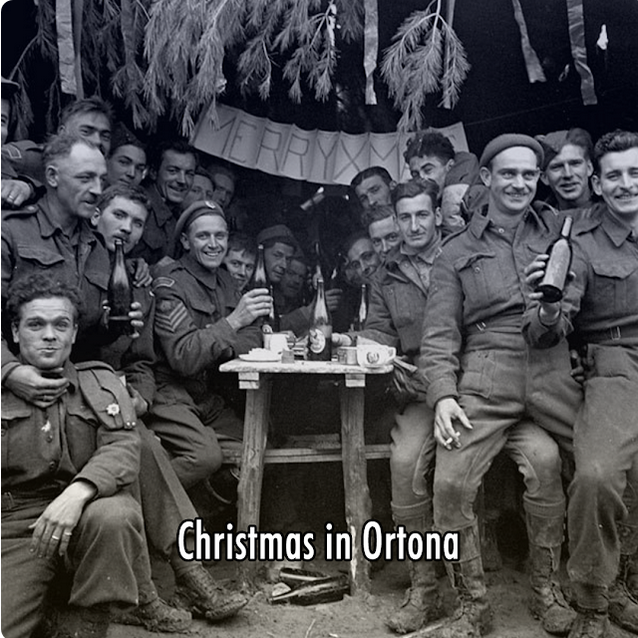
2nd Canadian Infantry Brigade Christmas celebrations in Ortona, 1943

Filed under: Cancon, History, Italy, Military, WW2 — Tags: , , , , — Nicholas @ 03:00

The folks at the World War Two channel on YouTube posted this to their community page on Christmas Day:

On Christmas Day, 25 December 1943, the 1st Canadian Infantry Division is still engaged in brutal urban combat against the 1. Fallschirmjäger-Division for control over the town of Ortona. But among the rubble of the “Italian Stalingrad”, soldiers of the Seaforth Highlanders of Canada, along with other units [of the 2nd Canadian Infantry Brigade], manage to keep the Christmas spirit alive.

Colonel S. W. Thomson will recount this most unusual Christmas celebration many years later:

    “I knew that we would be fully engaged with the enemy on Christmas day. However our most enterprising Quartermaster, Captain Bordon Cameron, was anxious to provide something special for the men at Christmas. Three companies were in the line with one in reserve, often the norm. We decided to feed the reserve company first and feed the remaining companies in relays. as one company finished it would go forward some 300 or 400 yards and relieve the next. Tables, linen, chinaware and candles were scrounged by the reserve company. The tables were set up in rows in our great church Santa Maria with four foot thick walls and my rear H.Q. What a picture, what an appropriate setting for a Christmas dinner on Dec. 25.

    “Soup, roast pork, vegetables and Christmas pudding along with a bottle of beer for each of the tattered, scruffy, war weary soldiers was served by HQ and B echelon staff. The Q.M. boys excelled themselves, the impossible had happened. There was a spirit of good-fellowship throughout the church. The signals officer Lieutenant Wilf Gildersleeve played the organ, and our much loved padre Roy Durford led the carol singing. Pipe Major Esson played his pipes several times during the meals drowning out the odd enemy shell burst outside.

    “Christmas in Ortona, the meal, yes, but the spirit of the occasion, the look on the faces of those exhausted, gutsy men on entering the church is with me to-day and will live forever.”

To all our followers, readers, and viewers: We wish you a Merry Christmas!

From: Canadian Military History, Vol. 2 (1993)
Picture: Canadian soldiers celebrate Christmas in Ortona, Italy
Source: Canadian Armed Forces

November 29, 2022

Tank Chat #159 | Warrior | The Tank Museum

Filed under: Britain, History, Military, Weapons — Tags: , , , , , — Nicholas @ 02:00

The Tank Museum
Published 29 Jul 2022

Join David Willey for a new Tank Chat on Warrior.
(more…)

November 28, 2022

QotD: The Carolingian army

Filed under: Europe, History, Military, Quotations — Tags: , , , , , , — Nicholas @ 01:00

In essence, the Carolingian army was an odd sort of layer-cake, in part because it represented a transitional stage from the Germanic tribal levies of the earliest Middle Ages towards to emergence and dominance of the mounted aristocracy of the early part of the High Middle Ages (note: the Middle Ages is a long period, Europe is a big place, and it moves through a lot of military systems; to talk of a single “medieval European system” is almost always a dangerous over-generalization). The top of the layer-cake consisted of the mounted aristocrats, in basically the same organization as the lords of Rohan discussed above: the great magnates (including the king) maintained retinues of mounted warriors, while smaller (but still significant) landholders might fight as individual cavalrymen, being grouped into the retinues of the great magnates tactically, even if they weren’t subordinate to those magnates politically (although they were often both). These two groups – the mounted magnate with his retinue and the individual mounted warrior – would eventually become the nobility and the knightly class, but in the Carolingian period these social positions were not so clearly formed or rigid yet. We ought to understand that to speak of a Carolingian “knight” (translated for Latin miles, which ironically in classical Latin is more typically used of infantrymen) is not the same, in social consequence, as speaking of a 13th century knight (who might also be described as a miles in the Latin sources).

But below that in the Carolingian system, you have the select levy, relatively undistinguished (read: not noble, but often reasonably well-to-do) men recruited from the smaller farmers and townsfolk. This system itself seems to have derived from an earlier social understanding that all free men (or all free property owning men) held an obligation for military service; Halsall notes in the eighth century the term arimannus (Med. Lat.: army-man) or exercitalis (same meaning) as a term used to denote the class of free landowners on whom the obligation of military service fell in Lombard and later Frankish Northern Italy (the Roman Republic of some ten centuries prior had the same concept, the term for it was assidui). This was, on the continent at least, a part of the system that was in decline by the time of Charlemagne and especially after as the mounted retinues of the great magnates became progressively more important.

We get an interesting picture of this system in Charlemagne’s efforts in the first decades of the 800s to standardize it. Under Charlemagne’s system, productive land was assessed in units of value called mansi and (to simplify a complicated system) every four mansi ought to furnish one soldier for the army (the law makes provisions for holders of even half a mansus, to give a sense of how large a unit it was – evidently some families lived on fractions of a mansus). Families with smaller holdings than four mansi – which must have been most of them – were brigaded together to create a group large enough to be able to equip and furnish one man for the army. These fellows were expected to equip themselves quite well – shield, spear, sword, a helmet and some armor – but not to bring a horse. We should probably also imagine that villages and towns choosing who to send were likely to try to send young men in good shape for the purpose (or at least they were supposed to). Thus this was a draw-up of some fairly high quality infantry with good equipment. That gives it its modern-usage name, the select levy, because it was selected out of the larger free populace.

And I should note what makes these fellows different from the infantry who might often be found in the retinues of later medieval aristocrats is just that – these fellows don’t seem to have been in the retinues of the Carolingian aristocracy. Or at least, Charlemagne doesn’t seem to have imagined them as such. While he expected his local aristocrats to organize this process, he also sent out his royal officials, the missi to oversee the process. This worked poorly, as it turned out – the system never quite ran right (in part, it seems, because no one could decide who was in charge of it, the missi or the local aristocrats) and the decades that followed would see Carolingian and post-Carolingian rulers more and more dependent on their lords and their retinues, while putting fewer and fewer resources into any kind of levy. But Charlemagne’s last-gaps effort is interesting for our purpose because it illustrates how the system was supposed to run, and thus how it might have run (in a very general sense) in the more distant past. In particular, he seems to have imagined the select levy as a force belonging to the king, to be administered by royal officials (as the nation-in-arms infantry armies of the centuries before had been), rather than as an infantry force splintered into various retinues. In practice, the fragmentation of Charlemagne’s empire under his heirs was fatal for any hopes of a centralized army, infantry or otherwise, and probably hastened the demise of the system.

Beneath the select levy there was also the expectation that, should danger reach a given region, all free men would be called upon to defend the local redoubts and fortified settlements. This group is sometimes called the general levy. As you might imagine, the general levy would be of lower average quality and cohesion. It might include the very young and very old – folks who ought not to be picked out for the select levy for that reason – and have a much lower standard of equipment. After all, unlike select levymen, who were being equipped at the expense, potentially, of many households, general levymen were individual farmers, grabbing whatever they could. In practice, the general levy might be expected to defend walls and little else – it was not a field force, but an emergency local defense militia, which might either enhance the select levy (and the retinues of the magnates) or at least hold out until that field army could arrive.

Bret Devereaux, “Collections: The Battle oF Helm’s Deep, Part IV: Men of Rohan”, A Collection of Unmitigated Pedantry, 2020-05-22.

November 20, 2022

Tank Chat #158 Spartan and Stormer | The Tank Museum

Filed under: Britain, History, Military, Weapons — Tags: , , , — Nicholas @ 02:00

The Tank Museum
Published 22 Jul 2022

David Fletcher is back with the next Tank Chat instalment! This week he chats about not one but two vehicles, Spartan and Stormer.
(more…)

November 1, 2022

Britain’s Final Assault – Falklands War

Historigraph
Published 29 Oct 2022

In the closing days of May 1982, the British land campaign to recapture the Falkland Islands began, after an eight thousand mile voyage and weeks of battles at sea and in the air. With a beachhead established, British troops were now charged with rapidly defeating an Argentinian force that was more numerous and had spent weeks preparing defences. The Battle for the Falklands was about to begin.
(more…)

October 7, 2022

QotD: King Agis IV’s and King Cleomenes III’s failed reform attempts in Sparta after 371BC

Filed under: Europe, Government, Greece, History, Quotations — Tags: , , , , , — Nicholas @ 01:00

In order to serve in the army as a hoplite” rel=”noopener” target=”_blank”>hoplite (the Greek heavy infantryman who was the basic unit of every polis army) – the key concern around the declining Spartiate citizen body – a man had to have enough wealth to afford the arms and armor. In a state where – because of the oft-praised Spartan austerity – functionally all wealth was tied to the land, that meant that any new Hoplites needed to be given land in order to be able to serve. But all the best land in Sparta was tied up in an ever-shrinking number of kleroi.

Thus the Spartan state might grant marginal, borderland to small groups of freed helots – the neodamodes and the Brasidioi – but actually bringing up the military strength of the polis in full could only be achieved by de-consolidating the kleroi – the best, most productive land (because you can only support so many hoplites on disputed, marginal land). This is one thing, of course, that the wealthy Spartiates who dominated the state were unwilling to do. The mothakes and hypomeiones, pushed to the edges of Spartan society, might be brought in to make up the difference, but unless they were made equals – homoioi – this was a recipe for instability, as seen with Lysander and Cinadon. This is the other thing the Spartiates were unwilling to do – if I had my guess, because for the poor Spartiates who still clung to their status (and might still use the Apella to block reform, even if they couldn’t use it to propose reform), that status differential was just about the only thing they had (apart from all of the slave labor they enjoyed the benefits of, of course).

(A different polis might have tried to make up this difference by either hiring large numbers of mercenaries, or arming its own people at state expense, as a way of using the fortunes of the rich to fund military activity without expanding the citizenry. But, as Aristotle notes – (we’ll come back to this when we talk about Spartan war performance) the public finances of Sparta were pitiful even by ancient standards – for precisely the same reason that deconsolidating the kleroi was politically impossible: the state was dominated by the wealthy (Arist. Pol. 2.1271b). With no real source of wealth outside of landholding and all of the good land held by the Spartiates, it seems that Sparta – despite being by far the largest polis in Greece and holding some of the best farmland outside of Thessaly, was never able to raise significant revenue.)

Instead, the clique of wealthy Spartiates arrayed about the kings did nothing, decade on decade, as the Spartiate citizen body – and the military power of Sparta – slowly shrank, until at least, in 371 it broke for good. But what is perhaps most illustrative of the dysfunction in the Spartan political system is the sad epilogue of efforts in the second half of the third century (in the 240s and 220s) to finally reform the system by two Spartan kings.

The first effort was by Agis IV (r. 245-241; Plut. Agis). By the time Agis came to power, there were only a few hundred Spartiate households. Agis tried to reform through the system by redividing all of the kleruchal land into 4,500 plots for Spartiates and another 15,000 for the Perioikoi (who might also fight as Hoplites). Agis gets the Apella to support his motion – his offer to put his own royal estates into the redistribution first earns him a lot of respect – but the Gerousia, by a narrow margin, rejects it. Agis is eventually politically isolated and finally executed by the Ephors (along with his mother and grandmother, who had backed his idea) – the first Spartan king ever executed (I have left out some of the twists and turns here. If you want to know Plutarch has you covered).

Cleomenes III (r. 235-222) recognizes what Agis seemingly did not – reform to the Spartan system could not happen within the system. Instead, he stages a coup, having four of the five Ephors murdered, exiled eighty citizens – one assumes these are wealthy and prominent opponents – and possibly had the other king assassinated (Plut. Cleom. 8, 10.1; Plb. 5.37). Cleomenes then redistributed the kleroi into 4,000 plots and made his own brother his co-king (Plut. Cleom. 11), essentially making him a tyrant in the typical Greek mold. He then set about continuing his war with the neighboring Achaean League in an effort to re-establish Spartan hegemony in the Peloponnese and presumably retake Messenia (which by that point was free and part of the Achaean league).

It was far, far too late. Had this been done in the 380s or even the 350s, Sparta might well have resumed its position of prominence. But this was the 220s – Macedon had dominated Greek affairs now for a century and the Antigonids – the dynasty then ruling in Macedon – had no intention of humoring a resurgent Sparta. In 224, a Macedonian army marched into the Peloponnese in support of Sparta’s enemies and in 222 it smashed the Spartan army flat at Sellasia, almost entirely wiping out the Spartiate citizen body – new and old – in the process (Plutarch claims only 200 adult Spartiate males survived, Plut. Cleom. 28.5). The victorious Macedonian – Antigonis III Doson – for his part re-crippled Sparta: he occupied it, restored its constitution to what it had been before Cleomenes and then left, presumably content that it would not threaten him again (Plut. Cleom. 30.1). The time when a state with a citizen body in the few thousands could be a major player had been over for a century and the great empires of the third century were in no mood to humor self-important poleis who hadn’t gotten the message.

Bret Devereaux, “Collections: This. Isn’t. Sparta. Part V: Spartan Government”, A Collection of Unmitigated Pedantry, 2019-08-29.

September 20, 2022

The Evolution of the Rifleman’s Uniform 1860-1990’s

Filed under: Cancon, History, Military, Weapons, WW1, WW2 — Tags: , — Nicholas @ 02:00

Queen’s Own Rifles of Canada Regimental Museum
Published 30 Nov 2020

See the evolution of the rifleman’s uniform throughout most of our history.
You can also read more about this evolution on our Museum website:
https://qormuseum.org/history/timelin…
(more…)

September 17, 2022

Maple Fury: Canada’s Mechanized Infantry Explained

Filed under: Cancon, Military, Weapons — Tags: , , , — Nicholas @ 02:00

Battle Order
Published 12 Nov 2020
(more…)

September 12, 2022

The Lord of the Rings and Ancient Rome (with Bret Devereaux)

toldinstone
Published 10 Sep 2022

In this episode, Dr. Bret Devereaux (the blogger behind “A Collection of Unmitigated Pedantry”) discusses the relationships between fantasy and ancient history – and why historical accuracy matters, even in fiction.
(more…)

History Summarized: Classical Warfare (Feat. Shadiversity!)

Overly Sarcastic Productions
Published 22 Jul 2017

How did people fight in ancient times? Well that’s a good question! Step right up and I’ll learn you a thing or two about history.
(more…)

September 8, 2022

QotD: Pre-modern armies could not march much faster than 8-12 miles per day … on good days

Filed under: History, Military, Quotations — Tags: , , , — Nicholas @ 01:00

Well, getting started ate quite a few hours, but at least we’re going to move at a constant speed all day right? Of course not. These are humans – they need to eat (lunch), drink and relieve themselves. Men will fall out of line because they are sick or because they sprained an ankle or because they’re tired of marching and faking it (many army guidelines put the medics at the back of the marching column for this purpose). To add to this, wagons get stuck in the mud, mules and horses get stubborn or lame (that chance may seem low, but remember we’re dealing with thousands of animals – small percentages add up fast when you have a few thousand of something).

For reference on how much time this can eat up, 1950s US Army marching regulations (this is again FM21-18 “Foot Marches”) suggest that “battle groups or smaller” (800 men or less, generally – so small, fast-moving infantry) can “under favorable conditions” (read: good, modern paved roads in good weather) make 15-20 miles in a continuous eight hour march. A forced march – marching longer than 8 hours and at a higher than normal pace – can cover more ground (c. 35 miles in a day in some cases) but such a pace will wear out an infantry force fast.

At the end of the day, the army needs to arrive at its planned camp site [early] enough to make camp. Cooking needs to be done. Food that was foraged by flanking units needs to get to the camp, be recorded and stored (or processed and eaten) – speaking of which, note that we haven’t even discussed flankers, scouts and foraging parties. Wages may need to be paid, paperwork needs to be done. In many armies, the camp will need to be fortified – the Romans built a wood-palisade fortified camp every night on the march. And then everyone goes to sleep around 9pm. And that, to be clear, is when everything works like clockwork – which it never does.

For a large army, the breaking camp, waiting to begin marching, waiting for the last man to arrive, dealing with pack animals and wagons slices a few hours off of that eight hour march routine. All of which is why a normal large body of infantry moves something closer 8-12 miles per day than the 24 miles (8 hours x 3.1mph) per day implied by Wikipedia’s Average Human Walking Speed.

Historians doing studies of campaigns thus tend to use these sorts of rule-of-thumb speeds without much feeling the need to explain why armies move so slow because I think they expect that most of their readers are either fellow historians or former soldiers and in either case, already know. These rules of thumb, in turn, derive from staff planning in the age when armies still mostly walked to war (especially the 1800s and early 1900s): those staff office planners would have (and presumably still do have) elaborate tables of how many men can move how fast over what sort of roads in what kind of weather – because bad staff work multiplied over massive armies can mean catastrophic logistics and timing failures (see: Frontiers, Battle of the (1914) for examples).

If anything, for a medieval army of conscripts, fresh from a successful battle, with a long supply-train moving off of the main roads, 12 miles per day is actually quite fast. Large armies with lots of wagons often strayed into single-digit marching speeds. And, to be clear, marching speeds are highly variable based on terrain and the rest.

Bret Devereaux, “New Acquisitions: How Fast Do Armies Move?”, A Collection of Unmitigated Pedantry, 2019-10-06.

September 1, 2022

The Royal Marines at War: Commando – The Story of the Green Beret (1945)

Filed under: Britain, History, Military, WW2 — Tags: , , — Nicholas @ 04:00

Royal Marines
Published 31 Aug 2012

Commando, made for the Admiralty in 1945, is a drama-documentary covering Commando training in Wrexham, Anchnacarry and St. Ives. Fascinating archive footage shows wartime Commando units on amphibious assault exercises, perfecting cliff-top assaults and practicing both armed and unarmed combat techniques.

(more…)

August 31, 2022

QotD: John Keegan’s The Face of Battle

The Face of Battle (1976) is in some ways an oddly titled book. The title implies there is a singular face to battle that the author, John Keegan, is going to discover (and indeed, to take his forward, that is certainly the question he looked to answer). But that plan doesn’t survive contact with the table of contents, which makes it quite clear that Keegan is going to present not one face of battle, but the faces of three different battles and they will look rather different. Rather than reinventing the wheel, I am going to follow Keegan’s examples to make my point here (although I should note that of course The Face of Battle is a book not without its flaws, as is true with any work of history).

Keegan’s first battle is Agincourt (1415). While famous for the place of the English longbow in it, at Agincourt the French advance (both mounted and dismounted) did reach the English lines; of this the sources for the battle are quite clear. And so the terror we are discussing is the terror of shock; not shock in the sense of a sudden shock or in the sense of a jolt of electricity, rather shock as the opposite of fire. Shock combat is the combat when two bodies of soldiers press into each other in mass hand-to-hand combat (which is, contrary to Hollywood, not so much a disorganized melee as a series of combats along the line of contact where the two formations meet). The advancing French had to will themselves forward into a terrifying shock encounter, while the English had to (like our hoplites above) hold themselves in place while watching the terrifying prospect of a shock engagement walk steadily towards them.

There is actually quite a bit of evidence that the terror of a shock engagement is something different from the other terrors of war (to be clear, not “better” or “worse”, merely different in important ways). There are numerous examples of units which could stand for extend periods under fire but which collapsed almost immediately at the potential of a shock engagement. To draw a much more recent example, at Bai Beche in 2001, a force of Taliban withstood two days of heavy bombing and had repulsed an infantry assault besides, but collapsed almost immediately when successfully surprised by a cavalry charge (yes, in 2001) in their rear (an incident noted in S. Biddle, “Afghanistan and the Future of Warfare”, Foreign Affairs 82.2 (2003)).

And so our sources for state-on-state pre-gunpowder warfare (which is where you tend to find more fully “shock” oriented combat systems) stress similar sequences of fear: the dread inspired by the sight of the enemy army drawing up before you (Greek literature is particularly replete with descriptions of teeth-chattering and trembling in those moments and it is not hard to imagine why), followed by the steady dread-anticipation as the armies advanced, each step bringing that moment of collision closer. Often in such engagements one side might break before contact as the fear not of what was happening, but what was about to happen built up. And only then the long anticipated not-so-sudden shock of the formations coming together – rarely for long given the overpowering human urge not to be near an enemy trying to stab you with a sharp stick. There is something, I think, quite fundamental in the human psyche that understands another human with a sharp point, or a huge horse rapidly closing on a deeper level than it understands bullets or arrows.

Which brings us to Keegan’s second battle, Waterloo (1815), defined in part by the ability of the British to manage to hold firm under extended fire from artillery and infantry. The French artillery in an 80-gun grand battery opened fire at 11:50am and kept it up for hours until the French cavalry advanced (hoping that the British troops were suitably “softened” by the guns to be dislodged) at 4pm. In contrast to Agincourt (or a hoplite battle) which may have ended in just a couple of hours and consisted mostly of grim anticipation, soldiers (on both sides) at Waterloo were forced to experience a rather different sort of terror: forced to stand in active harm for hours on end, as bullets and cannon shot whizzed overhead.

The difference of this is perhaps most clearly extreme if we move still forward to the Somme (1916) and bombardment. The British had prepared for their assault with a week long artillery barrage, in which British guns fired 1.5 million shells (that is about 148 shells fired a minute, every minute for a week). At the first sound of guns, soldiers (in this case, the Germans, but it had been the French’s turn just that February to be on the receiving end of a bombardment at Verdun) rushed into their dug-out bomb shelters at the base of their trench and then waited. Unlike the British at Waterloo, who might content themselves that, one way or another, the terror of fire would not last a day, the soldier of WWI had no way of knowing when the barrage would cease and the battle proper begin. Indeed, they could not see the battlefield at all, only sit under the ground as it shook around them and try to be ready, at any moment when the barrage stopped to rush back up to the lip of the trench to set up the machine guns – because if they were late to do it, they’d arrive to find British grenades and bayonets instead.

We will get into wounds, both physical and mental, next week, but it is striking to me that repeatedly there are reports after such barrages of soldiers so mentally broken by the strain of it that they wandered as if dazed or mindless, apparently driven mad by the bombardment. Reports of such immediate combat trauma are vanishingly rare in the pre-modern corpus (Hdt. 6.117 being the rare example). And it is not hard to see why the constant threat of sudden, unavoidable death hanging over you, day and night, for days or in some cases weeks on end produces a wholly different kind of terror.

And yet, to extend beyond Keegan’s three studies, in talking to contemporary veterans, it seems to me this terror of fire – being forced to stand (or hide) under long continuous fire – is not always quite the same as the terror of the modern battlefield. Of course I can only speak to this second hand (but what else can a historian generally do?), but there seems to be something different about a battlefield where everything might seem peaceful and fine and even a bit boring until suddenly the mortar siren sounds or a roadside IED goes off and the peril is immediate. The experience of such fear sometimes expresses itself in a sort of hypervigilance which seems entirely unknown to Greek or Roman writers (who in most cases could hardly have needed such vigilance; true surprise attacks were quite rare as it is extremely hard to sneak one entire army up on another) and doesn’t seem particularly prominent in the descriptions of “shell-shock” (which today we’d call PTSD) from the First World War, compared to the prominence of intense fatigue, the thousand-yard-stare and raw emotional exhaustion. I do wonder though if we might find something quite analogous looking into the trauma of having a village raided by surprise under the first system of war.

Bret Devereaux, “Collections: The Universal Warrior, Part IIa: The Many Faces of Battle”, A Collection of Unmitigated Pedantry, 2021-02-05.

« Newer PostsOlder Posts »

Powered by WordPress