
World War Two
Published 3 Sep 2022Four years of war and no real end in sight, but as the week ends the Allies land their first troops on Italy, actively committing themselves to a front in Western Europe. In the USSR the Soviets are taking heavy casualties but still pushing back the enemy with big partisan help and in Pacific plans are made for offensive against yet more Japanese held islands.
(more…)
September 4, 2022
The War is Four Years Old this week – WW2 – 210 – September 2, 1943
Comments Off on The War is Four Years Old this week – WW2 – 210 – September 2, 1943
July 6, 2022
Decapitating the French Resistance – WAH 066 – June 26, 1943
World War Two
Published 5 Jul 2022The Gestapo deals a devastating blow to French Resistance, and in Bengal, British India the famine is only getting worse.
(more…)
Comments Off on Decapitating the French Resistance – WAH 066 – June 26, 1943
July 5, 2022
How to Fool a Führer – Operation Mincemeat – WW2 – Spies & Ties 19
World War Two
Published 4 Jul 2022Glyndwr Michael, the dead secret agent, has deposited his deceptive letters in Spain. Now the next phase of Operation Mincemeat begins. If Charles Cholmondely of MI5 and Ewen Montagu of Naval Intelligence have done their job right, the letters should make their way into Hitler’s hands.
(more…)
Comments Off on How to Fool a Führer – Operation Mincemeat – WW2 – Spies & Ties 19
May 15, 2022
The End of the War in Africa – WW2 – 194 – May 14, 1943
World War Two
Published 14 May 2022With the end of the Tunisian Campaign, the Allies have won the war for the African Continent. What next? They meet at the Trident Conference in Washington DC to try and figure that out. Meanwhile, the fight in the field continues — in Burma, the Aleutians, China, and the Kuban.
(more…)
Comments Off on The End of the War in Africa – WW2 – 194 – May 14, 1943
May 8, 2022
Kilroy was Here! The fall of Tunis – WW2 – 193 – May 7, 1943
World War Two
Published 7 May 2022Tunis falls to the Allies, but the Axis are still fighting back from their little corner of Tunisia. There is more of the seemingly endless fighting in the Kuban in the Caucasus, and the Chinese Theater comes to life with a new Japanese offensive.
(more…)
Comments Off on Kilroy was Here! The fall of Tunis – WW2 – 193 – May 7, 1943
April 17, 2022
Operation Mincemeat, 1943
Once an obscure bit of espionage and military disinformation, the events of Operation Mincemeat are being brought to the big screen (boy, does that term seem dated) in a feature film starring Colin Firth. Michael Curtis provides a look at the actual deception mission that inspired the film:
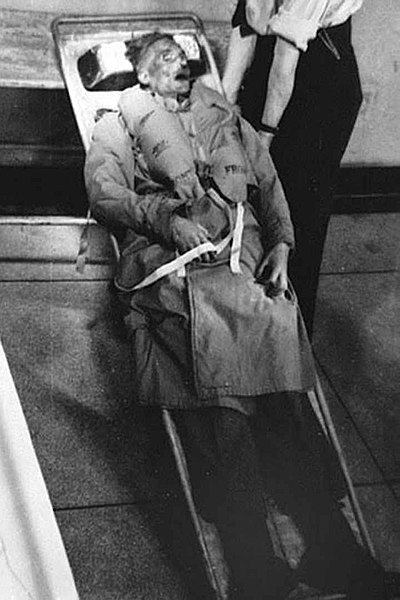
The corpse of Glyndwr Michael, dressed in a Royal Marine uniform with false documents and a fake ID, used in Operation Mincemeat, 1943.
Public domain image from The National Archives.
The story of the British deception, a fascinating story of Allied subterfuge, is now told in the film Operation Mincemeat. It is a remarkable and seemingly highly improbable story of a plan of Allied intelligence to deceive Hitler and misdirect German intelligence. Indeed, it is one of the best examples in history of military deception.
The concept of a plan starts with the Trout Memo, officially written in 1939 by Admiral John Godfrey, director of Naval Intelligence, but almost certainly written by his subordinate Lieutenant Commander Ian Fleming, not yet dreaming of 007, about the deception of an army in war time by fly fishing. Many ideas were suggested, including sending out tins of explosives disguised as food so that hungry sailors would pick them up. One idea, number 28 on the list, almost certainly the thought of Fleming who thought of elaborate deception options, was to use a dead body dressed as an airman dropped from a parachute that had failed and carrying false papers, and drop it where the Germans would find it and be deceived by it.
The deception was planned by a group, the Twenty Committee, XX, headed by Lieutenant Commander RNVR, Ewen Montagu, Cambridge, Harvard, a naval intelligence officer and prominent Jewish lawyer, who later became a judge, together with an RAF officer Squadron Leader Charles Cholmondeley. Montagu later wrote an account of the affair in a book, The Man who Never Was, 1953. The memory of the event is also simply commemorated in a mortuary in Hackney in East London where the body that was used in the plot is buried. In a rather unkind but truthful remark Montagu said of the man who was used, “The only worthwhile thing he ever did, he did after his death.”
The main deception in the plot was a personal letter purported to be from General Sir Archibald Nye to General Sir Harold Alexander, starting, “My dear Alex.” Nye’s letter contained details of sensitive topics, and of a new commander of the Guards brigade, and U.S. service medal awards. He also referred to Operation Husky, an imminent Allied invasion of Greece, that the Germans had been reinforcing and strengthening their defenses in Greece and Crete, and therefore the chief of the Imperial General Staff felt that the Allied troops planned for the assault were insufficient. Thus, it was agreed by the chiefs of staff that the 5th division should be reinforced by one brigade group for the assault on the beach south of Cape Araxos and that similar reinforcement should be made for the 56th division at Kalamata. The letter was a clever double bluff. Nye wrote that “we stand a very good chance of making the Germans think we will go for Sicily, it is an obvious objective and one about which they must be nervous.” To confuse Hitler, he therefore suggested the Allies would invade Sicily.
It is interesting but not surprising that a key figure in the deception appears to have been Ian Fleming, Mr. James Bond, who had written of methods to confuse the enemy, and was crucial to the Trout Memo.
The plot developed. After some difficulty a suitable body was found by a London coroner and kept on ice for few months. It was Glyndwr Michael, 34, homeless Welsh laborer, penniless, with mental health problems, who had died after ingesting rat poison in a London warehouse. He was transformed into Major William Martin, of the Royal Marines whose body contained love letters from a non-existent fiancé named Pam, a jewelry bill for an engagement ring, ticket stubs, religious medal, a copy of a letter marked “personal and most secret”, and above all the false Nye letter. The body had to look as if it had died in an air crash, but floated ashore and he had died at sea. Major Martin, his body wrapped in a life jacket, and with a black attaché case chained to his wrist, was found on April 30, 1943, by a Spanish fisherman off the coast of Huelva.
Even more unlikely than the plan itself was the impact the “secret” document had on Axis planning, summarized in the Wikipedia article:
On 14 May 1943 Grand Admiral Karl Dönitz met Hitler to discuss Dönitz’s recent visit to Italy, his meeting with the Italian leader Benito Mussolini and the progress of the war. The Admiral, referring to the Mincemeat documents as the “Anglo-Saxon order”, recorded
The Führer does not agree with … [Mussolini] that the most likely invasion point is Sicily. Furthermore, he believes that the discovered Anglo-Saxon order confirms the assumption that the planned attacks will be directed mainly against Sardinia and the Peloponnesus.
Hitler informed Mussolini that Greece, Sardinia and Corsica must be defended “at all costs”, and that German troops would be best placed to do the job. He ordered that the experienced 1st Panzer Division be transferred from France to Salonika, Greece. The order was intercepted by GC&CS on 21 May. By the end of June, German troop strength on Sardinia had been doubled to 10,000, with fighter aircraft also based there as support. German torpedo boats were moved from Sicily to the Greek islands in preparation. Seven German divisions transferred to Greece, raising the number present to eight, and ten were posted to the Balkans, raising the number present to 18.
On 9 July the Allies invaded Sicily in Operation Husky. German signals intercepted by GC&CS showed that even four hours after the invasion of Sicily began, twenty-one aircraft left Sicily to reinforce Sardinia. For a considerable time after the initial invasion, Hitler was still convinced that an attack on the Balkans was imminent, and in late July he sent General Erwin Rommel to Salonika to prepare the defence of the region. By the time the German high command realised the mistake, it was too late to make a difference.
April 10, 2022
Mussolini is Tired of War – WW2 – 189 – April 9th , 1943
World War Two
Published 9 Apr 2022Adolf Hitler meets with Benito Mussolini to hopefully restore his flagging morale and convince him that the Axis can hold out in North Africa, but the situation there grows more precarious and this week there the Allies advancing from the west and the east link up for the first time. The Axis are also holding out in the Caucasus, as new Soviet attacks to take Krymskaya begin.
(more…)
Comments Off on Mussolini is Tired of War – WW2 – 189 – April 9th , 1943
April 6, 2022
How To Build a Nazi Fortress – WW2 Special
World War Two
Published 5 Apr 2022Few things of the Second World War are more intimidating than the iconic German bunker. Made out of reinforced concrete with a thickness of up to 3.5 meters, these casemates and pillboxes were incredibly tough to destroy. Built to withstand shells and bombs, they provided shelter to troops and civilians alike. But there were also some even larger super-structures. From giant U-Boat shelters and fearsome Flak-Towers, to the ultimate Führerbunker, the Germans perfected the art of bunker building.
(more…)
Comments Off on How To Build a Nazi Fortress – WW2 Special
March 20, 2022
Kharkov Falls Once Again – WW2 – 186 – March 19, 1943
World War Two
Published 19 Mar 2022The British are attacking the Mareth Line in North Africa while the Americans hit the Axis flank, but the Allies are withdrawing in Burma. It’s the Germans who are pulling back in the USSR, though, and there is another attempt from within German command to assassinate Adolf Hitler.
(more…)
Comments Off on Kharkov Falls Once Again – WW2 – 186 – March 19, 1943
February 22, 2022
Triumph of the Will and the Cinematic Language of Propaganda
Folding Ideas
Published 10 Feb 2017Clickbait title: Nazis hate him! Secrets of propaganda exposed!
This took far longer to put together than I’d anticipated. It wasn’t even the work itself, it’s the emotional load. I eventually had to start chopping out huge planned segments, like looking at modern propaganda like that awful “Surfing in the DPRK” white guy rap video. I’m sorry about the downer ending, but there’s no way to spruce it up. To a certain degree we lost.
You should seriously read, and then re-read, Umberto Eco’s “Ur-Fascism”. It’s available online for free. It’s not that long. Here, I’ll even link it for you. http://www.nybooks.com/articles/1995/…
Books mentioned:
Urania’s Children
The Occult Roots of Nazism
The Origins of TotalitarianismWritten and performed by Dan Olson
Twitter: https://twitter.com/FoldableHuman
Comments Off on Triumph of the Will and the Cinematic Language of Propaganda
February 20, 2022
Can the Red Army Capture Hitler? – 182 – February 19, 1943
World War Two
Published 19 Feb 2022The Red Army liberates both Rostov and Kharkov this week, but their advancing spearheads are close to an even bigger prize, Adolf Hitler himself. It is the Axis, however, who are both advancing and consolidating in Tunisia, and gearing up for new offensive actions next week.
(more…)
Comments Off on Can the Red Army Capture Hitler? – 182 – February 19, 1943
February 19, 2022
When Goebbels Signed Germany’s Suicide Pact – WW2 Special
World War Two
Published 17 Feb 2022Outnumbered, outgunned, and outproduced by the Allies, the noose seems to be tightening slowly but surely around the Third Reich. For Joseph Goebbels, salvation lies in a radical transformation of the economy and society – Total War. But first, he must sell it to the German people.
(more…)
Comments Off on When Goebbels Signed Germany’s Suicide Pact – WW2 Special
February 16, 2022
Germany’s dual economy during WW2 (and why Himmler would have succeeded Hitler if the Nazis had won WW2)
At Founding Questions, Severian looks at the way the Nazi economy was actually two entities — the “wartime” economy and the effectively separate SS economy under the control of Heinrich Himmler:
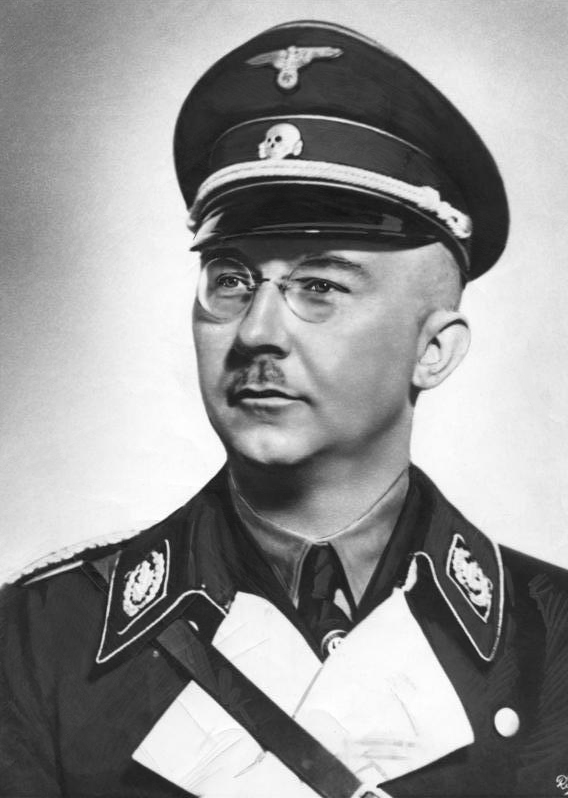
Reichsführer SS Heinrich Himmler, 1938.
German Federa Archive via Wikimedia Commons.
Here’s where the Nazis really blew it. “Nazism” should really be called “Hitlerism”, as it was a true cult of personality; there was no ideology without the specific individual man. That’s the tension at the heart of any collectivist ideology — somebody’s got to be The Boss, however temporarily — but Nazi Germany suffered it worse than most. Had the Nazis won the war, the bloodbath at the top would’ve been as spectacular per capita as the war itself. As thoroughgoing Social Darwinists, they only had one possible principle of succession …
Let’s provisionally call that the first consequence of an ideology in power: The personal is the political and vice versa. That seems trite, I realize, but I’m putting it here to emphasize its literalness – in an ideological state, building your own “affinity”, Bastard Feudalism-style, just IS politics. There’s no other possible political activity. And as much as the Nazis seemed to have screwed it up by going all in on the Fuhrerprinzip at the very top, their out-and-proud Organizational Darwinism (for lack of a better term) made them super-efficient at the lower levels.
Let’s bring Khrushchev back in. In many ways, he’s the Soviet Himmler. He was one of Stalin’s right hand men throughout the war, but somehow didn’t get tagged as a major player in the succession crisis until it was too late for all the other contenders for the purple to take effective countermeasures. In the same way, Hitler did announce a successor, sort of. In fact he did it twice: Before the war, it was Rudolf Hess; during the war, Hermann Goering. Neither of those guys had anything approaching the power Himmler had, but like Khrushchev, his personality was such that the other bigshots couldn’t help overlooking him. Just as the rest of the Politburo couldn’t wrap their heads around the idea of this uncouth quasi-Ukrainian peasant being a major threat, so the rest of the Nazi leaders couldn’t help seeing Himmler as this fussy little file clerk.
It’s a hell of a trick, and I’ll admit, I’m buffaloed. Even if Himmler (Khrushchev) was one hell of an actor, and the egos on the other top Nazis (Soviets) were gravity-defying, they still should’ve been able to see that this fussy little file clerk had some seriously hard boys working for him. Reinhard Heydrich was as ruthless a fuck as was ever born, and Himmler kept him in check. Ditto barbarians like Odilo Globocnik and Erich von dem Bach-Zelewski — they don’t come any nastier than those two, yet Himmler managed them easily. What other conclusion can you possibly draw about Himmler, other than that he was nastier than all of them put together? And yet, apparently, nobody did …
The only explanation for this that I can think of is the Nazis’ ideologization of governmental structures. As opposed to the Soviet experience, where the Party and the Bureaucracy were supposed to be, and often actually were, distinct. After some disastrous experiments with demoting technical experts to field hands, and vice versa, the Russian Communists learned that ideological correctness and “soviet power” does not, in fact, obviate the need for stuff like math. (See also: Mao’s backyard blast furnaces). So the Soviets made sure to separate what they called the “technical intelligentsia” from the Party. The head honcho at Gosplan, Gossnab, etc. would be a Party hack from way back, of course, but the actual brainworkers wouldn’t be. I don’t know just how many of them had Party membership cards, or if any of them did, but nobody I know of rose through the Party’s ranks via Gosplan.
Once a Gosplanner, always a Gosplanner. The technical intelligentsia got all kinds of perks in the Soviet system, but one thing they did not do was get perks inside the Party. You can be a technical expert, or you can be an up-and-coming Party man, but you can’t be both.
The Nazis did the exact opposite of that. The way the Third Reich actually functioned is still opaque in a lot of ways (especially to non-specialists), and of course the pressures of wartime forced a lot of ad hoc measures, but it seems like the SS was supposed to be a sort of All-Purpose Expert Corps. Not only did they have their own army and intelligence service, but they had their own economy — the brief history of the Third Reich makes a lot more sense when you realize that half or more of the official Reich economy was hamstrung by the informal but very real SS economy, operating largely (but far from exclusively) through the labor camps.
Indeed, the SS had their own administration. As incredible as it seems, the Nazis had no grand plan for what to do once they’d conquered Europe. Himmler did, at least as far as the East was concerned, and he tried his damnedest to put it into action in Poland (which is why the General Government was so legendarily brutal). Hitler apparently thought in terms of Germany’s lost late 19th century colonies, when he bothered to think about it at all … which wasn’t often. In his typical Fuhrer-riffic style, he just ignored the problem, trusting to Organizational Darwinism to sort it out …
… which is where the All-Purpose Experts of the SS stepped in. The General Government, for instance, was headed by a civilian lawyer, Hans Frank, but the day to day governance largely fell to the SS, because that’s who stepped up. Poland was an occupied zone, with vital war industries, but it was far behind the front for most of the war; the army couldn’t waste vital manpower garrisoning it. Thus the SSPF (the SS and Police Leader) stepped in, drawing manpower as needed from a wide variety of sources — the camp guards, the Wehrmacht (when garrison troops were available, and when they could wrangle them from the various army commanders), the civilian police, the “General SS”, and so on.
The details aren’t nearly as important as the big picture, which is: Unlike the technical intelligentsia in the Soviet Union, members of the SS could climb to the highest ranks of the Party. Indeed they were expected to: the SS was rapidly becoming a Party-within-the-Party at the outbreak of the war, not least because Himmler awarded a “ceremonial” SS rank to anyone who mattered politically in the various departments. The savvier guys refused the “honor,” of course, because they didn’t want to be subordinate to Himmler, even ceremonially, but many didn’t. Which meant that had the Nazis won the war, not only would Himmler have been the next Fuhrer, but the SS would’ve closed ranks, essentially taking over The Party — they’d be the Inner Party, as opposed to the “mere Nazis” of the Outer Party.
Comments Off on Germany’s dual economy during WW2 (and why Himmler would have succeeded Hitler if the Nazis had won WW2)
January 23, 2022
Hitler’s Interference is losing the war – WW2 – 178 – January 22, 1943
World War Two
Published 22 Jan 2022This is a rough week for the Germans — their trapped garrison at Velikie Luki is liquidated, and their trapped army at Stalingrad is … well, it isn’t going well for them. In fact, it isn’t going well for the Axis anywhere this week, being pushed back or retreating in New Guinea, the Caucasus, North Africa, and on Guadalcanal. Berlin is even bombed this week as well.
(more…)
Comments Off on Hitler’s Interference is losing the war – WW2 – 178 – January 22, 1943
QotD: The British governments of the 1930s
It follows that British democracy is less of a fraud than it sometimes appears. A foreign observer sees only the huge inequality of wealth, the unfair electoral system, the governing-class control over the Press, the radio and education, and concludes that democracy is simply a polite name for dictatorship. But this ignores the considerable agreement that does unfortunately exist between the leaders and the led. However much one may hate to admit it, it is almost certain that between 1931 and 1940 the National Government represented the will of the mass of the people. It tolerated slums, unemployment and a cowardly foreign policy. Yes, but so did public opinion. It was a stagnant period, and its natural leaders were mediocrities.
In spite of the campaigns of a few thousand left-wingers, it is fairly certain that the bulk of the English people were behind Chamberlain’s foreign policy. More, it is fairly certain that the same struggle was going on in Chamberlain’s mind as in the minds of ordinary people. His opponents professed to see in him a dark and wily schemer, plotting to sell England to Hitler, but it is far likelier that he was merely a stupid old man doing his best according to his very dim lights. It is difficult otherwise to explain the contradictions of his policy, his failure to grasp any of the courses that were open to him. Like the mass of the people, he did not want to pay the price either of peace or of war. And public opinion was behind him all the while, in policies that were completely incompatible with one another. It was behind him when he went to Munich, when he tried to come to an understanding with Russia, when he gave the guarantee to Poland, when he honoured it, and when he prosecuted the war half-heartedly. Only when the results of his policy became apparent did it turn against him; which is to say that it turned against its own lethargy of the past seven years. Thereupon the people picked a leader nearer to their mood, Churchill, who was at any rate able to grasp that wars are not won without fighting. Later, perhaps, they will pick another leader who can grasp that only Socialist nations can fight effectively.
George Orwell, “The Lion And The Unicorn: Socialism and the English Genius”, 1941-02-19.
Comments Off on QotD: The British governments of the 1930s


