
One of the peculiar phenomena of our time is the renegade Liberal. Over and above the familiar Marxist claim that “bourgeois liberty” is an illusion, there is now a widespread tendency to argue that one can only defend democracy by totalitarian methods. If one loves democracy, the argument runs, one must crush its enemies by no matter what means. And who are its enemies? It always appears that they are not only those who attack it openly and consciously, but those who “objectively” endanger it by spreading mistaken doctrines. In other words, defending democracy involves destroying all independence of thought. This argument was used, for instance, to justify the Russian purges. The most ardent Russophile hardly believed that all of the victims were guilty of all the things they were accused of: but by holding heretical opinions they “objectively” harmed the régime, and therefore it was quite right not only to massacre them but to discredit them by false accusations. The same argument was used to justify the quite conscious lying that went on in the leftwing press about the Trotskyists and other Republican minorities in the Spanish civil war. And it was used again as a reason for yelping against habeas corpus when Mosley was released in 1943.
These people don’t see that if you encourage totalitarian methods, the time may come when they will be used against you instead of for you. Make a habit of imprisoning Fascists without trial, and perhaps the process won’t stop at Fascists. Soon after the suppressed Daily Worker had been reinstated, I was lecturing to a workingmen’s college in South London. The audience were working-class and lower-middle class intellectuals — the same sort of audience that one used to meet at Left Book Club branches. The lecture had touched on the freedom of the press, and at the end, to my astonishment, several questioners stood up and asked me: Did I not think that the lifting of the ban on the Daily Worker was a great mistake? When asked why, they said that it was a paper of doubtful loyalty and ought not to be tolerated in war time. I found myself defending the Daily Worker, which has gone out of its way to libel me more than once. But where had these people learned this essentially totalitarian outlook? Pretty certainly they had learned it from the Communists themselves! Tolerance and decency are deeply rooted in England, but they are not indestructible, and they have to be kept alive partly by conscious effort. The result of preaching totalitarian doctrines is to weaken the instinct by means of which free peoples know what is or is not dangerous. The case of Mosley illustrates this. In 1940 it was perfectly right to intern Mosley, whether or not he had committed any technical crime. We were fighting for our lives and could not allow a possible quisling to go free. To keep him shut up, without trial, in 1943 was an outrage. The general failure to see this was a bad symptom, though it is true that the agitation against Mosley’s release was partly factitious and partly a rationalisation of other discontents. But how much of the present slide towards Fascist ways of thought is traceable to the “anti-Fascism” of the past ten years and the unscrupulousness it has entailed?
George Orwell, Unpublished Preface to Animal Farm, 1945.
June 10, 2021
QotD: “Defending” democracy using totalitarian methods
June 6, 2021
George Orwell’s “Politics And The English Language” remains the best guide to writing non-fiction
Despite pulling most of his writing behind a paywall, I still get the occasional “Weekly Dish” post excerpt from Andrew Sullivan, including his homage to the still-relevant Orwell essay “Politics and the English Language”:
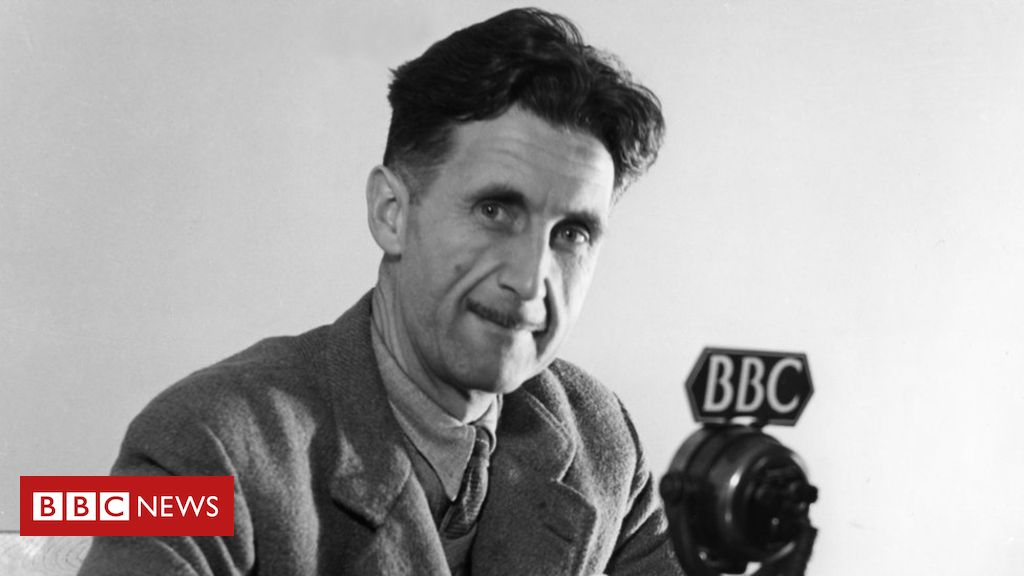
From time to time, I make sure to re-read George Orwell’s classic essay, “Politics And The English Language“. It remains the best guide to writing non-fiction, and it usually prompts a wave of self-loathing even more piercing than my habitual kind. What it shows so brilliantly is how language itself is central to politics, that clarity is as hard as it is vital, and that blather is as lazy as it is dangerous. It’s dangerous because the relationship between our words and our politics goes both ways: “[The English language] becomes ugly and inaccurate because our thoughts are foolish, but the slovenliness of our language makes it easier for us to have foolish thoughts”. We create language and language creates us. If the language is corrupted, so are we.
Near the end of the essay, Orwell lists a few rules to keep writing clear, accessible and meaningful:
i. Never use a metaphor, simile or other figure of speech which you are used to seeing in print.
ii. Never use a long word where a short one will do.
iii. If it is possible to cut a word out, always cut it out.
iv. Never use the passive where you can use the active.
v. Never use a foreign phrase, a scientific word or a jargon word if you can think of an everyday English equivalent.
vi. Break any of these rules sooner than say anything outright barbarous.
Originality, simplicity, brevity, active verbs, everyday language, decency: as simple as it is very, very hard. It’s a relief in a way to recall that Orwell thought things were pretty damn shitty in his day as well, but the more you read broadly across most elite media platforms these days, the more similar it all sounds. To reverse Orwell’s virtues: so much of it is repetition, complexity, length, passive verbs, endless jargon, barbarism.
I was just reading about the panic that occurred in the American Medical Association, when their journal’s deputy editor argued on a podcast that socio-economic factors were more significant in poor outcomes for non-whites than “structural racism”. As you might imagine, any kind of questioning of this orthodoxy required the defenestration of the deputy editor and the resignation of the editor-in-chief. The episode was withdrawn from public viewing, and the top editor replaced it with a Maoist apology/confession before he accepted his own fate.
But I was most struck by the statement put out in response by a group called “The Institute for Antiracism in Medicine”. Here it is:
The podcast and associated promotional message are extremely problematic for minoritized members of our medical community. Racism was created with intention and must therefore be undone with intention. Structural racism has deeply permeated the field of medicine and must be actively dissolved through proper antiracist education and purposeful equitable policy creation. The delivery of messages suggesting that racism is non-existent and therefore non-problematic within the medical field is harmful to both our underrepresented minoritized physicians and the marginalized communities served in this country.
Consider the language for a moment. I don’t want to single out this group — they are merely representative of countless others, all engaged in the recitation of certain doctrines, and I just want an example. But I do want to say that this paragraph is effectively dead, drained of almost any meaning, nailed to the perch of pious pabulum. It is prose, in Orwell’s words, that “consists less and less of words chosen for the sake of their meaning, and more and more of phrases tacked together like the sections of a prefabricated hen-house.”
It is chock-full of long, compounded nouns and adjectives, riddled with the passive voice, lurching and leaning, like a passenger walking the aisle on a moving train, on pre-packaged phrases to keep itself going.
Notice the unnecessary longevity: a tweet becomes an “associated promotional message”. Notice the deadness of the neologisms: “minoritized”, “marginalized”, “non-problematic”. As Orwell noted: “the normal way of coining a new word is to use a Latin or Greek root with the appropriate affix and, where necessary, the -ize formation. It is often easier to make up words of this kind (deregionalize, impermissible, extramarital, non-fragmentatory and so forth) than to think up the English words that will cover one’s meaning.” Go back and see if you can put the words “minoritized” or “non-problematic” into everyday English.
Part of the goal of this is political, of course. The more you repeat words like “proper antiracist education” or “systemic racism” or “racial inequity” or “lived experience” or “heteronormativity”, the more they become part of the landscape of words, designed to dull one’s curiosity about what on earth any of them can possible mean. A mass of ideological abstractions, in Orwell’s words, “falls upon the facts like soft snow, blurring the outlines and covering up all the details.”
Then this: “Racism was created with intention.” Abstract noun, passive voice, vague meaning. Who “created” it? What was the intention exactly? Hasn’t racist tribalism been a feature of human society for tens of thousands of years? They never say. Or this phrase: “purposeful equitable policy creation”. Again: what are they talking about? It is as vague as “doing the work” — and as deliberate as the use of a highly contested term like “structural racism” to define objective reality. These are phrases not designed to say anything real. They are phrases designed to send a message of orthodoxy, and, as Orwell also noted, “orthodoxy, of whatever colour, seems to demand a lifeless, imitative style”. Try reading Slate or Vox or the Huffington Post: the tedium you feel is the tedium of a language rendered lifeless by ideology.
June 5, 2021
QotD: British wartime censorship
At this moment what is demanded by the prevailing orthodoxy is an uncritical admiration of Soviet Russia. Everyone knows this, nearly everyone acts on it. Any serious criticism of the Soviet régime, any disclosure of facts which the Soviet government would prefer to keep hidden, is next door to unprintable. And this nation-wide conspiracy to flatter our ally takes place, curiously enough, against a background of genuine intellectual tolerance. For though you are not allowed to criticise the Soviet government, at least you are reasonably free to criticise our own. Hardly anyone will print an attack on Stalin, but it is quite safe to attack Churchill, at any rate in books and periodicals. And throughout five years of war, during two or three of which we were fighting for national survival, countless books, pamphlets and articles advocating a compromise peace have been published without interference. More, they have been published without exciting much disapproval. So long as the prestige of the USSR is not involved, the principle of free speech has been reasonably well upheld. There are other forbidden topics, and I shall mention some of them presently, but the prevailing attitude towards the USSR is much the most serious symptom. It is, as it were, spontaneous, and is not due to the action of any pressure group.
George Orwell, Unpublished Preface to Animal Farm, 1945.
June 1, 2021
What Orwell wrote about in The Road to Wigan Pier applies just as well to the modern Labour Party
David Starkey points out that while the best contemporary analysis of the collapse of the Labour vote may come from Rod Liddle, he is in many ways just echoing the words of George Orwell in The Road To Wigan Pier:
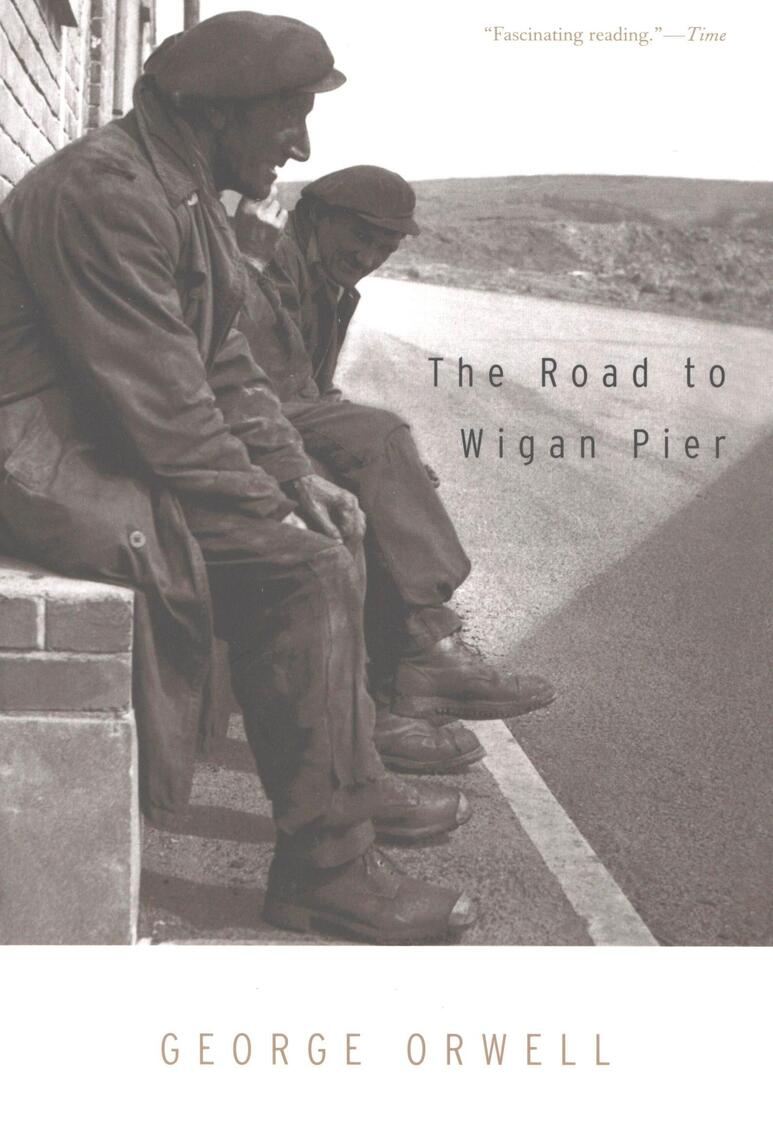
“The first thing that must strike any outside observer,” Orwell’s analysis begins, “is that Socialism in its developed form is a theory confined entirely to the middle classes.” “The typical Socialist is not”, he explains, “a ferocious-looking working man with greasy overalls and a raucous voice. He is either a youthful snob-Bolshevik … or, still more typically, a prim little man with a white-collar job … [and] a social position which he has no intention of forfeiting.”
He — and even more it must be said she — is also likely to be odd. Here Orwell is unsparing. And spot on. “There is,” Orwell declares, “the horrible — the really disquieting — prevalence of cranks wherever Socialists are gathered together.” “One sometimes get the impression,” he continues, “that the mere words ‘Socialism’ and ‘Communism’ draw towards them with magnetic force every fruit-juice drinker, nudist, sandal-wearer, sex-maniac, Quaker, ‘Nature Cure’ quack, pacifist, and feminist in England.”
Oh and vegetarians. And beards. And “high-minded women”. And homosexuals, like the two “dreadful-looking old men”, clad “in pistachio-coloured shirts and khaki shorts into which their huge bottoms were crammed so tightly that you could study every dimple”, whom Orwell encountered on a bus in Letchworth. And so — effortlessly out-Liddling Liddle — on.
Above all, Orwell identified the same disdain for the working class. “Are these mingy little beasts,” he reflected after attending one Socialist conventicle, “the champions of the working class?”
“For every person there”, he recalled, “bore the worst stigmata of snobbish middle-class superiority. If a real working man, a miner dirty from the pit, for instance, had suddenly walked into their midst, they would have been embarrassed, angry and disgusted; some, I should think, would have fled holding their noses”.
“The truth is,” Orwell concludes, “that to many people calling themselves Socialists, revolution does not mean a movement of the masses with which they hope to associate themselves; it means a set of reforms which ‘we’, the clever ones, are going to impose upon ‘them’, the Lower Orders.”
But Orwell was writing in 1937. Not 2021. So how on earth did the Labour party, with even then such a freakish, repellent cadre at its core, survive and thrive as the great mass movement that, for a time, it became and whose passing Liddle laments?
May 17, 2021
Christopher Hitchens – On EconTalk discussing George Orwell [2009]
CaNANDian
Published 25 Sep 2012Christopher Hitchens talked with EconTalk host Russ Roberts about George Orwell. Drawing on his book Why Orwell Matters, Hitchens talked about Orwell’s opposition to imperialism, fascism, and Stalinism, his moral courage, and his devotion to language. Along the way, Hitchens made the case for why Orwell matters.
Download audio: http://www.econtalk.org/archives/2009…

May 16, 2021
QotD: Emmanuel Goldstein’s Theory and Practice of Oligarchal Collectivism as applied in Afghanistan
Mark Steyn, “Essential Structure and Irreconcilable Aims”, Steyn Online, 2021-01-31.
May 4, 2021
QotD: DOUBLETHINK
The alteration of the past is necessary for two reasons, one of which is subsidiary and, so to speak, precautionary. The subsidiary reason is that the Party member, like the proletarian, tolerates present-day conditions partly because he has no standards of comparison … This day-to-day falsification of the past, carried out by the Ministry of Truth, is as necessary to the stability of the regime as the work of repression and espionage carried out by the Ministry of Love.
The mutability of the past is the central tenet of Ingsoc. Past events, it is argued, have no objective existence, but survive only in written records and in human memories. The past is whatever the records and the memories agree upon. And since the Party is in full control of all records and in equally full control of the minds of its members, it follows that the past is whatever the Party chooses to make it. It also follows that though the past is alterable, it never has been altered in any specific instance. For when it has been recreated in whatever shape is needed at the moment, then this new version IS the past, and no different past can ever have existed … It is also necessary to REMEMBER that events happened in the desired manner. And if it is necessary to rearrange one’s memories or to tamper with written records, then it is necessary to FORGET that one has done so. The trick of doing this can be learned like any other mental technique. It is learned by the majority of Party members, and certainly by all who are intelligent as well as orthodox. In Oldspeak it is called, quite frankly, “reality control”. In Newspeak it is called DOUBLETHINK.
George Orwell, Nineteen Eighty-Four, 1949.
April 28, 2021
QotD: George Orwell’s other novels
This would be a harsh and rather glib judgement, but many writers have faced worse. The book that suggested Wigan Pier, JB Priestley’s English Journey, was once hugely influential, even being credited with winning Labour the 1945 election, and is now regarded as a quaint piece of social commentary. That Priestley conducted his travels from a chauffeur-driven car, while Orwell willingly subjected himself to filthy evenings in slum bed and breakfasts and hostels, is a telling distinction between the two writers and their approaches: it is also undeniably true that Priestley died at 89, a grand old man of letters, and that Orwell’s premature death was one brought on by the tuberculosis that had affected him for years before his death. Yet Priestley is now remembered mainly for An Inspector Calls, and Orwell remains an iconic figure, beloved by millions. His canonisation was made explicit by a statue of him by Martin Jennings being erected outside Broadcasting House in 2017, complete with the phrase “If liberty means anything at all, it means the right to tell people what they do not want to hear”.
Yet it is doubtful that many of his admirers have read his earlier novels, namely Burmese Days, A Clergyman’s Daughter, Keep the Aspidistra Flying and Coming Up For Air. All four were brought out by the left-wing publisher Victor Gollancz, between 1934 and 1939, and each of them is autobiographical in nature. Burmese Days draws on Orwell’s faintly unlikely time in Burma in the Twenties with the Indian Imperial Police, and A Clergyman’s Daughter uses both his life with his family in Southwold (which appears faintly disguised in the novel as “Knype Hill”) and his days tramping for its narrative. Keep the Aspidistra Flying finds Orwell mining his experiences in the lower reaches of the London literary scene, including his time working in a bookshop in Hampstead, and Coming Up For Air, written while Orwell was recuperating in Marrakesh, is suffused with an intense nostalgia for an England that may never have really existed, but is of a piece with the fascination, and repulsion, for the tenets of “Englishness” that Orwell wrote about over and over again in his essays and reportage.
Alexander Larman, “The lesser-known Orwell: are his novels deserving of reappraisal?”, The Critic, 2021-01-07.
April 14, 2021
QotD: Emmanuel Goldstein, the Enemy of the People
Goldstein was delivering his usual venomous attack upon the doctrines of the Party — an attack so exaggerated and perverse that a child should have been able to see through it, and yet just plausible enough to fill one with an alarmed feeling that other people, less level-headed than oneself, might be taken in by it …
The sight or even the thought of Goldstein produced fear and anger automatically … But what was strange was that although Goldstein was hated and despised by everybody, although every day and a thousand times a day, on platforms, on the telescreen, in newspapers, in books, his theories were refuted, smashed, ridiculed, held up to the general gaze for the pitiful rubbish that they were — in spite of all this, his influence never seemed to grow less. Always there were fresh dupes waiting to be seduced by him. A day never passed when spies and saboteurs acting under his directions were not unmasked by the Thought Police.
George Orwell, Nineteen Eighty-Four, 1949.
February 10, 2021
Victor Davis Hanson on Animal Farm, America’s nightmare 2021 version
Victor Davis Hanson outlines the original George Orwell novel and then contrasts today’s situation with what progressives demanded back in the 1960s and 70s:
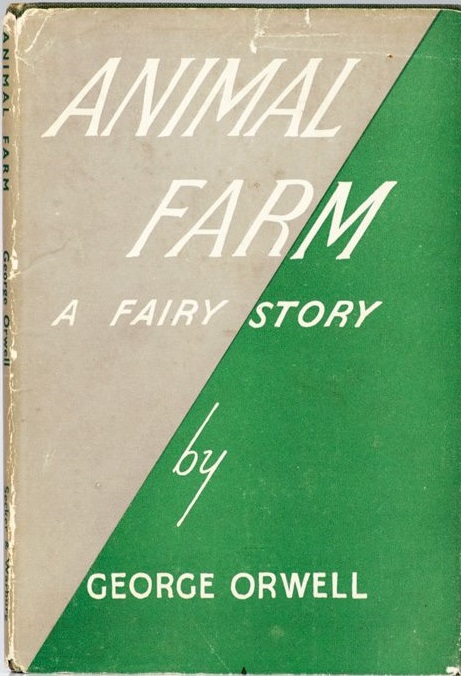
Yes, the downtrodden pigs, the exploited horses, and the victimized sheep finally did expel Farmer Jones from America’s Animal Farm.
But in his place, as Orwell predicted, revolutionary pigs began walking on two feet and absorbed all the levers of American cultural influence and power: the media, the bureaucracies, Wall Street, Silicon Valley, publishing, the academy, K-12 education, professional sports, and entertainment. And to them all, the revolutionaries added their past coarseness and 1960s-era by-any-means-necessary absolutism.
We are now finally witnessing the logical fruition of their radical utopia: Censorship, electronic surveillance, internal spying, monopolies, cartels, conspiracy theories, weaponization of the intelligence agencies, pouring billions of dollars into campaigns, changing voting laws by fiat, a woke revolutionary military, book banning, bleeding the First Amendment, canceling careers, blacklisting, separate-but-equal racial segregation and separatism.
Conspiracies? Now they brag of them in Time. Read their hubristic confessionals in “The Secret History of the Shadow Campaign That Saved the 2020 Election.” Once upon a Time, radicals used to talk of a “secret history” in terms of the Pentagon Papers, or a “shadow campaign” in detailing Hollywood blacklisting. They are exactly what they once despised, with one key qualifier: Sixties crudity and venom are central to their metamorphosis.
Our left-wing American revolutionary cycle from the barricades to the boardroom was pretty quick — in the manner that the ideology of the Battleship Potemkin soon led to Stalin’s show trials, or Mao’s “long march” logically resulted in the Cultural Revolution. The credo, again, is that the noble ends of forced “equity” require any means necessary to achieve them.
The Left censors books in our schools, whether To Kill a Mockingbird or Tom Sawyer. It is the Left who organizes efforts to shout down campus speakers or even allows them to be roughed up.
The Left demands not free-speech areas anymore, but no-speech “safe spaces” and “theme houses” — euphemisms for racially segregated, “separate-but-equal” zones. “Microaggressions” are tantamount to thought crimes. The mere way we look, smile, or blink can indict us as counterrevolutionaries. Stalin’s Trotskyization of all incorrect names, statues, and commemoratives is the Left’s ideal, as they seek to relabel Old America in one fell swoop. No one is spared from the new racists, not Honest Abe, not Tom Jefferson, not you, not me.
For “teach-ins,” we now have indoctrination sessions. But the handlers are no longer long-haired 1960’s dreamy, sloppy, and incoherent mentors. They are disciplined, no-nonsense brain-washers.
The Left’s Russia is our new old bogeyman. Putin is the new “We will bury you” Khrushchev.
January 19, 2021
QotD: British foods
First of all, British apples, one or other variety of which is obtainable for about seven months of the year. Nearly all British fruits and vegetables have a good natural flavour, but the apples are outstanding. The best are those that ripen late, from September onwards, and one should not be put off by the feat that most British varieties are dull in colour and irregular in size. The best are the Cox’s Orange pippin, the Blenheim Orange, the Charles Hoss, the James Grieve and the Russet. These are all eaten raw. The Bramley Seedling is a superlative cooking apple.
Secondly, salt fish, especially kippers and Scottish haddocks. Thirdly, oysters – very large and good, though artificially expensive. Fourthly, biscuits, both sweetened and unsweetened, especially those that come from the four or five great firms whose names are a trademark. Fifthly, jams and jellies of all kinds. These are usually best when home-made, with the exception of strawberry jam, which is nearly always better as a manufactured product. Some varieties not often seen outside Britain are blackcurrant jelly, bramble jelly (made of blackberries) marrow jam with ginger, and damson cheese, an especially stiff kind of jelly which can be cut in slabs. In addition, no one who has not sampled Devonshire cream, Stilton cheese, crumpets, potato cakes, saffron buns, Dublin prawns, apple dumplings, pickled walnuts, steak-and-kidney pudding and, of course, roast sirloin of beef with Yorkshire pudding, roast potatoes and horseradish sauce, can be said to have given British cookery a fair trial.
The only alcoholic drinks which are native to Britain, and are all widely drunk, are beer, cider and whiskey. The cider is fairly good (that brewed in Herefordshire is the best), the beer very good. It is somewhat more alcoholic and very much bitterer then the beers of most other countries, all save the mildest and cheapest kinds being strongly flavoured with hop. Its flavour varies greatly from one part of the country to another. The whiskey exported from Britain is mostly Scottish, but the Irish kind, which is sweeter in taste and contains more rye, is also popular in Britain itself. One excellent liquor, sloe gin, is widely made in Britain, though not often exported. It is always better when home-made. It is of a beautiful purplish-red colour, and rather resembles cherry brandy, but is of a more delicate flavour.
Finally, a word in praise of British bread. In general it is close-grained, rather sweet-flavoured bread, which remains good for three or four days after being baked. It is seen at its best in the kind of double loaf. Rye bread and barley bread are hardly eaten in Britain, but the wholemeal wheat bread is extremely good. The great virtue of British bread is that it is baked in small batches, in a rather primitive way, and therefore is not at all standardised. The bread from one baker may be quite different from another down the street, and one can range about from shop to shop until one is suited. It is a good general rule that small, old-fashioned shops make the best-flavoured bread. Throughout a great deal of the North of England the women prefer to bake their bread for themselves.
George Orwell, “British Cookery”, 1946. (Originally commissioned by the British Council, but refused by them and later published in abbreviated form.)
December 26, 2020
QotD: British meals – fish, fowl, and vegetables
Fish in Britain is seldom well cooked. The sea all round Britain yields a variety of excellent fishes, but as a rule they are unimaginatively boiled or fried, and the art of seasoning them in the cooking is not understood. The fish fried in oil to which the British working classes are especially addicted is definitely nasty, and has been an enemy of home cookery, since it can be bought everywhere in the big towns, ready cooked and at low prices. Except for trout, salmon and eels, British people will not eat fresh-water fish. As for vegetables, it must be admitted that, potatoes apart, they seldom get the treatment they deserve. Thanks to the rain-soaked soil, British vegetables are nearly all of excellent flavour, but they are commonly spoiled in the cooking. Cabbage is simply boiled – a method which renders it almost uneatable – while cauliflowers, leeks and marrows are usually smothered in a tasteless white sauce which is probably the “one sauce” scornfully referred to by Voltaire. The British are not great eaters of salads, though they have grown somewhat fonder of raw vegetables during the war years, thanks to the educational campaigns of the Ministry of Food. Except for salads, vegetables are always eaten with the meat, not separately.
George Orwell, “British Cookery”, 1946. (Originally commissioned by the British Council, but refused by them and later published in abbreviated form.)
November 11, 2020
QotD: Appeasement and shifting allegiances between the wars
George Orwell, “Who are the War Criminals?”, Tribune, 1943-10-22.
September 29, 2020
Modern Classics Summarized: 1984
Overly Sarcastic Productions
Published 24 Feb 2017It’s the mother of all dystopias! Long before YA dystopia rose to power, before the age of Young Attractive Heroes who Rebel Against The State and Also Find Love, there was just Winston Smith — a middle-aged man in poor health who Rebelled Against The State and Also Found Love. It just ended much less prettily for him.
1984 codified most of the modern dystopia tropes — absolute control of the media, black-bagging people who spoke out, and a lot of popular terms like “doublethink”, “big brother”, and “thought police”. Unfortunately, a lot of those terms got stripped of context and thrown around for the sake of Extra Edge, and as a result they get used a little haphazardly. And there’s nothing Red hates more than misused terminology, so here’s the video outlining the ORIGINAL meaning of 1984!
PATREON: www.patreon.com/user?u=4664797
MERCH LINKS:
Shirts – https://overlysarcasticproducts.threa…
All the other stuff – http://www.cafepress.com/OverlySarcas…Find us on Twitter @OSPYouTube!

August 17, 2020
QotD: Orwell and faith
Charles Curran, “Orwell: The man behind 1984 — and all that”, Daily Mirror, 1954-12-14.


