
… every time I buy “organic”, I feel like I’m sending a reinforcement to several different forms of vicious stupidity, beginning with the term “organic” itself. Duh! Actually, all food is “organic”; the term just means “chemistry based on carbon chains”.
Take “no GMOs” for starters. That’s nonsense; it’s barely even possible. Humans have been genetically modifying since the invention of stockbreeding and agriculture; it’s what we do, and hatred of the accelerated version done in a genomics lab is pure Luddism. It’s vicious nonsense, too; poor third-worlders have already starved because their governments refused food aid that might contain GMOs. And without GMOs it’s more than possible that the new wave of wheat rust, once it really gets going, might condemn billions to death.
Vegan? I’ve long since had it up to here with the tissue of ignorance and sanctimony that is evangelical veganism. Comparing our dentition and digestive tracts with those of cows, chimps, gorillas, and bears tells the story: humans are designed to be unspecialized omnivores, and the whole notion that vegetarianism is “natural” is so much piffle. It’s not even possible except at the near end of 4000 years of GMOing staple crops for higher calorie density, and even now you can’t be a vegan in a really cold climate (like, say, Tibet) because it’ll kill you. In warmer ones, you better be taking carnitine and half a dozen vitamins or you’re going to have micronutrient issues sneak up on you over a period of years.
OK, I give on gluten-free. Some people do have celiac disease; that’s a real need. But “no trans fat”? Pure faddery, or the next thing to it. The evidence indicting trans fats is extremely slim and surrounded by a cloud of food-nannyist hype. I hate helping to keep that sort of balloon inflated with my dollars.
Who could be against “fair trade”? Well, me … because the “fair trade” crowd pressures individual growers to join collectives with “managed” pricing. If you’re betting that this means lazy but politically adept growers with poor resource management and productivity prosper at the expense of more efficient and harder-working ones, you’ve broken the code.
Finally, “pesticide-free”. Do I like toxic chemicals on my food? No … but I also don’t fool myself about what happens when you don’t use them. This ties straight back to the general cluster of issues around factory farming. Without the productivity advantages of pesticides, synthetic fertilizer, and other non-“organic” methods, farm productivity would plummet. Relatively wealthy people like me would cope with reduced availability by paying higher prices, but huge numbers of the world’s poor would starve.
I buy “organic” food because it tastes better and I can, but I feel guilty about reinforcing all the kinds of delusion and superstition and viciousness that are tied up in that label. We simply cannot feed a world population of 6.6 billion without pesticides and factory farming and GMOs and preservatives in most bread; now, and probably forever, “organic” food will remain a luxury good.
Try telling its political partisans that, though. Hyped on their belief in their own virtue, and blissfully ignorant about scale problems, they have already engineered policies that have cost thousands of lives during spot famines. The potential death toll from (especially) anti-GMO policies is three orders of magnitude higher.
And my problem reduces to this: how can I buy the kind of food I want without supporting dangerous delusions?
Eric S. Raymond, “Organic guilt”, Armed and Dangerous, 2010-08-23.
January 1, 2021
QotD: Buying “organic” food
December 30, 2020
QotD: The sting in the tail of genetic research
Eric S. Raymond, “A Specter is Haunting Genetics”, Armed and Dangerous, 2010-06-19.
December 22, 2020
QotD: The foundational weirdness of Judeo/Christian/Islamic religions
The shortest summary is “No!” The less short answer is: “No, because religious moral codes are epiphenomenal.” And it is on point to add that the question reveals serious ignorance of the actual traits of most religions over most of history.
I’ll address the historical point first. The commenter’s question was framed from within the assumptions of one particular family of religions: the Judeo/Christian/Islamic tradition, which are more succinctly describable as the bastard offspring of Zoroastrian dualism. In this family, “religion” bundles cosmology, theology, and morality into a single total system designed primarily to enforce norms by programming the believer with an internalized guilt machine.
Because the dominant religions of the modern West are all derived from this group, it is difficult for Westerners to understand how bizarre and exceptional these religions are in a broader context. Most religions are not total systems. Most religions do not tie morality to cosmology. In fact, most religions have very little to say about morality at all!
Consider, for example, an Altaic shaman. It’s not his job to pronounce on who should sleep with who, or to tell people that theft is wrong. It’s not even his job to tell people that they must worship Tengri or Kara-han; dealing with the gods is his specialty, thank you. His job combines aspects of psychologist and medic with a bit of divination. The closest analog of “morality”, in his culture, is a set of inherited customs and taboos which is reinforced by explanatory myths but not generated by them and not really dependent on them. The closest equivalent of religious structures about right and wrong is an elaborate set of rules about ritual purity and impurity. In the jargon of the field, his religion is an orthopraxy rather than an orthodoxy.
Over most human cultures in most human history, “religion” has been much more like Altaic shamanism than like Christianity, Judaism, or Islam. Er, so why didn’t these cultures “collapse in a heap of nihilism”? The same question actually applies to modern religions outside the post-Zoroastrian family. Buddhism and Hinduism, for example, are almost completely unconcerned with “morality”. Hinduism is organized around ritual purity and impurity; Buddhism’s quest for merit is about liberation of the self from attachments, not about duties one owes to God or others.
Eric S. Raymond, “If God is dead, is anything permissible?”, Armed and Dangerous, 2010-02-10.
December 19, 2020
QotD: Ego and the A-listers
No. It’s more that ego games have a diminishing return. The farther you are up the ability and achievement bell curve, the less psychological gain you get from asserting or demonstrating your superiority over the merely average, and the more prone you are to welcome discovering new peers because there are so damn few of them that it gets lonely. There comes a point past which winning more ego contests becomes so pointless that even the most ambitious, suspicious, external-validation-fixated strivers tend to notice that it’s no fun any more and stop.
[…]
I think there are a couple of different reasons people tend to falsely attribute pathological, oversensitive egos to A-listers. Each reason is in its own way worth taking a look at.
The first and most obvious reason is projection. “Wow, if I were as talented as Terry Pratchett, I know I’d have a huge ego about it, so I guess he must.” Heh. Trust me on this; he doesn’t. This kind of thinking reveals a a lot about somebody’s ego and insecurity, alright, but not Terry’s.
There’s a flip side to projection that I think of as the “Asimov game”. I met Isaac Asimov just a few months before he died. Isaac had long been notorious for broadly egotistical behavior and a kind of cheerful bombast that got up a lot of peoples’ noses. But if you ever met him, and you were at all perceptive, you might see that it was all a sort of joke. Isaac was laughing inside at everyone who took his “egotism” seriously – and, at the same time, watching hungrily for people who could see through the self-parody, because they might – might – actually be among the vanishingly tiny minority that constituted his actual peers. The Asimov game is a constant temptation to extroverted A-listers; I’ve been known to fall into it myself. It’s not really anybody’s fault that a lot of people are fooled by it.
Another confusing fact is that though A-listers may not be about ego or status competition, they will often play such games ruthlessly and effectively when that gets them something they actually want. The something might be more money from a gig, or a night in the hay with an attractive wench, or whatever; the point is, if you catch an A-lister in that mode, you might well mistake for egotism some kinds of display behavior that actually serve much more immediate and instrumental purposes. Your typical A-lister in that situation (and this includes me, now) is blithely unconcerned that a bystander might think he’s egotistical; the money or the wench or the whatever is the goal, not the approval or disapproval of bystanders.
Finally, a lot of people confuse arrogance with ego. A-listers (and I am including myself, again, this time) are, as a rule, colossally arrogant. That is, they have utter confidence in their ability to meet challenges that would humble or break most people. Do not be fooled by the self-deprecating manner that many A-listers cultivate; it is a mask adopted for social purposes, mostly to avoid freaking out the normal monkeys. But this arrogance is not the same as egotism; in fact, in many ways it is the opposite. It is possible to be arrogant about one’s abilities compared to the statistically average human being and the range of challenges one is likely to encounter, but deeply and genuinely humble when dealing with peers or contemplating the vastness of one’s own ignorance and incapability relative to what one could imagine being. In fact, this combination of attitudes is completely typical of the A-listers I have known.
Eric S. Raymond, “Ego is for little people”, Armed and Dangerous, 2009-11-09.
December 11, 2020
QotD: Airbrushing out the worst parts of “Lost Cause” mythology
Looking back, we can see that between 1865 and around 1914 the Union and the former South negotiated an imperfect but workable peace. The first step in that negotiation took place at Appomattox, when the Union troops accepting General Robert E. Lee’s surrender saluted the defeated and allowed them to retain their arms, treating them with the most punctilious military courtesy due to honorable foes.
Over the next few years, the Union Army reintegrated the Confederate military into itself. Confederate officers not charged with war crimes were generally able to retain rank and seniority; many served in the frontier wars of the next 35 years. Elements of Confederate uniform were adopted for Western service.
The political leaders of the revolt were not executed. Instead, they were spared to urge reconciliation, and generally did. By all historical precedent they were treated with shocking leniency. This paid off.
Of course, not all went smoothly. The Reconstruction of the South between 1863 and 1877 was badly bungled, creating resentments that linger to this day and – in the folk memory of Southerners – often overshadow the harms of the war itself. The condition of emancipated blacks remained dire.
But overall, the reintegration of the South went far better than it could have. Confederate nationalism was successfully reabsorbed into American nationalism. One of the prices of this adjustment was that Confederate heroes had to become American heroes. An early and continuing example of this was the reverence paid to Robert E. Lee by Unionists after the war; his qualities as a military leader were extolled and his opposition to full civil rights for black freedmen memory-holed.
Lee’s heroism and ascribed saintliness would layer become a central prop in “Lost Cause” romanticism, which portrayed the revolt as an honorable struggle for a Southern way of life while mostly airbrushing out – but sometimes, unforgiveably, defending – the institution of slavery. Even today, the “soft” airbrushing version of Lost Cause retains a significant hold on Southerners who would never dream of defending slavery.
Eric S. Raymond, “Unlearning history”, Armed and Dangerous, 2017-09-22.
December 10, 2020
QotD: Italian Fascism and “corporatism”
From Benito Mussolini: “Fascism should more properly be called corporatism, since it is the merger of state and corporate power.”
This quote is often misconstrued nowadays by leftists who view profit-making corporations under capitalism (especially multinational corporations) as instruments of the devil. They love the implied image of capitalist fat-cats and fascist dictators conspiring in gilded opulence. Alas for them that this quote actually doesn’t imply anything like that; the terminological ground under it has shifted.
The “corporatism” Mussolini to which was referring had, actually, nothing to do with corporations, joint-stock or otherwise (in the 1920s the word “corporation” did not yet have its modern sense, either in English or Italian). His use of the word had to do with a feature of fascist theory forgotten by almost everybody but specialist historians.
In fascist theory, “corporations” were bodies like unions, craft guilds, professional societies, and grange associations. See http://en.wikipedia.org/wiki/Corporatism for discussion; see especially the section “[F]ascist corporativism” [section name changed since 2009].
What Mussolini was actually enunciating was a sort of organic statism in which the state would bless or admit representatives of various “corporations” into its governing councils — and no, that didn’t mean Fiat or Beretta but (say) the Abruzzo Building Trades Association, or the Society of University Professors.
While corporations-in-the-modern-sense were not outright excluded from being legitimized “corporations” in the fascist sense, neither did they have any special status or power in the system. Actually, it was rather the reverse …
It’s worth remembering that the founders of fascism were mainly Leninists like Mussolini with a sprinkling of anarcho-syndicalists (George Sorel being the best known of those). Actual fascism retained the founders’ doctrinal hostility to what modern leftists would call “corporate power”, never renouncing its state-socialist roots and being (in fact) hostile to all centers of power other than the state itself.
The modern idea that German and Italian fascism were conservative or pro-business ideologies is essentially a fantasy constructed by pro-Soviet propagandists during and after World War II. In fact, classical fascism never wandered very far from its left-wing origins; corporatism can be seen as an elaboration of the theoretical role of worker’s soviets in Leninist theory.
Eric S. Raymond, “Misconstruing Mussolini”, Armed and Dangerous, 2009-06-29.
November 10, 2020
QotD: The Smartphone, the Eater-of-Gadgets
[…]
But in an entertaining inversion, one device of the future actually works on smartphones now. Because I thought it would be funny, I searched for “tricorder” in the Android market. For those of you who have been living in a hole since 1965, a tricorder is a fictional gadget from the Star Trek universe, an all-purpose sensor package carried by planetary survey parties. I expected a geek joke, a fancy mock-up with mildly impressive visuals and no actual function. I was utterly gobsmacked to discover instead that I had an arguably real tricorder in my hand.
Consider. My Nexus One includes a GPS, an accelerometer, a microphone, and a magnetometer. That is, sensors for location, magnetic field, gravitational fields, and acoustic energy. Hook a bit of visualization and spectral analysis to these sensors, and bugger me with a chainsaw if you don’t have a tricorder. A quad- or quintcorder, actually.
And these sensors are already completely stock on smartphones because sensor electronics is like any other kind; amortized over a large enough production run, their incremental cost approaches epsilon because most of their content is actually design information (cue the shade of Bucky Fuller talking about ephemeralization). Which in turn points at the fundamental reason the smartphone is Eater-of-Gadgets; because, as the tricorder app deftly illustrates, the sum of a computer and a bunch of sensors costing epsilon is so synergistically powerful that it can emulate not just real single-purpose gadgets but gadgets that previously existed only as science fiction!
[…]
I specified “personal” radios because radios have something in common with personal computers; their main design constraints are actually constraints on a peripheral stage. For a computer you’ll be using for hours at a time you really want a full-sized hard keyboard and a display bigger than a smartphone’s; for a really good radio, the kind you supply sound for a party with, you need speakers with resonant cavities that won’t fit in a smartphone enclosure.
Digital cameras are another diagnostic case. The low-end camera with small lenses is already looking like a goner; the survivors will be DSLRs and more generally those with precision optics too large and too expensive to fit in a phone case.
These two examples suggest Raymond’s Rule of Smartphone Subsumption: if neither the physics nor the ergonomics of a gadget’s function require peripherals larger than will fit in a smartphone case, the smartphone will eat it!
Eric S. Raymond, “Smartphone, the Eater-of-Gadgets”, Armed and Dangerous, 2010-07-16.
October 12, 2020
QotD: Three lessons on weapons handling in moments of danger
The first and most important of these lessons is this: it all comes down to you.
No one’s finger is on the trigger but your own. All the talk-talk in your head, all the emotions in your heart, all the experiences of your past — these things may inform your choice, but they can’t move your finger. All the socialization and rationalization and justification in the world, all the approval or disapproval of your neighbors — none of these things can pull the trigger either. They can change how you feel about the choice, but only you can actually make the choice. Only you. Only here. Only now. Fire, or not?
A second is this: never count on being able to undo your choices.
If you shoot someone through the heart, dead is dead. You can’t take it back. There are no do-overs. Real choice is like that; you make it, you live with it — or die with it.
A third lesson is this: the universe doesn’t care about motives.
If your gun has an accidental discharge while pointed an unsafe direction, the bullet will kill just as dead as if you had been aiming the shot. “I didn’t mean to” may persuade others that you are less likely to repeat a behavior, but it won’t bring a corpse back to life.
These are hard lessons, but necessary ones. Stated, in print, they may seem trivial or obvious. But ethical maturity consists, in significant part, of knowing these things — not merely at the level of intellect but at the level of emotion, experience and reflex. And nothing teaches these things like repeated confrontation with life-or-death choices in grave knowledge of the consequences of failure.
Eric S. Raymond, “Ethics from the Barrel of a Gun”.
July 19, 2020
“Evolved cognition is a kludge – more properly, multiple stacks of kludges – developed under selection to be just barely adequate at coping”
ESR considers the role of programmers who need to document their software, after a brief trip into the kludginess of human cognition:
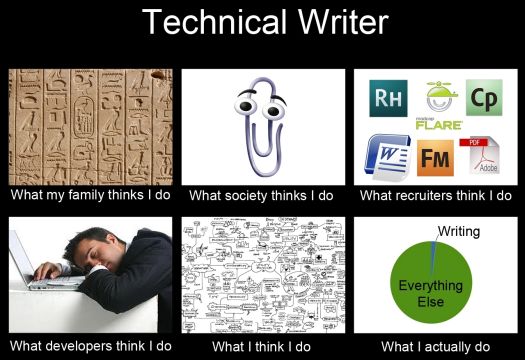
Maybe you’re one of the tiny minority of programmers that, like me, already enjoys writing documentation and works hard at doing it right. If so,the rest of this essay is not for you and you can skip it.
Otherwise, you might want to re-read (or at least re-skim) Ground-Truth Documents before continuing. Because ground-truth documents are a special case of a more general reason why you might want to try to change your mindset about documentation.
In that earlier essay I used the term “knowledge capture” in passing. This is a term of art from AI; it refers to the process of extracting domain knowledge from the heads of human experts into a form that can be expressed as an algorithm executable by the literalistic logic of a computer.
What I invite you to think about now is how writing documentation for software you are working on can save you pain and effort by (a) capturing knowledge you have but don’t know you have, and (b) eliciting knowledge that you have not yet developed.
Humans, including me and you, are sloppy and analogical thinkers who tend to solve problems by pattern-matching against noisy data first and checking our intuitions with logic after the fact (if we actually get that far). There’s no point in protesting that it shouldn’t be that way, that we should use rigorous logic all the way down, because our brains simply aren’t wired for that. Evolved cognition is a kludge – more properly, multiple stacks of kludges – developed under selection to be just barely adequate at coping.
This kludginess is revealed by, for example, optical illusions. And by the famous 7±2 result about the very limited sized of the human working set. And the various well-documented ways that human beings are extremely bad at statistical reasoning. And in many other ways …
April 28, 2020
ESR on “Lassie errors” in software
I’d never heard this term before, but it’s an excellent description of the problem:


Lassie was a fictional dog. In all her literary, film, and TV adaptations the most recurring plot device was some character getting in trouble (in the print original, two brothers lost in a snowstorm; in popular memory “Little Timmy fell in a well”, though this never actually happened in the movies or TV series) and Lassie running home to bark at other humans to get them to follow her to the rescue.
In software, “Lassie error” is a diagnostic message that barks “error” while being comprehensively unhelpful about what is actually going on. The term seems to have first surfaced on Twitter in early 2020; there is evidence in the thread of at least two independent inventions, and I would be unsurprised to learn of others.
In the Unix world, a particularly notorious Lassie error is what the ancient line-oriented Unix editor “ed” does on a command error. It says “?” and waits for another command – which is especially confusing since ed doesn’t have a command prompt. Ken Thompson had an almost unique excuse for extreme terseness, as ed was written in 1973 to run on a computer orders of magnitude less capable than the embedded processor in your keyboard.
Herewith the burden of my rant: You are not Ken Thompson, 1973 is a long time gone, and all the cost gradients around error reporting have changed. If you ever hear this term used about one of your error messages, you have screwed up. You should immediately apologize to the person who used it and correct your mistake.
Part of your responsibility as a software engineer, if you take your craft seriously, is to minimize the costs that your own mistakes or failures to anticipate exceptional conditions inflict on others. Users have enough friction costs when software works perfectly; when it fails, you are piling insult on that injury if your Lassie error leaves them without a clue about how to recover.
April 5, 2020
China’s geostrategic box
ESR looks at the concerns that China may be considering starting a war with the United States in the wake of the Wuhan Coronavirus:

To understand how limited the PRC’s war options are, we can start with a grasp on how difficult and unsatisfying any war of conquest would be due to the geographic box China is in. The obstacles around it are formidable.
To the south, the Himalayan massif makes all of South Asia other than a narrow coastal plain on the Southeast Asian peninsula inaccessible to serious troop movements. There are no roads or rail links. The last time the Chinese tried pushing in that direction, in 1979, they were unable to sustain an offensive at any distance from their railheads and withdrew after less than a month. Their war aim – forcing the North Vietnamese to withdraw its troops from Cambodia – failed.
To the west, the vastness and comparatively undeveloped state of China’s western hinterland is a serious logistical problem before one even gets to the border. At the borders, the Tien Shan and Pamir ranges present a barrier almost as formidable as the Himalayas. External road and rail links are poor and would be easily interdicted.
To the north, movement would be easier. It might be just within logistical possibility for the PLA to march into Siberia. The problem with this idea is that once you’ve conquered Siberia, what you have is … Siberia. Most of it, except for a small area in the south coastal region of Primorsky Kraye, is so cold that cities aren’t viable without food imports from outside the region. Set this against the risks of invading a nuclear-armed Russia and you don’t have a winning proposition.
To the east is the South China Sea. The brute fact constraining the PRC’s ambitions in that direction is that mass movement of troops by sea is risky and difficult. I recently did the math on Chinese sealift craft and despite an expensive buildup since the 1980s they don’t have the capacity to move even a single division-sized formation over ocean. Ain’t nobody going to take Taiwan with one division, they’ve has too much time to prepare and fortify over the last 60 years.
The PRC leadership is evil and ruthless, but it’s also cautious and historically literate and can read maps. Accordingly, the People’s Liberation Army is designed not to take territory but to hold the territory the PRC already has. Its mission is not conquest but the suppression of regional warlordism inside China itself. The capability for the PLA to wage serious expeditionary warfare doesn’t exist, and can’t be built in the near-term future.
It’s often said that the danger of aggressive war by China is a function of the huge excess of young men produced by covert sexual selection and the one-child policy. But to expend those young men usefully you need to get them to where they can fight and are motivated by some prospect of seizing the wives unavailable for them at home. The PRC can’t do that.
The military threat from China is, therefore, a function of what it can do with its navy, its airpower, and its missiles. And what it can do with those against the U.S. is upper-bounded by the fact that the U.S. has nuclear weapons and would be certain to respond to a PRC nuclear or EMP attack on the U.S. mainland by smashing Chinese cities into radioactive rubble.
Within the constraints of conventional warfare waged by navy and air force it is difficult to imagine an achievable set of PRC war aims that gains more than it costs.
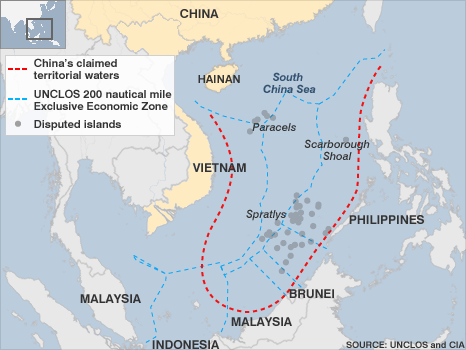
It’s possible — even likely — that the Chinese military has something like the oft-rumoured “ship-killer missiles” that might be able to cripple or sink an American carrier … if it was in range. That makes the South China Sea, the East China Sea, and the west coast of Japan a possible no-go area for US Navy carrier strike groups. A good defensive weapon system to have on hand in case relations with the outside world go “hot”, but not a strategic game-changer. Nobody would be likely to consider anything as dangerous as a seaborne invasion of mainland China, even without the threat of wonder weapons like the ship-killer. And good defensive weapons won’t secure the trade routes that China depends on outside coastal waters.
In a lot of ways your strategic situation is like a scaled-up version of Japan’s in 1941 – you could seize the initiative with a Pearl-Harbor-like initial shock, but you can’t wage a long war because without sealane control you’ll run out of key feedstocks and even food rather rapidly. And unlike the Japanese in 1941, you don’t have the kind of serious blue-water navy that you’d need for sealane control outside the First Island Chain – not with just two carriers you don’t.
There is one way an aggressive naval war could work out in your favor anyway. You can count on the U.S.’s media establishment to be pulling for the U.S. to lose any war it’s in, especially against a Communist or Socialist country. If your war goals are limited to ending U.S. naval power projection in the Western Pacific, playing for a rapid morale collapse orchestrated by agents of influence in the U.S. is not completely unrealistic.
It’s playing with fire, though. One problem is that before you launch your attack you don’t know that your sucker punch will actually work. Another is that, as the Japanese found out after Pearl Harbor, the American public may react to tragic losses with Jacksonian fury. If that happens, you’re seriously screwed. The war will end with your unconditional surrender, and not sooner.
Update: Bone-headed typo in the headline fixed. It’s funny how you can’t see ’em until just after you click the Save button…
March 26, 2020
QotD: “Gammon”
Who voted Labor? Recent immigrants. University students. Urban professionals. The wealthy and the near wealthy. People who make their living by slinging words and images, not wrenches or hammers. Other than recent immigrants, the Labor voting base is now predominantly elite.
This is the Great Inversion – in Great Britain, Marxist-derived Left politics has become the signature of the overclass even as the working class has abandoned it. Indeed, an increasingly important feature of Left politics in Britain is a visceral and loudly expressed loathing of the working class.
To today’s British leftist, the worst thing you can be is a “gammon”. The word literally means “ham”, but is metaphorically an older white male with a choleric complexion. A working-class white male, vulgar and uneducated – the term is never used to refer to men in upper socio-economic strata. And, of course, all gammons are presumed to be reactionary bigots; that’s the payload of the insult.
Catch any Labor talking head on video in the first days after the election and what you’d see is either tearful, disbelieving shock or a venomous rant about gammons and how racist, sexist, homophobic, and fascist they are. They haven’t recovered yet as I write, eleven days later.
Observe what has occurred: the working class are now reactionaries. New Labor is entirely composed of what an old Leninist would have called “the revolutionary vanguard” and their immigrant clients. Is it any wonder that some Laborites now speak openly of demographic replacement, of swamping the gammons with brown immigrants?
It would be entertaining to talk about the obvious parallels in American politics – British “gammons” map straight to American “deplorables”, of course, and I’m not even close to first in noticing how alike Donald Trump and Boris Johnson are – but I think it is more interesting to take a longer-term view and examine the causes of the Great Inversion in both countries.
Eric S. Raymond, “The Great Inversion”, Armed and Dangerous, 2019-12-23.
October 10, 2019
QotD: Taxonomy of the online troll
The Peevish Adolescent’s dominating emotions are all about primate posturing for status. One often gets the sense that any authority or high-status figure would do as a target for his feces-flinging and one has been chosen for the role almost at random. The Internet enables him to demonstrate belligerantly at a silverback male without fear of actual consequences; this thrills him and helps him feel marginally less inadequate.
The polar opposite of the Peevish Adolescent is the Embittered Old Fart. This type is much less common and much more interesting. Tends to be middling on the language-competency scale, and may have interesting things to say if you can mask out that 60-cycle hum.
The dominant emotions of the Embittered Old Fart are envy and resentment. The EOF fails to hide the fact that he thinks he could have been as famous and successful as you, or should have been; in order to live with his own comparative failure, he has to try to tear you down and trash your reputation. The amount of effort and intelligence an EOF may expend on this project is a very sad thing to see; one can’t help thinking he’d have much less resentment in him if he’d directed his energy more constructively in the past. Accordingly, where the Peevish Adolescent is mostly just ridiculous, the Embittered Old Fart is genuinely tragic.
Next we come to the Zealot. The Zealot thinks you are an articulate advocate of evil and must therefore be discredited at all costs. He doesn’t hate your success other than consequentially, and isn’t mainly concerned with posturing for status. No; his problem is that you have associated yourself with the wrong operating system, or the wrong political ideas, or the wrong religion, and that you commit the intolerable crime of persuading others to do likewise.
High-grade zealots are the most articulate variant of haterboy; indeed, they often run over with immaculately grammatical verbiage. Of all the haterboy types, they are most likely to try to pack a PhD thesis into a blog comment, complete with numerous hyperlinks. The thing about them, though, is that no matter what their particular idée fixe is, they all sound alike after awhile. The 60-cycle hum drowns out the idea content.
Zealots are also the least likely type to use an identity-concealing handle. Sadly, the appearance of honesty often deceives; their citations are apt to be thin and hyperpartisan, and their arguments to have gaps or even tactical falsehoods at crucial points. You are more likely to learn something useful from an Embittered Old Fart than from a Zealot.
Finally, the Iconoclast. The Iconoclast is, in his own mind, a fearless and principled speaker of truth to power. You are the idol with feet of clay, the pretender, the false god he must destroy. But note how he differs from the Peevish Adolescent; he is relatively unconcerned with his own status, and more like the Zealot in that he is mainly interested in protecting others from your baneful influence. The core of his complaint, though, is about social power and personal influence rather than ideas.
On this blog, the characteristic accusations of the Iconoclast are that (a) I’m a monster of ego, and (b) I claim a position of leadership in the hacker community that I don’t actually hold. I point these out because they’re issues that matter much less to the other haterboy types. The Peevish Adolescent and the Embittered Old Fart attack me exactly because they see me as a silverback alpha, and the Zealot is only upset by my social power insofar as it assists the infectiousness of my ideas.
Eric S. Raymond, “Taxonomy of the haterboy”, Armed and Dangerous, 2010-12-22.
July 14, 2019
The Epstein scandal is another example of the importance of accurate names
ESR has some concerns about the Epstein case, specifically on the correct terminology to use:
The sage Confucius was once asked what he would do if he was a governor. He said he would “rectify the names” to make words correspond to reality. He understood what General Semantics teaches; if your linguistic map is sufficiently confused, you will misunderstand the territory. And be readily outmaneuvered by those who are less confused.
Mug shot of Jeffrey Epstein made available by the Palm Beach County Sheriff’s Department, taken following his indictment for soliciting a prostitute in 2006.
Image via Wikimedia Commons.And that brings us to the Jeffrey Epstein scandal. In particular, the widespread tagging of Epstein as a pedophile.
No, Richard Epstein is not a pedophile. This is important. If conservatives keep misidentifying him as one, I fear some unfortunate consequences.
Pedophiles desire pre-pubertal children. This is not Epstein’s kink; he quite obviously likes his girls to be as young as possible but fully nubile. The correct term for this is “ephebophile”, and being clear about the distinction matters. I’ll explain why.
The Left has a long history of triggering conservatives into self-discrediting moral panics (“Rock and roll is the devil’s music”). It also has a strong internal contingent that would like to normalize pedophilia. I mean the real thing, not Epstein’s creepy ephebophilia.
Homosexual pedophiles have been biding their time in order to get adult-on-adult homosexuality fully normalized as battlespace prep, but you see a few trial balloons go up occasionally in places like Salon. The last round of this was interrupted by the need to take down Milo Yiannopolous, but the internal logic of left-wing sexual liberationism always demands new ways to freak out the normals, and the pedophiles are more than willing to be next up in satisfying that perpetual demand.
Liberals have proven themselves utterly useless at resisting the liberationist ratchet, so I’m not even bothering to address them. Conservatives, if you want to prevent the next turn, don’t give the pedophilia-normalizers maneuvering room. Rectify the names; make the distinctions that matter.
Epstein’s behavior is repulsive because we judge young postpubertal humans to be too psychologically immature to give adult consent, but it’s nowhere near the evil that is the sexual abuse of prepubertal children.

June 3, 2019
QotD: The roots of Italian Fascism

Colourized portrait of Italian Fascist leader Benito Mussolini in 1940.
Colourization by Roger Viollet via Wikimedia Commons.
Italian Fascism … originated as a kind of live-action role-playing game for disgruntled Italian WWI vets led by a charismatic war hero, aviator, and poet named Gabriele D’Annunzio. Compared to what it evolved into, early Italian fascism had a rather charming opera-bouffe quality about it – theoretical ideas that were incoherent to the point of surrealism, lots of prancing around in invented uniforms, and dosing of opponents with castor oil. The history of D’Annunzio’s Fascist microstate of Fiume makes amusing reading.
Then came Benito Mussolini, a man looking for a vehicle.
Mussolini was a revolutionary Socialist organizer influenced by the theories of Georges Sorel, who was responding to one of the early failures of Marxism. In Marxian “scientific socialism”, universal revolution was a process that would follow mechanically from the capitalist immiseration of the proletariat. But by the second decade of the new century it was becoming clear that most national proletariats were unwilling to play their appointed role in the theory and indeed tended to be among the most patriotic and nationalist elements of their societies. Class warfare as the engine of international socialism had failed, creating a doctrinal crisis in communist/socialist circles.
Sorel responded by writing a new theory of political motivation he called “irrationalism” which proposed that instead of fighting popular sentiments like patriotism and nationalist mythology, socialists and communists should embrace them as tools to build and perfect socialism. Mussolini was persuaded, broke with the Socialist Party, and went looking for a vehicle for a Sorelian revolution. He found it in D’Annunzio’s Fascists and, swiftly shunting D’Annunzio aside, became their leader.
I’ve covered this history in detail because it explodes one of the prevailing myths about Fascism – that it arose out of some fundamental opposition to Communism. In fact this was never true; Fascism was a Marxist heresy from the day Mussolini seized it, differing from Marxism not mainly in its aims but in the means by which they were to be achieved.
The defining doctrine of Fascism once D’Annunzio was out of the way was this quote by Mussolini: “Everything for the state, nothing outside the state, nothing against the state.” (There are a few variant translations from the original Italian.) Building directly on Leninist political economics, Benito Mussolini wrote a theoretical justification of the totalitarian state which paralleled Joseph Stalin’s less theorized but brutally-executed totalitarianization of the Soviet Union at around the same time.
The Fascist theory was of a unitary, totalizing state ruled by a leader acting as the embodiment of the will of the nation. No power centers in opposition to the embodied will can be tolerated; church, family, education, and civic institutions must all become organs of that will.
Eric S. Raymond, “Spotting the wild Fascist”, Armed and Dangerous, 2019-04-30.


