Quotulatiousness

April 6, 2021

Tank Chats #102 | Crossley Armoured Car | The Tank Museum

Filed under: Britain, History, Military, Weapons — Tags: , , , — Nicholas @ 02:00

The Tank Museum
Published 8 May 2020

David Fletcher looks at the Crossley Armoured Car, an inter-war vehicle. Only five were built and sent to Egypt, where they were unable to cope with the sand.

Support the work of The Tank Museum on Patreon: ► https://www.patreon.com/tankmuseum
Visit The Tank Museum SHOP & become a Friend: ► tankmuseumshop.org

Twitter: ► https://twitter.com/TankMuseum
Instagram: ► https://www.instagram.com/tankmuseum/
Tiger Tank Blog: ► http://blog.tiger-tank.com/
Tank 100 First World War Centenary Blog: ► http://tank100.com/
#tankmuseum #tanks

March 20, 2021

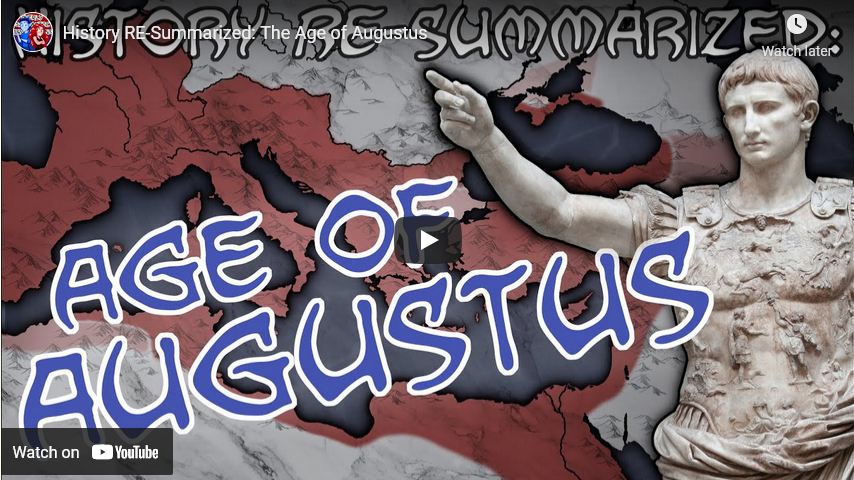
History RE-Summarized: The Age of Augustus

Overly Sarcastic Productions
Published 19 Mar 2021

Many Romans had conquered the Republic, but nobody could keep it, until Augustus. In the half century after the assassination of Caesar, his adoptive son would fundamentally transform the Roman state: expanding it, reforming it, and bringing it under the control of one man. The Age of Augustus found Rome a Republic and left it an Empire.

This video is a Remastered, Definitive Edition of three previous videos from this channel — History Summarized: “Augustus Versus The Assassins”, “Augustus Versus Antony”, and “How Augustus Made An Empire”. This video combines them all into one narrative, fully upgrading all of the visuals and audio. If you want more Histories to be Re-Summarized, please comment and let me know!

SOURCES & Further Reading: The Age of Augustus by Werner Eck, Augustus and the Creation of the Roman Empire by Ronald Mellor, Cleopatra: A Life by Stacy Schiff, Virgil’s Aeneid, Polybius’ Histories, Livy’s Ab Urbe Condita, Plutarch’s Parallel Lives, SPQR by Mary Beard, Rome: A History in Seven Sackings by Matt Kneale, (and also my degree in Classical Studies).

SECTION TIME-CODES:
0:00​​ 1 — Octavian V. the Assassins
07:40​​ 2 — Octavian V. Antony
17:36​​ 3 — Augustus as Emperor

Our content is intended for teenage audiences and up.

PATREON: https://www.Patreon.com/OSP​

PODCAST: https://overlysarcasticpodcast.transi…​

DISCORD: https://discord.gg/osp​

MERCH LINKS: http://rdbl.co/osp​

OUR WEBSITE: https://www.OverlySarcasticProductions.com
Find us on Twitter https://www.Twitter.com/OSPYouTube​
Find us on Reddit https://www.Reddit.com/r/OSP/

March 16, 2021

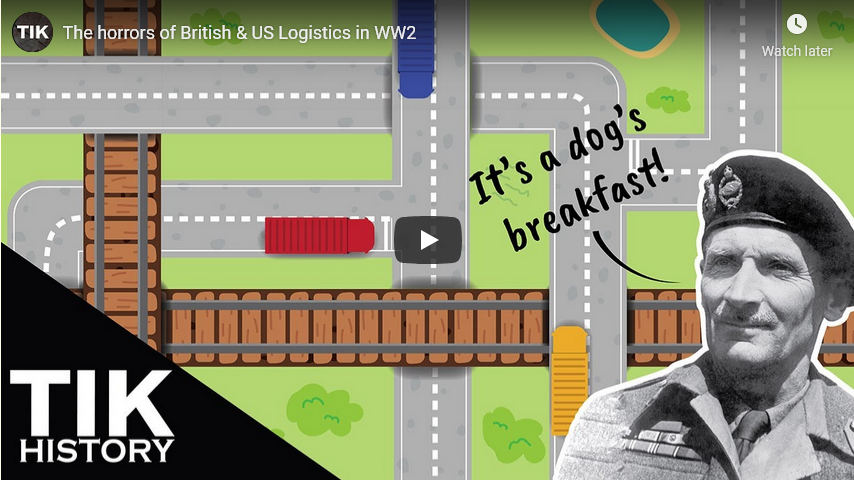
The horrors of British & US Logistics in WW2

TIK
Published 15 Mar 2021

The Allies may have had a lot of resources, manpower and industry, but that didn’t mean that their logistics weren’t inefficient or a disorganized mess. Today, we’re going to look at how the British railways were disaster during WW2, how the Americans ran out of fuel on the way to Germany, and why Montgomery called the planning for the invasion of Sicily a “dog’s breakfast”.

⏲️ Videos EVERY Monday at 5pm GMT (depending on season, check for British Summer Time).

The thumbnail for this video was created by Terri Young. Need graphics? Check out her website here https://www.terriyoungdesigns.co.uk/​

– – – – –

📚 BIBLIOGRAPHY / SOURCES 📚

Dunn, W. The Soviet Economy and the Red Army, 1930-1945. Praeger Publishers, 1995.
Garvey, J. Operation Husky: The Untold Story of the logistics of the Sicily Invasion. Farm Publications, Kindle 2019.
Hazlitt, H. Economics in One Lesson: The Shortest & Surest Way to Understand Basic Economics. Three Rivers Press, 1979.
MacDonald, J. Supplying the British Army in the Second World War. Pen & Sword Military, Kindle 2020.
Molony, C. The Mediterranean and Middle East, Volume V, The Campaign in Sicily 1943 and The Campaign in Italy 3rd September 1943 to 31st March 1944. The Naval & Military Press LTD 2004, first published in 1973.
Wolmar, C. Fire & Steam: How the Railways Transformed Britain. Atlantic Books, Kindle 2007.

British Government, Railways Act 1921, https://www.legislation.gov.uk/ukpga/…​

Full list of all my sources https://docs.google.com/spreadsheets/…​

– – – – –

⭐ SUPPORT TIK ⭐

This video isn’t sponsored. My income comes purely from my Patreons and SubscribeStars, and from YouTube ad revenue. So, if you’d like to support this channel and make these videos possible, please consider becoming a Patreon or SubscribeStar. All supporters who pledge $1 or more will have their names listed in the videos. For $5 or more you can ask questions which I will answer in future Q&A videos (note: I’m behind with the Q&A’s right now, and have a lot of research to do to catch up, so there will be a delay in answering questions). There are higher tiers too with additional perks, so check out the links below for more details.

https://www.patreon.com/TIKhistory
https://www.subscribestar.com/tikhistory

Thank you to my current supporters! You’re AWESOME!

– – – – –

ABOUT TIK 📝

History isn’t as boring as some people think, and my goal is to get people talking about it. I also want to dispel the myths and distortions that ruin our perception of the past by asking a simple question – “But is this really the case?”. I have a 2:1 Degree in History and a passion for early 20th Century conflicts (mainly WW2). I’m therefore approaching this like I would an academic essay. Lots of sources, quotes, references and so on. Only the truth will do.

This video is discussing events or concepts that are academic, educational and historical in nature. This video is for informational purposes and was created so we may better understand the past and learn from the mistakes others have made.

March 2, 2021

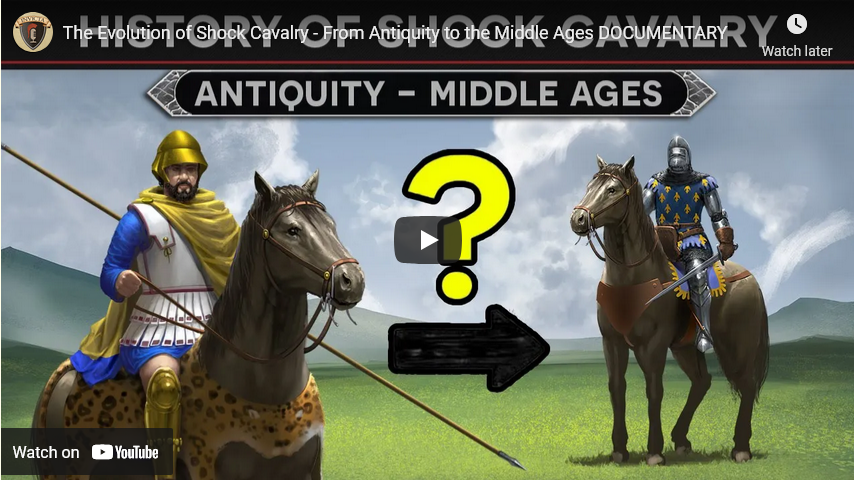
The Evolution of Shock Cavalry – From Antiquity to the Middle Ages

Invicta
Published 1 Mar 2021

Learn about the evolution of shock cavalry from antiquity before the use of saddles and stirrups! Check out The Great Courses Plus to learn about shock cavalry in the campaigns of Alexander the Great: http://ow.ly/osex30rvhjf​

In this history documentary we explore the topic of ancient cavalry. The basic idea is that these units often get depicted in media as performing glorious massed charges headlong into the enemy ranks as seen in such scenes as the Charge of the Rohirrim from the Battle of Pelenor Fields. In reality this would have been a very dangerous situation for cavalrymen even under the best circumstances. But to make matters worse, riders from antiquity fought without the use of either saddles or stirrups. So how on earth did they manage to dominate the battlefield with these handicaps. Let’s find out.

We begin by covering the history of cavalry with the first domestication of the horse and its introduction to warfare first as member of the baggage train and soon after as a part of chariot crews rather than as actual mounted forces. This was in large part due to the lack of riding experience and technology on behalf of the rider. Soon after the Bronze Age Collapse however cavalry began to rise to prominence across the armies of the Mediterranean. We speak about the various forms of equine practices which ranged from riding bareback into combat as with the Numidian Cavalry to the use of simple bridles and cloth seats as with Greek Cavalry and Persian Cavalry.

We then cover the techniques used by these cavalrymen to mount, ride, and fight. As a part of this discussion, we rely heavily on Xenophon’s Manual on Horsemanship which provides excellent first hand details from the period. We also show how these techniques were successfully used by shock cavalry of antiquity such as the Macedonian Companion Cavalry, the Saka Steppe Lancers, and the Persian Cataphracts to great effect even without the use of saddles and stirrups.

Finally we do pose the question of why they didn’t use the saddle and stirrup given its seemingly obvious advantages. To answer this question we look at the history of its development from late antiquity to the early Middle Ages.

Bibliography and Suggested Reading
On Horsemanship, by Xenophon
Adrian Goldsworthy, The Complete Roman Army
Adrian Goldsworthy, Roman Warfare
J.C. Coulston, Cavalry Equipment of the Roman Army in the First Century A.D.
George T. Dennis, Maurice’s Strategikon, p. 38.
Julius Caesar, Commentarii de Bello Civili
Russel H. Beaty, Saddles

#History​
#Documentary​
#ShockCavalry

From the comments:

Invicta
13 hours ago
I was inspired by comments on our latest Units of History episode covering the Companion Cavalry which asked about how shock tactics worked in an age before the stirrup and saddle. I went down the rabbit hole finding answers and present to you my findings in this video! One awesome source we used was the Manual on Horsemanship by Xenophon which you can read for yourself here: http://www.gutenberg.org/files/1176/1176-h/1176-h.htm

March 1, 2021

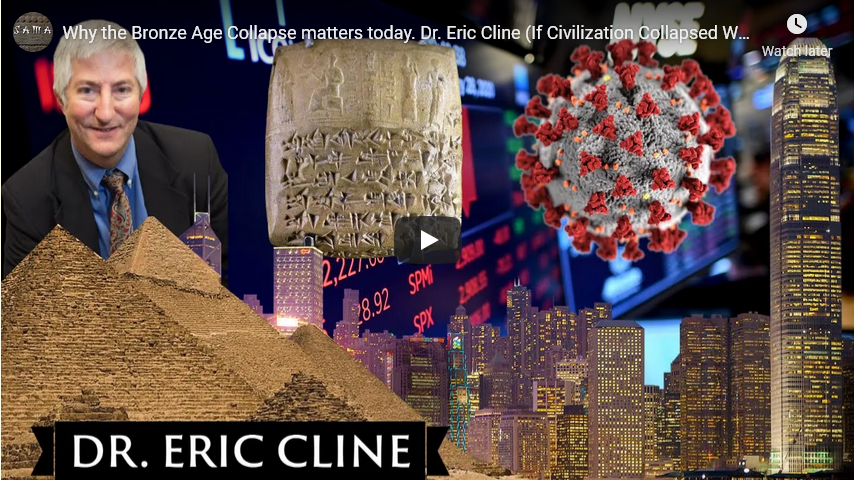
Why the Bronze Age Collapse matters today. Dr. Eric Cline (If Civilization Collapsed Would We Know?)

Study of Antiquity and the Middle Ages
Published 13 Jun 2020

Ladies and Gentlemen we arrive finally to the part of our series that you have all been waiting for! And that is the Bronze Age Collapse and here to guide us through it is none other than Dr. Eric Cline, the rock star archaeologist, historian and author of none other than 1177 BC!

He will give us an overview history of the collapse along with sharing his own personal views on the subject! Guiding us briefly through archaeology, trade, national politics, and contact in the ancient Mediterranean we will get a nice picture of the Bronze Age and how it all came crashing down in a perfect storm of events. But what is ever more awesome is he even gives us the inside scoop on why he wrote 1177 BC? And how he did it!

But at the end of this episode we come to our modern world and Dr. Cline explains why the Bronze Age Collapse matters today. What we need to look at when comparing it to our modern world and the current events and impacts affecting our world. Did the peoples living through the Bronze Age Collapse know they were living in a collapse? And he asks a delicate and intense question and that is if civilization collapsed today would we know?

Check out our new store! teespring.com/stores/the-history-shop​

Support Dr. Eric Cline at the links below!

Personal web page: https://ehcline.com​

Get all of his books here at his Amazon Author page:
https://www.amazon.com/s?i=stripbooks…​

GW pages:
https://cnelc.columbian.gwu.edu/eric-…​

https://anthropology.columbian.gwu.ed…

https://gwu.academia.edu/EricCline​

Image credits: Manna Nader, Gabana Studios Cairo

Hittite 3D City and intro footage credits: 3D reconstruction of Imperial Hittite Karkemish by Giampaolo Luglio, Turco-Italian Archaeological Expedition to Karkemish directed by Nicolò Marchetti (University of Boologna)

KARKEMISH (Carchemish) 1300 BC (3D) – The Southern Capital of the Empire Hittite

https://youtu.be/RsTdoY__F4U​

Music Attribution: Herknungr – Megaliths | Dark Neolithic Meditive Shamanic Ambient Music https://youtu.be/oc8FQwNjPu0

February 25, 2021

QotD: Islam and the impact of the Enlightenment

Filed under: France, History, Middle East, Military, Quotations, Religion — Tags: , , , , — Nicholas @ 01:00

In private, however, or when addressing his soldiers, Napoleon was contemptuous of the Islamic word. “You have come to this country,” he told his army before the battle of the Pyramids, “to save the inhabitants from barbarism, and to bring civilisation to the Orient.” This was why, in addition to muskets, cannon and cavalry, he had brought with him to Egypt a printing press, a hot-air balloon and a small army of intellectuals.

The blaze of the Enlightenment, although it might seem to have been lit in Europe, was not just for Europeans. All the world had the potential to share in its radiance. Illumination was the same wherever it manifested itself, and this meant that in Peking as in Paris, in Baghdad as in Bordeaux, there were sages more than qualified to rank alongside Voltaire and Diderot.

The Enlightenment, far from ranking as something parochial and culturally contingent, was properly a global phenomenon. These various dogmas, which the philosophes had tended to take for granted, had then been given a new and militant edge by the French Revolution. That religion was superstition; that rights were universal; that equality, individual liberty and freedom of expression were simultaneously natural and sacred: these were the convictions that had inspired in the citizens of revolutionary France their continent-shaking sense of certitude. Thrones had been toppled; abbeys demolished; the detritus of a benighted past erased. And if in Europe, then why not further afield? The Rights of Man were for everyone, after all, or they were nothing. “Any law that violates them,” as Robespierre had put it, “is fundamentally unjust and tyrannical. Indeed, it is not law at all.”

This sense of missionary purpose, which inspired in those who felt it an ambition to bring the entire world from darkness into light, outlasted the execution of Robespierre, the defeat of Napoleon, the seeming triumph of reaction across post-revolutionary Europe. In 1854, when the Ottoman Empire was facing a critical threat from Russia, France joined Britain in insisting as a condition of its entry into the Crimean War that the slave trade across the Black Sea be abolished.

Also abolished was the jizya, a tax on Jews and Christians that reached back to the very beginnings of Islam, and was directly mandated by the Qur’an. Such measures, to the Ottomans, risked immense embarrassment. The effect, after all, was to reform Islamic jurisprudence according to the standards of non-believers. It was, for Muslim traditionalists, an ominous straw in the wind. Over the course of the century and more that followed, the weathering effects of Western hegemony on the practices that Muslims believed they had inherited from Muhammad — the Sunnah — became more and more pronounced.

Tom Holland, “The age-old tension between Islam and France”, UnHerd, 2020-11-02.

February 9, 2021

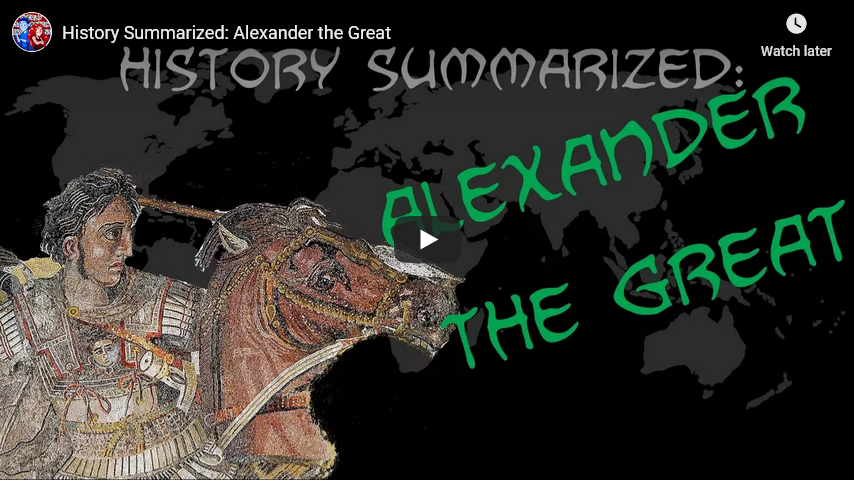
History Summarized: Alexander the Great

Overly Sarcastic Productions
Published 19 Sep 2017

Linguistically speaking, Alexander means “Defender of Men” from the Greek “alexo“, defend, and “aner/ander“, man. I’ll never be able to not internally think of his name as just meaning “Alex-Man”.

Oh, yeah, also he conquered an empire or something? IDK. I stopped paying attention after his bland name.

PATREON: www.patreon.com/OSP

MERCH LINKS:
Shirts – https://overlysarcasticproducts.threa…​
All the other stuff – http://www.cafepress.com/OverlySarcas…​

Find us on Twitter @OSPYouTube!

January 3, 2021

First Arab – Israeli War 1948

Filed under: History, Middle East, Military — Tags: , , , , , , — Nicholas @ 02:00

Kings and Generals
Published 31 Aug 2019

Support our channel and install the free-to-play PC game World of Tanks to get the in-game gifts: http://patron.me/KingsAndGeneralsWoT

Previously in our animated historical documentary series on modern warfare we have covered the Six-Day War of 1967, also known as the Third Arab-Israeli War http://bit.ly/30NfTOy This new 3d documentary will explain the events of the First Arab-Israeli War, which was fought in 1948-1949.

Creation of Israel: http://bit.ly/2ZApWFi
Arab countries after the World War II: http://bit.ly/2ZBW0bX
First Arab – Israeli War of 1948 – Political episode: http://bit.ly/2zyjAvs

Support us on Patreon: http://www.patreon.com/KingsandGenerals or Paypal: http://paypal.me/kingsandgenerals

We are grateful to our patrons and sponsors, who made this video possible: https://drive.google.com/open?id=1Jlq…

The video was made by our friend Leif Sick, while the script was written by Matt Hollis.

This video was narrated by Officially Devin (https://www.youtube.com/user/Official…)

✔ Merch store ► teespring.com/stores/kingsandgenerals
✔ Podcast ► Google Play: http://bit.ly/2QDF7y0 iTunes: https://apple.co/2QTuMNG
✔ Twitter ► https://twitter.com/KingsGenerals
✔ Instagram ► http://www.instagram.com/Kings_Generals

Sources:
Efraim Karsh – The Arab-Israeli Conflict: The Palestine War 1948
Benny Morris – A History of the First Arab-Israeli War 1948
Ahron Bregman – Israel’s Wars: A History Since 1947

Production Music courtesy of Epidemic Sound: http://www.epidemicsound.com

#Documentary #ArabIsraeliWar #ColdWar

December 19, 2020

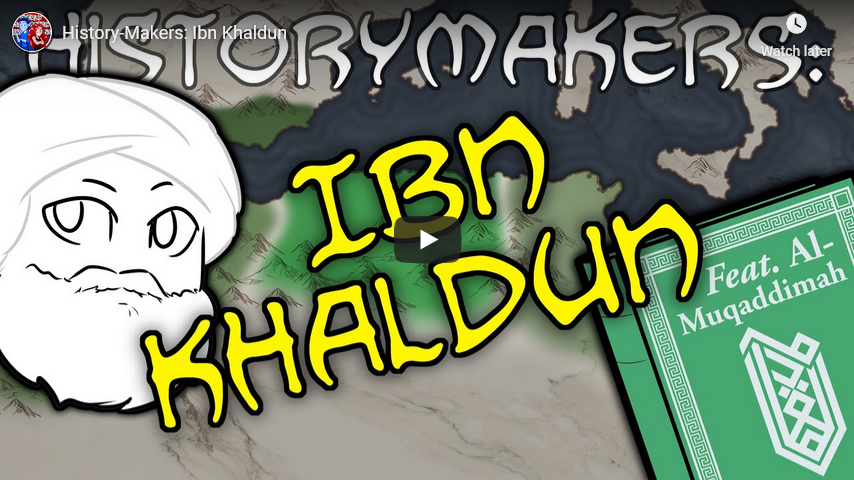
History-Makers: Ibn Khaldun

Overly Sarcastic Productions
Published 18 Dec 2020

Big thanks to our friend Al-Muqaddimah for his help with this video. The look of this video’s maps is an homage to his wonderful mapmaking style. For more Islamic History, check out his channel here: https://www.youtube.com/channel/UCf0O…

From the coast of Tunisia across the Straits of Gibraltar, over the Atlas Mountains, and east to the Nile of Egypt, Ibn Khaldun had certainly seen history at work. That experience came in handy as he wrote The Muqaddimah, a genre-defining masterwork of Historiography — not just retelling the events of the past, but explaining their causes and effects through the lens of human behavior and sociology.

SOURCES & Further Reading: Ibn Khaldun: An Intellectual Biography by Irwin, The Muqaddimah

This video was edited by Sophia Ricciardi AKA “Indigo”. https://www.sophiakricci.com/

Our content is intended for teenage audiences and up.

PATREON: https://www.Patreon.com/OSP

PODCAST: https://overlysarcasticpodcast.transi…

DISCORD: https://discord.gg/osp

MERCH LINKS: http://rdbl.co/osp

OUR WEBSITE: https://www.OverlySarcasticProductions.com
Find us on Twitter https://www.Twitter.com/OSPYouTube
Find us on Reddit https://www.Reddit.com/r/OSP/

November 14, 2020

The Decline of the Great Library of Alexandria

The History Guy: History Deserves to Be Remembered
Published 27 Mar 2019

Presented by Ms History. The Great Library was a center of knowledge. Its decline was not the single cataclysmic event that may seem to think, but its slow decline is perhaps, even more tragic. It is history that deserves to be remembered.

This is original content based on research by The History Guy. Images in the Public Domain are carefully selected and provide illustration. As images of actual events are sometimes not available, images of similar objects and events are used for illustration.

All events are portrayed in historical context and for educational purposes. No images or content are primarily intended to shock and disgust. Those who do not learn from history are doomed to repeat it. Non censuram.

Ms. History Guy is an avid reader and former reference librarian, and reviews around 100 books per year. Feel free to follow her progress or befriend her on Goodreads where she goes by the name “Heidi the Reader”: https://www.goodreads.com/MsHistory

Patreon: https://www.patreon.com/TheHistoryGuy

The History Guy: History Deserves to Be Remembered is the place to find short snippets of forgotten history from five to fifteen minutes long. If you like history too, this is the channel for you.

Awesome The History Guy merchandise is available at:
teespring.com/stores/the-history-guy

Script by JCG

#history #thehistoryguy #library

October 28, 2020

Who were the Assyrians? History of the Assyrian Empire

Filed under: History, Middle East, Military — Tags: , , , — Nicholas @ 02:00

Epimetheus
Published 12 Dec 2018

Who were the Assyrians? The entire history of the Ancient Assyrian Empire explained in 11 Minutes.

Support new videos from Epimetheus on Patreon! 😀
https://www.patreon.com/Epimetheus1776

History of Assyria from its founding, Shamshi Adad, Tiglath Pileser III, Sargon, Ashurbanipal to the fall of Ninevah and the Assyrian Empire.

October 10, 2020

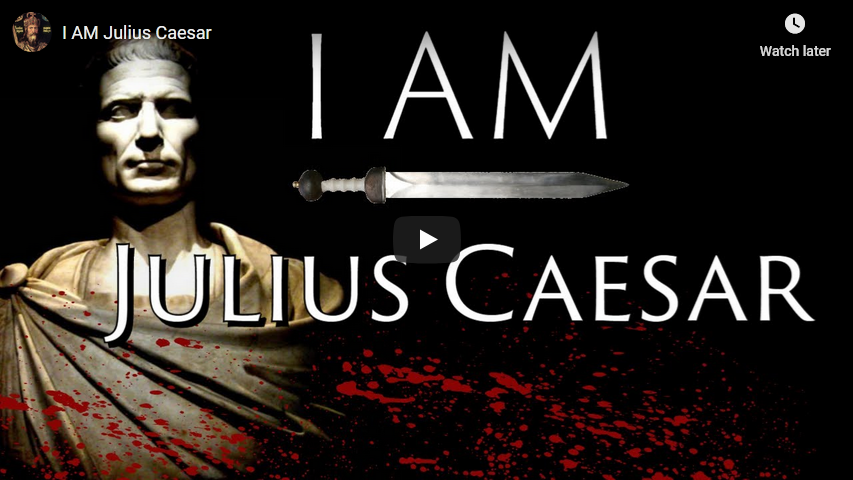
I AM Julius Caesar

The Study of Antiquity and the Middle Ages
Published 2 Jul 2020

Politician, warrior, priest, lover.

My name is Gaius Julius Caesar and I led one of the most extraordinary lives in recorded history.

My victories over foes both foreign and domestic are still studied today. I upended the Roman Republic and became its first dictator.

I loved Cleopatra.

My brutal assassination has been synonymous with bitter betrayal for 2000 years.

New videos from The Study of Antiquity and the Middle Ages, the I AM series allows the great figures of history to introduce themselves in brief, compelling, historically-accurate episodes. Look for more I AM videos of your favorites!

I AM Julius Caesar! Welcome to the first episode of the I AM series where you live history itself through the mind, viewpoints and lives of a historical character!

See and experience the world they lived and celebrate their triumphs and feel their defeats.

This first episode is on Julius Caesar, the revolutionary who set into place the foundations of what would become the Roman Empire.

This was written, directed and created by the extraordinary professional DW Draffin! He is an audio book narrator, stage actor, and independent author.

AUDIOBOOK NARRATOR
https://www.audible.com/search?search…

STAGE ACTOR
https://www.youtube.com/watch?v=xTept…

INDEPENDENT AUTHOR
https://www.amazon.com/DW-Draffin/s?k…

If you need a professional then contact him!

To support the channel, become a Patron and make history matter!

Patreon: https://www.patreon.com/The_Study_of_…

Donate directly to PayPal: https://paypal.me/NickBarksdale

Check out our newly opened store!
teespring.com/stores/antiquity-and-th…

Get your SPQR Face Masks today!
https://spqr-emporium.com/collections…

Enjoy history merchandise? Check out affiliate link to SPQR Emporium!
http://spqr-emporium.com?aff=3

*Dislaimer, the link above is an affiliate link which means we will earn a generous commission from your magnificent purchase, just another way to help out the channel!

Join our community!

October 7, 2020

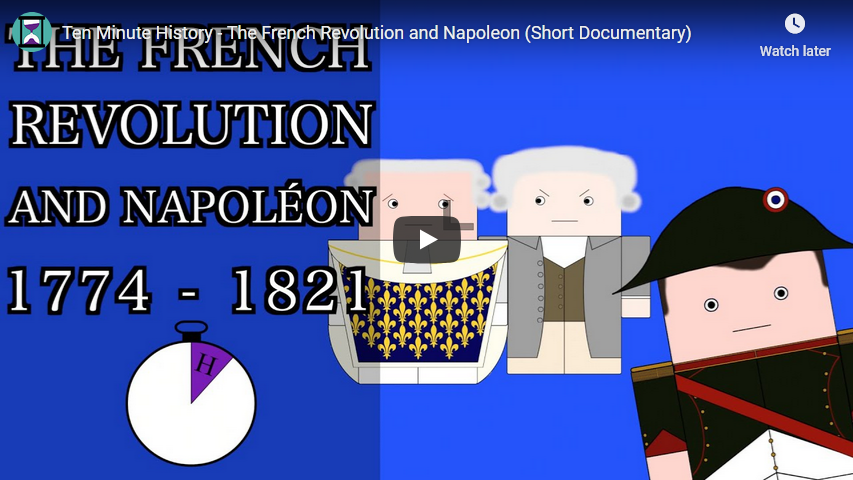
Ten Minute History – The French Revolution and Napoleon

Filed under: Britain, Europe, France, Germany, History, Middle East, Military, Russia, USA — Tags: , , , , , — Nicholas @ 02:00

History Matters
Published 12 Sep 2016

Twitter: https://twitter.com/Tenminhistory
Patreon: https://www.patreon.com/user?u=4973164

This episode of Ten Minute History (like a documentary, only shorter) covers the French Revolution and the Napoleonic Wars from the beginning of King Louis XVI’s reign all the way to the death of Napoleon Bonaparte in 1821. The first half covers the life and death of Louis XVI during the events of the revolution, including the rise and fall of Robespierre and the Reign of Terror. The second half covers the rise of Napoleon, the Napoleonic Wars and the eventual allied victory over France.

Ten Minute History is a series of short, ten minute animated narrative documentaries that are designed as revision refreshers or simple introductions to a topic. Please note that these are not meant to be comprehensive and there’s a lot of stuff I couldn’t fit into the episodes that I would have liked to. Thank you for watching, though, it’s always appreciated.

September 28, 2020

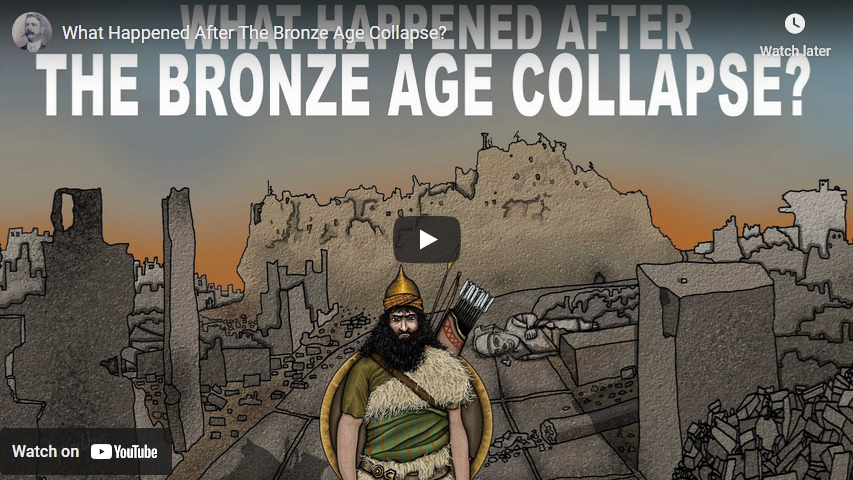
What Happened After The Bronze Age Collapse?

Filed under: Economics, Greece, History, Middle East — Tags: , , , , — Nicholas @ 04:00

Epimetheus
Published 17 Jun 2020

What Happened After The Bronze Age Collapse?

This video covers the period of time from the Bronze Age collapse through the Near Eastern dark age and to the first Iron Age empire.

This video is sponsored by my Patrons over on Patreon
https://www.patreon.com/Epimetheus1776

From the comments:

Epimetheus
3 months ago
Additional info some might find interesting:

Although the Arameans emerged from arid Southern Syria (in a similar manner to the earlier Amorites, taking advantage of a power vacuum) it is debated whether or not they were originally from there, with some believing they came from the Zagros mountains to Syria, before re-entering Mesopotamia. Others believe they were related to the Amorites, essentially they were the Amorites that stayed behind. There is also some debate if Ahlamu (also from the same region) is a synonym for Aramean or if it was a more broad generic term for the nomads, outlaws and ruffians of the region. (For example the Suteans, Chaldeans and Arameans may have all been considered Ahlamu) It is also interesting that many fugitives from authority in previous centuries found refuge in the frontier Ahlamu regions of the south.

All of that more or less got cut out of the video, and I thought some of you would find interesting.

September 24, 2020

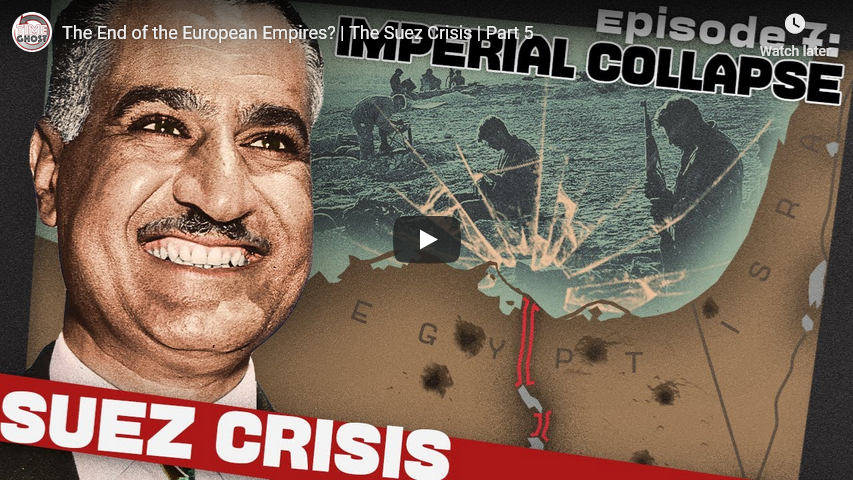
The End of the European Empires? | The Suez Crisis | Part 5

Filed under: Africa, Britain, France, History, Middle East, Military — Tags: , , , , , — Nicholas @ 04:00

TimeGhost History
Published 23 Sep 2020

Whilst the fighting may be over, the Crisis certainly isn’t. For starters, the three invaders may have agreed to a ceasefire, but aren’t too keen to give up the land they’ve conquered. And even if this is resolved, what lies in wait for the humiliated ex-colonial powers? Ultimately, only one thing does seem certain — irreversible change.

Join us on Patreon: https://www.patreon.com/TimeGhostHistory

Hosted by: Indy Neidell
Written by: Francis van Berkel
Director: Astrid Deinhard
Producers: Astrid Deinhard and Spartacus Olsson
Executive Producers: Astrid Deinhard, Indy Neidell, Spartacus Olsson, Bodo Rittenauer
Creative Producer: Joram Appel
Post-Production Director: Wieke Kapteijns
Research by: Francis van Berkel
Image Research: Daniel Weiss
Edited by: Daniel Weiss
Sound design: Marek Kamiński
Maps: Ryan Weatherby

Colorizations:
– Mikolaj Uchman
– Daniel Weiss – https://www.facebook.com/The-Yankee-C…
– Norman Stewart – https://oldtimesincolor.blogspot.com/

Sources:
National Archives NARA
Images from the UN News and Media
1960s Soviet Film “Egypt our Arab Ally”

From the Noun Project:
– speech_16988 By Juan Pablo Bravo, CL
– Parliament_1658396 By Dimitrios Stamatis, GB
– Money by Gilberto
– Ship by Edward Boatman
– soldier by Wonmo Kang
– oil barrel by Musmellow
– europe By Randomhero
– Income(not dollar)_2897802
– Trade by Adrien Coquet
– Handshake By priyanka, IN
– world by Guilherme Furtado
– telegraph By Luke Anthony Firth, GB
– people by ProSymbols
– documents by Srinivas Agra

Soundtracks from Epidemic Sound:
– “Devil’s Disgrace” – Deskant
– “In the Bank We Trust” – Jon Sumner
– “Searching Through Sand” – Deskant
– “The Inspector 4” – Johannes Bornlöf
– “Crying Winds” – Deskant
– “Scented Nectar” – Rune Dale
– “As the Rivers Collapse” – Deskant
– “Dark Beginning” – Johan Hynynen
– “Guilty Shadows 4” – Andreas Jamsheree

Archive by Screenocean/Reuters https://www.screenocean.com.

A TimeGhost chronological documentary produced by OnLion Entertainment GmbH.

From the comments:

TimeGhost History
2 days ago (edited)
So that’s the end of our series on the Suez Crisis. It’s been a pretty wild and messy ride, but we think our realtime format gave it a fresh perspective that hasn’t done before.

If you liked that final point Indy made about Churchill and The Beatles, and you want to find out more about decolonisation, then you should look up the work of Bill Schwarz. He was the one who originally made the comparison in his book White Man’s World, and it’s a really fascniating read, if also a bit challenging. Decolonisation is actually becoming a really vibrant field of study in academia and there are a whole host of books available if any of you want to dive into the topic. Europe After Empire by Elizabeth Buettner is an excellent place to start and Fight or Flight by Martin Thomas will be right up your street if you want to learn about the wars of decolonisation and the politics behind them. If you have any other suggestions then feel free to post them below.

Anyway, we hope you enjoyed the series and learnt a thing or two.

« Newer PostsOlder Posts »

Powered by WordPress