
For the record, I don’t actually think Europe would be better off with a single federal government, but Walter Russell Mead thinks the big mistake was attempting an economic union without a political union to match:
What is worrying investors worldwide is the evident intellectual and political bankruptcy of Europe. The Europeans are not stupider than other people, but they face deep structural economic and political problems that their institutions are hopelessly inadequate to solve. Creating a monetary union without a true federal government is looking more and more like the biggest European policy mistake since Britain and France let Hitler have the Sudetenland.
The current crisis is the result of a decade of policy failure. Greece should never have been allowed into the euro; prudent leaders would have checked its statistics, discovered the blatant frauds with which the Greeks sought to conceal the true state of their affairs, and told the country politely but firmly to come back when it was ready. Following that initial blunder, Europe failed to take note in any serious way of the serious distortions that were caused by suddenly reducing interest rates in Greece and other peripherals to near-German levels. Beyond that, alarm bells should have been ringing as it became clear that Greece and a number of other countries were treating their suddenly lower interest costs as found money. They were spending the windfall rather than taking advantage of the once in a lifetime opportunity to reform their economies in preparation for life under a monetary union with countries like Germany. If Europe’s institutions were up to the job, the warning signs would have been noticed and corrective steps taken years ago.
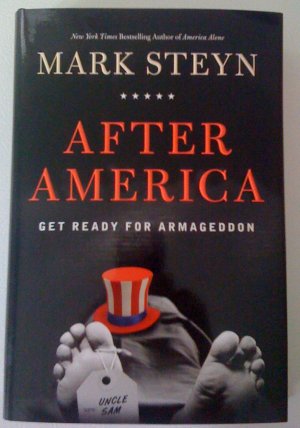 The trick in this business is not to be right too early. A week ago I released my new book — the usual doom ‘n’ gloom stuff — and, just as the sensible prudent moderate chaps were about to dismiss it as hysterical and alarmist, Standard & Poor’s went and downgraded the United States from its AAA rating for the first time in history. Obligingly enough they downgraded it to AA+, which happens to be the initials of my book: After America. Okay, there’s not a lot of “+” in that, but you can’t have everything.
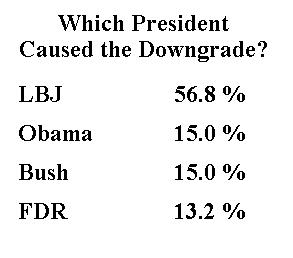 Well, it turns out that Social Security is a relatively minor part of the problem, so even though President Roosevelt’s policies exacerbated and extended the Great Depression, the program he created is only responsible for a small share of the fiscal crisis. To give the illusion of scientific exactitude, let’s assign FDR 13.2 percent of the blame.

