Quotulatiousness

February 21, 2023

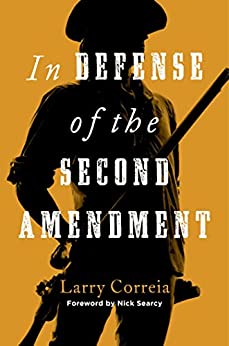
Larry Correia’s In Defense of the Second Amendment

Filed under: Books, Law, Media, Politics, USA, Weapons — Tags: , , — Nicholas @ 04:00

In the latest Libertarian Enterprise, Charles Curley reviews Larry Correia’s latest non-fiction book:

The name Larry Correia may ring a bell for Libertarian Enterprise readers. He has written fiction since 2008. He started with Monster Hunter, a self-published novel that later got a contract from Baen Books. He has since become a New York Times best selling author, and a finalist for the John Campbell award.

He also originated the Sad Puppies campaign, an effort to turn the Hugos away from their politically correct drift.

Yeah, guns and science fiction. TLE readers should appreciate that combination.

First off, this is not a scholarly exercise, nor does it break much new ground in the gun control arena. If you want scholarly language, look elsewhere, to, say, Don Kates, Stephen Halbrook, or David Kopel: in places this book is more of a rant than a treatise. So if you enjoy the snark of L. Neil Smith or H. L. Mencken, you’ll like this book. None the less, it has 12 pages of end notes and five pages of index. (But, oddly enough, no table of contents.)

Correia says so: “This book isn’t intended for policy wonks and pundits. I’m not an academic. I’m not a statistician. I’m a writer who knows a lot about guns.” (p. 23) And he’s tired of hearing the same tired old stuff trotted out again and again in any discussion about gun control. This book is his reply. “I won’t lie, I’d like this book to give ammo to the people on my side of the debate. To those of you who are on the fence, undecided, I want to help you understand more about how crime and gun control laws actually work.” (p. 23)

Chapter One is entitled Guns and Vultures. The vultures are the people who feed on every tragedy, trying to fit it into their agenda of more gun control and more dependence on the state. The people who heed Rahm Emmanuel’s famous dictum: “You never want a serious crisis to go to waste.” The people who wring their hands and say, we have to do something! even when the something has been tried before and found wanting, or even found impossible.

Much of the book is devoted to refuting the anti-gun arguments. I trust I needn’t outline those to TLE readers.

Note that while he’s confident that the book is well worth reading, he hasn’t actually read any of Larry’s fiction writing, so he can’t be dismissed as a fan who’d automatically recommend the book.

January 8, 2023

Conservatives “vote harder”, progressives take advantage of “procedural outcome manipulations”

Theophilus Chilton on a key difference between progressives and conservatives in how they address perceived problems with “the system”:

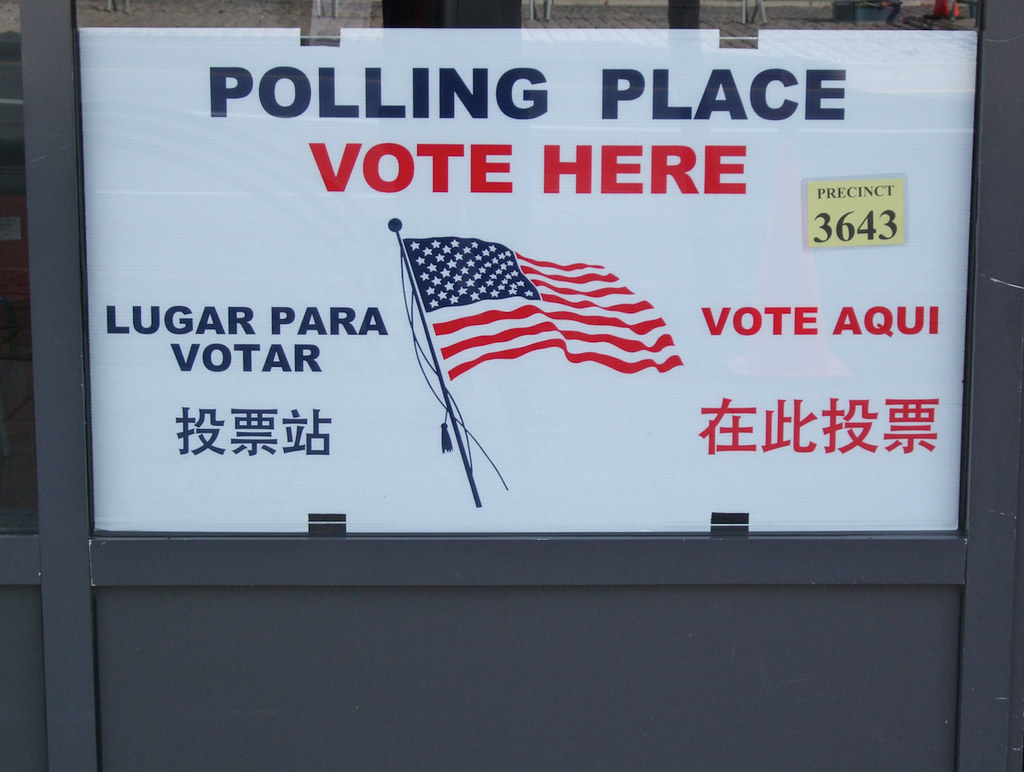
“Polling Place Vote Here” by Scott Beale is licensed under CC BY-NC-ND 2.0 .

Over the past decade or so, many folks on the broad Right have noticed that practically all of our institutions don’t really work as they should. The natural tendency on the part of normie conservatives is to chalk this up to incompetence and corruption. Granted, those do come into play – and will continue to do so increasingly. Yet structurally speaking, our institutional dysfunctionality runs a lot deeper than a little graft or some skimming off the top. Our institutional failures are both purposeful and towards a specific end.

Normies can perhaps be forgiven for not immediately coming to this conclusion. After all, as the name suggests, they’re the norm. They’re the mainstream. They’re not out on the “fringe” somewhere, for better or for worse. These are conservatives who have been conditioned by decades of playing by the rules to trust the rules and the processes under which government and institutions operate (even if they think they “distrust government” or whatever). They’re the ones who believe we have to keep voting harder because voting is the only “proper” way to act in our system. And yet, many times they end up being mystified that not only do the institutions and procedures not “work right” but that nobody in power (even their own so-called representatives) seems the least bit bothered by this.

Yet, purposeful it truly is. There is a concept about our institutions that I wish every conservative understood, which is that of “manipulating procedure outcomes”. Basically, what this refers to is the process by which bad actors will take an established procedure — a rule or statute, an institution inside or outside of government, a social or political norm — and subvert it to their own use while still “technically” adhering to procedure. However, the process of doing so completely warps the results from those which “should” happen had the procedure been played straight. This intentionality explains why our institutional failures always seem to tend in one direction — Cthulhu always seems to swim left, so to speak. The American Left are masters at manipulating procedural outcomes, while the American Right rigidly tries to adhere to “the way things oughta be” and end up getting outmanoeuvered every time.

Allow me to give some examples of this; seeing them will start to train the eye towards recognising other instances of this process.

Let’s take, for example, the recent revelations of government censorship of dissident ideas and individuals that we saw in the Twitter files. Now, we all know that the government can’t censor speech and ideas because of the First Amendment. So this means that they’d never do so … right? (LOL) Well, as the Twitter files revealed — and which absolutely assuredly applies to every other major tech company in the field — FedGov and the alphabet agencies simply use companies like Twitter as a way to work around the 1A. They can’t censor directly, but they can rely upon a combination of selective pressure on tech companies and ideologically friendly personnel within these companies to censor and gather information about right-leaning, and especially dissident Right, users all the same. And technically, none of this is illegal, because muh private company and all that. So a functional illegality nevertheless remains within the boundaries of “procedure”.

The same type of manipulation is underway with regards to the Second Amendment, too. Again, the plain wording of the 2A, as well as a long train of prior judicial interpretive precedence, militates against federal and state governments really being able to restrict the gun rights of Americans (not that they don’t try anywise). They can’t make it illegal to buy or own guns. Schemes like prohibitively taxing ammo won’t pass muster either. So if you’re a left-wing fruitcake who hates the Constitution and badly wants to disarm your fellow Americans for further nefarious purposes, what do you do?

Well, you make it too legally dangerous for gun owners to actually use their guns for anything beyond target shooting. You install a bunch of Soros-funded prosecutors in all the jurisdictions that you can so that you can go light on criminals but throw the book at gun owners who defend themselves from criminals. You creatively interpret laws to mean that harming someone while defending yourself is a crime or, barring that, open up self-defenders to civil attack from the criminal’s family. From a self-defence perspective you set up an anarchotyrannical regimen that can be used against ideological enemies. This is basically the same thing the Bolsheviks did when they were consolidating their power as “Russia” transitioned to “the Soviet Union”, as recorded by Solzhenitsin in The Gulag Archipelago. They used administrative courts and ideological judges to punish people who legitimately defended themselves against criminals. If you injured someone who was attacking or robbing you, you went to the gulag. Of course, as we’re also seeing today, these criminals were functionally agents of the Regime by that point.

August 18, 2022

MAID in Canada

Filed under: Cancon, Health, Law — Tags: , , , — Nicholas @ 05:00

In The Critic, Ben Woodfinden discusses the maple-flavoured slippery slope we’re gaining speed on: what’s known as “Medical Assistance In Dying (MAID)”:

Toronto General Hospital in 2005.
Photo via Wikimedia Commons.

Canada is widely seen as one of the world’s most progressive nations in the world, “leading the way” (depending on where you stand) on a variety of social issues. But in recent months, Canada has been garnering some less than savoury international attention because of the dark side of one of its recent progressive accomplishments, namely the assisted suicide regime that has been created since the Supreme Court struck down prohibitions on assisted suicide in 2015. The tragic situation that has developed in Canada offers a warning to Britain and other countries considering going down a similar path, both to be cautious about opening the assisted suicide floodgates and about empowering judges to decide whether such things should be allowed.

When Canada’s enlightened judicial philsopher kings and queens overturned criminal prohibitions on assisted suicide in Carter v. Canada, they overturned their own precedent. In 1993 a majority of the Supreme Court found that the criminal code provisions that prohibited assisted suicide did not ultimately violate the Canadian Charter. In 2015 the Court changed its mind. The law didn’t change, of course, but the court decided that “the matrix of legislative and social facts” surrounding the case had changed. Thus the interpretation of constitutional rights must change with them.

Plenty of the same people who were outraged that the United States Supreme Court would overturn precedent on seminal abortion decisions, seemingly had no problem with the overturning of precedent in this Canadian case. This is because implicit in the view of rights and judicial review that many progressives hold, is that it is perfectly acceptable to overturn precedent in the name of expanding or establishing some newly discovered right — but once this is done, the debate is settled and there can be no reasonable dissent or change of heart. History, it seems, only marches in one direction.

An important part of the Carter decision, where the court determined that relevant social facts had changed, was essentially a blithe dismissal of exactly what has come to pass in Canada less than a decade after the decision. The court rejected the concern that once assisted suicide was allowed in some rare cases, there would be a “slippery slope” from helping terminally ill people end their lives, to a system in which vulnerable people like the disabled were caught in a euthanising net.

Evidence presented in the case by a medical expert from Belgium that this might be possible, was dismissed by the court because “the permissive regime in Belgium is the product of a very different medico-legal culture”. Unlike those barbaric Belgians, enlightened Canada could avoid sliding down this slippery slope in which safeguards are easily gotten around. They would avoid the creeping expansion of eligibility by setting up a “carefully regulated scheme” that would keep its application narrow and exceptional.

Spoiler: No. No, we didn’t.

July 16, 2022

A viable … conservative … party in Quebec? Isn’t that somewhere in Revelations?

Filed under: Cancon, History, Politics — Tags: , , , — Nicholas @ 03:00

In the free-to-cheapskates portion of a Paul Wells column on the unlikely and certainly unpredicted rise of a conservative party in Quebec, he points out just how ephemeral such parties have been in the past:

My Big Book of Columnists’ Clichés tells me I should call Duhaime the leader of Quebec’s “upstart” Conservative party, but if we’re being accurate here, it hasn’t really upstarted yet. Or maybe it keeps upstarting and then unstarting. Quebec had a Parti conservateur in the 19th and early 20th centuries, under whose banner eight premiers were elected. Maurice Duplessis essentially shut it down in the 1930s when he formed the Union Nationale. There was a Parti conservateur for a minute in the mid-60s, to no great effect. And there’s been a Parti conservateur since 2009.

The latest party’s impact on electoral politics so far has been negligible. It won less than 1.5% of the vote in 2018, the year Legault’s amorphous populist-nationalist Coalition Avenir Québec (CAQ) swept to power. It’s never elected a member to the National Assembly. For the past year, its only MNA has been a woman who got booted from Legault’s party for, uh, contributing to Duhaime’s.

But things have been getting weird in Quebec this year. An Angus Reid Institute poll last week put Duhaime’s upstart party (see how easy it is?) in second place, well behind Legault’s CAQ but ahead of the historic Liberal and PQ parties and the urban social democrats in Québec Solidaire.

The Quebec Conservatives are, in fact, the leading party among male voters age 18-34 and 35-54. They’re not nearly as competitive among young women or among older voters in general. Duhaime would need his vote to keep growing, and not just a little, to have any chance of winning an election. Frankly he’s likelier to win zero seats, and perhaps likeliest to win somewhere between zero and a dozen.

But the party has already gone from 500 memberships to 60,000 since Duhaime, a former Ottawa political staffer (Bloc Québécois, then Canadian Alliance) and Quebec City talk-radio host, became its leader in 2021. That’s three times as many memberships as the CAQ had when Legault became premier.

Duhaime is working on something, a discourse starkly different from Legault’s and also different, in important ways, from the recent positions of the federal Conservatives. He’s against vaccine restrictions — but he’s been careful not to associate with truck convoy protesters. He’s against Legault’s new French language law, Bill 96. Not because it’s mean to anglophones, although Duhaime is making at least a modest attempt to appeal to conservative anglophone voters, but because the law makes blanket use of the Constitution’s “notwithstanding” clause to sidestep Charter rights. Duhaime says no government should curtail rights so easily. He wants a great big dose of private for-profit health care.

After two years of legislation by order-in-council and intermittent curfews and the most sweeping use of the notwithstanding clause in 40 years, Legault’s Premier-knows-best shtick has opened up room on his libertarian right. Enough room for a solid competitor? Duhaime himself shrugged when I asked him, during a brief chat after the parking-lot scrum.

“We might win this,” he said. “We might get zero seats. On est la ‘wild card’ de la gang.”

July 6, 2022

“The Great Charter of the Liberties” was signed on June 15, 1215 at Runnymede

Filed under: Britain, Government, History, Law, Liberty, USA — Tags: , , , , — Nicholas @ 03:00

Ed West on the connections between England’s Magna Carta and the American system (at least before the “Imperial Presidency” and the modern administrative state overwhelmed the Republic’s traditional division of powers):

King John signs Magna Carta on June 15, 1215 at Runnymede; coloured wood engraving, 19th century.
Original artist unknown, held by the Granger Collection, New York. Image via Wikimedia Commons.

England does not really go in for national monuments, and when it does they are often eccentric. There is no great shrine to Alfred the Great, for example, the great founder of our nation, but we do have, right in the middle of London, a large marble memorial to the animals that gave their lives in the fight against fascism. And Runnymede, which you could say is the birthplace of English liberty, would be a deserted lay-by were it not for the Americans.

Beside the Thames, some 10 miles outside London’s western suburbs, this place “between Windsor and Staines”, as it is called in the original document, is a rather subdued spot, with the sound of constant traffic close by. Once there you might not know it was such a momentous place were it not for an enclosure with a small Romanesque circus, paid for by the American Association of Lawyers in 1957.

American lawyers are possibly not the most beloved group on earth, but it would be an awful world without them, and for that we must thank the men who on June 15, 1215 forced the king of England to agree to a document, “The Great Charter of the Liberties”.

Although John went back on the agreement almost immediately, and the country fell into civil war, by the end of the century Magna Carta had been written into English law; today, 800 years later, it is considered the most important legal document in history. As the great 18th-century statesman William Pitt the Elder put it, Magna Carta is “the Bible of the English Constitution”.

It was also, perhaps more importantly to the world, a huge influence on the United States. That is why today the doors to America’s Supreme Court feature eight panels showing great moments in legal history, one with an angry-looking King John facing a baron in 1215.

Magna Carta failed as a peace treaty, but after John’s death in 1216 the charter was reissued the following year, an act of desperation by the guardians of the new boy king Henry III. In 1300 his son Edward I reconfirmed the Charter when there was further discontent among the aristocracy; the monarch may have been lying to everyone in doing so, but he at least helped establish the precedent that kings were supposed to pretend to be bound by rules.

From then on Parliament often reaffirmed Magna Carta to the monarch, with 40 such announcements by 1400. Clause 39 heavily influenced the so-called “six statutes” of Edward III, which declared, among other things, that “no man, of whatever estate or condition he may be … could be dispossessed, imprisoned, or executed without due process of law”, the first time that phrase was used.

Magna Carta was last issued in 1423 and then barely referenced in the later 15th or 16th centuries, with the country going through periods of dynastic fighting followed by Tudor despotism and religious conflict. By Elizabeth I’s time, Magna Carta was so little cared about that Shakespeare’s play King John didn’t even mention it.

July 4, 2022

A first, tentative step to reining back the juggernaut that is the modern administrative state

Filed under: Bureaucracy, Government, Law, USA — Tags: , , , — Nicholas @ 05:00

Brad Polumbo has words of praise for US Supreme Court Justice Neil Gorsuch:

Panorama of the west facade of United States Supreme Court Building at dusk in Washington, D.C., 10 October, 2011.
Photo by Joe Ravi via Wikimedia Commons.

“Vesting federal legislative power in Congress [rather than bureaucrats]”, Gorsuch writes, “is vital because the framers believed that a republic — a thing of the people — would be more likely to enact just laws than a regime administered by a ruling class of largely unaccountable ‘ministers’.”

But what about those, like dissenting Justice Elena Kagan, who say that federal bureaucrats need wide latitude because Congress is failing to, in their view, adequately address climate change?

“Admittedly, lawmaking under our Constitution can be difficult,” Gorsuch acknowledges. “But that is nothing particular to our time nor any accident.”

“The framers believed that the power to make new laws regulating private conduct was a grave one that could, if not properly checked, pose a serious threat to individual liberty …” he said. “As a result, the framers deliberately sought to make lawmaking difficult by insisting that two houses of Congress must agree to any new law and the President must concur or a legislative supermajority must override his veto.”

With an empowered, unelected bureaucracy, “agencies could churn out new laws more or less at whim”, Gorsuch adds. “Intrusions on liberty would not be difficult and rare, but easy and profuse.”

This isn’t hypothetical speculation — it’s exactly what we’ve seen under the status quo.

For a glaring example, just consider the Centers for Disease Control’s pandemic-era “eviction moratorium”. The federal agency unilaterally declared that evictions nationwide were prohibited in many circumstances by citing an old statute that gave the CDC director the ability to order in specific places “such measures to prevent such spread of the diseases as he/she deems reasonably necessary, including inspection, fumigation, disinfection, sanitation, pest extermination, and destruction of animals or articles believed to be sources of infection.”

They went from that to a nationwide “eviction moratorium”. Stretch, much?

That’s right: Unelected government officials effectively commandeered the nation’s rental market, which caused tremendous dysfunction, trampled over property rights, and sabotaged the supply of rental housing. (For which prices are now surging. Shocker!) And, it was years before the courts finally stopped them and struck down the “moratorium”.

May 6, 2022

“Canadians might not know their constitutional history or even the text of the Charter, but they know in their bones that these orders were unconstitutional”

Long before the Freedom Convoy protests earlier this year, I’d been somewhat skeptical of the value of the Canadian Charter of Rights and Freedoms — not that I thought it was a bad thing to have a clear enumeration of Canadians’ rights, but in the degree to which those rights could be ignored or abrogated whenever the government found it convenient to do so. The invocation of the Emergencies Act proved that lacking strong and effective absolute rights, the Charter was merely a bit of tissue paper. In The Line, Josh Dehass shows he’s not as cynical as I am about the value of the Charter and provides some history predating the current document:

In a Boston courtroom in 1761, lawyer James Otis Jr. made one of the most consequential legal arguments of all time.

Otis was challenging the legality of “writs of assistance”, a form of general warrant giving unfettered discretion to customs agents to force their way into people’s homes to search for and seize smuggled goods, and to require the “assistance” of bystanders.

“It appears to me (may it please your honours) the worst instrument of arbitrary power, the most destructive of English liberty, and the fundamental principles of the constitution, that ever was found in an English law-book,” Otis inveighed.

John Adams later described that day in court as “the first scene of the first Act of opposition to the Arbitrary claims of Great Britain. Then and there the Child Independence was born. Every Man of an immense crowded Audience appeared to me to go away, as I did, ready to take Arms against Writs of Assistants.”

This hard-won right to be secure against unreasonable searches and seizures, affirmed by Section 8 of the Canadian Charter of Rights and Freedoms, is the reason so many of us felt queasy about the Emergency Economic Measures ordered by the Liberal cabinet under the Emergencies Act in February to quell the trucker protests. Canadians might not know their constitutional history or even the text of the Charter, but they know in their bones that these orders were unconstitutional.

The emergency measures required financial institutions to search their records for customers suspected of “directly or indirectly” engaging in a “public assembly that may reasonably be expected to lead to a breach of the peace”, or “directly or indirectly” using their money to facilitate such protests, and then seize their accounts.

That’s a classic general warrant, a writ of assistance in fact, enlisting banks to help King Trudeau and Queen Freeland hunt down their political enemies without going before a judge to prove reasonable grounds that a specific offence had been committed by a specific person. Section 8 is designed to keep us secure against unreasonable searches and seizures by the executive, and the only way for individuals to maintain this security is by requiring specific warrants from an independent judiciary, barring exigent circumstances.

This profound assault on our section 8 right will hopefully be raised during Justice Paul Rouleau’s inquiry into the use of the Emergencies Act, despite Trudeau’s attempt to focus the inquiry on the truckers themselves. Even if section 8 doesn’t get examined during the inquiry, the Canadian Civil Liberties Association expects to raise it in Federal Court if they’re successful in convincing a judge to review the decision to declare the protests a national emergency.

I don’t expect anything useful to come out of this inquiry process, otherwise Trudeau wouldn’t have let it get started in the first place.

March 21, 2022

Republic to Empire: Sulla A Failed Reaction

seangabb
Published 10 Feb 2021

In 120 BC, Rome was a republic with touches of democracy. A century later, it was a divine right military dictatorship. Between January and March 2021, Sean Gabb explored this transformation with his students. Here is one of his lectures. All student contributions have been removed.
(more…)

March 16, 2022

Canada’s rejection of the rules of a “free and democratic society” under Justin Trudeau

Filed under: Cancon, Government, Liberty — Tags: , , , — Nicholas @ 05:00

We’re now a month past the day that marked when Justin Trudeau’s government stopped even paying lip service to the Canadian Charter of Rights and Freedoms, as Madeline Weld points out:

It is noteworthy that in the aforementioned Munk Debate in which the leaders of the three major national parties – Conservative, Liberal, and NDP – butted heads, that Trudeau declared in praising the legacy of his father, Pierre Elliott Trudeau:

    First and foremost is the Charter of Rights and Freedoms, which has defined Canada as a country that stands up for individual rights, even against governments who want to take those away.

Fast forward to 2021, and those rights are no more. When it comes to getting vaccinated for Covid, it’s get the jab or get lost. Far from standing up for individual rights, Justin Trudeau’s government is snatching them away and redefining them as privileges that the government will deign to give back once a person has obeyed its edict and gotten jabbed. In August of that year, he announced that his government, if re-elected, would spend a billion dollars to help provinces create their own vaccine passports for domestic use. Trudeau also said he wouldn’t force anyone to get a Covid shot but would restrict the “privileges” of those who refuse to get one without a medical reason (which is so narrowly defined as to make it almost impossible to get an exemption). So, per Trudeau, people were free to “choose” to get the jab or lose their “privileges” of holding a job and earning a living, going to “non-essential” venues like restaurants, gyms, and theatres, and traveling on planes, trains or cruise ships. No “force” to see here, folks, move along.

So much for “standing up for individual rights, even against governments who want to take those away.” The current government’s edicts on forced vaccination violate the right to “security of the person” as defined under Section 7 of the Charter and the concept of “informed consent” as understood both in Canadian law and the United Nations’ Nuremberg Code. The Nuremberg Code was created following the Nuremberg trials of Nazi officials who conducted medical experiments on prisoners. Given that the current vaccines, employing a novel technology of mRNA encased in lipid nanoparticles or DNA carried in an adenovirus, are being used only under emergency Interim Orders, people who have them injected into their bodies, whether willingly or for fear of losing their newly defined “privileges” of holding a job, earning a living, and participating in society, are indeed participating in a medical experiment. But regardless of the state of development of the vaccines, no one should be subjected to a medical treatment they don’t want.

Trudeau did not hide his contempt for the unvaccinated during his election campaign of 2021. In a campaign speech on September 1st, he referred to a nearby group of protesters as “anti-vaxxers”. Emphasizing the importance of vaccine passports, he said the federal government would pay for “the development of those privileges that you get once you get vaccinated”. “Everyone needs to get vaccinated, and THOSE PEOPLE,” he said, turning around and pointing at the demonstrators, “are putting us all at risk.” (“The science” – to use the current phrase – concerning Covid infections does not bear him out, but that’s another discussion.) Trudeau then contemptuously refers to his Conservative opponent Erin O’Toole as “siding with THEM” as he pointed backward with his thumb. He dismisses O’Toole’s expressed concerns about “personal choice”. “What about my choice to keep my kids safe?” He berates O’Toole, “You need to condemn those people; you need to correct them.”

Had Harper referred to terrorists or terrorist wannabes as “THOSE PEOPLE” during that Munk Debate in 2015 and said they needed to be condemned and corrected, Trudeau would no doubt have given him an earful. In fact, Trudeau is remarkably reluctant to condemn terrorists. Following the beheading of Paris school teacher Samuel Paty by a Muslim incensed that Paty had shown the Danish Mohammad cartoons in his class while discussing free speech, Trudeau said, “We will always defend freedom of expression … But freedom of expression is not without limits … In a pluralist, diverse and respectful society like ours, we owe it to ourselves to be aware of the impact of our words, of our actions on others, particularly these communities and populations who still experience a great deal of discrimination.” He said not a word about needing to “condemn” and “correct” people who kill when they’ve been offended.

But when it comes to expressing his opinions about those who decline to be injected with an experimental mRNA or DNA product, Trudeau does not seem much concerned about the impact of his words on others. For example, on a French-language TV program in September 2021, Trudeau claims that many vaccine-decliners are racist and misogynist and wonders if they should even be tolerated. Such was his diatribe that People’s Party of Canada leader Maxime Bernier tweeted a video titled “Psychopathe fasciste” (fascist psychopath).

H/T to Robert at SDA for the link.

Update: Doh! Forgot to provide the URL for Robert’s post.

February 24, 2022

I guess the “emergency” is technically over, question mark?

Filed under: Cancon, Law, Politics — Tags: , , , , — Nicholas @ 05:00

My original headline for this piece was

I can’t believe I’m writing this, but we need to depend on Canada’s Senate to turn down Trudeau’s Emergencies Act

Fortunately, perhaps because Mr. Trudeau realized he might lose the vote in the Senate, he announced earlier today that the government will relinquish the powers granted under the Emergencies Act. The province of Ontario is also rescinding the state of emergency. This makes much of what follows less immediately relevant, but I’m too lazy to delete it I feel it still has some informational value to offer:

I’ve never had much faith in our Senate — and given that most Prime Ministerial appointments to the upper house are given as rewards to former political backroom organizers, bagmen, and the occasional prominent citizen, the role of the Senate in daily life is virtually nil. Now, thanks to a provision of the Emergencies Act, our last chance of prying the undemocratic emergency powers Trudeau has claimed is to have the Senate vote against the use of the act. This is not how the upper house normally operates.

“In the east wing of the Centre Block is the Senate chamber, in which are the thrones for the Canadian monarch and her consort, or for the federal viceroy and his or her consort, and from which either the sovereign or the governor general gives the Speech from the Throne and grants Royal Assent to bills passed by parliament. The senators themselves sit in the chamber, arranged so that those belonging to the governing party are to the right of the Speaker of the Senate and the opposition to the speaker’s left. The overall colour in the Senate chamber is red, seen in the upholstery, carpeting, and draperies, and reflecting the colour scheme of the House of Lords in the United Kingdom.”
Photo and description by Saffron Blaze via Wikimedia Commons.

Even as it enables the government to take such far-reaching actions, the Emergencies Act provides safeguards against abuse. One such safety valve is that the government’s declaration of an emergency has to be approved, in short order, by both the House of Commons and the Senate in order to continue in force. In the Act’s words, “If a motion for confirmation of a declaration of emergency is negatived by either House of Parliament, the declaration, to the extent that it has not previously expired or been revoked, is revoked effective on the day of the negative vote.”

The House of Commons approved the motion to confirm the government’s declaration of emergency on Monday. It is up to the Senate to consider it now. And so, it may be useful to review the principles that govern the role of this much misunderstood and often maligned institution.

The Senate is not a deus ex machina that can rescue us from bad government. The suggestion, put forward by some of the “freedom convoy” leaders, that a constitutional chimera made up of the Senate and the governor general could oust the federal government and redress whatever grievances they came to air was arrant nonsense. For the most part, the Senate’s role in the government of Canada is very limited, and rightly so.

Senators are not elected and, as a result, lack the legitimacy to oppose the will of the House of Commons, whose members (the MPs) are, and the cabinet, led by the prime minister, which is responsible to the House of Commons. When the cabinet proposes that a law should be enacted, and the House of Commons agrees, constitutional propriety (a “constitutional convention”, in the jargon) dictates that the Senate’s role is limited to, at most, making suggestions for improving this law while respecting its general principle.

[…]

Will the Senate act independently? I do not know; I am just a boring law professor, and this question is above my pay grade. But I would like to conclude with an observation about how either answer to this question should make us reflect on the attitude the current prime minister and his predecessor have taken to the Senate.

If the Senate defeats Mr. Trudeau’s government, it will be in part because he cut his ties with what used to be the Liberal caucus there, releasing existing Liberal senators and new appointees to act with greater independence (though, in fairness, senators were always somewhat more independent-minded than MPs; not having to get re-elected does that to one). What may have seen a cost-free symbolic gesture might yet turn out to have been quite consequential.

Conversely, if the Senate ends up siding with the government, this will in part be because there are fewer Conservative senators than one might have expected. The reason for that is that Stephen Harper simply stopped appointing senators, in a fit of pique over the failure of Senate reform plans. That was a dereliction of constitutional duty ― the prime minister must fill Senate vacancies as they arise. And now, if not Mr. Harper himself, then at least many of his erstwhile supporters may come to regret that he did not.

February 18, 2022

The “small fringe minority … holding unacceptable views” who can now have their bank accounts seized without recourse

Filed under: Cancon, Government, Politics — Tags: , , , , , , — Nicholas @ 03:00

Prime Minstrel Justin Trudeau invoked the Emergencies Act earlier this week, which gives the federal government the kind of powers previously reserved for wartime. Among other measures, it is claimed that the act gives the feds the power to have Canadian banks seize the accounts of Canadians holding unacceptable views. Even those of us who donated to the support of the trucker convoys in Ottawa and several border crossings are now “legally” able to be deprived of our property. This is far from the kind of free and democratic society most of us thought we inhabited before the public health crisis of the Wuhan Coronavirus somehow transmuted our country into a would-be dictatorship.

At Essays in Idleness, David Warren demands that we stop it now:

The idea that one has the right, under a “Charter”, to speak freely, demonstrate and protest, but not the right to occupy physical space and time, has long been apparent to persons of the cold-blooded, criminal disposition.

In this respect Justin Trudeau is hardly unique. Like, for instance, the New Zealish prime minister, Jacinda Ardern, he rose to his present eminence as the embodiment of an empathy, that was entirely fake. Indeed, he had no other skills or gifts, and like Miss Ardern, has only offered administrative incompetence. He is what we call “a nasty piece of work”.

He has now declared a national State of Emergency: because there are trucks parked illegally on Wellington Street in Ottawa. Had he been quicker with his proclamation, he could have mentioned a bridge in Windsor and border crossings in Manitoba and Alberta. But this would not have made his claim more plausible, as all the demonstrations were provocatively peaceful. The only chance of violence is to use force against them.

An economy is a controversial thing, for economic activity will often involve the use of space and time. For instance, truckers, and most others who are inclined to resist government “mandates”, are known to have bank accounts. They buy food to put in themselves, and fuel to put in their vehicles. By “freezing” these financial instruments, Trudeau vainly hopes to starve his opponents into panicked submission.

As Jen Gerson notes on Twitter, Canada is suffering a psychotic break. The technical term is “Bug Fuck Crazy”:

She continues:

I mean, perhaps this was inevitable. No country can be this uptight and stoic for so long without losing its collective bugfuck crazy mind eventually.

    @MacLeodKirk: Yeah, to be honest I’m rather tired of us measuring our level of excellence based on the batshit crazy happenings in the US.
    Perhaps we could aim just a tad bit higher?

The difference is that America can tolerate a certain baseline level of crazy. It’s like having an alcohol tolerance.

Canada, by comparison, is an 18-year-old Ontario girl crossing into Quebec and taking her first shot of Sourpuss right now. We can’t handle our shit.

“ALL OF YOU ARE ACTING LIKE CRAZY PEOPLE” she screamed into the Internet abyss before throwing her wine glass at the wall and disappearing for three days.

Earlier this week, the government’s spokesgoons in the media made not-so-veiled threats against the children of truckers and other supporters. On Thursday, Ottawa officially threatened to dognap any pets at the protest … for their own good, of course. Interestingly, Thursday was also the day that workers began to install a fence around the Parliament buildings, in imitation of the fortifications at the American Congress.

Malcom Kyeyune calls it “Justin Trudeau’s phoney dictatorship”:

When Justin Trudeau invoked emergency powers to quell protests against mandatory Covid-19 vaccinations this week, it was another sign that for Western liberal democracy, business as usual is over. This is the first time Canada’s Emergencies Act has ever been called upon by a Prime Minister. Its predecessor, the War Measures Act, was used three times: once for World War One, once for World War Two, and once to deal with a violent campaign of bombing, kidnapping, and murder by Quebecois separatists in 1970.

Yet Trudeau’s invocation of the Emergency Act is also a bizarre moment. Consider that the law stipulates that the government can fine people violating the act between 500 and 5,000 dollars. On the face of it, these are not numbers that seem commensurate to punish violators of the most powerful emergency law in the Canadian state’s armoury. But the reason these numbers seem so strange is simple: the law hasn’t been updated to keep up with the times, or inflation.

The oddness doesn’t end there. A law that in a real sense was forgotten — and designed to handle the most extreme situations a nation state can find itself in — is now dredged up to deal with a fairly routine political protest. Trudeau, and his finance minister Chrystia Freeland, have also called on financial institutions to freeze or suspend any bank accounts without a court order if they are being used to fund the protests. They believe, as David Frum writes in The Atlantic, that the truckers represent a “form of performative intimidation”.

Compared to the mass burning and vandalism of Catholic Churches in Canada last summer — which Trudeau both denounced and sympathised with, calling the arsons “understandable” at one point — the truckers hardly represent a nadir of public order. Across the border in the United States, the rioting that occurred there in the summer of 2020 involved loss of life, and massive damage to property. Back then Kamala Harris’s response was markedly similar to that of Trudeau — hand-wringing, sure, but also sympathy with the motivations of those who rioted.

Perhaps buildings being burned down, sometimes with their occupants still inside them, is just part and parcel of living in a vibrant democracy. Meanwhile, a protest that has led to zero loss of life and no torched buildings is cast as a grave threat to democracy. Put up bouncy castles for kids to play in and have public barbecues, as the truckers have done? Then, in the words of the New York Times‘ editorial board, you are “far-Right”, and represent a “test of democracy” itself.

Or you will be accused of “sedition” by the usually phlegmatic Mark Carney. The former Bank of England governor may support Trudeau’s use of emergency powers, but by all indications it is a spectacularly ill-conceived move. Many provincial leaders are already openly rejecting the necessity of such extreme measures.

Kim du Toit responds to a rant by one of Sarah Hoyt’s contributors:

As I see it, most ordinary Americans — if faced with the choice — would rather go to war against our own government than against Canada, present company included.

And as Mr. Free Market put it to me during a semi-drunken phone call last night: how bad does the Canadian government have to be, to have pissed off the nicest, politest people on the planet?

They’re so nice that SoyBoy Trudeau is highly unlikely to have a Ceaușescu Moment, even though it could be argued that he deserves one

As always, Canadians love it when foreigners (especially Brits and Americans) call us “nice” and “polite” … it shows they don’t follow hockey or know many actual Canadians. Canadians are polite, generally, but it’s a kind of passive-aggressive niceness that can snap unexpectedly under sufficient provocation, then the gloves come off and there’s blood on the ice. That last bit is only sometimes metaphoric.

December 16, 2021

The Charter of Rights and Freedoms versus Quebec’s Bill 21 (Loi sur la laïcité de l’État)

Filed under: Cancon, Law, Liberty — Tags: , , , , , , — Nicholas @ 05:00

Andrew Potter characterizes our next big constitutional bun-fight as an exploded time-bomb in the Canadian Charter of Rights and Freedoms:

In 1982, Prime Minister Pierre Trudeau and the provincial premiers inserted a time bomb into the Canadian constitution. It finally went off last week, when an elementary school teacher in West Quebec was removed from the classroom for wearing a hijab, in violation of Bill 21, the province’s secularism law.

The case has generated no shortage of outraged commentary in Canada and abroad, with many denouncing what they see as the “bigotry” of the Quebec law. In The Line on Tuesday, Ken Boessenkool and Jamie Carroll argued that far from implementing a secular state, Quebec has simply imposed a state religion that takes precedence over private belief. In response to these criticisms, many Quebecers say that this is just another round of Quebec bashing. The rest of Canada needs to recognize that the province is different, and to mind its own business.

But it is important to realize that something like this was going to happen sooner or later. The patriation of the constitution and the adoption of the Charter of Rights and Freedoms in 1982 seriously destabilized the Canadian constitutional order, and the twin efforts of the Meech Lake and Charlottetown accords to fix that instability only made things worse. But the real ticking bomb here is s.33 of the Charter, a.k.a. the notwithstanding clause, which allows legislatures to override certain sections of the Charter for renewable five-year terms.

The basic tension is between two more or less incompatible views of the country. On the one hand there is the original concept of a federal Canada, where citizens’ political identities are shaped by and through their relationship with their provincial, and to a lesser extent, national, governments. On the other hand, the Charter created a newer understanding of Canadians as individual rights bearers with political and social identities prior to the state, underwritten by the Charter itself.

December 7, 2021

How are things going in Honduras?

Filed under: Americas, Economics, Government, Politics — Tags: , , — Nicholas @ 05:00

For those not following the Honduran experiment with ZEDEs (las Zonas de Empleo y Desarrollo Económico — Zones for Employment and Economic Development) also known as “charter cities” or “model cities”, Scott Alexander provides a handy summary of the situation in the wake of the recent Honduran elections:

Honduras, Guatemala and El Salvador
Image via Google Maps.

The socialist opposition has won Honduras’ election and pledges to fight against charter cities there. “Immediately upon assuming the presidency, we are going to send the National Congress an initiative for the repeal of the ZEDE law,” incoming president Xiomara Castro said.

This was what everyone was afraid of. But the last party tried pretty hard to protect ZEDEs from trigger-happy successors, and the constitution currently says that the only way to get rid of them is to win two consecutive 2/3 votes to do so, then give the existing projects ten years to wind down.

Can the socialists get a 2/3 majority? Wikipedia predicts the incoming Honduran Congress will look like this:

Liberty and Refoundation (the socialists) will probably enter into a coalition with the Savior Party and have 65/128 seats for a bare majority. They need 86 votes for a 2/3 majority, which in theory they can get if the Liberal Party agrees. The Liberal Party seems centrist and hard to pin down, but this article includes the following great quote:

    “The Liberal Party opposes the ZEDEs because, above all, they undercut our national sovereignty, and because we don’t want them to become hideouts for extraditable criminals,” said [Liberal Party leader Yani] Rosenthal, who served a three-year prison sentence in the United States for money laundering and participating in a criminal scheme with the Los Cachiros cartel.

Rosenthal kind of goes back and forth elsewhere, but in the end I think he’ll vote with the socialists on this. Still, there’s some speculation that his party might not vote as a bloc, and even a few defectors would be enough to prevent a supermajority.

In theory, even if the socialists win two consecutive votes, they have to give the projects ten years to wind down. Ten years is forever in politics, and probably before then the capitalists will get back into power and say never mind, everyone can keep doing what they’re doing. The socialists are aware of this and say that their supplementary strategy is to have everything about the ZEDE law declared unconstitutional.

This should be a hard sell, because ZEDEs are a constitutional amendment, plus the current Supreme Court explicitly ruled a few years ago that they were constitutional. But apparently the Honduran Supreme Court can declare constitutional amendments unconstitutional if it really wants. And the new government will get to appoint a new Supreme Court in two years, and although the exact process is complicated, they may be able to get people who agree with them on this.

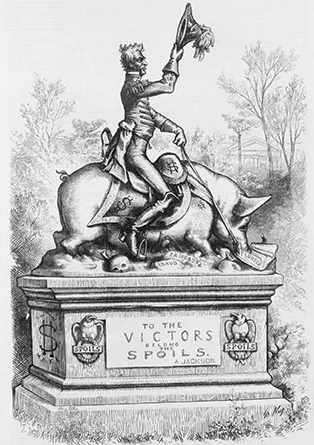
Also, incoming president Castro is married to Manuel Zelaya, a former president who tried to pull an Andrew Jackson after the Supreme Court ordered him to stop holding an illegal referendum to change term limits in his favor. He ordered the military to hold the referendum anyway, and was only ousted after the military couped him instead. So this is not exactly a family known for their deep respect for the exact wordings of laws or court rulings (not that anyone in Honduras has really excelled on that front). See further speculation eg here and here. And here’s Mark Lutter from Charter Cities Institute on the elections and the future.

December 2, 2021

If there are no restrictions on voting age, what other expansions of the franchise might amuse the Supreme Court of Canada?

Filed under: Cancon, Law, Liberty — Tags: , , , , — Nicholas @ 05:00

In Wednesday’s NP Platformed newsletter, Colby Cosh suggests that, given the SCC’s demonstrated preference for getting rid of restrictions on voting rights, we may be in for some interesting legal times:

A band of plucky teens, we are told, are suing to have Canada’s voting age lowered. They are not the first to try, and it goes without saying that the youngsters are a front for a gaggle of do-gooder groups who think that it would somehow purify our democracy in the fires of justice if 16-year-olds could vote. NP Platformed thinks this is a terrible idea that has logical problems on its face. If the age-18 voting limitation can’t be defended, how can any such limit be defended?

Rest assured that the grown-up lobbyists who have a sore bum about the voting age won’t be recruiting four-year-old boys to articulate their cause or serve as litigants. It will all be photogenic, politically sophisticated, fantastically unrepresentative teenagers.

But let’s set the snark aside for a moment. You may be asking, as we here at NP Platformed world headquarters did, how a charter challenge to the voting age can happen at all. Surely there’s solid caselaw about this? If you look into the matter, as we did, you might find yourself saying “Uh oh.” As we did.

The most revealing discussion we could find is tucked away in a footnote in a 2019 paper by University of Ottawa Prof. Michael Pal. Within this wad of small print, Prof. Pal outlines the whole issue. The charter says flat out that “Every citizen of Canada” has the right to vote in elections, and various species of legal voting disability have been removed over time, leaving persons under 18 as the only citizens within Canada who cannot exercise this right.

[…]

“The analogy between youth voting restrictions and inmate disenfranchisement breaks down because the type of judgment Parliament is making in the two scenarios is very different. In the first case, Parliament is making a decision based on the experiential situation of all citizens when they are young. It is not saying that the excluded class is unworthy to vote, but regulating a modality of the universal franchise. In the second case, the government is making a decision that some people, whatever their abilities, are not morally worthy to vote — that they do not ‘deserve’ to be considered members of the community and hence may be deprived of the most basic of their constitutional rights. But this is not the lawmakers’ decision to make.”

We’re just gonna say it: “regulating a modality of the universal franchise” is drivel. If this is the bedrock on which age restrictions on voting rest, age restrictions on voting are in trouble.

The constitutionality of a voting age was also discussed in the Supreme Court’s 2019 Frank case, which annihilated the voting eligibility restrictions for Canadian citizens living abroad. In that case it was dissenters, specifically justices Suzanne Côté and Russell Brown, who brought the matter up. If legislatures can’t restrict the voting rights of Canadians who have been living in Cucamonga or Timbuktu, how can they impose any limit at all?

The dissenting pair quietly pointed out (at paragraph 144) that the phrase “regulating a modality” is gaseous nonsense, and that the Supreme Court, in its endless lust for making the franchise more inclusive, seems to have made any restrictions at all untenable. (Why, indeed, should the franchise be limited to citizens? Municipalities are already asking this question!)

November 6, 2021

QotD: Michael Bellesisles

… I offered a very limited defense of the History Biz. It’s not just that they’re rabid Leftists, I said. I mean, yeah, they are, no denying that, but outright “writing the conclusion before you even start asking the question”-type fraud, Michael Bellesisles-type fraud, is a lot rarer than you probably think.

Bellesisles, you might recall, is the guy whose revolutionary revisionist thesis was that the Founders weren’t really all that enthusiastic about guns, and didn’t own that many, and that whole 2nd Amendment thing was just an afterthought. Yeah, right. That one was written conclusion first, and since no remotely objective look at the evidence could ever possibly support it, he resorted to making lots of “evidence” up. But the reaction of the rest of the profession was interesting: They lauded Bellesisles to the skies. He won the Bancroft Prize for his work, which is the biggest one you can get in American history. Now, I’m sure you’re saying “of course they praised him, he was telling them exactly what they wanted to hear!”, and you’re right …

… but only to a point. Because eggheads are — as you might imagine — the pettiest, most envious bunch of little bitches this side of a junior high cheerleading squad, there’s no piece of research so meticulous, no conclusion so solid, that someone isn’t going to tear into it in one of the professional journals, for base personal reasons if no other. Lest you think I’m kidding, I personally know of a woman at a big league school whose husband was seduced, and her marriage ruined, by an open, obnoxious lesbian colleague, all because she, the hetero, had dared to question some of the lesbian’s work at a conference in their mutual field.

That’s the level of pettiness we’re dealing with here. And I can’t say for absolute certain that Bellesisles received no criticism whatsoever; he doesn’t work in my field, so even though I was certain that Arming America was bullshit of the purest ray serene, it wasn’t my problem, professionally speaking. But whatever, point is, in my fairly well-informed opinion, merely “telling them what they want to hear” doesn’t account for the entire profession ignoring the huge, blinking, neon red flags surrounding Arming America. Rather, I suggest it’s more of a Pauline Kael thing.

I actually kinda pity Kael — much like John Montagu, the 4th Earl of Sandwich, she was a fairly big wheel back in her day, but if she’s known at all now, it’s for something entirely peripheral to her life’s work. In Kael’s case, it’s her declaration that it was impossible for Richard Nixon to have won in 1972, since “nobody I know voted for him” (it was one of the biggest blowouts in American electoral history). The Arming America thing is, I think, like that — nobody in academia owns a gun, or knows anyone who owns a gun, or knows anyone who knows anyone who owns a gun. So, yeah, they know all the scary statistics about how there are sixty gorillion more guns than people in America, but all of that iron belongs to the Dirt People, far away over the horizon. They’d never in a million years even be in the same zip code as someone who thinks Arming America was absurd on its face. Hence, it never occurred to them to question it.

It helped that Bellesisles was telling them what they wanted to hear, no doubt, but the main reason nobody challenged it was that they lacked the cognitive toolkit to even consider the possibility he might be wrong.

Severian, “Are They Trying to Lose?”, Rotten Chestnuts, 2021-07-15.

« Newer PostsOlder Posts »

Powered by WordPress