They don’t teach it this way in college (for obvious reasons), but the Civil War was a revolt of the Elites. Put polemically, but not unfairly, The American People were offered four choices for President in 1860:
- tacitly pro-slavery;
- pro-slavery;
- fanatically pro-slavery; or
- fuck you.
These were embodied by John Bell, Stephen A. Douglas, John C. Breckinridge, and Abraham Lincoln, respectively, but the names on the tickets really didn’t matter, because it all boiled down to two options: Some flavor of politics as usual, or fuck you. And here’s the important part: The vast, vast majority of the country voted for politics as usual. “Fuck you” got 39.82% of the vote, which by my math means that 60% of a country that would soon be conducting the largest military mobilization yet seen in the history of warfare wanted things to keep going as they were.
In fact, it’s worse than that. As much as I hate to credit him with anything, Barack Obama was right — He truly was a Lincolnesque figure, in that Lincoln was vague to the point of incoherence about his origins, aims, and platform, too. A vote for Lincoln wasn’t a vote for disunion; it was a thumb in Dixie’s eye, no more. In other words, it was a vote to put the ball in the South’s court — an electoral-college version of the double dog dare. We voted for “none of the above,” pro-slavery people, now whatcha gonna do about it?
We know the answer — they haven’t yet forbidden us from teaching the fact that secession happened sorta-kinda-quasi democratically — but for obvious reasons they don’t teach that the secession conventions were all rigged in favor of the fire-eaters, and even then the motions barely passed. Which, again, means that “politics as usual” was nearly the default position of guys specifically summoned to discuss ending politics as usual. If you want to say that the Civil War was started by about twenty guys nobody’s ever heard of, with names like “Louis T. Wigfall” and “Laurence M. Keitt,” you won’t hear much argument from me.
Severian, “Misunderstanding the Civil War”, Rotten Chestnuts, 2019-05-29.
July 29, 2022
QotD: The US Civil War as a “revolt of the elites”
June 10, 2022
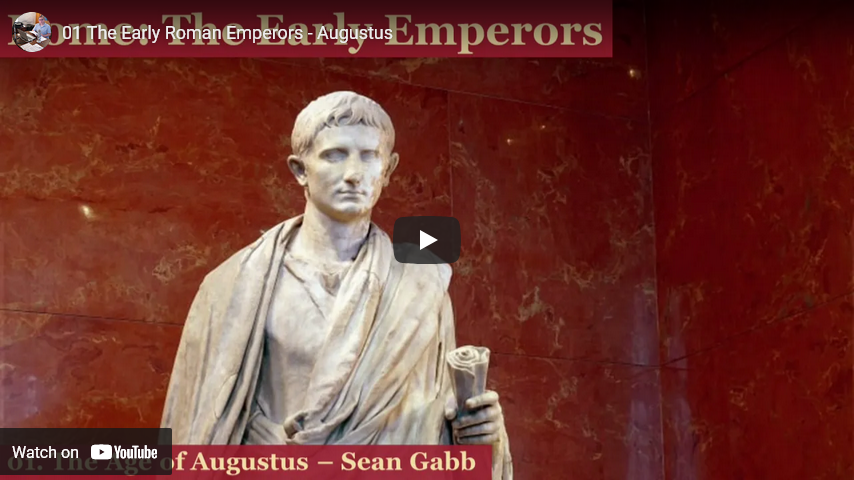
The Early Roman Emperors – Part 1: Augustus
seangabb
Published 26 Sep 2021The Roman Empire was the last and the greatest of the ancient empires. It is the origin from which springs the history of Western Europe and those nations that descend from the Western Roman Empire. It is the political entity within which the Christian faith was born, and the growth of the Church within the Empire, and its eventual establishment as the sole faith of the Empire, have left an indelible impression on all modern denominations. Its history, together with that of the ancient Greeks and the Jews, is our history. To understand how the Empire emerged from a great though finally dysfunctional republic, and how it was consolidated by its early rulers, is partly how we understand ourselves.
Here is a series of lectures given by Sean Gabb in late 2021, in which he discusses and tries to explain the achievement of the early Emperors. For reasons of politeness and data protection, all student contributions have been removed.
More by Sean Gabb on the Ancient World: https://www.classicstuition.co.uk/
Learn Latin or Greek or both with him: https://www.udemy.com/user/sean-gabb/
His historical novels (under the pen name “Richard Blake”): https://www.amazon.co.uk/Richard-Blak…
June 9, 2022
A brutal microcosm of the English Civil War
At The Critic, Jonathan Healey reviews The Siege of Loyalty House by Jessie Childs:

Late in the summer of 1641, with Charles I deep in dispute with his Parliament, alarming reports reached Westminster of Catholics amassing arms at Basing House in Hampshire. At this point in time, few expected civil war, but plenty feared an imminent Catholic plot. Recent reform to the Church had introduced lavish ceremonies which looked, to many eyes, like the trappings of Rome, and Charles himself was married to a Catholic.
More to the point, England’s Catholics had done it before. Every year, people marked the anniversary of the Gunpowder Treason, which was already stuck in the national consciousness as the quintessential Popish rebellion: an armed coup plotted by dissident aristocrats gathering weapons on their great rural estates and planning subterfuge at the highest levels.
Yet civil war came, and when it did it would be nothing like the “Popish Plots” of Protestant imagining. It would be fought over constitutional as much as religious divides. And, rather than a rebellion, it would be an armed struggle between two competing fiscal-military organisations — effectively between two competing states.
The English countryside became militarised. Now, it was not just a landscape. It was territory. The great houses were no longer places for covert plotting; now they were centres of command and control. And few were more important than Basing House.
Hampshire today is a pleasant place: gentle and verdant with rolling chalk hills, shaded woodlands, and quiet valleys. But in the 1640s it became contested and dangerous: a dark, malevolent land of violence and death. People looked upon one another with suspicion, and riders were ambushed and killed as they travelled at night. Parish churches were stormed, towns starved and bombarded. Armies of musketeers, pikemen, and cavalry traversed the folding lanes of the county looking to bring bloodshed and plunder.
[…]
A crucial theme is encapsulated in the book’s denouement. The deputy sent to pacify Hampshire for the New Model was Oliver Cromwell. He had been in the thick of the fighting from the start, and before then was an earnest — if obscure and scruffily-attired — Member of Parliament. But Cromwell really rose to prominence in 1644 and 1645, on the back of his military abilities. He represented a new approach to the war: the pursuit of total victory even at the cost of sharp bloodshed.
It was Cromwell’s direct — even brutal — efficiency that brought the siege of Basing House to its end. The walls fell and many of the garrison were killed. Slaughtered, too, were a number of Catholic priests in a moment of violence that was representative of the way the war was heading. Cold-blooded murder of female camp followers had been perpetrated by royalists in Cornwall and by parliamentarians after Naseby. King Charles had allowed a bloody storm of Leicester which had cost many civilian lives, and Cromwell would go on to oversee the horrors of Drogheda and Wexford in Ireland. The chivalry of Waller and Hopton would come to seem a long way in the past.
QotD: Cicero and the end of the Roman Republic
De legibus is more aggressively forward looking. Set in Cicero’s own time (it is a dialogue between Cicero, his brother Quintus and their friend Atticus), De legibus first sets out a theory for the general foundation of law […] to use as the basis for a reformed model of the Roman Republic, which is summarized in the third book. Damage to the text means that De legibus cuts off in book three, and there are smaller gaps and fragments in the earlier books as well.
It’s important to get a sense of the situation in the 50s B.C. when Cicero is writing to understand why he feels this is necessary. The previous round of civil wars had ended in 82 B.C., with the victor, the arch-conservative L. Cornelius Sulla, imposing a revised republic with shocking brutality and bloodshed. By the 50s, it would have been clear to anyone paying attention that the peace and apparent stability of the Sullan reforms had been a mirage – the disruptions of the 60s (including the Catilinarian conspiracy, foiled by Cicero) were not one-offs, but merely the first rattlings of the wheels coming off the cart entirely. I don’t want to get too deep into the woods of how exactly this happened; there are any number of good books on the collapse of the Republic which deal with this period (Scullard’s From the Gracchi to Nero (1959) is a venerable and straight-forward narrative of the period; Syme, The Roman Revolution (1939) is probably the most influential – reading both can serve as a foundation for getting into the more recent and often more narrowly directed literature on the topic, note also Flowers, Roman Republics (2011)).
It’s in this context – as the Republic is clearly shaking apart – that Cicero is ruminating on the nature of the Republic, how it functions, what it is for, and how it might be set right. Despite this, Cicero should not be taken for a radical, or even really for much of a reformer; Cicero is a staunch conservative looking to restore the function of the old system, in many cases by a return to tradition as much as the renovation of it. Cicero’s corpus is a plea to save the Republic as it was, not to bury it; it was a plea, of course, that would go unanswered. In a real sense, the Republic died with Cicero.
Bret Devereaux, “Collections: A Trip Through Cicero (Natural Law)”, A Collection of Unmitigated Pedantry, 2019-12-12.
April 22, 2022
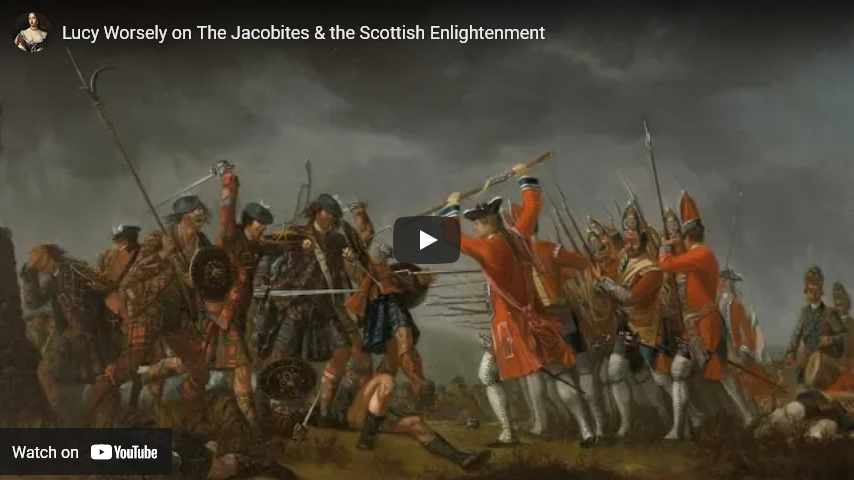
Lucy Worsely on The Jacobites & the Scottish Enlightenment
Whitehall Moll History Clips
Published 22 Jul 2018A segment on the Jacobites and the Scottish Enlightenment that blossomed in the face of Hanoverian oppression.
April 13, 2022
A new look at the Commonwealth and the Protectorate of Oliver Cromwell
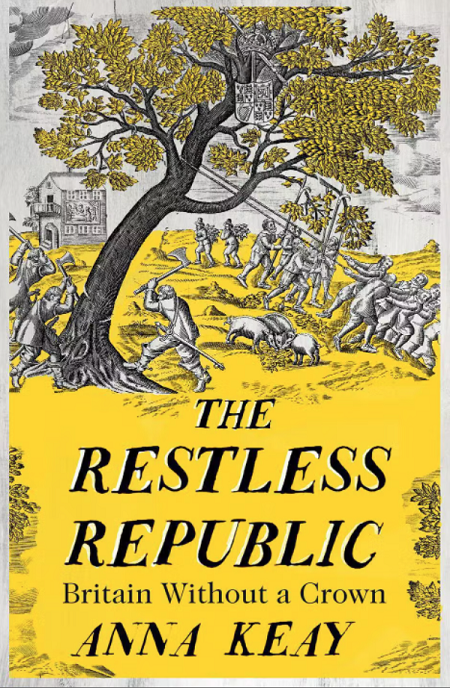
In The Critic, Miranda Malins reviews a new history of the period between the execution of Charles I and the Stuart restoration of Charles II, The Restless Republic: Britain Without a Crown by Anna Keay:
This evasion is not for the historian Anna Keay. Faced with these collective shortcomings (“This book was born of ignorance,” she explains in opening), she explores this most dynamic of decades, looking it squarely in the face. With her, we roam around the period, the broad chronological narrative softened through a selection of nine interwoven biographies ranging from the irrepressible newspaperman Marchamont Nedham, to the indomitable royalist Countess of Derby, from the brilliant scientist William Petty to the dreaming Digger Gerrard Winstanley.
This structure achieves a broad perspective and rare realism, giving the reader the sense of dipping and diving through the restless waves of the republic and taking them to all corners of the new Britain forged in the fire of three Civil Wars. As expected, we travel from the trial and execution of Charles I to the Restoration of his son, but Keay’s achievement is to make the shape-shifting years of the kingless Commonwealth and Protectorate that lie between more thrilling than either royal bookend, demonstrating how far from inevitable the return of the Stuarts was. There is no “high road to Restoration” here, but rather a snaking maze of paths striking off in new directions and looping back: an uncharted landscape for Keay’s characters to navigate where every choice counted.
The result is a panoramic and pulsating drama every bit as restless as the republic it captures so well. Indeed the “Restless” adjective of the title perfectly conjures the progressive spirit of Britain without a crown: unstable and dangerous, yes, but as a result, experimental and unafraid. As Keay puts it: “The 1650s was a time of extraordinarily ambitious political, social, economic and intellectual innovation, and it was not a foregone conclusion that the British republic would fail.”
This portrait will be, for many, a revelation. Far from the dour, militaristic regimes of popular imagination, life under the Commonwealth and Oliver Cromwell’s Protectorate emerges as innovative and exciting: the effect of the hitherto unimaginable act of abolishing the monarchy and House of Lords after years of transformative conflict being to unleash an energetic spirit of ambitious experimentation and industry.
We feel this bold energy in the meetings of the Oxford Experimental Philosophy Club (which would become the Royal Society in 1660) and its young member William Petty managing to survey the whole of Ireland in record time despite having no cartographical experience; in failed cloth trader Gerrard Winstanley’s determination to dig the new Jerusalem that had come to him on an autumn ramble; in Marchamont Nedham escaping Newgate prison and picking his way through several dangerous changes of side, pen in hand, always managing to land cat-like on his feet through sheer commercial nous and audacity.
April 11, 2022
Republic to Empire: The Ides of March to Actium
seangabb
Published 13 Mar 2021In 120 BC, Rome was a republic with touches of democracy. A century later, it was a divine right military dictatorship. Between January and March 2021, Sean Gabb explored this transformation with his students. Here is one of his lectures. All student contributions have been removed.
(more…)
April 10, 2022
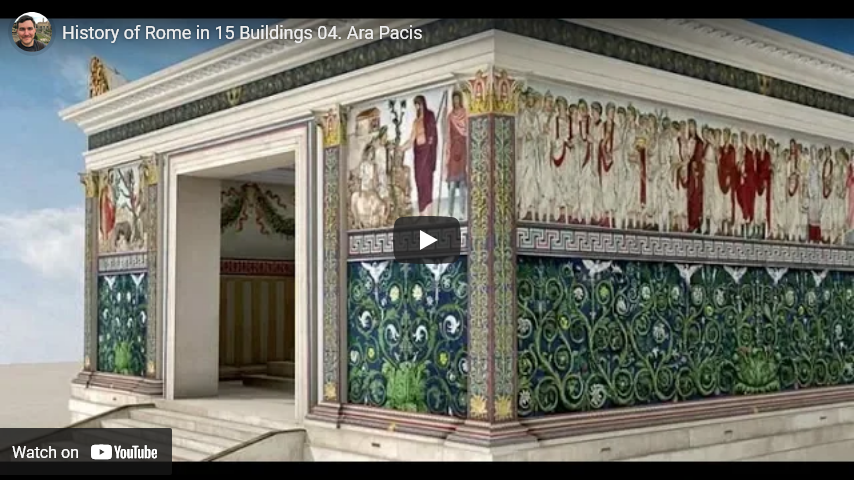
History of Rome in 15 Buildings 04. Ara Pacis
toldinstone
Published 27 Sep 2018Augustus dominates this fourth episode of our History of Rome, which uses the Ara Pacis Augustae (Altar of the Augustan Peace) to discuss the first emperor’s reign, reforms, and propaganda. I also threw in a gripping description of the Battle of Actium.
If you enjoyed this video, you might be interested in my book Naked Statues, Fat Gladiators, and War Elephants: Frequently Asked Questions about the Ancient Greeks and Romans. You can find a preview of the book here:
https://toldinstone.com/naked-statues…
If you’re so inclined, you can follow me elsewhere on the web:
https://www.reddit.com/r/AskHistorian…
https://www.instagram.com/toldinstone/To see the story and photo essay associated with this video, go to:
https://toldinstone.com/ara-pacis/Thanks for watching!
April 7, 2022
Republic to Empire: The Triumph of Caesar
seangabb
Published 5 Mar 2021In 120 BC, Rome was a republic with touches of democracy. A century later, it was a divine right military dictatorship. Between January and March 2021, Sean Gabb explored this transformation with his students. Here is one of his lectures. All student contributions have been removed.
(more…)
April 3, 2022
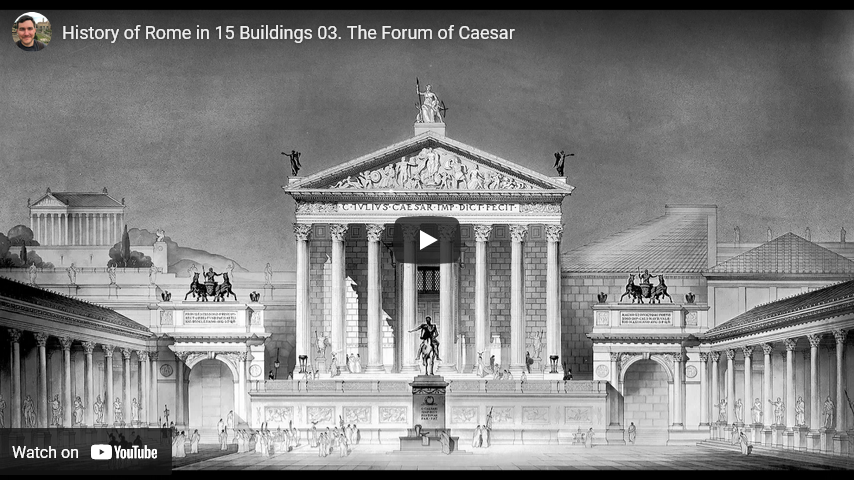
History of Rome in 15 Buildings 03. The Forum of Caesar
toldinstone
Published 27 Sep 2018In this third episode of our History of Rome, focused on the Forum of Julius Caesar, we discuss (as might be expected) Julius Caesar, the last and greatest of the generals who reshaped the Roman Republic in their own image. Caesar dominates the stage, but there are walk-on bits for a crew of pirates, forty trained elephants, and Cleopatra.
If you enjoyed this video, you might be interested in my book Naked Statues, Fat Gladiators, and War Elephants: Frequently Asked Questions about the Ancient Greeks and Romans. You can find a preview of the book here:
https://toldinstone.com/naked-statues…
If you’re so inclined, you can follow me elsewhere on the web:
https://www.reddit.com/r/AskHistorian…
https://www.instagram.com/toldinstone/To see the story and photo essay associated with this video, go to:
https://toldinstone.com/the-forum-of-…Thanks for watching!
April 2, 2022
Jon Stewart believes that “… the only thing that can possibly explain racial inequality today in America is still ‘white supremacy'”
Andrew Sullivan recounts his experiences on one of Jon Stewart’s shows:
Jon Stewart at the Montclair Film Festival, 7 May, 2016.
Wikimedia Commons.
… I found out, in fact, that there would be two other guests, and that it would, indeed, be a debate. Surprise! As the show started, I also realized for the first time there was a live studio audience and that the episode was called “The Problem With White People” — a title I’d never have been a party to, if I’d known in advance. (I wouldn’t go on a show called “The Problem With Jews” or “The Problem With Black People” either.) At that point I should have climbed carefully off the stake, tamped down the flames, made a path through the kindling, and walked away.
I protested to the producers that I’d been ambushed. And to be fair, they gave me the option of backing out at the last minute. But I didn’t want to leave them in the lurch, reassured myself that Stewart was a pro, and said I’d go ahead. I just assumed he wouldn’t demonize or curse at a guest; he would moderate; he would entertain counter-arguments; he would defend fair play. After all, this was the man who had lacerated Crossfire for bringing too much heat and not enough light. He believed in sane discourse. He was a liberal, right?
Wrong.
On the race question, Stewart has decided to go way past even Robin DiAngelo, in his passionate anti-whiteness. His opening monologue was intoned at times in a somber tone, as if he were delivering hard truths that only bigots could disagree with. He argued that no one in America had been prepared to have an honest discussion about race — until the “reckoning” of 2020. He also suggested that nothing had been done by whites to support African-Americans from 1619 (yes, he went there) … till now. The most obvious solution — reparations — was, he implied, somehow, absurdly, taboo.
His montage of “black voices” insisted that African-Americans are still granted only conditional citizenship, are still barred from owning property — “we don’t own anything!” — and ended with Sister Souljah — yes! — explaining that the thing that kills black people are not bullets, but white people. This is the same moral avatar who once said: “If black people kill black people every day, why not have a week and kill white people?” Stewart then hailed Angela Davis — a proud Communist, with a particular fondness for East Germany’s suppression of dissent — and warmly thanked her as “Angela”. But Stewart included not a single black voice of disagreement or nuance. He apparently believes that all black people hold the same view. And all white people just refuse to hear it.
Jon Stewart’s insistence that Americans had never robustly debated race before 2020 is also, well, deranged. Americans have been loudly debating it for centuries. There was something called a Civil War over it. His claim that white America has never done anything in defense of black Americans (until BLM showed up, of course) requires him to ignore more than 300,000 white men who gave their lives to defeat the slaveholding Confederacy. It requires Stewart to ignore the countless whites (often Jewish) who risked and gave their lives in the Civil Rights Movement. It requires him to erase the greatest president in American history. This glib dismissal of all white Americans throughout history, even those who risked everything to expand equality, is, when you come to think about it, obscene.
Stewart’s claim that whites never tried to ameliorate black suffering until now requires him to dismiss over $19 trillion of public funds spent in the long War on Poverty, focused especially on black Americans. That’s the equivalent of more than 140 Marshall Plans. As Samuel Kronen has shown, it requires the erasure from history of “the Food Stamp Act of 1964, the Child Nutrition Act of 1966, the Social Security Amendments of 1965, the Elementary and Secondary Education Act of 1965, the Social Security Amendments of 1962, and the Economic Opportunity Act of 1964, and on and on.” To prove his point, Stewart has to pretend LBJ never existed. That’s how utterly lost he now is.
Stewart then used crude metrics of inequality to argue, Kendi-style, without any evidence, that the only thing that can possibly explain racial inequality today in America is still “white supremacy”. Other factors — concentrated poverty, insanely high rates of crime and violence, acute family breakdown, a teen culture that equates success with whiteness, lack of affordable childcare — went either unmentioned or openly mocked as self-evident expressions of bigotry. He then equated formal legal segregation with voluntary residential segregation, as if Jim Crow were still in force. And he straw-manned the countering argument thus: white America believes that African-Americans are “solely responsible for their community’s struggles”.
I don’t know anyone who believes that. I sure don’t. It’s much more complex than that. And it’s that complexity that some of us are insisting on — and that Stewart wants to dismiss out of hand in favor of his own Manichean moral preening. His final peroration ended thus: “America has always prioritized white comfort over black survival.” Note: always. There has been no real progress; white people have never actually listened to a black person; America is irredeemably racist. Those fucking white men, Lincoln and LBJ, never gave a shit.
March 26, 2022
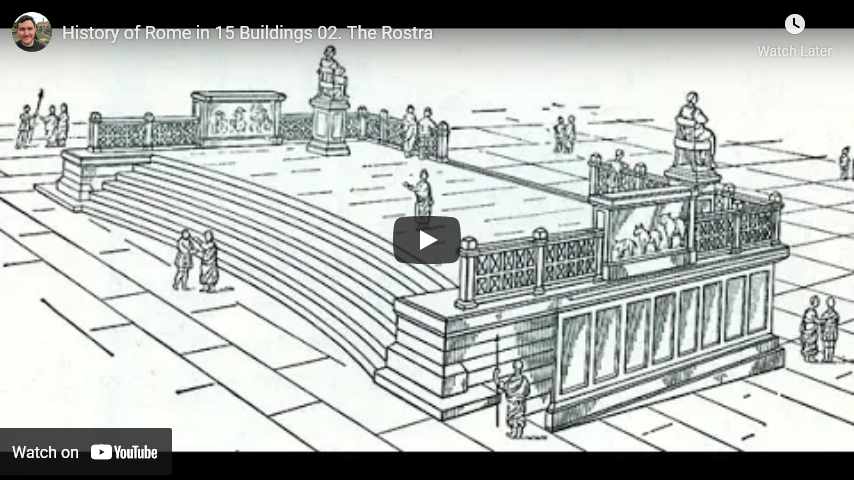
History of Rome in 15 Buildings 02. The Rostra
toldinstone
Published 2 Oct 2018This second episode of our History of Rome presents the Rostra, the speaking platform in the Roman Forum, as a key to understanding the turbulent world of the Late Republic. It focuses on the career of Cicero, Rome’s greatest orator, who was successively applauded and impaled on the Rostra.
If you enjoyed this video, you might be interested in my forthcoming book Naked Statues, Fat Gladiators, and War Elephants: Frequently Asked Questions about the Ancient Greeks and Romans.
You can find a preview of the book here:
https://toldinstone.com/naked-statues…
If you’re so inclined, you can follow me elsewhere on the web:
https://www.reddit.com/r/AskHistorian…
https://www.instagram.com/toldinstone/To see the story and photo essay associated with this video, go to:
https://toldinstone.com/the-rostra/
Thanks for watching!
March 21, 2022
Republic to Empire: Sulla A Failed Reaction
seangabb
Published 10 Feb 2021In 120 BC, Rome was a republic with touches of democracy. A century later, it was a divine right military dictatorship. Between January and March 2021, Sean Gabb explored this transformation with his students. Here is one of his lectures. All student contributions have been removed.
(more…)
March 13, 2022
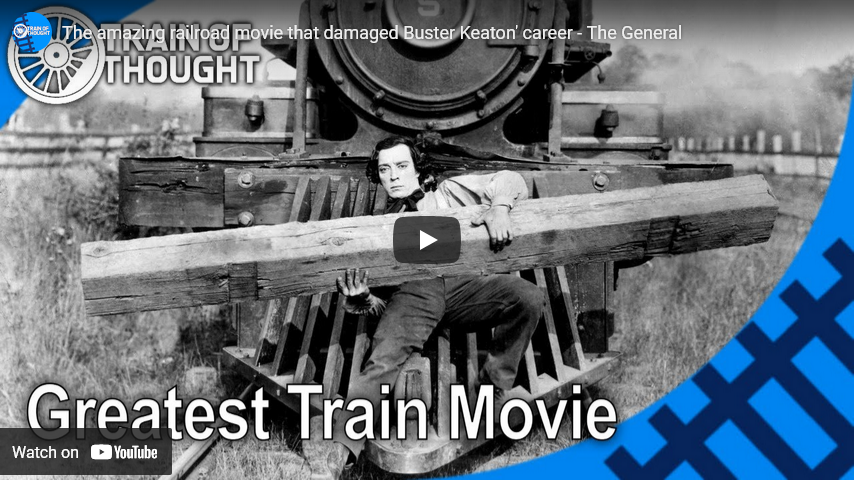
The amazing railroad movie that damaged Buster Keaton’s career – The General
Train of Thought
Published 26 Nov 2021In this video, we take a look at the tragedy of The General and how, what is now considered a classic of the silent era, was panned by audiences upon its release. Yes, I have been watching a lot of Buster Keaton films recently, how can you tell.
The General (Give it a watch): https://youtu.be/iHlBMKtgPOA
Please subscribe for more
This video falls under the fair use act of 1976
March 7, 2022
Wargaming the Spanish Civil War
Of all the wars of the 20th century, the Spanish Civil War has to have been one of the most confusing to outsiders at the time and virtually unreadable to moderns who didn’t live through that tumultuous era. I’ve read and enjoyed Orwell’s Homage to Catalonia, but it’s not a history of the whole war: Orwell was an enlisted volunteer who served on a “quiet” sector until he was seriously wounded by a Nationalist sniper. He discusses the situations he encountered personally and avoids, for the most part, editorializing the larger strategic conflict (the TimeGhost team did a pretty helpful video on how the war was triggered that may be informative). As a result of the lack of clarity and the confused narratives, the Spanish Civil War hasn’t been covered in wargames to any great degree, but Jonathan Kay found a scenario for Advanced Squad Leader on part of the conflict that he clearly found intriguing:
The Spanish Civil War was, in human terms, an epic clash of arms: Almost 300,000 combatants are thought to have been killed, as well as more than 150,000 civilians. The conflict also looms large in the history of the 20th century, having been memorably described by U.S. ambassador to Spain Claude Bowers as the “dress rehearsal” for World War II.
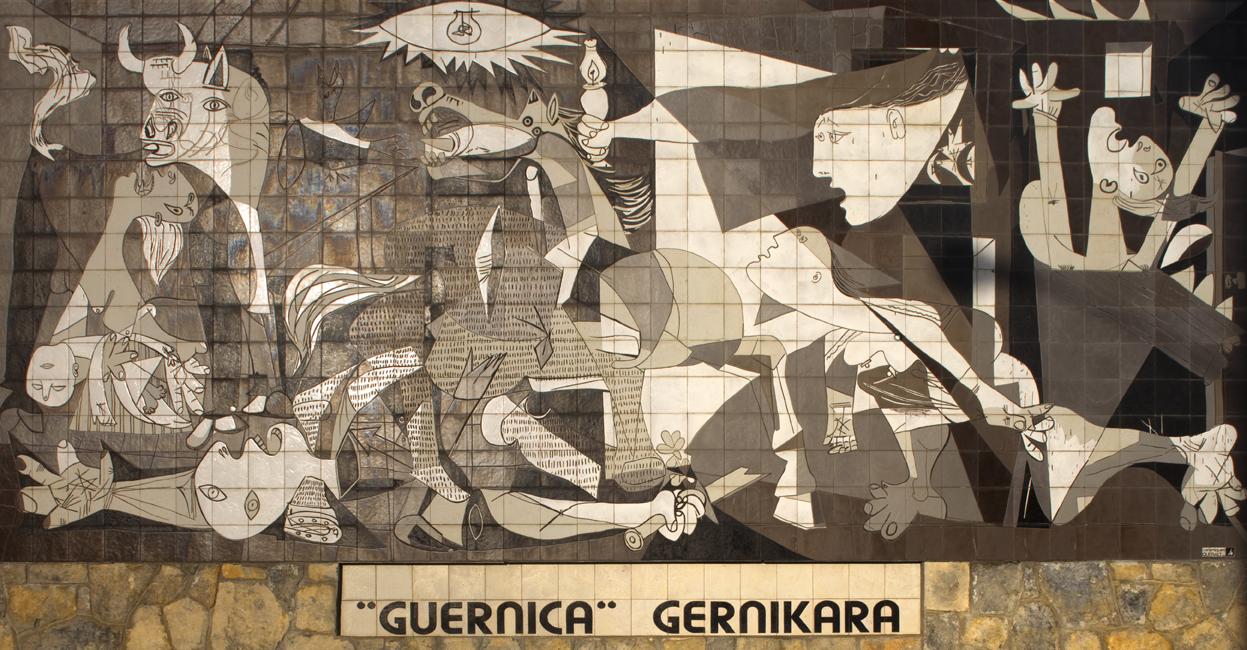
Among the idealistic combatants who travelled to Spain to join the fight against fascism were Ernest Hemingway and George Orwell, whose war experiences served to inform, respectively, For Whom the Bell Tolls and Homage to Catalonia. The war also inspired Pablo Picasso’s unsettling surrealist masterpiece Guernica, which depicted the bombing of the Basque town of the same name on April 26, 1937.
Picasso’s Guernica in mural form in the town of Guernica.
Photo by Papamanila via Wikimedia Commons.All in all, something like 50,000 foreigners assisted the Republican side through the International Brigades — whose Brigada Abraham Lincoln included a Washington Battalion made up of Americans, and a Mackenzie-Papineau Battalion made up of Canadians. At least a quarter of these international volunteers died in combat, but most of the rest went home with frightening stories to tell. Even before the Nazis invaded Poland, the world’s understanding of fascism’s existential threat to humanity was shaped by General Francisco Franco’s successful campaign to topple the Second Spanish Republic.
And yet one thing that the Spanish Civil War has not yielded is a wide array of popular boardgames. This may be partly due to the fact that the conflict was so greatly overshadowed in scale and importance by World War II. But it may also be due to the fact that neither side emerged as sympathetic. As Orwell described in Homage to Catalonia (and as Adam Hochschild described, from a U.S. perspective, in his 2016 book, Spain in Our Hearts: Americans in the Spanish Civil War, 1936–1939), the Republican war effort turned out to be incompetent, fractured, and cynical, with the dominant pro-Stalinist faction eventually turning murderously upon its Trotskyist and anarchist allies. And as late as early March, 1939, just weeks before Franco conquered Madrid and ended the war, Republican forces inside the capital city were engaged in a deadly power struggle within their own ranks. All in all, the many regional and political subplots make the war difficult to model in any kind of conventional wargame (though, of course, this hasn’t stopped numerous game designers from trying).
However, The Beleaguered Capital, HazMo scenario 11, presents a reminder that when Republican and Nationalist forces fought each other in pitched battles, the mode of combat really did offer a preview of World War II, including the use of air power and tanks. (While the only tanks that existed in Spain when the war broke out were a handful of tiny, World War I-era Renault FTs, the Russians sent T-26s to the Republicans while Germany dispatched Pz Is to the Nationalists. In both cases, these vehicles arrived in Spain during the Fall of 1936, just a few months before the December 16 dateline on The Beleaguered Capital.)