
Tasting History with Max Miller
Published 6 Dec 2022
(more…)
December 7, 2022
The Marie Antoinette Diet
Comments Off on The Marie Antoinette Diet
The media: they hate you, they really hate you
In a follow-up to yesterday’s post at Thank You Truckers!, Donna Laframboise provides more details on one of the individual cases highlighted by Douglas Murray in the Munk Debates last week:
Collectively, those examples demonstrate three things: Egregious journalistic bias. A frightening inability to empathize with the working class. And a bizarre eagerness to slander and dismiss fellow human beings.
Because the examples cited by Murray are vile, I didn’t amplify them. But those of you who watched the three-minute clip heard about them. On further reflection, therefore, I’m going to highlight one of them. Simply to make the point that Murray wasn’t exaggerating. When he used the words rancid and corrupt to describe our current media environment, he was wholly on target. Here’s a small portion of Murray’s remarks, including some third party profanity:
You had a Toronto Star columnist saying, quote (sorry for the language), it’s a homegrown hate farm that was then jet-fuelled by an American right-funded rat-fucking operation …
Yup, that was a real tweet from Bruce Arthur, who earns his living as a sports writer, currently for the Toronto Star. Below is his full reply to comments made by another Canadian journalist, Jeet Heer, who writes for The Nation, a far-left US publication:
I worked with both these gentlemen 20 years ago, in the earliest days of the National Post. It was a large newsroom. I didn’t get to know either of them.
The day after they catapulted these deluded, venomous tweets into the world, I arrived in Ottawa. I spent a week there, taking photos and actually talking to people. The Freedom Convoy protesters I met were supremely decent human beings. Since then, I’ve formally interviewed many of them. I’ve learned about their lives, their triumphs, their troubles, their sorrow.
My conclusion? If I were stranded on a desert island — or if a nuclear bomb detonated anywhere near me — I’d be sticking close to folks like these. People who know how to fix things, how to build things, and how to get things done. People sufficiently concerned about right and wrong to put themselves at risk. People of faith, many of them, who show us religion at its finest — a stable, calming force. A source of courage, strength, and big picture perspective.
Those who protested in Ottawa were human beings, not saints. That’s true of every large gathering. But overwhelmingly, they were decent, salt-of-the-earth people.

Even the members of the Canadian media still trying to be more even-handed in their coverage felt obligated to go looking for the red-hatted Trump supporters, the “hard men”, and the potential trouble-makers to the point that those relatively few people seemed disproportionally represented in the published articles. Of course, all of them spent a lot of time and effort desperately searching for more idiots like that paid government agent who’d briefly been able to get on-camera waving his Nazi flag …
Comments Off on The media: they hate you, they really hate you
Pearl Harbor: Before and After December 7th
Geographics
Published 20 Sep 2022
(more…)
Comments Off on Pearl Harbor: Before and After December 7th
QotD: Career path from recent B.A. to being “an expert” on national TV
The Z Man has had lots of fun bagging on “The Institute for the Study of War”. These are the guys peddling the truly bizarre Ukraine fantasies. Take a look at their masthead (with the awesome domain name “understandingwar.org”) and you’ll see a whole bunch of people who have never fired a shot in anger, but are either big league Media goons (Bill Kristol), disgraced politicians (Joe Liberman!), woke capital grifters, and of course at least one fucking Kagan, warming up in the bullpen until the next “change” of “administration”, when she’ll rotate into her patrimony at the State Department.
Just for giggles, I clicked on the bio of the cutest contributor — called, hilariously, “analysts and associates” — a
womangirlpersyn named Karolina Hird. Here’s her official bio, in full:
Karolina is a Russia Researcher on the Russia/Ukraine portfolio at ISW. She graduated from George Washington University in December of 2021 with a B.A. in International Affairs and a concentration in Security Studies. Karolina’s undergraduate research examined aspects of international law and Eastern European security with a special focus on the rise of Polish populism. She has also conducted research pertaining to Russian objectives and geopolitical strategies on NATO’s Southern periphery.
Did everyone catch that? A Bachelor’s Degree. In December 2021. This gal is all of nine months out of college.
I’ve read my share of undergraduate research. Some of it is decent. There are some undergrads I’d trust to hit the archives for limited purposes. But there are no 21 year old kids on this earth whose judgments I’d trust, because I’ve taught a LOT of college kids, and y’all …But of course she’s not doing anything policy-related. You know how this kid’s career trajectory will go: A few years at ISW, in which she’ll start appearing as a guest on the “news” as a “Ukrainian affairs expert” — and you can tell she’s an expert, because she’s an “analyst” at the “Institute for the Study of War”. Once her looks start going, she’ll move over to a staff job for some politician, then off to a think tank, then maybe a run for office in her own right, then back to the Media as a “senior analyst”. I’d wager many crisp stacks of Crispus Attucks that this lady couldn’t tell the difference between a MiG-31 and a Mazda Miata, but we’re a year or two away from putting her on national TV as an “expert” on war and peace.
How do you stop that kind of thing? How would you even start?
Severian, “Slipping the Leash”, Founding Questions, 2022-08-27.
Comments Off on QotD: Career path from recent B.A. to being “an expert” on national TV
December 6, 2022
Elizabeth Nickson on Prime TV’s new mystery series, Three Pines
I don’t watch much TV myself, aside from Minnesota Vikings football games, so what little I know about current TV offerings is pretty much all second-hand … and as Elizabeth Nickson‘s review shows, I don’t think I’m missing much at all:

I had the distinct unpleasure this week of watching Prime TV’s new mystery series, Three Pines, set in the village I grew up in, Knowlton, Quebec, where the author now lives and the geography within which she sets her series. I have a rule of not watching anything violent (except Yellowstone) but to catch a glimpse of the village I ranged through as a kid, I sucked it up.
Of course, I was immediately insulted, as the first scene had a white-blond beefy Anglo (Nazi Alert!) cop in Quebec City (an Anglo cop in Quebec City is vanishingly rare) beating up an Indian woman. The thing marched on, hitting every nasty leftie trope, through an increasing ugly physical landscape. The writer, Louise Penny, is very successful, top of the NYTimes bestseller list with every book and much loved by women of a certain age. Penny’s work is a look inside their heads. Hillary Clinton and she are friends, ’nuff said.
The show is like a beautiful painting over which an angry adolescent has thrown red and black paint in order to “show reality”. A friend who who lives across the street from Penny’s palatial residence states that, contra her reality, there has been one murder in the village in the last 80 years and that was an argument over a pig.
Penny has populated my village with killers, bigots, madmen and women, noble Indians, and noble artistes who wrestle with evil normals, all of whom are unhappy because they are so unethical, bigoted, homophobic and racist. There is also a former residential school in situ, which there was not. There are literally no children in the show. No children, no families. (Penny is childless like most of her generation of Canadian artists) Just noble artistes, hard-done-by-noble Indians and noble French policemen.
Oh wait, there is one 12 year old. She murders her mother.
An unrelated thematic undercurrent about Canada’s maltreatment of its native peoples clubs the viewer, so of course that gives Penny permission to trash the culture she exploits. There is, apparently, no wound that she will not scrape at, making it bigger, more dramatic, more focused on her hatred for white Anglo men.
And women. The villain, like all her villains, is a sick, entitled, white woman. Basically Penny loathes rich white people of any sex, while living a lush life in the place they created. Because Knowlton was the summer and weekend place of Canada’s then corporate elite. A village of 500 bulked out to 1500, as the interlocking network of the people who built the infrastructure of modern Canada came to summer. Penny profits off the product of bitterly hard generational labor, while trashing it. Which is a metaphor for our arts.
I went to the local school for seven years so was friends with both parts of the community. My father was on every committee in the village, and he and his fellows made sure there was not one fallen sparrow in the region. The only way anyone fell out of the network of care that used to exist in every small town in Canada and the US, was through alcoholism. Aside from crime caused by that sickness, there was virtually none. And for the fallen, there were halfway houses and treatment. Unlike Penny’s implication of hate and neglect, Indians in the area were, to the extent they allowed, helped, funded, cared for. Like almost every early settler family, my father’s family had married into two Indian tribes, and in the case of my father, given his cousinage, were understood.
Because that’s what Christians do, and at the time, everyone was Christian.
That job now falls to bureaucrats who, like Penny, see everyone as unreconstructed bigots, walking beasts capable of sudden mayhem, and treats them accordingly. The village, if my eyes are telling me true, is no longer beautiful. At least the filmmakers don’t see any beauty in it. Setting it there, like Penny, they hope to capitalize on the mythical small town’s history as a place where happiness and safety were possible. And then they can destroy its memory as a place where goodness reigned.
Comments Off on Elizabeth Nickson on Prime TV’s new mystery series, Three Pines
The coming of the Korean War
In Quillette, Niranjan Shankar outlines the world situation that led to the outbreak of the Korean War in 1950:
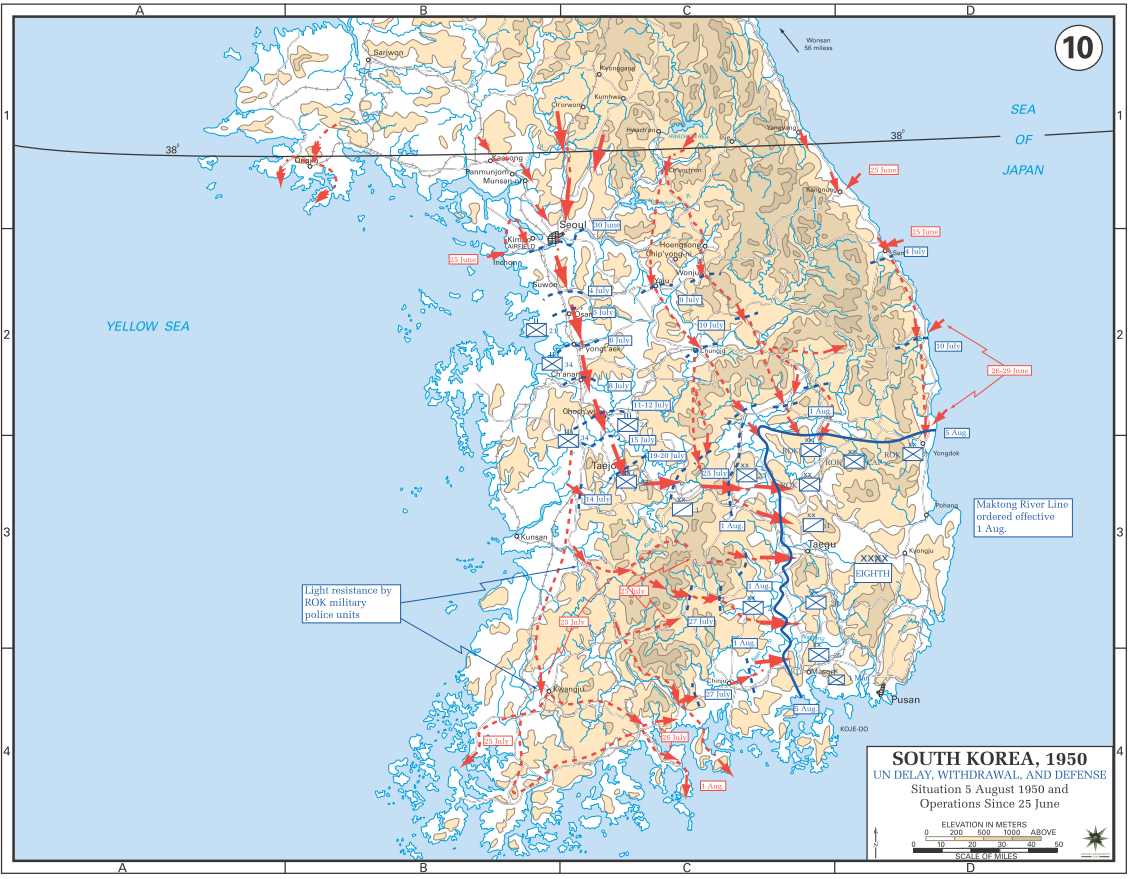
Initial phase of the Korean War, 25 June through 5 August, 1950.
Map from the West Point Military Atlas — https://www.westpoint.edu/academics/academic-departments/history/korean-war
The Korean War was among the deadliest of the Cold War’s battlegrounds. Yet despite yielding millions of civilian deaths, over 40,000 US casualties, and destruction that left scars which persist on the peninsula today, the conflict has never received the attention (aside from being featured in the sitcom M*A*S*H) devoted to World War II, Vietnam, and other 20th-century clashes.
But like other neglected Cold War front-lines, the “Forgotten War” has fallen victim to several politicized and one-sided “anti-imperialist” narratives that focus almost exclusively on the atrocities of the United States and its allies. The most recent example of this tendency was a Jacobin column by James Greig, who omits the brutal conduct of North Korean and Chinese forces, misrepresents the underlying cause of the war, justifies North Korea’s belligerence as an “anti-colonial” enterprise, and even praises the regime’s “revolutionary” initiatives. Greig’s article was preceded by several others, which also framed the war as an instance of US imperialism and North Korea’s anti-Americanism as a rational response to Washington’s prosecution of the war. Left-wing foreign-policy thinker Daniel Bessner also alluded to the Korean War as one of many “American-led fiascos” in his essay for Harper’s magazine earlier this summer. Even (somewhat) more balanced assessments of the war, such as those by Owen Miller, tend to overemphasize American and South Korean transgressions, and don’t do justice to the long-term consequences of Washington’s decision to send troops to the peninsula in the summer of 1950. By giving short shrift to — or simply failing to mention — the communist powers’ leading role in instigating the conflict, and the violence and suffering they unleashed throughout it, these depictions of the Korean tragedy distort its legacy and do a disservice to the millions who suffered, and continue to suffer, under the North Korean regime.
Determining “who started” a military confrontation, especially an “internal” conflict that became entangled in great-power politics, can be a herculean task. Nevertheless, post-revisionist scholarship (such as John Lewis Gaddis’s The Cold War: A New History) that draws upon Soviet archives declassified in 1991 has made it clear that the communist leaders, principally Joseph Stalin and North Korean leader Kim Il-Sung, were primarily to blame for the outbreak of the war.
After Korea, a Japanese imperial holding, was jointly occupied by the United States and the Soviet Union in 1945, Washington and Moscow agreed to divide the peninsula at the 38th parallel. In the North, the Soviets worked with the Korean communist and former Red Army officer Kim Il-Sung to form a provisional “People’s Committee”, while the Americans turned to the well-known Korean nationalist and independence activist Syngman Rhee to establish a military government in the South. Neither the US nor the USSR intended the division to be permanent, and until 1947, both experimented with proposals for a united Korean government under an international trusteeship. But Kim and Rhee’s mutual rejection of any plan that didn’t leave the entire peninsula under their control hindered these efforts. When Rhee declared the Republic of Korea (ROK) in 1948, and Kim declared the Democratic People’s Republic of Korea (DPRK) later that year, the division was cemented. Each nation threatened to invade the other and began preparing to do so.
What initially prevented a full-scale attack by either side was Washington’s and Moscow’s refusal to provide their respective partners with support for the military reunification of the peninsula. Both superpowers had withdrawn their troops by 1949 to avoid being dragged into an unnecessary war, and the Americans deliberately withheld weapons from the ROK that could be used to launch an invasion.
However, Stalin began to have other ideas. Emboldened by Mao Zedong’s victory in the Chinese Civil War and frustrated by strategic setbacks in Europe, the Soviet premier saw an opportunity to open a “second-front” for communist expansion in East Asia with Beijing’s help. Convinced that Washington was unlikely to respond, Stalin gave Kim Il-Sung his long-sought “green-light” to reunify the Korean peninsula under communist rule in April 1950, provided that Mao agreed to support the operation. After Mao convinced his advisers (despite some initial difficulty) of the need to back their Korean counterparts, Red Army military advisers began working extensively with the Korean People’s Army (KPA) to prepare for an attack on the South. When Kim’s forces invaded on June 25th, 1950, the US and the international community were caught completely off-guard.
Commentators like Greig, who contest the communists’ culpability in starting the war, often rely on the work of revisionist historian Bruce Cumings, who highlights the perpetual state of conflict between the two Korean states before 1950. It is certainly true that there were several border skirmishes over the 38th parallel after the Soviet and American occupation governments were established in 1945. But this in no way absolves Kim and his foreign patrons for their role in unleashing an all-out assault on the South. Firstly, despite Rhee’s threats and aggressive posturing, the North clearly had the upper hand militarily, and was much better positioned than the South to launch an invasion. Whereas Washington stripped Rhee’s forces of much of their offensive capabilities, Moscow was more than happy to arm its Korean partners with heavy tanks, artillery, and aircraft. Many KPA soldiers also had prior military experience from fighting alongside the Chinese communists during the Chinese Civil War.
Moreover, as scholar William Stueck eloquently maintains, the “civil” aspect of the Korean War fails to obviate the conflict’s underlying international dimensions. Of course, Rhee’s and Kim’s stubborn desire to see the country fully “liberated” thwarted numerous efforts to establish a unified Korean government, and played a role in prolonging the war after it started. It is unlikely that Stalin would have agreed to support Pyongyang’s campaign to reunify Korea had it not been for Kim’s persistent requests and repeated assurances that the war would be won quickly. Nevertheless, the extensive economic and military assistance provided to the North Koreans by the Soviets and Chinese (the latter of which later entered the war directly), the subsequent expansion of Sino-Soviet cooperation, the Stalinist nature of the regime in Pyongyang, Kim’s role in both the CCP and the Red Army, and the close relationship between the Chinese and Korean communists all strongly suggest that without the blessing of his ideological inspirators and military supporters, Kim could not have embarked on his crusade to “liberate” the South.
Likewise, Rhee’s education in the US and desire to emulate the American capitalist model in Korea were important international components of the conflict. More to the point, all the participants saw the war as a confrontation between communism and its opponents worldwide, which led to the intensification of the Cold War in other theaters as well. The broader, global context of the buildup to the war, along with the UN’s authorization for military action, legitimized America’s intervention as a struggle against international communist expansionism, rather than an unwelcome intrusion into a civil dispute among Koreans.
Comments Off on The coming of the Korean War
The outcome of the latest Munk Debates
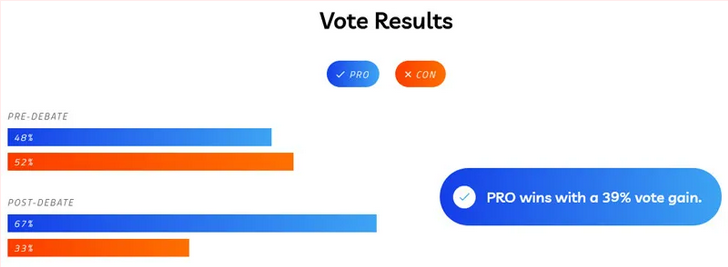
Donna Laframboise summarizes what happened last week in the Munk Debates as Matt Taibbi and Douglas Murray spoke in favour of the proposition “Be it resolved, don’t trust mainstream media” while Malcolm Gladwell and Michelle Goldberg argued against:
Last week, an old fashioned public debate took place here in Canada. The topic:
Be it resolved, don’t trust mainstream media.
Journalists Douglas Murray (UK) and Matt Taibbi (US) argued the pro/agree side.
Journalists Malcolm Gladwell (Canada) and Michelle Goldberg (US) argued the con/disagree side.
The event was sponsored by Munk Debates, which has been holding these events since 2008. Before the debate commences, audience members vote. Two hours later, they vote again.
On this occasion, the opinion swing was dramatic. The “don’t trust” side grew by 39% — apparently the largest swing ever in a Munk debate. At the beginning, slightly less than half of the in-house audience held this opinion (48%). Afterward, it was two-thirds (67%).
(When two-thirds of a population agrees on anything, you’re in supermajority territory — a number large enough to change constitutions.)
Here’s the key point: the winning side of the debate placed great emphasis on the scandalous manner in which Canada’s mainstream media covered the Freedom Convoy. Residing as he does in Britain, Douglas Murray had no trouble cutting through the nonsense. In the 3-minute video clip at the top of this post, he says our Prime Minister started by calling protesters names, and ended by invoking the Emergencies Act. Here’s what he says next:
At such a time, what would the mainstream media do? It would question it. It would question it. The Canadian mainstream media did not.
The Canadian mainstream media acted as an Amen chorus of the Canadian government. I will give you a couple of examples, but ladies and gentlemen I could go on for hours with examples of this. You had a CBC host describing the Freedom Convoy as a quote feral mob …
Why is this so rancid? Utterly, utterly rancid and corrupt. Because in this country, your media, your mainstream media is funded by the government. A totally corrupted system.

Comments Off on The outcome of the latest Munk Debates
Tank Chat #160 | M18 Hellcat | The Tank Museum
The Tank Museum
Published 5 Aug 2022Hello Tank Nuts! M18 Hellcat perfectly fit the American Army’s Tank Destroyer doctrine during WW2. This particular M18 saw service during WW2 and conflict in former Yugoslavia. It is part of the Phelps private collection and recently took part in the celebrations for the 75th Anniversary of the liberation of the city of Mons, Belgium. Discover more on Hellcat and watch the latest Tank Chat with David Willey.
(more…)
Comments Off on Tank Chat #160 | M18 Hellcat | The Tank Museum
QotD: Mao Zedong’s theory of “Protracted War”
The situation for the Chinese Communists in 1938 was a difficult one. The Chinese Red Army has set up a base of power in the early 1930s in Jiangxi province in South-Eastern China, but in 1934 had been forced by Kuomintang Nationalist forces under Chiang Kai-shek to retreat, eventually rebasing over 5,000 miles away (they’re not able to straight-line the march) in Shaanxi in China’s mountainous north in what became known as The Long March. Consequently, no one could be under any illusions of the relative power of the Chiang’s nationalist forces and the Chinese Red Army. And then, to make things worse, in 1937, Japan had invaded China (the Second Sino-Japanese War, which was a major part of WWII), beating back the Nationalist armies which had already shown themselves to be stronger than the Communists. So now Mao has to beat two armies, both of which have shown themselves to be much stronger than he is (though in the immediate term, Mao and Chiang formed a “United Front” against Japan, though tensions remained high and both sides expected to resume hostilities the moment the Japanese threat was gone). Moreover, Mao’s side lacks not only the tools of war, but the industrial capacity to build the tools of war – and the previous century of Chinese history had shown in stark terms how difficult a situation a non-industrial force faced in squaring off against industrial firepower.
That’s the context for the theory.
What Mao observed was that a “war of quick decision” would be one that the Red Army would simply lose. Because he was weaker, there was no way to win fast, so trying to fight a “fast” war would just mean losing. Consequently, a slow war – a protracted war – was necessary. But that imposes problems – in a “war of quick decision” the route to victory was fairly clear: destroy enemy armed forces and seize territory to deny them the resources to raise new forces. Classic Clausewitzian (drink!) stuff. But of course the Red Army couldn’t do that in 1938 (they’d just lose), so they needed to plan another potential route to victory to coordinate their actions. That is, they need a strategic framework – remember that strategy is the level of military analysis where we think about what our end goals should be and what methods we can employ to actually reach those goals (so that we are not just blindly lashing out but in fact making concrete progress towards a desired end-state).
Mao understands this route as consisting of three distinct phases, which he imagines will happen in order as a progression and also consisting of three types of warfare, all of which happen in different degrees and for different purposes in each phase. We can deal with the types of warfare first:
- Positional Warfare is traditional conventional warfare, attempting to take and hold territory. This is going to be done generally by the regular forces of the Red Army.
- Mobile Warfare consists of fast-moving attacks, “hit-and-run”, performed by the regular forces of the Red Army, typically on the flanks of advancing enemy forces.
- Guerrilla Warfare consists of operations of sabotage, assassination and raids on poorly defended targets, performed by irregular forces (that is, not the Red Army), organized in the area of enemy “control”.
The first phase of this strategy is the enemy strategic offensive (or the “strategic defensive” from the perspective of Mao). Because the enemy is stronger and pursuing a conventional victory through territorial control, they will attack, advancing through territory. In this first phase, trying to match the enemy in positional warfare is foolish – again, you just lose. Instead, the Red Army trades space for time, falling back to buy time for the enemy offensive to weaken rather than meeting it at its strongest, a concept you may recall from our discussions of defense in depth. The focus in this phase is on mobile warfare, striking at the enemy’s flanks but falling back before their main advances. Positional warfare is only used in defense of the mountain bases (where terrain is favorable) and only after the difficulties of long advances (and stretched logistics) have weakened the attacker. Mobile warfare is supplemented by guerrilla operations in rear areas in this phase, but falling back is also a key opportunity to leave behind organizers for guerrillas in the occupied zones that, in theory at least, support the retreating Red Army (we’ll come back to this).
Eventually, due to friction (drink!) any attack is going to run out of steam and bog down; the mobile warfare of the first phase is meant to accelerate this, of course. That creates a second phase, “strategic stalemate” where the enemy, having taken a lot of territory, is trying to secure their control of it and build new forces for new offensives, but is also stretched thin trying to hold and control all of that newly seized territory. Guerrilla attacks in this phase take much greater importance, preventing the enemy from securing their rear areas and gradually weakening them, while at the same time sustaining support by testifying to the continued existence of the Red Army. Crucially, even as the enemy gets weaker, one of the things Mao imagines for this phase is that guerrilla operations create opportunities to steal military materiel from the enemy so that the factories of the industrialized foe serve to supply the Red Army – safely secure in its mountain bases – so that it becomes stronger. At the same time (we’ll come back to this), in this phase capable recruits are also be filtered out of the occupied areas to join the Red Army, growing its strength.
Finally in the third stage, the counter-offensive, when the process of weakening the enemy through guerrilla attacks and strengthening the Red Army through stolen supplies, new recruits and international support (Mao imagines the last element to be crucial and in the event it very much was), the Red Army can shift to positional warfare again, pushing forward to recapture lost territory in conventional campaigns.
Through all of this, Mao stresses the importance of the political struggle as well. For the guerrillas to succeed, they must “live among the people as fish in the sea”. That is, the population – and in the China of this era that meant generally the rural population – becomes the covering terrain that allows the guerrillas to operate in enemy controlled areas. In order for that to work, popular support – or at least popular acquiescence (a village that doesn’t report you because it supports you works the same way as a village that doesn’t report you because it hates Chiang or a village that doesn’t report you because it knows that it will face violence reprisals if it does; the key is that you aren’t reported) – is required. As a result both retreating Red Army forces in Phase I need to prepare lost areas politically as they retreat and then once they are gone the guerrilla forces need to engage in political action. Because Mao is working with a technological base in which regular people have relatively little access to radio or television, a lot of the agitation here is imagined to be pretty face-to-face, or based on print technology (leaflets, etc), so the guerrillas need to be in the communities in order to do the political work.
Guerrilla actions in the second phase also serve a crucial political purpose: they testify to the continued existence and effectiveness of the Red Army. After all, it is very important, during the period when the main body of Communist forces are essentially avoiding direct contact with the enemy that they not give the impression that they are defeated or have given up in order to sustain will and give everyone the hope of eventual victory. Everyone there of course also includes the main body of the army holed up in its mountain bases – they too need to know that the cause is still active and that there is a route to eventual victory.
Fundamentally, the goal here is to make the war about mobilizing people rather than about mobilizing industry, thus transforming a war focused on firepower (which you lose) into a war about will – in the Clausewitzian (drink! – folks, I hope you all brought more than one drink for this …) sense – which can be won, albeit only slowly, as the slow trickle of casualties and defeats in Phase II steadily degrades enemy will, leading to their weakness and eventual collapse in Phase III.
I should note that Mao is very open that this protracted way of war would be likely to inflict a lot of damage on the country and a lot of suffering on the people. Casualties, especially among the guerrillas, are likely to be high and the guerrillas own activities would be likely to produce repressive policies from the occupiers (not that either Chiang’s Nationalists of the Imperial Japanese Army – or Mao’s Communists – needed much inducement to engage in brutal repression). Mao acknowledges those costs but is largely unconcerned by them, as indeed he would later as the ruler of a unified China be unconcerned about his man-made famine and repression killing millions. But it is important to note that this is a strategic framework which is forced to accept, by virtue of accepting a long war, that there will be a lot of collateral damage.
Now there is a historical irony here: in the event, Mao’s Red Army ended up not doing a whole lot of this. The great majority of the fighting against Japan in China was positional warfare by Chiang’s Nationalists; Mao’s Red Army achieved very little (except preparing the ground for their eventual resumption of war against Chiang) and in the event, Japan was defeated not in China but by the United States. Japanese forces in China, even at the end of the war, were still in a relatively strong position compared to Chinese forces (Nationalist or Communist) despite the substantial degradation of the Japanese war economy under the pressure of American bombing and submarine warfare. But the war with Japan left Chiang’s Nationalists fatally weakened and demoralized, so when Mao and Chiang resumed hostilities, the former with Soviet support, Mao was able to shift almost immediately to Phase III, skipping much of the theory and still win.
Nevertheless, Mao’s apparent tremendous success gave his theory of protracted war incredible cachet, leading it to be adapted with modifications (and variations in success) to all sorts of similar wars, particularly but not exclusively by communist-aligned groups.
Bret Devereaux, “Collections: How the Weak Can Win – A Primer on Protracted War”, A Collection of Unmitigated Pedantry, 2022-03-03.
Comments Off on QotD: Mao Zedong’s theory of “Protracted War”
December 5, 2022
“… when confronted, our self-proclaimed warriors against fake news and misinformation are just lying about what they’re doing”
From the free-to-cheapskates excerpt from this weekend’s dispatch from The Line:
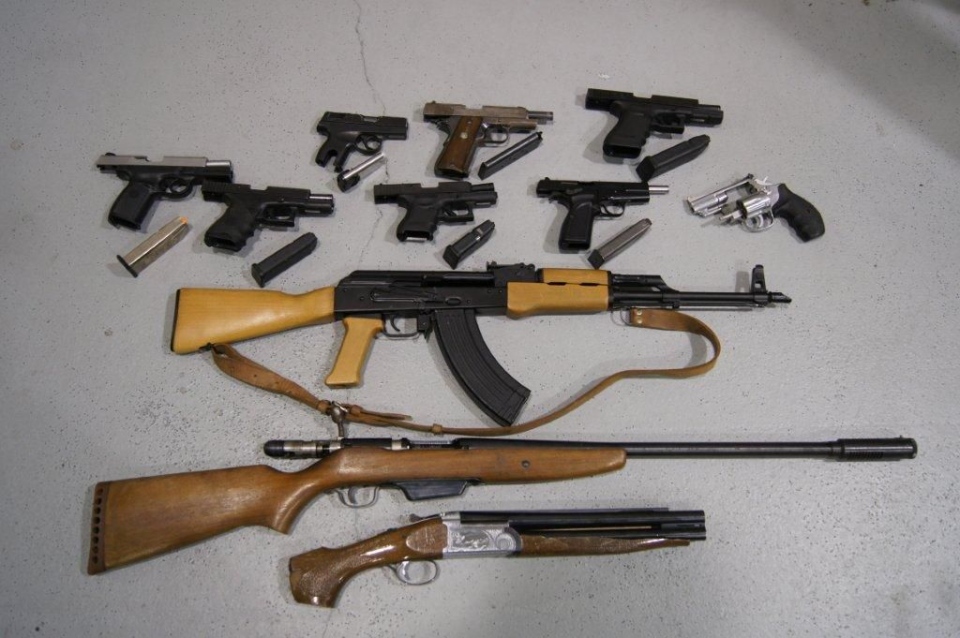
A typical haul of weapons confiscated by Toronto Police Services in 2012. Most of these guns are in the “restricted” or “prohibited” category of Canadian firearms and would not be available for legal purchase by anyone who had not gone through a rigorous RCMP background check and passed multiple training courses. Almost certainly none of them came from a legal owner.
We hate this as much as you do, but we must discuss guns with you again. We think the Liberals have screwed up, and we aren’t sure yet they realize it. (But they’re probably clueing in.)
You know why we’re suspicious? The Liberals are extremely good at marketing. A depressing amount of the time, it’s all they’ve got. They can take the smallest morsel of accomplishment and make it the centrepiece of a coordinated nation-wide grassroots mobilization campaign and fundraising drive. They have memes and other social shareables ready to go. Cabinet ministers release cringe videos captured by staffers who probably realize, in the very moment of their filming, that they’ve wasted their God-given potential on … this.
Outcomes? The hell with those. Let’s talk about those inputs, baby! In both official languages.
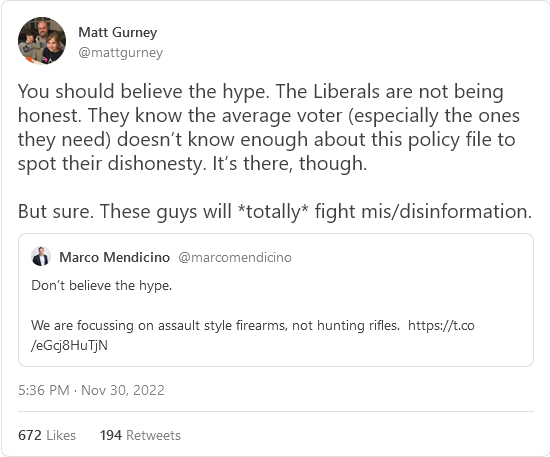
But this time? When the Liberals have actually embarked on what would be the most significant overhaul of our firearms laws in a generation? Not only have they not said boo. They’re going out of their way to deny that they’ve done anything. Or, when confronted, our self-proclaimed warriors against fake news and misinformation are just lying about what they’re doing.
So either they don’t know what they’re doing (very possible), regret what they’ve done (also very possible) or it’s a confused mix of both (our working theory).
But let us explain. And forgive us, but things will get a bit technical. (We’ll keep it as simple as possible, but guns are complicated.)
Canadian firearms policy has generally tried to classify firearms by their technical specifications. Three broad categories were created by the major reforms of the 1990s. “Prohibited” firearms essentially were machine guns, automatic assault rifles of the kind used by modern militaries, and easily concealed short-barrelled handguns; prohibited licences were issued in the 1990s to a relatively small number of individuals who already owned such firearms and their immediate descendants (to cover family heirlooms), but prohibited firearms otherwise are not available to the public. “Non-restricted” firearms were the very common rifles and shotguns suited (and frequently used) for hunting or target shooting sports, and require the least onerous level of licensing (but still, you do need a licence that involves background checks and vetting). In the middle we had “restricted” firearms — mostly handguns — that require a special licence beyond the normal licence, requiring extra training and conditions.
These broad categories do not always reflect the reality of how the laws actually shaped up. The prohibited and restricted categories were often stretched by meddling politicians to apply more broadly than they ought to have, so that politicians (mainly Liberals) could claim to be “tough on guns” in particular instances. But these three categories have been generally stable for a generation, and functioned well, more or less. Perfectly? No. But our gun-control laws worked for the public at large, which is why violent gun crime by licensed individuals is rare despite a relatively high rate of firearms ownership in Canada.
You wouldn’t think it given all the political controversy, but Canadian gun control has been a fundamentally successful public-policy program, for decades. The very real problem we have with gun violence in this country is overwhelmingly committed with illegal guns smuggled in from the United States, and fall outside the scope of our gun-control system, which works well doing what it is supposed to do: licensing lawful gun owners, regulating the legal uses of guns and regulating, as well, the lawful hunting and shooting sports industry.
For all its success as public policy, though, the system didn’t work for the Liberals politically. So they decided to get cute. And that’s where their problems began.
Comments Off on “… when confronted, our self-proclaimed warriors against fake news and misinformation are just lying about what they’re doing”
The Halifax Explosion
[For more on the events leading up to the explosion, you can read my page on the event here.]
OTD Canadian Military History
Published 3 Dec 2022Halifax, Nova Scotia was rocked by a massive explosion on the morning of 6 December 1917 after the French cargo ship SS Mont-Blanc collided with the Norwegian vessel SS Imo in the harbour. Nearly 2000 people were killed and 9000 were injured. More than 25,000 were left without adequate shelter.
This video includes a photo of the Halifax explosion itself and footage from its aftermath as I explain details of the explosion and the relief efforts.
(more…)
Comments Off on The Halifax Explosion
Edmund Burke
At Samizdata, Niall Kilmartin republishes part of a much older post out as background on Edmund Burke (who I haven’t yet read):
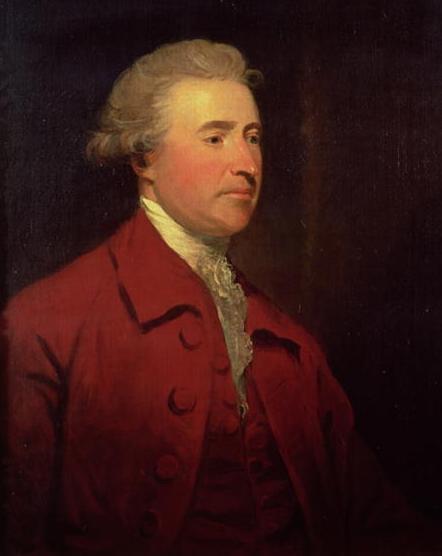
Portrait of Edmund Burke (1729-1797), circa 1770-1780 after a painting of 1774 by James Northcote.
Original in the Royal Albert Museum & Art Gallery via Wikimedia Commons.
When I first started reading Edmund Burke, it was for the political wisdom his writings contained. Only many years later did I start to benefit from noticing that the Burke we know – the man proved a prophet by events and with an impressive legacy – differed from the Burke that the man himself knew: the man who was a lifelong target of slander; the one who, on each major issue of his life, gained only rare and partial victories after years or decades of seeing events tragically unfold as he had vainly foretold. Looking back, we see the man revered by both parties as the model of a statesman and thinker in the following century, the hero of Sir Winston Churchill in the century after. But Burke lived his life looking forwards:
- On America, an initial victory (repeal of the Stamp Act) was followed by over 15 years in the political wilderness and then by the second-best of US independence. (Burke was the very first member of parliament to say that Britain must recognise US independence, but his preferred solution when the crisis first arose in the mid-1760s was to preserve – by rarely using – a prerogative power of the British parliament that could one day be useful for such things as opposing slavery.)
- He vastly improved the lot of the inhabitants of India, but in Britain the first result of trying was massive electoral defeat, and his chosen means after that – the impeachment of Warren Hastings – took him 14 years of exhausting effort and ended in acquittal. Indians were much better off, but back in England the acquittal felt like failure.
- Three decades of seeking to improve the lot of Irish Catholics, latterly with successes, ended in the sudden disaster of Earl Fitzwilliam’s recall and the approach of the 1798 rebellion which he foresaw would fail (and had to hope would fail).
- The French revolutionaries’ conquest of England never looked so likely as at the time of his death in 1797. It was the equivalent of dying in September 1940 or November 1941.
It’s not surprising that late in his life he commented that the ill success of his efforts might seem to justify changing his opinions. But he added that, “Until I gain other lights than those I have“, he would have to go on being true to his understanding.
Burke was several times defeated politically – sometimes as a direct result of being honest – and later (usually much later) resurged simply because his opponents, through refusing to believe his warnings, walked into water over their heads and drowned, doing a lot of irreversible damage in the process. Even when this happened, he was not quickly respected. By the time it became really hard to avoid noticing that the French revolution was as unpleasant as Burke had predicted, all the enlightened people knew he was a longstanding prejudiced enemy of it, so “he loses credit for his foresight because he acted on it”, as Harvey Mansfield put it. (Similarly, whenever ugly effects of modern politics become impossible to ignore, people like us get no credit from those to whom their occurrence is unexpected because we were against them “anyway”.)
Lastly, I offer this Burke quote to guide you when people treat their success in stealing something from you (an election, for example) as evidence of their right to do so:
“The conduct of a losing party never appears right: at least, it never can possess the only infallible criterion of wisdom to vulgar judgments – success.”
Comments Off on Edmund Burke
The sinking of HMS Courageous, 17 September, 1939
The Northern Historian
Published 5 Feb 202117th September 1939, just two weeks after Britain had declared war on Germany, aircraft carrier HMS Courageous was on patrol off the west coast of Ireland. Unbeknown to her, she was being stalked by a hidden predator. Within 20 minutes of being attacked she had slipped beneath the Atlantic surface, taking with her the lives of over 500 men. She became the first British naval casualty of World War Two.
She began her life as a light cruiser during World War One as part of the Courageous class of cruisers. They were a trio of ships comprising HMS Courageous, HMS Glorious, and HMS Furious. These ships were designed and built to support Admiral Lord Fisher’s Baltic project.
Following heavy losses at The Battle of Jutland, HMS Courageous became the flagship of the 1st Cruiser Squadron and took part in the 2nd Battle of Heligoland.
Following World War 1 and due to the Washington Naval Treaty of 1922, limiting new ship constructions, HMS Courageous along with her sisters HMS Glorious and HMS Furious were converted into aircraft carriers and became the Courageous class of aircraft carriers for the Royal Navy.
(more…)
Comments Off on The sinking of HMS Courageous, 17 September, 1939
QotD: Open concept house designs
A single room could serve as a study in the morning, a dining room at noon, a living room in the evening, and a bedroom at night. Beds were couches, and couches were beds. Your house was your workspace, and your minimal furniture typically had no fixed arrangement, as it was constantly moved about to accommodate different uses of the only room available. (The French and Italian words for “furniture” still hint at this history: You can see the similarity to “mobile” in meubles and mobilia.)
These open concepts of old were not only motivated by different conceptions of privacy and the expense of building additional walls. They were also required for the lower classes by premodern heating technologies. A single open hearth, or, later, fireplace or stove, could warm one large room but could not do much for other, closed-off spaces. A lord or king could build a heating element into every room, but for the average family, winter warmth required most of life to happen in a single space.
As technology advanced, ideas about privacy changed, and standards of living improved over the last 500 years, ordinary people were increasingly able to move away from an open concept home, and they eagerly did so. “Rooms began to proliferate as wealthy householders discovered the satisfactions of having space to themselves,” notes Bill Bryson in At Home: A Short History of Private Life. Though the transition was slow — toilets long had “multiple seats, for ease of conversation” — rooms were increasingly devoted to particular uses, and those uses were separated from one another as much as resources permitted.
Bonnie Kristian, “Open concept homes are for peasants”, The Week, 2019-05-12.
Comments Off on QotD: Open concept house designs
December 4, 2022
Operation Overlord Confirmed at Teheran – WW2 – 223 – December 3, 1943
World War Two
Published 3 Dec 2022The Teheran Conference is in full swing and the Allied leadership and plan for a cross channel invasion of Europe is agreed upon by Stalin, Churchill, and Roosevelt. There are new Allied attacks across Italy, but at Bari a German air raid releases deadly poison gas.
(more…)
Comments Off on Operation Overlord Confirmed at Teheran – WW2 – 223 – December 3, 1943


