
This is going to sound really weird, but bear with me: I’d like you to check out Muscle: Confessions of an Unlikely Bodybuilder, by Sam Fussell. It was written in the early 90s (I think) describing the bodybuilding scene of the mid-1980s, and when I first read it, twenty-odd years ago, it came off like the tale of a recovered alcoholic, or more accurately a well-controlled schizophrenic — the male version of all those mental illness memoirs the chicks were into back then (Prozac Nation; Girl, Interrupted, and so on). Certainly Fussell himself pitched it that way — he says that even bodybuilders call their thing “the disease”. From the Current Year’s perspective, though, it looks a lot more like the leading edge of an increasingly common phenomenon that I’m going to call “identity fetishism”.
Fussell is almost embarrassingly frank about why he got into bodybuilding: He was terrified. A scrawny, desperately insecure guy, he just couldn’t handle the social pressures of life in New York. He saw muscles as armor. If he made his exterior so intimidating that no one would want to get close to him he’d never have to get close to anyone. The whole thing is a sustained exercise in fremdschämen — Fussell is a hard guy to like before his transformation, and frankly repulsive afterwards. It’s a short read, and fascinating, but it’s not an easy one.
Do slog through it, though, and I think you’ll see what I mean. The thing that prevents so many of us from really getting into the Left’s headspace, I think, is sheer exhaustion. Forget hardcore SJWs for a sec; just think of what it must take to be, say, a hipster. I mean, seriously, just look at this fucking hipster. The time, the money, the sheer goddamn effort it must take! I’m bushed just writing about it, and that’s nothing compared to what Fussell did.
If you’re a weightlifter, you know. If you’re not, trust me, you don’t want to know. Same deal with endurance athletes, of course, and so on — I’m sure “runner’s high” is real, and it’s great, but son, I really don’t want to experience it. I have experienced “the pump”, famously described by Arnold himself as “like cumming”, but trust me, drugs are a lot better if you just want to get high, because getting to “the pump” fucking hurts. A lot. See Fussell for details.1
Much easier, then, to invest all that time and energy and money into an outward show that, though it no doubt costs as much — perhaps more! — isn’t nearly as painful (I’m sure getting elaborate tats hurts, but if the choice was between that or legs day, I’d be The Illustrated Man). Best of all, of course, is one that doesn’t take anything but time — you know, like, say, Twitter …
All that no doubt seems like a long ride for a short payoff, but unlike my infamously lax attitude towards “the Classics”, I’m going to insist that if you want to get the point of this one — and I consider it important enough to have invested all these words in it — you’re really going to have to go read the book. Fussell is self-aware enough to see himself for what he is, and the Twitterati are of course oblivious, but the psychology is the same. It’s a fetishized identity, and it’s terrifying, because those are our rulers.
Severian, “Identity Fetishism”, Rotten Chestnuts, 2021-05-24.
1. Worst of all, you don’t get it during “legs day”, the most excruciating part of weightlifting, which is why so many guys skip it. It’s nothing but pain. I was never more than a moderately serious weightlifter back in my youth, but that’s the sole criterion of seriousness — do you skip legs day? If yes, then get back to Planet Fitness, you poseur.
June 21, 2024
June 20, 2024
The “Idiot Nephew Theory” of show business management
Ted Gioia recalls his hopes of getting into the entertainment industry after graduation:
The story of how I became a strategy consultant is shameful.
I was a student at Stanford’s Graduate School of Business, and needed a job after graduation. I wanted to work in the music or entertainment industries — but I soon learned this was an impossible dream.
They didn’t want me. And they didn’t want my classmates either.
Hundreds of companies came to our business school to recruit talent, and they included most of the leading US corporations. So I talked with everybody — Coca Cola, Morgan Stanley, Atari, Procter & Gamble, you name it.
But no record label or movie studio ever showed up. They didn’t even send job listings.
Can you guess why?
I asked around on campus and was told the following (off the record):
Come on, Ted. You will never see the entertainment business recruit here. Those folks are not looking for business talent.
They give the choice jobs to their family members — the idiot nephew gets hired, not an MBA. Even better if it’s an idiot son.
And if there are other openings? Well … You’ve heard about the casting couch, haven’t you? Let me give you a hint — that couch isn’t just for auditioning the cast.
But you wouldn’t want a job there even if they gave you one. When time comes for a promotion, the drooling idiot nephew moves up — not you.
I’ve never shared that story before — because I know how people inside the music business hate hearing it.
And maybe it’s not a fair story.
All I can say is that I found this advice very helpful. I stopped planning on a career in the music business. And I also developed a very useful theory to explain why record labels are so bad at making strategic decisions.
I call it the “Idiot Nephew Theory”:
THE IDIOT NEPHEW THEORY: Whenever a record label makes a strategic decision, it picks the option that the boss’s idiot nephew thinks is best.
And what does the idiot nephew decide? That’s easy — they always do whatever the company lawyer recommends.
Maybe this theory is wrong. All I can say is that it helps me predict events in the entertainment industry with a surprising degree of accuracy.
I always operate on the assumption that there’s no business strategy in the music or movie business — only legal maneuvering.
Years later, when the music business got totally reamed by tech companies — a phase we’re still living through, by the way — I wasn’t surprised in the least. The record labels respond to every new music technology by litigating, but whenever they encounter a company with more legal clout than them (Apple or Google/YouTube, for example), they simply gave up.
In the future, you can test this theory yourself. You will see that it possesses great explanatory power.
The birth of para-rescue
At The War Room, Dr. Robert Lyman discusses an air crash in 1943 and the innovative and daring rescue of the survivors using parachutes:

A United States Army Air Force (USAAF) C46 similar to that of Flight 12420.
The birth of para-rescue can be placed in operations across the Hump airlift in 1942 and 1943. The story of the crash of Flight 12420 was a central part of the story.
The story itself is extraordinary. In 1943 a Soviet spy inside the predecessor organization to the CIA and a proud descendant of the famous Southern leader General Robert E Lee, on his way to China to meet General Dai Li, the mysterious and secretive Kuomintang intelligence chief; a celebrated American journalist sent by President Roosevelt to ascertain the “truth about China”; and General “Vinegar Joe” Stilwell’s political adviser; together with eighteen others — American and Chinese — survived a C46 air crash on the mountainous and remote border between India and Burma. It was, and remains, the largest evacuation of an aircraft by parachute, and, given the fact that even the crew had never been trained in the technique, it was a miracle that so many survived. But they fell with their crippled plane from the frying pan into the fire. On disentangling themselves from their parachutes, the twenty shocked survivors soon found that they had arrived in wild country dominated by a tribe that had an especial reason to hate white men. The Nagas of the Patkoi Hills on their remote and unsurveyed land were notorious headhunters, who continued — despite the feeble wrath of distant British imperial authority — to practice both slavery and human sacrifice. Their specialty was the removal of the heads of their enemies — often women and children — achieved with a swipe of ugly, razor-sharp daos. On two occasions in recent years their village, or parts of it, had been burned to the ground and their warriors killed in running battles with sepoys sent to teach the villagers a lesson and to exert the authority of the Raj.
Nevertheless, and against all the odds, all but one of the twenty-one passengers and crew on the doomed aircraft survived. The story of the extraordinary adventure of those men among the Nagas of Pangsha and of their rescue by the young representative of the distant imperial power, the British deputy commissioner who arrived wearing “Bombay bloomers” and stout leather walking shoes, carrying a bamboo cane, and leading an armed party of “friendly” Nagas, is told in my book Among the Headhunters. In their meeting in some of the world’s most inaccessible and previously unmapped terrain, three very different worlds collided. The young, exuberant apostles of the vast industrial democracy of the United States came face-to-face with members of an ancient mongoloid race, uncomprehending of the extent of modernity that existed beyond the remote hills in which they lived and determined to preserve their local power, based on ancient head-hunting and slaving prerogatives. Both groups met — not for the first time for the Nagas, whose village had been burned twice, in 1936 and 1939, because of persistent head-hunting — the vestiges of British authority in India, disintegrating as the Japanese tsunami washed up at its gate.
One of the reasons for the survival of the men whose aircraft fell to earth that tumultuous day was the quick thinking, rapid action and spontaneous sacrifice of a group of US servicemen at the airbase from whence the aircraft departed that morning, Chabua. One in particular needs calling out, thirty-six-year-old ATC wing surgeon Lieutenant Colonel Don Flickinger. He had been duty medical officer at Pearl Harbor during the Japanese attack on December 7, 1941 and in 1943 found himself stationed in the upper reaches of Assam as part of the mammoth Hump airlift to China.
On the day the C46 went down over the rugged Paktoi ranges, the dividing line between astern India and Burma in the first leg of the journey to China, a C47 sent up to see if it could find the wreckage, and found the survivors waving from a remote village high in the hills. Using ground signalling panels the C47 dropped to the survivors they indicated that at least one of the party was badly injured. When the C47 returned to Chabua with the news that survivors were seen in the sprawling village and its location pinpointed on the map, the British deputy commissioner gave the Americans the grave news that the men were likely to be in grave danger. The villagers were, unknown to the survivors, the most practised headhunters of the region, a powerful and unruly tribe who were notorious for their violence. It was unlikely that the men would survive the encounter.
“Surely the only way to defeat racism and homophobia is to treat ethnic and sexual minorities as incapable of high achievement and in need of a leg up from their betters?”
Andrew Doyle on a radical new approach to hiring that might just catch on:

With the inexorable spread of DEI – Diversity, Equity and Inclusion – across the western world, it’s refreshing to see at least one major company resist the decrees of this new religion. This is precisely what happened this week when Scale, an Artificial Intelligence company based in San Francisco, launched a new policy to ensure that its employees were hired on the basis of – wait for it – being the most talented and best qualified for the job.
This innovation, which sees race, gender and sexuality as irrelevant when it comes to hiring practices, should hardly be considered revolutionary. And yet in a world in which the content of one’s character is less important than the colour of one’s skin, to treat everyone equally irrespective of these immutable characteristics is suddenly deemed radical.
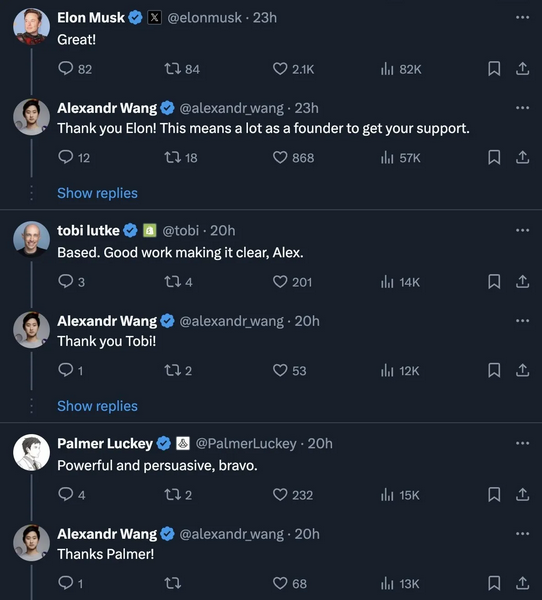
Scale’s CEO, Alexandr Wang, explained that rather than adopt DEI policies, the company would henceforth favour MEI, which stands for Merit, Excellence, and Intelligence. He explained the thinking behind the new scheme in a post on X.
There is a mistaken belief that meritocracy somehow conflicts with diversity. I strongly disagree. No group has a monopoly on excellence. A hiring process based on merit will naturally yield a variety of backgrounds, perspectives, and ideas. Achieving this requires casting a wide net for talent and then objectively selecting the best, without bias in any direction. We will not pick winners and losers based on someone being the “right” or “wrong” race, gender, and so on. It should be needless to say, and yet it needs saying: doing so would be racist and sexist, not to mention illegal. Upholding meritocracy is good for business and is the right thing to do.
One can already hear the likes of Robin DiAngelo and Alexandria Ocasio-Cortez screaming in fury at this blatant implementation of good old-fashioned liberal values. Surely the only way to defeat racism and homophobia is to treat ethnic and sexual minorities as incapable of high achievement and in need of a leg up from their betters?
It is instructive to compare reactions from the Twittersphere (now X) and Instagram, as one X user has done. If nothing else, the comparison reveals how the divide in the culture war is playing out on social media since Elon Musk’s takeover. On X, major figures in the corporate world such as Tobias Lütke (CEO of Shopify), Palmer Luckey (founder of Oculus VR) and Musk himself have congratulated Wang on his new initiative.
By contrast, here are some of the responses on Instagram:
You’re ‘disrupting’ current hard-fought standards you don’t like, by reverting to a system rooted in bias and inequality that asks less of you as a hiring manager and as a leader
– Dan Couch (He/Him)Curious to see how hiring processes can effectively (and objectively) measure one’s ‘merit’, ‘excellence’, and ‘intelligence’, all of which are very subjective terms
– Cole Gawin (He/Him)What is merit and how do we measure it?
– Rio Cruz Morales (They/Them)This sounds a lot like excuse making for casting off DEI principles
– R.C. Rondero De Mosier (He/Him)The pronouns, of course, signify membership of the cult, and so we should not be surprised to see the sentiments of its minions mirroring each other so closely. What Wang is proposing of course builds equality into the hiring system and, contrary to these complaints, it is entirely possible to measure merit objectively. This, after all, is the entire point of academic assessment. The arguments against merit can only be sustained if one presupposes that systemic inequalities are ingrained within society, that all of these relate to the concept of group identity, and that adjustments have to be made accordingly to guarantee equality of outcome.
Canadian Armed Forces – Snow Machines
Ontario Regiment Museum
Published Mar 7, 2024During the TANK SATURDAY — Winter Warfare event in 2024, we had special guests from the Hussars Military Vehicle Club. They brought their fully restored CAF Arctic equipment to the museum and spoke to our visitors about the history and use of these unique vehicles.
(more…)
QotD: Canadian soldiers of the 1950s and early 1960s
J.L. Granatstein, Canada’s Army, 2002.
June 19, 2024
Soviet America in decay
At The Free Press, Niall Ferguson invites us to consider that America, not China, has taken the place of the Soviet Union in the post-Soviet world:

The witty phrase “late Soviet America” was coined by the Princeton historian Harold James back in 2020. It has only become more apposite since then as the cold war we’re in — the second one — heats up.
I first pointed out that we’re in Cold War II back in 2018. In articles for The New York Times and National Review, I tried to show how the People’s Republic of China now occupies the space vacated by the Soviet Union when it collapsed in 1991.
This view is less controversial now than it was then. China is clearly not only an ideological rival, firmly committed to Marxism-Leninism and one-party rule. It’s also a technological competitor — the only one the U.S. confronts in fields such as artificial intelligence and quantum computing. It’s a military rival, with a navy that is already larger than ours and a nuclear arsenal that is catching up fast. And it’s a geopolitical rival, asserting itself not only in the Indo-Pacific but also through proxies in Eastern Europe and elsewhere.
But it only recently struck me that in this new Cold War, we — and not the Chinese — might be the Soviets. It’s a bit like that moment when the British comedians David Mitchell and Robert Webb, playing Waffen-SS officers toward the end of World War II, ask the immortal question: “Are we the baddies?”
I imagine two American sailors asking themselves one day — perhaps as their aircraft carrier is sinking beneath their feet somewhere near the Taiwan Strait: Are we the Soviets?
Yes, I know what you are going to say.
There is a world of difference between the dysfunctional planned economy that Stalin built and bequeathed his heirs, which collapsed as soon as Mikhail Gorbachev tried to reform it, and the dynamic market economy that we Americans take pride in.
The Soviet system squandered resources and all but guaranteed shortages of consumer goods. The Soviet healthcare system was crippled by dilapidated hospitals and chronic shortages of equipment. There was grinding poverty, hunger, and child labor.
In America today, such conditions exist only in the bottom quintile of the economic distribution — though the extent to which they do exist is truly appalling. Infant mortality in the late Soviet Union was around 25 per 1,000. The figure for the U.S. in 2021 was 5.4, but for single mothers in the Mississippi Delta or Appalachia it is 13 per 1,000.
The comparison to the Soviet Union, you might argue, is nevertheless risible.
Take a closer look.
Nazi Werwolves: Post War Terror – War Against Humanity 135
World War Two
Published 18 Jun 2024The guns are silent in Germany but the Allied Forces continue to suffer a flurry of bombings, assassinations, and shootings. Who is to blame? Well, the press suspects the Nazi Werwolves – terroristic bands of men, women, and children determined to carry on Hitler’s war. But just how serious is this violence really, and how many of the attackers are true believing Nazi fanatics?
(more…)
Toronto “atones for slavery” by renaming Yonge-Dundas Square. They chose … poorly.
In the never-ending quest for moral superiority, the City of Toronto decided to rename a downtown landmark — Yonge-Dundas Square — after allegations were made that British Home Secretary Henry Dundas was against the abolition of slavery in the 1790s. (In fact, it was partly his efforts to mediate between the abolitionists and their opponents that actually got the first anti-slavery bill through Parliament, but who cares about his actual work when we can issue blanket condemnations hundreds of years later?)
In a twist worthy of the Babylon Bee, it turns out that the new and improved name proposed has a much more direct connection with slavery:

The Yonge-Dundas Square sign on the southeast corner of the intersection in downtown Toronto.
Detail of an image from Google Street View.
There is a lot wrong both with the name that Toronto city council chose to replace Yonge-Dundas Square and the burden that the name change will place on taxpayers.
Originally budgeted at $335,000, the new estimate is $860,000 — and who is to say it won’t go higher? That would be a lot of money even for a desirable name, but the name the city chose, Sankofa Square, is problematic.
The term is Ghanaian and means “learning from the past.” But while it is intended to replace the name of Henry Dundas, who some blame for delaying the abolition of slavery in the British Empire, the term “Sankofa” has its own connection to the slave trade.
Slavery was rife throughout Africa, and much of the world, for centuries past, but Ghana’s version included the execution of the slaves of chiefs who died, so that they could serve him in the afterlife. […]
The basic fact, ignored by Toronto’s mayor and city councillors, is that the Gold Coast, the earlier name for Ghana, was a notorious slave society. Leading Ghanaians were prominent in the slave trade and were themselves slave owners. For years after slavery was abolished elsewhere, they fought its abolition in Ghana. It wasn’t until 1874 that the slave trade in Ghana was abolished — nearly a century after Britain.
Compare Ghana’s record with that of Ontario, where a process of gradual abolition was started in 1793, 81 years before Ghana. That, notably, was thanks to the efforts of Upper Canada’s first lieutenant governor, John Graves Simcoe, an appointee of Henry Dundas, no less.
So Dundas was not only instrumental in getting slavery abolished in Scotland, acting as a lawyer in the appeal of a case dealing with a runaway slave, he also sent a dedicated abolitionist to Upper Canada to take the top post. He deserves a better square than Yonge-Dundas!
Why the US Lost the Tet Offensive Despite Beating the NVA
Real Time History
Published Feb 16, 2024After years of boots on the ground and bloody combat in Vietnam, US officials are publicly confident. The strategy of eliminating the Viet Cong is working. The North Vietnamese communist forces are on their last legs and victory is only a matter of time. Or so they say. But as 1968 and the traditional lunar new year festivities begin, US and South Vietnamese troops find themselves on the receiving end of a formidable North Vietnamese surprise attack: The Tet Offensive.
(more…)
QotD: Canada’s Liberal Party
Honestly, now, if you moved this metaphor any closer to the bathroom, there’d be no room for anybody to sit down. What have we come to when the communications director for the prime minister of Canada comes within an ace of referring to his own party as a filthy toilet in need of some elbow grease?
Colby Cosh, ColbyCosh.com, 2005-04-09.
June 18, 2024
“If you convince a group of Homo sapiens that that group over there are economic parasites … then you have primed them for mass murder”
Lorenzo Warby on the malign influence of Karl Marx:
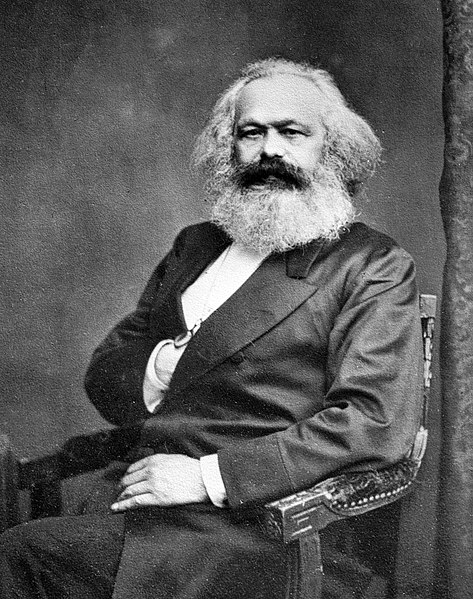
Despite — in some ways because of — all his Theorising about “capitalism”, Marx made no serious attempt to understand the actual dynamics of commerce, creating a (false) theory of economic parasitism (“surplus value”) that — both predictably, and in practice — motivated mass murder. If you convince a group of Homo sapiens that that group over there are economic parasites — and you and your society is better off without them — then you have primed them for mass murder. Hence, Marx’s theory was used to justify actual Marxist mass-murders, starting with Lenin’s infamous hanging order.
Marx’s economistic systematising created a pretence of being social scientist — to himself and even more to Engels — that many people have maintained ever since. Hence a pre-Darwinian metaphysician is even now regularly treated as if he was a social scientist. This despite being wrong about more or less everything — class, commerce, surplus, immiseration, the state, patterns of history, commodification, division of labour, foraging societies …
As I have noted elsewhere:
To have a state, farming niches have to be sustainable after taxes are extracted. That means resources are extracted before they turn into extra babies. This means that states create surplus (income above subsistence): indeed, they dominate the creation and extraction of surplus.
The perennial dominance of the state in extraction of surplus — and hence the creation of class structures — is nowhere more obvious than in Marxist states.
Philosopher Charles Taylor pointed out the tension between the claim to being science — and the causal determinism that goes with that — and the messianic vision that motivates Marx’s and Marxist activism. In any tension between the two, the latter wins because it is so powerfully motivating. This includes with Marx himself, which is why his “science” is so profoundly wrong in fact. It exists to justify the messianic vision.
No political (or religious) movement has killed and tyrannised more people than revolutionary Marxism. A Marxist is someone for whom no amount tyranny and mass murder will stop them worshipping the splendour in their head. This testifies to the power of the messianic vision.
Marx was the original launderer of ideas. Over decades of wrestling with the economics of Smith and Ricardo, he laundered — via economic reasoning — the metaphysical conclusions he reached in the 1840s to create a system that would “scientifically” generate and justify those conclusions. That those conclusions went mostly unpublished in his lifetime — with the most dramatic exception being The Communist Manifesto (1848) — does not belie this. Marx himself insisted on the centrality of this period of “self-clarification”.
Nothing he published later significantly contradicted those conclusions. Marx is the archetypal activist scholar, whose activism drives, and so degrades, his scholarship and analysis. He is the key formulator of the Dialectical Faith, that has generated various disastrous spin-offs, from his own economism to Lenin’s Jacobinising of Marxism to the Cultural Marxism of Lukacs and Gramsci, Critical Theory, and all forms of Critical Social Justice.
No form or derivative of the Dialectical Faith have ever generated a net positive contribution to human flourishing, or understanding, compared to available alternatives.
Ibn Khaldun was a far more acute analyst of the role of the state in the economy, and patterns within history, than Marx. Ibn Khaldun sought systematically to understand what he observed, participated in and read about. He was not laundering ideas, not justifying pre-set conclusions, nor judging evidence by his Theory.
Ibn Khaldun was a social scientist (arguably the first). Marx was not, he was pretending to be one (including to himself).
The Dialectical Faith holds that history is driven by dialectical process that transforms society from an oppressive past to a future liberated from constraints, if the oppressive elements of society are suppressed or abolished. As Marx tells us, our productive capacity will be so great, that we will so humanise the world, that division of labour will end for:
In communist society, where nobody has one exclusive sphere of activity but each can become accomplished in any branch he wishes, society regulates the general production and thus makes it possible for me to do one thing today and another tomorrow, to hunt in the morning, fish in the afternoon, rear cattle in the evening, criticise after dinner, just as I have a mind, without ever becoming hunter, fisherman, herdsman or critic.
Marx was not engaged in scientific enquiry but pseudo-scientific, or scientistic — the form of science without the substance — justification of already reached conclusions. He regularly judges and chooses evidence based on Theory, a pattern that has become endemic within all forms of Marxism and its spinoffs (such as Critical Theory). Marx exemplifies the activist principle that “what I can imagine — however self-contradictory — is so much better than what others have struggled to achieve”.
Marx’s picture of the evils of division of labour is metaphysical twaddle flatly contradicted by any serious study of the role of division of labour — and, for that matter, commodification — in production at scale. How can division of labour be such an alienating evil when it is built into sexual reproduction, into every eusocial species, even into the cells of every single complex organism?
The answer is via a ludicrous quasi-theological metaphysical inflation of human consciousness and creativity. Marx collectivises — through his notion of species-being — the Romantic notion of human fulfilment through self-expression.
Freddie deBoer contra J.J. McCullough on Conspiracy Theories
I saw JJ’s latest video pop up on my YouTube subscriptions page, read the headline and winced slightly. I generally like JJ’s videos even when I disagree with his presentation or interpretation and from the title, I thought “No, ‘many conspiracy theories’ did NOT ‘turn out to be true'” would require a fair bit of, uh, curation of the theories that get discussed. Freddie deBoer — who I disagree with much more than I do with McCullough — had a similar reaction:
The latest video from conservative Canadian YouTuber JJ McCullough displays many of the attributes that make his perspective unique — he’s genuinely a right-wing figure but an arch institutionalist, a gay Millennial with the kind of vague social libertinism common to a lot of libertarian-leaning conservatives but something of a scold, a Canadian patriot who relentlessly defends the United States from the kinds of criticism of Americanah that you might associate with Europe or, well, Canada — critiques of our provincialism, our consumerism, our boorish tendency to shove the rest of the world around. McCullough likes all of that stuff, more or less, while living a cosmopolitan and vaguely-arty lifestyle in groovy Vancouver. He’s perhaps best known for his war with Montreal, Francophone Canadians, and the entire province of Quebec, which fits his general esteem for a certain kind of capital-R Reasonable Anglophilia.
He reminds me, strangely, of a certain kind of secular anti-atheist, the type who still gets mad about the New Atheists despite the complete collapse of that subculture and whose own lack of belief doesn’t prevent them from waxing poetic about the glories of religion. I have a friend from grad school who grew up in an extremely repressive Christian community when she was young, and who describes leaving as an “escape”. (The kind of community where she and her sisters wore wrist-to-ankle dresses every day of their lives no matter the Oklahoma heat, weren’t allowed TV or radio, absorbed lots of corporal punishment, that sort of thing.) She has very, very little patience for people who are so annoyed by internet atheists that they become in effect advocates for religion; as she says, this kind of vague fondness for religion among the irreligious could only occur to someone who never had to live the way she did. I sort of see the same thing in McCullough — he idealizes certain aspects of America’s ethos because he has never had to live with the consequences of being surrounded by people who believe in it, who consciously or unconsciously demand that everyone else believe in it.
Anyhow, this new video is about conspiracy theories. Conspiracy theories are a good topic for understanding McCullough’s very particular ideological makeup. Conspiracy theories are famously a cross-ideological phenomenon, with both left conspiracy theories and right conspiracy theories but also conspiracy theories that don’t fit neatly into either, like 9/11 trutherism. As I said, McCullough is an institutionalist, a small-but-good government sort of guy (or so I take it) who places a great deal of value in official claims, institutions, and experts, and so he’s naturally distrustful of conspiracy theories. And he demonstrates that antipathy in this video through poking holes in a few clickbaity articles listing conspiracy theories that turned out to be true. This all amounts to feasting on a banquet of low-hanging fruit, but it’s not an illegitimate way to approach the question. I just don’t like his conclusions.
The key to McCullough’s bit here is that he doesn’t dispute that the named conspiracy theories (or “conspiracy theories”) that are asserted to be true are true. Rather, he operates by insisting that every identified conspiracy theory is in fact not a conspiracy theory according to his preferred definition. It’s not sufficient for a conspiracy theory to be broadly thought of as a conspiracy theory; it has to comport to specific rules he has devised for what a conspiracy theory entails. Effectively, that means that a conspiracy theory is only a conspiracy theory if it satisfies criteria endorsed by no one but JJ McCullough. I can’t decide if this is an isolated demand for rigor or a No True Scotsman, but either way, McCullough is here insisting on an unusually stringent definition of a conspiracy theory for the purpose of dismissing the idea that any conspiracy theories are true. And there’s a version of this that isn’t entirely wrong; there’s a tautological sense in which all conspiracy theories are false because being false is part of that definition of a conspiracy theory. But McCullough isn’t using that definition, just a particularly odd one that makes his task easier.
So the fact that cigarette manufacturers knew that cigarettes were very bad for your health but conspired to hide this fact from the public is not a conspiracy theory, according to McCullough, because other people of that era suspected that cigarettes caused lung cancer. (Actually proving that took a very long time, at least according to modern standards of causality.) I find this argument powerfully strange! You had a group of powerful people, they indisputably knew that cigarettes were very bad for your health, they indisputably conspired to suppress that information, they were fairly effective at that task. The fact that some early whistleblowers tried to raise the alarm is simply irrelevant. Check out my own proprietary formula.
Group of Powerful or Influential People + Nefarious Intent + Secrecy + Active Conspiring + Negative Consequences, Real or Potential = Conspiracy TheoryThat’s a conspiracy, brother, and the tobacco company bad behavior fits. Long before information about their coverups became public knowledge, people were talking about the possibility that the tobacco companies were up to that exact bad behavior. Theorizing, you might say.
US “birthright citizenship”
Theophilus Chilton argues against the legality of “birthright citizenship”:

“American Flag” by JeepersMedia is licensed under CC BY 2.0

One of the benefits of Donald Trump’s involvement in politics over the last ten years has been that it opened up a robust national discussion about an issue that up until recently had been largely ignored by the political class. This discussion is about so-called “birthright citizenship”, the idea that whenever a foreign national (regardless of legal status and with a very few exceptions) has a child on American soil, this child automatically becomes an American citizen from birth. This approach to citizenship has been the de facto (though not de jure) approach to the issue of “anchor babies”, the children of illegal aliens who come to the United States so that they can have their children here, thus allowing the parents to remain as well, usually helping themselves to generous American benefit monies.
Defenders of unrestricted birthright citizenship – primarily found among liberals, establishment GOP types, and the more uninformed types of libertarians – adamantly argue from the 14th amendment’s Citizenship Clause that birthright citizenship is not only legal, but is in fact constitutionally protected, and is what the 14th amendment has meant all along. They often try to buttress their arguments by appealing to English common law with its historical provisions for birthright citizenship. However, is this sort of “swim a river, fill our quiver” approach really what the 14th amendment meant? Is it really what English common law, which forms the basis for much of our own law and constitutional interpretation, historically upheld? The answer to these questions is, “No”. Let’s look at some of the history behind this issue.
The crux about which the discussion revolves is the Citizenship Clause found in the 14th amendment, Section 1,
All persons born or naturalized in the United States, and subject to the jurisdiction thereof, are citizens of the United States and of the State wherein they reside.
More specifically, what is at issue is the phrase, “and subject to the jurisdiction thereof”. Clearly, the clause was not intended to convey American citizenship to an unlimited pool of children born to aliens on American soil. If this had been the case, then the phrase under discussion would not have been included. Obviously, some limits were intended, those circumscribed by the intent of being “subject to the jurisdiction thereof”.
So what were these limits? Typically, it will be pointed out that the limits due to this jurisdictional issue were that citizenship was not being conveyed to children born of ambassadors and others aliens employed by their foreign governments, nor was it being conveyed to members of various Indian tribes which exercised sovereign powers within their own territories (this latter was rescinded by an act of 1924 which granted Indian tribes full American citizenship). Were these the only restrictions on birthright citizenship intended by the author and debaters of the 14th amendment?
No, actually. Let’s understand what the original intention of the 14th amendment was, which was to grant American citizenship to former black slaves and their children, and to prevent these newly freed citizens from being denied citizenship rights by certain of the southern states. That’s it. This was made clear by Sen. Jacob Howard, who authored the amendment in 1866, who clearly provided the intent for this section of the amendment,
Every person born within the limits of the United States, and subject to their jurisdiction, is, by virtue of natural law and national law, a citizen of the United States. This will not, of course, include persons born in the United States who are foreigners, aliens, who belong to the families of ambassadors or foreign ministers accredited to the government of the United States, but will include every other class of persons. It settles the great question of citizenship and removes all doubt as to what persons are or are not citizens of the United States. This has long been a great issue in the jurisprudence and legislation of this country.
Clearly, other classes of foreign citizens were intended besides the children of ambassadors and other diplomatic personnel. Indeed, Howard’s statement appears to be quite all-encompassing – if taken at face value, it would appear that he did not even intend the 14th amendment to grant citizenship to the children of foreign nationals here legally, much less to those here illegally.
Spice: King Of The Poor Man’s Kitchen
Townsends
Published Mar 3, 2024One of the questions we seek to answer on our channel is that of the plight of poor folks in American history. What did they eat? How did they dress? Did they have enjoyment in life? They didn’t have the best cuts of meat or the most sought after ingredients. What they did have was plenty of flavor! Spice is the king of the poor man’s kitchen.
(more…)


