Quotulatiousness

July 10, 2013

How Avro salvaged a bad design to create the Lancaster bomber

Filed under: Britain, History, Technology, WW2 — Tags: , — Nicholas @ 00:01

In Samizdata, Brian Micklethwait goes back to his Airfix modelling days to rediscover his admiration for Avro’s Lancaster bomber. In the process, he discovers just how strange the evolution of that aircraft actually was:

In the late 1930s, believing that bombers would always get through and that they therefore had to have lots of bombers or lose the war, British Air Officialdom had two ideas about how to build a bomber. They accordingly announced two specifications, which different potential bomber-makers were invited to meet with their designs. They wanted a two engined bomber, like those that the Germans bombed Britain with in 1940 but better, or like the Wellington but better. And they wanted a much bigger four engined bomber, such as the Germans never got around to building, and like … well, like the Avro Lancaster.

So, the Lancaster was Avro’s answer to the second requirement? Actually, no. Or, not at first. Britain ended up with three four-engine heavy bombers, the Short Stirling, the Handley Page Halifax, and the Lancaster. But strangely, by far the worst of these three, the Short Stirling, was the only one of the three that was all along intended to be a four-engine bomber. Both the Halifax and the Lancaster started out as answers to the two-engine specification rather than the four-engine one.

[. . .]

In particular, all the work that Avro had done improving, as they had hoped, the fuselage of the Manchester, which had done nothing to improve the Manchester, suddenly came into its own in the new configuration. Ever since I built my Airfix Lancaster as a child, I have wondered about the oddity of that Lancaster fuselage. Simply, this fuselage seemed too small for the airplane as whole. And the wings seemed too big. Not ugly exactly, in fact not ugly at all, but nevertheless a bit like the arms of one of those misshapen body builders with excessive biceps. My Lancaster photo (above) even shows how the wings between the fuselage and the inner two engines go straight out rather than tapering, as if these wings were only widened late on in the design process. Now, all that makes sense. The Lancaster’s fuselage began life as the fuselage of a smaller airplane. No wonder it looked to me too small. It was too small. The Lancaster’s wings look stretched because they were stretched. It is only now, after half a century and more of gazing at the Lancaster, that one looks at the Manchester, and sees its fuselage as too big and its wings as too small.

The birth of the Lancaster illustrates a general point about making airplanes, which explains why successful airplanes often fly on for so long. Consider the airborne WW2 mega-hit, the DC-3 (aka the Dakota), and then later the big Boeings, the B-52 and the 747. The Lancaster didn’t last as long as those hardy perennials, because propeller driven heavy bombers were soon replaced by jet bombers (like the B-52) and by intercontinental ballistic missiles. But even the Lancaster flew on for many decades, in the only slightly altered form of its close cousin, the Avro Shackleton, which only went out of service in 1991!

July 5, 2013

The secret army of monitors who fed Enigma signals to Bletchley Park

Filed under: Britain, Germany, History, Italy, Military, WW2 — Tags: — Nicholas @ 08:20

The BBC remembers the volunteer radio tinkerers who helped win the intelligence war in Europe:

One day, towards the start of World War II, a captain wearing the Royal Signals uniform knocked on a British teenager’s door.

The 16-year-old was called Bob King. When he went to greet the visitor, he had no idea that soon he would become one of Britain’s so-called “voluntary interceptors” — some 1,500 radio amateurs recruited to intercept secret codes broadcast by the Nazis and their allies during the war.

“The captain asked me if I would be willing to help out with some secret work for the government,” remembers Mr King, now 89. “He wouldn’t tell me any more than that.

“He knew that I could read Morse code – that was the essential thing.”

[. . .]

By mid-1941, the new base, Arkley View, was receiving about 10,000 message sheets a day from its recruits.

“I worked for five years scrutinising the logs that came in from the other amateurs — thousands of log sheets with the signals which we knew were wanted, and you could only know it from experience,” remembers Mr King.

“We knew it wasn’t Allied army air force, we knew it was German or Italian — various things gave that away, but it was disguised in such a form that it looked a bit like a radio amateur transmission.

“We knew it was highly important, everything was marked ‘top secret,’ but only many years later we discovered that it was German secret service we were listening to.

“Of course you didn’t ask questions in those days, otherwise you’d be in real trouble.”

Encoded messages were transmitted to Bletchley Park in Buckinghamshire, the UK’s former top-secret code-cracking centre.

Once decoded, the data was sent to the Allied Commanders and the UK Prime Minister, Winston Churchill.

June 29, 2013

QotD: Orwell on nationalism and the world state

Filed under: Germany, History, Military, Quotations, Russia, WW2 — Tags: , , , , — Nicholas @ 00:01

What is the use of pointing out that a World State is desirable? What matters is that not one of the five great military powers would think of submitting to such a thing. All sensible men for decades past have been substantially in agreement with what Mr. Wells says; but the sensible men have no power and, in too many cases, no disposition to sacrifice themselves. Hitler is a criminal lunatic, and Hitler has an army of millions of men, aeroplanes in thousands, tanks in tens of thousands. For his sake a great nation has been willing to overwork itself for six years and then to fight for two years more, whereas for the common-sense, essentially hedonistic world-view which Mr. Wells puts forward, hardly a human creature is willing to shed a pint of blood. Before you can even talk of world reconstruction, or even of peace, you have got to eliminate Hitler, which means bringing into being a dynamic not necessarily the same as that of the Nazis, but probably quite as unacceptable to ‘enlightened’ and hedonistic people. What has kept England on its feet during the past year? In part, no doubt, some vague idea about a better future, but chiefly the atavistic emotion of patriotism, the ingrained feeling of the English-speaking peoples that they are superior to foreigners. For the last twenty years the main object of English left-wing intellectuals has been to break this feeling down, and if they had succeeded, we might be watching the S.S. men patrolling the London streets at this moment. Similarly, why are the Russians fighting like tigers against the German invasion? In part, perhaps, for some half-remembered ideal of Utopian Socialism, but chiefly in defence of Holy Russia (the ‘sacred soil of the Fatherland’, etc. etc.), which Stalin has revived in an only slightly altered from. The energy that actually shapes the world springs from emotions — racial pride, leader-worship, religious belief, love of war — which liberal intellectuals mechanically write off as anachronisms, and which they have usually destroyed so completely in themselves as to have lost all power of action.

[. . .]

Mr. Wells, like Dickens, belongs to the non-military middle class. The thunder of guns, the jingle of spurs, the catch in the throat when the old flag goes by, leave him manifestly cold. He has an invincible hatred of the fighting, hunting, swashbuckling side of life, symbolised in all his early books by a violent propaganda against horses. The principal villain of his Outline of History is the military adventurer, Napoleon. If one looks through nearly any book that he has written in the last forty years one finds the same idea constantly recurring: the supposed antithesis between the man of science who is working towards a planned World State and the reactionary who is trying to restore a disorderly past. In novels, Utopias, essays, films, pamphlets, the antithesis crops up, always more or less the same. On the one side science, order, progress, internationalism, aeroplanes, steel, concrete, hygiene: on the other side war, nationalism, religion, monarchy, peasants, Greek professors, poets, horses. History as he sees it is a series of victories won by the scientific man over the romantic man. Now, he is probably right in assuming that a ‘reasonable,’ planned form of society, with scientists rather than witch-doctors in control, will prevail sooner or later, but that is a different matter from assuming that it is just round the corner. There survives somewhere or other an interesting controversy which took place between Wells and Churchill at the time of the Russian Revolution. Wells accuses Churchill of not really believing his own propaganda about the Bolsheviks being monsters dripping with blood, etc., but of merely fearing that they were going to introduce an era of common sense and scientific control, in which flag-wavers like Churchill himself would have no place. Churchill’s estimate of the Bolsheviks, however, was nearer the mark than Wells’s. The early Bolsheviks may have been angels or demons, according as one chooses to regard them, but at any rate they were not sensible men. They were not introducing a Wellsian Utopia but a Rule of the Saints, which like the English Rule of the Saints, was a military despotism enlivened by witchcraft trials. The same misconception reappears in an inverted form in Wells’s attitude to the Nazis. Hitler is all the war-lords and witch-doctors in history rolled into one. Therefore, argues Wells, he is an absurdity, a ghost from the past, a creature doomed to disappear almost immediately. But unfortunately the equation of science with common sense does not really hold good. The aeroplane, which was looked forward to as a civilising influence but in practice has hardly been used except for dropping bombs, is the symbol of that fact. Modern Germany is far more scientific than England, and far more barbarous. Much of what Wells has imagined and worked for is physically there in Nazi Germany. The order, the planning, the State encouragement of science, the steel, the concrete, the aeroplanes, are all there, but all in the service of ideas appropriate to the Stone Age. Science is fighting on the side of superstition. But obviously it is impossible for Wells to accept this. It would contradict the world-view on which his own works are based. The war-lords and the witch-doctors must fail, the common-sense World State, as seen by a nineteenth-century Liberal whose heart does not leap at the sound of bugles, must triumph. Treachery and defeatism apart, Hitler cannot be a danger. That he should finally win would be an impossible reversal of history, like a Jacobite restoration.

George Orwell, “Wells, Hitler and the World State”, Horizon, 1941.

June 6, 2013

D-Day 1942 or 1943

Filed under: Britain, Cancon, France, Germany, History, Military, USA, WW2 — Tags: , , , — Nicholas @ 10:17

At Military History Now, there’s a look at a few of the allied plans for invading France before the actual June 6, 1944 operation:

IKE’S SLEDGEHAMMER
Almost as soon as America entered the war with Nazi Germany, generals Dwight Eisenhower and George Marshall were both lobbying for a strike across the English Channel into France. One plan foresaw a joint British and American assault on either of the French port cities of Cherbourg or Brest as early as the fall of 1942. The operation, codenamed Sledgehammer, would see a force of just six divisions attack, capture and hold either one of the two strategically-vital, deep-water harbours. The force, which likely would have totalled no more than 60,000 men, would have been expected to withstand the inevitable Nazi counterattacks until spring when more reinforcements could arrive. Despite the fact that the Germans would have been free to throw as many as 30 divisions at the invaders, the U.S. Joint Chiefs (as well as the Soviets) endorsed Sledgehammer wholeheartedly. The American commanders seemed to favour any plan that would bring U.S. forces into action in Europe quickly, while Stalin was thrilled at the prospect of an Allied offensive in Western Europe — anything to divert German forces away from the Russian front. Oddly enough, while the mission called for the heavy use of American air and sea power, at the time there was still only a handful of combat-ready U.S. Army units in England. As such, the ground portion of the invasion would be left entirely up to the British military. Cooler heads, namely Prime Minister Churchill, convinced Eisenhower to shelve Sledgehammer – Britain was already stretched thin in Egypt and America still had yet to fully mobilize for the war in Europe. An invasion of France would simply have to wait.

OPERATION ROUNDUP
Later in 1942, the Allies roughed out a second plan to put troops ashore in Western Europe the following spring. This operation, dubbed Roundup, called for 18 British and 30 American divisions to hit a series of landing zones along a 200 km stretch of coastline between Boulogne-sur-Mer near Calais and the port of Le Harve. Overhead, more than 5,700 Allied aircraft were to sweep the skies of the Luftwaffe clearing the way for a series of airborne drops. D-Day was set for some time in April or May of 1943. The British, already strained by three years of total war against the Axis, were understandably reluctant to throw their army headlong into the teeth of Germany’s Channel fortifications. They pushed instead to attack Sicily and Italy – what Churchill called the “soft underbelly of Europe” — by way of North Africa. A sober appraisal of British and American fleet strength, air assets and manpower ultimately convinced the Allied high command that no invasion could be mounted until 1944 at the earliest. For one thing, American factories had yet to manufacture enough of the landing craft needed for such a massive undertaking. Washington and London turned their attention instead towards a late 1942 invasion of Tunisia – Operation Torch. The rest is, as they say, history.

As any Canadian military historian would probably have said to either of these proposals … I have two words: Operation Jubilee.

The Dieppe Raid, also known as the Battle of Dieppe, Operation Rutter and, later, Operation Jubilee, was a Second World War Allied attack on the German-occupied port of Dieppe. The raid took place on the northern coast of France on 19 August 1942. The assault began at 5:00 a.m. and by 10:50 a.m. the Allied commanders were forced to call a retreat. Over 6,000 infantrymen, predominantly Canadian, were supported by a Canadian Armoured regiment and a strong force of Royal Navy and smaller Royal Air Force landing contingents.

The objective of the raid was discussed by Winston Churchill in his war memoirs:

    “I thought it most important that a large-scale operation should take place this summer, and military opinion seemed unanimous that until an operation on that scale was undertaken, no responsible general would take the responsibility of planning the main invasion…

    In discussion with Admiral Mountbatten it became clear that time did not permit a new large-scale operation to be mounted during the summer (after Rutter had been cancelled), but that Dieppe could be remounted (with the new code-name “Jubilee”) within a month, provided extraordinary steps were taken to ensure secrecy. For this reason no records were kept but, after the Canadian authorities and the Chiefs of Staff had given their approval, I personally went through the plans with the C.I.G.S., Admiral Mountbatten, and the Naval Force Commander, Captain J. Hughes-Hallett.”

Objectives included seizing and holding a major port for a short period, both to prove it was possible and to gather intelligence from prisoners and captured materials, including naval intelligence in a hotel in town and a radar installation on the cliffs above it. Although the primary objective was not met and secondary successes were relatively few, some knowledge was gained while assessing the German responses. The Allies also wanted to destroy coastal defences, port structures and all strategic buildings. Due to the failure to secure Dieppe this objective was not met in any systematic sense. The raid had the added objective of providing a morale boost to the troops, Resistance, and general public, while assuring the Soviet Union of the commitment of the United Kingdom and the United States.

A total of 3,623 of the 6,086 men (almost 60%) who made it ashore were either killed, wounded, or captured. The Royal Air Force failed to lure the Luftwaffe into open battle, and lost 96 aircraft (at least 32 to flak or accidents), compared to 48 lost by the Luftwaffe.[2] The Royal Navy lost 33 landing craft and one destroyer. The events at Dieppe later influenced preparations for the North African (Operation Torch) and Normandy landings (Operation Overlord).

Operation Jubilee clearly showed that the plans for both Sledgehammer and Roundup would have been bloody failures.

May 18, 2013

The micro-state of Sealand

Filed under: Britain, Europe, Government, Liberty, WW2 — Tags: , , , — Nicholas @ 08:56

Thomas Hodgkinson reports on his week-long visit to the tiny nation of Sealand:

Sealand

Seven miles off the coast of Suffolk, there is a country. It isn’t a very big country. In fact, its surface area extends to no more than 6,000 square feet, which is about twice the size of a tennis court. You won’t find it on Google Maps and it isn’t a member of Nato or, indeed, the EU. But it exists. And I know, because I’ve been there.

[. . .]

The reason for this suspicion of strangers in general lies in the violent, picaresque nature of its past. Sealand was built in 1943 by the Royal Navy as an anti-aircraft fortress designed to shoot down Luftwaffe planes. In those days it was equipped with two 94mm Vickers heavy anti-aircraft guns and two 40mm Bofors light anti-aircraft guns, and manned by 120 seamen crammed into accommodation in the hollow concrete towers. It was known as HM Fort Roughs, or Roughs Tower for short. Abandoned after the War, it gathered rust and guano, a gloomy relic of conflict, until the era of pirate radio in the 1960s.

Then two rival entrepreneurs competed for possession, regarding the fort as the perfect place (since it was outside the three-mile zone that then constituted British territorial waters) from which to broadcast pop music to a grateful generation of teenagers. The piratical pair were the long-haired Irish chancer Ronan O’Rahilly, of Radio Caroline fame, and one Roy Bates, a cravat-wearing former Army major.

Each time one of them put men on Roughs Tower, the other would send people to eject them, sometimes forcibly. It was a question of who was prepared to go further, and the answer turned out to be the Englishman. For Bates, the solitary fortress became far more than a radio project. It became an obsession that would absorb not only his life, but also the lives of his wife and children.

The key thing, he knew, was to maintain a presence. With even one occupant, Roughs Tower was tough to take. But Roy couldn’t afford a guard, so instead he plucked his 14-year-old son Michael out of school and put him up there, sometimes with his daughter Penny, sometimes with his wife Joan. For Michael, this was a welcome escape from the dreary rigours of a public-school education, but as he confided to me during a long lunch on-shore after my visit, “I expected it to last six months, not 40-something years”.

Sealand2

April 27, 2013

“Nazi” is a word that leads to intellectual laziness and misunderstanding

Filed under: Germany, History, Media, WW2 — Tags: , , — Nicholas @ 09:00

In History Today, Richard Overy explains why the word “Nazi” has been over-used and has become an obstacle to historical understanding:

Few words in regular use in historical writing can have been abused as much as the word ‘Nazi’. At the very least it has proved a persistent grammatical challenge for generations of students who fall into the trap of writing ‘Nazi’s’ or ‘Nazis’ ‘ as the plural of Nazi and ‘Nazis’ as the possessive without an apostrophe, when it should be the other way around. This has become so widespread a practice that the mistake profits from a growing linguistic inertia. Soon it will be designated as an anomaly we can all live with, like the misuse of ‘impact’ as if it were a verb — as in ‘the Nazi’s impacted the German political system’.

In truth this is the least of the problems. The real issue is the indiscriminate use of the term ‘Nazi’ to describe anything to do with German institutions or behaviour in the years of the dictatorship between 1933 and 1945. It is common practice to talk of the ‘Nazi Army’, or the ‘Nazi Air Forces’, or ‘Nazi atrocities’, or ‘the Nazi economy’ as if everything in Germany under Hitler was uniquely and unambiguously National Socialist. The result is a complete lack of historical precision. ‘Nazi’ becomes a shorthand term that obscures more than it explains. Historians who write about the Soviet Union under Stalin do not usually describe its features as ‘Commie this’ or ‘Commie that’, any more than historians of British party politics in the interwar years talk about ‘Tories’ and ‘lefties’ rather than the Conservative Party and the Labour Party.

The term originated in the 1920s when contemporaries searched for some way of getting round the long-winded title of the party — the National Socialist German Workers Party (NSDAP). It was used chiefly by the enemies of the party and never by the regime itself. The term ‘Nazi’ or ‘the Nazis’ had strongly negative associations; it was employed as a quick way of describing a movement popularly associated in the mind of left-wing critics outside Germany with authoritarian rule, state terror, concentration camps and an assault on the cultural values of the West. Psychologists even suggested that there was such a thing as a ‘Nazi mind’ to explain why members of the party were so brutal, aggressive and mendacious. The term then, and now, was loaded.

April 9, 2013

Britain’s wartime rationing was the actual start of the modern welfare state

Filed under: Britain, Bureaucracy, Food, Government, History, WW2 — Tags: , , , — Nicholas @ 08:31

In the Telegraph, Daniel Hannan shows that the wartime coalition government led by Winston Churchill actually laid the groundwork for the post-war “creation” of the welfare state:

British WW2 Fuel ration book cover

It wasn’t the 1945 Labour Government that created the welfare state, that Saturn which now devours its children. The real power-grab came in 1940.

With Britain’s manpower and economy commandeered for the war effort, it seemed only natural that ministers should extend their control over healthcare, education and social security. Hayek chronicled the process at first hand: his Road to Serfdom was published when Winston Churchill was still in Downing Street.

Churchill had become prime minister because he was the Conservative politician most acceptable to Labour. In essence, the wartime coalition involved a grand bargain. Churchill was allowed to prosecute the war with all the nation’s resources while Labour was given a free hand to run domestic policy.

The social-democratic dispensation which was to last, ruinously, for the next four decades — and chunks of which are rusting away even today — was created in an era of ration-books, conscription, expropriations and unprecedented spending. The state education system, the NHS, the Beveridge settlement — all were conceived at a time when it was thought unpatriotic to question an official, and when almost any complaint against the state bureaucracy could be answered with “Don’t you know there’s a war on?”

All quite true, and all quite necessary at the time. Without significant amounts of imported food, Britain could not feed its people. Even with imports, the amount of available food was subject to unpredictable fluctuations as losses at sea interrupted supply and left empty shelves in grocery stores. Although losses were relatively low early in the war (early U boats were unable to stay at sea for long periods, and German bases were a long way from most British trade routes), the writing was on the wall if the war continued for years.

To fight a totalitarian regime, Britain had to emulate some of its methods (ironically, full rationing wasn’t introduced in Germany until much later in the war). For the middle classes, this was an unwelcome intrusion of the state into private affairs, but generally accepted due to the war. For the working classes, in many cases it was actively welcomed. While the rations were small, there was the promise — and generally a fulfilled promise — that some would be made available even in the poorest areas of the country. My mother was nine when the war began, and she remembers seeing more food in the stores of Middlesbrough after rationing was introduced. After the deprivations of the Great Depression, many people in the north and in Scotland were better fed and clothed during the rationing period than they had been for nearly a decade.

Given that information, it should not be surprising that so many people voted for Labour in the 1945 elections: they’d had what they believed to be a live demonstration of the benefits of socialism for six years of war, and didn’t want to go back to the pre-1940 status quo.

February 17, 2013

It turns out it actually was the Burmese equivalent of Al Capone’s vault

Filed under: Asia, Britain, History, Military, WW2 — Tags: , , — Nicholas @ 11:51

Back in early January, the archaeological dig for buried WW2 Spitfires was announced:

Then, the doubts began to grow:

And now, even the sponsoring organization says there are no buried Spitfires after all:

A global video gaming company that funded a high-profile hunt for dozens of World War II-era British fighters in Myanmar has some bad news for aviation enthusiasts: It says none of the legendary planes are buried in the Southeast Asian country.

Excavation teams carrying out surveys on the ground, however, said Saturday that they would not give up the search.

The hunt for the lost planes was launched amid hope that as many as 140 rare Spitfires were hidden in crates in pristine condition in three locations in Myanmar.

But the Belarusian video gaming company Wargaming.net, which had backed the venture, said in a statement late Friday that the planes were never even delivered to the country by Allied forces as the war drew to a close nearly 70 years ago.

“The Wargaming team now believes, based on clear documentary evidence, as well as the evidence from the fieldwork, that no Spitfires were delivered in crates and buried” in Myanmar between 1945 and 1946, the statement said.

I’d been rather doubtful of the story from the start — even though it would have been awesomely cool to find a stash of Spitfires.

February 16, 2013

The socialist origins of Mussolini’s Fascist Italy

Filed under: Europe, History, Italy, Politics, WW2 — Tags: , , , , — Nicholas @ 11:13

Everyone “knows” that Fascism is an ideology of the extreme right, and Communism is an ideology of the extreme left. Benito Mussolini’s fascist state was bankrolled by big business and the Catholic Church to suppress the democratic demands of the workers in the wake of the First World War. Except that isn’t actually true:

… Mussolini was every bit as much as man of the Left as contemporaries such as Eugene V. Debs. He was what would later come to be known as a “red diaper baby” (meaning the child of revolutionary socialist parents). As a young man, Mussolini himself was a Marxist, fervently anticlerical, went to Switzerland to evade compulsory military service, and was arrested and imprisoned for inciting militant strikes. Eventually, he became a leader in Italy’s Socialist Party and he was imprisoned once again in 1911 for his antiwar activities related to Italy’s invasion of Libya. Mussolini was so prominent a socialist at this point in his career that he won the praise of Lenin who considered him to be the rightful head of a future Italian socialist state.

[. . .]

When the Italian Fascist movement was founded in 1919, most of its leaders and theoreticians were, like Mussolini himself, former Marxists and other radical leftists such as proponents of the revolutionary syndicalist doctrines of Georges Sorel. The official programs issued by the Fascists, translations of which are included in Norling’s book, reflected a standard mixture of republican and socialist ideas that would have been common to any European leftist group of the era. If indeed the evidence is overwhelming that Fascism has its roots on the far Left, then from where does Fascism’s reputation as a rightist ideology originate?

[. . .]

During its twenty-three years in power, Mussolini’s regime certainly made considerable concessions to traditionally conservative interests such as the monarchy, big business, and the Catholic Church. These pragmatic accommodations borne of political necessity are among the evidences typically offered by leftists as indications of Fascism’s rightist nature. Yet there is abundant evidence that Mussolini essentially remained a socialist throughout the entirety of his political life. By 1935, thirteen years after Mussolini seized power in the March on Rome, seventy-five percent of Italian industry had either been nationalized outright or brought under intensive state control. Indeed, it was towards the end of both his life and the life of his regime that Mussolini’s economic policies were at their most leftist.

After briefly losing power for a couple of months during the summer of 1943, Mussolini returned as Italy’s head of state with German assistance and set up what came to be called the Italian Social Republic. The regime subsequently nationalized all companies employing more than a hundred workers, redistributed housing that was formerly privately owned to its worker occupants, engaged in land redistribution, and witnessed a number of prominent Marxists joining the Mussolini government, including Nicola Bombacci, the founder of the Italian Communist Party and a personal friend of Lenin. These events are described in considerable detail in Norling’s work.

It would appear that the historic bitter rivalry between Marxists and Fascists is less a conflict between the Left and the Right, and more of a conflict between erstwhile siblings on the Left. This should come as no particular surprise given the penchant of radical leftist groupings for sectarian blood feuds. Indeed, it might be plausibly argued that leftist ”anti-fascism” is rooted in jealously of a more successful relative as much as anything else.

February 7, 2013

Japan scrambles fighters after two Russian aircraft intrude

Filed under: Asia, Japan, Military, Pacific, Russia, WW2 — Tags: , , — Nicholas @ 09:39

Japan’s military forces are getting quite a workout these days, with the standoff with China over the Senkaku Islands and now the Russians are getting aggressive about probing Japanese airspace:

Two Russian fighter jets have violated Japanese airspace, prompting Tokyo to scramble its own aircraft, reports say.

Japan lodged a protest after the planes were detected off the northern island of Hokkaido for just over a minute.

The incident happened after Japanese PM Shinzo Abe said he was seeking a solution to a territorial dispute with Russia over a Pacific island chain.

Russia’s military denied the incursion, saying the jets were making routine flights near the disputed islands.

Mr Abe was speaking on the anniversary of an 1855 treaty which Japan says supports its claims to the islands.

The four islands — which Russia calls the Southern Kurils and Japan calls the Northern Territories — are the subject of a 60-year-old dispute.

Because of the dispute, the two nations have not yet signed a peace treaty to end World War II.

December 13, 2012

You can’t have a free society when you also have “official truth” enforced by law

Filed under: History, Law, Liberty, Media, WW2 — Tags: , , — Nicholas @ 10:03

At sp!ked, Angus Kennedy explains why open debate and free speech is a far better solution to holocaust denial than hate speech laws and officially sanctioned “truth”:

Firstly, I think that genocide denial has always been something of a shrill brand rather a real force in the world. It had it’s heyday in 1970s France with Robert Faurisson, a rather lame literary critic in the south of France who denied the Holocaust, and was taken apart by, among other people, the French classicist and structuralist Pierre Vidal-Naquet, who was also a left-winger. Vidal-Naquet did not call for the legal prohibition of denial; instead he argued that contempt is a much more effective weapon. Similarly, Deborah Lipstadt, the author of History on Trial: My Day In Court With David Irving (2005), rails against genocide denial but is still opposed to criminalising it, shuddering at the thought ‘that politicians might be given the power to legislate on history’. I think that is a useful point to bear in mind.

The decision of whether or not to criminalise genocide denial is, in a way, the key free speech issue, the fundamental taboo. In that sense, it’s interesting that there continue to be movements by governments to make genocide denial illegal. France will probably try to push through the genocide denial law, despite it being overturned by its constitutional court, and argue for restrictions on what the French can and cannot say.

To make it clear, I’m completely opposed to criminalisation of speech or, to be more accurate, criminalisation of an idea — because that’s what this is. This is governments saying that a certain idea — genocide denial — should be illegal. I don’t think history is a matter for judges; it’s a matter for historians. I think that the completely unrestricted and absolute right to free speech is simply the best method we’ve got for getting closer to historical truth with a capital ‘T’. We should not be criminalising ideas; we should never be pragmatic about where we extend tolerance — it is a principal to be defended at all costs.

December 7, 2012

Revisiting Pearl Harbour

Filed under: History, Japan, Military, Pacific, USA, WW2 — Tags: , , , , — Nicholas @ 10:38

In a History Today article from 2001, Dan van der Vat looks at the actual history rather than the film treatments of the Japanese attack on Pearl Harbour in 1941:

To recount what actually happened blow by blow, as in the exhaustive Tora, Tora, Tora!, is one thing; to use the event as the backdrop to an avowed fiction, as in From Here to Eternity, is equally legitimate. But to play fast and loose with history by presenting fiction as fact is at best confusing and at worse dangerous — especially when the event is still within living memory, affects current policy and needs to be understood by the young if the lessons of history are to be truly learned.

On Roosevelt’s ‘date that will live in infamy’, six Japanese carriers launched 350 aircraft to immobilise the US battlefleet at the very moment talks were due to resume in Washington. The Americans knew Japan’s propensity for surprise attack (Korea in 1895, the Russians’ Chinese enclave at Port Arthur in 1904, Manchuria in 1931, China in 1937). They were forewarned by their Tokyo embassy of the inclusion of Pearl Harbor in Japan’s war-plans, and they intercepted signals exposing its intentions. Yet the Japanese achieved strategic surprise. But their strategic blunder in not bombing repair facilities and fuel dumps spared the US Navy the crippling embarrassment of having to withdraw 2,200 miles eastward to the continental West Coast.

[. . .]

Initial American reaction to Pearl Harbor included not only rage at Japanese duplicity but also incredulity based on racism. Many witnesses insisted they had seen swastikas on the bombers; surely the Germans must have been behind such a sophisticated stroke. Inability to cope with the reality of America’s most spectacular lost battle led to a flourishing conspiracy industry which sprang up within hours of the bombing.

Even today, extreme revisionists claim that British frogmen came in on the midget Japanese submarines that almost gave the game away by trying to attack before the bombers. That at least one batch of intelligence intercepts from 1941 has not yet been released is taken as proof that they must conceal the ‘smoking gun’ the revisionists so stubbornly seek to this day.

Update: MHQ has the story of the most effective Japanese spy who reported on the comings and goings of US Navy ships at Pearl Harbour:

At 1:20 a.m. on December 7, 1941, on the darkened bridge of the Japanese aircraft carrier Akagi, Vice Admiral Chui­chi Nagumo was handed the following message: “Vessels moored in harbor: 9 battleships; 3 class B cruisers; 3 seaplane tenders, 17 destroyers. Entering harbor are 4 class B cruisers; 3 destroyers. All aircraft carriers and heavy cruisers have departed harbor….No indication of any changes in U.S. Fleet or anything unusual.”

[. . .]

Astonishingly, such critical intelligence was not the work of a brilliant Japanese superspy who had worked his way into the heart of the fleet’s installation. Rather, Takeo Yoshikawa, a naval officer attached to the consulate and known to the Americans, had simply watched the comings and goings of the fleet from afar, with no more access than a tourist. He made little effort to cloak his mission, and almost certainly would have been uncovered if American intelligence had been more on the ball, or if America’s lawmakers had recognized the mortal threat Japan presented. Instead, he raised little suspicion, and his observations helped the Japanese piece together an extraordinarily detailed attack plan, ensuring its success.

November 28, 2012

70 years later, “don’t wish Beveridge a happy birthday”

Filed under: Britain, Government, History, WW2 — Tags: , , , — Nicholas @ 10:06

In sp!ked, Rob Lyons looks back at the 1942 Beveridge Report and what it led to:

On 2 December 1942, the UK government published the Report of the Inter-Departmental Committee on Social Insurance and Allied Services, usually referred to as the Beveridge Report after its chair, the social reformer (and eugenicist) William Beveridge. The report is commonly regarded as a watershed in the development of the welfare state in Britain, a sign that we were becoming a more civilised and humane society. But the seventieth anniversary of the report on Saturday will no doubt prompt much handwringing about the system that the report helped to create.

[. . .]

The fact that the report’s recommendations were largely implemented by a Labour government, elected after the Second World War ended in 1945, has led to the creation of a myth that these were somehow ‘radical’ or ‘socialist’ policies. In fact, the general assumption that the state had to step in to reorganise and manage large swathes of society had been broadly accepted both before and particularly during the war. Compulsory national insurance had been introduced in a limited way in 1911 and state pensions had been enacted, for the very few people who lived past the age of 70, in 1908. The first call for a national health service came from the distinctly un-radical think tank, Political and Economic Planning, in 1937 — a call which was backed by the British Medical Association a year later.

[. . .]

Beveridge also built his belief in social insurance on another idea: that it was the function of the state to ensure full employment. Beveridge was inspired by the establishment’s new ideologue-in-chief, John Maynard Keynes; ideas about planning and state management of the economy started to become all the rage. The welfare bill would never become too large, Beveridge assumed, because the government would never let unemployment get out of hand. Individuals suffering temporary unemployment would be covered by their insurance contributions. In any event, it was widely assumed that people would, by and large, be too proud and independent to abuse the system and would choose work over welfare.

Yet as the decades passed, the welfare state expanded. The notion of a connection between national-insurance contributions and entitlements has pretty much disappeared. Now there is an amorphous sense of entitlement to welfare, regardless of one’s contributions. The state has positively encouraged this sentiment even as politicians have attacked ‘scroungers’ rhetorically.

For example, incapacity benefit has been expanded, so that millions of people who could work but are not currently employed are effectively told not to bother looking for jobs. This suited politicians when it became abundantly clear that full employment was gone, never to return. Taking those who might struggle to find work off the dole figures, and putting them on benefits that are not reliant upon them looking for work, might seem like a humane or generous thing to do. But in truth, the incapacity system effectively disabled them, by officially branding them ‘incapable’ — a label which many of these people have now internalised.

November 13, 2012

QotD: British women in WW2

Filed under: Britain, History, Military, Quotations, USA, WW2 — Tags: , , , — Nicholas @ 12:24

A British woman officer or non-commissioned officer can and often does give orders to a man private. The men obey smartly and know it is no shame. For British women have proven themselves in this war. They have stuck to their posts near burning ammunition dumps, delivered messages afoot after their motorcycles have been blasted from under them. They have pulled aviators from burning planes. They have died at the gun posts and as they fell another girl has stepped directly into the position and “carried on.” There is not a single record in this war of any British woman in uniformed service quitting her post or failing in her duty under fire.

Now you understand why British soldiers respect the women in uniform. They have won the right to the utmost respect. When you see a girl in khaki or air-force blue with a bit of ribbon on her tunic — remember she didn’t get it for knitting more socks than anyone else in Ipswich.

Instructions for American Servicemen in Britain, 1942

November 11, 2012

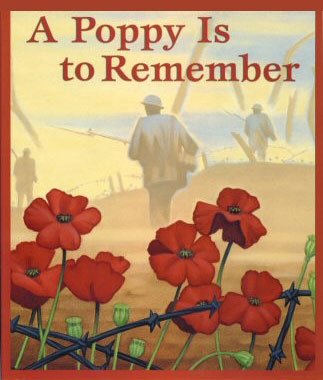
In memorium

Filed under: Britain, History, Military, WW1, WW2 — Tags: , , — Nicholas @ 11:00

A simple recognition of some of our family members who served in the First and Second World Wars:

The Great War

  • Private William Penman, Scots Guards, died 1915 at Le Touret, age 25
    (Elizabeth’s great uncle)
  • Private David Buller, Highland Light Infantry, died 1915 at Loos, age 35
    (Elizabeth’s great grandfather)
  • Private Walter Porteous, Northumberland Fusiliers, died 1917 at Passchendaele, age 18
    (my great uncle)
  • Corporal John Mulholland, Royal Tank Corps, died 1918 at Harbonnieres, age 24
    (Elizabeth’s great uncle)

The Second World War

  • Flying Officer Richard Porteous, RAF, survived the defeat in Malaya and lived through the war
    (my uncle)
  • Able Seaman John Penman, RN, served in the Defensively Equipped Merchant fleet on the Murmansk Run (and other convoy routes), lived through the war
    (Elizabeth’s father)
  • Private Archie Black (commissioned after the war and retired as a Major), Gordon Highlanders, captured at Singapore (aged 15) and survived a Japanese POW camp
    (Elizabeth’s uncle)
  • Elizabeth Buller, “Lumberjill” in the Women’s Land Army in Scotland through the war.
    (Elizabeth’s mother)

In Flanders fields the poppies blow
Between the crosses row on row,
That mark our place; and in the sky
The larks, still bravely singing, fly
Scarce heard amid the guns below.

We are the Dead. Short days ago
We lived, felt dawn, saw sunset glow,
Loved and were loved, and now we lie
In Flanders fields.

Take up our quarrel with the foe:
To you from failing hands we throw
The torch; be yours to hold it high.
If ye break faith with us who die
We shall not sleep, though poppies grow
In Flanders fields.

Lieutenant Colonel John McCrae, MD (1872-1918)

« Newer PostsOlder Posts »

Powered by WordPress