Quotulatiousness

November 9, 2012

Deception and counter-deception

Filed under: Europe, Germany, History, Military, WW2 — Tags: , , , , , — Nicholas @ 09:08

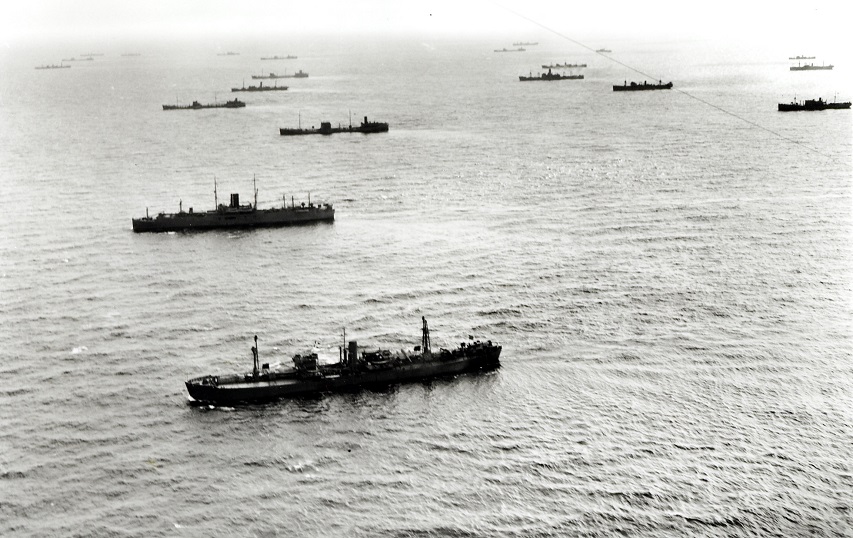
Deception in war reached a crescendo in the latter stages of World War 2, with the allies’ use of General George S. Patton’s imaginary First US Army Group (FUSAG) to pin German attention on the Pas de Calais for more than a month after the real D-Day landings in Normandy. In addition to direct propaganda and an extensive radio network generating fake messages to show the size of FUSAG, the allies also created entire dummy airfields and flotillas of fake landing craft to show up on German air recon photos. The fake planes, aircraft, and buildings were a key part of maintaining the fictitious threat of another, bigger invasion — which successfully kept a large German force away from the real landings.

Less well-known is that the Germans also indulged in this kind of deception:

In what could easily be the finest and boldest example of death-defying and cheeky nose-thumbing during the Second World War or any conflict for that matter, bomber and intruder crews of the Royal Air Force and USAAF are reputed to have bombed the Luftwaffe’s decoy airfields and dummy aircraft, not with high explosives or incendiaries, but with nothing more than dummy bombs made of wood, and painted with the smug remark “Wood for Wood”… all just to make a point.

Throughout all theatres of war, during the Second World War, from China to Holland to Kent, air forces, phsy-ops units and logistics people constructed dummy targets such as airfields, factories, truck parks, convoys and even ships, out of wood, canvas, burlap, or inflatable rubber. The decoy airfields were often populated with dummy aircraft and vehicles of such high quality, that even low flying recce aircraft with photographic equipment would have hard time telling the difference between the dummies and the real thing. The decoy airfields and dummy aircraft served several purposes simultaneously. They confused snooping enemy aircraft and hence planners as to the number of aircraft available to the opposing forces as well as to their displacement. They provided decoy targets for enemy bombers which, if attacked would prevent real aircraft from being destroyed. Often, these airfields were built near real airports in the path of attacking aircraft in the hopes that they would then drop their bombs and strafe the dummies, thereby saving the real aircraft.

H/T to Roger Henry for the original link.

November 3, 2012

Context matters

Filed under: Cancon, Humour, WW2 — Tags: , , , — Nicholas @ 09:05

Queen’s University may eventually have to consider apologizing for their ham-fisted treatment of Professor Michael Mason:

“If I were to continue teaching I would feel that there was somebody up on the stage with me making shorthand notes — a phantom censor,” he said. After the complaint was filed, the university said he could only continue teaching if the department chair sat in on lectures from time to time. He wouldn’t comply. Classes were cancelled and Mr. Mason was “banned,” as he puts it. He was never formally let go or asked to leave — health problems eventually had him sidelined.

Mr. Mason never disputed what was said, but the complaint didn’t divulge the context, he said.

The words “f—ing rag head,” “towel head,” “japs” and “little yellow sons of bitches,” did indeed cross his lips, he said, but he was quoting from books and articles on racism in that era.

[. . .]

Mr. Mason says he feels anything but supported by the school, which did not acknowledge the context of his statements nor let him explain himself, he said.

“I didn’t do it, I’m not guilty of it, they screwed up. The administration screwed up, mishandled it. They should have done it much more openly and honestly and fairly and they didn’t. And now they’re just saying ‘go away, we’re not going to deal with it.’”

He maintains that only one teaching assistant from the faculty of gender studies made the complaint, but the university and the Public Service Alliance of Canada, Local 901, which represents the TAs, say there were complaints from TAs and students.

October 19, 2012

Vegemite: it’s not just Australian for Marmite

Filed under: Australia, Cancon, Food, History, WW1, WW2 — Tags: , — Nicholas @ 00:01

BBC News celebrates the 90th birthday of that uniquely Australian spread, Vegemite:

Vegemite and Marmite
Photo via Wikimedia

Vegemite started as a wartime substitute for Marmite, but it’s now as symbolic of Australia as Sydney Harbour Bridge and the koala. How did this salty spread become so popular?

What’s the link between German U-boats, the beer industry, processed cheese and the Men At Work’s 1983 hit, Down Under?

The answer is, they all played a part in turning Vegemite from a humble yeast spread into an Australian icon. Stop any Aussie on any street, anywhere in the world, and they will have a view on Vegemite – for, or against.

Now, on the eve of its 90th birthday, the first official history has just been published. The Man Who Invented Vegemite is written by Jamie Callister, grandson of the man who created it.

[…]

Walker put Callister on the case in 1923, and by the end of the year, the pair were confident they had a finished product. Walker decided to launch a competition so the public could name it and claim a £50 prize. Hundreds entered and it was Walker’s daughter Sheila who pulled the word Vegemite out of a hat.

Like the product itself, the name stuck. But sales were sluggish.

Walker had heard about an ingenious Canadian called James Kraft, who had perfected what came to be known as processed cheese. It was a sensation, as it allowed people who couldn’t afford fridges to store cheese for much longer periods.

In 1924, Walker met Kraft in Chicago. The two men got on well and Walker persuaded Kraft to grant him rights to sell his cheeses in Australia.

[…]

As World War II unfolded, Vegemite became associated with the national interest. Posters put up in Australia had pictures of it with the slogan, “Vegemite: Keeping fighting men fighting fit.”

For Vegemite, the war was a turning point, marking its entry deep into the hearts and consciousness of the Australian public.

October 12, 2012

Winston Churchill’s papers now available online

Filed under: Britain, History, Media, WW2 — Tags: — Nicholas @ 09:41

Anna Leach at The Register on the newly available writings of Winston Churchill:

The man who famously stated that the British would “fight them on the beaches” in the event of a German invasion has had some of his less-often quoted words including his private letters (and his receipts for cigars) fully digitised and made available online in the Churchill archive.

Winston Churchill’s private musings, letters to Stalin, doodles and appointments diaries are now on the internet after two years of painstaking digitisation at Churchill College, Cambridge.

The haul of papers documents all areas of the great man’s life and times from the most trivial to the most important.

October 1, 2012

France, 1940: If you can’t beat ’em, sleep with them?

Filed under: Europe, France, Germany, History, WW2 — Tags: , — Nicholas @ 14:16

The ignominy of military defeat and occupation in 1940 was bad for French civilian morale, but according to Patrick Buisson, the female population adapted to the new reality much faster than anyone would have expected:

Everyone was surprised the tall, blond invading newcomers did not set about raping the population as the French had expected. Instead, they handed out bread and tarts.

Moreover, they were so handsome and so brave in comparison with the drunken French soldiers who had surrendered the fight.

Soon, every French child was crying out that he wanted to be German, while every young French girl was lusting after the newcomers as though they were allies, not enemies, offering them oranges and standing on tip-toe to look into the plush interior of their limousines.

And French housewives, deprived of companionship while their soldier husbands were held prisoner, were happily sleeping with the enemy.

The French have long sought to draw a veil over these aspects of the occupation, claiming heroic acts of resistance during the period when, in fact, they were little more than collaborators.

Now, with uncharacteristic daring, Patrick Buisson, director of France’s History Channel, TF1, has set the record straight by writing a book, whose titillating title — 1940-1945: The Erotic Years — shows the extent to which his fellow countrymen actually enjoyed their wartime experiences.

[. . .]

Naturally, there were the inevitable consequences. While the British birth-rate fell during the dark days of the Blitz, the French birth-rate soared in the years after the Germans arrived, despite the fact that more than two million redblooded French men were locked away in prison camps.

Up to 30 per cent of live births were illegitimate in some parts of Paris. This gave the French authorities a particular headache. For a long time, they had been lamenting that France was underpopulated; now they did not know whether to rejoice or deplore each new arrival.

Update: Just realized the original story is actually from a few years back, so I omitted the phrase “a new book”.

September 20, 2012

Potentially deadly legacies of war

Filed under: Environment, History, Military, Weapons, WW1, WW2 — Tags: — Nicholas @ 15:41

A long, fascinating, disturbing blog post at SciencePunk on unexploded munitions from both World War 1 and World War 2, still showing up unexpectedly:

The WMD was discovered, quite by chance, lying by the side of a Bridgeville road in late July by a Delaware state trooper on an unrelated callout. Jutting out of the ground, the 75mm shell was encrusted in barnacles and pitted with rust; barely recognisable as a munition at all. The trooper called in his find and a military team took the bomb to Dover Air Force Base for disposal. As with most conventional rounds, a small charge was placed on the side of the shell and detonated to trigger the vintage munition’s own explosive. But something went wrong, and the bomb failed to explode.

When the two staff sergeants and technician walked over to inspect the failed detonation, they found a strange black liquid seeping out of the cracked mortar. Given that the shell had been under the sea for the better part of fifty years, the men thought little of the foul-smelling substance until hours later, when their skin began to erupt in agonising blisters. All three were rushed to Kent General hospital, where two were released later after minor treatment. A third, more seriously injured serviceman was transported to Temple University Hospital in Philadelphia, where he remained in serious but stable condition with what were only described as “burns or blisters” in a statement issued by the Army later that week. A scientific team were sent to Dover to collect soil samples from the area. The results were clear: the shell had been filled with mustard gas. The United States’ forgotten weapons of mass destruction had returned to haunt it.

[. . .]

With three servicemen now lying in hospital, injured by a weapon of mass destruction, officials could no longer ignore the problem of the rogue munitions. On August 4, the U.S. Army announced a $6 million plan to locate and stem the source of the clamshell ordnance. The investigation was led by Robert Williams Jnr of the Army’s Corps of Engineers. It seemed like an impossible task – Williams couldn’t search every clamshell-topped road in the state, and even if he did, there’d be no guarantee he could complete the survey before one of the hidden weapons detonated. Worse still, nobody knew how the munitions were getting from the ocean into driveways, and how to stop more arriving. Then Williams was handed a gigantic stroke of luck: interviews with everyone who discovered ordnance in their driveways revealed that they had all purchased their clamshell mix from one hauler, Perry Butler. And Perry Butler had an exclusive contract to collect waste clamshells from one Milford clam processing plant: SeaWatch International.

As Delaware’s only clam processor, suspicion had already been placed on the Milford plant. In spite of initial claims that no ordnance had been found on site, when the U.S. Army turned their attention to the factory, it was already the subject of an ongoing investigation by the Occupational Safety & Health Administration. On inspecting the facility, their suspicions were confirmed: twelve munitions were recovered onsite. Workers had picked the highly unstable ordnance off the conveyor lines and stored them in a bucket of water in the basement. The munitions that they did not spot had been first plunged into conditioning tanks with the live clams, passed through steam cookers, and then raked across an industrial shucker that violently shakes the cooked meat from the shells. From there, the ordnance was picked up by Perry Butler, hidden in containers of empty clamshells, who passed them through a grinder that pulverised the shells into gravel before selling the fill on to various downstate residents. That none of the munitions exploded at any point was nothing short of miraculous. That no chemical rounds had broken open or leaked, even more so. SeaWatch International was fined $9,000 by OSHA for endangering staff and only permitted to continue business with the installation of $15,000 metal detector. Just three days later, the buzzer sounded. Workers reported the discovery of a 75mm shell, identical to the one that had injured three servicemen at Dover.

The problem is much bigger than the incidents in Delaware, however, as all the combatant nations of WW1 dumped their unused chemical weapons into the sea … and not always safely (and that really deserves scare quotes: “safely”).

With the close of the First World War, both defeated and victorious nations of the world were left holding thousands of tonnes of lethal chemical weaponry and no one to launch them at. The weapons were dangerous to transport and difficult to store. And nobody really knew how to neutralize their contents. So it’s easy to see how dumping the weapons in the deep ocean, out of harm’s way, was seen as a sensible solution. Entire ships were loaded with munitions, chemical and conventional alike, and sailed out to sea where the cargo was thrown overboard. As part of the CHASE program (“Cut Holes And Sink ‘Em), entire ships filled with weapons and unwanted hardware were scuttled, some detonating on their way to the seabed. For many decades, countries cast their surplus chemical weapons into ocean water and forgot about them. Over a quarter million tonnes of British bombs filled with mustard and phosgene gas and the nerve agent Tabun lie in the waters around the UK, concentrated off the west coast of Scotland. Somewhere between 50,000 and 300,000 tonnes of German, Soviet, US and British chemical agent lies in the shallow Baltic Sea. The USA has also admitted to dumping toxic materiel off the coastlines of other nations rather than risk carrying the volatile cargo home. The James Martin Centre for Non-Proliferation Studies lists 127 known dumpsites across the world, it’s likely even more exist.

Rewriting a crucial moment in WW2: 9th Canadian Infantry Brigade on D+1

Filed under: Cancon, France, Germany, History, Military, WW2 — Tags: , , , — Nicholas @ 09:30

If you’re interested in the Canadian part of the D-Day landings and the days that followed, you’ll probably want to visit the Canadian Military History site:

Marc Milner’s Chapter, “No Ambush, No Defeat: The Advance of the Vanguard of the 9th Canadian Infantry Brigade, 7 June 1944″ in Canada and the Second World War: Essays in Honour of Terry Copp rewrites the history of 9 Brigade on D-Day+1. The defeat of 9 Brigade has always been used a prime example of the flawed nature of Allied leadership and combat capability and proof of the superior fighting skill of German forces. Milner challenges this assessment, arguing “the vanguard of 9 Brigade fought an enemy at least three times its size to a standstill, and did so largely without the crucial component of Anglo-Canadian doctrine: artillery support … in the process 9 Brigade met and defeated a portion of the panzer forces that the 3rd Canadian Division had been tasked with destroying. So maybe 9 Brigade did all right on D+1 after all.”

The revised chapter to the book has been made available as a freely downloadable PDF.

September 9, 2012

Midway: the turning point of the Pacific War

Filed under: Books, History, Japan, Military, Pacific, USA, WW2 — Tags: , , , , — Nicholas @ 09:33

An interesting sketch of the importance of the 1942 Battle of Midway in the Spectator from Richard Freeman:

For many of us the Battle of Midway is just one more Hollywood spectacular in, to paraphrase Neville Chamberlain, a far-away sea of which we know little. But having recently taken a closer look at the battle I am struck both by what was at stake and what the consequences of the American victory were for the Allies at the time and geopolitics since then.

[. . .]

Because the Americans were the victors at Midway, it is easy to forget how near they came to losing the battle. On the day of the main action they attacked the Japanese carriers from dawn until 10.20 am without inflicting any serious damage. Then, between 10.20 am and 10.25 am, the American planes caught three of the Japanese carriers without adequate fighter protection. All three were completely disabled in just five minutes in what has been called ‘the miracle of Midway’.

[. . .]

Now suppose — and it almost happened — that the Japanese carriers, with their vastly superior fighter planes, had caught the American carriers off guard. The loss of those carriers and the destruction of the Midway airbase would have compelled America to give a much higher priority to the Pacific. A direct consequence of that would have been a slower build-up of American power in, first North Africa, and then Europe.

Shortly after the North African landings, there was the other great turning point of the war: Germany’s surrender at Stalingrad. From then on one of the great questions of the war was where the Russians would meet the Allies. Had America suffered a massive defeat at Midway, the Allies advance in Europe would have been slower. (As it was, D-day strained the Allies to the limit. Even a small reduction in ships, tanks, planes or men would have forced its delay.) In these circumstances it is not inconceivable that the Soviet Union would have taken the whole of Germany

I just finished reading one of the few accounts of the battle from the Japanese perspective, Midway: The Battle That Doomed Japan by Mitsuo Fuchida and Masatake Okumiya. Because I couldn’t remember Fuchida’s co-author’s name, I Google searched on the title of the book, only to find the top item after Fuchida’s Wikipedia entry was this:

The Western accounts of the Japanese side of the battle have heretofore been built around three primary sources: The after-action log of Admiral Nagumo (“The Nagumo Report”); the interviews with Japanese naval officers conducted after the war by the United States Strategic Bombing Survey (“USSBS”); and Mitsuo Fuchida’s book, Midway: The Battle That Doomed Japan, which was published in the United States in 1955. These three sources, augmented by fragmentary survivor accounts, have formed the backbone of the Japanese account for all Western histories up to this point.

Unfortunately, one of these sources — Fuchida’s Midway — is irretrievably flawed. Fuchida’s misstatements, which have lain undetected in the West until very recently, have had manifold negative effects on the veracity of the standard English-language battle accounts. His were not minor errors of omission that can be brushed off or explained away — they were fundamental and willful distortions of the truth that must be corrected. Intriguingly, Fuchida’s account was overturned and discredited in Japan more than twenty-five years ago. Yet in the West, he has remained as important as the day his book was first published.

September 2, 2012

The (mostly) forgotten Soviet-Japanese conflict of 1939

Filed under: China, History, Japan, Military, WW2 — Tags: , — Nicholas @ 11:17

Japan’s conduct of the opening stages of World War 2 were literally schizophrenic: the Imperial Japanese Navy viewed their primary opponent as the United States, while the Imperial Japanese Army viewed their primary opponent as the Soviet Union. The army’s fears were based on a little-known but very significant campaign in an undeclared war fought between Japan and the Soviet Union in 1939:

In the summer of 1939, Soviet and Japanese armies clashed on the Manchurian-Mongolian frontier in a little-known conflict with far-reaching consequences. No mere border clash, this undeclared war raged from May to September 1939 embroiling over 100,000 troops and 1,000 tanks and aircraft. Some 30,000-50,000 men were killed and wounded. In the climactic battle, August 20-31, 1939, the Japanese were crushed. This coincided precisely with the conclusion of the German-Soviet Nonaggression Pact (August 23, 1939) — the green light for Hitler’s invasion of Poland and the outbreak of World War II one week later. These events are connected. This conflict also influenced key decisions in Tokyo and Moscow in 1941 that shaped the conduct and ultimately the outcome of the war.

This conflict (called the Nomonhan Incident by Japanese, the Battle of Khalkhin Gol by Russians) was provoked by a notorious Japanese officer named TSUJI Masanobu, ring-leader of a clique in Japan’s Kwantung Army, which occupied Manchuria. On the other side, Georgy Zhukov, who would later lead the Red Army to victory over Nazi Germany, commanded the Soviet forces. In the first large clash in May 1939, a Japanese punitive attack failed and Soviet/Mongolian forces wiped out a 200-man Japanese unit. Infuriated, Kwantung Army escalated the fighting through June and July, launching a large bombing attack deep inside Mongolian territory and attacking across the border in division strength. As successive Japanese assaults were repulsed by the Red Army, the Japanese continually upped the ante, believing they could force Moscow to back down. Stalin, however, outmaneuvered the Japanese and stunned them with a simultaneous military and diplomatic counter strike.

[. . .]

But what if there had been no Nomonhan Incident, or if it had ended differently, say in a stalemate or a Japanese victory? In that case, the Japanese decision to move south might have turned out very differently. A Japan less impressed with Soviet military capability and faced with choosing between war against the Anglo-American powers or joining Germany in finishing off the U.S.S.R., might have viewed the northern course as the best choice.

If Japan had decided to attack northward in 1941, that could well have changed the course of the war, and of history. Many believe that the Soviet Union could not have survived a two-front war in 1941-1942. The Soviet margin of victory in the Battle of Moscow, and at Stalingrad a year later, was excruciatingly thin. A determined Japanese foe in the east might have tipped the balance in Hitler’s favor. Furthermore, if Japan had moved against the Soviet Union in 1941, it could not also have attacked the United States that year. The United States might not have entered the war until a year later, under circumstances in Europe far more unfavorable than the actual grim reality in the winter of 1941. How then would Nazi domination of Europe been broken?

August 30, 2012

General A.G.L. McNaughton and the First Canadian Army

Filed under: Books, Cancon, History, Military, WW2 — Tags: , , , — Nicholas @ 12:21

Randall Wakelam reviews a new biography of Lieutenant-General A.G.L. McNaughton, the first commander of Canada’s major field formation in World War 2:

Lieutenant-General A.G.L. ‘Andy’ McNaughton was one of the key staff gunners in the Canadian Corps in the Great War and went on to be Chief of the General Staff in Ottawa from 1930 to 1935. From 1935 to 1939 he established and led the National Research Council. He was recalled to active service in 1939 and took 1st Canadian Division overseas. Once there he would spend four years building the Canadian field force first to corps and then army level. Relieved of army command in late 1943, he was for a short while Minister of National Defence and in the postwar years continued to serve Canada as the Canadian co-chair of the Canada-US Permanent Joint Board on Defence. Not a bad record of public service, but he is most remembered for his apparent failures as general officer commanding-in-chief (GOC-in-C), First Canadian Army.

[. . .]

Previous portraits show McNaughton to be a general who argued vehemently against breaking up his force for errant missions and, who at the same time, was a failure in field exercises. He has also been seen as an inflexible man who could not get on with his military or political seniors. Historians of no less repute than C.P. Stacey, Jack English and Jack Granatstein have created that portrait for Andy.

[. . .]

Rickard has gone well beyond what we have to now generally accepted as the tragic character that was Andy McNaughton. He has drawn from an impressive range or primary sources in building a case for, if not accepting McNaughton as a viable, but unlucky commander, then one whose flaws are now better understood in comparison of those of his peers. While not all will agree with Rickard’s assessment of McNaughton it could be argued that such disagreement is born in large part because of the complex nature of high command and the management of armies and national forces in coalition warfare – what might be termed Clausewitzian fog and friction both on the battlefield and in the meeting rooms, and with more than a pinch of ambiguity added when it comes to strategic-level discussions and decisions. Such has been the case recently for Canadian politicians and commanders in Afghanistan and the Mediterranean; both they and students of Canadian history will enjoy John Rickard’s fresh and refreshing study of Andy.

August 22, 2012

QotD: Orwell on the Dieppe raid

Filed under: Cancon, France, Germany, History, Military, Quotations, WW2 — Tags: , , — Nicholas @ 09:12

D[avid] A[stor] very damping about the Dieppe raid, which he saw at more or less close quarters and which he says was an almost complete failure except for the very heavy destruction of German fighter planes, which was not part of the plan. He says that the affair was definitely misrepresented in the press and is now being misrepresented in the reports to the P.M., and that the main facts were: – Something over 5000 men were engaged, of whom at least 2000 were killed or prisoners. It was not intended to stay longer on shore than was actually done (ie. till about 4pm), but the idea was to destroy all the defences of Dieppe, and the attempt to do this was an utter failure. In fact only comparatively trivial damage was done, a few batteries of guns knocked out etc., and only one of the three main parties really made its objective. The others did not get far and many were massacred on the beach by artillery fire. The defences were formidable and would have been difficult to deal with even if there had been artillery support, as the guns were sunk in the face of the cliffs or under enormous concrete coverings. More tank-landing craft were sunk then got ashore. About 20 or 30 tanks were landed but none got off again. The newspaper photos which showed tanks apparently being brought back to England were intentionally misleading. The general impression was that the Germans knew of the raid beforehand. Almost as soon as it was begun they had a man broadcasting a spurious “eye-witness” account from somewhere further up the coast, and another man broadcasting false orders in English. On the other hand the Germans were evidently surprised by the strength of the air support. Whereas normally they have kept their fighters on the ground so as to conserve their strength, they sent them into the air as soon as they heard that tanks were landing, and lost a number of planes variously estimated, but considered by some RAF officers to be as high as 270. Owing to the British strength in the air the destroyers were able to lie outside Dieppe all day. One was sunk, by this was by a shore battery. When a request came to attack some objective on shore, the destroyers formed in line and raced inshore firing their guns while the fighter planes supported them overhead.

George Orwell, diary entry for August 22, 1942.

August 16, 2012

George Orwell, “the moral compass of the 20th century”

Filed under: Books, Britain, History, Media, WW2 — Tags: , , , — Nicholas @ 08:15

A review of Diaries by George Orwell in the Wilson Quarterly:

The early entries cover Orwell’s days as a tramp, a period that provided material for Down and Out in Paris and London (1933), and his subsequent investigation of poverty in the industrial north of England, from which he drew for The Road to Wigan Pier (1937). This volume’s lacuna is Orwell’s experience fighting the fascists during the Spanish Civil War. Plainclothes policemen in Barcelona seized the one or two diaries that recorded those events, and delivered the work to the Soviets. Though the writings likely remain in the archives of the former KGB, Orwell transformed them into literature as well, with the extraordinary memoir Homage to Catalonia (1938).

Of greatest interest are entries from the periods of Orwell’s life that he did not turn directly into books. His World War II diaries are the highlight. Although all of the entries feature Orwell’s direct prose style, there are occasional hints of the novelist at work: “Characteristic war-time sound, in winter: the musical tinkle of raindrops on your tin hat.” And there are ominous passages that reveal his unusually clear view of the awful century unfolding, such as this one from June 1940 that prefigured his 1945 novel Animal Farm:

Where I feel that people like us understand the situation better than so-called experts is not in any power to foretell specific events, but in the power to grasp what kind of world we are living in. At any rate I have known since about 1931 . . . that the future must be catastrophic. I could not say exactly what wars and revolutions would happen, but they never surprised me when they came. Since 1934 I have known war between England and Germany was coming, and since 1936 I have known it with complete certainty. . . . Similarly such horrors as the Russian purges never surprised me, because I had always felt that — not exactly that, but something like that — was implicit in Bolshevik rule. I could feel it in their literature.

August 9, 2012

QotD: “No one is patriotic about taxes”

Filed under: Britain, Bureaucracy, Government, Quotations, WW2 — Tags: , , , — Nicholas @ 08:54

The money situation is becoming completely unbearable. . . . Wrote a long letter to the Income Tax people pointing out that the war had practically put an end to my livelihood while at the same time the government refused to give me any kind of a job. The fact which is really relevant to a writer’s position, the impossibility of writing books with this nightmare going on, would have no weight officially. . . . Towards the government I feel no scruples and would dodge paying the tax if I could. Yet I would give my life for England readily enough, if I thought it necessary. No one is patriotic about taxes.

George Orwell, diary entry for 9 August, 1940.

August 5, 2012

Raoul Wallenberg remembered

Filed under: Europe, Germany, History, Russia, WW2 — Tags: , , , , — Nicholas @ 11:05

Yesterday was what would have been Raoul Wallenberg’s 100th birthday. It was observed in Sweden:

Sweden on Saturday commemorated the life of a diplomat credited with saving thousands of Hungarian Jews from the Nazis in World War II, but whose fate remains one of the country’s greatest war-time mysteries.

Crowds gathered in the town of Sigtuna, 50 kilometers (30 miles) north of Stockholm to celebrate the centennial of the birth of Raoul Wallenberg, whose defiance of the Nazis has been commemorated worldwide in statues, streets names, and on postage stamps.

Wallenberg served as Sweden’s envoy in Budapest from July 1944 — where he saved the lives of at least 20,000 Jews by giving them Swedish travel documents, the so-called “shutzpass,” or moving them to safe houses. He is also credited with dissuading German officers from massacring the 70,000 inhabitants of the city’s ghetto.

But, in January 1945, the young Swede was arrested by the Soviet Red Army on leaving Budapest to go to the eastern part of the country, and suddenly disappeared.

The Soviets initially denied they had detained him, but later said he had died of a heart attack in prison on July 17, 1947.

August 4, 2012

British quirks, in brief

Filed under: Britain, History, Humour, WW2 — Tags: , — Nicholas @ 09:19

To provide assistance to all the benighted foreigners visiting Britain for the Olympics, BBC News Magazine solicited helpful bits of advice and information from their audience. Here are a few of the responses, explaining some of the odd and illogical quirks of Britons:

Avoiding terms of address

British speakers of English try to avoid addressing each other by any sort of title. While speakers of French politely address strangers as “monsieur” or “madame”, the British are tongue-tied at the point of interaction, hoping that simple proximity will indicate to whom they are talking. These days, it’s considered condescending to use “sir” or “madam”, unless the speaker is in a clearly-defined “service” role. To fill this gap, the locals have developed various colloquial circumlocutions. In London, for example, “guv[nor]”, “mate” and “squire” are employed by males (according to complex rules) to address unknown males, with “darling” or “love” (rather questionably) filling the gap for males speaking to females. Further north, “petal” is a possible variant on “love”, while in western Scotland “pal” is used to address unknown males. In south Hampshire, the guv/pal equivalent is the linguistically intriguing “moosh”. What the British never, ever do is follow the American tradition and address those driving taxis as “driver”, those serving at table as “waiter” or those working the hotel switchboard as “operator”. To our ears, this is the height of condescension, verging on rudeness, and will ensure that the cab stops on the wrong side of the road, drinks orders are unfilled and the call is misrouted. Y’all remember that now.

Nick Stevenson, London

[. . .]

Saying sorry

Visitors should be wary of the word sorry — it has endless nuances. For instance, if I inadvertently step on your toe we should both immediately say sorry. I’m sorry for having stepped on your toe — you say sorry to imply it was your fault really, or at least no one is quite sure, so both should say sorry. It also means no hard feelings. But when I say “sorry to bother you, but…” I’m not really apologising, just prefacing a request for some trivial favour, or bit of information. Such as: “Sorry to bother you, but do you have the time?” However, if you hear “sorry?” as a question you’re most likely being asked to repeat something not quite heard or understood. But don’t get carried away with your new knowledge. If someone pronounces sorry a “so-ree” with a strong emphasis on both syllables then that is bad news. They are not sorry at all, just being sarcastic. Maybe someone has mildly offended them — perhaps by accusing them of the unforgivable sin of queue-jumping. Their “so-ree” then means “shut it mate”. But occasionally, very occasionally, sorry really does mean sorry. If someone says: “I’m so sorry to hear your mother has died” they probably are sorry. Not always, but probably.

Mike Pollak, Birmingham

[. . .]

The War

The War — always meaning World War II — is as alive in the collective British consciousness as if it only ended five years ago. A melange of manic cheerfulness, stiff upper lips, atrocious food, doodlebugs, and muddling through. Equally evocative are the sounds of the time — big band dance numbers, and the warbling note of the air raid siren — and ladies’ fashions — severe, economically cut, but with a certain dour style, and neat, off-the-shoulder hairdos, topped (in my mother’s case) with a jaunty WAAF forage cap. It is an awful example of how propaganda can take hold and become history. History is laid down by the survivors – the images we all remember so well were composed with a good deal of thought by the powers that be — the Ministry of Information and the BBC — with a definite end in mind; to endure, to tough it out, to hang on until things got better. Something very similar was attempted during the Cold War, but met with far less success — the Cold War was nasty but theoretical, whereas WWII was nasty but actually happened. As a Baby Boomer, I just remember the post-war atmosphere — grey, tatty, somewhat regimented. We ate baked cod, mashed potatoes and boiled carrots off plates that did not match.

Luce Gilmore, Cambridge

« Newer PostsOlder Posts »

Powered by WordPress