Quotulatiousness

July 28, 2012

“Beevor’s book stinks”

Filed under: Books, History, Japan, Media, Military, WW2 — Tags: , — Nicholas @ 12:01

Yes, the headline is taken out of context. Here’s the context:

Granted, we already knew that World War II was brutal. What, then, can Beevor add to this horridly familiar tale? Or, stated differently, do we need another history of that war? Yes, we do. While the war itself remains a constant, the way it is viewed evolves according to changing moral perceptions. In late 1945, for instance, the Tokyo War Crimes Tribunal decided to suppress evidence of cannibalism in order not to traumatize the families of soldiers who died in Japanese prison camps. Beevor thinks that this once-taboo story needs now to be told. He’s probably right. His skill lies in telling it without descending into gratuitous horror.

The challenge that confronts historians is how to convey the immensity of total war without losing sight of singular torment. Too often, the grandeur of great battles smothers the suffering of the individual. Soldiers become battalions that attack on faceless flanks. “One death is a tragedy,” Stalin famously remarked. “A million deaths a statistic.” In the grand narrative, human beings disappear. War is thus sanitized; Stalingrad and Normandy are re-created without the detail of men and women screaming in agony. That is how some readers like it — war without the carnage and putrefaction, without the dismembered limbs and torn faces.

But that is chess, not war. Good military history should stink of blood, feces and fear. Beevor’s book stinks. It reconstructs the great battles but weaves in hundreds of tiny instances of immense suffering. War is presented on its most personal level. We learn not only of the vanity of Gen. Mark Clark, the cruelty of Gen. George Patton and the stupidity of Gen. Maurice Gamelin, but also of the terrible misery endured by what the poet Charles Hamilton Sorley once called “the millions of mouthless dead.” Very few heroes emerge, because heroes are too often cardboard constructs. Detail adds nuance and dimension, clouding characteristics worthy of worship. “Say not soft things as other men have said,” warned Sorley to those who wanted to remember war. Beevor constructs a true picture by avoiding soft things. The book brims with horror, but so it should.

July 26, 2012

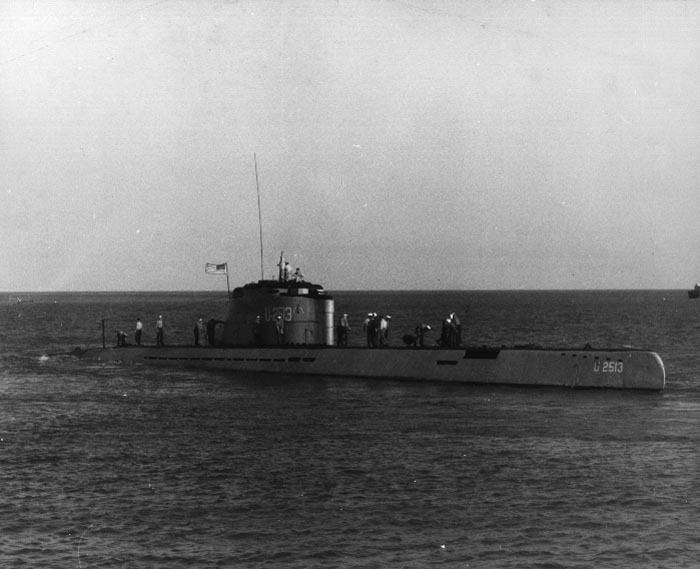
Wreck of WWII U-boat may be 100km up the Churchill River

Filed under: Cancon, Germany, History, Military, WW2 — Tags: , , — Nicholas @ 09:57

CBC News on the possible discovery of remains of a German WW2 submarine in Labrador:

The German government says it is possible, but added that it would be “sensational and unusual,” that a submarine could have ended up so far inland.

“We do know that German U-boats did operate in that region,” said Georg Juergens, the deputy head of mission for the German Embassy in Ottawa.

He notes that a Second World War-era, battery-operated weather station was found decades after being left in Labrador by a U-boat. It is now on display at the Canadian War Museum in Ottawa.

“We must brace ourselves for surprises,” Juergens told CBC News, while stressing that the submarine has yet to be positively identified.

More than a dozen U-boats may still be unaccounted for, he said.

If the mystery find is proven to be a submarine wreck, the German government does not favour bringing it to the surface.

“That would be against our tradition and our naval customs,” Juergens said. “This site then would be declared a war grave at sea.”

He said Canadian policy dovetails with German policy on such matters.

According to Juergens, the Newfoundland and Labrador government is now involved in efforts to authenticate the possible wreck.

July 11, 2012

Antony Beevor’s latest book

Filed under: Asia, Books, Europe, History, Military, Pacific, WW2 — Tags: , — Nicholas @ 00:02

In History Today, Roger Moorhouse talks to Antony Beevor on his latest booK:

I asked what novelties of approach or new material he employed for the book? Did he, for instance, set out to try to draw the two traditionally distinct narratives of the war in the Pacific and the war in Europe into a single integral whole? Though he does make a nod in that direction, Beevor believes that such an approach is not really feasible, adding that the war in the Pacific was ‘almost like a war on another planet’, such was its separation from events in Europe. ‘I was fascinated,’ he went on, ‘by the reaction of the US Marines on Okinawa when they heard about the surrender of Germany. It was “Who cares?” For them it was impossible to imagine, just as it was impossible for the people fighting in the snows of Russia to imagine war in the Pacific Islands.’

If the approach is largely conventional, the book does not lack new information. Russian sources are still yielding fascinating material, he notes, despite political retrenchment, while German scholarship is throwing up new approaches and new resources, such as the archive of Feldpostbriefe (soldiers ‘field post’ letters) in Stuttgart. Beevor’s most interesting revelation, however, is the horrific contention that the Japanese army practised organised cannibalism. As he explains: ‘Allied prisoners, especially Indian army prisoners, were kept as sort of human cattle and slaughtered one by one for their meat.’ News of such crimes was largely suppressed after the war, as it was considered ‘too awful even to be mentioned in the war crimes trials’, but has since been brought to light by Japanese historians.

[. . .]

Of course the heart of Beevor’s appeal is precisely that straightforward narrative approach, coupled with his lively, engaging style and his use of memorable, almost cinematic, set-pieces. I put it to him that, in tackling a book of this scope, perhaps he had been obliged to rein in some of those literary flourishes. ‘You are right,’ he conceded. ‘There is so much more to tell and there is much less room for the vignette, but it is still terribly important, serving to root the reader in the reality of the moment.’ He is swift to acknowledge a debt to John Keegan in this regard, under whom he studied at Sandhurst and whose The Face of Battle (1976) was hugely influential. ‘It is absolutely vital to give the reader a frequent reminder of what it was actually like, the view from below, otherwise it’s just history from above, which never really works.’

June 26, 2012

Poland’s uneasy WW2 history

Filed under: Books, Europe, Germany, History, Media, WW2 — Tags: , , — Nicholas @ 09:39

Poles are being told unwelcome things about the country’s experiences under Nazi rule. The most recent upheavals have been triggered by the publication of a new book by Jan T. Gross:

Its title, Golden Harvest, stems from a cover photograph that purportedly shows Polish peasants who have been digging through remains of victims killed at Treblinka, where 800,000 Jews were gassed and cremated, to find gold or valuable stones neglected by the Nazis.

From there, Mr. Gross narrates events beyond the barbed wire of Nazi death camps. He describes Poles hunting Jews down, extorting money from them, massacring them, and profiting by taking over their jobs and property. Some 3.3 million Jews lived in Poland before the war began, and about 90 percent had perished by its end.

“There was a sense of satisfaction that was quite widespread that they are being eliminated from Polish economic and social life,” Mr. Gross says in a phone interview from Kraków, where he is teaching a summer course for Princeton students. “When given the opportunity, a large number of Poles participated in victimization of Jews.”

[. . .]

The white-haired, New York-based writer, 64, enjoys a level of notoriety in his native country that lacks any analogue among American historians. When word gets out that he is publishing a new book, anxiety spreads about what dirty laundry he will expose this time. His writing gets discussed on prime-time TV.

Mr. Gross “polarizes public opinion probably more than anyone else outside of the political world,” says Jan Grabowski, a Holocaust historian who splits his time between the University of Ottawa and Poland.

His books have struck such a nerve because they cut against the national narrative that Poland is exclusively a victim of history, not a victimizer.

June 16, 2012

Sometimes the navy gets far more use out of a ship than they expect

Filed under: Britain, Europe, History, Military, Russia, USA, WW1, WW2 — Tags: , , , — Nicholas @ 10:12

Strategy Page on some extremely old ships still in service in various navies:

Last year, the British Royal Navy retired its oldest warship still in service, the 4,700 ton HMS Caroline. This light cruiser entered service in 1914 and fought in the epic Battle of Jutland in 1916. After World War II, Caroline served as a training ship, mostly tied up at dockside. When decommissioned last year, the ship could no longer move under her own power.

The Caroline was not the only World War I warship still in service. Currently, the oldest ship still in service is the Russian salvage ship VMF Kommuna. This 2,500 ton catamaran was built in the Netherlands and entered service in 1915. Kommuna began service in the Czar’s navy, spent most of its career in the Soviet (communist) Navy, and now serves in the fleet of a democratic Russia. Originally designed to recover submarines that had sunk in shallow coastal waters, Kommuna remains in service to handle smaller submersibles, does it well and has been maintained over the decades to the point where it cheaper to keep the old girl operational, than to try and design and build a replacement.

Most navies would not want to bring attention to their oldest ship, especially if it was nearly a century old. It’s different in the American Navy. For example, three years ago the carrier, USS Kitty Hawk (CV 63) was finally decommissioned, and ceased to be the oldest ship in the fleet. The Kitty Hawk served for 48 years and 13 days. In that time, about 100,000 sailors served on the ship. The ship was the navy’s last non-nuclear carrier and, since 1998, the oldest ship in commission. “The Hawk” did not age well, and had lots of breakdowns in its final years. This led members of the crew to nickname the ship; “Shitty Hawk”.

June 13, 2012

John Kay on the Finnish frontier

Filed under: Europe, History, Military, Russia, WW1, WW2 — Tags: , , , , — Nicholas @ 08:58

Finland had a very chancy time over the last hundred years. John Kay is visiting now, and reflects on how Finland survived to today:

The Finnish border is an anomaly. In 1918 the Finns won independence for a state that extended to the gates of St Petersburg. Russia captured territory in the 1939-40 Winter War. Finland then fought on the losing side in the second world war and did not remain neutral in the cold war. So the once thriving Finnish industrial city of Viipuri is today the depressed Russian outpost of Vyborg.

A cynical commentator on 20th-century history might observe that the political ineptitude of Kaiser Wilhelm and subsequently of Adolf Hitler brought America in on the opposite side of Germany’s quarrel with Russia in 1917 and 1941. Only when the democratic politicians of modern Germany made the rational alliance did Finland achieve the favourable political and economic outcomes it now enjoys. To pass the watchtowers and barbed-wire fences on the Finnish-Russian border is to be reminded of how fragile, and how recent, are the stability and security we take for granted today.

[. . .]

That observation is evident on the Finnish-Russian border. The razor wire kept Russian citizens in when the living standards of planned societies and market economies diverged. But now the border is easy to cross and the gap in per capita income has narrowed, though not by much. The very different income distributions of egalitarian Finland and inegalitarian Russia can be seen in the car parks and designer shops of Lappeenranta.

In the Soviet era, Finland produced Marimekko; Russia made no clothes any fashion-conscious woman would want to buy. Post-Communist but still autocratic Russia made surveillance equipment; democratic Finland led the world in mobile phones. Today Russia’s geeks hack into your bank account, while those of Finland develop Angry Birds.

The pristine countryside of Finland contrasts with the degraded physical state of much of Russia: a demonstration of the unexpected finding that regulated democratic capitalism preserves the environment more successfully than any other system of government.

June 6, 2012

Colour footage of the D-Day landings

Filed under: Britain, Cancon, France, Germany, History, Military, USA, WW2 — Tags: , , — Nicholas @ 00:02

Reposted from last year.

Update: Jonathan Kay on the forgotten casualties of the Slapton Sands exercise:

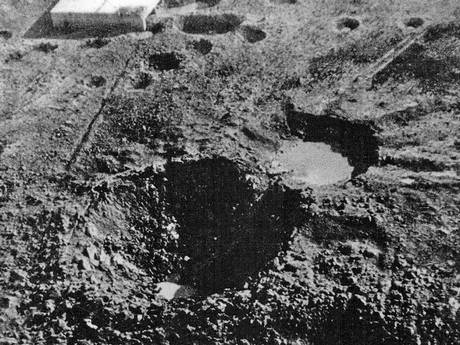
In the dead of night, just over 68 years ago, 30,000 Allied soldiers stationed in British ports filed onto amphibious landing craft, and put out to sea. The flotilla sailed toward its objective, and all went according to plan — until a German naval squadron patrolling the English Channel spotted the Allied force and opened fire. The defenseless landing craft began burning and sinking, sending more than 600 men to their deaths.

The surviving ships sailed on to their assigned landing zone, disgorging the soldiers onto the beach. There, the killing continued: More than 300 troops died in the sand, blasted to bits by incoming shells. All told, 946 men from among the original 30,000 died that day — a fatality rate of about 3%.

That figure was hardly unusual for major Second World War offensive operations. And yet, amazingly, the tragedy described in the paragraphs above wasn’t actually an offensive operation at all. It was Exercise Tiger, an American training mission that took place in April, 1944 — a full five weeks before D-Day.

The beach that the men landed on wasn’t in Nazi-occupied Europe, but Slapton Sands on the Devon coast. And the shells that rained down on the dunes were fired not from German artillery positions, but by guns on the British cruiser HMS Hawkins. As British historian Giles Milton notes, “the Supreme Allied Commander, General Eisenhower, had ordered that real ammunition be used, so that men would experience actual battlefield conditions. It was a disastrous decision.”

May 23, 2012

Review of Savage Continent: Europe in the Aftermath of World War II

Filed under: Europe, Germany, History, Military, Russia, WW2 — Tags: , , — Nicholas @ 10:41

Roger Moorhouse reviews the new book by Keith Lowe for History Today:

It examines Europe in the years immediately after the end of the Second World War, when the guns stopped firing. Yet, as Lowe clearly demonstrates, the absence of war is not the same as an outbreak of peace.

Savage Continent is a grim catalogue of humanity at its lowest ebb. Necessarily pointillist, given its broad scope, it ranges across much of the European continent, portraying a world where civil society and the rule of law were yet to be re-established and where revenge, antisemitism, ethnic cleansing and heightened political sensibilities gave rise to a renewed wave of inter-communal and political violence.

According to Lowe’s account, those immediate postwar years had a thoroughly unedifying air. From the Yugoslav partisans cutting off the noses of their erstwhile opponents, to antisemitic pogroms in Poland, to the massacres of Sudeten Germans in Czechoslovakia, he shows a dystopian continent in which the all-pervasive dehumanisation of the war proved difficult to reverse, provoking a hangover of violence that would last, in some places, into the 1950s.

Alongside the now rather well-documented episodes of brutality from the period, such as the Communist takeover of Eastern Europe, or the expulsion of the German populations from the same region, Lowe does well to uncover some lesser-known examples of man’s postwar inhumanity to his fellow man. The story of the Lithuanian ‘Forest Brothers’, for instance, and their brave, futile resistance to the imposition of Soviet rule, is one that deserves to be much wider known and is outlined well. Similarly the ethnic cleansing of Ukrainians in postwar Poland is rightly placed alongside better-known events, such as the Kielce pogrom and the Vertreibung (expulsion) of the Germans.

I just started reading Postwar: A History of Europe Since 1945 by Tony Judt, and he covers much of the same period of history as Lowe in the first part of his book. I’m moderately well-read on World War II, but the amount of violence and human misery in Europe for more than a decade after the war was “over” is indeed an under-covered and misunderstood aspect of that turbulent period.

Western European countries (France, Belgium, the Netherlands, Norway, and even western Germany) recovered faster in all senses because the Nazi occupiers did much less damage to the social structures in those countries. It’s rather eye-opening to find how few Nazi officials were needed to oversee the local governments in those countries: 800 in Norway, and only 1,500 in France (plus 6,000 military and civil police auxiliaries). Local governments continued to operate pretty much as they had before the war, under the control of a tiny group of German overseers. Economic demands meant the local industries were harnessed to the Nazi war effort (but largely kept under the control of their original owners).

Central and eastern European countries suffered far more disruption as the Nazi racial “logic” did not allow local governments the same relative lack of interference the western local governments got. Local industry was more frequently nationalized and run by German managers directly, not working through the original owners, and local labour was more readily drafted to work in Germany. And unlike in the west, the experiences of newly “liberated” countries in the east often started with a fresh purge of local governments, business owners, and middle class professionals.

What we’d now call “ethnic cleansing” was a frequent second act after the Soviet armies moved in: ethnic Germans were expelled, ethnic Slavs were moved into the cleared areas. Jews, Gypsies, and other groups that suffered terribly under the Nazis did not necessarily see much improvement under the Soviets. Former resistance fighters were hunted down and eliminated (except for those belonging to identified Communist movements … and not even that was guaranteed protection).

Under the circumstances, it may well be nothing short of a secular miracle that Europe recovered economically and socially so soon after the war and the post-war convulsions.

May 22, 2012

Bombing campaigns against Nazi Germany were remarkably inaccurate

Filed under: Britain, Europe, Germany, History, Military, WW2 — Tags: , — Nicholas @ 10:54

An article in History Today recaps the huge gap between what the RAF was thought to be accomplishing in the first half of World War 2 and what they actually achieved in the bombing campaign against Germany:

By 1941, after the winter Blitz in which the Luftwaffe had relentlessly bombed the cities of Britain, the British people wanted to know that the RAF were ‘giving it back’ to the Germans. Later that year, as [Michael] Paris describes, Harry Watt directed his film Target for Tonight for the Crown Film Unit. Made with actual RAF personnel performing a script written by Watt, Target follows the story of a single raid on an imaginary railway yard and oil depot somewhere near a bend in the Rhine. The film sought to celebrate the quiet heroics of the RAF, which is shown to have the ability to mount a precision raid with great success. Audiences no doubt cheered to see the (models of the) target ablaze and to know — or, rather, believe — that the RAF was creating havoc in the enemy’s heartland.

[. . .]

According to a secret Cabinet report, which analysed aerial photographs in the summer of 1941, the RAF failed to get even one third of its bombs within five miles of its targets. The Strategic Air Offensive was published much to the chagrin of wartime RAF leaders such as Sir Arthur ‘Bomber’ Harris and generated intense and widespread controversy.

By the 1980s it was largely accepted that, before new navigational aids were introduced in 1942, the RAF offensive had been a complete failure. Although the moral debate about the rights and wrongs of ‘area’ or ‘indiscriminate’ bombing has continued ever since, there are no serious historians today who challenge the accuracy of the Webster-Frankland account. And so, in 1990, Paris was able to point out the gulf between what the RAF pretended had been happening and what, in reality, was going on.

Before the war started, the air force always claimed that the “bomber would always get through”. What they didn’t say was that it couldn’t be predicted where the bomber would get through to.

However, it must be remembered that even the US Air Force, which carried out daylight air raids against German targets in the latter half of the war, had an accuracy issue too:

Gladwell began with the story of Carl Norden — a Swiss engineer, born in 1880, domineering and narcissistic, “who had very strong feelings about alternating current” and much else. Norden became obsessed with finding a more precise ways to deliver bombs from aircraft — and invented the Norden Mark 15 Bomb Sights. Its promise: that a bomb could be dropped into a pickle barrel from 20,000 feet.

The US military was excited; in fact, Washington spent $1.5 billion in 1940 dollars rolling out the devices, buying 90,000 of them and training 50,000 bombardiers to use them. Yet when America was brought into world war two, “it turns out they were not the holy grail”. They could only hit a pickle barrel under perfect conditions — and life is rarely perfect, it proved. They were hard to use, broke down, could not function in cloud without direct line of sight of the target, and were inaccurate. Plus, Norden had hired German engineers — who gave Berlin the complete blueprint by 1938.

May 3, 2012

Remembering the heroism and sacrifice of the defenders at Kohima’s Garrison Hill

Filed under: Britain, History, India, Japan, Military, WW2 — Tags: — Nicholas @ 09:53

A little-known battle had major consequences to the tides of Japanese expansion, and has been called “India’s Battle of the Somme“:

Nestled in the vast country’s north-eastern state of Nagaland, it is a place where two Victoria Crosses were won for outstanding bravery, where a 1,000-strong British and Indian force, outnumbered 10 to one, halted the Japanese army’s relentless march across Asia.

Blood-soaked battles in April 1944 saw the troops of the Royal West Kent Regiment, with their comrades from the Punjab Rifles and other Indian regiments, under siege on the top of Kohima’s Garrison Hill.

Troops fought hand to hand in torrential rain from rat-infested trenches dug on the then British deputy commissioner’s clay tennis court.

The two sides were so close that they could lob grenades into each other’s strongholds barely 50 feet away and, according to chroniclers of the battle, Allied troops sometimes woke in their monsoon mud trenches with Japanese troops sleeping alongside them.

When the siege of the hill was finally relieved some 45 days after it had begun, British officers were appalled at the conditions in which both Japanese and allied forces had fought and compared it to the Battle of the Somme. Some of the Japanese soldiers had died of starvation and disease. By then end, more than 4000 allied soldiers were dead, and 5764 Japanese troops had been killed.

March 27, 2012

The first “home run” from the Colditz POW camp

Filed under: Britain, Europe, Germany, History, WW2 — Tags: — Nicholas @ 09:45

BBC News has an interesting bit of history about the first successful escape from the “escape-proof” prisoner-of-war camp at Colditz:

Forged papers used by a British escapee from Colditz to make one of the first “home runs” back to the UK from the notorious German prisoner-of-war camp are being sold along with his medals. The tale of his ingenuity and success has become the stuff of World War II legend.

Perched high on a rocky outcrop overlooking the River Mulde near Leipzig, eastern Germany, Colditz castle was considered by German authorities in WWII the ideal site for a high-security prison for allied officers with a history of trying to escape.

But despite its “escape proof” label, the Gothic building witnessed 174 attempts by its troublesome, spirited inmates.

Nevertheless, just 32 men were ever successful — and only half of these managed the feat from within the castle.

March 10, 2012

More on the story of the WWII poster “Keep Calm and Carry On”

Filed under: Books, Britain, History, Media, WW2 — Tags: , — Nicholas @ 00:02

That looks like my kind of book shop! If/when I’m next in Alnwick, I’ll have to stop in for a visit.

Earlier item about the poster here.

March 3, 2012

Three persistent myths about the Great Depression, the New Deal, and World War 2

Filed under: Economics, Government, History, USA, WW2 — Tags: , , , — Nicholas @ 00:08

Historian Stephen Davies names three persistent myths about the Great Depression. Myth #1: Herbert Hoover was a laissez-faire president, and it was his lack of action that lead to an economic collapse. Davies argues that in fact, Hoover was a very interventionist president, and it was his intervening in the economy that made matters worse. Myth #2: The New Deal ended the Great Depression. Davies argues that the New Deal actually made matters worse. In other countries, the Great Depression ended much sooner and more quickly than it did in the United States. Myth #3: World War II ended the Great Depression. Davies explains that military production is not real wealth; wars destroy wealth, they do not create wealth. In fact, examination of the historical data reveals that the U.S. economy did not really start to recover until after WWII was over.

February 10, 2012

Help sponsor a new home for the historic Colossus code-cracking computer

Filed under: Britain, History, Technology, WW2 — Tags: , , — Nicholas @ 11:11

John Leyden at The Register on the fundraising efforts to build a new home for the WW2 cryptographic computer:

The National Museum of Computing (TNMOC) has turned to a tried-and-tested fundraising method to establish a home for the rebuilt Colossus computer at Bletchley Park.

Individuals and firms are invited to buy up pixels of an online picture of the wartime code-breaking machine — at 10 pence per dot with a minimum spend of £10 — pretty much like Alex Tew’s million-dollar homepage effort.

The museum’s curators need the cash to open an exhibition featuring the Colossus in the historic Block H, on the spot where Colossus No 9 stood during the Second World War and where the rebuild took place.

Colossus was the world’s first electronic programmable computer, and was used to crack encrypted messages between Hitler and his generals.

February 3, 2012

Reason.tv: A non-hagiographic analysis of FDR, the New Deal, and the expansion of federal power

Filed under: Economics, History, USA, WW2 — Tags: , , , , — Nicholas @ 14:16

« Newer PostsOlder Posts »

Powered by WordPress