This video has been sponsored and approved by Oasis Games
Sources: The Pacific War Companion: From Pearl Harbor to Hiroshima, Daniel Marston (editor) Iwo Jima: World War II Veterans Remember the Greatest Battle of the Pacific, Larry Smith Hell is Upon Us: D-Day in the Pacific, Victor Brooks Eyewitness Pacific Theater, Firsthand Accounts of the War in the Pacific from Pearl Harbor to the Atomic Bombs, John T. Kuehn and D.M. Giangreco Lost in the Pacific: Epic Firsthand Accounts of WWII Survival Against Impossible Odds, L. Douglas Keeney (Editor)
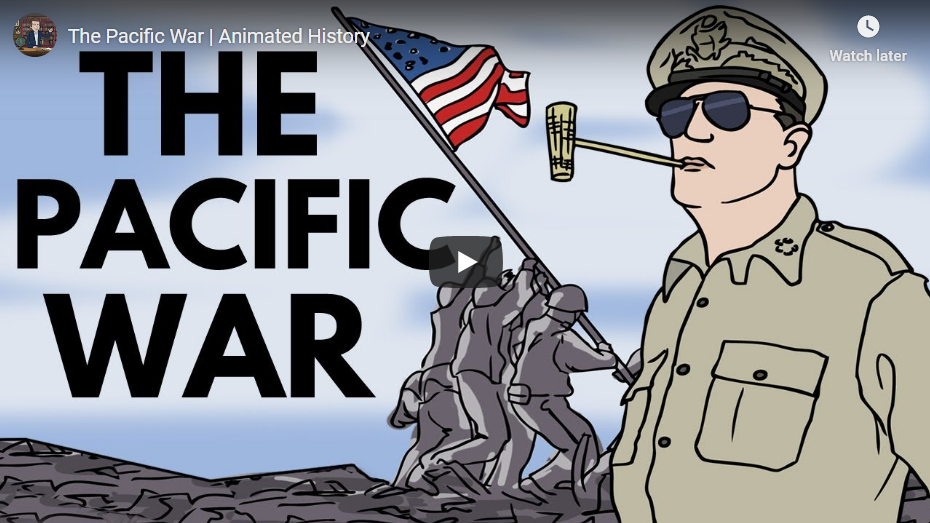
This rather short-changes the Australian contribution to MacArthur’s campaigns in the southwest Pacific theatre, but it is a survey and can only cover so much of such a massive conflict.
Comments Off on The Pacific War | Animated History
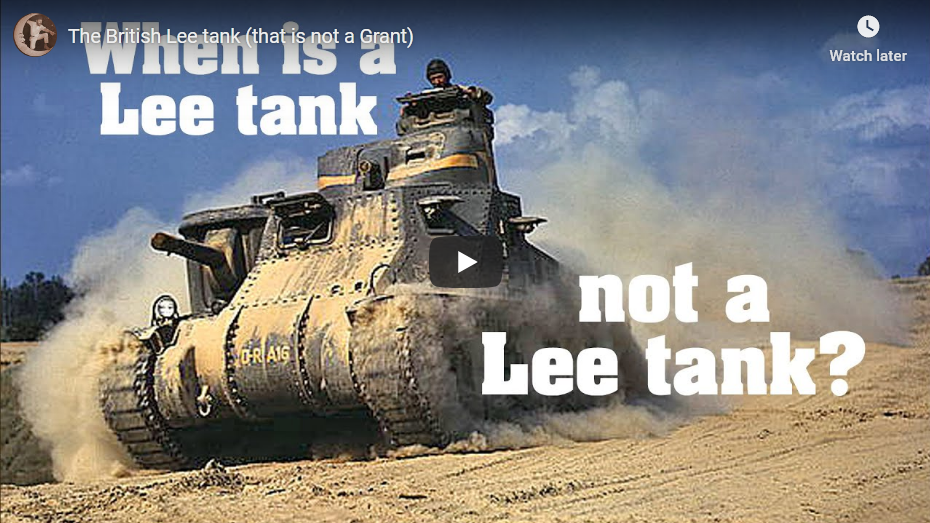
The Lee tank was an American hastily-made tank that saw action in the north African desert, and the Grant was a British version of the same vehicle. But there were also Lee tanks that were more like Grants. I try to explain the confusion.
Lindybeige: a channel of archaeology, ancient and medieval warfare, rants, swing dance, travelogues, evolution, and whatever else occurs to me to make.
▼ Follow me…
Twitter: https://twitter.com/Lindybeige I may have some drivel to contribute to the Twittersphere, plus you get notice of uploads.
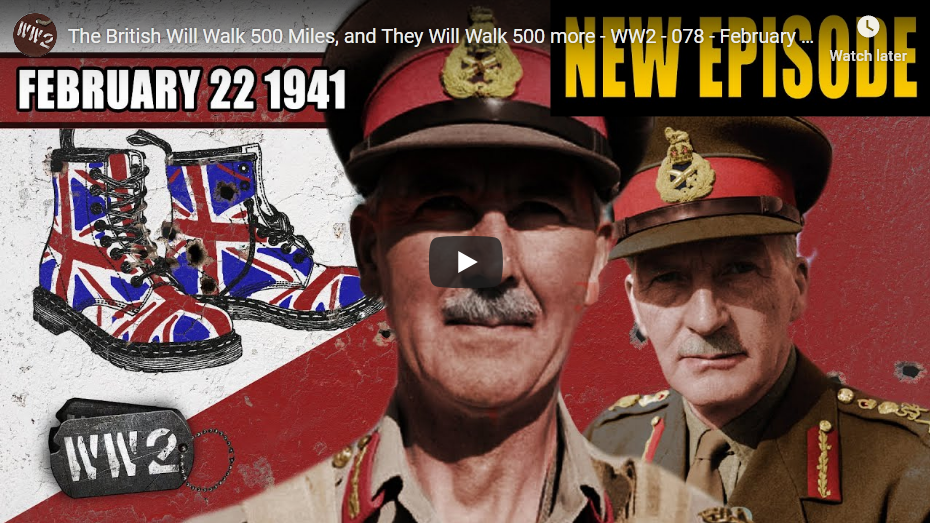
As the British make spectacular advances in East-Africa, with even more spectacular advances on the horizon, South-Eastern Europe is getting increasingly tense.
Written and Hosted by: Indy Neidell
Produced and Directed by: Spartacus Olsson and Astrid Deinhard
Executive Producers: Bodo Rittenauer, Astrid Deinhard, Indy Neidell, Spartacus Olsson
Creative Producer: Joram Appel
Post-Production Director: Wieke Kapteijns
Research by: Indy Neidell
Edited by: Iryna Dulka
Map animations: Eastory (https://www.youtube.com/c/eastory)
Sources:
– Bundesarchiv
– Library of Congress
– IWM: E 6661
– National Library of Australia
– National Portrait Gallery
– Letter by Mochammad Kafi, post icon by Bonegolemfrom, from the Noun Project
– Photot of Goethe Medal by Mondfreund from Wikimedia Commons
– Eirik Sundvor, The Municipal Archives of Trondheim
If you happen to like our videos and have a few bucks to spare to support our efforts, check out our Patreon page where we’ve got a variety of perks for our Patrons, including Simon’s voice on your GPS and the ever requested Simon Whistler whistling package: https://www.patreon.com/TodayIFoundOut
The Great Courses Plus is currently available to watch through a web browser to almost anyone in the world and optimized for the US, UK, and Australian markets. The Great Courses Plus is currently working to both optimize the product globally and accept credit card payments globally.
Never run out of things to say at the water cooler with TodayIFoundOut! Brand new videos 7 days a week!
In this video:
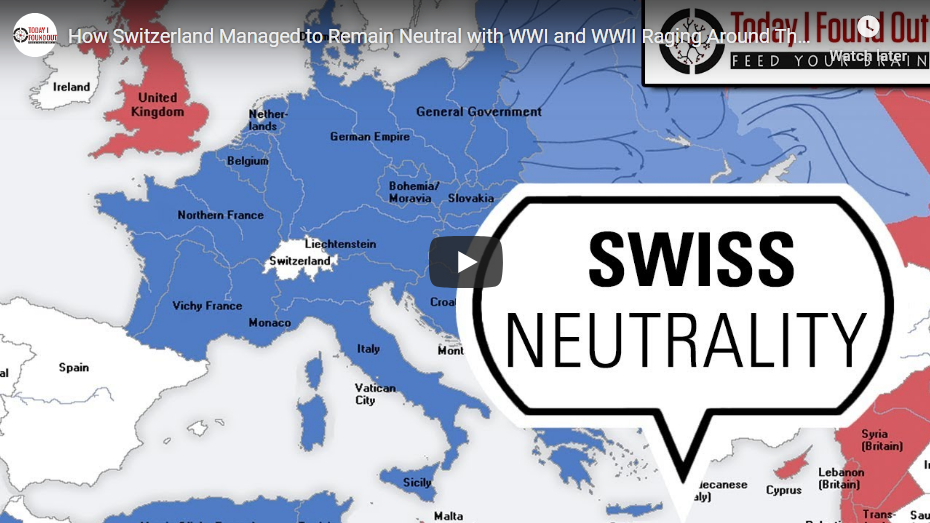
The tiny mountainous country of Switzerland has been in a state of “perpetual neutrality” since the major European powers of the time declared it as such during the Congress of Vienna after the end of the Napoleonic wars in 1815.
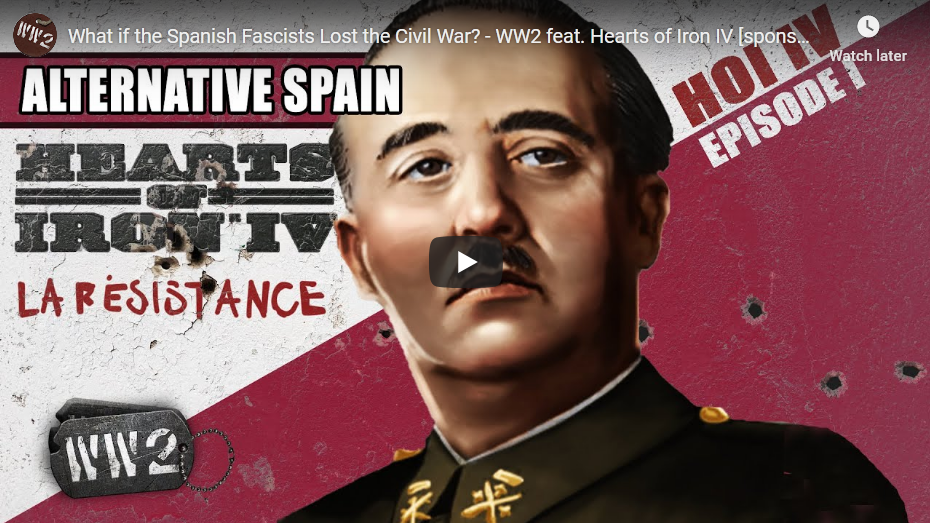
This video is sponsored by Paradox Interactive. Indy shares his thoughts on what he thinks would have happened if the Spanish Revolution would have happened differently.
You can create your own alternate history in the grand strategy game Hearts of Iron IV! Discover it here: https://pdxint.at/37Po039
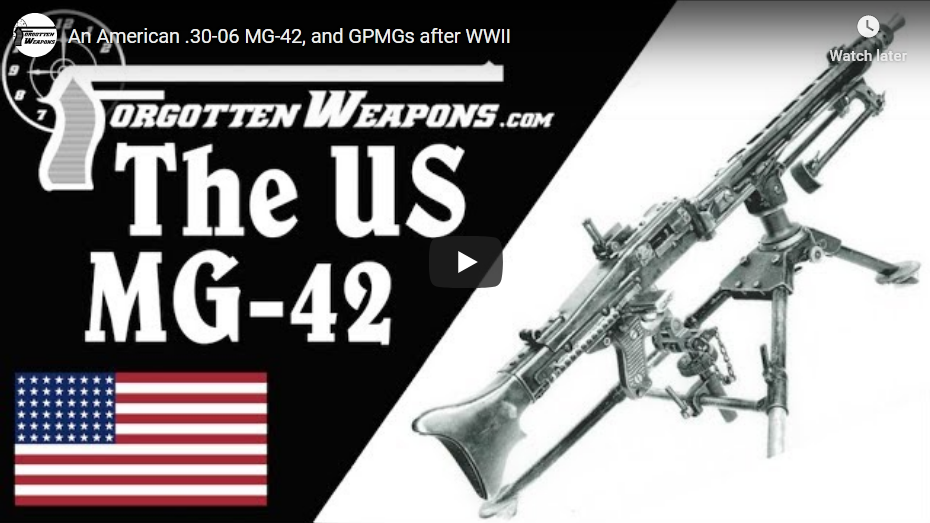
The perk for $100 Patrons is choosing a gun they would like me to find and film, and one such Patron (Mark) expressed a curiosity about US testing and lack of adoption of an MG-42 in .30-06 caliber. So, today we will discuss that (the trials gun was designated the T24) as well as why it took so long for the FN MAG to be developed and adopted.
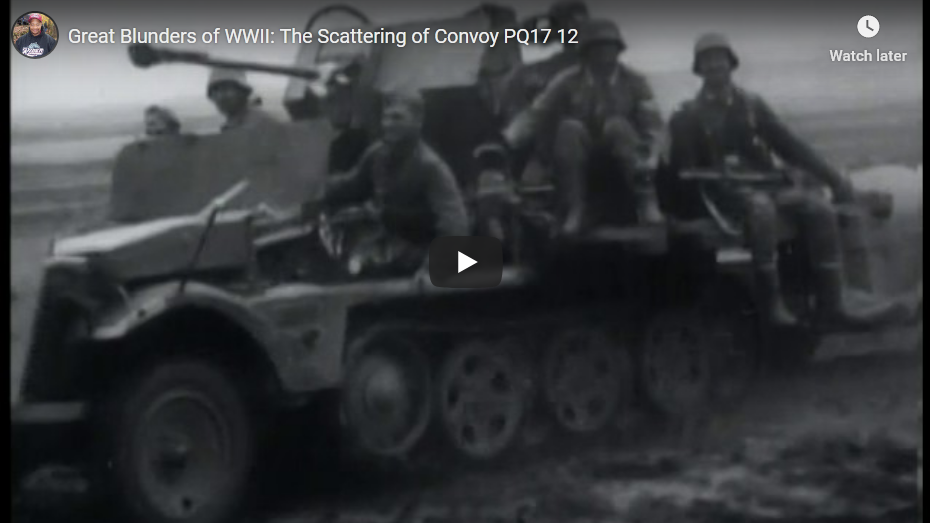
From the History Channel DVD series Great Blunders of WWII.
This is of interest for many reasons, but particularly because my late father-in-law served in the Royal Navy on the Arctic convoys and spent a full winter in the Soviet Union when his convoy couldn’t return before the ice closed the convoy route.
Comments Off on Great Blunders of WWII: The Scattering of Convoy PQ17
In addition to inflating our confidence in overseas interventions, the war era fueled belief that government could be a major force for good at home, capable of solving every domestic problem. Franklin Roosevelt’s superb wartime management boosted the popular opinion of government and encouraged Americans to adopt war as a metaphor for government action in general. The war seemed to fulfill Teddy Roosevelt’s and Woodrow Wilson’s earlier progressive dreams that big government, acting in concert with big business and big labor, could solve any problem that it chose to tackle. Just as warfare was re-envisioned to fit the total-war model of World War II, governing became understood as a matter of trained professionals applying management methods to public policy.
This belief in the military-like efficiency of government inspired the ambitious welfare-state policies of the postwar era, especially Johnson’s War on Poverty. When, in 1972, Richard Nixon declared a War on Drugs, and when, in 1977, Jimmy Carter described the energy crisis as the “moral equivalent of war,” the model they had in mind was, again, World War II. Today, newspapers and scientific journals still proclaim the need for ambitious government action to fix enormously complex problems — for example, calling repeatedly for a “new Manhattan Project” to solve the problem of climate change.
War, as conservatives figured out early on, is a poor metaphor for government doing socially useful things. We can’t fight and win a “war” on poverty, or drugs, or cancer, because these things are nothing like war. The last heroic big-government project run along World War II lines was the Apollo program, which put Americans on the moon. This was a tremendous achievement, but here a military mindset was directly relevant: like the design of war machines a quarter-century earlier, the Saturn rockets were a discrete engineering challenge, one whose basic parameters were well understood.
Written and Hosted by: Spartacus Olsson
Produced and Directed by: Spartacus Olsson and Astrid Deinhard
Executive Producers: Bodo Rittenauer, Astrid Deinhard, Indy Neidell, Spartacus Olsson
Creative Producer: Joram Appel
Post-Production Director: Wieke Kapteijns
Research by: Spartacus Olsson
Edited by: Mikołaj Cackowski
Map animations: Eastory (https://www.youtube.com/c/eastory)
Soundtracks from the Epidemic Sound:
Johannes Bornlof – “Deviation in Time”
Farrell Wooten – “Blunt Object”
Wendel Scherer – “Reunion”
Fabien Tell – “Last Point of Safe Return”
Howard Harper-Barnes – “London”
Hakan Eriksson – “The End of The World 2”
Phoenix Tail – “At the Front”
A TimeGhost chronological documentary produced by OnLion Entertainment GmbH.
From the comments:
Spartacus Olsson
3 days ago
You’d think that the Nazis would know how nationalism works … well, it turns out that when Hitler’s fantasies of race meet the very real nationalism of the old European monarchies, race doesn’t have the trump. Now, in 1940 nationalism isn’t that old, but it’s anchored in old traditions that the monarchies now occupied by the Nazis have managed to reconcile with modernity rather successfully. And here’s an important point: nationalism is often decried as the root of all of these conflicts, and perhaps it is, but in some places it’s also proved to be fertile ground for modern democracy. Perhaps there’s a lesson to be learnt somewhere in there, and maybe that’s that in the end it’s not what, but how that makes a difference. What’s particularly interesting, in for instance the Netherlands with the February Strike or in the Germany resistance rings, is that when faced with a common enemy to the nation, patriotism unites people across the political spectrum, well except those obsessed with the idea of race.
Comments Off on Royal Resistance in Benelux and Scandinavia 1940 – WW2 – War Against Humanity 008
While the Germans send one of their best generals to North Africa to bail out the Italians, Great Britain switches focus from Libya to Greece, but make symbolically important gains in East Africa.
Written and Hosted by: Indy Neidell
Produced and Directed by: Spartacus Olsson and Astrid Deinhard
Executive Producers: Bodo Rittenauer, Astrid Deinhard, Indy Neidell, Spartacus Olsson
Creative Producer: Joram Appel
Post-Production Director: Wieke Kapteijns
Research by: Indy Neidell
Edited by: Iryna Dulka
Map animations: Eastory (https://www.youtube.com/c/eastory)
Sources:
– Bundesarchiv
– A German soldier poses atop a tank, photo credit: United States Holocaust Memorial Museum, courtesy of Perquimans County Library
– US National Archive
– IWM: A 4035, HU 39482
A TimeGhost chronological documentary produced by OnLion Entertainment GmbH.
From the comments:
World War Two
2 days ago
When you know the story going forward it’s fascinating to see how the decisions unfold this week — the reshuffling of command both on the Axis and Allied side might seem like innocuous administrative decisions when you don’t know the future. But if you have a crystal ball, you’ll know that not just Rommel arriving in North Africa, but also the decisions on the British side this week will have momentous impact on the war in total. That’s one of the things we discovered early-on with a chronological narrative, it suddenly puts things in a new perspective. The relationship between events changes, and things that might seem too boring, or undramatic to include in a “great story” take on a whole new meaning, increasing our understanding of cause and effect of the “greater” events that will come. On a different note, we just finished shooting a new batch of videos today and we’ll be announcing some fascinating developments on our program in the coming weeks. Stay tuned, and stay awesome, you all are by far the best community on YouTube!
Comments Off on Enter Erwin Rommel – The British Advance in Africa – WW2 – 077 – February 15 1941
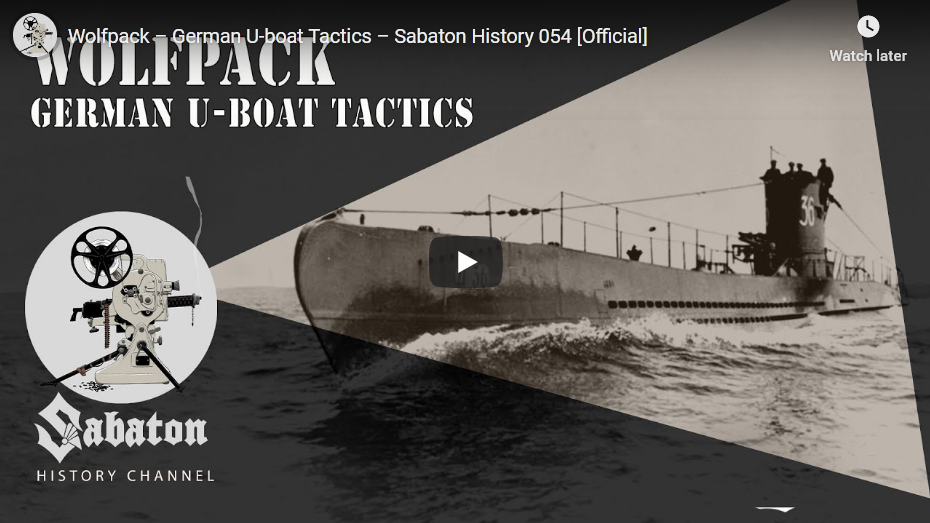
The Battle of Britain had saved the United Kingdom from imminent invasion by the German Wehrmacht, however the war was far from over. To destroy Britain’s economic capabilities to wage war, the German Kriegsmarine had to win the tonnage war in the North Atlantic. The German submarines — the U-Boote, were sent out to hunt. As the British Royal Navy returned to the convoy system to protect its merchant fleet, the Germans as well began organizing their submarines in groups to attack in unison. These hunter-killer teams, the Wolfpacks, would soon haunt the depths of the North Atlantic.
Sources:
– IWM: HU 16546, A 30292
– Bundesarchiv
– Otis Historical Archives, National Museum of Health and Medicine
– Narodowe Archiwum Cyfrowe
– Canadian ship being attacked, photo courtesy of the Government of Canada, https://www.canada.ca/en/navy/service…
An OnLion Entertainment GmbH and Raging Beaver Publishing AB co-Production.
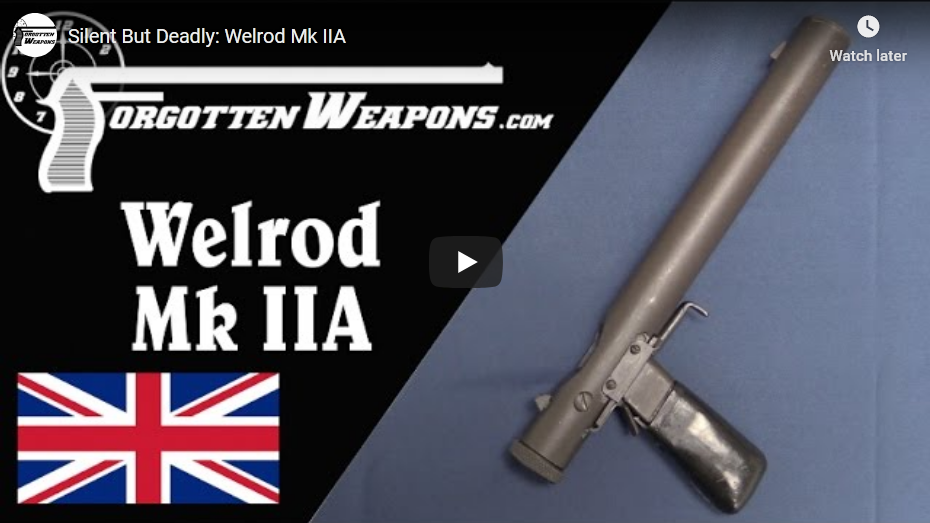
The Welrod is a nearly completely silent bolt action pistol designed by SOE Section 9 for covert operation and assassination use during WW2. Chambered for the .32ACP cartridge (which is subsonic to begin with), the Welrod uses a ventilated barrel and large-volume suppressor with several solid rubber wipes to bring its firing report down to the minimum possible level. This noise reduction only lasts for about a dozen shots, after which time the rubber wipes have more or less bore-sized permanent holes in them, reducing the suppressor’s effectiveness to pretty much on par with other typical designs.
The Welrod is a manually operated pistol, to avoid action noise. It feeds from a Colt 1903 Pocket Hammerless magazine, which also serves as its grip. A grip safety is the only safety device, and it fires using a striker mechanism. The Welrod was first introduced in 1943, with a larger 9x19mm version added later in the war. They appear to have been manufactured by BSA, with a total of about 14,000 made. Welrods were in service as recently as Desert Storm, and are most likely still in use for those times when a very efficient silent pistol is necessary.
Thanks to the Institute of Military Technology for allowing me to have access to this very cool pistol and bring it to you! Check them out at:
Beginning part two, Italy has been recaptured by the Byzantines thanks to the tenacious ambitions of Emperor Justinian. But throughout the Middle Ages, the land became a battleground for more powerful empires. The 19th Century Italian revolution would see the peninsula swept up in the waves of nationalism that was taking the continent by storm.
Comments Off on The Animated History of Italy | Part 2