Quotulatiousness

December 8, 2023

“An error of this magnitude makes one wonder how robust such calculations are”

Filed under: Britain, Food, Health, Media, Politics, USA — Tags: , , , , — Nicholas @ 05:00

Christopher Snowden notes the proliferation of media and public advocacy groups warning us about “junk food”:

On Monday, the front page of The Times led with a speech from Henry Dimbleby and a cost-of-obesity estimate from the Tony Blair Institute for Global Change — the perfect start to the week for any Times reader. According to Sir Tony’s think tank, “the effect on national productivity from excess weight is nine times bigger than previously thought”. An error of this magnitude makes one wonder how robust such calculations are (the previous estimate only came out last year), but Mr Dimbleby saw it as further proof that food should be treated like smoking.

    The NHS “will suck all the money out of the other public services” while “at the same time, economic growth and tax revenue will stagnate. We will end up both a sick and impoverished nation,” Dimbleby will warn.

Would it be unfair to point out that the USA has much higher rates of obesity than the UK and also has much higher GDP growth?

As I pointed out on what I shall continue to call Twitter, the estimates as bunkum. They come from Frontier Economics and were first commissioned by the makers of Wegovy, presumably to make their effective but expensive weight loss drug look like a relative bargain.

Their previous estimate of the cost of obesity to “society” was £58bn. This year’s estimate is £98bn, most of which (£57bn) comes from lost quality-adjusted life years. As I tire of pointing out, these are internal costs to the individual which, by definition, are not costs to wider society. I can’t stress enough how absurd it is to include lost productivity due to early death as a cost to the economy. You might as well calculate the lost productivity of people who have never been born and claim that contraception costs the economy billions of pounds.

Since the previous estimate, the costs have been bulked up by including the costs of being overweight, but there is no indication in the wafer-thin webpage of what these are. Being merely overweight doesn’t have many serious health implications. The healthcare costs have doubled, but as in the previous report, the new estimate does not look at how much more healthcare would be consumed if there was no obesity. No savings are included. What we need is the net cost.

The “report” that The Times turned into a front page news story is no more than a glorified blog post. It contains no detail, no methodology and none of the assumptions upon which it is based can be checked. It comes with an eight page slideshow from Frontier Economics which is described as a “full analysis” but which doesn’t contain any useful figures either.

Estimates like this are bound to mislead the casual reader into thinking that they are paying higher taxes because of obesity. There is no other reason to publish them, as they have no academic merit. They are designed to be misunderstood.

Sure enough, the very next day The Times was explicitly claiming that the putative £98 billion — now rounded up to £100 billion — was a direct cost to government …

    The findings come after an analysis found this week that Britain’s weight problem is costing the state almost £100 billion a year.


The development of the American suburb

Filed under: Architecture, Books, History, Railways, USA — Tags: , , , , , , , — Nicholas @ 04:00

In the latest book review from Mr. and Mrs. Psmith’s Bookshelf, Jane Psmith discusses A Field Guide to American Houses (Revised): The Definitive Guide to Identifying and Understanding America’s Domestic Architecture, by Virginia Savage McAlester. In particular, she looks at McAlester’s coverage of how suburbs developed:

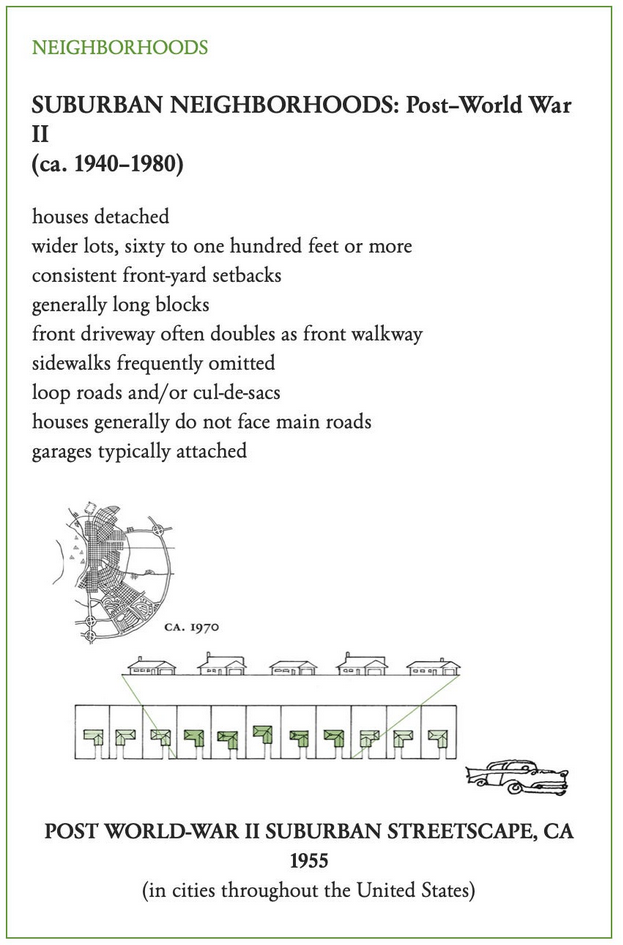
After some brief but interesting discussion of cities,1 most of the page count is devoted to the suburbs. It’s a sensible choice: suburbs have by far the most varied types of house groupings, and more than half of Americans live in one. But what exactly is a “suburb”? It’s a wildly imprecise word, referring to anything that is neither truly rural nor the central urban core, and suburbs vary tremendously in character. As a working definition, though, a suburb is marked by free-standing houses on relatively larger lots. (If you can think of a counter-example that qualifies but is “urban”, I’ll bet you $5 it started out as a suburb before the city ate it.)

This means that building a suburb has a few obvious technological prerequisites, which McAlester lists as follows: First, balloon-frame construction, which enabled not just corners but quick and inexpensive construction generally and removed much of the incentive for the shared walls that were so common in the early cityscape. Second, the proliferation of gas and electric utilities in the late nineteenth century meant that the less energy-efficient free-standing homes could still be heated relatively inexpensively. Third, the spread of telephone service after 1880 meant that it was much easier to stay in touch with friends whose front doors weren’t literally ten feet away from yours.2 But by far the most important technological advances came in the field of transportation, which is obviously necessary if you’re going to live in the country (or a reasonable facsimile thereof) and work in the city.

The first of these transportation advances was the railroad. In fact “railroad suburb” is a bit of a misnomer, because most of the collections of houses that grew up around the new rail stops were fully functional towns that had their own agricultural or manufacturing industries. The most famous railroad suburbs, however, were indeed planned as residential communities serving those wealthy enough to pay the steep daily rail fare into the city. Llewellyn Park near New York City, Riverside near Chicago, and the Main Line near Philadelphia are all examples of railroad suburbs that have maintained their tony atmosphere and high property values.

The next and more dramatic change was the advent of the electric trolley or streetcar, first introduced in 1887 but popular until about 1930. (That’s what all the books say, but come on, it’s probably October 1929, right?) Unlike steam locomotives, which take quite a long time to build up speed or to slow down again, and so usually had their stations placed at least a mile apart, streetcars could start and stop far more easily and feature many more, and more densely-placed, stops. Developers typically built a streetcar line from the city veering off into the thinly-inhabited countryside, ending at an attraction like a park or fairground if possible. If they were smart, they’d bought up the land along the streetcar beforehand and could sell it off for houses,3 but either way the new streetcar line added value to the land and the development of the land made the streetcar more valuable.

You can easily spot railroad towns and streetcar suburbs in any real estate app if you filter by the date of construction (for railroad suburbs try before 1910, for streetcar before 1930) and know what shapes to look for. Railroad towns are typically farther out from the urban center and are built in clusters around their stations, which are a few miles from one another. Streetcar suburbs, by contrast, tend to be continuous but narrow, because the appeal of the location dropped off rapidly with distance from the streetcar line. (Lots are narrow for the same reason — to shorten the pedestrian commute.) They expand from the urban center like the spokes of a wheel.

And then came the automobile and, later, the federal government. The car brought a number of changes — paved streets, longer blocks, wider lots (you weren’t walking home, after all, so it was all right if you had to go a little farther) — but nothing like the way the Federal Housing Authority restructured neighborhoods.

The FHA was created by the National Housing Act of 1934 with the broad mandate to “improve nationwide housing standard, provide employment and stimulate industry, improve conditions with respect to mortgage financing, and realize a greater degree of stability in residential construction”. It was a big job, and the FHA set out to accomplish it in a typical New Deal fashion: providing federal insurance for private construction and mortgage loans, but only for houses and neighborhoods that met its approval. This has entered general consciousness as “redlining”, after the color of the lines drawn around uninsurable areas (typically old, urban housing stock),4 but the green, blue, and yellow lines — in order of declining insurability — were just as influential on the fabric of contemporary America.

A slow economy through the 1930s and a prohibition on nonessential construction during the war meant that FHA didn’t have much to do until 1945, but as soon as the GIs began to come home and take advantage of their new mortgage subsidies, there was a massive construction boom. With the FHA insuring both the builders’ construction loans and the homeowners’ mortgages, nearly all the new neighborhoods were built to the FHA’s exacting specifications.

One of the FHA’s major concern was avoiding direct through-traffic in neighborhoods. Many post-World War II developments were built out near the new federally-subsidized highways on the outskirts of the cities, so the FHA was eager to protect new subdivisions from heavy traffic on the interstates and the major arterial roads. Neighborhoods were meant to be near the arterials, but with only a few entrances to the neighborhood and many curved roads and culs-de-sac within it. Unlike the streetcar suburbs or the early automobile suburbs that filled in between the “spokes” of the streetcar lines, where retail had clustered near the streetcar stops, the residents of the post-World War II suburbs found their closest retail establishments outside the neighborhood on the major arterial roads. Lots became wider, blocks longer, and sidewalks less frequent; houses were encouraged to stay small by FHA caps on the size of loans. And although we tend to assume they were purely residential areas, the FHA encouraged the inclusion of schools, churches, parks, libraries, and community centers within the neighborhood.


    1. America doesn’t have many urban neighborhoods that predate 1750, and even fewer that persist in their original layout, but if you’ve ever visited one it’s amazing how compact everything feels even in comparison to the rowhouses of the following century.

    2. McAlester’s footnote for the paragraph that contains all this reads: “These three essentials were highlighted in an essay the author has read but has not been successful in locating for this footnote.”

    3. This is still, I am told, how some of the more sensibly-governed parts of the world run their transit systems: whatever company has the right to build subways buys up the land around a planned (but not announced) subway line through shell corporations, builds the subway, then sells or develops the newly-valuable property. Far more efficient as a funding mechanism than fares!

    4. This 2020 NBER working paper points out that redlined areas were 85% white (though they did include many of the black people living in Northern cities) and suggests that race played very little role in where the red lines were drawn; rather, black people were already living in the worst neighborhoods.

“When you see the same signs here that characterised collapse in other polities for the last 5000 years, it means collapse is coming here too – we’re not special snowflakes”

Filed under: Government, Politics, USA — Tags: , , — Nicholas @ 03:00

Feeling good? Happy with your culture and comfortable that major disruptions won’t disturb you? Here’s Theophilus Chilton to harsh your mellow:

There are essentially three basic reasons why those on the American Right haven’t shrugged the same way regular folks in Europe are beginning to (see Spain and France as well as Ireland for recent examples). The first of these is because the American Right still holds onto a residual trust in elections and democracy and the whole “We’ll get ‘em next election!” mentality. Having been fed a decades-long diet of reverence for democracy and voting and whatnot acts as a desensitising agent that keeps many Americans anesthetised to the actual uselessness of such attitudes.

But this will continue to erode as we see more obvious election fraud. Eventually, when the norm becomes “go to bed with the right-wing candidate ahead by 10% and wake up with the left-wing candidate winning by 0.5%,” elections will lose what legitimacy they have left. Further, as “democracy” comes to be increasingly defined as “whatever the Regime wants to do“, more and more normies will start to clue in to the fact that democratic forms are not going to save America, but are in fact what are destroying it.

Second, Heritage Americans and those on the normie Right tend to assume that everybody still plays by the old, traditional set of norms, including FedGov. This “seemed” plausible when the Regime employed incrementalism to gradually acculturate normies to its agenda. But as they accelerate their revolutionary overthrow of everything that normies thought would be sacrosanct like they have over the past few years, this sense of “norms” will go away. And when that happens, there will be a whole lot of people suddenly open to the possibility that something else might become a new set of norms.

Third, because America is so BIG – especially in the geographical sense – Heritage Americans have been able to self-mitigate many of the worse aspects of the Regime agenda. They could get away from the slums. Federalism allowed them to find states in which to prosper despite the Regime’s efforts. And so forth. Regular folks in many places could still plausibly think America was a high trust, high social cohesion society because where they were at locally might well have been. But as the Regime accelerates, this also will stop. $oros DAs will continue to release violent criminals while punishing law-abiding citizens for defending themselves and their property. Immigration and inflation will further erode the economic prosperity that still remains, which is something that fleeing to a Red state can’t fix. And of course, it will all be brought home starkly once 20,000 or so Palestinian “refugees” get relocated into their counties.

Let’s remember that this is what we actually saw in Ireland. Even into the Oughts, Ireland was homogenous, relatively high IQ and high trust, was the Celtic Tiger with lots of prosperity. Then globohomo decided that Ireland needed tons of “refugees” just like the rest of Europe and suddenly that prosperity and safety and high trust went away. What was the response? Riots and continued disorder that Regime attempts to clamp down on are only going to make worse.

This is going to wear out eventually, which is something that FedGov knows. That’s why they’ve been ramping up gun control efforts over the past few years despite constant opposition from the courts. They’re merely trying to prepare for the inevitable by disarming the people they know they need to suppress the most. Unlike most Euro and Anglosphere countries, Americans haven’t allowed themselves to be disarmed — and that’s something that really does vex The Powers That Be.

But the problem is that it isn’t the 1950s anymore, or even the 1990s for that matter. Back in the 1950s, FedGov could literally stick bayonets at the backs of high school students and force unwilling southern states to integrate their schools. Even in the 1990s FedGov could send its agents to besiege and murder dozens of men, women, and children and most people even at an official level wouldn’t say a thing. But now its 2023 and we’re quite a bit further along the decentralisation path in our secular collapse phase. What FedGov had the moral legitimacy and competency to pull off back then isn’t guaranteed for them now anymore.

So what happens when the FBI wants to do another Waco? What happens if Texas decides it doesn’t want to allow the FBI to do another Waco? We’re past the point where we can blithely say, “Well, the Feds can just make Texas go along with it!” Our place in our collapse cycle means that’s not going to fly like it could have 30 years ago.

At this point, the goal should not be to calm people down but to get them riled up so that when (not if) the break comes, it will be so widespread and numerous that it will completely overwhelm the ability of FedGov and its agencies to deal with it. In this vein, I think of Solzhenitsin’s quote from Gulag Archipelago,

    And how we burned in the camps later, thinking: What would things have been like if every Security operative, when he went out at night to make an arrest, had been uncertain whether he would return alive and had to say good-bye to his family? Or if, during periods of mass arrests, as for example in Leningrad, when they arrested a quarter of the entire city, people had not simply sat there in their lairs, paling with terror at every bang of the downstairs door and at every step on the staircase, but had understood they had nothing left to lose and had boldly set up in the downstairs hall an ambush of half a dozen people with axes, hammers, pokers, or whatever else was at hand? … The Organs would very quickly have suffered a shortage of officers and transport and, notwithstanding all of Stalin’s thirst, the cursed machine would have ground to a halt! If … if … We didn’t love freedom enough. And even more – we had no awareness of the real situation … We purely and simply deserved everything that happened afterward.

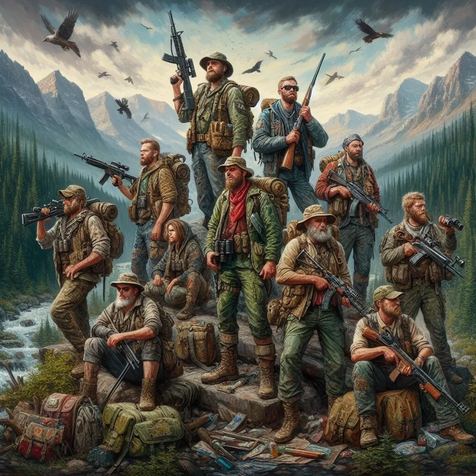
So what does this mean practically? It means people need to start organising locally with people they trust, building a network in their town or county, coordinating with friendly local power holders. It means stockpiling the necessary tools for the maintenance of their freedoms. It means training to shoot, learning how to use comms, thinking both strategically and tactically — obtaining the knowledge to use with your organising. Most of all, it means being morally and temperamentally prepared to oppose the enemies of our people, both foreign and domestic.

The Real Betty Crocker’s Pineapple Upside Down Cake

Filed under: Books, Business, Food, History, Media, USA — Tags: , , , , , — Nicholas @ 02:00

Tasting History with Max Miller
Published 22 Aug 2023
(more…)

December 7, 2023

The only kind of conspiracy theories the media is interested in

Chris Selley points out the obvious bias legacy media polls bring to any investigation into the popularity of various conspiracy theories:

Readers, were you aware that polls show conservative Canadians are more prone to believing in conspiracy theories than liberal Canadians? I’m kidding — of course you were. The pollsters haven’t stopped asking about it since the pandemic hit: Insights West in April 2021, Angus Reid in November 2021, Abacus Data in June 2022, Leger Marketing in the spring of 2022, and again this week. And we in the media can’t get enough of it: “Conspiracy theories are popular in Canada, especially among conservatives, poll says”, was The Canadian Press headline for this week’s Leger poll.

The notion that the Conservative Party of Canada and some of its leading lights are inviting violence through unconscionably heated and conspiratorial rhetoric is endemic in the Canadian newsroom. While I’m no fan of unconscionably heated rhetoric, I very much doubt actual extremists, or potentially violent extremists, see anyone worth choosing among Canada’s federal political leaders. But in any event, it apparently needs saying that not all conspiracy theories are created equal. Some aren’t conspiracy theories at all.

To its credit, The Leger poll released this week mostly confines itself to proper conspiracies: 9/11 Trutherism, a faked lunar landing, etc. Somewhere between 36 per cent (the truth about John F. Kennedy’s assassination was covered up) and five per cent (the earth is flat) believe completely or somewhat in these notions.

But by far the most popular statement among those Leger presented to respondents was as follows: “Mainstream media manipulates the information it disseminates”. Fifty-five per cent of respondents overall agreed with that; the JFK coverup was in a distant second at 36 per cent.

What’s “mainstream media”? If it includes, say, Al Jazeera and Fox News, then the statement is obviously true. (What does “manipulate” mean, for that matter? It doesn’t necessarily imply bad faith.) And the belief is certainly not just confined to Conservative voters: 47 per cent of NDP voters and 53 per cent of Green voters agreed, compared to 69 per cent of Conservative supporters.

What the question definitely does, however, is boost the overall numbers and make them more newsworthy. So Leger (and media) can say “79 per cent of Canadians believe in at least one of the conspiracy theories we asked them about”, and “Conservative voters (94 per cent) are more likely to believe in at least one of the theories”.

That’s a quibble, really. Other polls have, in my view, been utterly shameless about this sort of results-padding.

Take this proposition, for example, which Abacus put to its respondents: “52 per cent think government accounts of events can’t be trusted”.

That is a true statement. It applies to every government in the world, ever.

Even to mention Klaus Schwab’s Great Reset in Canadian political conversation is to risk being branded a conspiracy theorist. But it’s a real-deal “world governance” manifesto, it’s absolutely bonkers from start to finish, everyone from Justin Trudeau to the King (in a previous role) has made approving noises about it, and to the very limited extent it should be taken seriously, everyone should oppose it.

QotD: Displacing the “little platoons”

Filed under: Government, Liberty, Quotations, USA — Tags: — Nicholas @ 01:00

Where government moves in, community retreats, civil society disintegrates and our ability to control our own destiny atrophies. The result is: families under siege; war in the streets; unapologetic expropriation of property; the precipitous decline of the rule of law; the rapid rise of corruption; the loss of civility and the triumph of deceit. The result is a debased, debauched culture which finds moral depravity entertaining and virtue contemptible.

Janice Rogers Brown, “A Whiter Shade of Pale”, a speech to the Federalist Society, 2000-04-11.

December 5, 2023

See Inside Sherman Firefly | Tank Chats Reloaded

Filed under: Britain, History, Military, USA, Weapons, WW2 — Tags: , , , — Nicholas @ 02:00

The Tank Museum
Published 1 Sept 2023

Inspired innovation or a bit of a lash-up? In this video we look inside the legendary Sherman Firefly, the British Army’s Tiger killer. We also hear from a Firefly veteran, Ken Dowding, ex-14th/20th Hussars.
(more…)

December 4, 2023

QotD: The “ivory gulag”

Filed under: Education, Health, Politics, Quotations, USA — Tags: , , , — Nicholas @ 01:00

Looking at the cat ladies of both sexes and all 57 genders who ruined Trashcanistan, it seems obvious that they skipped sexual maturity – they jumped straight from “tween-ager” to “menopausal”. Even the young women in the “Social Justice” movement look – and, crucially, act – like they’re pushing fifty, while the young “men” are neotenous. Most of them are what bodybuilders call “skinny fat” – scrawny yet flabby, with no muscle tone – and the rest are morbidly obese. A crowd of college kids, again of both sexes and all however-many genders, looks like the mosh pit at the Lilith Fair. Without their exaggerated displays of secondary sex characteristics – ironic facial hair on the lads, pussy hats on the lassies – who could even tell them apart?

So, too, with their mentalities. I spent many years toiling in the groves of academe, so obviously my social life (such as it was) contained a lot of post-menopausal lesbians. No creature is more solipsistic than this. Whatever maternal instincts she once might’ve had, have curdled into general naggy truculence, and since they have all the money and free time in the world in which to indulge their narcissism, if they can’t find any actual wrongthink around they’ll simply invent some. Before the Deplorables were driven to organize themselves for gaudy, suicidal, IRA-style violence, post-Oranzhevvy Trashcanistan felt, I imagine, a lot like a college campus …

… which the few people with normal serum hormone levels who were stuck there often called “the ivory gulag”. Make of that what you will.

Severian, “Hormones, or Lack Thereof”, Founding Questions, 2021-01-20.

December 3, 2023

“I find myself despising the elites I joined in ways that shock me. I have come to despise the woke left, their indifference to crime, their reveling in reverse-racism, their deep hatred of Western civilization”

I’ve been reading Andrew Sullivan’s Substack since he started and it’s always been a pretty clear indicator that as soon as the name Trump is mentioned, the rest of the piece can be ignored because he’s been saying the same things for literally years now. This week’s article is a significant break with that tradition. It’s not that he suddenly likes Trump but that he seems to have gained more understanding about why other people support him:

As old-time Dishheads may recall, I was one of a handful of pundits who thought in early 2016 that Trump not only could, but probably would, win the election. I could feel his appeal in my lizard brain, and had long studied the fragility of liberal democracy in my frontal cortex. But the moment I knew his presidency was almost certain was when the Brexit result was announced in June, when everyone still assumed Hillary was a shoo-in. Something was stirring. And that’s why, after my annual trip back to Britain last week, I’m feeling the nausea again.

[…]

Add to that anger a lockdown far more intense than in the US and a period of crippling inflation, and you have a recipe that will likely lead to a Labour landslide next year. And in so many countries right now, for a variety of reasons, you see the same “blow it all up” mentality, turfing out incumbents mercilessly, often in favor of performative populists of various hues and flavors.

Look at the Netherlands: a progressive country that just saw Geert Wilders’ hard-right anti-immigration party go from 10 percent in 2021 to 23.5 percent of the vote, and become by far the biggest party in the Dutch House of Representatives, with center-right parties open to joining them. Or Argentina, where a weirdly coiffed, former rock-singer, Javier Milei — who had a near mental breakdown in a televised interview during the campaign, complaining about voices that weren’t there — wiped out the Peronist establishment in a landslide.

Orbán’s decisive re-election, Meloni’s electoral victory in Italy, and Sweden’s lurch to the right all suggest a sudden widening of the Overton window in much of Europe. In Germany, the AfD, the far-right movement, is now polling at 21 percent of the electorate, compared with 15 percent for Chancellor Scholz’s Social Democrats and 9 percent for the Greens. None of it is particularly coherent. Milei is Steve Forbes in a very bad toupee — about as far away from Boris’ Red Toryism or entitlement-friendly Trumpism as you can get. The only truly consistent thing is the ridiculous hair, and contempt for elites.

And the fear of the crazy right has gone. Milei and Wilders instantly moderated on some of their most outlandish positions, as soon as power was within reach. No, Milei won’t dollarize the Argentine economy, it turns out; and no, Wilders won’t ban mosques, as he tries to build a coalition government. Meloni has talked up immigration control, but in power, she hasn’t done much about it, and her support for Ukraine and the EU has been a big surprise. Poland’s hard-right party showed it could not stay in power forever this year, and in Spain, Vox lost ground. But in all this, a taboo has been broken — the same kind of taboo that the election of Donald Trump represented. The small-c conservatism of the Western electorate has expired.

That’s why I find the re-election of Joe Biden so hard to imagine. Biden is the incumbent of all incumbents. He became a senator in 1973! He has been vice president for eight years and president for four. He’s extremely old for the job he is doing, and everyone knows it. He has presided over inflation higher than at any time since the 1970s, and a huge new wave of legal and illegal immigration. We may now have a higher percentage of the population that is foreign-born than in the entire history of this country of immigration. Americans’ support for a border wall is the highest it’s been since 2016.

And Gallup’s latest polling on how the public feels about crime should terrify the Democrats. Coming back to DC this week after seven months away, I’m struck by how stark the decline has become. It says something when a city is experiencing a massive wave of carjackings, bars the cops from pursuing them, and just hands out free AirTags so you can track your stolen car yourself.

And the key, lame argument from Biden will be that Trump is too big a risk to take. He’s right. Broadly speaking, I agree with Bob Kagan on the crazed ambitions of this tyrant wannabe. But how has that argument worked out so far? Impeachments and indictments seem to have strengthened, not weakened him. And what we’re seeing all over the world is that voters are rushing toward the risky candidates, not away from them.

And Trump has already been in office for four years, and … democracy didn’t end, did it? Or at least, that’s what his supporters will say. They’ll remember the pre-Covid years as the good old days (and economically they wouldn’t be wrong), and also vent anger at an elite that seems to care more about pronouns and “equity” than protecting the border or controlling crime — the core functions of government. I’d be worried if Biden were ahead of Trump by five points in the battleground states. But he’s actually behind.

And though I will never vote for Trump, in my lizard brain, I kind of get the appeal. Inflation and mass immigration, alongside a bewildering and compulsory cultural revolution, are the kind of uncontrollable things that make people vent, especially if the president seems oblivious to these concerns — as Biden does. When Elon Musk f-bombed on Andrew Ross Sorkin and the advertisers who are boycotting X this week, the rational part of me shook my head. He’s bonkers and may see his company collapse from his whims and rages.

But at some deeper level, I also wanted to yell “Fuck yeah!” I find myself despising the elites I joined in ways that shock me. I have come to despise the woke left, their indifference to crime, their reveling in reverse-racism, their deep hatred of Western civilization. I hate how they’ve taken so much of the progress we made on gay integration and thrown it all away in transqueer solipsism. I loathe their piety and certainty and smugness. I found their instant condemnation of Israel, even as October 7 was taking place, shocking.

Was Hürtgen Forest Worth it? WW2 – Week 275 – December 2, 1944

World War Two
Published 2 Dec 2023

The bulk of the fight for Hürtgen Forest is now over, and today we look at the results. We also look at Soviet plans for their January offensive. In the field this week, the Red Army is still fighting in Hungary, the Allies are still trying to reach the Roer River in the west, and in the Pacific Theater the kamikaze menace is wreaking havoc with Allied scheduling.

00:00 INTRO
01:06 Soviet Offensive Plans for 1945
03:12 Red Army attacks in Hungary
06:19 The Port of Antwerp is clear for use
07:23 The Battle of Hurtgen Forest is Over
12:20 Allied advances to the Roer
14:19 Tension builds in Greece
15:32 The aerial situation in the Philippines
21:36 CONCLUSION
(more…)

Every Construction Machine Explained in 15 Minutes

Filed under: Technology, USA — Tags: — Nicholas @ 02:00

Practical Engineering
Published 15 Aug 2023

A very quick overview of nearly every machine you’ll see on a construction site.

It takes a lot of big tools to build the roads, dams, sewage lift stations, and every other part of the constructed environment. To me, there’s almost nothing more fun than watching something get built, and that’s made all the better when you know what all those machines do.
(more…)

QotD: Intersectionality and the “American experiment”

Let me remind you of the educational vision of the Founders, by way of E.D. Hirsch: “The American experiment … is a thoroughly artificial device designed to counterbalance the natural impulses of group suspicions and hatreds … This vast, artificial, trans-tribal construct is what our Founders aimed to achieve.” Intersectionality aims for the exact opposite: an inflaming of tribal suspicions and hatreds, in order to stimulate anger and activism in students, in order to recruit them as fighters for the political mission of the professor. The identity politics taught on campus today is entirely different from that of Martin Luther King. It rejects America and American values. It does not speak of forgiveness or reconciliation. It is a massive centrifugal force, which is now seeping down into high schools, especially progressive private schools.

Today’s identity politics has another interesting feature: it teaches students to think in a way antithetical to what a liberal arts education should do. When I was at Yale in the 1980s, I was given so many tools for understanding the world. By the time I graduated, I could think about things as a Utilitarian or a Kantian, as a Freudian or a behaviorist, as a computer scientist or a humanist. I was given many lenses to apply to any one situation. But nowadays, students who major in departments that prioritize social justice over the disinterested pursuit of truth are given just one lens — power — and told to apply it to all situations. Everything is about power. Every situation is to be analyzed in terms of the bad people acting to preserve their power and privilege over the good people. This is not an education. This is induction into a cult, a fundamentalist religion, a paranoid worldview that separates people from each other and sends them down the road to alienation, anxiety, and intellectual impotence.

Jonathan Haidt, “The Age of Outrage: What the current political climate is doing to our country and our universities”, City Journal, 2017-12-17.

December 2, 2023

Joe Biden solves the inflation problem, fat!

Filed under: Business, Economics, Government, Media, Politics, USA — Tags: , — Nicholas @ 04:00

Like any lying dog-faced pony soldier would know, it’s as easy as saying “Trunalimunumaprzure“:

Inflation is kicking just about everyone in the junk here lately, regardless of whether that junk is an innie or an outie. It’s been rough on a lot of us, but I know just how hard it’s been on me and mine.

Prices are up significantly over the last few years and my income isn’t up nearly as much. This creates issues with our finances. The upside is that it’s forced me to be better with money.

But prices are still higher than Willie Nelson on a SpaceX flight.

Luckily, President Joe Biden has figured out the solution to all our problems. He’s going to just tell companies to drop prices.

Yes, seriously.

    This week, the White House announced the launch of a Council on Supply Chain Resilience, created with the hope to “strengthen America’s supply chains” and “lower costs for families.”

    President Joe Biden delivered remarks from the White House on Monday to announce the new council’s creation. He touted the lower inflation rate and falling grocery prices but admonished American companies for, in his view, not going far enough.

    “Let me be clear: To any corporation that has not brought their prices back down — even as inflation has come down, even as supply chains have been rebuilt — it’s time to stop the price gouging,” Biden warned, imploring them to “giv[e] the American consumer a break.”

Here’s the issue, at least as I see it.

At Thanksgiving, it was noted here that prices are nearly 20 percent higher than in 2019. This while inflation has supposedly decreased. Prices are still high because it’s not so much that inflation has fallen but that the rate of inflation’s increase has fallen. It doesn’t mean prices should drop, only that they should increase at a slower rate.

NATO’s Ostfront

Filed under: Europe, History, Military, Russia, USA — Tags: , , , — Nicholas @ 03:00

CDR Salamander doesn’t like the misunderstandings that cause commentators to identify NATO’s primary (but thankfully not militarily active) front as a “flank”:

For those who follow me on twitter/X, you are quite familiar with the meme I’ve been posting since long before the Russo-Ukrainian War, all the way back to at least 2018.

This misuse of the King’s English soon became a bur under my saddle as this error continued to be made. Seeing a trend, the following meme was generated by a friend;

This is not a new problem, and I know exactly where it comes from. In my years as a NATO Staff Officer, it did not take long to notice a twitch in the eye of many, not only Germans, to the mention of an “Eastern Front”. It seems silly, and in the 21st Century is it, but it is a reality.

I refused to play along. Yes, I understand how a very few highly emotional people can’t let go of their grandfather’s nightmares, but it is time for the adults in the room to just go around them. Anyway, this is the English language, and while there were French and Walloon Waffen SS units along with Hungarians, Romanians, Italians, and a few volunteer Spanish and others now on the NATO bench that fought on the Eastern Front in WWII, it doesn’t have the same impact with them as we don’t discuss such things in polite company.

Eastern Front, Front de l’Est, or Ostfront, we should all have moved along. History — and proper military terminology — have been around for centuries. In any event, it doesn’t bother the Russians one way or the other and you are fooling yourself if you think it does.

The use of “Eastern Flank” instead of “Front” where referring to real military threat to NATO, the Russian Federation, is just childish.

QotD: Western media and Putin’s war

Filed under: Germany, History, Media, Military, Quotations, Russia, USA, WW2 — Tags: , , , , — Nicholas @ 01:00

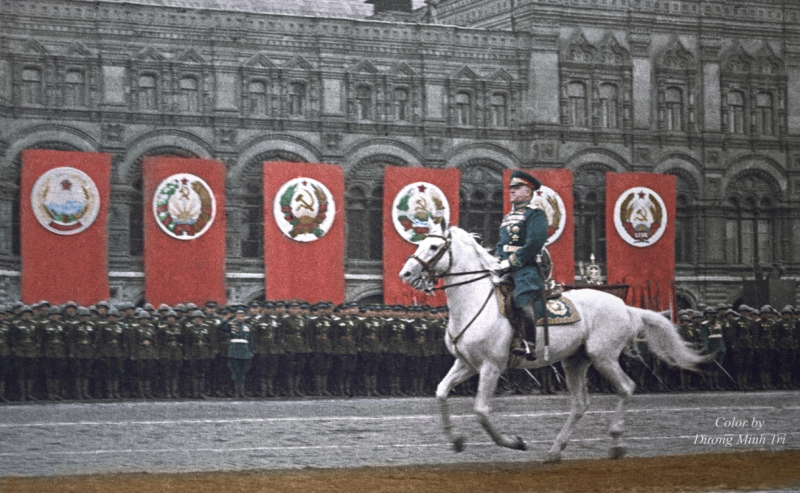
Regarding [Vladimir Putin’s] Magical Mystery War, I’m going with the stoyak that the casualty counts peddled by the [western media] is part of a very very old playbook which various Western observers have peddled since 1905-that of Russian stupidity and indifference to casualties. Russia loses a war? They’re stupid gopniks who flung their soldiers into meat grinders until they rebelled (1905 or 1917). Russia wins a war? They’re stupid gopniks who flung their soldiers into meat grinders until they won (1945, 2023). Note that you can effortlessly pivot your propaganda when it becomes obvious in hindsight the outcome of the war. This becomes very important when [Putin] negotiates his 18th century kabiniettskreig ending to the war, since nobody in the West, especially AINO, understands how a cabinet war is fought, much less ends. They will claim that they foiled Putin’s plan for conquering all Ukraine (which he never has wanted) by killing hundreds of thousands of poor, oppressed, stupid, vodka-fueled gopniks used as cannon fodder who simply overwhelmed the valiant forces of good by sheer numbers. Not by superior strategy or tactics, or weapons, but the good ol’ Russian sledgehammer. Just like Hitler’s excuse in 1945, when Ivan was knock knock knockin’ on his bunker door. His generals who survived carried that piece of gospel West when the US Army started studying how to fight the Reds and asked the Germans how they did it. Their answer was happily embraced by the next generation of Very Clever Boys in the 1960s and carried forward to today’s Fistagon — Wunderwaffen.

Pickle Rick, commenting on “Friday Mailbag”, Founding Questions, 2023-12-01.

Rick agreed to me posting this quote as long as I included this colourized photo of Marshal of the Soviet Union Georgy Zhukov (“because it’s gangsta as FUCK”)

« Newer PostsOlder Posts »

Powered by WordPress