
Matsimus
Published on 24 Dec 2018The M551 Sheridan was a light reconnaissance tank developed by the American company General Motors in May 1960 under the designation XM551. In November 1965 approval was given for the type classification of the XM551 as Limited Production and a four-year production contract was awarded to the Allison Motor Car Division of General Motors Corporation. In May 1966 the Sheridan was classified as Standard A and by this time production was well under way with the first production vehicle being completed in June 1966. Production continued until 1970 by when 1700 M551S (or General Sheridans) had been built, of which 1570 were still in service with the US Army in 1970. The role of the M551. as originally conceived, is to function as the main reconnaissance vehicle for armour, infantry and airborne operations and arms teams not employing main battle tanks. Late in 1978, it was announced that the M551 would be phased out of service and replaced by the M60A1 MBT, apart from those vehicles allocated to the 82nd Airborne Division (57) and Arkansas National Guard (12), 330 have been assigned to the National training Center at Fort Irwin, California. These are essentially basic M551s but with visual modifications to the outside to disguise them as “OPFOR force” vehicles such as BMP-1 and ZSU-23-4.
Hope you enjoy!!
💰 Want to support my channel? Check out my Patreon Donation page! https://www.patreon.com/user?u=3081754
My PO Box: Matthew James 210A – 12A Street N Suite #135 Lethbridge Alberta Canada T1H2J
DISCORD: https://discord.gg/B7cbXgy
🐦Twitter: https://twitter.com/MatsimusGaming(DISCLAIMER: This video is for entertainment purposes only. The views and opinion come from personal experience or information from public accessible sources.)
January 21, 2019
M551 “Sheridan” AR/AAV | DESIGN DISASTER!
January 18, 2019
Tank Chats #41 Sherman Firefly | The Tank Museum
The Tank Museum
Published on 28 Jul 2017A Tank Chat from David Fletcher on an inspired British modification. As an all-round, general purpose tank the Sherman was one of the best of World War II, but by 1943 it was getting past its prime. An officer at Lulworth Camp, near Bovington, came up with the idea of fitting a better gun, the British 76.2mm, known as the 17 pounder. The new design would be known as the Sherman Firefly.
Support the work of The Tank Museum on Patreon: ► https://www.patreon.com/tankmuseum
Or donate http://tankmuseum.org/support-us/donateSUBSCRIBE to The Tank Museum YouTube channel: ► http://www.youtube.com/channel/UChl-X…
Press the little bell above to enable NOTIFICATIONS so you don’t miss the latest Tank Museum videos.
Twitter: ► https://twitter.com/TankMuseum
Tiger Tank Blog: ► http://blog.tiger-tank.com/
Tank 100 First World War Centenary Blog: ► http://tank100.com/ #tankmuseum #tanks
January 16, 2019
QotD: Patriotism
Patriotism is the primal love of your country which pre-exists any particular notion about how its political affairs should be arranged. You can espouse a single-payer health care program (or smaller government) as a loyal citizen of Denmark. You cannot, however, be an an American patriot in that same position, though you may be a most excellent Dane. True patriotism does not require us to choose between the many constituent identities that every individual has. But it does require you to decide where your first loyalties lie.
Your patriotism may indeed lead you to advocate various changes in the government, in the belief that this will make it a better place, just as your love of your spouse may cause you to urge them to give up their soul-sucking job in corporate law and pursue the nonprofit career they’ve always dreamed of. But your love of your spouse does not, one hopes, consist primarily of plans for their future or hopes for their improvement. (If it does, you aren’t their spouse; you’re their agent). Patriotism is similar. It can survive substantial disagreement about the reasons for that love, or the sacrifices that love should entail. It can’t survive one half of the partnership declaring that they will only start loving their country after it has perfected itself. As in a marriage, that would be a very long wait.
But shouldn’t we scorn patriotism, which drives us to war and so many other awful things? No more than we should scorn the progressive ideals that have led to so much good social change, and also so much human suffering under various left-wing regimes. Ideals are dangerous things with a tendency to run amok, but no society can live without them. And I submit that no nation can live long without a pretty healthy patriotism — a powerful symbolic identity that transcends the frictions and disagreements which otherwise make it impossible to unite for any common purpose.
Megan McArdle, “In Defense of Trump’s ‘Day of Patriotic Devotion'”, Bloomberg View, 2017-01-26.
January 14, 2019
Lysander Spooner and the US postal system
Naomi Mathew recounts the battle between anarchist Lysander Spooner and the United States Post Office:
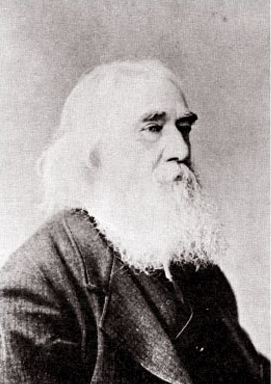
This is a story about a philosopher, entrepreneur, lawyer, economist, abolitionist, anarchist — the list goes on. As his obituary summarizes, “To destroy tyranny, root and branch, was the great object of his life.” Although he is rarely included in mainstream history, Lysander Spooner was an anarchist who didn’t merely preach about his ideas: He lived them. No example illustrates this better than Spooner’s legal battle against the US postal monopoly.
Born in 1808 in Athol, Massachusetts, Lysander Spooner was raised on his parent’s farm and later moved to Worcester to practice law. Eventually, he found himself in New York City, where business was booming — but not for the Post Office.
The Postal System of the 1840s
In Spooner’s day, government subsidized the cost of building infrastructure used for mail routes. Postage rates paid for these subsidies, which in turn made the rates expensive. For example, in 1840 it cost 18.75 cents, over a quarter of a day’s wages, to send a letter from Baltimore to New York.
Corruption was another issue facing the post office. Positions appeared to change after each election cycle, indicating political cronyism. Congress was also under pressure from the coach contractor lobby, and favorable postage routes were often given to contractors with political connections. Thanks to a legal monopoly it had enjoyed since the Confederation, the Post Office remained the sole legal mail business despite its skyrocketing costs and corruption.
In his book Uncle Sam, The Monopoly Man, William Wooldridge describes how high postal costs led some to defy postal laws: Traveling individuals doubled as temporary, private postmen. By the 1840s, these illicit services were chipping into government revenues. Eventually, a court ruled it legal for individuals (but not companies) to carry mail. As a result, underground mail enterprises sprung up. Agents covertly used the existing rails, coaches, and steamboats to transport letters. It is estimated that in 1845, a third of all letters were transported by private mail firms.
QotD: Eisenhower’s Middle East policy about-face
Unlike some American presidents, however, Eisenhower learned from his mistakes. In 1958, five years after being sworn into office, he reversed course. Rather than suck up to Egypt, Ike deployed American Marines to Lebanon to shore up President Camille Chamoun, who was under siege by Nasser’s local allies.
“In Lebanon,” Eisenhower wrote in his memoirs, “the question was whether it would be better to incur the deep resentment of nearly all of the Arab world (and some of the rest of the Free World) and in doing so risk general war with the Soviet Union or to do something worse — which was to do nothing.” That is almost verbatim what the British said to justify their own war against Nasser when Eisenhower slapped them with crippling sanctions.
Reality forced the United States into a total about-face. Ike’s entire Middle Eastern worldview collapsed. Even before sending the Marines to Lebanon he announced that America was taking Britain’s place as the pre-eminent power in the Middle East. He had to start over even if he didn’t want to. “Nasser,” Doran writes, “the giant who rose from the Suez Crisis, crushed Eisenhower’s doctrine like a cigarette under his shoe.”
What happened between the Suez Crisis and Eisenhower’s intervention in Lebanon? A couple of things.
Ike’s hope to bring Syria into the American orbit alongside Turkey and Pakistan collapsed in spectacular fashion. So many Syrians swooned over Nasser after Egypt’s victory in the Suez Canal that Syria, astonishingly, allowed itself to be annexed by Cairo. Egypt and Syria became one country—the United Arab Republic—with Nasser as the dictator of both.
Washington’s attempt to groom Saudi Arabia as a regional counterbalance to Egypt also hit the skids when Nasser accused the Saudis of trying to assassinate him and foment a military coup in Damascus. The Saudis responded by shoving King Saud aside and replacing him with his Nasserist younger brother, Crown Prince Faisal.
The final blow came with the brutal overthrow of the pro-Western Hashemite monarchy in Iraq and the mutilation of the royal family’s corpses in public, thus toppling the last pillar of America’s anti-Soviet alliance in the Middle East. Eisenhower had no choice but to stop being clever and return to the first rule of foreign policy: reward your friends and punish your enemies.
Michael J. Totten, “We Are Still Living With Eisenhower’s Biggest Mistake”, The Tower Magazine, 2017-02.
January 13, 2019
January 12, 2019
QotD: Cosmopolitanism and “world citizens”
… as I’ve noted before, the idea of being a “citizen of the world” is nonsense. If you get into trouble in a foreign country, it’s the U.S. embassy that’s required to swoop in to bail you out, not “the world.” Don’t get me wrong; there are many fine people abroad, and many of them may help you. But the U.S. government is the only one that has to, and that makes all the difference.
This should be obvious at a time when that cosmopolitan ideology is failing everywhere. Elites somehow got the idea that national loyalties would fade away and be replaced by a gentle globalism. And indeed, some of the old loyalties did fade away. But it turned out that the alternative to nationalism was not globalism, but particularism — the fracturing of polities into angry tribes that passionately loathe each other. And many in those tribes now demand to know why they should let cosmopolitan elites run things, when those elites declare, as a matter of pride, that they feel no greater loyalty to their fellow citizens than they do to strangers far away.
Megan McArdle, “In Defense of Trump’s ‘Day of Patriotic Devotion'”, Bloomberg View, 2017-01-26.
January 11, 2019
QotD: Libertarian “co-ordination”
… advocates of liberty are about as good at coordinated action as a bunch of cats. I pretty much laughed myself (physically) sick when I read that the Sad Puppies “strictly enforced slate voting.” Not only did the numbers completely deny this (the only lockstep voting was no award) but the idea of anyone on our side doing anything “lockstep” just about… Giggle, snort.
If you told most people on our side “you have to do it this way, it’s the only way” you’d get “Who’s gonna make me, you and whose army?” And if you said “you have to do it this way or we’ll kill you,” you’re still likely to get “You’re not the boss of me.” We should have “Stupidly individualistic” stamped on our foreheads.
So long, coordinated marches like what the left (they of the collectivist will) executed are really impossible for us.
On the other hand… On the other hand, we seem to do pretty well in our long uncoordinated march of building under and building around and building over.
We might all be marching in different directions and to the tune of a different kettle of fish, but the other side is so profoundly incompetent, that even so we can still replace the moribund institutions they took over.
It’s just going to take a little while. Not a hundred years, but probably twenty. Not three generations, but one and a half.
In the end we win, they lose, but you can’t stop when your ankles first start hurting.
The last mile of the long march is always the hardest one, but the goal is almost in sight.
Sarah Hoyt, “The Long March”, According to Hoyt, 2015-12-20.
January 10, 2019
A timely reminder about the dangers of expanding government power
At Coyote Blog, Warren Meyer points out to the Republicans that if it was bad during the last presidency, it’s just as bad during this one:
Dear Republicans:
The last thing we need now is even more expansion of executive power. I remember when, gosh it was like only two or three years ago, you Republicans were (rightly) bemoaning Obama’s executive actions as unconstitutional expansions of Presidential power. You argued, again rightly, that just because Congress did not pass the President’s cherished agenda items, that did not give the President some sort of right to do an end-around Congress.
But now, I hear many Republicans making exactly the same arguments on the wall that Obama made during his Presidency, with the added distasteful element of a proposed declaration of emergency to allow the army to go build the wall.
[…]
I can pretty much guarantee you that if Trump uses this emergency declaration dodge (and maybe even if he doesn’t now that Republicans have helped to normalize the idea), the next Democratic President is going to use the same dodge. I can just see President Warren declaring a state of emergency to have the army build windmills or worse. In fact, if Trump declares a state of emergency on a hot-button Republican issue, Democratic partisans are going to DEMAND that their President do the same, if for no reason other than tribal tit for tat.
What Happened to America’s Passenger Trains?! The Truth – from Class to Crap!
American Rail Club
Published on 1 Jul 2017Did America’s once industrious and world-famous passenger rail system fall because of “fair and equal” competition – or did the federal government tax it to death? Did America’s shift from rails to roads come out naturally – or from lobbying from General Motors? We visit two of America’s passenger rail cars from a bygone era to reminisce and then dive into the history and truth behind the decline of America’s passenger railroad system.
January 8, 2019
QotD: RINOs and other soft conservatives
The RINOs you complain about are RINOs now but they weren’t always. I don’t know how many of you remember the seventies. The right here was kind of like the right in Europe. It assumed that in the end communism would not only win, but DESERVED to win, and what the right disagreed with was the way to get there. It is useful to remember this was a time when William Buckley’s dictum that conservatism was “Standing astride History yelling stop” found deep resonance. Unpack that phrase. It assumes history comes with an arrow, that it’s not going our way, and that at best we can get it to pause.
Those RINOs who, by the way, took immense flack back then were as conservative as anyone dared to be. Because everyone knew in the end the reds won.
Then the wall fell down and we knew what true horrors lurked on the other side.
Individuals process these things fast enough. Well, my generation, at any rate, awakened by Reagan and shown that the win of the dark side was not inevitable, was more pro-freedom than people ten years older than us.
But when we saw the wall fall down, it pushed many of us further into the liberty side of the isle. Not only wasn’t a communist win inevitable, but their vaunted “strengths” like superior planning and better minority integration didn’t exist unless you really wanted to plan for three million size thirty boots for the left foot only, and integration meant grinding the minorities very fine and spreading them in the soil.
However cultures aren’t individuals. Cultures re-orient and process startling events very slowly.
Yeah, those older Republicans are still with us, and they were over 45 when the wall fell, which means they couldn’t reorient anymore. (Studies have been done.)
Sarah Hoyt, “The Long March”, According to Hoyt, 2015-12-20.
January 7, 2019
People tend to become more conservative as they age … let’s just lower the voting age to “fix” that “problem”
It is a truth universally acknowledged that as people age they tend to develop more conservative or even reactionary views. This can, in extreme cases, lead to deplorable results — as our American and British friends discovered in 2016 (fortunately, we Canadians were lucky enough to avoid such unpleasantness by having our election in 2015). Some advanced forward-thinking on how to best address this problem was reported in the Guardian on suggestions by Cambridge professor David Runciman, who advocated lowering the voting age to six, as younger voters are generally much more open to progressive ideas.
This extension of the franchise was not proposed by an inmate of an asylum for the criminally insane but by a professor, David Runciman, of the University of Cambridge, supposedly one of the best three or four such institutions in the world. But no mere criminal lunatic could have dreamt up such an idea. Is it any wonder that many people feel the world has gone mad?
Sure enough, Runciman’s idea was given serious consideration by a writer in The Guardian. Admittedly, the writer came down against the proposal, but only after giving it credence. Nevertheless, it gave an insight into the mindset of those whose political ideas are to themselves so self-evidently virtuous that the only possible explanation for the fact others do not share them is stupidity in the case of the poor and wickedness in the case of the rich.
At the head of the article were the words: “Allow six-year-olds to vote? No, but it’s not as crazy as it sounds. Children tend to be more progressive and idealistic than their parents.”
I think it’s safe to say that if the US election and the Brexit referendum had included all those woke six-year-olds, the results would have been much more amenable to our moral and intellectual superiors in the media. However, I suspect that Professor Runciman’s proposal is only half of the necessary solution. In addition to lowering the minimum voting age, we should give careful consideration to lowering the maximum voting age as well. I’m sure that a properly funded study would find that not only do older voters tend to become more conservative as they begin to fall apart physically, but it also tracks directly with mental incapacity. Our study — perhaps a pan-national group drawn from Harvard, Berkeley, Cambridge and the London School of Economics — would almost certainly conclude that a pattern of voting for more conservative options is a clear indication of enfeeblement of judgement and society would be doing a kindness to remove the franchise from those who can no longer responsibly exercise it.
Perhaps, rather than directly revoking oldsters’ voting rights, we could offer a more gentle option of designating a responsible young voter (ideally between the ages of six and eighteen) to exercise the franchise on their behalf. This way, they are still fully represented, but the vote will be directed by someone with a direct stake in the outcome, as the young will have to live for far longer with the result of any election (and the oldsters are all going to die soon, anyway).
It might also make sense to revise the voting system so that the votes of younger people carry more weight than those of older folks. Perhaps double the weight of their parents’ votes and quadruple the weight of their grandparents’? We can’t be short-changing the people who matter the most, after all … that would hardly be progressive, would it?
The use of the word progressive is telling. It implies not only that there is a clear path in humanity’s moral ascent to perfection but also that its route map has been vouchsafed to certain adults. For self-proclaimed progressives, there are no complexities or unintended consequences, let alone ironies: there is only progress and its opposite, reaction.
For the writer of the article, children are born with a knowledge of the route map of the ascent to perfection, as salmon, cuckoos and swallows are born with a knowledge of where to migrate to. Only the corruption of age causes them to forget: “Children do tend towards the progressive, having a natural sense of justice … and an underdeveloped sense of self-interest.” But what has caused the realisation that children may be suitable for enfranchisement? Our author cannot be clearer: “Most of the arguments against giving six-year-olds a vote have been capsized by the (Brexit) referendum.”
In other words, because the electorate got the answer wrong, it is necessary to change the electorate. If only it had answered the question correctly, it is a fair guess no one would have thought of lowering the voting age to six.
Why, then, does our author finally reject the vote for six year-olds? “If parents could be trusted to use their influence wisely and inculcate children with the politics it will take to assure a better future, then I wouldn’t necessarily have a problem with that, apart from, obviously, that culture is already wildly skewed towards parents … But that’s moot anyway, because parents can’t be trusted, otherwise we’d all already vote Green.”
It’s not what you report, it’s how you report it
Media reports over the last few weeks have highlighted the fact that three people have died in US national parks during the government “shutdown”, and most do their best to imply that these deaths are at least indirectly the fault of President Trump. What isn’t highlighted is that the three deaths — individually tragic as they undoubtedly are — are fewer than normally occur in US national parks:

Visitors to US National Parks in 2014.
Image via Wikimedia Commons.
This does sound a little bizarre it’s true, but it seems that America’s National Parks are actually safer with the government shut down than they are when it’s all running. Not quite what we’d expect, all those rangers and the like we’d think would reduce risk to people.
It is actually possible that this is true too. Could be that rangers themselves are actively dangerous although that might not be the way to bet. But it’s possible that the presence of rangers leads to people thinking they are safer and thus they take more – and overcompensate – risks. As with people wearing seatbelts driving more aggressively and so on.
Actually, what is really true here is that varied journalists want to find something to shout at Trump about and deaths in national parks during the shutdown is a good enough excuse…
January 6, 2019
WW2 Ball Turret with twin .50 cals at the Big Sandy Shoot
Gunscom
Published on 7 Dec 2018One of the highlights at this fall’s Big Sandy Shoot was a vintage WW2 ball turret with twin .50 cals that spectators could shoot.
Although it’s not uncommon to see unique and rare guns and military vehicles at the event, the fully functioning ball turret garnered a lot of attention.
Taigh Ramey, president of Vintage Aircraft, towed the Sperry A2 ball turret all the way from Stockton, California to the shoot, which takes place every April and October just outside of the town of Wikieup, Arizona.
Sperry A2 ball turrets were commonly mounted underneath either a Boeing B-17 Flying Fortress or the Consolidated B-24 Liberator. They were used to defend the bomber against aircraft attacking from below.
Ramey found the turret in a surplus shop many years ago. It took him 15 years to convince the owner to sell it, and he’s sure glad he did. Ramey fixes up and maintains vintage aircraft for the Stockton Field Aviation Museum. The ball turret has proven to be very popular with visitors.
The turret was new ‘old stock’ from the 1940’s, so it never saw service. Despite having sat on a storage skid for half a century, Ramey says he brought it back to his shop, put hydraulic fluid, fired it up, and the turret ran like a charm.
Rumored to have inspired the inside of the cockpit of the Millennium Falcon from the Star Wars films, the Sperry turret was operated by the gunner inside using two hand controls that operated two Vickers hydraulic units. It could rotate 360 degrees and tilt up up and down. Atop two control handles were fire buttons that engaged two .50 caliber light-barrel Browning AN/M2 machine guns. The guns fired 850 rounds per minute, and each gun was fed by a 500 round box of ammunition. The guns could not be reloaded in flight, so gunners had to be careful.
Contrary to popular myth, ball turrets were not always manned by tiny people. People up to six foot could fit inside comfortably. Gunners sat in a fetal-type position, and aimed the guns using a Reflector sight in front of a small circular window between their legs.
Statistically, the ball turret was one of the safest crew positions during WWII as ball turret gunners had the lowest loss rate.
Ramey was at the Big Sandy Shoot not only to live fire the turret, something he’d never done before, but also to promote Bomber Camp. It is a two-day event held on May 29 and 30 of every year at the Stockton Metropolitan Airport in California. Participants get a chance to step back in time to train for a bombing mission, and then to fly it for real.
Participants learn how to use original bomber sights and compensate for height, distance and wind. Gunnery classes familiarize them with the ball turret and other aircraft mounted guns, all of which can be fired in flight using airsoft propane ‘blanks’.
The grande finale is a flying mission in which dummy cement bombs are dropped from high altitudes on targets from a B-24 or B17 aircraft. Bomber Camp offers a once in a lifetime experience to gain a greater appreciation for the men and women of the “greatest generation”. Enrollment is tax deductible.
January 5, 2019
Leave the Strand Alone! Iconic Bookstore Owner Pleads With NYC: Don’t Landmark My Property
ReasonTV
Published on 4 Jan 2019Leave the Strand Alone! Iconic Bookstore Owner Pleads With NYC: Don’t Landmark My Property
More from the article at Reason:
If New York City moves ahead with a proposal to landmark the home of the Strand Book Store, it would be putting a “bureaucratic noose” around the business, says owner Nancy Bass Wyden. “The Strand survived through my dad and grandfather’s very hard work,” Wyden says, and now the city wants to “take a piece of it.”
Opened by her grandfather, Benjamin Bass, in 1927, the Strand is New York City’s last great bookstore — a four-story literary emporium crammed with 18 miles of merchandise stuffed into towering bookcases arranged along narrow passageways. It’s the last survivor of the world-famous Booksellers Row, a commercial district comprised of about 40 secondhand dealers along Fourth Avenue below Union Square.
On December 4, 2018, the New York City Landmarks Preservation Commission held a public hearing on a proposal to designate the building that’s home to the Strand as a historic site. If the structure is landmarked, Wyden would need to get permission from the city before renovating the interior or altering the facade.
“It would be very difficult to be commercially nimble if we’re landmarked,” Wyden tells Reason. “We’d have to get approvals through a whole committee and bureaucracy that do not know how to run a bookstore.”
Wyden’s outrage derives in part from her family’s decades of struggle to keep the business alive.
The Strand survived, she says, because of “my grandfather and my dad’s very hard work and their passion … Both worked most of their lives six days a week” and they “hardly took vacations.”


