Quotulatiousness

June 23, 2024

The amazing range of things Britain’s Ofcom gets its tentacles into

Earlier this week, Mark Steyn discussed the British government’s Office of Communications (Ofcom) and the way it rigs regulates who can say what during British election campaigns:

Why do I think the UK state censor Ofcom should be put out of business? Because there are very few areas of British life that this strange, secretive body does not “regulate”. Take, for example, this current UK election campaign, which the media are keen to keep as a torpid Potemkin struggle between TweedleLeft and TweedleRight. So, on Thursday night, BBC bigshot Fiona Bruce will host a debate between the four party leaders – that’s to say, the head honchos of the Conservatives, Labour, the Liberal Democrats and the Greens.

Wait a minute: what about Nigel Farage, leader of the Reform party? Since the beginning of the year, Reform has been third-placed in the polls, ahead of the LibDems and Greens, and last week they rose to second place ahead of the unlovely Tories.

So why wouldn’t the second-place party get a spot in the leaders’ telly debate?

Ah, well, you’re looking at it all wrong, you hick. Here’s how the Beeb explain it:

    The Ofcom guidance gives “greater weight on the actual performance of a political party in elections over opinion poll data” taking into account the “greater uncertainty associated with support in opinion polls”.

The “actual performance of a political party” refers to their results in the two previous elections — 2019 and 2015 — when Reform didn’t exist. A lot of other things didn’t exist in 2015: Brexit, Covid, lockdown, the Ukraine war, legions of vaccine victims, the massed ranks of Albanian males occupying English country-house hotels …

But, per “Ofcom guidance”, Campaign 2024 has to be conducted on the basis of how things stood a decade ago.
You know who would also be ineligible to participate under Ofcom’s rules? Everyone’s favourite Lana Turner sweater-girl in Kiev, Volodymyr Zelenskyyyyy. He only formed his Servant of the People party in late 2017, so no election debates for you, sweater-girl. And don’t try blaming it on Putin, because it’s “Ofcom guidance” so we all know it’s on the up-and-up.

Because, as their barrister assured the High Court, Ofcom are “expert regulators”. Lord Grade and Dame Melanie Dawes probably did a module in regulation at Rotherham Polytechnic or whatever.

I can see why the likes of Naomi Wolf’s creepy stalker-boy Matthew Sweet like this system: it’s a club and they get to decide who’s admitted. It’s less obvious why the generality of the citizenry put up with it. At any rate, get set for another thrilling BBC election debate in which all four “opponents” agree on Covid, climate, Ukraine, the joys of mass Muslim immigration and the inviolability of the NHS … but ever more furiously denounce each other for not tossing enough money that doesn’t exist into the sinkhole.

Don’t get me wrong, I quite like that pixie Green leader who describes herself as a “pansexual vegan”, and I certainly don’t have the personal baggage with her that I have with Nige. But under what rational conception of media “regulation” does the six per cent basement-dweller get guaranteed a seat at the table but not Reform?

And you wonder why nothing changes?

June 22, 2024

“We can learn a lot about our betters from looking at each exception to their rules”

Filed under: Britain, Media, Politics, Soccer — Tags: , , , , , , , — Nicholas @ 03:00

Julie Burchill isn’t a soccer fan, but she points out that the “exceptions” to the usual “rules” that the kakistocrats allow during international soccer tournaments tell us a lot about them:

Patriotism is not the only “bad” thing we’re suddenly “allowed” to do in the weeks when the national team plays on the world stage. The BBC in particular reminds men that they can disregard the finger-wagging for a few brief weeks. In EastEnders, male characters cringingly ask their mates to “get the beers in for the game”. Alcohol would generally be condemned as a public-health menace by Auntie, but during “The Game”, one more “cheeky” tipple apparently won’t hurt you.

We can learn a lot about our betters from looking at each exception to their rules. Don’t be racist – except against Jews. Believe all women about sexual assault – unless they’re Israeli. Oh, and be careful not to “culturally appropriate” the slightest thing from any other nationality, even to the point of never wearing a sombrero in a Mexican restaurant – but it’s fine to be a cross-dressing man culturally appropriating my sex. Meanwhile, if you’re a woman, be a good little Transmaid and stand by smiling, even if you call yourself a feminist.

Like most other places in the West in these dog days of civilisation, England feels like a nation devoid of hope and pride. Even so, being allowed to take pride in some overpaid ball-kickers, but not in the fact that this country contributed massively to ending slavery – lest we be called out as White Saviours – is a somewhat surreal situation to find ourselves in, after all those centuries of blood, sweat and struggle.

Flying the flag for the duration of the Euros is like being a eunuch who’s permitted to have his nuts back for a couple of weeks – for old times’ sake – and wear them as earrings. But those who indulge must be sure to tear their St George’s down sharpish once the festivities are over, lest they be fingered as a fascist for liking their own flag more than others. Remember, the only flag that can be flown constantly now is the Pride flag. This must be saluted respectfully wherever it pops up – failure to do so may identify you as an unworthy citizen of Soft Play Pit Nation.

June 21, 2024

Fractal dissidence

Filed under: Europe, History, Media, Politics — Tags: , , , , , — Nicholas @ 04:00

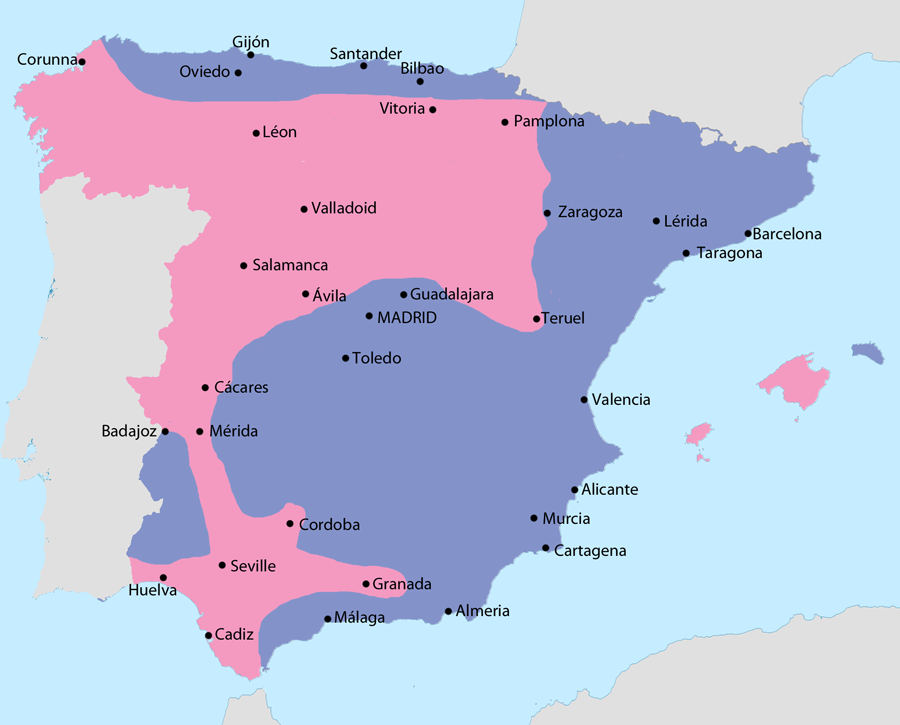
Fortissax notes some historic parallels between the many, many factions in Spain leading up to the catastrophe of the Spanish Civil War and the many, many factions of the dissident right in the Anglosphere and the rest of the diminishing western world today:

The Spanish Civil War, approximate Nationalist (pink) and Republican (blue) areas of control in September, 1936.
Map by NordNordWest with modifications by “Sting” via Wikimedia Commons.

We have serious issues on our hands. We must each contribute through our respective projects and instigate real-world change by pen, sword, or ploughshare. We don’t have time to split, fracture, insult, belittle, destroy each other’s reputations, or engage in character assassination. I liken the factionalism of the (terminally) online right to that of the factions in the Spanish Civil War. The online right is important because the internet is the new “public square”. As influential or more, as mass-action in living, breathing cities. The influence of discourse, media, and content on the internet is insurmountable. While small locally, the impact of each content maker, producer, writer, poet, and videographer is huge. We are part of a civilizational, some would even say global, culture, yet not of it. I will provide examples of some similarities I notice while reading through Peter Kemp’s “Mine Were of Trouble”.

In the buildup to the Spanish Civil War, you had conservative patriots (populists, anti-woke patriot-normies), traditionalist Christian monarchists (who parallel Christ-Is-King people), and the Falangist (who parallel the Vitalists, secular-right). This roughly, parallels the groupings of the Dissident Right today. I believe this is a good case study. History may not repeat itself, but it rhymes. All of them had a lot more in common than they opposed. For example, consider the following points:

  • Anti-Communism: Both the Falangists and the Requetés were strongly anti-communist and opposed the Spanish Republic, which they associated with communism, liberalism, and anarchism. They viewed the leftist factions as threats to Spanish traditions, religion, and social order. Today, the Managerial Elite of every single western country has weaponized the New-Left of decades past to use as shock troops against the good people of each nation. We all agree the mass psychosis of capital backed DEI civic cult, their nihilistic, suicidal anti-life acolytes are the most destructive group the human species has ever seen.
  • Support for Strong Leaders: Both groups eventually supported General Francisco Franco’s leadership, despite some initial differences in ideology and goals. Franco’s ability to unify the Nationalist forces was crucial to their eventual victory. In many Western countries today, people are rallying behind Trump, Bardella, Farage, Bernier to name a few. They are not perfect, but they are increasingly influenced by Dissident Right ideas, and culture.
  • Nationalism: The Falangists and the Requetés were deeply nationalist, believing in the unity and greatness of Spain. They were committed to preserving Spain as a single, undivided nation-state. Today, Dissidents of all stripes support nationalism an civilizational cooperation against outside threats like China, the emerging Republic of India, and the Islamic world, who seek to make excursions in Europe.
  • Militarism: Both factions believed in the application of force when necessary to achieve their goals and restore order in Spain. They were heavily involved in the Nationalist military efforts during the civil war. Both the religious right, and the secular Vitalists ostensibly believe a strong body, mind and soul are necessary to enact change. Both hold excellence as a core value, although perhaps one more than the other.
  • Benevolent Authoritarianism: Both the Falangists and the Requetés supported authoritarian forms of government. While the Falangists leaned towards a Nietzsche inspired model, the Requetés, rooted in traditional Christian monarchism, were also supportive of strong, centralized authority to maintain order and uphold traditional values.
  • Natural Social Order: Both groups believed in a natural social order or organic hierarchy. This concept held that society should be structured according to natural, hierarchical lines, which they saw as inherent and beneficial for maintaining stability and harmony. Do the religious right, and the Vitalists not believe this? That the strong, the beautiful, healthy, are fit to lead? That the most capable should be given the opportunity to advance socially?
  • Community Over Individual: While recognizing and respecting the Western man’s innate streak of liberty and individualism, both groups prioritized the needs and values of the community over the individual. They believed that individuals found their true purpose and identity within the larger community and that communal values should guide social and political life. When everyone is doing their part, all prosper.

“Neoliberal ideology is antidemocratic at its very core. Its aim is to give free-reign over our societies to corporations, not citizens”

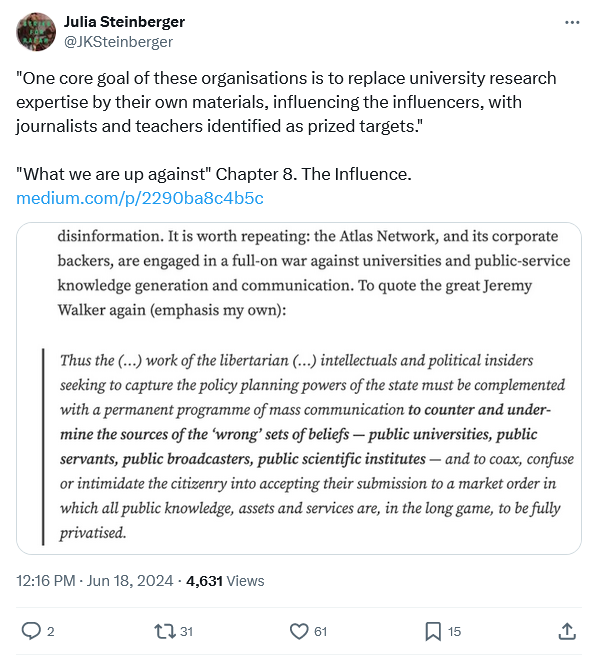
Tim Worstall responds to a recent Medium essay by Julia Steinberger which illustrates that “neoliberal” has joined “fascist” as a generic term to indicate strong disapproval of a person, organization, or idea:

The idea that an adult woman can believe these things is just amazeballs. But here we are. A tweet from Julia Steinberger leads to her Medium essay about what’s wrong with the world.

An upheaval in 10 chapters:

    1. The cause. We know the climate crisis is brought to us by highly unequal and undemocratic economic systems.

Err, no? Emissions are emissions. 100 people emitting one tonne each is exactly the same as 1 person emitting 100 tonnes. Sure, it’s true that a more unequal society will have more people emitting those 100 tonne personal amounts. But a more equal society will have more people able to emit another 1 tonne each. For, more equality is by definition the movement of some of those assets of the richer to those poorer — the economic assets which either allow or do the emitting. Sure, Jim Ratcliffe’s £50,000 private jet flight emits more than my £100 Easyjet one. But if we take the £50k off Jim and give it to 500 folk like me then all 500 of us might spend the marginal income on an Easyjet flight each — which would be more emissions than Jim’s spending of the money.

It simply is not true that economic inequality is the heart, the core or the cause of climate change. It’s idiocy to think it is too.

Of course, we know what’s happening here. Climate Change is Bad, M’Kay? Which it is, obviously. Economic inequality is Bad, M’Kay? Well, there the evidence is a great deal more mixed but whatever. But in the minds of the stupid all bad things have the same cause. So, if inequality is bad, climate change is bad, then they must be the same thing because they’re Bad, M’Kay?

    2. The rise. The recent history of these economic systems, in the Americas and Eurasia, is dominated by the ascendance of neoliberal ideology.

Oh, that is good. Given that I am a neoliberal — a fully paid up one, Senior Fellow at the Adam Smith Institute and all — that’s very good. Given HS2, looming wealth taxation, the increased bite of idiot regulation and all that I can’t say that I see neoliberalism as winning right now but that might depend upon your starting point. If you’re a socialist — or an idiot but I repeat myself — you might well regard the plenitude of bananas in the supermarket as neoliberal. After all, that is something that socialism never did achieve.

    3. The threat. Neoliberal ideology is antidemocratic at its very core. Its aim is to give free-reign over our societies to corporations, not citizens.

And, well, you know, bollocks. The very beating heart of neoliberalism is that corporations need to be controlled and they’re best controlled by the citizens. In the form of free markets rather than voting on which bureaucrats get the gold plated pension, true. But neoliberals are between indifferent and actually against capitalist power. The whole nub of the idea is that markets do the job of controlling capitalists better than bureaucrats, politicians or, obviously, capitalists.

There’s not really any way for her thesis to survive after getting so much of the basics wrong, is there?

But just one more tidbit:

    Hayek and his neoliberal colleagues now needed another, antidemocratic way, to organise society. They didn’t want democracy, but they wanted some kind of self-maintaining organisation — by which they meant hierarchy. Organisation was supposed to be supplied by the market, and hierarchy by competition within markets. (It’s worth noting that neoliberals in the 1950s did not, although they should have, predict that unfettered markets lead to concentrations in monopolies or cartels. They would arguably disapprove of the vast corporations running our current economies, even though their market-above-democracy policies predictably brought them into being.)

Well, that wasn’t actually the last tidbit. But the idea that Friedman, Mises, Menger, Hayek and the rest didn’t worry about monopolies? Jesu C is really bouncin’ on that pogo stick right now. And then the idea that democracy will be better bulwark against monopolies than markets? Can you actually do backflips on a pogo stick?

June 20, 2024

“Surely the only way to defeat racism and homophobia is to treat ethnic and sexual minorities as incapable of high achievement and in need of a leg up from their betters?”

Filed under: Business, Politics, USA — Tags: , , , , , — Nicholas @ 03:00

Andrew Doyle on a radical new approach to hiring that might just catch on:

With the inexorable spread of DEI – Diversity, Equity and Inclusion – across the western world, it’s refreshing to see at least one major company resist the decrees of this new religion. This is precisely what happened this week when Scale, an Artificial Intelligence company based in San Francisco, launched a new policy to ensure that its employees were hired on the basis of – wait for it – being the most talented and best qualified for the job.

This innovation, which sees race, gender and sexuality as irrelevant when it comes to hiring practices, should hardly be considered revolutionary. And yet in a world in which the content of one’s character is less important than the colour of one’s skin, to treat everyone equally irrespective of these immutable characteristics is suddenly deemed radical.

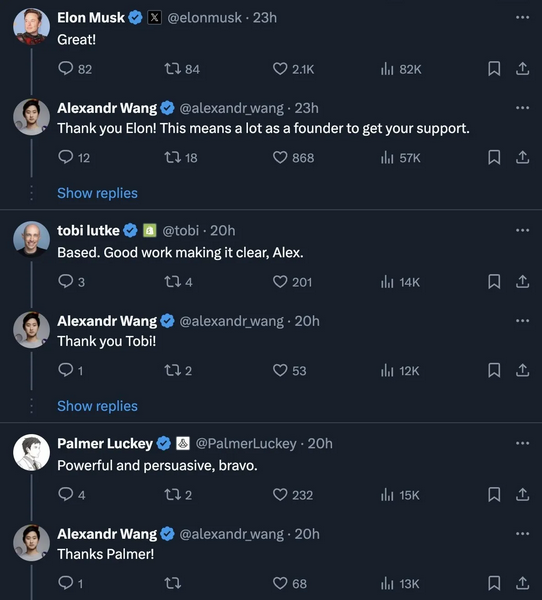
Scale’s CEO, Alexandr Wang, explained that rather than adopt DEI policies, the company would henceforth favour MEI, which stands for Merit, Excellence, and Intelligence. He explained the thinking behind the new scheme in a post on X.

    There is a mistaken belief that meritocracy somehow conflicts with diversity. I strongly disagree. No group has a monopoly on excellence. A hiring process based on merit will naturally yield a variety of backgrounds, perspectives, and ideas. Achieving this requires casting a wide net for talent and then objectively selecting the best, without bias in any direction. We will not pick winners and losers based on someone being the “right” or “wrong” race, gender, and so on. It should be needless to say, and yet it needs saying: doing so would be racist and sexist, not to mention illegal. Upholding meritocracy is good for business and is the right thing to do.

One can already hear the likes of Robin DiAngelo and Alexandria Ocasio-Cortez screaming in fury at this blatant implementation of good old-fashioned liberal values. Surely the only way to defeat racism and homophobia is to treat ethnic and sexual minorities as incapable of high achievement and in need of a leg up from their betters?

It is instructive to compare reactions from the Twittersphere (now X) and Instagram, as one X user has done. If nothing else, the comparison reveals how the divide in the culture war is playing out on social media since Elon Musk’s takeover. On X, major figures in the corporate world such as Tobias Lütke (CEO of Shopify), Palmer Luckey (founder of Oculus VR) and Musk himself have congratulated Wang on his new initiative.

By contrast, here are some of the responses on Instagram:

    You’re ‘disrupting’ current hard-fought standards you don’t like, by reverting to a system rooted in bias and inequality that asks less of you as a hiring manager and as a leader
    – Dan Couch (He/Him)

    Curious to see how hiring processes can effectively (and objectively) measure one’s ‘merit’, ‘excellence’, and ‘intelligence’, all of which are very subjective terms
    – Cole Gawin (He/Him)

    What is merit and how do we measure it?
    – Rio Cruz Morales (They/Them)

    This sounds a lot like excuse making for casting off DEI principles
    – R.C. Rondero De Mosier (He/Him)

The pronouns, of course, signify membership of the cult, and so we should not be surprised to see the sentiments of its minions mirroring each other so closely. What Wang is proposing of course builds equality into the hiring system and, contrary to these complaints, it is entirely possible to measure merit objectively. This, after all, is the entire point of academic assessment. The arguments against merit can only be sustained if one presupposes that systemic inequalities are ingrained within society, that all of these relate to the concept of group identity, and that adjustments have to be made accordingly to guarantee equality of outcome.

June 19, 2024

Toronto “atones for slavery” by renaming Yonge-Dundas Square. They chose … poorly.

Filed under: Africa, Cancon, History, Politics — Tags: , , — Nicholas @ 03:00

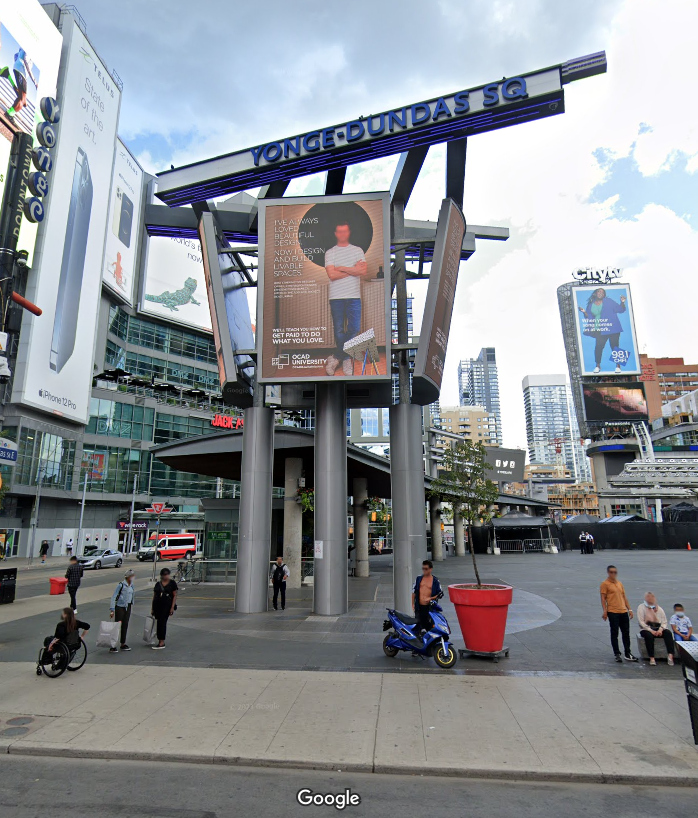
In the never-ending quest for moral superiority, the City of Toronto decided to rename a downtown landmark — Yonge-Dundas Square — after allegations were made that British Home Secretary Henry Dundas was against the abolition of slavery in the 1790s. (In fact, it was partly his efforts to mediate between the abolitionists and their opponents that actually got the first anti-slavery bill through Parliament, but who cares about his actual work when we can issue blanket condemnations hundreds of years later?)

In a twist worthy of the Babylon Bee, it turns out that the new and improved name proposed has a much more direct connection with slavery:

The Yonge-Dundas Square sign on the southeast corner of the intersection in downtown Toronto.
Detail of an image from Google Street View.

There is a lot wrong both with the name that Toronto city council chose to replace Yonge-Dundas Square and the burden that the name change will place on taxpayers.

Originally budgeted at $335,000, the new estimate is $860,000 — and who is to say it won’t go higher? That would be a lot of money even for a desirable name, but the name the city chose, Sankofa Square, is problematic.

The term is Ghanaian and means “learning from the past.” But while it is intended to replace the name of Henry Dundas, who some blame for delaying the abolition of slavery in the British Empire, the term “Sankofa” has its own connection to the slave trade.

Slavery was rife throughout Africa, and much of the world, for centuries past, but Ghana’s version included the execution of the slaves of chiefs who died, so that they could serve him in the afterlife. […]

The basic fact, ignored by Toronto’s mayor and city councillors, is that the Gold Coast, the earlier name for Ghana, was a notorious slave society. Leading Ghanaians were prominent in the slave trade and were themselves slave owners. For years after slavery was abolished elsewhere, they fought its abolition in Ghana. It wasn’t until 1874 that the slave trade in Ghana was abolished — nearly a century after Britain.

Compare Ghana’s record with that of Ontario, where a process of gradual abolition was started in 1793, 81 years before Ghana. That, notably, was thanks to the efforts of Upper Canada’s first lieutenant governor, John Graves Simcoe, an appointee of Henry Dundas, no less.

So Dundas was not only instrumental in getting slavery abolished in Scotland, acting as a lawyer in the appeal of a case dealing with a runaway slave, he also sent a dedicated abolitionist to Upper Canada to take the top post. He deserves a better square than Yonge-Dundas!

QotD: Canada’s Liberal Party

Filed under: Cancon, Humour, Politics, Quotations — Tags: , , — Nicholas @ 01:00

I keep replaying Scott Reid’s comment in my mind […] “Paul Martin is the wire brush that will scrub clean this stain on Canadian politics.”

Honestly, now, if you moved this metaphor any closer to the bathroom, there’d be no room for anybody to sit down. What have we come to when the communications director for the prime minister of Canada comes within an ace of referring to his own party as a filthy toilet in need of some elbow grease?

Colby Cosh, ColbyCosh.com, 2005-04-09.

June 18, 2024

“If you convince a group of Homo sapiens that that group over there are economic parasites … then you have primed them for mass murder”

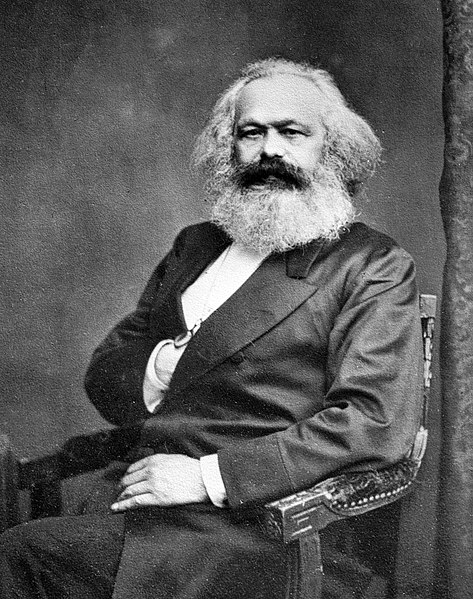
Lorenzo Warby on the malign influence of Karl Marx:

Despite — in some ways because of — all his Theorising about “capitalism”, Marx made no serious attempt to understand the actual dynamics of commerce, creating a (false) theory of economic parasitism (“surplus value”) that — both predictably, and in practice — motivated mass murder. If you convince a group of Homo sapiens that that group over there are economic parasites — and you and your society is better off without them — then you have primed them for mass murder. Hence, Marx’s theory was used to justify actual Marxist mass-murders, starting with Lenin’s infamous hanging order.

Marx’s economistic systematising created a pretence of being social scientist — to himself and even more to Engels — that many people have maintained ever since. Hence a pre-Darwinian metaphysician is even now regularly treated as if he was a social scientist. This despite being wrong about more or less everythingclass, commerce, surplus, immiseration, the state, patterns of history, commodification, division of labour, foraging societies …

As I have noted elsewhere:

    To have a state, farming niches have to be sustainable after taxes are extracted. That means resources are extracted before they turn into extra babies. This means that states create surplus (income above subsistence): indeed, they dominate the creation and extraction of surplus.

The perennial dominance of the state in extraction of surplus — and hence the creation of class structures — is nowhere more obvious than in Marxist states.

Philosopher Charles Taylor pointed out the tension between the claim to being science — and the causal determinism that goes with that — and the messianic vision that motivates Marx’s and Marxist activism. In any tension between the two, the latter wins because it is so powerfully motivating. This includes with Marx himself, which is why his “science” is so profoundly wrong in fact. It exists to justify the messianic vision.

No political (or religious) movement has killed and tyrannised more people than revolutionary Marxism. A Marxist is someone for whom no amount tyranny and mass murder will stop them worshipping the splendour in their head. This testifies to the power of the messianic vision.

Marx was the original launderer of ideas. Over decades of wrestling with the economics of Smith and Ricardo, he laundered — via economic reasoning — the metaphysical conclusions he reached in the 1840s to create a system that would “scientifically” generate and justify those conclusions. That those conclusions went mostly unpublished in his lifetime — with the most dramatic exception being The Communist Manifesto (1848) — does not belie this. Marx himself insisted on the centrality of this period of “self-clarification”.

Nothing he published later significantly contradicted those conclusions. Marx is the archetypal activist scholar, whose activism drives, and so degrades, his scholarship and analysis. He is the key formulator of the Dialectical Faith, that has generated various disastrous spin-offs, from his own economism to Lenin’s Jacobinising of Marxism to the Cultural Marxism of Lukacs and Gramsci, Critical Theory, and all forms of Critical Social Justice.

No form or derivative of the Dialectical Faith have ever generated a net positive contribution to human flourishing, or understanding, compared to available alternatives.

Ibn Khaldun was a far more acute analyst of the role of the state in the economy, and patterns within history, than Marx. Ibn Khaldun sought systematically to understand what he observed, participated in and read about. He was not laundering ideas, not justifying pre-set conclusions, nor judging evidence by his Theory.

Ibn Khaldun was a social scientist (arguably the first). Marx was not, he was pretending to be one (including to himself).

The Dialectical Faith holds that history is driven by dialectical process that transforms society from an oppressive past to a future liberated from constraints, if the oppressive elements of society are suppressed or abolished. As Marx tells us, our productive capacity will be so great, that we will so humanise the world, that division of labour will end for:

    In communist society, where nobody has one exclusive sphere of activity but each can become accomplished in any branch he wishes, society regulates the general production and thus makes it possible for me to do one thing today and another tomorrow, to hunt in the morning, fish in the afternoon, rear cattle in the evening, criticise after dinner, just as I have a mind, without ever becoming hunter, fisherman, herdsman or critic.

Marx was not engaged in scientific enquiry but pseudo-scientific, or scientistic — the form of science without the substance — justification of already reached conclusions. He regularly judges and chooses evidence based on Theory, a pattern that has become endemic within all forms of Marxism and its spinoffs (such as Critical Theory). Marx exemplifies the activist principle that “what I can imagine — however self-contradictory — is so much better than what others have struggled to achieve”.

Marx’s picture of the evils of division of labour is metaphysical twaddle flatly contradicted by any serious study of the role of division of labour — and, for that matter, commodification — in production at scale. How can division of labour be such an alienating evil when it is built into sexual reproduction, into every eusocial species, even into the cells of every single complex organism?

The answer is via a ludicrous quasi-theological metaphysical inflation of human consciousness and creativity. Marx collectivises — through his notion of species-being — the Romantic notion of human fulfilment through self-expression.

Freddie deBoer contra J.J. McCullough on Conspiracy Theories

Filed under: Cancon, History, Media, Politics, USA — Tags: , , , , — Nicholas @ 04:00

I saw JJ’s latest video pop up on my YouTube subscriptions page, read the headline and winced slightly. I generally like JJ’s videos even when I disagree with his presentation or interpretation and from the title, I thought “No, ‘many conspiracy theories’ did NOT ‘turn out to be true'” would require a fair bit of, uh, curation of the theories that get discussed. Freddie deBoer — who I disagree with much more than I do with McCullough — had a similar reaction:

The latest video from conservative Canadian YouTuber JJ McCullough displays many of the attributes that make his perspective unique — he’s genuinely a right-wing figure but an arch institutionalist, a gay Millennial with the kind of vague social libertinism common to a lot of libertarian-leaning conservatives but something of a scold, a Canadian patriot who relentlessly defends the United States from the kinds of criticism of Americanah that you might associate with Europe or, well, Canada — critiques of our provincialism, our consumerism, our boorish tendency to shove the rest of the world around. McCullough likes all of that stuff, more or less, while living a cosmopolitan and vaguely-arty lifestyle in groovy Vancouver. He’s perhaps best known for his war with Montreal, Francophone Canadians, and the entire province of Quebec, which fits his general esteem for a certain kind of capital-R Reasonable Anglophilia.

He reminds me, strangely, of a certain kind of secular anti-atheist, the type who still gets mad about the New Atheists despite the complete collapse of that subculture and whose own lack of belief doesn’t prevent them from waxing poetic about the glories of religion. I have a friend from grad school who grew up in an extremely repressive Christian community when she was young, and who describes leaving as an “escape”. (The kind of community where she and her sisters wore wrist-to-ankle dresses every day of their lives no matter the Oklahoma heat, weren’t allowed TV or radio, absorbed lots of corporal punishment, that sort of thing.) She has very, very little patience for people who are so annoyed by internet atheists that they become in effect advocates for religion; as she says, this kind of vague fondness for religion among the irreligious could only occur to someone who never had to live the way she did. I sort of see the same thing in McCullough — he idealizes certain aspects of America’s ethos because he has never had to live with the consequences of being surrounded by people who believe in it, who consciously or unconsciously demand that everyone else believe in it.

Anyhow, this new video is about conspiracy theories. Conspiracy theories are a good topic for understanding McCullough’s very particular ideological makeup. Conspiracy theories are famously a cross-ideological phenomenon, with both left conspiracy theories and right conspiracy theories but also conspiracy theories that don’t fit neatly into either, like 9/11 trutherism. As I said, McCullough is an institutionalist, a small-but-good government sort of guy (or so I take it) who places a great deal of value in official claims, institutions, and experts, and so he’s naturally distrustful of conspiracy theories. And he demonstrates that antipathy in this video through poking holes in a few clickbaity articles listing conspiracy theories that turned out to be true. This all amounts to feasting on a banquet of low-hanging fruit, but it’s not an illegitimate way to approach the question. I just don’t like his conclusions.

The key to McCullough’s bit here is that he doesn’t dispute that the named conspiracy theories (or “conspiracy theories”) that are asserted to be true are true. Rather, he operates by insisting that every identified conspiracy theory is in fact not a conspiracy theory according to his preferred definition. It’s not sufficient for a conspiracy theory to be broadly thought of as a conspiracy theory; it has to comport to specific rules he has devised for what a conspiracy theory entails. Effectively, that means that a conspiracy theory is only a conspiracy theory if it satisfies criteria endorsed by no one but JJ McCullough. I can’t decide if this is an isolated demand for rigor or a No True Scotsman, but either way, McCullough is here insisting on an unusually stringent definition of a conspiracy theory for the purpose of dismissing the idea that any conspiracy theories are true. And there’s a version of this that isn’t entirely wrong; there’s a tautological sense in which all conspiracy theories are false because being false is part of that definition of a conspiracy theory. But McCullough isn’t using that definition, just a particularly odd one that makes his task easier.

So the fact that cigarette manufacturers knew that cigarettes were very bad for your health but conspired to hide this fact from the public is not a conspiracy theory, according to McCullough, because other people of that era suspected that cigarettes caused lung cancer. (Actually proving that took a very long time, at least according to modern standards of causality.) I find this argument powerfully strange! You had a group of powerful people, they indisputably knew that cigarettes were very bad for your health, they indisputably conspired to suppress that information, they were fairly effective at that task. The fact that some early whistleblowers tried to raise the alarm is simply irrelevant. Check out my own proprietary formula.

Group of Powerful or Influential People + Nefarious Intent + Secrecy + Active Conspiring + Negative Consequences, Real or Potential = Conspiracy Theory

That’s a conspiracy, brother, and the tobacco company bad behavior fits. Long before information about their coverups became public knowledge, people were talking about the possibility that the tobacco companies were up to that exact bad behavior. Theorizing, you might say.

June 17, 2024

For want of a security clearance, the (potential) traitors escaped scot-free

In the free-to-cheapskates section of this week’s Dispatch from The Line, we get a summary of the state of brain-freeze in Parliament over the NSICOP (National Security and Intelligence Committee of Parliamentarians) report, that in a functioning state would have triggered much more action than it has in the dysfunctional Dominion:

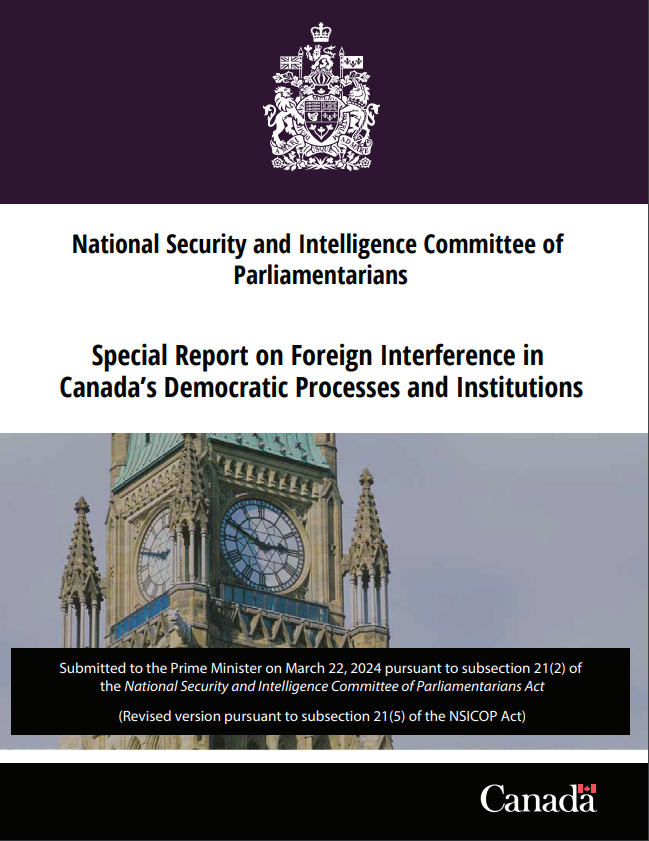
The cover of the NSICOP special report on foreign interference (PDF – https://nsicop-cpsnr.ca/reports/rp-2024-06-03/special-report-foreign-interference.pdf )

The lead story this week, clearly, was the continuing fallout from the NSICOP report last week. Because of this report, even though there is much that we do not know, there are absolutely some things that are clearly established. Let’s run through some of the key points that are uncontested and draw some very modest and safe conclusions from them.

Here are facts.

  • There are multiple parliamentarians, meaning members of the House of Commons and the Senate, who have been deemed by eight of their colleagues to be engaged in activities with hostile foreign powers on either a witting or semi-witting basis.
  • The prime minister and the PMO have been aware of who these individuals are for at least a month, if not longer. That is when NSICOP filed its unredacted report to them for review, as required.

The above facts are unchallenged. Now let’s draw a few conclusions.

The phrasing of the NSICOP report, as well as both Elizabeth May’s and Jagmeet Singh’s press conferences this week, led us to believe some of these individuals are still sitting in both the House of Commons and the Senate. We acknowledge that Elizabeth May and Jagmeet Singh differ considerably on the severity of what these individuals are alleged to have done, but both seem to agree that the relevant parties, in at least some cases, remain in Parliament.

The prime minister, as the person responsible for the administrative and legal apparatus of government, could call the Clerk of the Privy Council, the Director of CSIS, the minister of public safety and others as necessary into his office today, and inform them that he would be making the names public, and that it would be the responsibility of those individuals to figure out how that could be accomplished while protecting intelligence sources and methods. At this time, there is no indication that he has done so, or has any interest in doing so.

So we got the grotesque theatre that was the House of Commons this week. The government has spent the last week and change challenging various opposition leaders to obtain security clearances so that they could view information that the prime minister has had for at least a month, and perhaps longer, even though both the Security of Information Act and the National Security and Intelligence Committee of Parliamentarians Act (depending on the auspices under which their security clearances were issued) prevents them from disclosing what they read.

And, therefore, doing anything about it. Because to remove a caucus member would be to reveal it, and if a leader has no caucus members that are implicated, there is no urgency to their reading the report.

Protecting the national security of Canada, and the democratic institution of parliament itself, is the prime minister’s job before it is anyone else’s. And the prime minister has had this information for at least a month.

It’s worth repeating that because we want you to envision something. Imagine there are three U.S. Senators accused of aiding and abetting a foreign power, and Joe Biden knew about it for a month.

When do you think impeachment proceedings would start?

Boris Johnson was unceremoniously dumped by his party for lying about throwing a party during COVID lockdowns (and we have no problem with that). Our prime minister has known that there are people currently sitting in parliament that have turned themselves into intelligence assets for hostile foreign powers for a month, and …

… the government would like you to know that it thinks Pierre Poilievre should get a security clearance so that he can read the documents.

We think Poilievre should, too. Because here’s the thing. The Security of Information Act says right there in Section 24 “No prosecution shall be commenced for an offence against this Act without the consent of the Attorney General”.

That reads to us like so: Pierre Poilievre can read those documents, release the names, and then dare Justin Trudeau to prosecute him. Indeed, anyone with the names could.

Your Line editors have raised this before on the podcast, but it bears repeating. Canada’s international reputation has taken a lot of hits lately. So imagine if you would, gentle reader, a situation where Justin Trudeau’s Attorney General signs off on having his political opponent arrested for revealing that hostile foreign powers have coerced sitting MPs into becoming intelligence assets … especially if one or more of those MPs is revealed to be a Liberal.

That’s a front page international news story. We’d look like a banana republic. Our international reputation would take decades to recover.

Spoiler: we already do look like a banana republic and our international reputation is lower than it has ever been. Trudeau isn’t a dummy: he figures that our reputation literally can’t get much worse no matter what he does, so he’s choosing to protect … someone … and what’s Poilievre going to do? He proved during the lockdowns that he’s not willing to get arrested on a matter of principle (unlike Maxime Bernier), so he’s likely to just posture endlessly until something new pops up in the silly season news rotation.

Inside the deputy PM’s thoughts

Filed under: Cancon, Humour, Politics — Tags: , , — Nicholas @ 03:00

In the National Post, Tristin Hopper imagines what Deputy Prime Minister Chrystia Freeland might be thinking as she pushes her capital gains tax increase:


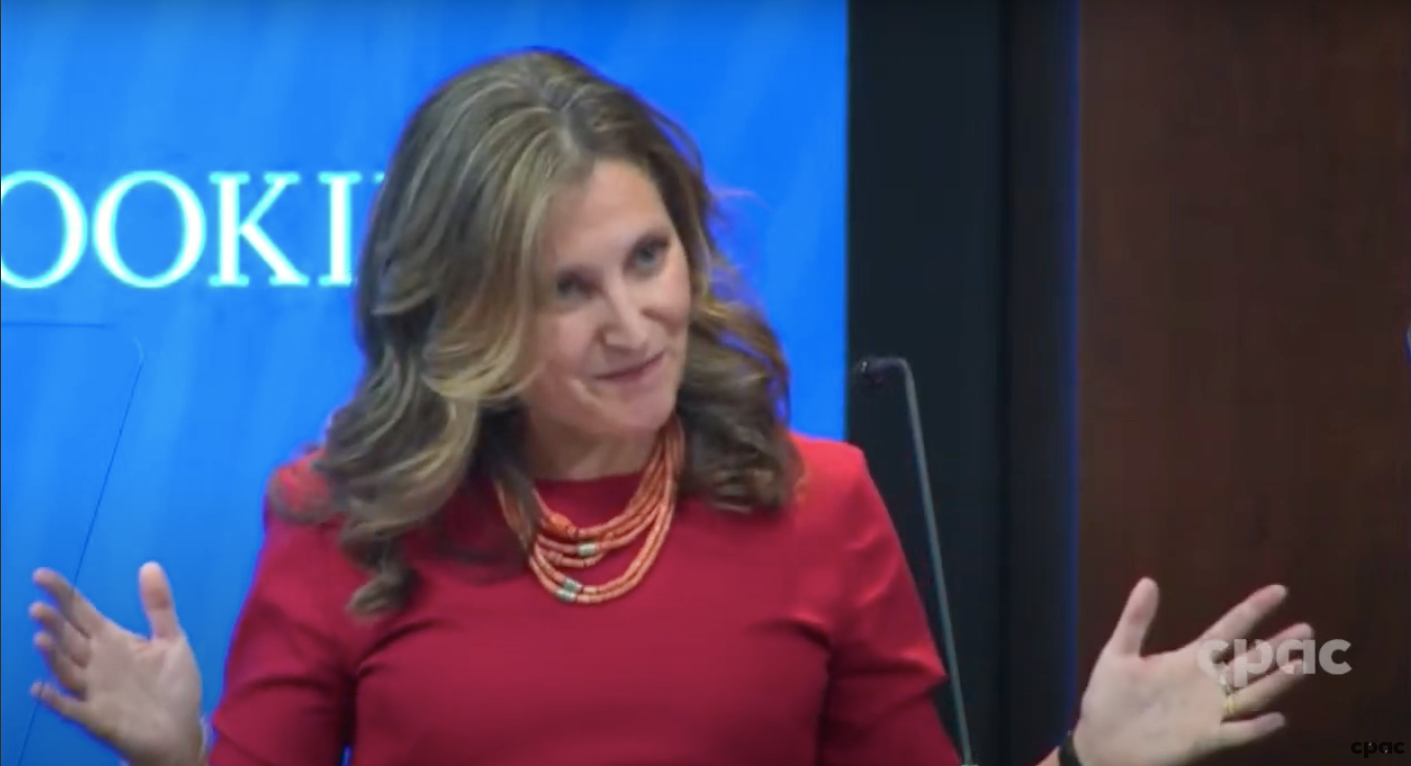
Screencap from a CPAC video of Chrystia Freeland speaking in October, 2022.

On Monday, Deputy Prime Minister Chrystia Freeland defended her government’s raising of the capital gains tax by delivering a weirdly catastrophic lecture speaking of a Canada beset by poverty, division and angry mobs.

“Do you want to be in a country where those at the very top live lives of luxury but must do so in gated communities behind ever higher fences using private health care and airplanes because the public sphere is so degraded and the wrath of the vast majority of their less privileged compatriots burns so hot?” she said.

[…]

Monday
Rivers of blood. Mothers consuming their offspring. Houses of worship employed only as makeshift storehouses for the dead.

Abundance will cease. Colour will vanish. The people you now know as loved ones will first become strangers, and then they will become enemies.

These are but some of the fates that realistically lie in store for a Canada that refuses to raise its capital tax inclusion rate from 50 per cent to 67 per cent on gains realized after June 25, 2024. While I am sympathetic to those who have worked hard and wish to retain what they have earned, I would urge them to consider the value of money in a Canada where the only remaining currency is one’s readiness to kill.

Tuesday
As deputy prime minister of Canada, I am fully aware that carbon taxes are an electoral liability for this government. But this is a problem not of policy, but of messaging.

If we’re not able to tax carbon-emitting fuels to a rate of $170 per tonne by 2030, the most optimistic scenario I can offer is the complete breakdown of the natural world as we know it.

Agriculture will become a memory. Cities will become unapproachable due to the overwhelming smell of decay. Language will devolve and then disappear. Any surviving art or culture will only inspire fear, because people will not know what it is.

The air may be breathable, but we will wish it was not.

June 16, 2024

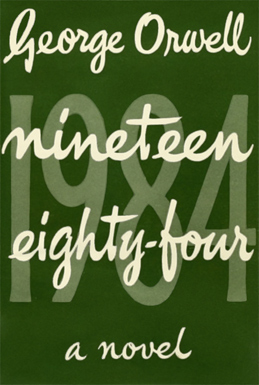
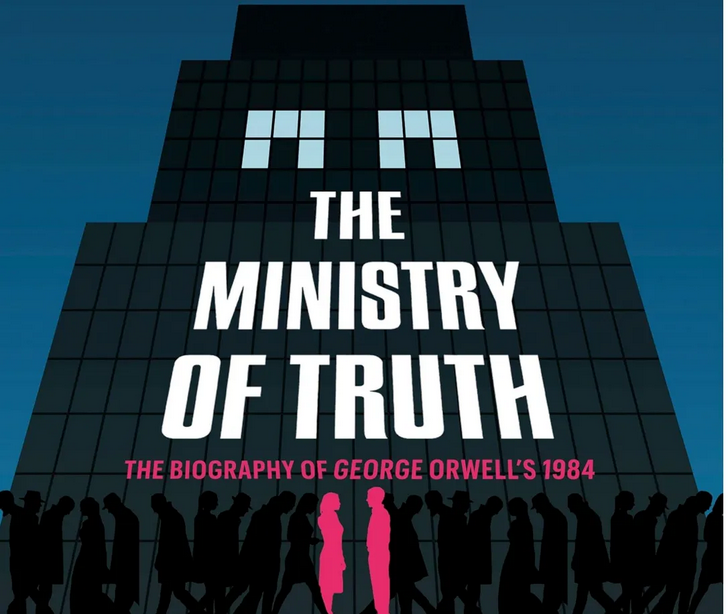
Orwell’s Nineteen Eighty-Four at 75

Ed West on the attempts by many different parties to claim the legacy of George Orwell for their own purposes:

No writer’s legacy and approval is so fought over as George Orwell, whose final — and most celebrated — work Nineteen-Eighty-Four was published seventy five years ago this month.

The most influential piece of political fiction in history, such is the success of the dystopian novel that its themes have been recited to death by columnists, often by people I imagine he would have loathed (including me).

Orwell’s nightmare became a particular focus of conservative commentators from the 1990s with the rise of “political correctness”, which might be seen as both a form of politeness and at the same time a way of policing opinions by changing the language. As Orwell’s Newspeak was described, it was to ensure that dissent cannot be voiced because “the necessary words were not available”. Newspeak, along with thought police and doublethink, has become a part of our political vocabulary, while even the proles have Big Brother to entertain them. No one can doubt that Orwell has won the final victory, and the struggle for the writer’s soul forms part of Dorian Lynskey’s entertaining and informative The Ministry of Truth, a biography of Nineteen-Eighty-Four which was published at the time of the last significant anniversary.

Lynskey, a hugely gifted writer who specialises in the relationship between arts and politics, is very much on the Left and sees the modern parallels with the Trumpian disdain for truth, although the great man himself is now often more cited by the Right. Indeed the anniversary was recently celebrated by the free-market think-tank the Institute of Economic Affairs with a new edition and an introduction by my friend Christopher Snowdon.

Orwell was a paradoxical man, contradictory, sometimes hypocritical (aren’t we all?). In the preface to his book, publisher Victor Gollancz wrote that “The truth is that he is at one and the same time an extreme intellectual and a violent anti-intellectual. Similarly he is a frightful snob – still (he must forgive me for saying this), and a genuine hater of every form of snobbery.”

As Lynskey writes: “Until the end of his life, Orwell acknowledged that microbes of everything he criticised existed in himself. In fact, it was this awareness of his own flaws that inoculated him against utopian delusions of human perfectibility.”

Such awareness is surprisingly rare among intelligent journalists and commentators, especially when ideology takes a grip — and Orwell was introduced to this reality in quite brutal form.

The background to both Nineteen Eighty-Four and Animal Farm was Orwell’s disillusionment during the Spanish Civil War. The conflict between Nationalists and Republican galvanised western intellectuals and marked the turning point when the intelligentsia became firmly wedded to the Left. Over a thousand writers went to fight in Spain, and while few entirely understood the political situation they did grasp, as Malcolm Muggeridge said, that “it seemed certain that in Spain Good and Evil were at last joined in bloody combat”.

In reality it was a conflict in which both sides committed appalling atrocities, although Franco’s forces certainly outdid their enemies in murderous scale. That ruthlessness partly explains their victory, but the Republicans were not helped by the seemingly endless factionalism that saw various squabbling leftist acronyms fight each other, and which makes the war hard to follow. There was the socialist UGT, the Russian-backed PSUC, the anarchist FAI and anarcho-syndicalist CNT, and also the POUM, Workers’ Party of Marxist Unification, which rather belied its name by falling out with both Stalin and Trotsky.

Spain was an education for Orwell. Witnessing in Barcelona a Russian known only as “Charlie Chan”, allegedly an agent of NKVD, he wrote: “I watched him with some interest for it was the first time I had seen a person whose profession was telling lies — unless one counts journalists”.

He recorded how, with the honourable exception of the Manchester Guardian, “One of the dreariest effects of this has been to teach me that the Left-wing press is every bit as spurious and dishonest as that of the Right”. Welcome to the Intellectual Dark Web, George Orwell.

June 15, 2024

In Germany, it can be dangerous to “participat[e] in the wrong discussions before the wrong kind of people and assembl[e] one’s (wholly accurate) data from the wrong sources”

Filed under: Germany, Health, Media, Politics — Tags: , , , , — Nicholas @ 05:00

German government control over what people can say online seems like something Justin Trudeau would love to have (and, in fact, is working toward) here in Canada:

Almost two years ago, on 26 July 2022, a German Twitter user known only as MicLiberal posted a thread that culminated in his criminal trial this week. His is but the latest in a long line of such prosecutions – the tactic our rulers increasingly favour to intimidate and harass those who use their freedom of expression in inconvenient ways.

MicLiberal committed his alleged offence as Germany was still awakening from months of hypervaccination insanity. Science authorities and politicians had spent the winter decrying the “tyranny of the unvaccinated“, demanding that “we have to take care of the unvaccinated, and … make vaccination compulsory“, firing people who protested institutional vaccine mandates on social media and denouncing the unvaccinated for ongoing virus restrictions and Covid deaths. Our neighbour, Austria, even went so far as to impose a specific lockdown on those who refused the Covid vaccines. Culturally and politically, those were the darkest months I have ever lived through; they changed my life forever and I will never forget them.

MicLiberal’s thread aimed only to memorialise some of the crazy things the vaccinators had said. It opened with this tweet:

    We were complicit!

    We marginalised, defamed, discredited, insulted and cancelled people. On behalf of science!

    By popular demand, this brief thread with statements that should not be forgotten:

There ensued nothing but a series of citations, most of them wholly typical samples of vintage 2021/22 vaccinator rhetoric, much of it not even that remarkable. For example, MicLiberal included this statement from Andreas Berholz, deputy editor-in-chief of the widely read blog Der Volksverpetzer:

    Fact-check: The unvaccinated remain the main drivers of the pandemic.

[…]

You might be wondering what crime MicLiberal can possibly have committed by drawing attention to these already-public statements. The most honest answer is that his thread achieved millions of views in a matter of days, and at a very awkward moment – precisely when everyone was beginning to regret all the illiberal and wildly intemperate things they had said in the depths of the virus craze. He had embarrassed some very vain and powerful people with their own incredibly stupid words, and today many are of the opinion that that ought to be a crime in and of itself.

Alas, things have not yet deteriorated that far. Thus the police and prosecutors were left to scour our dense thicket of laws for a more plausible offence. They decided that their best chance lay with a novel provision of the German Criminal Code (Paragraph 126a). This provision makes it a crime to “disseminate the personal data of another person in a matter that is … intended to expose this person … to the risk of a criminal offence directed against them“. On 28 July, two days after MicLiberal posted his 25 tweets, Cologne police filed a criminal complaint against him, and afterwards the Cologne prosecutor’s office brought charges, arguing that MicLiberal had suggested that the people he cited were “perpetrators” and therefore associated them with “fascism”. The district court declined to approve the charges, but the prosecutors appealed to the regional court, where the judges saw things differently. They believed that a prosecution was warranted because of the “heated social debate” surrounding Covid measures, and because MicLiberal’s audience was composed of “homogeneous” like-minded people, who (in the summary of the Berliner Zeitung) “could either form groups or encourage individual members to commit acts of violence”. MicLiberal had furthermore assembled his citations from a website that the judges deemed guilty of an “anti-government orientation”.

We must take a moment to ponder this truly amazing argumentation, which would seem to criminalise such things as participating in the wrong discussions before the wrong kind of people and assembling one’s (wholly accurate) data from the wrong sources. In each of these cases, of course, it is the prosecutors and the judges eager to apply Paragraph 126a to their political opponents who get to decide what is “wrong”.

The good news in all of this is that the court acquitted him of these creative charges, but the prosecution has given notice that they intend to appeal.

W.H.O. the hell do they think they are?

Christopher Snowden on what he calls a “new low” for the World Health Organization (WHO) in a report issued earlier this week that sounds like Karl Marx was one of the writers:

The WHO European Region published a new report today, written mostly by British ‘public health’ academics. It is quite revealing. For example …

    This requires, at a minimum, that governments recognize that the primary interest of all major corporations is profit and, hence, regardless of the product they sell, their interests do not align with either public health or the broader public interest. Any policy that could impact their sales and profits is therefore a threat, and they should play no role in the development of that policy. Similarly, governments must also recognize the now overwhelming evidence (see also chapters 4, 6 and 7) that HHIs [“health-harming industries”] engage in the same political and scientific practices as tobacco companies and that voluntary or multistakeholder partnership approaches do not work where conflicts of interest exist. Instead, they must regulate other HHIs [“health-harming industries”], their products and practices, as they do tobacco.

That’s just one paragraph, but there’s a lot it in.

Firstly, they are clearly not just opposed to “health-harming industries” but to private industry and the free market in general.

Secondly, they want to exclude all industries from the policy-making process, as already happens with the tobacco industry.

Thirdly, they want to regulate all “health-harming industries” in the same way as they regulate tobacco. These industries include alcohol, food and fossil fuels, but the report also mentions pharmaceuticals, infant formula, gambling, firearms, healthcare (!) and sugary drinks. As the quote above makes clear, they think that all private industry damages health in some way.

This is all there in black and white and there is much more of the same in the report. This is not scaremongering or the slippery slope fallacy. It is in an official WHO document.

When people show you who they are, believe them.

I have written about this for The Critic

    If this sounds to you like Bolshie talk, you might be onto something. It is further confirmation that the modern “public health” movement is an arm of the hard left presented as an arm of medicine. It would be tempting to tell the authors to stay in their lane, but anti-capitalist nanny statism is their lane. For over a decade, such academics, mostly from Britain and Australia, have been pumping out studies about the “commercial determinants of health” and the “corporate political activity” of “unhealthy commodity industries”. The new WHO report is a sort of greatest hits collection. Last year they published a whole series of articles in the Lancet in which they claimed that there is “growing evidence that neoliberalism has been damaging to health” and called for “a normative shift away from harmful consumptogenic systems”.

    Half-baked Marxist rhetoric has been rife in the social sciences for decades, but these people have a vaguely coherent point to make and are pursuing a serious, if terrifying, agenda. Since they do not believe in human agency, they assume that people only make “unhealthy choices”, such as eating processed ham, because the system that controls them has been rigged by big corporations. They say in today’s report that “consumers do not have capacity (time or resources) to make the ‘right’ choice”. Fortunately, public health academics know what the right choice is and could impose it on a grateful population if it were not for the pesky free market. Hence their rage against capitalism, which extends to suspicion of intellectual property, international trade, share buybacks, impact assessments (because they allow businesses to engage with policy-makers) and even the EU single market.

Further to what I say in the article, I’d add that it is to the UK’s shame that so many of the authors of this report are British. They include quackademics that I have been making fun of for years, such as Anna Gilmore, Mark Petticrew and May van Schalkwyk. Between them, they constitute a small clique of talentless, fanatics and/or grifting social scientists who have constructed a world of unreality for themselves by publishing endless low quality journal articles which they and their colleagues then reference and self-reference. It is profoundly depressing that they are now dangling the corpse of the WHO — which was once a great institution — on pieces of string.

The Ford Foundation and the far left

Filed under: Media, Politics, USA — Tags: , , , , , — Nicholas @ 03:00

N.S. Lyons looks at the vast amount of money the “philanthropic” Ford Foundation donates to organizations pushing far left agendas:

It’s November 2023, and, following the October 7 attacks by Hamas terrorists that killed some 1,400 Israelis and at least 31 Americans, thousands of demonstrators march through New York City, calling for the destruction of the Jewish state. Chants of “from the river to the sea, Palestine will be free” echo through the streets, along with “there is only one solution: intifada revolution”. Among the crowd is the infamous Palestinian American activist Linda Sarsour, who warns through a megaphone that a cabal of wily Jews has conspired to place “their little posters” (of kidnapped Israeli civilians) across the city, seeking to entice people to rip them down. While many onlookers might look like “ordinary people”, she says, the Jews have “their little people all around the city”, surveilling others. Sarsour is there to deliver such rhetoric in part because she’s been paid to be there: her nonprofit, MPower Change, has received $300,000 in grant funding from the Ford Foundation “to build grassroots Muslim power”.

It’s May 2023, and protesters have stormed the Capitol building in Washington, D.C., to demand that lawmakers not accept spending cuts during negotiations to lift the debt ceiling. Many are so disruptive that the police arrest them and drag them out. These are activists of the Center for Popular Democracy, an extreme left-wing organization that has collected $35.2 million from the Ford Foundation since 2012. Four months later, they will be imitated by 150 youth activists from the “climate revolution” group the Sunrise Movement, 18 of whom will be arrested after occupying the Speaker of the House’s office. The Sunrise Movement also receives Ford Foundation money—$650,000 for “training and organizing”.

It’s April 2023, and, a world away, the China Development Research Foundation (CDRF), a think tank set up and directed by the Chinese state, is hosting a conference in Beijing to discuss how to “promote the formation of an internationally accepted ESG system with Chinese characteristics”, including through China’s globe-spanning influence and infrastructure plan, the Belt and Road Initiative. But this effort by America’s top geopolitical adversary isn’t too far afield for the Ford Foundation to fund; it has given CDRF $600,000 to help realize its ambitions.

These examples from just the last year — collected via a semi-random tour of the Ford Foundation’s vast Grants Database — represent a tiny fraction of the nearly $1 billion that the foundation gives away yearly, on average. Almost a century old and sitting on a mountainous $16.4 billion endowment in 2022, the foundation is a “philanthropic” giant — one of the five largest in the U.S. If it were a for-profit firm, its market capitalization would rank it among the Fortune 500. Instead, “guided by a vision of social justice”, as its mission statement puts it, the Ford Foundation’s enormous flood of untaxed money flows annually to an immense ecosystem of overwhelmingly left-wing — and often outright revolutionary — causes.

Yet the foundation’s activities remain largely below the public’s radar, the extent of its malign history mostly unknown. This should change. America today faces a multitude of escalating sociopolitical crises that are rapidly tearing apart the body politic: a rapacious strain of tribal identity politics; spreading legal, cultural, and moral chaos; lawlessness in the streets; and the entrenchment of an oligarchic managerial elite, increasingly willing to cast aside any remaining shred of democratic or national sovereignty in its pursuit of top-down global “progress”. Behind every one of these fractures, one finds the ongoing work of the Ford Foundation.

In 2020, following the death of George Floyd in Minneapolis, a “racial reckoning” swept the United States, kindling fiery riots across the nation, abrupt moves by municipalities to defund police departments, and the near-wholesale capitulation of public institutions — from universities to government agencies to major corporations — to a culturally revolutionary ideology of identitarian grievance and racial separatism. To some, this came as a shock. To the Ford Foundation, it marked the fulfillment of decades of effort.

The foundation has long seen itself as uniquely dedicated to progress and social justice, its stated mission from as early as the 1950s being the “general purpose of advancing human welfare” and to “eradicate the causes of suffering” worldwide. But after current president Darren Walker took the helm in 2013, it began more fully to embrace a public identity as a “social justice foundation” and reoriented its mission to “disrupt the drivers of inequality” in every sphere of life and across the globe.

« Newer PostsOlder Posts »

Powered by WordPress