Quotulatiousness

December 17, 2019

QotD: The mass cowardice of the Baby Boomers

Filed under: Liberty, Politics, Quotations — Tags: , , — Nicholas @ 01:00

Unlike the Beat Generation that headed off to North Africa or South America for a few weeks or months of “real” freedom before settling into permanent disaffection and (if they were lucky) early, spectacular death, boomers said, “Screw it, let’s make our own life right here.” What started as an effort to build a counter-culture soon fragmented into niche cultures that had nothing to do with, or even hated, flower power. That continued with succeeding generations to the point that today, with a big boost from technology, the average American can burrow deep into one comforting culture and/or surf across dozens of cultures with equal ease.

The mythical hippy-drippy boomer even gave birth to another myth that refuses to die, that of their conservative Millennial offspring. Considering this all started 20 years ago with a limp Michael J. Fox sitcom, it is time to retire the played out joke before it gets flipped onto the next generation. Holo-headline 2031: “Look! The conservatives have hippie kids!”

Yet history will show that, for all their organizing skill and moral sensitivities, the boomers took a pass on actually changing one hellish state policy rather than have a few uncomfortable conversations with their kids. Gotta have that moral high ground even at the kitchen table, it seems. Boomers have collaborated and shamelessly switched sides on the war on drugs with full knowledge of the repercussions. If the greatest generation had landed at Omaha Beach, pissed themselves, tossed their weapons into the sea, and begged to serve as Nazi slop-boys, then you might have an equivalent act of mass cowardice.

Jeff A. Taylor, “Boomer or Bust: Reflections of a generational refugee”, Reason, 2004-12-14.

December 16, 2019

“The near-homogeneity of Silicon Valley political beliefs has gone from wry punchline to national crisis in the United States”

Jason Morgan reviews Michael Rectenwald’s new book Google Archipelago: The Digital Gulag and the Simulation of Freedom:

The near-homogeneity of Silicon Valley political beliefs has gone from wry punchline to national crisis in the United States. The monoculture of virtue signaling and high- and heavy-handed woke corporate leftism at places like Google, Twitter, and Facebook was once a source of chagrin for those who found themselves shut out of various internet sites for deviating from the orthodoxies of the Palo Alto elites. After the 2016 presidential election, however, it became obvious that the digitalistas were doing a lot more than just making examples of a few handpicked “extremists.” From the shadow banning of non-leftist sites and views to full-complement political propagandizing, Bay Area leftists have been so aggressive in bending the national psyche to their will that there is talk in the papers and on the cable “news” channels of “existential threats to our democracy.”

It is tempting to see this as a function of political correctness. Americans, and others around the world, who have found themselves on the “wrong side of history” (as determined by the cultural elite in an endless cycle of epistemological door closing) have long been shut out of conversations, their views deemed beyond the pale of acceptable discourse in enlightened modern societies. Google, Facebook, Twitter — are these corporations, and their uber-woke CEOs, just cranking the PC up to eleven and imposing their schoolmarmish proclivities on the billions of people who want to scrawl messages on their electronic chalkboards?

Not so, says reformed leftist — and current PC target — Michael Rectenwald. The truth of Stanford and Harvard alumni’s death grip on global discourse is much more complicated than just PC run amok. It is not that the Silicon Valley giants are agents of mass surveillance and censorship (although mass surveillance and censorship are precisely the business they’re in). It’s that the very system they have designed is, structurally, the same as the systems of oppression that blanketed and smothered free expression in so much of the world during the previous century. In his latest book, Google Archipelago, Rectenwald outlines how this system works, why leftism is synonymous with oppression, and how the Google Archipelago’s regime of “simulated reality” “must be countered, not only with real knowledge, but with a metaphysics of truth.”

Google Archipelago is divided into eight chapters and is rooted in both Rectenwald’s encyclopedic knowledge of the history of science and corporate control of culture, as well as in his own experiences. Before retiring, Rectenwald had been a professor at New York University, where he was thoroughly entrenched in the PC episteme that squelches real thought at universities across North America and beyond. Gradually, Rectenwald began to realize that PC was not a philosophy, but the enemy of open inquiry. For this reason, and because Rectenwald is an expert in the so-called digital humanities and the long history of scientific (and pseudo-scientific) thinking that feeds into it, Google Archipelago is not just a dry monograph about a social issue. By turns memoir, Kafkaesque dream sequence, trenchant rebuke of leftist censorship, and intellectual history of woke corporate political correctness, Google Archipelago is a welcoming window into a mind working happily in overdrive.

December 15, 2019

Every time the “wrong” side wins an election…

Filed under: Britain, Media, Politics — Tags: , , , , , , — Nicholas @ 03:00

… we get all the media talking about how the winner needs to tack to the left:

Prime Minister Boris Johnson at his first Cabinet meeting in Downing Street, 25 July 2019.
Official photograph via Wikimedia Commons.

Every single time. Whenever the left is slapped by voters like a bony Antifa moll at a street riot, “expert” analysts rush to the scene of democracy, cordon it off with police tape and announce through a bullhorn that there’s nothing to see here. Move along. They then propose that the winner is morally obliged to sideline the constituency that just elected him and heed the boutique preoccupations of the vanquished instead. Successful right-of-centre candidates must govern for All of Us. Successful leftists, on the other hand, are encouraged to give leftism to the enemy good and hard for the next few-to-several years. Possibly the first man to pull out his ‘horn following Boris Johnson’s emphatic victory is Philip Williams.

The sullen acceptance that Brexit will happen but will unleash crises that – alas – must be solved by a buffoon: check. Schools and hospitals: check. The problem of “an economy excised from Europe”: check. Williams’ piece is the Tate of tropes. But no: Johnson won’t faulter by being true to the shy nationalists who elected him but he might antagonise them by pivoting left to usher Hugh Grant’s coterie into a broader Boris marquee. Given his track record, that is very likely. Let’s not get carried away: Johnson did his Conservative duty regarding Brexit, nothing more. The question is whether or not he has the panache to hold on to his base while trying to expand it. The media will be a huge asset. They are certain to make daily sport of Johnson’s “gaffes,” eccentricities and less than squared away private life. This will endear him to everyman even more.

On the other hand, when the “correct” side wins an election, we’re assured that “elections have consequences”, the’ve been “keeping score”, and that the losers must strap in tight and hold on for dear life because we’re going further left than we ever were promised during the campaign.

Update: Related.

December 14, 2019

Livingstone announced Labour’s defeat was at least partially down to “the Jewish vote”

Barbara Kay on the British general election results:

Boris Johnson’s Conservatives racked up a stunning victory in the U.K. elections, with numbers so decisive — 365 of 650 seats — we will hear no more rumblings about a “second referendum” on Brexit. You can love Boris or hate him, or struggle with mixed feelings (as I confess I do), but he now has a mandate to get Brexit done.

But I have no mixed feelings about the Labour Party’s humiliating loss, at 203 seats their lowest ebb since pre-World War Two. If ever a party leader deserved a definitive smackdown, it was Jeremy Corbyn, and a victory lap is in order for democracy doing what it does best.

On seeing the results, I said to myself, “Yay!” The second thing I said to myself was, “Who will be the first to pull a Jacques Parizeau and how long will it take?” As it turned out, not long at all, and it was former London mayor Ken Livingstone who reprised Parizeau’s infamous “money and the ethnic vote” blame-shift after the Yes side’s narrow loss in the 1995 Quebec sovereignty referendum.

As soon as it was clear the U.K. Conservatives had crossed the threshold majority number of 326 seats, Livingstone announced Labour’s defeat was at least partially down to “the Jewish vote.” In fact, a Jewish population of 260,000 could not by itself have greatly influenced the result, but it is a mark of the anti-Semitic mindset to constantly exaggerate Jewish power.

Livingstone, who has called allegations of anti-Semitism within the Labour Party “lies and smears,” was himself suspended from Labour in 2016 over an assertion that Hitler supported Zionism. It was by no means Livingstone’s only egregiously insensitive remark. In April, he reportedly told the group Labour Against the Witchhunt that “It is not anti-Semitic to hate the Jews of Israel.”

Disappointed progressives, of course, are handling the Labour defeat with calm resignation, patience, and a spot of rioting.

Who will “Big Dairy” push as the next Conservative leader?

The Canadian supply management system is a classic case of concentrated benefits and diffused costs … all Canadians pay more for milk, cheese, and other dairy products, but the extra profits go to those who hold the quota allotment for production. During the last federal Conservative leadership race, the “temporary conservatives” were enough to push the Milk Dud over the top to defeat Maxime Bernier — because Bernier was outspoken in his opposition to the whole supply management cartel and threatened those guaranteed profits for the insiders. The Milk Dud has announced he’s stepping down, so who will Big Dairy choose to replace him?

Andrew Scheer, paid tool of Big Dairy, chugs some milk during a Press Gallery speech in 2017. I’ve called him the “Milk Dud” ever since.
Screencapture from a CTV video uploaded to YouTube.

To my mind the defining image of Andrew Scheer’s efforts to become prime minister of Canada, which officially came to an end Thursday, comes from the 2017 Press Gallery Dinner in Ottawa. “There’s some suggestion out there that I’m beholden to a certain group within the Conservative family,” he told the crowd, grinning. And then, dimples at maximum, he took a swig from a one-litre carton of Neilson two-per-cent milk.

It’s nice when politicians can poke fun at themselves. Most are really bad at it, betraying only their own ego. Scheer’s routine, by contrast, reportedly brought the house down. The problem is that, by all the evidence, Scheer was utterly beholden to the dairy industry. And absent the effects of alcohol, that’s not really very funny.

We knew at the time that, days before, Scheer had barely beaten Maxime Bernier in the party leadership contest with help from a few thousand votes from people whom Bernier not unreasonably called “fake Conservatives” — i.e., people who had purchased memberships for the sole purpose of voting for Scheer, for the sole purpose of maintaining supply management in the dairy industry (which Bernier opposes) intact.

We came to know later, thanks to a Dairy Farmers of Canada briefing book discovered by an aggrieved delegate to the 2018 party convention in Halifax, that the dairy lobby considered Scheer a “safety net.” Regardless of any vote by the party membership that might recommend freer markets in dairy, the book alleged, the farmers had Scheer’s commitment never to undermine supply management in an election platform.

Scheer denied any such deal existed, of course. But it seemed doubtful the dairy industry’s notoriously fearsome, professional and effective lobbyists could have been so misinformed.

It ought to have been a liability from the start: Here was the self-styled middle-class alternative to Justin Trudeau, the man who knows what it’s like to plan a family budget around the breakfast table, to scrimp and save, whose parents didn’t own a car, declaring his fealty to a cartel dedicated to inflating milk prices for the benefit of wealthy businesses. Har, har, har.

December 13, 2019

We won’t have the Milk Dud to kick around any more … eventually

Filed under: Cancon, Politics — Tags: , , — Nicholas @ 05:00

News of the moment in Canada is the sudden resignation of “Conservative” party leader Andrew “The Milk Dud” Scheer:

Andrew Scheer, paid tool of Big Dairy, chugs some milk during a Press Gallery speech in 2017. I’ve called him the “Milk Dud” ever since.
Screencapture from a CTV video uploaded to YouTube.

Andrew Scheer used money from the Conservative Party to pay costs of private schooling for his children, according to sources in contact with Global News. Some are suggesting this story might have ultimately let to Scheer’s resignation.

Scheer has since stepped down as leader of the Conservative Party, but he will not fully resign until the party has a replacement to fill the position.

According to some senior Conservative members, Scheer’s use of the Conservative Party of Canada funds was improper.

While in the House of Commons, Scheer said, “I just informed my colleagues in the Conservative caucus that I will be resigning as the leader of the Conservative Party of Canada and I will be asking the Conservative Party national council to immediately begin the process of organizing a leadership contest.”

“In order to chart the course ahead in the direction this party is heading, the party needs someone who can give 100 percent.”

Dustin van Vugt, the Executive Director of the Conservative Party of Canada wrote a statement saying, “All proper procedures were followed and signed off on by the appropriate people.”

Van Vugt talked about the party covering some of Scheer’s costs in the statement saying, “As is the normal practice for political parties, the Party offered to reimburse some of the costs associated with being a national leader and re-locating the family to Ottawa.”

Where, oh where will the “Conservatives” find a leader of Scheer’s “stature” to fill his dainty little shoes? Maybe Justin can spare one of his cast-offs…

QotD: Labelling matters a lot in political discussions

Filed under: Economics, Politics, Quotations — Tags: — Nicholas @ 01:00

If a nice name comes to be attached to a nefarious policy, even those people who are harmed by that policy can be misled into mistaking that policy as being one that works in their favor – or as being at least a policy that is admirably motivated or that achieves commendable outcomes for the public at large. Who, after all, dares oppose trade that’s “fair”? Who can object to “level” playing fields? Who would not want the government to prevent its citizens from being “dumped” on by foreigners? Who would applaud prices that are “too” low? These labels sneak in the false conclusion both that what is so labeled really exists as such, and that the accompanying policies actually achieve the results implied by their labels.

Don Boudreaux, “Quotation of the Day…”, Café Hayek, 2017-11-09.

December 12, 2019

“Socialism” and “Capitalism” in the United States

Filed under: Economics, Government, Politics, USA — Tags: , , , , , , — Nicholas @ 05:00

Antony Davies and James R. Harrigan look at the supposed conflict between sharing, caring socialism and raw, heartless capitalism in the context of the American political theatre:

These terms were once very clearly defined. Socialism is state control of the means of production. The intent is that these means are to be used for the public good. By contrast, capitalism is simply private ownership of the means of production. The intent is that these means are to be used to advance the interests of those who own them, which will in turn create conditions of general prosperity that can be enjoyed by all.

When polled, Americans express relatively well-defined views on both. And while nowhere near a majority of the American electorate favors a completely socialist system, a recent Gallup poll indicates that more than four in ten Americans think “some form of socialism” is a good thing. But what is “some form of socialism?” A society is either socialist or it isn’t. The state either owns the means of production or it doesn’t. There is no middle ground. Even our openly socialist politicians rarely advocate anything near as drastic as government control of the means of production.

[…]

And just as transferism is not actually socialism, the system against which transferists rail isn’t capitalism, either. When they think of “capitalism,” transferists imagine a monied class that defrauds customers, pollutes the environment, and maintains monopoly power, all because the monied class is in bed with government. But capitalism is simply the private ownership of the means of production. What people are actually describing is something more appropriately called “cronyism,” which can manifest in a socialist system as easily as in a capitalist one. Cronyism isn’t a byproduct of the economic system at all; it is a byproduct of politics.

For current examples, one need look no further than North Korea, Cuba, and Venezuela. Socialists say these aren’t examples of “real socialism,” and they’re not. There was a time when these countries were indeed socialist, just as there was a time when the United States was capitalist. But cronyism has overtaken these countries’ economic systems, just as it did in humanity’s grandest socialist experiment: the Soviet Union. Life was simply different for inner-party members than it was for workers. This is the real danger that all countries face, regardless of the animating principles of their economic and political structures.

[…]

We need to answer the core question: how much transferism do we want?

In order to figure this out, we need to come to terms with the fact that any transfer is a confiscation of wealth from the people who created it. That confiscation will decrease wealth creation in the long term by decreasing an important incentive to take the risks necessary for creating wealth. Second, we have to recognize that transferism is addictive. No matter how much we transfer, people will always want more. The United States’ $23 trillion debt, the largest debt the world has ever seen, has come about because of American voters’ voracious appetite for transfers combined with politicians’ obvious incentive to provide them.

The solution politicians have found is to pass off the cost of the transfers to taxpayers who haven’t yet been born by borrowing the money, thereby leaving to the next generation the problem of repaying the debt or enduring unending interest payments. It’s a house of cards to be sure, but from their perspective, it will be someone else’s house of cards.

In the end, we have polluted our political discourse with two words that no longer have much meaning: socialism and capitalism. In the process, we don’t call the animating principle of modern American politics what it actually is: transferism. The only winners have been the politicians who manage to gather votes by keeping the electorate in a near-constant state of friction. And they keep winning if people keep thinking in categories that ceased to have any real meaning years ago.

December 11, 2019

Toward a working definition of “social justice”

David Thompson hacks through the jungle of misinformation to craft an initial working definition that appears to hit all the high points quite nicely:

“Social justice” entails treating people not as individuals but as mascots and categories. And judging a person and their actions based on which Designated Victim Group they supposedly belong to and then assigning various exemptions and indulgences depending on that notional group identity and whatever presumptuous baggage can be attached to it, with varying degrees of perversity. And conversely, assigning imaginary sins and “privilege” to someone else based on whatever Designated Oppressor Group they can be said to belong to, however fatuously, and regardless of the particulars of the actual person.

Which is to say, “social justice” is largely about judging people tribally, cartoonishly, and by different and contradictory standards, based on some supposed group identity, which apparently — and conveniently — overrides all else. It’s glib, question-begging and pernicious. Cargo-cult morality. Viewed with a cool eye, it’s something close to the opposite of justice. And yet, among our self-imagined betters, it’s the latest must-have.

In much the same way, “diversity” seems to be the belief that the less we have in common, and feel we have in common, the happier we will be. An unobvious proposition, to say the least. And then there’s “equity” — another word favoured by both educators and campus activists — and which is defined, if at all, only in the woolliest and most evasive of terms. And which, when used by those same educators and activists, seems to mean something like “equality of outcome regardless of inputs.” Inputs including diligence and punctuality. And that isn’t fair either.

December 10, 2019

Warren Kinsella, the PPC, and “Operation Cactus”

Filed under: Cancon, Media, Politics — Tags: , , , — Nicholas @ 05:00

Kate at SDA linked to this interesting article by James Di Fiore on the Conservative Party’s contract with Warren Kinsella to smear Maxime Bernier and the PPC in the run-up to the Fall election:

If you were new to this country, or part of our sect of apathetic voters, there was a good chance you walked away from the election believing Bernier and his party were nothing but a bunch of racists who thought they finally found a home. From there, being branded the racist party in Canada, all the media had to do was either ignore the PPC, or only run negative stories, not wanting to be seen as an outlet giving positive coverage to what was deemed as obvious bigotry.

Enter Warren Kinsella.

I sometimes wonder how well-known Kinsella really is. Everyone in the Ottawa and Toronto bubble knows him. The media and party members know him. But he’s not exactly a household name, until now maybe. Kinsella, a throwback operative going back to the Chretien years, still manages to convince people to hire him, despite having a reputation of being hopelessly unsavoury, where the ends always justifies the means as long as you remind everyone along the way how great of a person you are.

Kinsella was hired by the Conservative Party of Canada to execute a campaign painting The People’s Party of Canada as a haven for bigotry and white nationalism. Secretly recorded by an employee, Kinsella was heard giving his team a pep talk on how to effectively destroy Bernier. He even tried to reinforce his motivational speech by bragging about falsely smearing three prominent politicians as racists when he knew they were not. He tries to catch himself by saying how easy it is to smear Bernier as a racist because, as Kinsella put it, “this guy actually is a racist.”

When a strong federal party hires a notoriously unethical operative to smear a new party as a gang of racists and bigots, it can be difficult to define your own brand. I asked Bernier if he thought there was a reason some racists did seem drawn to his party’s platform.

“It happened when Preston Manning started the Reform Party more than 25 years ago. People were saying that party was a racist party. The Conservative Party and Kinsella tried to do the same thing with us. That’s why I am looking at all my options to look at the legal procedures that we can do.”

Bernier might have a very strong case, especially now that Kinsella’s mask has been taken off by his own hand.

“The Conservative Party of Canada is morally and intellectually corrupt, and they proved that with their contract with Kinsella.”

It is still unknown how much the CPC and Kinsella impacted Bernier’s party, but it is reasonable to believe Kinsella was ultimately successful. On September 29th, at an event in Hamilton, several protestors accosted event attendees as they tried to get into the building at Mohawk College. The aggressiveness of the demonstrators was palpable as they screamed at seniors, calling them Nazis and preventing them from entering the building. Instances like this make Kinsella’s contract all the more mysterious. After all, his job, according to his own admission, was to activate Canadians against Bernier by stoking the flames of racial intolerance.

There are questions as to whether Kinsella’s fingerprints are on several other party missteps and controversies, including a rash of resignations earlier this year when former loyalists mysteriously began trashing the party publicly.

Operatives normally do not get caught bragging about having a track history of how their lies about other people’s bigotry have been successfully used to disrupt campaigns. In Bernier’s case, Kinsella, a self-proclaimed, lifelong fighter for racial justice, actually spent a career monetizing racial divisions he helped to stoke. When his shtick was exposed through his own accidental confessions, the hindsight view of Maxime Bernier became less blurry.

In praise of Warren Gamaliel Harding

Filed under: History, Politics, USA — Tags: , , , , — Nicholas @ 03:00

At Essays in Idleness, David Warren says nice things about an American president who rarely gets any love from historians:

Warren G. Harding, 14 June 1920.
Library of Congress control number 2016828156

Like most politicians, W. G. Harding was only semi-literate, yet well above the average. The Ivy League types are still querying his use of “normalcy,” which the Natted States president used during his election campaign of 1920. Harding himself ranks low in the polls of “Great American Presidents,” though he was quite popular until his death. That mistake, committed after a heart attack in San Francisco, anno 1923, was the first of several. It was discovered that his administration had been rather corrupt, and himself guilty of an adultery. One might say he was “impeached,” posthumously. Today, they impeach Republican presidents for breathing.

Warren Gamaliel Harding is naturally among my favourite presidents. This has something to do with his “return to normalcy.” For the better part of a decade, his countrymen had suffered under the ministrations of progressive Democrats, such as the unspeakable Woodrow Wilson, and from such foreign entanglements as the First World War. The federal budget was being blown to heck, and society was on the verge of the Jazz Age.

Harding, who stayed home in Marion, Ohio, for most of his presidential campaign — rather than “pressing the flesh” and risking the influenza — won by a landslide, promising: “Not heroics, but healing; … not revolution, but restoration; not agitation, but adjustment; not surgery, but serenity; not the dramatic, but the dispassionate; not experiment, but equipoise; not submergence in internationality, but sustainment in triumphant nationality.”

Oh yes and, “not nostrums, but normalcy.”

The quote, which I have filched from the Wicked Paedia, is semi-literate throughout. Harding was a man who had an unhealthy relationship with a dictionary, and to his other sins, we must add an addiction to semi-colons. Still, “The Peeple” could guess what he meant. He wanted America to move backwards. He thought the whole country should forget about recent lunatic adventures, and return to her wonted calm.

Al Stewart wrote a song called “Warren Harding” (lyrics here):

December 9, 2019

Nikki Haley, 2024?

Filed under: Cancon, Politics, USA — Tags: , , , — Nicholas @ 03:00

Ted Campbell looks at the US political scene and wonders if Nikki Haley will be the President after the 2024 federal election:

President Donald Trump and Ambassador Nikki Haley at the United Nations Headquarters in New York City, 24 September, 2018.
Official White House photograph by Shealah Craighead via Wikimedia Commons.

Following on from my previous post, I suspect that former Governor (South Carolina) and US Ambassador (to the United Nations) Nikki Haley might be President-elect of the United States five years from now. She is, right now, I think, the wholly unofficial but very clear voice of the post-Trump Republicans. She shares many of the Trumpian aims but she will campaign with a much different mixture of grit and grace, as the title of her recent book (campaign manifesto?) suggests.

It also seems pretty obvious to me, and to some other observers, that Justin Trudeau and the Liberal Party of Canada have decided that they can win a majority in (probably) 2021 by appealing even more strongly to the Laurentian Elites and thereby securing a half dozen more seats in each of Greater Vancouver and in urban Quebec and another dozen in (mainly) South-Western Ontario.

[…]

I think that Ambassador Haley’s comments are a shot across Canada’s bows made on behalf of the American establishment, not just Donald Trump. I suspect her remarks were very carefully crafted and even blessed by influential leaders in government, academe and in the huge array of think tanks in which America’s “government in waiting” resides. She is not speaking for Donald Trump; he can (likely will) speak for himself in his own, inimitable, bullying style. She is speaking for a larger, more permanent establishment, the “deep” administrative state that guards America’s permanent, vital interests.

Canadians need to pay attention. Nikki Haley matters; she (or someone very like her) is the future and she (or that similar someone) is the future to which we must accommodate ourselves for the 2020s and into the 2030s. We must remain a steadfast, trusted member of the US-led West. We, under Mackenzie-King and Louis St Laurent and John Diefenbaker, helped to build the US-led West, we even helped to lead it. Pierre Trudeau wanted to change Canada; he did, but not as much as he wished. His own Liberal ministers would not follow him all the way. Justin Trudeau is following in his father’s deeply flawed strategic footsteps which aim to make Canada irrelevant. He has a much tamer (weaker) cabinet allowing him and Chrystia Freeland to push Canada towards a strategic place where our country will be politically isolated, largely friendless and poor.

Liberals, by which, in the 2020s, I mean Conservatives, must speak out and offer Canadians a better, principled strategic vision which aims to secure our sovereignty, our prosperity and a respectable, responsible, leadership role ~ what Paul Martin called a role of pride and influence ~ in the world. Otherwise, Canada’s very sovereignty is in peril. If, as I expect, Donald Trump is re-elected next year and is then followed in 2024 by another, albeit “kinder, gentler” Trumpian, (which I believe is very likely because I think the Democratic Party in the USA will shatter after the 2020 election and will not be a real force again for a decade or more) then Canada must adapt. The importance of our bilateral relationship with America is to all other things as ten is to one.

December 8, 2019

Political evolution in action – “The predator approaching is a Donald Trumptruck”

Filed under: Humour, Media, Politics, Science, USA — Tags: , , , — Nicholas @ 05:00

At Essays in Idleness, David Warren explores the notion of a “no-brainer”:

The definition of a “no-brainer,” is a decision that requires no brains. Gentle reader will imagine what happens when decisions are made in that way. Or maybe he can’t, in which case I will imagine it for him. The results will be unforeseeable, if prompt; except by those using their brains to foresee them.

This is a problem with the zombie, or collective method of governing a country, or governing anything. It relies on luck. Sometimes, very rarely, it will get lucky. But the luck never lasts.

Perhaps one might observe there is no such thing as a “no-brainer,” even among fish swimming in a school. It is physiologically impossible, even for a human, to act without engaging his grey matter.

Let us take a decision that might be made by either — say, fish in the ocean, or a school of liberal-progressives. It is the principle, “Whenever encountering an obstacle, turn Left.” (Or the alternative no-brainer is possible: “Turn Right.”) No turning signal is necessary, for the rest of the school has been programmed the same way. Still, they must see the obstacle, and turn. This involves a dim intellectual process. It need not be applauded, however.

Let us posit our obstacle is a whale; and that we are its diet. It is large, so we can see it from a distance, or were equipped to detect it in some other way. Instinct kicks in, and we turn. “Left, left!” goes the collective signal. The whale’s advantage is that, with even less thought, he can make his own adjustment of course. It’s easy, because experience has taught him which way we will turn. We do so, and in a moment, we are all gobbled down.

The life of a sprat may be hard, perhaps; but it is mercifully brief.

Or let’s say we are Democrats, in caucus. The predator approaching is a Donald Trumptruck. We can see it coming a mile away; there is no subtlety at all in the creature. And yet we always get run over.

December 6, 2019

“‘The world needs more Canada’, some of us love to boast. Just not if it costs money”

Filed under: Cancon, Military, Politics, USA — Tags: , , , — Nicholas @ 03:00

In hindsight, President Trump let Justin Trudeau off rather lightly for his blatant disrespect on the world stage. Trump has all the cards in our bilateral trade relationship, and the Canadian economy isn’t in a healthy state at the moment. It’s not a risk any Canadian PM should be running when we are so “delinquent” on our NATO commitments, as Chris Selley points out:

Canadian soldiers set a perimeter position after disembarking a U.S. Navy landing craft during a simulated amphibious landing, 24 April 2009. The training exercise was part of the 50th iteration of UNITAS, a multi-national exercise intended to increase interoperability among participating navies. Other participating nations include Brazil, Peru, Mexico, Germany, Ecuador, Argentina and Chile.
U.S. Coast Guard photo by Petty Officer Seth Johnson via Wikimedia Commons.

The unfortunate thing is that the precipitating event for this little spat could have been useful: An American president publicly calling out Canada, in effect, as a deadbeat brother. At their media availability-cum-fireside chat, Trump accused Canada — again in remarkably diplomatic language, by his standards — of being “slightly delinquent” when it comes to military spending, particularly as it relates to our NATO obligations. The unofficial target for NATO countries is two per cent of GDP. In 2018, the World Bank pegged Canada at 1.25.

This is far from a unique state of affairs. “The world needs more Canada,” some of us love to boast. Just not if it costs money. As a percentage of gross national income, Canada’s foreign aid spending is 0.26 per cent — below the OECD average of 0.31 and a pale shadow of countries like Sweden and Norway, which spend quadruple that. During the last election campaign, no doubt having extensively focus grouped the idea, the Conservatives promised to cut aid spending by 25 per cent.

Canada routinely lobbies for a seat on the UN Security Council for reasons no one can quite articulate — I suspect because it’s a relatively inexpensive thing that we can then boast about. Trudeau’s Liberals orated furiously about Canada’s alleged peacekeeping imperative during the 2015 election, dithered for an eon about how to fulfil it, sent 200 soldiers and eight helicopters to Mali for a year, and then brought them home. Peace kept! Conservatives spent the previous decade talking up Canada’s hard-power credentials even as military spending fell, as a percentage of GDP, for five out of the nine years Stephen Harper was prime minister.

No Canadian government of any stripe can procure a new fighter jet, icebreaker or frigate to save its life — because at the end of the day, we can’t use them to save our lives. If things really go pear-shaped we’re basically begging at Uncle Sam’s feet anyway, so military procurement has become about buying votes and very little else. Military spending has risen under Trudeau’s Liberals, but it’s still less than the 2009 high point under Harper — 1.4 per cent of GDP, in 2009. It was above two per cent as recently as 1987.

Justin Trudeau meets with President Donald Trump at the White House, 13 February, 2017.
Photo from the Office of the President of the United States via Wikimedia Commons.

December 4, 2019

Defund the BBC? Well, if you can’t just sack, burn, and salt the earth it stands on, defunding might help

Filed under: Britain, Government, Media, Politics — Tags: , , — Nicholas @ 05:00

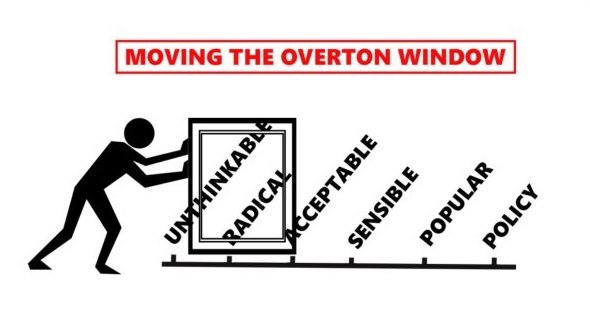
Hector Drummond wonders if the Overton Window has moved far enough that the BBC might lose its sacred status:

In a notorious talk given to Conservative Future in 2009, Sean Gabb made the following radical recommendation:

    On the first day of your government, you should close down the BBC. You should take it off air. You should disclaim its copyrights. You should throw all its staff into the street … You must shut it down – and shut it down at once.

I have for many years been torn between thinking this a good idea, and thinking that it would result in such uproar that the government would immediately fall, and be replaced by a new government who would restore the BBC. But the question was purely abstract anyway, because no Conservative government would even contemplate doing such a thing. No Conservative government was even going to contemplate taking away the licence fee.

But finally, after three years of disgraceful conduct — well, extra disgraceful conduct — the future of the BBC is finally an issue that that can be broached. It’s finally an issue that can be talked about without people throwing up their hands in horror and demanding you be thrown out of wherever you are. People will listen sympathetically if you suggest that the BBC can’t go on like it has been. People will join in enthusiastically if you say that Channel 4 is a disgrace that should no longer be state-funded. Well, not if you’re in the common room. But in the ordinary pubs around the country they will. They will at the dinner parties that are being held outside the M25. And even some inside it.

So what should be done? The conventional conservative/libertarian idea is that the BBC should be moved to a subscription model. The more radical Gabb idea is not one that has ever been talked about much. In fact, it’s an idea that until recently would have shocked most people, even most conservatives. (If you read to the end of the Gabb article, you’ll see that the young conservatives were themselves outraged by Gabb’s idea). But actually it’s a very good idea. Because here’s the thing. If you privatise the BBC, it may do very well for itself, and then it would be free to spin the news far more outrageously than it currently does.

More recently than Dr. Gabb, Richard Delingpole made a suggestion that I stole for my headline:

So the idea is no longer so alien. Particularly amongst younger people, who just don’t watch the BBC any more. They generally don’t watch much TV at all, they prefer YouTube and TikTok (which are filled with rubbish, it has to be said, but that’s another story), but they especially don’t watch the BBC (or channel 4). So most young people won’t even notice if the BBC is closed down, although about thirty sociology undergraduates will eventually tweet about it once their lecturers tell them what’s happened, and then the Guardian will have a fit and try to make it a big story, but there’ll be no BBC to amplify that, so it won’t be that effective. And the other channels are unlikely to shed too many tears over the shutdown of a subsidised rival (although I expect that the news staff will as they’re all lefties now).

« Newer PostsOlder Posts »

Powered by WordPress