Quotulatiousness

December 3, 2019

Canada and China

Filed under: Cancon, China, Economics, Politics — Tags: , , , , — Nicholas @ 05:00

Ted Campbell discusses Canadian foreign policies — or perhaps more accurately Canada’s lack of policies — on China:

“The Chinese People’s Liberation Army is the great school of Mao Zedong Thought”, 1969.
A poster from the Cultural Revolution, featuring an image of Chairman Mao, published by the government of the People’s Republic of China.
Image via Wikimedia Commons.

There were many things that history might find regrettable about the Mulroney years but I doubt that it will fault him for having a principled and coherent foreign policy.

That all changed with Jean Chrétien, who was almost a neo-mercantilist, and for whom principle could never stand in the way of profit.

In the modern (Chrétien-Martin-Harper-Trudeau) era, Conservatives have been, broadly, anti-China, sometimes for reasons that are less than coherent or principled, and Liberals have been too prepared to “go along to get along” with China. This is because both parties reflect the incoherent views of the whole country. But political leaders shouldn’t (mustn’t) just reflect the views of their voters ~ that sort of populism is nonsensical ~ they must, as Edmund Burke said, bring his or her “unbiased opinion … mature judgment … [and] … enlightened conscience” to bear on each issue. But I’m afraid that too many (most?) modern Canadian political tacticians hold all those things in scant regard.

In the 2020s Canadians must listen to a few clear voices who will tell them that China is a competitor in many “markets” including in the marketplace of ideas, ideals, institutions and values. The current Chinese leadership is overtly hostile to Weterm liberal-democratic values and is not unwilling to punish any country with which it disagrees. It is protectionist, relatively rich and growing in military, political and economic power, but, still, somewhat cautious, and Xi Jinping’s China seems to be able to separate its own short-term political interests from its firm, long term, strategic goals. China, as Kevin Rudd reminded us just a few days agois contemptuous of weakness and prevarication,” which explains why it is so obviously contemptuous of Justin Trudeau’s Canadian government.

It is a fact that the Sino-Canadian relationship is “unbalanced:” China is a great power, Canada is not; China is an autocracy, Canada is a democracy; and so on but, as Kevin Rudd said (link just above) “China too has net strengths and weaknesses of which … [our] … strategists should be aware in framing our own strategy … [and we] … should be equally aware of our own strengths, weaknesses and vulnerabilities.” Canadian strategists need to educate Canadians about China so that a solid, informed majority will want a coherent and principled policy ~ one that puts our national vital interests first […]

Our policy towards China needs to be just one part of a coherent, principled foreign policy which Canadians understand and, broadly, support, and that, in turn, needs to be part of a Canadian grand strategy that aims to secure a place, as Paul Martin suggested, “of pride and influence in the world” ~ that, of course, was a place we enjoyed under St Laurent, Diefenbaker and Pearson, all of whom were acutely aware of the many and varied (and very divergent) views about Canada in the world that existed then and persist today in Canada’s many and varied communities.

“Useful idiots” during the Cold War

Robert Reilly reviews Judgement in Moscow: Soviet Crimes and Western Complicity by Vladimir Bukovsky, which has recently been republished in English:

Krushchev, Brezhnev and other Soviet leaders review the Revolution parade in Red Square, 1962.
LIFE magazine photo by Stan Wayman.

Judgment In Moscow contains autobiographical elements but is principally concerned with providing and analyzing documentary evidence for what should have been the USSR equivalent of what the Nuremberg Trials had been for Nazi Germany. In 1991, Bukovsky returned to the Soviet Union to take part in the “trial of the communist party” that was held in 1992. In an audacious move the Communist Party had sued then-President Boris Yeltsin to get its property back. To prepare a defense, Yeltsin ordered that the secret Central Committee archives be opened to Bukovsky. The order was obeyed, but only partially and for a short time. The trial fizzled, but Bukovsky, with the aid of a hand-held scanner, was able to gather many thousands of pages of top-secret Central Committee and Politburo documents and get them out of Russia. Some of these key documents are what we have in this priceless book. They are eye-opening.

During the Cold War, we had to speculate as to why, for instance, the Soviet Union invaded Afghanistan and how the decision was made. Now we know for certain. Bukovsky provides the minutes of the Politburo meetings in which the invasion was decided. The Reagan administration was highly skeptical of détente and was therefore criticized for war-mongering. The skepticism was well-placed because, as the documents reveal, détente was simply a façade for advancing Soviet power and manipulating Western publics and governments against the Reagan plan to place Pershing IIs and cruise missiles in Europe to defend it against burgeoning Soviet power, including the SS-20s.

The revelations of the extent to which the Soviet Union manipulated the “peace” movement in the West should be an embarrassment to its participants, who may have been too naïve at the time to know how they were being used. Others, of course, acceded to being used, or even cravenly sought to be used. The names of some of these useful idiots are in the documents.

Another thing these documents disclose, much to the embarrassment of many American Sovietologists, is that there were no “hawks” and “doves” in the Kremlin — a premise on which they had banked their academic careers. The unanimity of the Politburo decisions reveals that the senior Soviet leaders were all of one stripe. It was to their advantage to create the impression that there were hawks and doves so that they could game the policies of Western governments and the opinions of its publics. For instance, providing Western credits to the USSR — it was thought by many so-called Russian experts in the West — would strengthen the doves in the Kremlin, whereas denying credits would empower the hawks. By buying this line of thought, the West was induced to keep the Soviet Union on life-support for more than a decade past what would have been its earlier collapse, according to Bukovsky.

No one was a greater master of this deception than Mikael Gorbachev. The minutes from many Politburo meetings chaired by Gorbachev show that glasnost and perestroika were façades constructed to ensure the continued existence of the Soviet Union through even more Western subsidies. And it worked to the extent that credits and subsidies ballooned under the Western illusion that Gorbachev had to be supported to ensure his success — ignorant of the fact that Gorbachev conceived of success in ways inimical to Western freedom.

H/T to Blazing Cat Fur for the link.

December 2, 2019

Andrew Scheer’s Daisy connection

Filed under: Cancon, Politics — Tags: , , , — Nicholas @ 05:00

Jay Currie on the lingering stench of the spoiled Milk Dud’s campaign:

Andrew Scheer, paid tool of Big Dairy, chugs some milk during a Press Gallery speech in 2017. I’ve called him the “Milk Dud” ever since.
Screencapture from a CTV video uploaded to YouTube.

The sheer lack of ethics and paranoia hiring the Jackal demonstrates pretty much proves that Scheer is not fit to lead the CPC or to be Prime Minister. A fact which is dawning on the CPC itself as it struggles to figure out what to do with their present leader. Before Kinsellagate it was possible to say that Scheer was a decent, if uninspiring, leader. Now? It is indecent to hire a political mobster to beat up your opponents. Which leaves Scheer as merely uninspiring. I would be astonished if he survives a leadership review.

The revelation of Kinsella’s filth may sink Scheer but it burnishes Bernier’s reputation. Virtually all the accusations of “racism” levelled against the PPC and Max personally either were manufactured by Kinsella or occurred in a climate of hate created by the Jackal. I have never seen a credible accusation and now we have a pretty good idea why.

The PPC, even with Kinsella’s disinformation campaign, secured over 300,000 votes from a standing start a year before the election. If the CPC tears itself apart with a red/blue fight, a lot of thoughtful, conservative, people will give the PPC a second look. Conservative MPs looking for an alternative to the nastiness and vindictiveness of the Scheer people might well be tempted to join the PPC. Max had a lot of caucus support for his CPC leadership run. He was careful not to unfairly attack conservative positions, rather, during the campaign, he attacked CPC positions which were, in fact, Liberal-lite positions.

Political pundits, as they do after every election in which the Conservatives fail to win government, solemnly inform us that it was because the Conservatives failed to move towards the middle. The fact that only 30-35% of Canadians are even a bit right-leaning is trotted out to show how impossible it is for the Conservatives to win government unless they move left. I think this analysis is entirely incorrect. A solid, right of center party which had libertarian social views would hold that 30-35%. From there it is simply a matter of finding 3-5% in carefully targetted ridings. To do that a party would have to come up with policies which, while conservative, do not alienate middle-class voters, immigrant communities and women.

I don’t think there is a chance the CPC will manage that simply because they are too tied to establishment politics in Canada. Yeah multi-culti, boo climate change only echos the Liberal Party’s bland formula for success.

December 1, 2019

Tulsi Gabbard versus the Democratic establishment

At Spiked, Tim Black calls the establishment’s anger and rage at the Democratic presidential candidate “Gabbard Derangement Syndrome”:

Tulsi Gabbard speaks at the “People’s Rally” in Washington DC on 17 November, 2016.
Photo by Lorie Shaull via Wikimedia Commons.

… the Democratic establishment and its media cheerleaders seem to have become fixated on her. She annoys them. She riles them. And it’s not just because of her ambivalence towards identity politics and the other aspects of her Sanders-style progressivism – indeed, she endorsed Sanders in 2016, much to the chagrin of the Democratic establishment at the time. No, it’s also because of her uncompromising opposition to the “counterproductive regime-change wars” pursued with such ignorant zeal by the likes of Democratic grandee Hillary Clinton. It’s because of her willingness to question the narratives that have justified Western intervention in Syria, including a secret fact-finding mission to Damascus, and a meeting with Bashar al-Assad in 2017. And it’s because she does all this not as a woolly pacifist, but as a war vet.

So where her small but growing band of supporters see a principled 38-year-old, armed with a progressive policy platform, and, above all, a strong commitment to anti-interventionism, her powerful opponents are determined to present her as something altogether more sinister. They talk of her being a poster girl for white supremacists and the alt-right, of her being a Republican stooge in Democratic clothing, and of her being some sort of Russian asset.

It’s genuinely crazy stuff. Last week, the New York Times even laid into her for wearing a white pantsuit for a TV debate, claiming it was somehow cult-like. But that is as nothing compared to the constant innuendo and sometimes outright claims that Gabbard is being backed by Russia and Putin, the seeming power behind all world disorder.

Gabbard’s chances of winning the Democratic nomination are slim, but her recent online spat with Hillary Clinton probably won her a lot of fans outside the establishment:

Then, of course, there’s Hillary Clinton herself, a woman who, since losing to Donald Trump in the 2016 presidential election, is no longer able to go near a bed without spotting reds under it. Gabbard, unsurprisingly, does not escape Clinton’s conspiracist gaze. “I’m not making any predictions but I think [the Russians have] got their eye on somebody who’s currently in the Democratic primary, and they’re grooming her to be the third-party candidate. She’s the favorite of the Russians”, Clinton continued. “They have a bunch of sites and bots and other ways of supporting her so far.”

That’s right. Clinton thinks Gabbard is a Russian plant. She thinks Gabbard is “being groomed” by the Kremlin. She thinks she is being manoeuvred, by Putin and Co, out of the Democratic Party and into a third-party position, so as to split the Democratic vote in 2020. And she thinks that will hand victory once again to Russia’s Manchurian Candidate, Donald Trump, just as she thinks that Jill Stein, the Green Party’s 2016 presidential nominee, was also a Russian asset, used to split the vote three years ago and deprive Hillary of the election victory she still believes should be hers. The entitlement underwriting her deranged conspiracy theory is breathtaking.

November 30, 2019

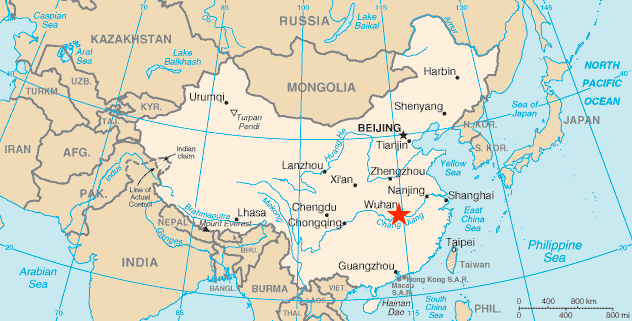
Hong Kong and China

Filed under: China, Liberty, Politics — Tags: , , , — Nicholas @ 05:00

At Samizdata, Brian Micklethwait considers the state of play in Hong Kong’s defiance of the Chinese Communist Party:

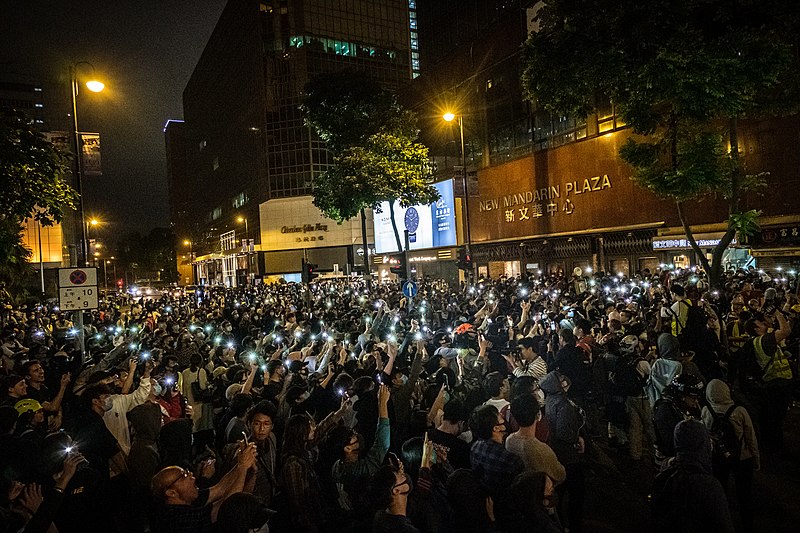
Protests continue in Hong Kong, 25 November 2019.
Photo by Studio Incendo via Wikimedia Commons

How can the HongKongers defeat the Chinese Communists (hereinafter termed ChiComs), and preserve their HongKonger way of life approximately as it now is? In the short run, they probably can’t. During the next few months, the ChiCom repression in Hong Kong will surely get ever nastier, and the bigger plan, to just gobble it up and digest it into ChiCom China will surely bash onwards.

But then again, I thought that these Hong kong demonstrations would all be snuffed out months ago. So what the hell do I know? I thought they’d just send in the tanks, and to hell with “world opinion”. But the ChiComs, it turned out, didn’t want to just kill everyone who dared to disobey, plus anyone else who happened to be standing about nearby. That would not be a good look for them. What are they? Russians? Far too unsophisticated. Instead the plan has been to divide and conquer, and it presumably still is. By putting violent agent provovateurs in among the demonstrators, and by ramping up the violence simultaneously perpetrated by the police, the plan was, and is, to turn the peaceful and hugely well attended demonstrations into far smaller, far more violent street battles of the sort that would disgust regular people. Who would then turn around and support law and order, increased spending on public housing, blah blah. So far, this has not worked.

And for as long as any ChiCom plan for Hong Kong continues not to work, “world opinion” has that much more time to shake itself free from the sneer quotes and get itself organised, to try to help Hong Kong to stay semi-free.

Those district rat-catcher (or whatever) elections last Sunday came at just the wrong time for the ChiComs, because they gave peaceful HongKongers the chance to make their opinions known, about creatures of a far more significant sort than rats, and at just the time when the ChiCom plan should have started seriously shutting the HongKongers up. These elections were a landslide.

The ChiComs are very keen to exude indifference to world opinion, but they clearly do care about it, because if they truly didn’t care about it, those tanks would have gone in months ago, just as I had assumed they would. So, since world opinion clearly has some effect, the first thing the rest of us can do to help the HongKongers is to keep our eyeballs on Hong Kong.

As I say, I continue to be pessimistic about the medium-term future in Hong Kong. But in the longer run, if the HongKongers can’t have a local victory, they can set about getting their revenge. And all of the rest of us who care can join in and help them.

Toynbee’s warning

Filed under: History, Liberty, Politics — Tags: , , , , , — Nicholas @ 03:00

In the National Post, Barbara Kay wonders if conservative democracy can shore up the civilizational boundaries that liberal democracy has abandoned:

The Course of Empire – Destruction by Thomas Cole, 1836.
From the New York Historical Society collection via Wikimedia Commons.

The historian Arnold Toynbee warned that “civilizations die from suicide, not by murder.” He said they begin to disintegrate when they abandon moral law and yield to their impulses, which in turn brings about a state of passivity, a sense that there is no point in resisting incoming waves of foreigners driven by confidence and purpose.

Since Toynbee, other writers, notably James Burnham in his influential 1964 essay, “Suicide of the West: An essay on the Meaning and Destiny of Liberalism”, have picked up on the theme. In every case in which the word “suicide” features, the root cause comes down to the effects of a universalist liberal democracy over time. These observers are not trading in fear-mongering for its own sake. We must pay respectful attention to their warnings.

Liberal democracy is, broadly speaking, a political doctrine consecrated to the belief that reason, universally accessible and everywhere the same, can by itself create the conditions for enlightened progress in human affairs.

With social justice as the end and social transformation as the means, liberals are not perturbed by the erosion of Christianity, the traditional family and the cultural particularism such transformation requires. The instinct to jettison cultural babies in order to refresh our cultural bathwater is a feature, not a bug, of liberal democracy.

Conservatives, even those who don’t embrace social conservatism, view the crumbling of these building blocks of civilization with anxiety and fear. Their view is that reason alone, without spiritual ballast and deference to the traditions that created our civilization, can produce social instability and even violence. Nobody considered himself more reasonable than Vladimir Lenin. Nobody considers herself more reasonable than a minister of sport who conflates subjective gender identification with biological sex.

Conservatives’ fears are driving the nationalist/nativist counter-movement liberals view with disgust and anger. Conservatives find it difficult to get an unbiased hearing in the prevailing progressive zeitgeist. Liberals have been successful in linking nationalism with history’s most odious incarnations of racism and imperialism in the popular imagination, while ignoring the equally tragic history of internationalist movements, because Marxist utopianism casts a spell they find irresistible.

So in the matter of immigration, for example, liberals are not concerned by mass immigration from countries with different religious and cultural traditions, because they rely on the universal appeal of liberal principles to even out the initial wrinkles. Conservatives regard these different traditions as deeply entrenched and likely to be negatively transformative to our own culture. They are inclined to impose strictures that encourage integration into, along with recognition of, our own culture’s dominant status. Far from being racist, conservatives view this precaution as a hedge against the kind of inter-cultural tensions spilling over into expressed hatreds that are presently roiling Europe. But as we saw in the last election, even the mildest criticism of mass immigration is the kiss of death to a politician.

Recently, I posted a Quote of the Day from Sarah Hoyt that emphasized the persistence of culture, which is a warning to those who think unlimited immigration from other cultures won’t have negative impacts on the receiving culture:

Societies don’t work that way. Culture doesn’t work that way. In fact culture is so persistent, so stubborn, it leads people to think it’s genetic. (It’s not. A baby taken at birth to another culture will not behave as his culture of origin.) It changes, sure, through invasions and take overs, but so slowly that bits of older cultures and ideas stay embedded in the new culture. It has been noted that the communist rulers of Russia partook a good bit of the Tsarist regime, because the culture of the people was the same and that came through. (They just dialed up the atrocities and lowered the functionality because their ideology was dysfunctional. They blame their failure on Russia itself, but considering how communism does around the world, I’ll say to the extent countries survive it’s because of the underlying culture.)

November 29, 2019

Revolts, civil wars, and revolutions

Filed under: Britain, Government, History, Politics — Tags: , , , , , — Nicholas @ 03:00

Severian offers his taxonomy of protest with examples from English history:

King Charles I and Prince Rupert before the Battle of Naseby 14th June 1645 during the English Civil War.
19th century artist unknown, from Wikimedia Commons.

  • A revolt is a large-scale, semi-organized riot. It aims, at best (e.g. Wat Tyler’s Rebellion), at the redress of specific grievances. At worst, it’s violent nihilism (e.g. the Jacquerie).
  • A civil war aims to replace one leader with another, leaving the underlying civil structure intact — e.g. any of the Roman civil wars post-Augustus.
  • A revolution‘s goal is total social transformation. We’re stipulating that it’s violent, because while stuff like the Industrial Revolution is fascinating, we’re not looking at peaceful change here in the Current Year. Revolutions are necessarily, fundamentally ideological.

I realize this can cause some confusion, as events I’d classify as “revolutions” are called civil wars in the history books, and vice versa. But the difference is important, because it sheds light on the development, course, and outcome of events.

The paradigm case is the English Civil War, 1642-51. This was clearly a revolution, as it aimed at — and achieved — the near-total overthrow of existing society. When Charles I took the throne in 1625, his kingdom was very much closer to a Continental-style divine-right monarchy than most Britons would like to admit. While the English had succeeded in clawing some of their liberties back from the crown after Henry VIII’s death, the fact remains that the Stuart state, like the Tudor state, was despotic. But by 1625, the despot was completely out of step with his people, and his times.

By 1642, the first revolutionary prerequisite was in place: No clear alternative. There were lots of revolts against Henry VIII, and one of them, the Pilgrimage of Grace, had the potential to turn into a civil war, or even a revolution. The revolts against Elizabeth I didn’t quite rise to that level, but the Northern Rebellion, and Essex’s Rebellion certainly imperiled her government. See also Wyatt’s Rebellion against Queen Mary, the Prayer Book Rebellion and Kett’s Rebellion against Edward VI, etc. In all of these, the alternative was clear — return to Rome, replacement of one court faction with another, or return to the old ways.

QotD: The progressive belief in the mind-controlling power of the press (and Facebook)

Filed under: Britain, Media, Politics, Quotations — Tags: , , , , — Nicholas @ 01:00

There’s a piece of graffiti that sums up the woke left’s view of ordinary people. It says: “When the British working class stop reading right-wing news, we will see progressive change.” There it is. In black and white. Scrawled on a wall somewhere but frequently shared on social media by supposed progressives. One sentence that captures why so many modern left-wingers, and in particular the Corbynistas, are so obsessed with the press – because they think it has hypnotised the fickle masses and polluted the plebs’ brains with horrible right-wing ideas. Make no mistake: when the left rages against the media, it is really raging against the masses.

Media-bashing has resurfaced with a vengeance over the past couple of weeks. It isn’t hard to see why. The polls don’t look good for Labour. Some are predicting a wipeout, especially in Labour’s traditional working-class strongholds. And as has been the case for a good 30 years now, when political events don’t go the left’s way – or rather, when the dim public lets the left down – the knives come out for the media.

Corbynista commentators are railing against the “billionaire media”. “Billionaires control the media, and it’s undermining democracy”, say the middle-class left-wingers of Novara Media. How? Because these billionaires are “tell[ing] you what to think”. You, the gullible, ill-educated throng, that is; not us, the well-educated, PhD-owning media leftists at Novara who can see through the lies peddled by evil billionaires.

Brendan O’Neill, “The woke elitism behind the left’s media-bashing”, Spiked, 2019-11-25.

November 28, 2019

“The chickens are coming home to roost … but they are, actually, Pierre Trudeau’s chickens”

Filed under: Cancon, Government, Military, Politics, USA — Tags: , , , , — Nicholas @ 03:00

Ted Campbell looks at Justin Trudeau’s plight — needing to focus on policies that will increase his party’s chances of winning more seats in Quebec — with increasing demands from south of the border to get the Canadian commitment to higher military spending moved from “aspirational goal” to actual policy:

Justin Trudeau meets with President Donald Trump at the White House, 13 February, 2017.
Photo from the Office of the President of the United States via Wikimedia Commons.

Many in the media are saying, and I agree, that Justin Trudeau’s agenda for the next couple of years is about 99.9% domestic and focused, mainly, gaining seats in on Québec and holding on, at least, in Atlantic Canada and in urban and suburban Ontario and British Columbia. The overarching aim ~ the ONLY aim ~ of this government is to be re-elected with a majority.

As I mentioned a week or so ago, Donald J Trump is about to rain all over Justin Trudeau’s parade.

As Murray Brewster reports, for CBC News,

    The Liberal government is facing renewed political pressure from the administration of U.S. President Donald Trump to increase defence spending to meet the benchmark established by NATO [… and …] Robert O’Brien, the new U.S. national security adviser, said it is an “urgent priority” to get allies across the board to set aside military budgets that are equal to two per cent of the individual country’s gross domestic product [… while …] Speaking with journalists at the Halifax International Security Forum on Saturday, O’Brien rattled off a list of the world’s flashpoints, including Iran and Venezuela, as well as traditional adversaries such as Russia and China [… saying …] “There are very serious threats to our freedom and our security [… and adding that …] Canada made a pledge at [the 2014 NATO Summit in] Wales to spend two per cent. We expect our friends and our colleagues to live up to their commitments, and Canada is an honourable country; it’s a great country.”

Note the choice of words by Mr O’Brien, who is “a lawyer and former U.S. State Department hostage negotiator.” He doesn’t say that President Trump and the USA “asks” Canada to keep its word (although the Harper government said that spending 2% of GDP on defence was an “aspirational goal,” rather than a firm commitment) nor did he say something like “the US hopes Canada will change its ways and spend more on defence.” He said that Donald Trump’s America “expects” Canada to live up to its “pledge.” As I mentioned before, when President Trump negotiates with friends and allies he usually has both fists in the air and his knuckles are often reinforced with unfair trade tariffs and the like. Right now he is, for example, asking Japan and South Korea to pay much, much more to support American forces in their countries because, in his mind, he (America) is providing a “service” which is all for the Asians and is not, in any way, in America’s self-interest and, therefore, he wants to be reimbursed. It’s a very Trumpian notion. I am sure he sees NATO and NORAD in very much the same light.

[…]

The issue that worries some analysts is that while Canada is, in the final analysis, protected by the US because it is in America’s best interests to protect us, NATO provides a useful counter-balance and, in effect, helps us to at least pretend to be a little less than just another American colony. And that, having the status of being little better than a US colony, is what Pierre Trudeau willed upon Canada in the late 1960s and early 1970s when he wanted to leave NATO, entirely and saddled Canada with his, juvenile, nonsensical, neo-isolationist “Foreign Policy For Canadians” white paper in 1970. Although Brian Mulroney wanted Canada to be independent – think standing up to President Reagan and Prime Minister Thatcher on South Africa – and Stephen Harper did, too, the cumulative impact of Trudeau-Chrétien-Trudeau for 30 of the last 50 years has been too much to change. When our political leaders don’t care about Canada being a leader amongst the nations and don’t, in fact, even care about Canada being a truly sovereign state then we will sink, inevitably, into the status of an American colony.

November 27, 2019

The “Gentrification” debate

Filed under: Economics, Politics, USA — Tags: , , , — Nicholas @ 05:00

In Quillette, Coleman Hughes explains the furor over gentrification in many big American cities:

The word “gentrification” was coined in 1964 to describe the influx of wealthy newcomers into low-income inner-city neighborhoods, resulting in rising property values, changes in neighborhood culture, and displacement of original residents. Though gentrification predates the modern era, it has only become the target of criticism in recent decades, as cities like Washington, D.C., Atlanta, and Boston have witnessed rapid transformations. Opponents of gentrification have ranged from residents directly affected by it to wealthy college students directly responsible for it, as well as prominent Democrats such as Bernie Sanders, Cory Booker, and Alexandria Ocasio-Cortez.

Critics of gentrification give two main reasons for their opposition: (1) wealthy newcomers drive up monthly rents, thereby displacing original residents; and (2) rapid change to neighborhood culture represents an injustice to original residents. Both critiques are magnified by the presumed skin color of the gentrifiers and the gentrified, who tend to be white and black or Hispanic, respectively.

Though such critiques may seem reasonable at first glance, neither of them survive scrutiny. Not only is gentrification harmless, it’s actually beneficial. Indeed, for reasons I will lay out, it’s exactly the kind of thing that progressives should support.

Let’s begin with the charge that gentrification displaces original residents. Two economists used data from the 2000 U.S. Census and the 2010-2014 American Community Survey to track individual outcomes for all residents of “gentrifiable” — or low-income inner-city — neighborhoods in America’s one hundred largest metropolitan areas. The largest study of its kind, it divided residents of gentrifiable neighborhoods into two categories based on educational attainment. Their findings refute the displacement narrative conclusively.

[…]

On the whole, progressives ought to love gentrification. It makes black inner-city homeowners wealthier. Among less-educated homeowners — who are majority non-white and comprise over a quarter of the total population in gentrifiable neighborhoods — those who remained in gentrified neighborhoods saw a $15,000 increase in the value of their homes due to gentrification. Among more-educated homeowners — who are also majority non-white — those who remained saw a $20,000 increase in property value.

What’s more, gentrification breaks up concentrated poverty and reduces residential segregation. Progressives have frequently observed that poor blacks are more likely to live in concentrated poverty than poor whites. As a result, they lose out on the advantages that come with living in a mixed-income neighborhood. Gentrification helps solve this problem. Moreover, progressives often observe that residential segregation remains pervasive half a century after the 1968 Fair Housing Act. Gentrification helps solve that problem too.

The Deep State versus the President

Filed under: Bureaucracy, Government, Politics, USA — Tags: , — Nicholas @ 03:00

David P. Goldman reviews a new book by Andrew McCarthy on the ongoing conflict between the elected President of the United States and the permanent bureaucracy:

Donald Trump addresses a rally in Nashville, TN in March 2017.
Photo released by the Office of the President of the United States via Wikimedia Commons.

America’s Central Intelligence Agency in concert with foreign intelligence services manufactured the myth of Donald Trump’s alleged collusion with Russia, argues Andrew McCarthy, a distinguished federal prosecutor turned public intellectual.

A contributor to Fox News and a prolific writer for The National Review and other conservative media, McCarthy well knows how to build a case and argue it before a jury. His latest book Ball of Collusion should be read carefully by everyone with an interest in American politics. It is exhaustively documented and brilliantly argued, and brings a wealth of evidence to bear on behalf of his thesis that an insular, self-perpetuating Establishment conspired to sandbag an outsider who threatened its perspectives and perquisites.

From my vantage point as an American, the constitutional issue is paramount: The American people elected Donald Trump, and it is horrifying to consider the possibility that a cabal of unelected civil servants supported by the mainstream media might nullify a presidential election. That is why I support the president unequivocally and without hesitation against his detractors.

But this sordid business has deep implications for America’s allies as well as her rivals. Trump is not a popular president overseas, except in Poland, Hungary, and Israel. In the eyes of polite opinion, McCarthy writes, “Donald Trump was anathema: a know-nothing narcissist – as uncouth as Queens – riding a populist-nationalist wave of fellow yahoos that threatened their tidy, multilateral post-World War II order.” China (and not only China) views Trump as a bully who presses American advantage at the risk of disruption to the global economy.

Donald Trump has one quality for which the rest of the world should be grateful: He really does not care how China, Russia, or any other country manages its affairs. By “America First,” he simply means that he cares about what happens in America, and is incurious about what happens outside America unless it affects his country directly. That stands in sharp contrast to view of all the wings of America’s political Establishment – progressive, “realist” and neoconservative – who believe that America should bring about the millenarian End of History by bringing democracy to Iraq and Afghanistan, by expanding NATO into a giant social-engineering project, by pressing China to transform itself into a Western-style democracy, and so forth.

McCarthy reports in persuasive detail how the spooks set up the president. There is more to be said, though, about why they did it. I will summarize McCarthy’s findings, and afterward discuss the motivation.

November 24, 2019

Next stage in religious observance for those participating in the “Great Environmental Awakening”

Filed under: Environment, Media, Politics, Religion — Tags: , , , — Nicholas @ 05:00

Mark Steyn discusses the obvious next step for those newly converted to the Environmentalist religion:

To quote a line from America Alone: “The future belongs to those who show up.” And, while eugenics is universally condemned as morally repugnant, self-eugenics is an idea we can all get behind. Step forward the “Indefinitely Wild” columnist of Outside magazine, Wes Siler:

    I Got a Vasectomy Because of Climate Change
    Getting one was, by far, the most powerful personal action I could take for our planet

Mr Siler claims to be 38 years old, notwithstanding the prose style of an overwrought pre-pubescent. And he cannot stand idly by procreating while the planet burns. Greater love hath no man than to lay down his sperm for the remnants of Malibu […]

In fact, “the absolute biggest difference” you could make would be to kill yourself right now — rather than merely tossing your unborn children into the infernos of California. Alas, the self-extinction movement has not yet reached that stage of despair, although we should certainly encourage them to follow the necessary logic of their epocalyptic torments. For the moment (and, again, as I wrote in America Alone) contemporary progressivism has “adopted a twenty-first-century variation on the strategy of the Shakers, who were forbidden from reproducing and thus could increase their numbers only by conversion”.

As you might have noticed, there aren’t a lot of Shakers around today. Will there be a lot of anguished environmentalists around once every Wes Siler reader has had his scrotum anesthetized?

No. But at least they’ll have saved the planet, right?

Doubtful. Mr Siler notes that every little baby Siler comes with a price tag of 58 tons of carbon emissions per year. But that’s because he’s American. Mr and Mrs Siler could move to Somalia and have thirty kids for the carbon footprint of one Yank moppet. So why are the same people who lecture us that we only have twelve years to save the planet in favor of every Somali moving to Maine or Minnesota and acquiring a western-sized carbon payload?

QotD: The persistence of culture

Filed under: Education, History, Politics, Quotations — Tags: , , , — Nicholas @ 01:00

The trick to this is not only to give [the people] a fake history. Every tinpot dictator does that. The trick is to give them a fake history starting in kindergarten, that is painted in primary hues and comic-book complexity. There are good guys (the oligarchs who would design society to be more fair) and bad guys (usually capitalists and greedy, they want to “exploit” everyone, which only works if you believe in fixed pie economics and that everyone gets a share at birth, an economic idea so stupid you have to be indoctrinated from birth to believe it.) And everything is explained by “laws” and top down action. Though this history talks about mass movements, and “the people” they don’t actually take THE PEOPLE into account, not with any depth and complexity. The people in this narrative, the entire culture, in fact, is moldable, like butter to the sculpting knife of the powerful.

Societies don’t work that way. Culture doesn’t work that way. In fact culture is so persistent, so stubborn, it leads people to think it’s genetic. (It’s not. A baby taken at birth to another culture will not behave as his culture of origin.) It changes, sure, through invasions and take overs, but so slowly that bits of older cultures and ideas stay embedded in the new culture. It has been noted that the communist rulers of Russia partook a good bit of the Tsarist regime, because the culture of the people was the same and that came through. (They just dialed up the atrocities and lowered the functionality because their ideology was dysfunctional. They blame their failure on Russia itself, but considering how communism does around the world, I’ll say to the extent countries survive it’s because of the underlying culture.)

Sarah Hoyt, “A Generation With No Past”, According to Hoyt, 2017-10-19.

November 23, 2019

QotD: Populism and democracy

Filed under: Asia, Politics, Quotations — Tags: , , , — Nicholas @ 01:00

As I have previously confessed, I became a Tory at the age of six. This was riding home from St Anthony’s, on the crossbar of our family servant’s bicycle, through an angry crowd in Lahore. He’d been sent to fetch me from danger. This beloved man, Bill, whose turban revealed him to be a Christian, chose a long route home, to skirt the crowd. But there was no avoiding them, and in the course of our wild ride, I distinctly remember blood and corpses. The crowd was demanding, as I recall, death for the hostages from a hijacked Indian aeroplane, but in the absence of its intended victims, began taking its violence out on itself. Yairs, a lurid spectacle.

I was not so precocious: it took me twenty more years to sort out what I might mean by the word “Tory.” But the view itself began in Hobbesian fear, that day, with my discovery that “the people” stink. They are mindless animals, and put some wrath in them, they will lose their bashfulness. And of course, not only in West Pakistan; for gradually one makes the further discovery that “the people are the people are the people” everywhere. They need to be tamed, cautioned, repressed, sometimes caged. My response to misty-eyed rhetoric for “democracy” is unfavourable. “Populism” is, in my sight, unambiguously evil — even when its cause be, for the moment, just. Given more time, and the inevitable failure to achieve immediate goals, the cause itself will turn rancid.

David Warren, “Crowds & powers”, Essays in Idleness, 2016-11-08.

November 22, 2019

To think we used to joke about environmentalism as a substitute religion…

Filed under: Environment, Politics, Religion, Science — Tags: , , , , — Nicholas @ 03:00

… it’s long since stopped being a joke and become all but the state religion, as Barbara Kay notes on the tenth anniversary of “climategate”:

Rayne pointed out that a cursory perusal of the Environment Canada Adjusted and Homogenized Canadian Climate Data database would illustrate that the daily summer maximum temperatures in Toronto showed no upward trend whatsoever. She further noted that a database for the WMO-certified Pearson Airport site demonstrated there was “absolutely no temporal correlation” for extreme July or August maximum temperatures between 1938 (when the database was initiated) and 2012.

In fact, there was no source in Canada then — and still isn’t — from which CAP could have plucked that ludicrous figure. University of Guelph economics professor Ross McKitrick had at that time just created his invaluable site, yourenvironment.ca, which sets out a complete temporal record of officially recorded air and pollution levels everywhere in Canada. The data for the site is culled from provincial environment and natural resources ministries, or from Environment Canada. Over many decades, no matter where you look in Canada, the graph trends remain resolutely horizontal with tiny upward and downward spikes indicating extreme weather blips.

Every layperson who identifies as an alarmism skeptic has his or her own pivotal moment, and that idiotic “news” story in the Globe was mine. When reporters and editors act like deer in the headlights in the reception and dissemination of demonstrably impossible “information,” it’s clear evidence that they have been gripped by a socially contagious virus. These are the people who in the 19th century would have believed tulip bulb prices were never going to peak, even if every single family on the planet had enough tulip bulbs to fill a half-acre garden.

The late writer Michael Crichton, author of the best-selling 2004 techno-thriller, State of Alarm, was one of the first independent students of environmentalism to define environmentalism as a “religion,” and to observe that its principal characteristic was to cater to the state of alarm he believed is an inherent human need. Its dogmatists act as though they have been appointed Morals Police. And they do not take kindly to dissent.

Al Gore, whose 2006 documentary film An Inconvenient Truth was received with uncritical awe, (one of my friends, normally very brainy, described it as a “religious experience”) was later found by a UK court to contain “nine key scientific errors.” It was deemed rife with “serious scientific inaccuracies, political propaganda and sentimental mush” and the judge ruled that the “apocalyptic vision” presented made it not an impartial scientific analysis, but a “political film.” He continues to hector the world as though that never happened from the depths of a home whose electricity kilowatt hours exceed twenty times the national average.

In 2007, environmental guru David Suzuki stormed out of a Toronto radio station interview when the host suggested global warming was not yet a “totally settled issue.” The incident revealed the mindset of the enviro-ayatollahs. (We see its 16-year-old version in little Pied Piper leader of the Children’s Crusade Greta “how-dare-you” Thunberg.) Suzuki perceived the radio host as a blasphemer, unworthy of his rational rebuttal. Suzuki actually felt enviro-infidels should be literally suppressed, and even opined that politicians who aren’t on board with his views should go to prison. You’d think a guy that far down the rabbit hole would be minding his own enviro P’s and Q’s, but like Al Gore, his real estate portfolio is humongous and his carbon footprint immense.

« Newer PostsOlder Posts »

Powered by WordPress