Quotulatiousness

August 19, 2019

QotD: Hitler’s “wonder weapons”

Filed under: Germany, History, Military, Quotations, Technology, WW2 — Tags: , , , , , , — Nicholas @ 01:00

Historians have generally thought of the Type XXI [submarine] — along with other systems like the Me 262, V-1 and V-2 rockets, and the Tiger tank — as an example of Wunderwaffen, wonder weapons. Since 1945 many have fixated on the revolutionary military technologies that the Third Reich developed in the last two years of the war. The cultural impetus behind the concept, as implicitly or explicitly acknowledged by historians in the uneven and largely enthusiastic literature on the subject, was an irrational faith in technology to prevail in operationally or strategically complex and desperate situations — a conviction amounting to a disease, to which many in the Third Reich were prone in the latter years of the Second World War. To the extent that it shaped decision making, faith in the Wunderwaffen was a special, superficial kind of technological determinism, a confidence in the power of technology to prevail over the country’s strategic, operational, and doctrinal shortcomings. To the extent that leaders, officers, engineers, and scientists after 1943 believed innovation to be the answer to Germany’s strategic dilemmas, they displayed a naive ignorance of how technology interacts with cultural and other factors to influence the course of events. In particular, they reflected a willful ignorance of the extent to which even substantial technological superiority has proved indecisive in human conflict throughout history.

Marcus Jones, “Innovation For Its Own Sake: The Type XXI U-boat”, Naval War College Review, 2014-04.

August 18, 2019

Il Duce Kicks Churchill Where it Hurts – WW2 – 051 – August 17 1940

Filed under: Africa, Britain, Europe, History, Italy, Military, WW2 — Tags: , , , , — Nicholas @ 04:00

World War Two
Published on 17 Aug 2019

As the Battle of Britain reaches not seen before levels of intensity, one of the British colonies is lost to the Italians.

Join us on Patreon: https://www.patreon.com/TimeGhostHistory
Or join The TimeGhost Army directly at: https://timeghost.tv

Follow WW2 day by day on Instagram @World_war_two_realtime https://www.instagram.com/world_war_t…
Join our Discord Server: https://discord.gg/D6D2aYN.
Between 2 Wars: https://www.youtube.com/playlist?list…
Source list: http://bit.ly/WW2sources

Written and Hosted by: Indy Neidell
Produced and Directed by: Spartacus Olsson and Astrid Deinhard
Executive Producers: Bodo Rittenauer, Astrid Deinhard, Indy Neidell, Spartacus Olsson
Creative Producer: Joram Appel
Post-Production Director: Wieke Kapteijns
Research by: Indy Neidell
Edited by: Iryna Dulka
Map animations: Eastory

Colorisations by Norman Stewart and Julius Jääskeläinen https://www.facebook.com/JJcolorization/

Eastory’s channel: https://www.youtube.com/channel/UCEly…
Archive by Screenocean/Reuters https://www.screenocean.com.

Sources:
– Banda groups scan by Localcivis
– Freepngimg.com
– Original photograph of Simon Gauleiter by Mykemalone on Wikimedia Commons
– Membership card photo Photograph by Zinneke on Wikimedia Commons
– IWM: E 1168, E 4350, NA 1670

A TimeGhost chronological documentary produced by OnLion Entertainment GmbH.

AAI 2nd Gen SPIW Flechette Rifles

Filed under: History, Military, Technology, USA, Weapons — Tags: , , , , — Nicholas @ 02:00

Forgotten Weapons
Published on 24 Jun 2019

http://www.patreon.com/ForgottenWeapons

Cool Forgotten Weapons merch! http://shop.bbtv.com/collections/forg…

The SPIW program began in 1962 with entries from Colt, Springfield, AAI, and Winchester. The first set of trials were a complete failure, and both Colt and Winchester abandoned the project at that point. AAI pressed on, producing these second generation rifles – one for trials in 1966 and one after. Both are chambered for the XM-645 5.6x57mm single-flechette cartridge. Under testing, both showed multiple serious problems in reliability, noise, cook-offs, and accuracy. The company would struggle on for years continuing to develop the flechette rifle system, but would be ultimately unsuccessful.

Thanks to the Rock Island Arsenal Museum for allowing me access to film this very interesting rifle! If you are in the Quad Cities in Illinois or Iowa, the Museum is definitely worth a visit. They have a great number of small arms on display as well as an excellent history of the Rock Island Arsenal.

http://www.arsenalhistoricalsociety.o…

Contact:
Forgotten Weapons
PO Box 87647
Tucson, AZ 85754

August 17, 2019

The Drive On Moscow – Russian Civil War Summer 1919 I THE GREAT WAR 1919

Filed under: History, Military, Russia — Tags: , , , , , — Nicholas @ 06:00

The Great War
Published on 16 Aug 2019

Register for our free newsletter: https://realtimehistory.net/subscribe

The summer of 1919 was a pivotal moment in the Russian Civil War. Backed with Allied support the White movement went on the offensive in the East under Alexander Kolchak and in the South under Anton Denikin. However, the Bolsheviks were not wasting time either. They consolidated their power and got the Red Army into shape to crush the enemy once and for all.

» SUPPORT THE CHANNEL
Patreon: https://realtimehistory.net/patreon
Merchandise: https://realtimehistory.net/spreadshirt
Become a member: https://realtimehistory.net/join

» BUY OUR SOURCES IN OUR AMAZON STORES
https://realtimehistory.net/amazon

» SOURCES
Smele, Jonathan. The “Russian” Civil Wars 1916-1926 (London: Hurst, 2015).

Makhno, Nestor. The Struggle Against the State and Other Essays. AK Press: Edinburgh & San Francisco, 1996.

Mawdsley, Evan. The Russian Civil War (New York: Pegasus Books, 2005).

Robert Gerwarth, The Vanquished. Why the First World War Failed to End, 1917-1923 (Penguin, 2017)

Sumpf, Alexandre. “Russian Civil War”, in 1914-1918 online. International Encyclopedia of the First World War. https://encyclopedia.1914-1918-online.

Mawdsley, Evan. “International Responses to the Russian Civil War”, in 1914-1918 online. International Encyclopedia of the First World War. https://encyclopedia.1914-1918-online…

Leonhard, Jörn. Der überforderte Frieden. Versailles und die Welt 1918-1923 (CH Beck, 2018).

Figes, Orlando. A People’s Tragedy. The Russian Revolution (London: The Bodley Head, 2017 [1996]).

Gilley, Christopher: “Makhno, Nestor Ivanovich”, in: 1914-1918-online. International Encyclopedia of the First World War, ed. by Ute Daniel, Peter Gatrell, Oliver Janz, Heather Jones, Jennifer Keene, Alan Kramer, and Bill Nasson, issued by Freie Universität Berlin, Berlin 2014-10-08 https://encyclopedia.1914-1918-online…

»CREDITS
Presented by: Jesse Alexander
Written by: Jesse Alexander
Director: Toni Steller & Florian Wittig
Director of Photography: Toni Steller
Sound: Toni Steller
Editing: Toni Steller
Mixing, Mastering & Sound Design: http://above-zero.com
Maps: Daniel Kogosov (https://www.patreon.com/Zalezsky)
Research by: Jesse Alexander
Fact checking: Florian Wittig

Channel Design: Alexander Clark
Original Logo: David van Stephold

A Mediakraft Networks Original Channel

Contains licensed material by getty images
All rights reserved – Real Time History GmbH 2019

From the comments:

The Great War
7 hours ago
Register for our free newsletter and win $250 worth of our recommended history books: https://realtimehistory.net/win *

*Instead of paying Facebook, Twitter & Co. money for the possibility to reach you with our content, we’d rather get in touch with you directly and spend the money on history books and the production of the show.

The “remarkably worthless” Sea Sparrow missile launchers on RCN Iroquois-class destroyers

Filed under: Cancon, History, Military, Weapons — Tags: , , , — Nicholas @ 05:00

Earlier this week, Tyler Rogoway posted a fascinating article about one of the original weapon systems installed on Royal Canadian Navy Iroquois-class destroyers. It was developed specifically for this class, and was eventually replaced with modern Mark 41 Vertical Launch Systems during the ships’ mid-life modernization refits:

Image posted to the Reddit r/WarshipPorn subreddit by u/Admhawk.

From manually aimed box launchers, to automated ones like the Mk29 still in use today, to vertical launch variants, the Sea Sparrow was adapted for many different launching methods. Yet the strangest had to the one found on Canada’s Iroquois class. About seven years ago, someone who had worked with RIM-7s on U.S. Navy vessels told me about how nuts the Canadian launch system was that he had seen demonstrated in the late 1980s. In fact, he said it was so clumsy and slow reacting, that it largely defeated the main purpose of the missile system, at least in a multitude of circumstances. “Remarkably worthless” was the way he described it. I had long forgotten about this exchange until recently when pictures of this exact system popped up on the always lively Reddit page r/Warshipporn. At first, when I saw the images I was flabbergasted as to how weird the setup was, then the memory of the conversation hit me. This is what my contact was talking about!

Four Iroquois-class destroyers were commissioned between 1972 and 1973 and all served until 2005, with the last example being retired two years ago, in 2017. They featured the MKIII Sea Sparrow system fitted inside their forward deckhouse, with doors that opened up on each side and overhead swing-arm launchers carrying four missiles each (eight in total, four on each side) that extended out from their garage-like enclosure that hung out off the side of the ship strangely when at the ready. The whole arrangement looks like something far from conducive to high sea state, not to mention rocket blast from the missiles, or a combat environment, for that matter. 32 missiles were carried in all, with twelve at the ready on each side, but reloading the system as a whole was a slow process.

In addition, it’s said that the Hollandse Signaal Mk22 Weapon Control System wasn’t really up to the task and just deploying the missiles and warming up their guidance systems could take minutes or longer. All of this is far from ideal for what is supposed to have been a fast-reacting point defense system capable of quickly fending off sea-skimming anti-ship missiles that arrive with little warning from over the horizon.

HMCS Iroquois (DDG 280) at Port of Hamburg, near Övelgönne, after mid-life refit replaced the Sea Sparrow launchers (via Wikimedia Commons)

History Summarized: Malta

Overly Sarcastic Productions
Published on 16 Aug 2019

Go to https://NordVPN.com/overlysarcastic and and use code OVERLYSARCASTIC to get 75% off a 3 year plan and an extra month for free. Protect yourself online today!

Malta, the Island of A Dozen Empires, chilling in the middle of the Mediterranean Sea, is one of the most social butterflies in History. Having played host to or fought against every major power in the Mediterranean, this island bears a gorgeous architectural and linguistic record of its past, and is still a treasure to behold in the modern day. I’ve covered a lot of nations and empires in my time here, but between the rich cultural blends, the overflowing artistic treasures, and the Still-In-One-Piece-ness of it all, Malta may have one of the strongest claims to being the Winner of History in my book. What’s so special about Malta? Watch and find out!

NOTE on 7:00 – 7:08 — I’m cheating the time-scales a little here. This church, the Rotunda of Mosta, was actually built mid 1800s. Malta’s lavish church construction continued nearly unabated from C. 1565 to the modern day, so I use this example here — but St Paul’s Co-Cathedral in Valletta, shown from 6:27-6:33 is a better example of pure original Baroque construction. Honestly, all of the churches in Malta deserve a look if you’re curious.

PATREON: https://www.Patreon.com/OSP

DISCORD: https://discord.gg/sS5K4R3

August 16, 2019

“White Death” – Finnish Sniper Simo Häyhä – Sabaton History 028 [Official]

Filed under: Europe, History, Media, Military, Russia, WW2 — Tags: , , , , , — Nicholas @ 04:00

Sabaton History
Published on 15 Aug 2019

One of the deadliest snipers ever to roam the face of the earth was Simo Häyhä, who fought on the Finnish side during the Winter War in 1939 and 1940. He was also known as White Death, as he killed an estimated 500 Russians in the cold snowy winter.

Support Sabaton History on Patreon: https://www.patreon.com/sabatonhistory

Watch our episode on “Talvisota” here: https://youtu.be/6grVeu3EWis

Listen to Coat of Arms (where “White Death” is featured):

CD: http://bit.ly/CoatOfArmsStore
Spotify: http://bit.ly/CoatOfArmsSpotify
Apple Music: http://bit.ly/CoatOfArmsAppleMusic
iTunes: http://bit.ly/CoatOfArmsiTunes
Amazon: http://bit.ly/CoatOfArmsAmzn
Google Play: http://bit.ly/CoatOfArmsGooglePlay

Hosted by: Indy Neidell
Written by: Markus Linke and Indy Neidell
Directed by: Astrid Deinhard and Wieke Kapteijns
Produced by: Pär Sundström, Astrid Deinhard and Spartacus Olsson
Creative Producer: Joram Appel
Executive Producers: Pär Sundström, Joakim Broden, Tomas Sunmo, Indy Neidell, Astrid Deinhard, and Spartacus Olsson
Maps by: Eastory
Edited by: Iryna Dulka
Sound Editing by: Marek Kaminski

Eastory YouTube Channel: https://www.youtube.com/channel/UCEly…
Archive by: Reuters/Screenocean https://www.screenocean.com
Music by Sabaton.

Sources: SA-Kuva, Finish wartime archive.

An OnLion Entertainment GmbH and Raging Beaver Publishing AB co-Production.

© Raging Beaver Publishing AB, 2019 – all rights reserved.

From the comments:

Sabaton History
2 days ago (edited)
This episode is one of the most frequently requested songs for Sabaton History. And while the story of Simo Häyhä is a compelling story, the Winter War was about much more than the deadliest sniper of World War Two. We have made an earlier episode about the Winter War, based on the Sabaton Song “Talvisota”, which is Finnish for Winter War. You can watch that right here: https://youtu.be/6grVeu3EWis. If after that, you’re keen to dive even deeper into the history of the Winter War, I suggest you check out Indy’s World War Two channel, where he covered the Winter War (and everything before and after that) week by week. You can check that out right here: https://www.youtube.com/c/worldwartwo

QotD: It’s not really accurate to call the French “cheese-eating surrender monkeys”

Filed under: Europe, France, Germany, History, Military, Quotations, WW2 — Tags: , , — Nicholas @ 01:00

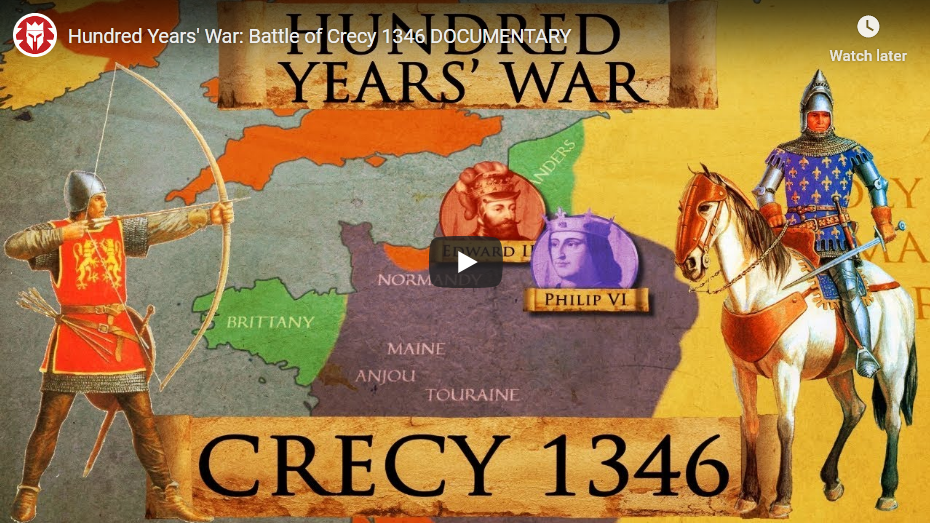
It is a truth universally acknowledged that, en masse if not individually, E2 has a slight nagging tendency towards anti-French sentiment. For the Brits it’s sort of traditional/historic, dating back to the Hundred Years War and all that (in which the English gloriously won, as they will be sure to note, at Crecy and Agincourt; strangely, at the end of it all, the French owned all of France, including the bits that the English had owned previously) and quite a lot of subsequent ones, mainly fought in Belgium, while for the Americans it seems to be something to do with the fact that they needed French help to run a revolution properly, along with the proximity of uppity Quebeckers and the fact that the French are marginally less prepared than the rest of the world to roll over and be McDisneyfied™; not being one I can’t say definitively. But I digress.

When it comes to military history, this particular bias mostly comes out in references to three weeks in May 1940, and specifically one piece of particularly crap judgement by General Gamelin and one bypassed fortress line. The fact that that the allied participants — France, Britain, the Netherlands and Belgium — have spent most of the time since blaming each other and trying to work out who sold out whom has been allowed to mask the fact that this particular campaign was successful beyond all reasonable expectations for the Germans, and that when the French actually had troops in the right places, they were perfectly capable of fighting the advancing Panzers to a standstill at a tactical or operational level. Visitors to Paris may wish to note that the big — rather bigger than you think until you actually see it in the flesh — structure at one end of the Champs Elysées is called the Arc de Triomphe, and not the Arc de Defaite; it bears an admittedly tedious and tasteless, but indubitably long, list of battles at which the French did rather well. The fact that your school history lessons may have taught you rather more about Paul Revere or Clive of India than about Charles Martel is not relevant in the greater scheme of things.

Albert Herring, “Why neither the French nor the Italians are the worst military nation”, Everything2, 2002-01-07.

August 12, 2019

The Battle For Hungary: October – December 1944

Filed under: Europe, Germany, History, Military, Russia, WW2 — Tags: , , — Nicholas @ 04:00

Historigraph
Published on 10 Aug 2019

Join me in War Thunder! Use my link for a FREE premium aircraft, tank or ship and a three day account boost as a BONUS: https://gjn.link/Historigraph/190810 Also available for free on PlayStation®4 and Xbox One.

If you enjoyed this video and want to see more made, consider supporting my efforts on Patreon: https://www.patreon.com/historigraph

To chat history, join my discord: https://discord.gg/vAFTK2D

I’m indebted to some viewers for helping me out with pronounciation of Hungarian words:

https://www.youtube.com/watch?v=FApWW…
https://www.youtube.com/watch?v=nCG_w…

If you are Hungarian, please be charitable as I will still not have the word sounds 100% correct, as I am not a native speaker. I’m not about to put on a bad hungarian accent!
#WarThunder #BattleForHungary #Historigraph

Sources:

The Siege of Budapest and the battles that led to it have had precious little written about them (in English!), so the bulk of this video (and the next) comes from one book:

Krisztián Ungváry, Battle for Budapest: 100 Days in World War 2

This is by far the most detailed account of the battle that I could find.

August 11, 2019

Hail Mussolini, Haile Selassie’s Usurper – WW2 – 050 – August 10 1940

Filed under: Africa, Britain, Europe, Germany, History, Italy, Military, Russia, WW2 — Tags: , , , , — Nicholas @ 06:00

World War Two
Published on 10 Aug 2019

This week, the war spreads to Africa, when the Italians invade the British Colony of British Somaliland. While this might seem trivial, it might have tremendous consequences on the remainder of the war.

Join us on Patreon: https://www.patreon.com/TimeGhostHistory
Or join The TimeGhost Army directly at: https://timeghost.tv

Follow WW2 day by day on Instagram @World_war_two_realtime https://www.instagram.com/world_war_t…
Join our Discord Server: https://discord.gg/D6D2aYN.
Between 2 Wars: https://www.youtube.com/playlist?list…
Source list: http://bit.ly/WW2sources

Written and Hosted by: Indy Neidell
Produced and Directed by: Spartacus Olsson and Astrid Deinhard
Executive Producers: Bodo Rittenauer, Astrid Deinhard, Indy Neidell, Spartacus Olsson
Creative Producer: Joram Appel
Post-Production Director: Wieke Kapteijns
Research by: Indy Neidell
Edited by: Iryna Dulka
Map animations: Eastory

Colorisations by Norman Stewart and Julius Jääskeläinen https://www.facebook.com/JJcolorization/

Eastory’s channel: https://www.youtube.com/channel/UCEly…
Archive by Screenocean/Reuters https://www.screenocean.com.

Sources:
Freepngimg.com
IWM: CH 3484
Sound effect: littlerobotsoundfactory

A TimeGhost chronological documentary produced by OnLion Entertainment GmbH.

From the comments:

World War Two
2 days ago
Last week, we saw how one of our flagship episodes was taken down by YouTube. It turned out that this was a mistake by a YouTube worker who erroneously identified our content as hate speech. While we contacted YouTube immediately to protest, they themselves noticed the mistake before we reached the right people. They have since apologized to us and reinstated the episode. You can watch it here: https://youtu.be/DLN8NHXiMy0. We welcome YouTube’s diligence in fighting against extremist hateful content, especially in light of the current tragic events in the US, and we have accepted their apology. However, this does not change the fact that we still face demonetization of many of our videos, connected to lower recommendation of these videos. This is a problematic situation that we deplore – we continue to believe that the best way to fight ignorance and hatred is by education and that is at the heart of what we do here, unfortunately YouTube’s monetization policies continue to stand in the way of that mission.

When the episode went down we saw a surge of support from many of you and we are humbly grateful for our dedicated community. The effort you all have made to share our content and support us on Patreon and timeghost.tv is what makes this show possible, and it’s an honor to have you all here. It is your support, both financially and in spirit that keeps us getting up in the morning to face yet another day of the war. Thank You!

Cheers,
The TimeGhost team

August 9, 2019

“Purple Heart” – US Military Decoration – Sabaton History 027 [Official]

Filed under: History, Media, Military, USA — Tags: , — Nicholas @ 06:00

Sabaton History
Published on 8 Aug 2019

The Purple Heart is arguably one of the most iconic military decorations in the American military. The Sabaton Song “Purple Heart” is about the origins and story behind the famous medal.

Support Sabaton History on Patreon: https://www.patreon.com/sabatonhistory

Listen to Primo Victoria (where Purple Heart is featured):

CD: http://bit.ly/PrimoVictoriaStore
Spotify: http://bit.ly/PrimoVictoriaSpotify
Apple Music: http://bit.ly/PrimoVictoriaAppleMusic
iTunes: http://bit.ly/PrimoVictoriaiTunes
Amazon: http://bit.ly/PrimoVictoriaAmzn
Google Play: http://bit.ly/PrimoVictoriaGooglePlay

Check out the trailer for Sabaton’s new album The Great War right here: https://www.youtube.com/watch?v=HCZP1…

Hosted by: Indy Neidell
Written by: Markus Linke and Indy Neidell
Directed by: Astrid Deinhard and Wieke Kapteijns
Produced by: Pär Sundström, Astrid Deinhard and Spartacus Olsson
Creative Producer: Joram Appel
Executive Producers: Pär Sundström, Joakim Broden, Tomas Sunmo, Indy Neidell, Astrid Deinhard, and Spartacus Olsson
Maps by: Eastory
Edited by: Iryna Dulka
Sound Editing by: Marek Kaminski

Eastory YouTube Channel: https://www.youtube.com/channel/UCEly…
Archive by: Reuters/Screenocean https://www.screenocean.com
Music by Sabaton.

Sources:
– Parks, Recreation and Historic Preservation
– U.S. Army Center of Military History
– identifymedals.com
– Medal of Honor, NHHC 1957-2-F, Naval History and Heritage Command, Washington, DC
– Civil War Campaign Medal – Naval History and Heritage Command, Washington, DC
– Photo of Elizabeth Will Courtesy of The Institute of Heraldry
– Reagan Library, National Archives Identifier: 5730544

An OnLion Entertainment GmbH and Raging Beaver Publishing AB co-Production.

© Raging Beaver Publishing AB, 2019 – all rights reserved.

Lightweight Experimental Lanchester SMGs

Filed under: Britain, History, Military, Weapons, WW2 — Tags: , , — Nicholas @ 02:00

Forgotten Weapons
Published on 14 Jun 2019

http://www.patreon.com/ForgottenWeapons

Cool Forgotten Weapons merch! http://shop.bbtv.com/collections/forg…

George Lanchester was the engineer responsible for originally reverse engineering the German MP28 submachine gun for production by the British, under the designation Lanchester. Once he finished that design work, the gun was put into production by the Sterling Engineering Company, and Lanchester went to work for them as part of the manufacturing process. Once there, he began tinkering with improved designs to reduce the weight of the gun – one of its main drawbacks. He created these three prototypes, but went no further, as government officials ordered him to stop when they discovered this work in 1942. By that time the Sten was in production, and continued development of the Lanchester was seen as a waste of time and resources.

The guns remained in the Sterling company’s reference collection, and elements of the final stock design would resurface in a later prototype design in the 60s. Beyond that, these guns were a simple dead end of design.

Many thanks to the Royal Armouries for allowing me to film and disassemble these unique submachine guns! The NFC collection there – perhaps the best military small arms collection in Western Europe – is available by appointment to researchers:

https://royalarmouries.org/research/n…

You can browse the various Armouries collections online here:

https://royalarmouries.org/collection/

Contact:
Forgotten Weapons
PO Box 87647
Tucson, AZ 85754

August 8, 2019

QotD: Austrians – strudel-eating surrender monkeys

Filed under: Europe, History, Italy, Military, Quotations, WW1 — Tags: , , , , , , — Nicholas @ 01:00

Oh yes, did I mention the Austrians? A grand military tradition. The Radetzky march, all that stuff. Let’s look at their record more closely, shall we?

The Austrians (or rather the Habsburgs) built up a moderately large empire by persuading the Magyars that they could be sort of equal partners in the empire in an unequal sort of way, expert politicking and setting one lot of Slavs against another in the Balkans and central Europe, and marrying into the right ducal families in bits of what was later to become Italy. They never quite managed to sort out the Serbs, however, who felt that fighting nobly against the Turks was their speciality, and they were forced out of Switzerland early on by a small boy with an apple on his head.

The year 1683 may reasonably be considered a turning point for Western Christendom. Over the preceding century or so the Turkish Ottoman Empire had steadily advanced up the Balkan peninsula and after being balked, as it were, for many years by Macedonians, Bulgars, Albanians, Serbs, Bosnians, Croats, Slovenians, Slavonians and some I’ve probably forgotten, finally got as far as the Habsburg capital, Vienna, to which they laid siege. The siege failed, and the Turks were repelled, never again to return. Why? Because Austria was rescued by the Poles under Jan III Sobieski.

Under the noted and renowned Empress Maria Theresa, a War of the Austrian Succession was held. In keeping with tradition, it was mainly fought between the French and the English in Belgium (the French, opposed to Austria, won), except for an unimportant sideshow which appears to have been between the French and the Indians in Saratoga. The upshot was naturally that the Austrians let the Prussians have Silesia. Twice, to be on the safe side. A few years later the Seven Years War, largely fought between the English and the French in Belgium (the English, opposed to the Austrians, won) confirmed the result.

When it came to the French revolutionary and the Napoleonic wars, the Habsburgs were naturally on the side of the divine right of kings (well, Marie-Antoinette was a Habsburg herself) and against mob rule, liberty, fraternity, and most certainly equality. In furtherance of this cause, the Austrians fought the French at such places as Marengo, Austerlitz, and Wagram – among other names listed on the Arc de Triomphe in Paris. By 1812 the Austrians decided to try being on the same side as Napoleon for a change. Napoleon promptly invaded Russia, with predictable results. Following Napoleon’s final defeat at a battle in Belgium which the Austrians fortunately weren’t in time to get to, they regained most of their possessions in Italy at the peace talks due to diplomatic manoeuvrings by the master of the art, Metternich, but lost influence in Germany.

In the 1850s Austria failed to back her treaty partner Russia when the latter was invaded by the Turks, French and English in the Crimean war. Sardinia/Savoy/Piedmont, the leading state in the Italian peninsula, fought with the Allies, gaining international favour when it came to removing the Austrian influence during the subsequent wars of the Italian unification. Austria lost battles at places like Magenta and Solferino, and with them most of its Italian possessions except Venice.

In 1864 the Austrians did actually win a battle, a small naval engagement near Heligoland in the North Sea, against the Danes, against whom they were fighting in support of the Prussians over the Schleswig-Holstein question, of course. Emboldened by this masterstroke, they promptly came to blows with their erstwhile allies and were soundly whipped at the battle of Sadowa-Königgratz. The Italians got most of the rest of their country back in the resulting confusion.

The Austrians managed to stay out of trouble for another few decades after that, building up a national economy based on cheap dance music and diplomatic manoeuvrings in the Balkans. Unfortunately they got out of their depth in this respect; in 1914 the foreign minister [actually Chief of the General Staff] Conrad von Hötzendorff, believing himself to be the reincarnation of Metternich, decided to start the First World War to impress a woman he fancied. It could reasonably be argued that all the countries involved lost the First World War, even the winners, but Austria, after some Pyrrhic successes against the Serbs, a certain amount of back-and-forth against the Russians in Galicia and a cheap and ultimately futile win at Caporetto after the Russians had pulled out and the Germans had sent rather a lot of extra troops, ended up losing its entire empire, its monarchy, access to the sea and any self-respect whatsoever. It also managed to export Adolf Hitler to Germany during this period, which was singularly unfortunate; he absorbed Austria into a Greater Germany and then lost a rather big war in the most spectacular of fashions, as you are probably aware. This ended the military involvement of Austria in world affairs, at least for the moment.

I rest my case.

Albert Herring, “Why neither the French nor the Italians are the worst military nation”, Everything2, 2002-01-07.

August 7, 2019

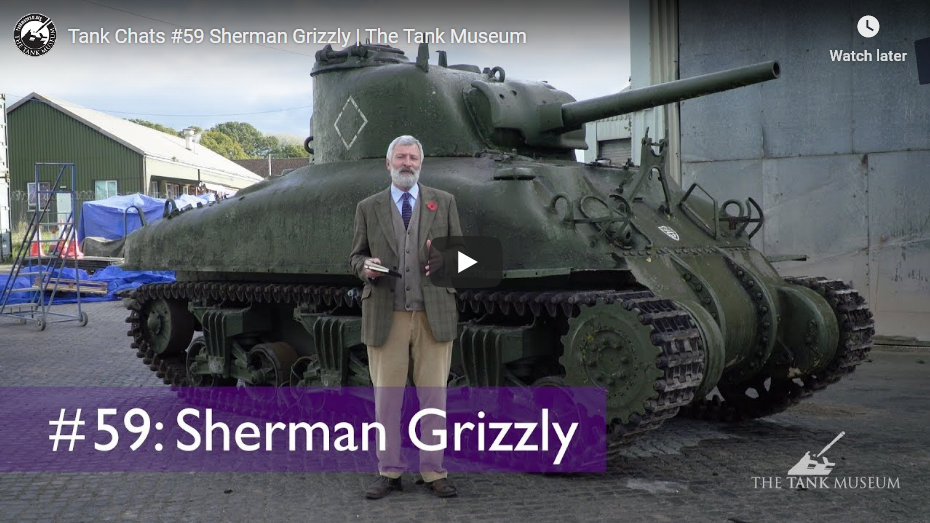
The Norfolk Tank Museum

Filed under: Britain, History, Military — Tags: , — Nicholas @ 02:00

The Mighty Jingles
Published on 7 Jul 2019

So this week Rita and I went to a tiny little tank museum in deepest, darkest Norfolk. Luckily, the natives were friendly.

http://norfolktankmuseum.co.uk/
https://www.youtube.com/watch?v=G0ryV…

Patreon: https://www.patreon.com/TheMightyJingles

August 5, 2019

How Boeing lost its mojo

Rafe Champion linked to this interesting thumbnail-sketch history of the decline and fall of Boeing:

Let’s start by admiring the company that was Boeing, so we can know what has been lost. As one journalist put it in 2000, “Boeing has always been less a business than an association of engineers devoted to building amazing flying machines.”

For the bulk of the 20th century, Boeing made miracles. Its engineers designed the B-52 in a weekend, bet the company on the 707, and built the 747 despite deep observer skepticism. The 737 started coming off the assembly line in 1967, and it was such a good design it was still the company’s top moneymaker thirty years later.

How did Boeing make miracles in civilian aircraft? In short, the the civilian engineers were in charge. And it fell apart because the company, due to a merger, killed its engineering-first culture.

What Happened?

In 1993, Clinton’s Deputy Secretary of Defense, Bill Perry, called defense contractor CEOs to a dinner, nicknamed “the last supper.” He told them to merge with each other so as, in the classic excuse used by monopolists, to find efficiencies in their businesses. The rationale was that post-Cold War era military spending reductions demanded a leaner defense base. In reality, Perry had been a long-time mergers and acquisitions investment banker working with industry ally Norm Augustine, the eventual CEO of Lockheed Martin.

Perry was so aggressive about encouraging mergers that he put together an accounting scheme to have the Pentagon itself pay merger costs, which resulted in a bevy of consolidation among contractors and subcontractors. In 1997, Boeing, with both a commercial and military division, ended up buying McDonnell Douglas, a major aerospace company and competitor. With this purchase, the airline market radically consolidated.

Unlike Boeing, McDonnell Douglas was run by financiers rather than engineers. And though Boeing was the buyer, McDonnell Douglas executives somehow took power in what analysts started calling a “reverse takeover.” The joke in Seattle was, “McDonnell Douglas bought Boeing with Boeing’s money.”

[…]

The key corporate protection that had protected Boeing engineering culture was a wall inside the company between the civilian division and military divisions. This wall was designed to prevent the military procurement process from corrupting civilian aviation. As aerospace engineers Pierre Sprey and Chuck Spinney noted, military procurement and engineering created a corrupt design process, with unnecessary complexity, poor safety standards, “wishful thinking projections” on performance, and so forth. Military contractors subcontract based on political concerns, not engineering ones. If contractors need to influence a Senator from Montana, they will place production of a component in Montana, even if no one in the state can do the work.

« Newer PostsOlder Posts »

Powered by WordPress