One way to respond to a novel tactical problem is with novel tactics. And the impetus for this kind of thinking is fairly clear: if your own artillery is the problem digging you into a hole, then find a way to use less of it.
The mature form of this tactical framework is often called “Hutier” tactics, after German general Oskar Emil von Hitier, though he was hardly the sole or even chief inventor of the method. In its mature form, the technique went thusly: instead of attacking with large waves of infantry which cleared each objective in sequential order, attacks ought to be proceeded by smaller units, carefully trained with the layout of the enemy positions. Those units, rather than having a very rigid plan of attack, would be given those general objectives and left to figure for themselves how to accomplish them (“mission tactics” or Auftragstaktik), giving them more freedom to make decisions based on local conditions and the ground.
These elite spearhead units, called Stoßtruppen or “Stormtroopers” were well equipped (in particular with a higher amount of automatic firearms and hand grenades, along with flamethrowers). Importantly, they were directed to bypass enemy strong-points and keep moving forward to meet their objectives. The idea here was that the follow-up waves of normal infantry could do the slow work of clearing out points where enemy resistance was strong, but the stormtroopers should aim to push as deeply as possible as rapidly as possible to disorient the defenders and rapidly envelop what defenses remained.
These sets of infantry tactics were in turn combined with the hurricane barrage, a style of artillery use which focused on much shorter but more intense artillery barrages, particularly associated with Colonel Georg “Breakthrough” Bruchmüller. Rather than attempting to pulverize defenses out of existence, the hurricane barrage was designed merely to force enemies into their dugouts and disorient the defenders; much of the fire was directed at longer ranges to disrupt roads and artillery in the enemy rear. The short barrage left the ground relatively more intact. Meanwhile, those elite infiltration units could be trained to follow the creeping barrage very closely (being instructed, for instance, to run into the shell explosions, since as the barrage advantages, no gun should ever strike the same spot twice; a fresh shell-hole was, in theory, safe). Attentive readers will recognize the basic foundations of the “move fast, disorient the enemy” methods of the “modern system” here.
So did infiltration tactics break the trench stalemate? No.
First, it is necessary to note that while infiltration tactics were perhaps most fully developed by the Germans, they were not unique to them. The French were experimenting with many of the same ideas at the same time. For instance, basic principles of infiltration were being published by the French General Headquarters as early as April, 1915. André Laffargue, a French infantry captain, actually published a pamphlet, which was fairly widely distributed in both the French and British armies by the end of 1915 and in the American army in 1916, on exactly this sort of method. In many cases, like at the Second Battle of Artois, these French tactics bore significant fruit with big advances, but ran into the problem that the gains were almost invariably lost in the face of German counter-attacks. The Russians, particularly under Aleksei Brusilov, also started using some of these techniques, although Brusilov was as much making a virtue of necessity as the Russians just didn’t have that much artillery or shells and had to make due with less and Russian commanders (including Brusilov!) seem to have only unevenly taken the lessons of his successes.
The problem here is speed: infiltration tactics could absolutely more efficiently overrun the front enemy lines and even potentially defeat multiple layers of a defense-in-depth. But after that was done and the shock of the initial push wore off, you were still facing the same calculus: the attacker’s reinforcements, shells, artillery and supplies had to cross broken ground to reach the new front lines, while the defender’s counter-attack could ride railways, move over undamaged roads and then through prepared communications trenches. In the race between leg infantry and trains, the trains always won. On the Eastern Front or against the Italians fighting under the Worst General In History at Caporetto (1917), the already badly weakened enemy might simply collapse, producing massive gains (but even at Caporetto, no breakthrough – shoving the enemy is not a breakthrough, to qualify as a breakthrough, you need to get to the “green fields beyond” that is open ground undefended by the enemy), but against a determined foe, as with the 1918 Spring Offensives, these tactics, absent any other factor, simply knocked big salients in the line. Salients which were, in the event, harder to defend and brought the Germans no closer to victory. Eventually – often quite rapidly – the front stabilized again and the deadlock reasserted itself. Restoring maneuver, the actual end-goal of these tactics, remained out of reach.
Bret Devereaux, “Collections: No Man’s Land, Part II: Breaking the Stalemate”, A Collection of Unmitigated Pedantry, 2021-09-24.
February 2, 2022
QotD: Breaking the trench stalemate with Stormtroopers (Stoßtruppen)
February 1, 2022
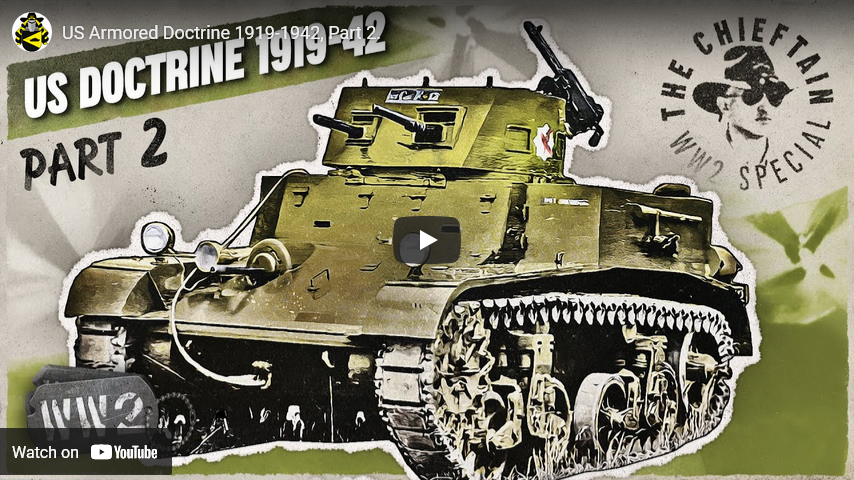
US Armored Doctrine 1919-1942, Part 2
The Chieftain
Published 29 Jan 2022Continuing on this series of videos supporting the WW2 Channel, this is part one of a two-part look at how the US Army ended up with the armored force with which it entered combat in North Africa. https://www.youtube.com/c/WorldWarTwo
If you missed part 1… https://www.youtube.com/watch?v=hLkJP…
Sources include:
Forging the Thunderbolt (Gillie)
Men on Iron Ponies (Morton)
Greasy Automatons and the Horsey Set (Tedesco)
A number of Center of Military History documents to include GHQ Maneuvers 1941 https://history.army.mil/catalog/pubs…
A few other things I’ve forgotten about, but the above will get you 90% of the way there.Improved-Computer-And-Scout Car Fund:
Patreon: https://www.patreon.com/The_Chieftain
Direct Paypal https://paypal.me/thechieftainshat1939 Cavalry Journal with Polish cavalry article.
https://mcoepublic.blob.core.usgovclo…
January 31, 2022
Stalingrad: Endgame – WW2 – 179b – January 31, 1943
World War Two
Published 30 Jan 2022The Battle of Stalingrad is nearing its end. Strong contingents of the 21st and 62nd Soviet Armies broke through the German defensive lines west of Stalingrad and were now pushing deep into the city. Despite the “Kessel” being split into several parts, the Axis soldiers are still resisting fiercely, fighting street by street, house by house. Yet it is a desperate last stand. Overwhelmed and undersupplied, many Generals push for surrender. But only their commander, the freshly promoted “Field-Marshal” Paulus, has the authority to do so.
(more…)
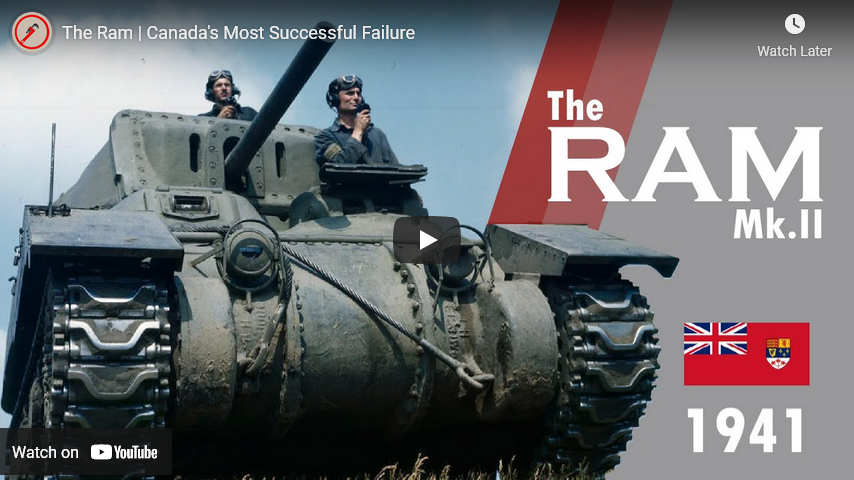
The Ram | Canada’s Most Successful Failure
Red Wrench Films
Published 4 Dec 2020A Canadian Franken-tank that pre-dated the M4 Sherman, the Ram would be an icon of Canada’s industry in the early war years. Ultimately a failure as a battle tank, variants of the vehicle would see combat in Normandy and beyond, as the Kangaroo APC which revolutionised mechanised warfare in 1944 and 1945.
Any feedback is greatly appreciated, I’m always trying to improve.
Any suggestions for the next video? Leave it down in the comments or message me. 🙂
((Like and subscribe))
Please note that the footage I can find on these vehicles is scarce and sometimes the video will not match properly or will perhaps be slightly inaccurate.
Sources:
https://tanks-encyclopedia.com/ww2/ca…
https://www.dday-overlord.com/en/mate…
https://www.friends-amis.org/index.ph…
http://panzerserra.blogspot.com/2015/…Intuit256 by Kevin MacLeod is licensed under a Creative Commons Attribution 4.0 licence. https://creativecommons.org/licenses/…
Source: http://incompetech.com/music/royalty-…
Artist: http://incompetech.com/
January 30, 2022
Time to Fire Rommel? – WW2 – 179 – January 29, 1943
World War Two
Published 29 Jan 2022The Allies are unable to win in Tunisia, though further east Bernard Montgomery has achieved his goal of driving the enemy out of Libya. To the west, the Casablanca Conference comes to its end and the Allies write a list of their war priorities. The Soviets, however, are on the move everywhere, closing in on Stalingrad, and launching new operations up and down the eastern front, to the dismay and detriment of the Axis forces.
(more…)
QotD: Montgomery on the advance after El Alamein
Suddenly I saw a lorry coming up from behind, and on it a large boat; a naval Petty Officer sat with the driver and some sailors were inside.
I stopped the lorry and said to the Petty Officer: “What are you doing here? Do you realise that you are right up with the most forward elements of the Eighth Army, and you and your boat are leading the advance? This is a very dangerous area just at present, and you are unarmed. You must turn round and go back at once.”
He was dreadfully upset. He had been ordered to open up a “petrol point” at a small cove well to the north of Mersa Brega; small naval craft were to land petrol at this point in order that the leading armoured car regiments could refill their tanks; this was the easiest way of getting petrol and oil to them. He explained this to me, looking at me with pleading eyes rather like a spaniel asking to be taken for a walk to hunt rabbits.
He then said: “Don’t send me back, sir. If the armoured cars don’t get their petrol, they will have to halt and you will lose touch with the Germans. Couldn’t I go on with you? I would then be quite safe.”
That Petty Officer was clearly a student of psychology! In point of fact I did not know about these small petrol points for the armoured cars; it was a staff plan and a very good one. I took the naval party forward with me and saw them safely to their cove, where I was their first customer for petrol. I have often thought of that Petty Officer; he was from the Merchant Navy and in the R.N.V.R.; his sense of duty was of the highest order, and Britain will never lose her wars so long as the Royal Navy can count on men like him.
Bernard L. Montgomery, The Memoirs of Field-Marshal Montgomery, 1958.
January 29, 2022
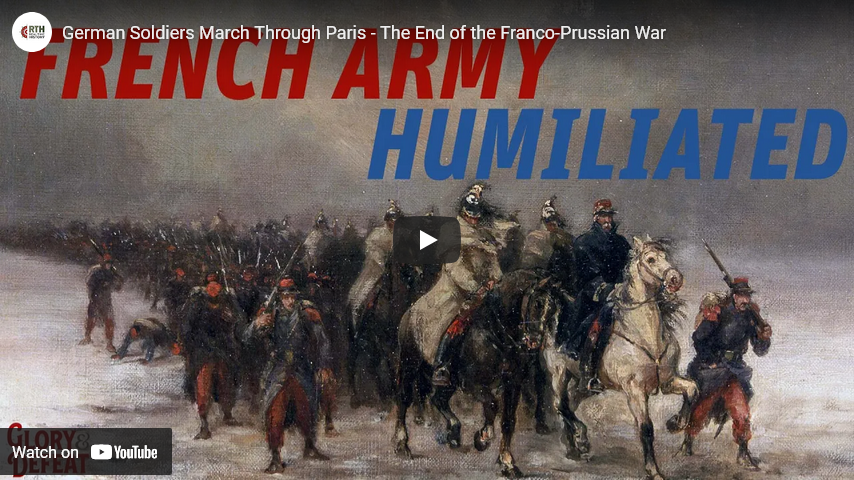
German Soldiers March Through Paris – The End of the Franco-Prussian War
Real Time History
Published 27 Jan 2022https://patreon.com/realtimehistory – support future Real Time History series on Patreon
The end of the Franco-Prussian War is marked by humiliation for France. German soldiers march into Paris and the French Army of the East under Bourbaki flees to neutral Switzerland to surrender there.
» THANK YOU TO OUR CO-PRODUCERS
John Ozment, James Darcangelo, Jacob Carter Landt, Thomas Brendan, Kurt Gillies, Scott Deederly, John Belland, Adam Smith, Taylor Allen, Rustem Sharipov, Christoph Wolf, Simen Røste, Marcus Bondura, Ramon Rijkhoek, Theodore Patrick Shannon, Philip Schoffman, Avi Woolf,» OUR PODCAST
https://realtimehistory.net/podcast – interviews with historians and background info for the show.» LITERATURE
Arand, Tobias: 1870/71. Der Deutsch-Französische Krieg erzählt in Einzelschicksalen. Hamburg 2018Bauer, Gerhard u.a. (Hrsg.): Ausst.-Kat. MHM Dresden‚ Krieg – Macht – Nation. Wie das deutsche Kaiserreich entstand. Dresden 2020
Bolek, Nina: “Die Regelungen des Frankfurter Friedensvertrages zur Kriegerbestattung”, in: Das Schlachtfeld von Woerth – Geschichtsort, Erinnerungsort, Lernort, hrsg. v. T. Arand und Ch. Bunnenberg. Münster. 2012: 109-130
Buk-Swienty, Tom: Feuer und Blut. Hauptmann Dinesen. Hamburg 2014
Gouttman, Alain: La grande défaite. 1870-1871. Paris 2015
Joland, Gérard: “La variole et la guerre de 1870”, in Les Tribunes de la santé 33/4 (2011): 25-30
Tomasetti, Philippe: “L’œvre des tombes et des prières et l’érection des premiers monuments commémoratifs français de la guerre de 1870-1871”, in: L’Outre-Fôret 155 (2011): 3-17
» SOURCES
Deuerlein, Ernst: Die Gründung des Deutschen Reichs 1870/71 in Augenzeugenberichten. Gerlingen 2011 (Neuauflage)Engels, Friedrich: Der Deutsch-Französische Krieg. Sechzig Artikel aus der “Pall Mall Gazette”. Berlin (Ost) 1957
Gerstäcker, Friedrich: “Um Paris herum. IV. Die Brücke von Sèvres”, in: Die Gartenlaube, Heft 11 (1871). SW. 183-186
Goncourt, Edmond de: Journal des Goncourts. II.1. 1870-1871. Paris 1890
Pietsch, Ludwig: Von Berlin bis Paris. Kriegsbilder 1870-1871. Berlin 1871
Reich-Gesetzblatt Nr 26. 1871. Berlin 1872
Russell, William Howard: My diary during the last great war. London 1874
Schellendorf, Paul Bronsart von: Geheimes Kriegstagebuch 1870-71, hrsg. v. Peter Rassow. Bonn 1954
Zeitz, Karl: Kriegserinnerungen eines Feldzugsfreiwilligen aus den Jahren 1870 und 1871. Altenburg 1905
» OUR STORE
Website: https://realtimehistory.net»CREDITS
Presented by: Jesse Alexander
Written by: Cathérine Pfauth, Prof. Dr. Tobias Arand, Jesse Alexander
Director: Toni Steller & Florian Wittig
Director of Photography: Toni Steller
Sound: Above Zero
Editing: Toni Steller
Motion Design: Philipp Appelt
Mixing, Mastering & Sound Design: http://above-zero.com
Maps: Battlefield Design
Research by: Cathérine Pfauth, Prof. Dr. Tobias Arand
Fact checking: Cathérine Pfauth, Prof. Dr. Tobias ArandChannel Design: Battlefield Design
Contains licensed material by getty images
All rights reserved – Real Time History GmbH 2022
January 28, 2022
The Warsaw Ghetto: The Jews Strike Back – WAH 51 – January 1943, Pt. 2
World War Two
Published 27 Jan 2022In early 1943 Nazi German propaganda minister Joseph Goebbels is preparing to rally the German people behind an unrestrained war — or “total war” as he puts it. It’s unclear what that means, Nazi Germany has long been waging an unrestrained war, and it seems that the United Nations alliance is now ready to do the same on Germany.
(more…)
January 27, 2022
Carthage: The Empire of Melqart
Thersites the Historian
Published 11 Nov 2021In this lecture, we look at why it is so hard to find Punic material remains and where one can search for what little there is left to find.
Patreon link: https://www.patreon.com/thersites
PayPal link: paypal.me/thersites
Discord: https://discord.gg/QCaXXFr
Brave Browser: https://brave.com/noa557
Twitter link: https://twitter.com/ThersitesAthens
Minds.com link: https://www.minds.com/ThersitestheHis…
Steemit/dtube link: https://steemit.com/@thersites/feed
BitChute: https://www.bitchute.com/channel/jbyg…
What Would Ross Do? The .280 Military Match M10 Rifle
Forgotten Weapons
Published 15 Sep 2021http://www.patreon.com/ForgottenWeapons
https://www.floatplane.com/channel/Fo…
Cool Forgotten Weapons merch! http://shop.forgottenweapons.com
There were many different versions of the Ross straight-pull bolt action rifle made and adopted by the Canadian military. However, the version that Sir Charles Ross thought would be best was only ever made as a small run of prototypes. This rifle was called the Military Match M10, in .280 Ross caliber.
The .280 Ross was a powerful cartridge on par with 7mm Remington Magnum, firing a 140 grain bullet at 3000 fps. This made it very flat-shooting, which Ross saw as ideal for minimizing range estimation errors. Ross’ military experience had been in the Boer War, where long range individual marksmanship was perhaps as important as in any other modern military conflict. For his ideal rifle, he used his M1910 action with a Mauser-style 5-round double-column flush magazine, a finely adjustable rear sight with an aperture for precision shooting but also a notch sight for snap shots. He gave a it a 26 inch barrel — longer than many of the rifles being adopted in the early 1900s, but long enough to have good ballistics and a very long sight radius.
Ross presented his rifle to the Canadian and British militaries, but it was not accepted, because of the British retention of the .303 cartridge if for no other reason. Only about two dozen were made, with serial numbers in the 102XX range. Only perhaps half of those still exist today, and it’s a rare treat to be able to examine this one!
Contact:
Forgotten Weapons
6281 N. Oracle 36270
Tucson, AZ 85740

January 26, 2022
“Soldier of Heaven” – Mountain Warfare in WW1 – Sabaton History 108 [Official]
Sabaton History
Published 25 Jan 2022The war in the Alps between the Italians and the Austro-Hungarians added new dimensions to the fighting in the Great War since mountain warfare has its own unique set of challenges and dangers. What sort of men were doing the fighting here? And how did they cope with it? How did the survivors survive? Let’s take a look.
Support Sabaton History on Patreon: https://www.patreon.com/sabatonhistory
Listen to “Soldier of Heaven”: https://music.sabaton.net/SoldierOfHe…
Watch the Official Music Video of “Soldier of Heaven” here: https://www.youtube.com/watch?v=LYI3e…
Listen to Sabaton on Spotify: http://smarturl.it/SabatonSpotify
Official Sabaton Merchandise Shop: http://bit.ly/SabatonOfficialShopHosted by: Indy Neidell
Written by: Markus Linke and Indy Neidell
Directed by: Astrid Deinhard and Wieke Kapteijns
Produced by: Pär Sundström, Astrid Deinhard and Spartacus Olsson
Creative Producer: Maria Kyhle
Executive Producers: Pär Sundström, Joakim Brodén, Tomas Sunmo, Indy Neidell, Astrid Deinhard, and Spartacus Olsson
Post-Production Director: Wieke Kapteijns
Editor: Iryna Dulka
Sound Editor: Marek Kaminski
Archive: Reuters/Screenocean – https://www.screenocean.com
Sources:
– IWM Q 65115, IWM Q 65299, IWM Q 65062, IWM Q 65324, IWM Q 65102, IWM 1034-4, IWM 1062-14, IWM 459, IWM Q 114805б IWM Q 65104, IWM Q 65053, IWM Q 54778, IWM Q 65114, IWM Q 65130, IWM Q 65158
– esercito.difesa.it
– Médiathèque de l’architecture et du patrimoineS
– Business vector created by macrovector, Background vector created by freepik – www.freepik.com
All music by: SabatonAn OnLion Entertainment GmbH and Raging Beaver Publishing AB co-Production.
© Raging Beaver Publishing AB, 2019 – all rights reserved.
January 25, 2022
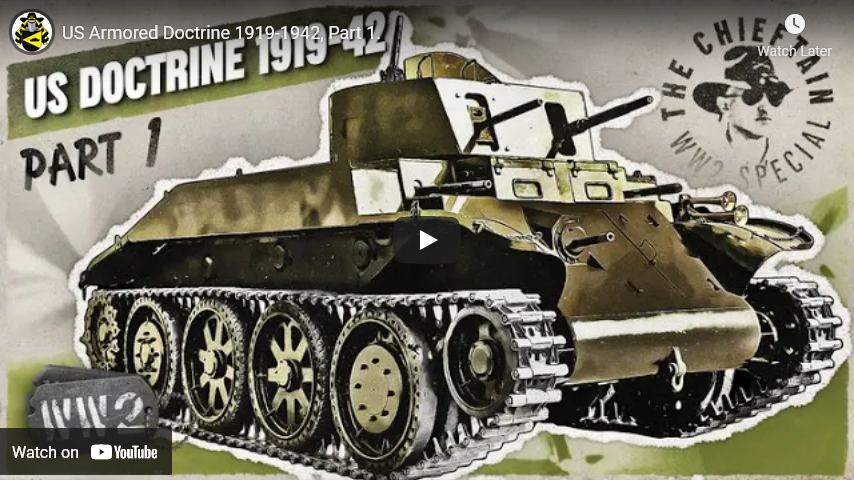
US Armored Doctrine 1919-1942, Part 1
The Chieftain
Published 22 Jan 2022Continuing on this series of videos supporting the WW2 Channel, this is part one of a two-part look at how the US Army ended up with the armored force with which it entered combat in North Africa.
Sources include:
Forging the Thunderbolt (Gillie)
Men on Iron Ponies (Morton)
Greasy Automatons and the Horsey Set (Tedesco)
A number of Center of Military History documents
A few other things I’ve forgotten about, but the above will get you 90% of the way there.Improved-Computer-And-Scout Car Fund:
Patreon: https://www.patreon.com/The_Chieftain
Direct Paypal https://paypal.me/thechieftainshatChristie Tank Video
https://www.youtube.com/watch?v=0APcE…
1930 Cavalry Journal.
https://mcoepublic.blob.core.usgovclo…
1939 Cavalry Journal
https://mcoepublic.blob.core.usgovclo…
Soviet doctrine video.
https://www.youtube.com/watch?v=s7nr8…
Interview with Ken Estes on USMC tank history
https://www.youtube.com/watch?v=_DBmN…
Assessment of USMC light tanks.
https://www.youtube.com/watch?v=gy4dw…
Tank Chats #138 | White Scout Car | The Tank Museum
The Tank Museum
Published 22 Oct 2021Our Patreons have already enjoyed Early Access and AD free viewing of our weekly YouTube video! Consider becoming a Patreon Supporter today: https://www.patreon.com/tankmuseum
David Fletcher is back with a new Tank Chat on White Scout Car this week! Find out how a sewing machine manufacturer, from Cleveland Ohio, became one of the largest producers of vehicles in the USA.
Visit The Tank Museum SHOP & become a Friend: ►tankmuseumshop.org
Twitter: ► https://twitter.com/TankMuseum
Instagram: ► https://www.instagram.com/tankmuseum/
#tankmuseum #tanks
January 24, 2022
David Starkey – The Churchills episode 3
Whitehall Moll History Clips
Published 29 May 2019How did Winston Churchill draw on the lessons of his ancestor John Churchill to fight World War II? The Duke of Marlborough’s influence is apparent as Dr David Starkey explains

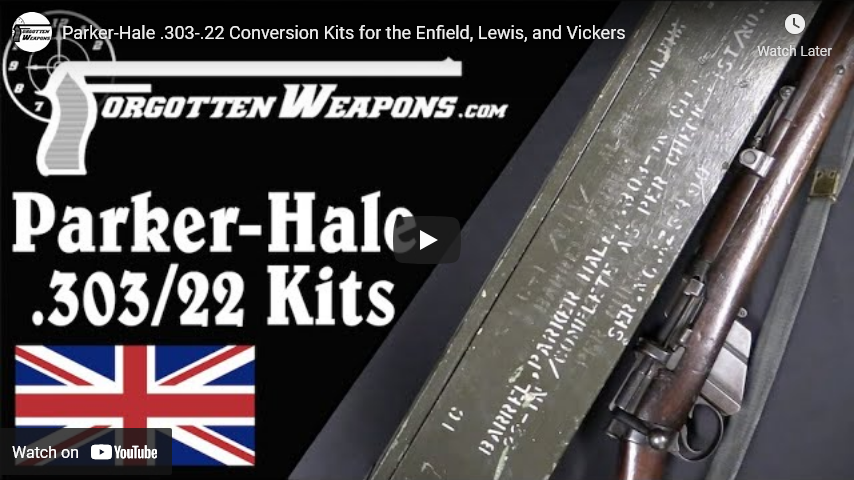
Parker-Hale .303-.22 Conversion Kits for the Enfield, Lewis, and Vickers
Forgotten Weapons
Published 14 Sep 2021http://www.patreon.com/ForgottenWeapons
https://www.floatplane.com/channel/Fo…
Cool Forgotten Weapons merch! http://shop.forgottenweapons.com
In July of 1918, the British military formally adopted a Parker-Hale system of adapting .303-caliber arms to .22 rimfire for short range training. The system involved lining standard barrels with .22 caliber blanks that were machined with full size .303 chambers. Special cartridge inserts were used which had the external dimensions of .303 cartridges, but held .22LR cartridges inside. This allowed the weapon to use the same feeding system as it normally would, and to duplicate the handling and trigger mechanism of a standard .303 caliber gun while only firing a small rimfire cartridge.
Parker-Hale built kits of this type for the Lee Enfield rifle, the Lewis LMG, and the Vickers HMG, and all were used by the British military. In the Lewis and Vickers, there was no accommodation made to actually cycle the guns; this sort of .22 practice drill was done by manually cycling the actions after each shot. Still, it was a good way to practice basic drill (loading, unloading, etc) as well as basic marksmanship without the noise of full power cartridges and without the need for a full-power-rated backstop.
The system for the Lee Enfield was replaced in 1920 (after only about 2 years of use) with the No2 MkIV* rifle, a dedicated .22 conversion of an SMLE. Parker-Hale kept the system in their commercial catalog into the 1930s, however.
Contact:
Forgotten Weapons
6281 N. Oracle 36270
Tucson, AZ 85740