Quotulatiousness

October 18, 2021

Strategikon – Army Manual of the Eastern Roman Empire

Filed under: Books, History, Middle East, Military — Tags: , , , , — Nicholas @ 04:00

Kings and Generals
Published 30 Mar 2021

The Kings and Generals animated historical documentary series on the evolution of the Roman Army continues with the second episode of the series on the Army of the Eastern Roman Empire – the Byzantine Empire. In this episode, we’ll focus on Strategikon of Maurice – the army manual that defined the structure, training and tactics of the Byzantine army.

Support us on Patreon: http://www.patreon.com/KingsandGenerals or Paypal: http://paypal.me/kingsandgeneral

We are grateful to our patrons and sponsors, who made this video possible: https://docs.google.com/document/d/1o…

The video was made by Arb Paninken http://bit.ly/2Ow3oC8, while the script was developed by Matt Hollis. This video was narrated by Officially Devin (https://www.youtube.com/user/OfficiallyDevin)

✔ Merch store ► https://teespring.com/stores/kingsand…
✔ Patreon ► https://www.patreon.com/KingsandGenerals
✔ Podcast ► Google Play: http://bit.ly/2QDF7y0 iTunes: https://apple.co/2QTuMNG
✔ PayPal ► http://paypal.me/kingsandgenerals
✔ Twitter ► https://twitter.com/KingsGenerals
✔ Instagram ► http://www.instagram.com/Kings_Generals

Production Music courtesy of Epidemic Sound: http://www.epidemicsound.com

#Documentary #Byzantines #Romans

Look at Life — The Rocket Age Lancers (1961)

Filed under: Britain, History, Military — Tags: , , , , — Nicholas @ 02:00

PauliosVids
Published 20 Nov 2018

Looking to the future with the 9th Queen’s Royal Lancers.

October 17, 2021

Stalingrad, Stalingrad, Stalingrad, No Retreat! – WW2 – 164 – October 16, 1942

World War Two
Published 16 Oct 2021

The Americans win a naval victory off Guadalcanal and even manage to reinforce the Marines there with the first Army units to arrive, but as the week ends the Japanese launch a major offensive on the island. Meanwhile far across the globe, Adolf Hitler orders that all German offensive operations except those at Stalingrad and in the Caucasus cease. There is plenty to do in Stalingrad, though, because this week all hell breaks loose there.
(more…)

October 16, 2021

W.A.R. – the Winchester Automatic Rifle

Filed under: History, Military, USA, Weapons, WW2 — Tags: , , — Nicholas @ 02:00

Forgotten Weapons
Published 1 Aug 2016

http://www.patreon.com/ForgottenWeapons

With the failure of the G30M and G30R to lead to any military orders (American or otherwise), the Winchester company took the advice of the Ordnance Department to scale the design up to an automatic rifle. The BAR had a number of known shortcomings in WWII, and the military was interested in replacing it. The Winchester Automatic Rifle (WAR) offered the same basic set of features with a lighter weight and lower cost.

The WAR used a 2-lug rotating bolt like the Garand’s, in combination with a Williams short stroke gas tappet action. Chambered for the standard .30-06 cartridge and using 20-round magazines, the WAR could be used as a semiautomatic rifle or in full automatic with a rate of fire of approximately 600 rpm (slightly more or less depending on whether a muzzle device was used).

The WAR passed initial Ordnance inspection with flying colors, and a contract for 10 was placed, for more extensive testing. It passed these tests well, but they took place in the summer of 1945. By the time a major contract was a real possibility, World War II had ended, and the budget for new arms development was slashed. Had the war continued, the WAR likely would have begun to replace the BAR in US military service.

October 15, 2021

The Battle of Orléans 1870 – French Raw Recruits vs. Experienced German Soldiers

Filed under: France, Germany, History, Military, Weapons — Tags: , , , , , — Nicholas @ 06:00

Real Time History
Published 14 Oct 2021

All across France French Armies have been raised from any available troops. From international volunteers to raw teenaged recruits. How these sub-par soldiers fare against professional German soldiers is not hard to guess and we can see how that goes in the first battles for Orléans.

Special Thanks to Jonathan Ferguson from Royal Armouries. Check out their Channel: https://www.youtube.com/RoyalArmouries

» THANK YOU TO OUR CO-PRODUCERS
John Ozment
James Darcangelo
Jacob Carter Landt
Thomas Brendan
James Giliberto
Kurt Gillies
Albert B. Knapp MD
Tobias Wildenblanck
Richard L Benkin
Scott Deederly
John Belland
Adam Smith
Taylor Allen
Jim F Barlow
Rustem Sharipov

» OUR PODCAST
https://realtimehistory.net/podcast – interviews with historians and background info for the show.

» LITERATURE
Arand, Tobias: 1870/71. Der Deutsch-Französische Krieg erzählt in Einzelschicksalen. Hamburg 2018

Milza, Pierre: L’année terrible. La guerre franco-prussienne. Septembre 1870 – mars 1871. Paris 2009

» SOURCES
Bernhardt, Sarah: Mein Doppelleben. Leipzig 1908

Hérisson, Maurice Graf d’: Journal d’un officier d’ordonannce. Juillet 1870 – Février 1871. Paris 1885

Kühnhauser, Florian: Kriegs-Erinnerungen eines Soldaten des königlich bayerischen Infanterie Leibregiments. Partenkirchen 1898 (Neudruck 2012)

Meisner, Heinrich Otto (Hrsg.): Kaiser Friedrich III. Das Kriegstagebuch von 1870/71. Berlin, Leipzig 1926

N.N. (Hrsg.): Theodor Fontane. Kriegsgefangen – Erlebtes 1870. Briefe 1870/71. Berlin (Ost) 1984

» OUR STORE
Website: https://realtimehistory.net

»CREDITS
Presented by: Jesse Alexander
Written by: Cathérine Pfauth, Prof. Dr. Tobias Arand, Jesse Alexander
Director: Toni Steller & Florian Wittig
Director of Photography: Toni Steller
Sound: Above Zero
Editing: Toni Steller
Motion Design: Philipp Appelt
Mixing, Mastering & Sound Design: http://above-zero.com
Maps: Battlefield Design
Research by: Cathérine Pfauth, Prof. Dr. Tobias Arand
Fact checking: Cathérine Pfauth, Prof. Dr. Tobias Arand

Channel Design: Battlefield Design

Contains licensed material by getty images
All rights reserved – Real Time History GmbH 2021

Nazis “Restore” Law and Order – WAH 044 – October 1942, Pt. 1

World War Two
Published 14 Oct 2021

Resistance against occupation starts rising in the Autumn of 1942. It faces opposition not only from the occupiers, but also from collaborators killing their own countrymen.
(more…)

RV Petrel – The Pac-Man of Wartime Shipwrecks

Filed under: Australia, History, Japan, Military, Pacific, USA, WW2 — Tags: , , — Nicholas @ 02:00

Drachinifel
Published 13 Nov 2019

A quick summation of the excellent work being done by the RV Petrel crew and the Paul Allen Foundation.

Want to support the channel? – https://www.patreon.com/Drachinifel

Want a shirt/mug/hoodie – https://shop.spreadshirt.com/drachini…

Want a medal? – https://www.etsy.com/uk/shop/Drachinifel

Want to talk about ships? https://discord.gg/TYu88mt

Want to get some books? www.amazon.co.uk/shop/drachinifel

Drydock Episodes in podcast format – https://soundcloud.com/user-21912004

Music – https://www.youtube.com/c/NCMEpicMusic

October 14, 2021

Canada’s carrier-borne fighters onboard HMCS Bonaventure; the story of the McDonnell F2H-3 Banshee

Filed under: Britain, Cancon, History, Military, USA — Tags: , , , , , — Nicholas @ 04:00

Polyus Studios
Published 2 Apr 2021

Don’t forget to like the video and subscribe to my channel!
Support me on Patreon – https://www.patreon.com/polyusstudios

Up until the late 1960s the Canadian Navy operated a modern aircraft carrier. It had an angled flight deck, steam catapults, and fighter jets. The jets were comparable to land-based aircraft like the CF-100 but could pack a vicious air-to-air punch with their Sidewinder missiles. They saw a brief service aboard HMCS Bonaventure before being retired without replacement. It was the McDonnell F2H Banshee, Canada’s premiere sea-based jet fighter.

0:00 Introduction
0:29 Canadian Navy aircraft carriers 1945 to 1957
2:13 New Fighter Selection
3:34 Specifications
5:07 Comparison to the CF-100
5:50 Operational Service
8:23 Accidents and Retirement

Music:
Denmark – Portland Cello Project

Research Sources:
CASM-Aircraft Histories – HMCS Bonaventure CVL-22 by Robert T. Murray
McDonnell Banshee – Royal Canadian Air Force – http://www.rcaf-arc.forces.gc.ca/en/a…
Magnificent Moments by Vintage Wings of Canada – http://www.vintagewings.ca/VintageNew…
McDonnell Banshee – Shearwater Aviation Museum – http://www.shearwateraviationmuseum.n…
HMCS Bonaventure: Canada’s Last Aircraft Carrier by Kevin Patterson – http://www.sevenyearproject.com/canad…

Footage Sources:
HMCS Magnificent (CVL 21) – Majestic Class Light Aircraft Carrier – Camildoc – https://youtu.be/_Zvnz06-MRc
HMCS Bonaventure (CVL 22) – Majestic Class Aircraft Carrier – Camildoc – https://youtu.be/QmFD5bijrok

#Banshee #CanadianAerospace #PolyusStudios

Tank Chats #128 | Panzer 61 | The Tank Museum

Filed under: Europe, History, Military, Weapons — Tags: , , , , — Nicholas @ 02:00

The Tank Museum
Published 4 Jun 2021

Curator David Willey examines one of Switzerland’s first indigenously designed and produced tanks, the Panzer 61, put into service during the Cold War.
(more…)

October 13, 2021

A War Without Hate? – The Officers and Gentlemen of North Africa – WW2 – Gallery 05

Filed under: Africa, Australia, Britain, Germany, History, Italy, Military, WW2 — Tags: , , , , , — Nicholas @ 04:00

World War Two
Published 12 Oct 2021

In the history of European-style warfare, there has always been the ideal of “rules of warfare”. The horrors of the Eastern Front and the Pacific prove how hollow this ideal can be, but there is one theatre where some officers are trying to maintain it: North Africa.
(more…)

QotD: The POW/MIA theories from the post-Vietnam War era

… there are lots of cases where “the narrative” — the method of organizing disparate facts for easy transmission and digestion — becomes The Narrative, all caps, the conspirazoid stuff. Al from da Nort brought up the POW/MIA thing from the Vietnam War, which is a great example. […] back in the 1980s The Narrative (note the capital letters) was that the Vietnamese government was still holding American prisoners of war for some reason.

It routinely showed up on the “news magazine” shows, and of course there were whole series of movies about it: The Missing in Action flicks with Chuck Norris, Rambo II, I’m sure I’m forgetting a few. And though the “firsthand testimony” for this thesis was always of the “somebody knew somebody who heard from somebody that Lt. Smith suddenly disappeared from a POW camp back in 1968,” there was one seemingly strong piece of archival evidence: The seemingly disproportionate number of soldiers and airmen officially listed as “missing in action”.

And yet … c’mon, man, as a guy who dodged that war probably said back when he could still remember what century he’s living in. Why would the Vietnamese do that? All the mooted explanations — slave labor, selling captured pilots to the Russians for training purposes — didn’t pass the smell test. So a historian started digging into it, and while I read MIA: Mythmaking in America 30 years ago in college, I remember the crux of his argument:

In the war’s early days, the military used a statistic called KIA/BNR — killed in action / body not recovered. Everyone knows Lt. Smith is dead, but since his aircraft was vaporized by a SAM over Haiphong, his remains can’t be returned to his people. As Al notes, though, when a pilot was killed in action, his wife and kids got a puny condolence check from the government and kicked out of base housing. Thus the surviving pilots, acting from noble motives, started fudging. “Well … maybe Lt. Smith’s plane wasn’t vaporized. I might’ve seen a chute. It’s all very confusing; remember I was going Mach 1 at the time, dodging flak …” Mrs. Smith and the little Smiths get to keep drawing a paycheck, keep living on base housing, etc. So the official MIA list grew.

Enter Richard Nixon and that sneaky rat fuck Kissinger. Needing a way to prolong the war while concluding “peace with honor” — that is, to weasel out without seeming too weaselly — they needed a sticking point at the treaty table. The MIA issue was perfect for that. What about Lt. Smith? Of course the Vietnamese government can’t account for him; he was blown to atoms over Haiphong; but there’s his name on the missing list. Perhaps he’s in double secret prison!

And thus “the narrative” — the perfectly understandable-in-context lie that changed KIA/BNR to MIA — became “The Narrative”, that the Vietnamese were, for some unfathomable reason, still hanging on to captured American servicemen. Who knows why those inscrutable Orientals do anything, and what kind of America-hating hippie scum are you to ask questions? Don’t you want to bring our boys back home?

Severian, “Kayfabe”, Rotten Chestnuts, 2021-07-04.

October 12, 2021

Richard Overy looks at the “Great Imperial War” of 1931-1945

Filed under: Asia, Books, Britain, China, France, History, India, Japan, Military, WW2 — Tags: , , , , , — Nicholas @ 05:00

I missed Rana Mitter‘s review of Richard Overy’s latest book when it was published in The Critic last week:

Imagine there’s no Hitler. It’s not that easy, even if you try, at least if you’re a westerner thinking about the Second World War. But for millions of Asians, those years of conflict had little to do with the horrors of Nazi invasion and genocide, and it is their experience that frames Richard Overy’s account of a seemingly familiar conflict. For most non-Europeans, the war was not a struggle for democracy, but a conflict between empires, and in this book, that imperial struggle begins not with the invasion of Poland by Germany in 1939 but the occupation of Manchuria by the Japanese in 1931.

Blood and Ruins is really two books in one. The first is perhaps the single most comprehensive account of the Second World War yet to appear in one volume. You might think that by reading extensively, you could construct a book like this one. You could not — unless you have Overy’s control over a staggering range of World War II scholarship, much of it drawn from his own decades of research on the economics of total warfare, the development of technology, from radar to aerial bombing, and the idea of the “emotional geography” of war, encompassing morale, hope, and despair. Then you’d need to go back and cover all those categories for each of the major Allied and Axis belligerents: Britain, the US, Japan, Germany, France, Italy and China among them.

The second book is an argument about what kind of conflict the Second World War really was. Overy is clear: on a global as opposed to European scale, it was not (just) a war about democracy, but about empires and their fate, although “the starting point in explaining the pursuit of territorial empire is, paradoxically, the nation.”

Overy points out what is generally lost to view when the European war is placed at the centre of the historiography: both Britain and France were undertaking an “awkward double standard” in their defence of democratic values, as their Asian and African possessions “rested on a denial of those liberties and the repression of any protest against the undemocratic nature of colonial rule”. While this argument has been made before (not least by figures such as Nehru and Gandhi in India at the time), Overy does something unusual and revealing: he compares the western empires with Japan’s justification for its own imperial project in the early twentieth century.

The book is scrupulously careful not to endorse or excuse the worldview of Tokyo’s imperialists, and gives full weight to the voices of the Chinese nationalists and communists who were bitterly opposed to Japan’s expansion on the Asian mainland. Still, the comparison of Japan’s pre-war and wartime empire to those of the western powers provides an important and original broadening of a contemporary debate.

There is ongoing public British (and to some extent French) argument about whether empire was a “good” or “bad” thing. Yet neither attackers nor defenders of the British empire tend to analyse it alongside the Japanese equivalent that lasted nearly half a century. Britain committed colonial massacres (Amritsar) and deadly repression (Mau Mau). So did Japan (the rape of Nanjing, invasion of Manchuria).

Britain’s empire also created an aspirational middle class full of cosmopolitan nationalists, and drew on ideas of loyalty to recruit its subjects to fight in world wars. All these things are also true of Japan, which like Britain was a multi-party democracy for much of its period as an overseas empire (between 1898 and 1932), and whose capital city was an intellectual hub for political activists from across Asia.

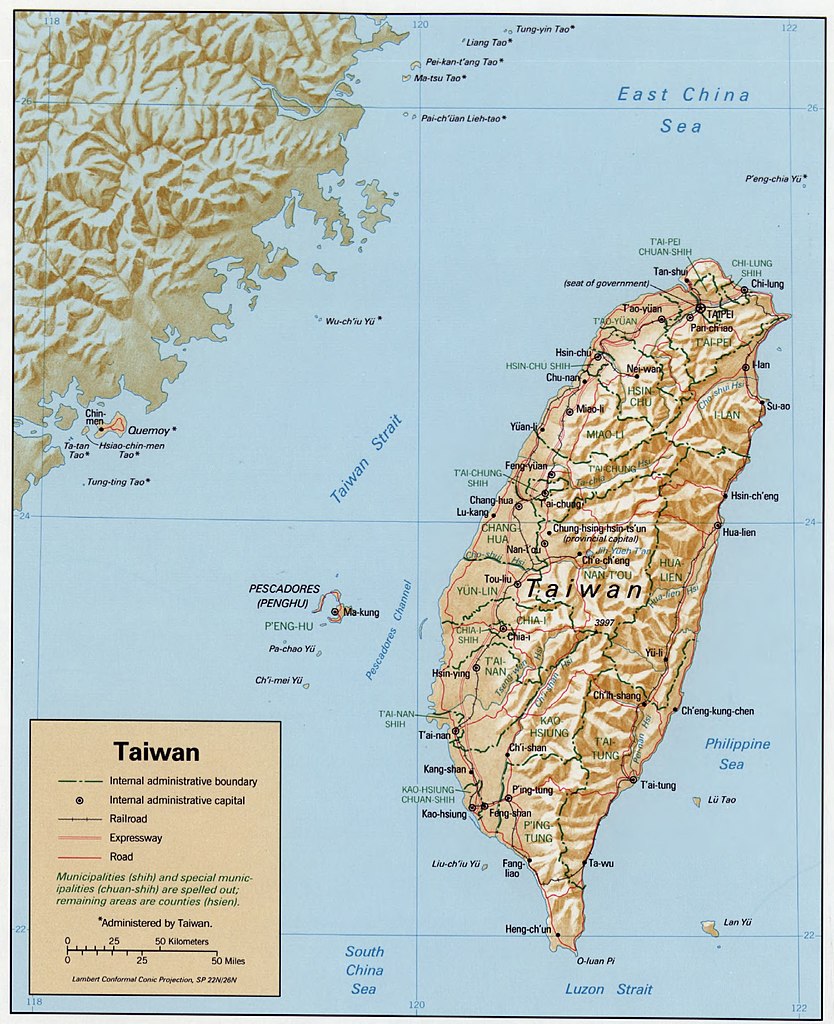
As a colony of Japan between 1895-1945, Taiwan developed a middle class that was Japanese-speaking and keen to draw on new economic opportunities brought by empire: Lee Teng-hui, the first democratically elected president of the Republic of China on Taiwan, always thought of Japanese as his mother tongue. Park Chung-hee, the American-sponsored dictator of Cold War South Korea, learned his political craft as an army officer in the Japanese Manchukuo Army that occupied Manchuria.

October 11, 2021

City Minutes: The Athenian Empire

Filed under: Europe, Greece, History, Humour, Military — Tags: , , , , — Nicholas @ 02:00

Overly Sarcastic Productions
Published 25 Jun 2021

Deja Vu? Only slightly! I’m re-imaging City Minutes, and this time the plan is to *Actually Make It Good*! With MULTIPLE CITIES per episode, and HORIZONTAL VIDEO!

I heard your feedback on the first run of the shorts loud and clear — City Minutes Good, Shorts Bad — so this will be the format going forward: networks of cities, with each getting a minute of spotlight.

We’re starting where I always start, in ancient Athens (I wanted to give you the proper version of the pilot), but we’ve got tons of other City Minutes planned!

SOURCES & Further Reading: Thucydides History of the Peloponnesian War, World History Encyclopedia (https://www.worldhistory.org/Athens): “Athens”, “Piraeus”, “Sounion”, “Delos”, “Corcyra”, “The Delian League” parts 3 & 4, and my degree in Classical Studies

Cities by timestamp:
00:00 — Athens
1:00 — Piraeus
2:01 — Sounion
3:03 — Delos
4:05 — Mytilene
5:03 — Korkyra
6:03 — Conclusion

Our content is intended for teenage audiences and up.

PATREON: https://www.Patreon.com/OSP

PODCAST: https://overlysarcasticpodcast.transi…

DISCORD: https://discord.gg/osp

MERCH LINKS: http://rdbl.co/osp

OUR WEBSITE: https://www.OverlySarcasticProductions.com
Find us on Twitter https://www.Twitter.com/OSPYouTube
Find us on Reddit https://www.Reddit.com/r/OSP/

From the comments:

Overly Sarcastic Productions
43 minutes ago
Fun linguistic shenanigans: The island of Korkyra (commonly spelled Corcyra when referring to the ancient city) is known today as both Kerkyra and Corfu. The name Corfu comes from an Italianized version of the Byzantine name Korufo.

I use the pronunciation of “Korkyra” with an O because it reflects the more common version of the name as listed in ancient accounts — adherence to the original ancient version is also why I’m using Ks in place of any Latinized Cs.

Essentially: I’m spelling everything the ancient way, but using modern Greek phonetics to sound out those words. It’s an uncommon way to go about, but it feels like the right balance of ancient authenticity and modern linguistic continuity.
-B

October 10, 2021

Stalingrad Thunderdome: Paulus vs. Chuikov! – WW2 – 163 – October 9, 1942

Filed under: Germany, History, Japan, Military, Pacific, Russia, USA, WW2 — Tags: , , , , — Nicholas @ 04:00

World War Two
Published 9 Oct 2021

Things are looking pretty grim for Vassily Chuikov’s 62nd Army in Stalingrad this week, as the German 6th Army launches its biggest series of attacks so far. The Axis are unable to get anywhere in the Caucasus, though, and the American Marines win a local victory over the Japanese on Guadalcanal, but everyone’s thoughts there are on reinforcing and more reinforcing.
(more…)

Book Review: The Guns of John Moses Browning, by Nathan Gorenstein

Filed under: Books, Europe, History, Military, USA, Weapons — Tags: , , , , , , , — Nicholas @ 02:00

Forgotten Weapons
Published 24 Jun 2021

http://www.patreon.com/ForgottenWeapons

https://www.floatplane.com/channel/Fo…

Cool Forgotten Weapons merch! http://shop.forgottenweapons.com

John Moses Browning is, without argument, the greatest firearms designer in history. While we have had many brilliant designers who had their names forever connected to guns (Maxim, Luger, Kalashnikov, …), Browning invented whole *categories* of firearms. Gorenstein’s new book The Guns of John Moses Browning is a welcome biography of the man, giving great insight into Browning’s life and work. The book is well researched, well written, and thoroughly engaging. It is also worth noting that Gorenstein is himself a competitive shooter, and understands the world that Browning operated in.

I think my back-cover blurb for the book (for which I received no compensation; full disclosure) sums it up well:

    Following Browning from his birth in rural Utah to his death in urban Belgium, we see how a changing world shaped his inventions and how, in turn, his inventions shaped a changing world.

    Browning began in the last years of the Wild West inventing lever action rifles, then became a major part of the blossoming of the automatic pistol, then invented the semiauto shotgun before designing the modern machine guns that become iconic to the United States’ involvement in two world wars. It is a tremendous story, and Gorenstein’s book lays it all out for the reader.

Available from Amazon here:
https://amzn.to/355eMxe

Contact:
Forgotten Weapons
6281 N. Oracle 36270
Tucson, AZ 85740

« Newer PostsOlder Posts »

Powered by WordPress