Quotulatiousness

May 20, 2024

At what point did “quiet genocide” become the preferred option for the climate cultists to “save the planet”?

The Daily Sceptic‘s Chris Morrison on the not-so-subtle change in the opinions of the extreme climatistas that getting rid of the majority of the human race is now the preferred way to address their concerns:

The grisly streak of neo-Malthusianism that runs through the green movement reared its ugly head earlier this week when former United Nations contributing author and retired UCL Professor Bill McGuire tweeted that the only “realistic way” to avoid catastrophic climate breakdown was to cull the human population with a high fatality pandemic. The tweet was subsequently withdrawn by McGuire, “not because I regret it”, but people took it the wrong way. McGuire is the alarmists’ alarmist, suggesting for instance that human-caused climate change could lead to more earthquakes and volcanic eruptions. The Daily Sceptic will not take his views the wrong way. They are an illuminating insight into environmental Malthusianism that does not get anything like the amount of publicity it deserves.

Every now and then Sir David Attenborough allows the genial TV presenter mask to slip to reveal a harder-edged Malthusian side. Speaking to BBC Breakfast in 2021, he suggested that the Earth would be better off without the human race, describing us as “intruders”. In 2009, Attenborough became the patron of the Optimum Population Trust and told the Guardian: “I’ve never seen a problem that wouldn’t be easier to solve with fewer people.” In 2013, he made the appalling remark that it was “barmy” for the United Nations to send bags of flour to famine-stricken Ethiopia. Too little land, too many people, was his considered judgement.

Any consideration of the refusal of food aid these days brings to mind the 19th century Malthusian Sir Charles Trevelyan, the British civil servant during the Irish famines who saw the starvation as retribution on the local population for their moral failings and tendency to have numerous children. He is said to have seen the great loss of life as a regrettable but unavoidable consequence of reform and regeneration.

Anti-human sentiment is riven through much green thinking. In 2019, Anglia Ruskin University Professor Patricia MacCormack wrote a book suggesting humans were already enslaved to the point of “zombiedom” because of capitalism, and “phasing out reproduction is the only way to repair the damage done to the world”. Green fanatics can be a joyless crowd – it is not enough to declare a climate crisis, now they want a “nookie” emergency. As the economist and philosopher Robert Boulding once remarked: “Is there any more single-minded, simple pleasure than viewing with alarm? At times it is even better than sex.”

If King Crimson Played the Batman TV Theme

Filed under: Media — Tags: , , , , — Nicholas @ 02:00

JB Anderton
Published Jan 8, 2024

Batman TV Theme written by Neil Hefti
Arrangement by JB Anderton
Bass, guitar, keyboards and drum loop programming – JB Anderton

Batman ’66 is a registered trademark of Greenway Productions/20th Century Fox. No infringement is intended.

#KingCrimson #Batman66

May 19, 2024

Rush Meets LOONEY TUNES???

Filed under: Cancon, History, Media, USA — Tags: , , , — Nicholas @ 02:00

pdbass
Published Jan 4, 2024

Remember that time Rush worked music from cartoons into one of their greatest recordings?

Digging into “La Villa Strangiato” from 1978’s Hemispheres, breaking down Geddy Lee’s wicked bass solo (and its Jazz connections) and showing you how pianist/composer Raymond Scott will always be linked to this iconic prog rock instrumental.
(more…)

May 18, 2024

Antisemitism is far from a new problem

Filed under: Britain, Europe, History, Media, Middle East, Politics — Tags: , , , , , — Nicholas @ 03:00

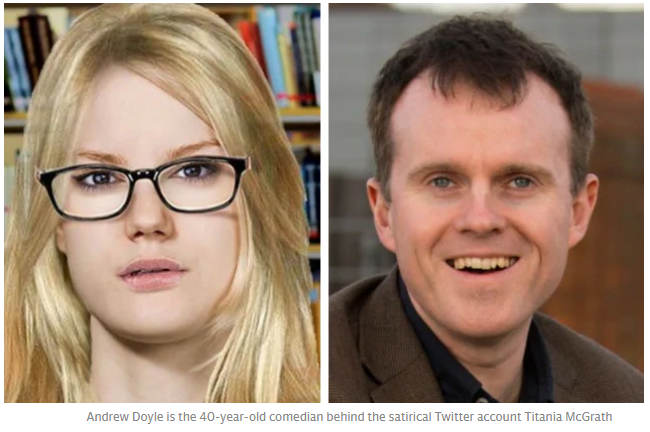
Andrew Doyle on some of the historical relics of antisemitism in European history down to today’s revived fascism of the left:

In his memoir Hitch-22, Christopher Hitchens considered “why it is that anti-Semitism is so tenacious and so protean and so enduring”. Many of us in the west have grown complacent, assuming that the horrors of the Holocaust would prevent this ancient prejudice from re-emerging. But as the conflict between Israel and Hamas escalates, few of us can be in any doubt that antisemitism has once again goose-stepped into the spotlight.

Of course, criticism of the Israeli government and its military strategy is entirely legitimate. So too is our profound concern for the innocents of Gaza and the many thousands of non-combatants who are losing their lives. But there is no denying the explicit anti-Jewish hatred that has accompanied these discussions in certain quarters. Criticise Israel all you like, but don’t try to tell me that Monday night’s daubing of the Shoah memorial in Paris with handprints of red paint was anything other than antisemitic.

Social media has opened our eyes to the prevalence of such sentiments. The other day I posted a link to my Substack piece about the Eurovision Song Contest on that hellsite now known as X. My focus in the article was on the narcissism of the “non-binary” performers, but one feminist activist decided to make it all about Israel. Underneath my post, she added an image of Eden Golan, the Israeli entry to the competition, with bloodstains photoshopped onto her dress. She went on to dismiss the victims of the October 7 pogrom as “silly ravers” and to blame the massacre on the IDF. Whatever else one might say about such views, it is clearly evidence of a complete absence of basic humanity.

This is sadly not uncommon. Recently we have seen protesters openly supporting Hamas, or even praising its acts of barbarism. A new poll has found that 63% of students currently protesting at US universities have at least some sympathy for Hamas. There have been overtly antisemitic statements, and Jews have been harassed on campus. It has been reported that at Columbia University, one protester cried out “We are Hamas” while another shouted at a group of Jewish students: “The 7 October is about to be every fucking day for you. You ready?” These are the very people who have spent the last few years calling anyone who dissents even slightly from their worldview a “fascist”, and yet they are blind to actual fascism when it emerges within their own ranks.

All of this has taken me by surprise, which perhaps reveals the extent of my naivety. Antisemitism is nothing new, and has assumed myriad and outlandish forms over the centuries. Our own country has not been immune; Jews were deported from England in 1290, only to be readmitted in 1656. Before then, only those who had converted to Christianity were allowed to remain; specially, they were able to reside at the Domus Conversorum in London, established by Henry III in 1232. Anti-Jewish sentiments were reignited by a plot to poison Elizabeth I in 1594, which was blamed on her physician Roderigo Lopes, a Portuguese man of Jewish ancestry who was executed for treason. This is the context in which the forced conversion of Shylock at the end of Shakespeare’s The Merchant of Venice ought to be understood.

Unpleasant myths about Jews have abounded throughout history, some of which still linger in Islamic regimes and the darker crannies of the internet where neo-Nazis gather to wallow in their bile. The poisoning of wells by Jews was thought to have initiated the Black Death epidemic in 1348. This notion was still pervasive by the time Christopher Marlowe wrote his play The Jew of Malta in 1589 (consider Barabas’s mass extermination of an entire convent of nuns by means of “a precious powder”, or his boastful claim: “Sometimes I go about and poison wells”).

May 17, 2024

“Once a mind is infected with Climate Change, bioweapons are just another kind of carbon credit”

Jo Nova presents evidence of a university professor — a vulcanologist — who perhaps has more sympathy for the volcanoes he studies than the human race:

Let’s just say, hypothetically, that someone wanted an excuse to reduce global population, or limit competing tribes and religions, there’s a scientific hat for that. Climate Change is the ultimate excuse for mass death — done in the nicest possible way and for the most honorable of reasons. But isn’t that what they all say: Jim Jones, the Branch Davidians, Heavens Gate — death makes the world a better place?

The cult that pretends it isn’t a cult sells itself as “science”. I mean, what the worst thing you can think of? Would that be one degree of warming, or the Black Death?

In Bill McQuire’s mind the catastrophe is not when billions of innocent people die.

One hundred years from now, what would our great grandchildren prefer: that the world was slightly cooler or they were never born at all? If you hate humans it’s a terrible dilemma …

Bill McGuire, vulcanologist, accidentally put his primal instincts in a tweet last weekend:

Thirty years of telling us that humans are bad has consequences. As Elon Musk said” They want a holocaust for humanity.” It turns out a televised diet of one-sided climate projection by mendicant B-Grade witchdoctors might be a dangerous thing for mental health. If only Bill McQuire had seen a skeptic on TV?

Predictably the McGuire tweet spread far, and got crushing replies so the Emeritus Professor deleted it, as all cowards do, yelling at us:

To which the winning reply was:

May 16, 2024

The replication crisis and the steady decline in social trust

Theodore Dalrymple on the depressing unreliability — and sometimes outright fraudulence — of far too high a proportion of what gets published in scientific journals:

Until quite recently — I cannot put an exact date on it — I assumed that everything published in scientific journals was, if not true, at least not deliberately untrue. Scientists might make mistakes, but they did not cheat, plagiarise, falsify, or make up their results. For many years as I opened a medical journal, the possibility simply that it contained fraud did not occur to me. Cases such as those of the Piltdown Man, a hoax in which bone fragments found in the Piltdown gravel pit were claimed to be those of the missing link between ape and man, were famous because they were dramatic but above all because they were rare, or assumed to be such.

Such naivety is no longer possible: instances of dishonesty have become much more frequent, or at least much more publicised. Whether the real incidence of scientific fraud has increased is difficult to say. There is probably no way to estimate the incidence of such fraud in the past by which a proper comparison can be made.

There are, of course, good reasons why scientific fraud should have increased. The number of practising scientists has exploded; they are in fierce competition with one another; their careers depend to a large extent on their productivity as measured by publication. The difference between what is ethical and unethical has blurred. They cite themselves, they recycle their work, they pay for publication, they attach their names to pieces of work they have played no part in performing and whose reports they have not even read, and so forth. As new algorithms are developed to measure their performance, they find new ways to play the game or to deceive. And all this is not even counting commercial pressures.

Furthermore, the general level of trust in society has declined. Are our politicians worse than they used to be, as it seems to everyone above a certain age, or is it that we simply know more about them because the channels of communication are so much wider? At any rate, trust in authority of most kinds has declined. Where once we were inclined to say, “It must be true because I read it in a newspaper”, we are now inclined to say, “It must be untrue because I read it in a newspaper”.

Quite often now I look at a blog called Retraction Watch which, since 2010, has been devoted to tracing and encouraging retraction of flawed scientific papers, often flawed for discreditable reasons. Such reasons are various and include research performed on subjects who have not given proper consent. This is not the same as saying that the results of such research are false, however, and raises the question of whether it is ethical to cite results that have been obtained unethically. Whether it is or not, we have all benefited enormously from past research that would now be considered unethical.

One common problem with research is its reproducibility, or lack of it. This is particularly severe in the case of psychology, but it is common in medicine too.

The Thüringen Project – “where our greatest legal minds are at this very moment brainstorming ways to defend Thuringian democracy from the grave threat of ordinary people expressing their political preferences via voting”

Filed under: Germany, Media, Politics — Tags: , , , , — Nicholas @ 04:00

eugyppius on the brave defenders of German democracy in Thuringia (and Brandenburg and Saxony) who are doing everything they can to ensure that the unwashed masses don’t disturb the stately progress toward their long-dreamed-of utopia:

“German flag” by fdecomite is licensed under CC BY 2.0 .

To live in Germany in 2024 is to be lectured constantly about democracy. An endless parade of doubtful personalities – pundits, experts and a lot of very shrill women – appear on the television every night to tell you which parties are democratic, which people are democratic and therefore who enjoys democratic legitimacy. As we have seen, however, the whole concept of democracy is very confusing. Those people and organisations who want to mute free expression and ban political parties are all held to be extremely democratic, while those parties that demand more direct democracy and talk constantly about respecting the popular will are the direct modern equivalent of illiberal antidemocratic fascists.

To make all of this even harder, we are told that the upcoming September elections in Thüringen, Brandenburg and Saxony present a grave threat to democracy. To counteract this threat we have things like the Thüringen Project, where our greatest legal minds are at this very moment brainstorming ways to defend Thuringian democracy from the political preferences of actual voters. Crucially, the very existence of the Thüringen Project means that democracy must still reign supreme in Thüringen. Otherwise, there would be nothing for the democratic police of the Thüringen Project to defend. We therefore need only study Thuringian politics in their present state to gain a better idea of what this mysterious, shape-shifting, elusive phenomenon we call German democracy might be.

We will start at the top. The current Minister President (i.e., governor) of Thüringen is a highly democratic man named Bodo Ramelow:

Ramelow is a member of Die Linke, or the Left Party, which is the direct successor of the Socialist Unity Party (or SED) that used to govern the DDR. That might seem baffling, as the SED and the DDR were anything but democratic. Still more baffling is the fact that the constitutional protectors suspected Ramelow of antidemocratic tendencies and even surveilled him for many years. But democracy as we have learned is extremely complicated, and whatever antidemocratic essence Ramelow may have harboured in the past, he is a stalwart democratic politician today. He is also a huge fan of the mobile game Candy Crush, which he enjoys playing during government meetings. That at least seems unambiguously democratic, and perhaps it is even enough to overcome Ramelow’s political unreliability in other respects.

[…]

In summary: A constitutional protector who owes his office to a Minister President who was appointed to a second term via the anti-constitutional interventions of outsiders is now vowing to use his office to forestall political developments that may deprive his Minister President of power in the future. It is almost like “democracy” in Thüringen is synonymous with left-wing government. Elections which threaten to deprive Bodo Ramelow of office or his left-wing coalition of power are by definition anti-democratic, deplorable and perhaps even illegal.

Thuringians can vote for whichever party they want, but their votes are only democratic if they are cast for those specific parties. If Kramer has his way, Thuringia will soon achieve the democratic end-state – one in which the sad reality of popular sovereignty in practice will be replaced with a theoretical popular sovereignty that exists entirely in an ideal, Platonic form, unchanging and as it ought to be, now and forever.

May 15, 2024

Disintermediation Now! “Even the gatekeepers are sick of dealing with gatekeepers”

Filed under: Bureaucracy, Business, Media, USA — Tags: , , — Nicholas @ 04:00

Ted Gioia on the trend for even people at the top of the distribution chain trying to find ways to get around the distribution chain they inhabit:

The Emoji Movie premiere at the Fox Theatre, Westwood Village, 23 July 2017.
Photo by Kristofer Gonzalez-DeWhitt via Wikimedia Commons.

A few weeks ago, 35 of the biggest names in Hollywood collaborated on a business venture. Can you guess what it is?

I’ll help by providing a list of the participants. Here they are in alphabetical order, to avoid wounding any of the huge egos involved:

    J.J. Abrams, Judd Apatow, Damien Chazelle, Chris Columbus, Ryan Coogler, Bradley Cooper, Alfonso Cuarón, Jonathan Dayton, Guillermo del Toro, Valerie Faris, Hannah Fidell, Alejandro González Iñárritu, James Gunn, Sian Heder, Rian Johnson, Gil Kenan, Karyn Kusama, Justin Lin, Phil Lord, David Lowery, Christopher McQuarrie, Chris Miller, Christopher Nolan, Alexander Payne, Todd Phillips, Gina Prince-Bythewood, Jason Reitman, Jay Roach, Seth Rogen, Emma Seligman, Brad Silberling, Steven Spielberg, Emma Thomas, Denis Villeneuve, Lulu Wang and Chloé Zhao.

What are these movie titans up to?

Maybe they want to make a film together? Or perhaps they’re thinking bigger — planning to launch their own production company or even a movie studio?

Nope. They weren’t thinking big. They were thinking small — very small.

These heavy hitters got together to buy a 93-year-old building.

They now own the Westwood Village theater at 945 Boxton near the UCLA campus. I went there to see films when I was in high school and it was old even back then. At some point it stopped being old, and became historic and vintage. (Maybe if I live long enough this will happen to me too.)

But these 35 investors aren’t just interested in preserving a quaint old building. They want to own a place where they can show quality movies to a flesh-and-blood audience without anybody getting in their way.

We’ve reached a point where even the people in power at the top of the industry want to bypass the system. Even the gatekeepers are sick of dealing with gatekeepers.

That’s how bad it’s gotten.

May 14, 2024

The Eurovision non-binary song contest

Filed under: Europe, Media, Politics — Tags: , , , , , , — Nicholas @ 04:00

Unless you’re very tuned in to all things Euro, you might not have known that the gala Eurovision Song Contest has again come and gone (I only noticed after the fact myself). It wouldn’t be a televised pan-European event if there wasn’t at least a tiddly bit of controversy, so that role appears to have been eagerly filled by the Irish contestant, in whom Brendan O’Neill is unimpressed:

What a thing of beauty that Israel beat Ireland in Saturday’s Eurovision Song Contest. That Israel’s serene songstress, Eden Golan, got more points than Ireland’s warbling, gurning, pseudo-Satanic they / them, Bambie Thug. That an actually decent song trumped the caterwauling of a fake punk who mistakes having tattoos, identifying as “nonbinary” and saying “I’m queer!” for a personality. More importantly, that a singer who was harangued by baying mobs of Hamas fanboys did better than the “singer” who helped to whip up this orgy of cruelty by saying she cried when she heard Israel had made it to the final. Boo-fucking-hoo. I bet you’re crying even more now, Ms Thug.

This is the news – the beautiful news – that Israel came fifth and Ireland sixth in the Eurovision Song Contest. Of course – because they are racist and mentally unstable – Israel haters on social media are saying the Zionist octopus helped to bump up Israel’s points. One pictures Mossad agents taking a break from hunting down the anti-Semites who slaughtered a thousand of their compatriots to post memes on Facebook saying “Screw Bambie, Vote Eden!”. In truth, the reason Israel did so well in the public vote – getting the maximum “douze points” from no fewer than 14 of the 37 nations eligible to vote in Eurovision – is because normal people don’t share the Euro-bourgeoisie’s feverish loathing for the Jewish State. It wasn’t only the emotionally incontinent Israelophobe Bambie Thug who took a beating last night – so did the entire anti-Israel middle class whose cries for a boycott of Eurovision clearly fell on deaf ears.

We shouldn’t get ahead of ourselves, of course, given it’s only Eurovision, and given that some people (me, for example) were highly motivated to vote for Israel in order to wind up the wankers of Europe. But it is undeniably delicious that, despite the pompous pleas of drag queens and other paragons of morality for everyone to switch off Eurovision this year, millions watched. Around 7.6million Brits tuned in. Yes, that’s lower than last year – when we were the hosts – but it’s higher than every year between 2015 and 2021. It will be a source of mirth for me for some time that while the LGBTQ lobby was self-importantly putting away the glitter, locking the drinks cabinet and doing their very best not to check X for Eurovision updates, the general public were watching and enjoying the daftness of it all. Rarely has the moral gulf between us and our preening cultural overlords been so starkly exposed.

Then there were the votes for Israel. It felt like a tiny rebellion against the hysteria of the elites. Brits gave Israel 12 points. So did France, Germany, Belgium, Italy and others. This was people saying “We don’t agree with your bullying of a young woman and your obsessive hatred for her homeland”. Even the good people of Ireland gave Israel 10 points. As someone who knows and loves Ireland, it would not surprise me one iota to discover that people there are as yawningly vexed by Bambie Thug as everyone else in Europe who enjoys the sense of hearing. The land that gifted Eurovision Dana, Johnny Logan and Riverdance now finds itself represented by a self-styled “goth gremlin goblin witch” who does “primordial screaming” (shorter version: she can’t sing). What a mess. I’ve been listening to Logan’s “Hold Me Now” (winner in 1987) to try to liberate my brain from Thug’s narcissistic howling.

Andrew Doyle also commented on the “non binary” emphasis of many participants:

This year the trophy went to Switzerland’s Nemo, a man in a skirt who identifies as “non-binary”. The UK entry, Olly Alexander, calls himself “gay and queer and non-binary” but magnanimously accepts the pronouns “he” and “him”. And then there is the “queer” and “non-binary” Irish entry Bambie Thug, a woman who came sixth in the competition but first in the award for the sorest of losers. Having being beaten by Israel, whose very presence in the competition was a source of outrage for Thug, she had the following to say:

    I’m so proud of Nemo winning. I’m so proud that all of us are in the top ten that have been fighting for this shit behind the scenes because it has been so hard and it’s been so horrible for us. And I’m so proud of us. And I just want to say, we are what the Eurovision is. The EBU [European Broadcasting Union] is not what the Eurovision is. Fuck the EBU. I don’t even care anymore. Fuck them. The thing that makes this is the contestants, the community behind it, the love and the power and the support of all of us is what is making change. And the world has spoken. The queers are coming. Non-binaries for the fucking win.

One might argue that all of this is simply an extension of the high-campery of old. Thug certainly looks pantomimic, with her Christmas-cracker devil horns, and the layers of makeup piled on to what used to be a face. But what were once the glittery fripperies of gay culture have been hijacked by the acolytes of gender identity ideology, a movement that has appropriated this whimsical sheen to advance its authoritarian and sinister goals. It is this same movement that has successfully lobbied governments to introduce draconian speech laws, has hounded people out of their jobs for wrongthink, and has normalised bullying and threats of violence in the name of “social justice”.

The very notion of “non-binary” is a reactionary concept dressed up in the guise of progressivism. Most of those who identify as non-binary are embracing, rather than rejecting, sex stereotypes. They claim to feel neither sufficiently masculine nor feminine, which is simply another way of reinforcing what it means to be male or female.

The same ambiguity goes for “queer”. Many gay people see this as a anti-gay slur, associating the term with the practice of “queer-bashing”. But now, many young heterosexuals are identifying themselves into this category as a means to claim the high status that now accompanies victimhood. Dannii Minogue, a lifelong heterosexual, recently “came out” as “queer”. To those who have been the victims of homophobic abuse and violence, it’s galling to see straights embracing the term as a fashion accessory. Minogue may as well have come out as a “faggot” or a “dyke”.

Spirit Duplicators: Copies Never Smelled So Good

Filed under: Business, Education, History, Media, Technology — Tags: , , , — Nicholas @ 02:00

Our Own Devices
Published Feb 7, 2024

Widely used throughout the 20th Century by schools, churches, fan clubs, and other small organizations, Spirit Duplicators or “Ditto” machines allowed small runs of documents to be copied cheaply and quickly. Often conflated with mimeographs, they were in fact a distinct technology, used a master sheet printed with dye-bearing wax instead of liquid ink. Paper passing through the machine was wetted with a solvent and pressed against the master sheet, causing some of the dyed wax to dissolve and transfer onto the paper.

0:00 Introduction
1:26 “Ditto” and “Banda” as Genericized Trademarks
2:15 Rex Rotary R11 – History
2:56 Rex Rotary R11 – External Controls
3:17 Creating Master Sheets
4:44 Correcting Master Sheets
5:21 Loading the Master Sheet
6:00 Solvent (“Duplicator Fluid”) System
7:35 Loading Paper/Final Setup
8:31 Making Copies
9:05 Other Design Features / Internal Mechanism
9:52 Design Variations
10:12 Master Sheet Variations
11:00 Impact of Spirit Duplicators
11:23 Outro
(more…)

May 13, 2024

QotD: Of course, they could try just … acting

Filed under: Britain, Media, Politics, Quotations — Tags: , , , , — Nicholas @ 01:00

In any case, the demand that actors should play only those parts that are somehow consonant with what we now call their “lived experience” is self-evidently absurd. If taken seriously, Richard III would have to be played by a member of the Royal Family (Prince Andrew, perhaps?), for only such a person could know or imagine what it was like to be a royal person and covet the crown. Taken to its logical conclusion, or its reductio ad absurdum, the argument would mean that the only person an actor could play was him- or herself.

Of course, a happy medium exists, though we are increasingly unable to find it. We should not expect Ophelia to be played by a 90-year-old crone. We should add difficulties in the way of an audience’s “willing suspension of disbelief”, as Coleridge put it, by casting a tall man as short or a short man as tall.

The whole silly controversy reveals to what absurdities we have sunk, thanks to identity politics and a willful misunderstanding, for the sake of personal or group advantage, of what wrongful discrimination is. Storms in teacups can be revealing.

Theodore Dalrymple, “My Kingdom for Some Crutches”, New English Review, 2024-02-06.

May 12, 2024

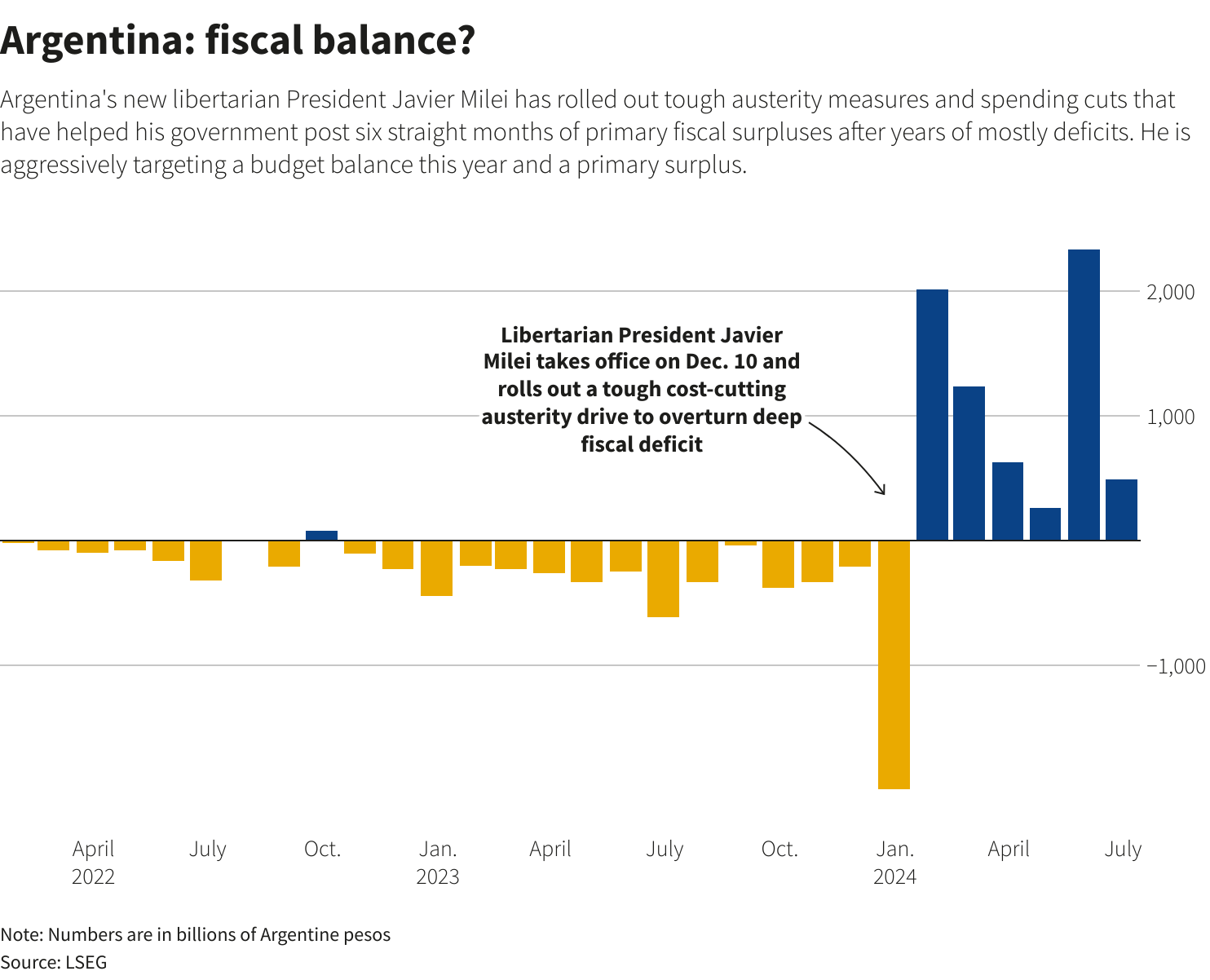
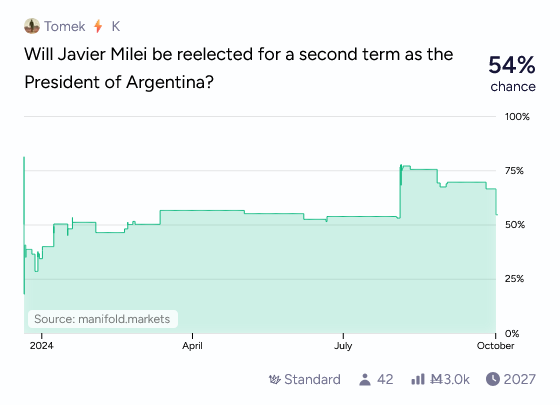
Javier Milei and the “Malvinas” question

Colby Cosh on how Argentine President Javier Milei handled British press inquiries about the Malvinas Falkland Islands like a boss:

I’ve been relishing a classic feast of British press overreaction to a BBC interview with the colourful libertarian president of Argentina, Javier Milei. The Beeb’s Ione Wells visited Milei at the Casa Rosada last week in Buenos Aires for a chat, and nothing like this could possibly happen without some talk about those damned islands — the Falklands or las Malvinas, depending on which country you believe to be their rightful sovereign.

Argentine leaders have to be careful how they talk about the Falklands (and about their uninhabited dependencies elsewhere in the South Atlantic). For decades regimes of left and right in Argentina have opportunistically kept the disputed islands at the forefront of the public imagination, fostering a spirit of delayed revenge. Sometimes this leads to daft verbal outbursts about “colonialism”, alongside game-playing with supplies and access to the islands. The constitution of Argentina contains language asserting “legitimate and imprescriptible sovereignty” over the rocks.

So anything a current Argentine leader says about the Falklands is bound to be scrutinized closely at home and in the United Kingdom. Milei is naturally impulsive, and has the particular problem that he is a political admirer of the late Margaret Thatcher. Wells tried to provoke him by bringing up the 1982 sinking of the General Belgrano and the consequent deaths of 323 Argentine sailors, which is still a slightly controversial episode of the Falklands War among the most self-hating shades of U.K. political opinion.

Milei, who had arranged a little display of Thatcher memorabilia in the room where the interview was held, sliced right through Wells’s Gordian knot. “Criticizing someone because of their nationality or race is very intellectually precarious,” he told Wells. “I have heard lots of speeches by Margaret Thatcher. She was brilliant. So what’s the problem?”

Even if you venerate Thatcher, who ordered the sinking of the Belgrano in very cold blood, you can perceive that this is a non sequitur. Milei is under no obligation to like a fellow neoliberal who was a military enemy of his own country. But one does remember that British statesmen have often been willing to express admiration for Napoleon I, Washington, Rommel and other killers of large numbers of British soldiers.

May 11, 2024

The second time as farce – “we’re living through a performative version of the seventies”

Filed under: History, Media, Politics — Tags: , , , , , — Nicholas @ 05:00

Sarah Hoyt posted this a few days back, but I only noticed it now:

A member of the CIA helps evacuees up a ladder onto an Air America helicopter on the roof of 22 Gia Long Street April 29, 1975, shortly before Saigon fell to advancing North Vietnamese troops.
Hubert van Es photo via Wikimedia Commons.

Yesterday talking to a friend, he said that it seems like we’re living through a shoddy version of the seventies.

But that’s not QUITE it. It’s more complicated. It’s more like we’re living through a performative version of the seventies.

It’s like all the recasting and re-doing of classic movies and series, at this point even those that weren’t particularly successful: it feels like Hollywood is just redoing these things out of some sort of dinosaur brain memory that they were successful. However, the people in charge no longer have any idea why these things were successful or why they resonated or achieved the results they did.

So the re-casts/re-dos sound hollow and strange, and would even if they didn’t use them to push their weird personal current obsessions. (All heroes must be women and black and increasingly of some odd sexual identity! Only villains can be white!) Because the car is there, but the engine is gone metaphorically speaking.

A Boeing CH-47 Chinook transport helicopter appears over the U.S. embassy compound in Kabul, 15 Aug 2021. Image from Twitter via libertyunyielding.com

All these redos and recastings and all are just shells of what the original was. And imbuing them with current wokeness doesn’t make them massively popular, because it doesn’t have that kind of purchase amid the public.

The left and current “Cultural gatekeeping elite” doesn’t seem to be aware of this, or aware of why they fail. In fact, each failure baffles them.

I could be snide, here, and say that it’s because this entire administration, and in fact, the entire upper-crust/controlling layer of our institutions are profoundly untalented theater kiddies, who have no creativity but love the style, and so are trying to do performance of what they think should be there, in the hopes it will work. And are forever baffled it doesn’t.

The truth is not quite that mean, but it rhymes. They are people of a certain frame of mind. In most places and most times, this would make them profoundly “conservative.” Frankly they are, because 100 years into the “progressive” project, those who support it are conservatives. But it’s a weird sort of “conservatism” because what they’re conserving is the cult that tells them if they tear Western civ apart paradise ensues. The whole just-so cult of Marx as filtered through their parents, grandparents and great grandparents.

Part of the whole Marxian philosophy is that it’s a self-contained system, congruent within itself, and with no basis in reality. This makes a certain type of mind susceptible to it. In other centuries they’d be religious fanatics, missionaries to the heathens and zeal-burned puritans.

That type of mind tends to think of things in terms of pre-ordained and fixed narrative, not wildly creative and innovative. That THEY think of themselves as creatives is the insanity of the current system and the Marxian corruption of institutions. They are not actually capable of creativity, only of passing on the received word.

And so we get to the other side of the rerun of the seventies: These kids, by and large, grew up with everything from schools, to TV to even their parents (for the children and grandchildren of boomers) being sold a version of the sixties and seventies in which protesting on the street, behaving badly and destroying property was being passionate and fighting for the voiceless and by itself meant IMPROVING SOCIETY and MAKING THE WORLD A BETTER PLACE.

So the most gullible of this generation are rebels without a clue. They must perform the hit the streets and protest, but they lack the immediacy of the draft to make it personal, and they lack anything like civil rights to make it righteous.

Instead they attach to any stupid cause they can find or which is handed to them by manipulative SOBs. So, you know, it might be saving the endangered Prebles Jumping Mouse, or perhaps saving old buildings, or even well … Lately Occupy Wall Street, BLM, antifidiots and of course pro-Hamass.

Apple crushes it

Filed under: Business, Media — Tags: , , , , , — Nicholas @ 04:00

You might not believe me, but I haven’t seen the Apple ad that everyone is hating on. I actively avoid ads of all kinds and refuse to open websites that are little more than shills for whoever is paying for the advertising. That aside, the description of the current ad — that Apple has already apologized for, I’m told — would certainly make me less likely to deal with the company that produced it:

Not since Kendall Jenner slipped away from a modeling shoot to defuse the tensions around a Black Lives Matter protest by handing a can of Pepsi to a riot cop has a mainstream ad campaign generated as much hostility as the just-released spot from Apple pitching the arrival of the thinnest iPad ever.

The ad was shared on Twitter by Apple CEO Tim Cook, who implored potential customers to “Just imagine all the things it’ll be used to create.” The clip shows a huge hydraulic press slowly crushing a bunch of old analog-era creative tools and treats, including a trumpet, an acoustic guitar and a piano, a record player, a camera, an old stand up arcade game, some rubber squeeze toys, and a bunch of paint cans. Then it pulls up to reveal the new, ultra thin iPad Pro, which has assimilated all of these things like some flatland Borg.

You can see what Apple was going for here – all these old, bulky, single purpose tools and playthings are now available at your fingertips, in a package no bigger than a magazine. It’s an upgraded version of that old meme that used to go around about everything that used to be literally on your desktop – phone, typewriter, file folders, fax machine, and so on – is now digitally sitting there on your computer desktop.

People got it all right. The response to the spot was immediate, visceral, and vicious. They hate it.

How did Apple go so wrong?

The most salient feature of the western mind’s relationship with technology is the ambivalence we have felt ever since Prometheus stole fire from the gods. On the one hand, we can now cook our food and keep ourselves warm. On the other hand, who knows where this will lead? Have we unleashed forces that will lead us to our destruction, or at least, lead us away from our true, authentic, selves? We love technology but we fear it, and the pendulum tends to swing from one extreme to the other depending on a host of factors, the most important of which is probably the rate of change and innovation. The faster things move, the less time we have to adapt, and we fear what is being lost more than we appreciate what is being gained.

We are living through a period of what is for most of us unprecedented technological change, where the threats – to both humanity, and to our humanity – seem more urgent than they have in decades, certainly since the advent of the nuclear bomb. Whether it is the sudden fears over AI or the rising moral panic over smartphones or the leery way we look at self-driving cars, there is a firm sense that things are just happening too fast, that the old is being replaced by the new in ways we are barely able to process, let alone control.

Update, 17 May: Samsung picks up something from the wreckage:

The publicity error was compounded by a frenzy of critical mainstream media coverage accompanied by celebrities expressing their outrage at the ad. But Samsung was not ready to let it lie.

The South Korean consumer technology mega-corp posted a short video on Twitter — which now calls itself X — accompanied by the hashtag “UnCrush”.

It shows a young woman walking into what appears to be the wreckage left behind by the Apple ad. Picking up a badly damaged guitar, with strings missing and holes in the body’s soundboard, she nonetheless sits down to play, reading music from a Samsung tablet.

“We would never crush creativity,” Samsung says in the social media post.

It might be a cheap shot, but it is one that is bound to sting for Apple.

Rex Murphy, RIP

Filed under: Cancon, Media, Politics — Tags: , , , — Nicholas @ 03:00

Canadian political commentator Rex Murphy has died at 77:

Tributes and remembrances from across the political spectrum have poured in for Rex Murphy, who died aged 77.

Mark Critch, a fellow Newfoundlander who parodied Murphy on the CBC program This Hour Has 22 Minutes, recalled that Murphy had worked with his father at VOCM radio in St. John’s, N.L. “You might not always agree with what he had to say but oh, could he say it”, Critch wrote on X, formerly Twitter. “I hope he makes it home to Gooseberry Cove.”

That theme — of not always agreeing with Murphy, but admiring his style — has been frequent in remembrances of his life.

Bob Rae, a long-time Liberal member of Parliament, former premier of Ontario and now Canada’s ambassador to the United Nations, wrote of meeting Murphy on television in 1978: “He stole the show”.

“We disagreed about many things, but I never lost my affection and admiration for him,” Rae wrote on X.

In a video posted Thursday evening, which had been recorded for an award Murphy received prior to his death, Conservative Leader Pierre Poilievre praised Murphy’s “verbal ninja moves”.

“You are a national treasure. You are a voice of reason. You are a champion of all things that are great in our country,” Poilievre said.

    Canada has lost an icon, a pioneer of independent, eloquent, and fearless thought, and always a captivating orator who never lost his touch.I was honoured to toast to Rex a few months ago on receiving the Game Changers Award for one of this country’s true game changers.

    Rex,… pic.twitter.com/Nz8fWBPv7F

    — Pierre Poilievre (@PierrePoilievre) May 10, 2024

On Friday, the House of Commons held a moment of silence in honour of Murphy.

“Few gifts from the rock rival that of the now-departed Rex Murphy,” Conservative MP John Williamson said in the House. “Rex stood on guard for all of us with great wit and wisdom throughout his many newspaper columns and on-air commentaries. Rex was brave but without pretence. He despised the smug.”

Murphy’s writing, which appeared for more than a decade in National Post, was always fierce, often controversial, and liberally peppered with the sort of language that has the feel of an age gone by.

« Newer PostsOlder Posts »

Powered by WordPress