
High on my list of esoteric forgotten things that I still love is ’70s and ’80s electric jazz fusion and the more esoteric reaches of prog rock adjacent to it. Return To Forever, Brand X, Billy Cobham, Mahavishnu Orchestra, Weather Report, that sort of thing. Also its modern descendants like Planet X and Protocol.
I’ve spent years trying to encourage the YouTube algorithm to find me more stuff like this. Fairly successfully, until recently it seems all I can get is repeats of stuff I’ve already heard.
Could be the algorithm is stuck in a rut and underweighting novelty. Or it could be that YouTube’s coverage is inadequate. But this morning the truly horrifying possibility occurred to me. That YouTube’s coverage is complete, and …
Maybe … maybe I’ve heard it all.
ESR, Twitter, 2025-04-14.
July 15, 2025
QotD: Music on YouTube
July 14, 2025
The “War of the Sexes” is over … men now expected to surrender and go back to doing what women want
The more I read about the state of male-female interactions on the dating scene (such as it is), the more grateful I am that I’m decades out of that killing ground. Male survivors have clearly decided that the risks are far greater than the potential relationship rewards and individually withdrawn in large enough numbers that the “dating scene” is a shadow of what it once was in the pre-swipe-left era. Janice Fiamengo responds to a “men, come back!” plea from Rachel Drucker in the New York Times:
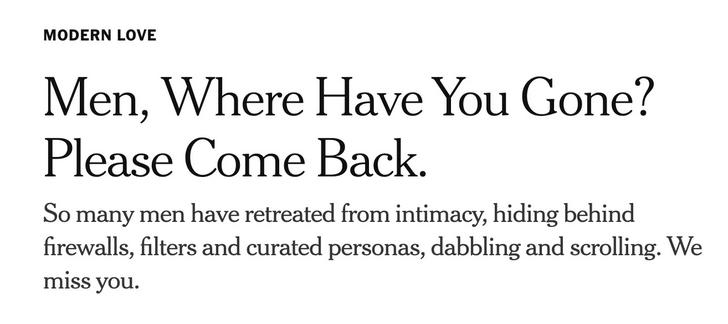
The question of where men have gone, in the title of Rachel Drucker’s New York Times op/ed, is surely disingenuous. Drucker thinks she knows: men have disappeared into social media posting, digital lurking, uncommitted sexting, and porn. Allegedly afraid of emotional intimacy, they are no longer “showing up” for women. Drucker addresses men directly, diagnosing their feelings: “You’ve retreated — not into malice, but into something softer and harder all at once: Avoidance. Exhaustion. Disrepair.”
Well, maybe. Maybe not.
Drucker’s article is part social lament, part personal ad, and like many statements by modern women about men, it is notable for its presumption. Drucker seems to think she can call off the sex war simply by saying she’s had enough. Men were never supposed to stop being available to women. Drucker mourns a lost time when men “asked questions and waited for the answers”, when they “listened — really listened — when a woman spoke”. It doesn’t seem to occur that men have been listening and have heard women’s messages, loud and clear.
Drucker goes so far as to express nostalgia for a time of male sexual pursuit, when having a woman on one’s arm was a way for a man to prove himself and impress other men. “It wasn’t always healthy”, she says in one of her many massive understatements (ignoring the barrage of condemnation leveled against such men) “but it meant that men had to show up and put in some effort”.
Drucker produces no evidence of men’s lack of effort, and it is not clear that her personal anecdotes — all culled, it seems, from her monied Chicago milieu — are representative. I know many men, including young men, who are still willing to pursue romantic relationships with women; many put in a lot of time and thought. But it does ring true that at least some portion of men are far more wary than in previous eras, unwilling to risk the potential hell of divorce or of a false accusation in a culture that believes women and belittles men.
Some men have simply come to the conclusion that modern women aren’t, in general, all that likable — neither marriage material nor viable candidates for motherhood.
As far as female pronouncements about men go, Drucker’s piece is not the worst. It does not hector or accuse (at least, not much), and Drucker expresses some genuine liking for men. But it’s not clear how much that is worth when she is so oblivious to men’s points of view and unaware that at least some of the onus for re-engaging men must fall on women. Drucker’s blind spots and unearned certainty turn her wistful dirge into a tone-deaf commentary on contemporary sexual politics.
The article begins with a restaurant, where Drucker notes the absence of men. There are women together, doing what women do, but almost no coupled men. And in her own life, Drucker notes, there has been retreat. It isn’t just her, she’s sure: it’s a collective act in which men are removing themselves from women’s lives, no longer “trying to connect”.
Drucker is part of the problem, though she doesn’t seem to recognize it. She admits that she “spent over a decade” working for Playboy and more hardcore sites to get men addicted to digital pornography. Part of her job was “to understand exactly what it took to get a man to pay for content he could easily find for free”. She does not seem to regret this work or recognize its damage; on the contrary, she exults that it helped her understand men’s deepest selves.
Her characterization is simplistic and contemptuous: “We knew what worked”, she boasts. “It wasn’t intimacy. It wasn’t mutuality. It was access to stimulation — clean, fast and frictionless. In that world, there’s no need for conversation. No effort. No curiosity. No reciprocity.”
If this is what men fundamentally are to Drucker — sex bots without emotion or desire for reciprocity — why is she so disappointed that they are no longer around?
July 11, 2025
William F. Buckley
In Quillette, Ronald Radosh reviews the long-awaited biography of arch-conservative William F. Buckley by his friend Sam Tanenhaus, Buckley: The Life and the Revolution That Changed America:
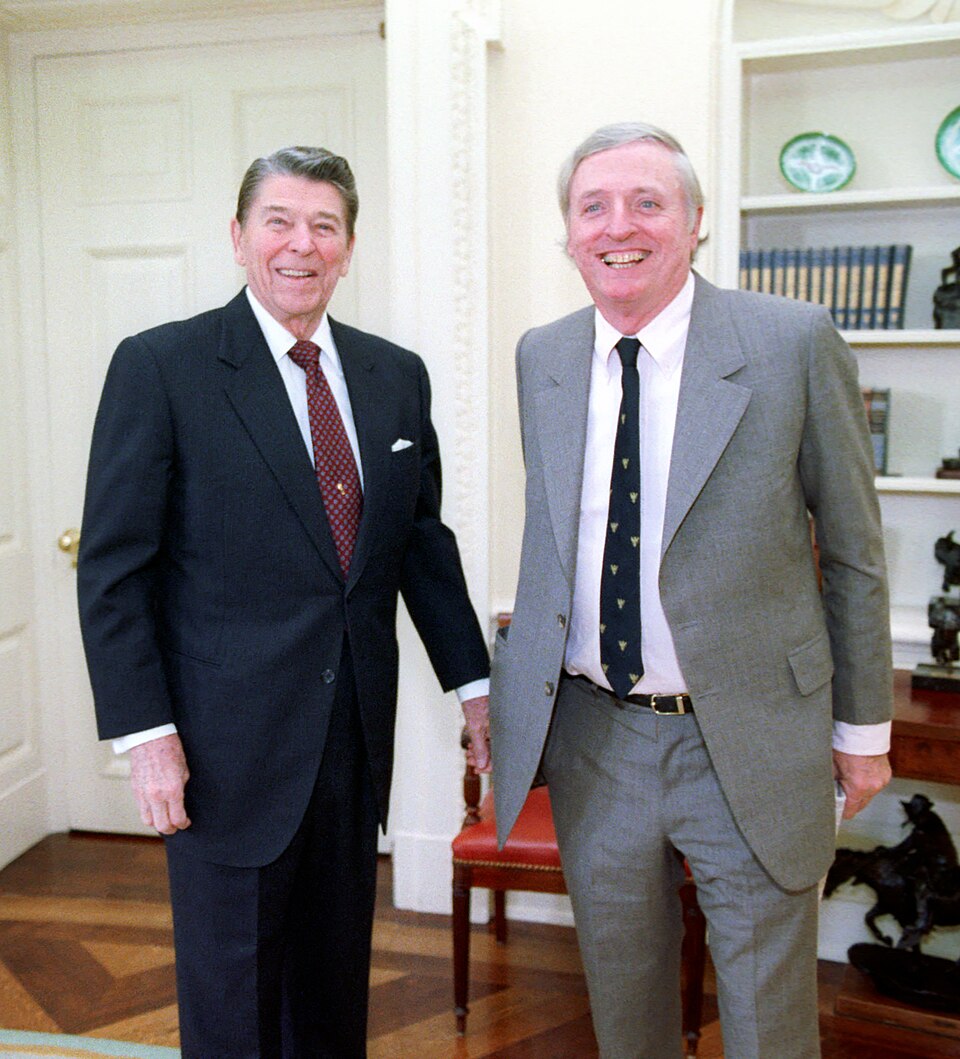
President Reagan meeting with William F. Buckley in the White House, 21 January, 1988.
Photo from the White House Photographic Collection via Wikimedia Commons.
William F. Buckley Jr. was a polymath of unusual erudition. The author of scores of books (including nearly two dozen novels), Buckley was an ardent apostle of conservatism at a moment when American liberalism was ascendant. But he was also an accomplished musician who played the harpsichord, a sailor who entered competitions and spent most summers on the sea, and an avid skier who spent his winters on the slopes of Gstaad after a morning of writing. Most Americans knew him as the host of a weekly television talk show called Firing Line, in which he interviewed and debated a wide range of politicians and intellectuals, most of whom he vehemently but politely disagreed with. (Many of these episodes are now available to view on YouTube.)
Television allowed Buckley to display his not inconsiderable wit and charm. He interviewed prominent socialists like both Norman Thomas and Michael Harrington, but he invited fellow conservatives onto his show as well. He had fellow conservatives on his show too, but he particularly relished debates with ideological opponents like Julian Bond (the young black leader of the Student Nonviolent Coordinating Committee), author Norman Mailer, journalist Christopher Hitchens, Ramparts editor Robert Scheer, and leaders of the Black Panther Party. The only people he would refuse to debate, he told the TV network, were communists lest he lend them legitimacy. Agents of the Soviet Union, he maintained, were not worth engaging with.
Buckley’s other major accomplishment was founding and editing America’s first nationwide conservative magazine. The bi-weekly National Review was the conservative counterpart of the influential liberal publications of the day, including the New Republic, The Nation, The Reporter, and the New Leader. Those liberal magazines all had rather small circulations but they also had the field to themselves until Buckley’s NR came along. Buckley hired a roster of old-style conservatives and ex-communists, including the former Trotskyist James Burnham, the former Communist agent (and accuser of Alger Hiss) Whittaker Chambers, Willi Schlamm, and Frank Meyer. As time went by, he added prominent young conservatives to the magazine’s masthead, many of whom would go on to become political leaders in the new American conservative movement. His prize protégé may have been Gary Wills, who eventually left NR‘s ranks and, much to Buckley’s disappointment, became an influential American liberal. Other NR contributors went on to become important American essayists and authors in their own right, like Joan Didion, George Will, and John Leonard, who edited the New York Times Book Review during the 1970s.
Buckley was the scion of a wealthy Connecticut family with a great estate in Sharon, Connecticut, that his father William F. Buckley Sr. named “Great Elm”. However, Buckley Sr. was also a Texan who identified closely with the American South, and after he made his fortune speculating in oil in Mexico and Venezuela, he purchased a mansion in Camden, South Carolina, for use during the cold Eastern winters. He named it Kamchatka, and the neighbouring residents, Tanenhaus writes, embraced the family “as Southerners who had come home”. Kamchatka had previously been the home of a Confederate general and senator who left office when Lincoln was elected President in 1860, but Camden would play an important role in the civil-rights movement.
By the 1950s through the ’60s, Tanenhaus writes, “the institution of Jim Crow — the legacy of slavery, the Civil War and Reconstruction — was being shaken at its foundations”. In the ’50s, the nation learned about the brutal murder of fourteen-year-old Emmet Till and massive protests by the black population began to appear across the South. The liberal magazines of the day covered the rise of the civil-rights movement and did what they could to mobilise Northerners in support of Southern blacks. In the deep South, activist efforts culminated in the famous Freedom Summer movement for black-voter registration in 1964. Camden, too, became the centre of a massive resistance movement.
Yet all this political and social upheaval never received a word of positive coverage in the pages of National Review. The reason for this was not complicated. Buckley’s family believed that “race was a settled question” and that racial separation was justified “as a matter of law as well as custom”. The Buckley family, of course, hired black help for their Camden mansion, whom they treated with respect and support. But members of the “Negro” race, as blacks were then called, had to know their place. So, Buckley wrote a number of unsigned editorials in February 1956 defending the South’s “deeply rooted folkways and mores”. The South, he argued, “believes that segregation is the answer to a complex situation not fully understandable except to those who live with it”, just as his own parents and siblings did. He vigorously objected to the Supreme Court’s verdict in 1954 outlawing segregated schools in Brown v. Board of Education, and he wrote editorials arguing that the Court’s decision was not an interpretation of the Constitution but rather “a venture in social legislation.”
In Camden, meanwhile, the Buckley family started and financed a newspaper called the News, which was meant to be a vehicle for the white South’s racist population and their “Citizens’ Councils”. Instead of burning crosses and lynching, the Councils preferred to use “legal threats, economic harassment, and public denunciation” in defence of segregation. In one case, a business owned by a black protestor was destroyed and his family harassed by the Council, after the owner tried to register to vote. As the violence in Camden became more extensive and widely reported, Buckley responded with an unsigned NR editorial on 10 January 1957 in which he argued that “the Northern ideologists are responsible for the outbreak of violence”. He did also condemn the “debasing brutality” of the white population’s behaviour, and for years, that remark remained his strongest condemnation of white violence. He continued to ignore the support provided to the Councils by South Carolina authorities.
One of Tanenhaus’s most stunning revelations is that, in 1956, Buckley dispatched an NR contributor to report on the National States’ Rights Conference in Memphis. The man he sent was one Revilo Oliver, whom Tanenhaus correctly describes as “a fanatical racist and anti-Semite”. The following year, NR published Buckley’s most infamous editorial, titled “Why the South Must Prevail”. The white community, he wrote, had a right to defend segregation because “for the time being, it is the advanced race”. The white South, he wrote, “perceives important qualitative differences between its culture and the Negroes’; and intends to assert its own”. And since NR “believes the South’s premises are correct”, the black population could justifiably have its interests thwarted by “undemocratic” but “enlightened” means. That editorial, Tanenhaus rightly notes, “haunts [Buckley’s] legacy, and the conservative movement he led”. Buckley also believed that if suppression of the black vote violated the terms of the Fourteenth Amendment, then that and the Fifteenth Amendment should be considered unconstitutional — “inorganic accretions to the original document, grafted upon it by victors-at-war by force”.
July 10, 2025
Mandatory online age verification
Michael Geist discusses the rush of the Canadian and other governments in the west to try to impose one-size-fits-all age verification schemes on the internet:

The Day I Knew I Was Old 😉 by artistmac CC BY-SA 2.0
When the intersection of law and technology presents seemingly intractable new challenges, policy makers often bet on technology itself to solve the problem. Whether countering copyright infringement with digital locks, limiting access to unregulated services with website blocking, or deploying artificial intelligence to facilitate content moderation, there is a recurring hope the answer to the policy dilemma lies in better technology. While technology frequently does play a role, experience suggests that the reality is far more complicated as new technologies also create new risks and bring unforeseen consequences. So too with the emphasis on age verification technologies as a magical solution to limiting under-age access to adult content online. These technologies offer some promise, but the significant privacy and accuracy risks that could inhibit freedom of expression are too great to ignore.
The Hub runs a debate today on the mandated use of age verification technologies. I argue against it in a slightly shorter version of this post. Daniel Zekveld of the Association for Reformed Political Action (ARPA) Canada makes the case for it in this post.
The Canadian debate over age verification technologies – which has now expanded to include both age verification and age estimation systems – requires an assessment of both the proposed legislative frameworks and the technologies themselves. The last Parliament featured debate over several contentious Internet-related bills, notably streaming and news laws (Bills C-11 and C-18), online harms (Bill C-63) and Internet age verification and website blocking (Bill S-210). Bill S-210 fell below the radar screen for many months as it started in the Senate and received only cursory review in the House of Commons. The bill faced only a final vote in the House but it died with the election call. Once Parliament resumed, the bill’s sponsor, Senator Julie Miville-Dechêne, wasted no time in bringing it back as Bill S-209.
The bill would create an offence for any organization making available pornographic material to anyone under the age of 18 for commercial purposes. The penalty for doing so is $250,000 for the first offence and up to $500,000 for any subsequent offences. Organizations can rely on three potential defences:
- The organization instituted a government-approved “prescribed age-verification or age estimation method” to limit access. There is a major global business of vendors that sell these technologies and who are vocal proponents of this kind of legislation.
- The organization can make the case that there is “legitimate purpose related to science, medicine, education or the arts”.
- The organization took steps required to limit access after having received a notification from the enforcement agency (likely the CRTC).
Note that Bill S-209 has expanded the scope of available technologies for implementation: while S-210 only included age verification, S-209 adds age estimation technologies. Age estimation may benefit from limiting the amount of data that needs to be collected from an individual, but it also suffers from inaccuracies. For example, using estimation to distinguish between a 17 and 18 year old is difficult for both humans and computers, yet the law depends upon it. Given the standard for highly effective technologies, age estimation technologies may not receive government approvals, leaving only age verification in place.
July 8, 2025
The dangers of whiplash when “the narrative” suddenly changes
I’ve never been to Los Angeles, although I did spend a couple of weeks working in the San Francisco area a few decades back, so I’m inclined to think Chris Bray is reporting closer to the objective reality than most of the mainstream media are doing:
Federal agents raided MacArthur Park in Los Angeles today, and that’s shocking! It’s HORRIBLE! Why on earth would they do that?!?!?!? (MY GOD, THEY WERE EVEN ARMED!)
Also, here’s local NPR station KCRW, a very few months ago:
Opening paragraphs:
For more than a century, MacArthur Park, just west of Downtown Los Angeles, has been an urban oasis for residents of the surrounding Westlake District and the wider city. But in recent years, MacArthur Park has also become synonymous with fentanyl, the synthetic opioid that can be 50 times more powerful than heroin. Open fentanyl abuse is now so common, the drug might as well be an unofficial symbol of the park.
Scenes of fentanyl abuse, and what it does to the body and mind, are everywhere, with people passed out or staring dead-eyed as they clutch drug pipes and small containers of fentanyl residue.
More recently, the Los Angeles County DA’s office announced a bunch of felony indictments for an aggressive retail theft ring that used MacArthur Park to recruit and organize its army of professional thieves:
LOS ANGELES — Los Angeles County District Attorney Nathan J. Hochman announced today that Blanca Escobar has been charged with receiving over $350,000 in stolen merchandise from retailers including Target, Macy’s, TJ Maxx, CVS, and Walgreens at her business near MacArthur Park.
“This case is an important step toward cleaning up MacArthur Park, a community that has long struggled with crime and safety concerns,” District Attorney Hochman said. “Combating organized retail theft in close partnership with LAPD and other law enforcement is a priority for my administration. My office will vigorously prosecute this case and send an unmistakable message to criminals: Retail theft will not be tolerated under my watch.”
Note that the DA called the indictments “an important step toward cleaning up MacArthur Park”. Why? Why did prosecutors think MacArthur Park needs cleaning up?



“One of the problems with being a writer is that all of your idiocies are still in print somewhere”
At the Foundation for Economic Education, Itxu Díaz considers the work of P.J. O’Rourke:
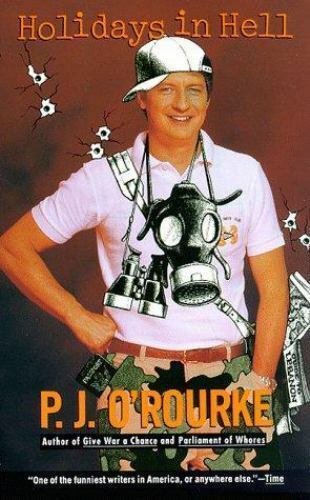
Though P.J. O’Rourke passed away three years ago, his sharp wit and defense of freedom continue to resonate in a world still tempted by interventionist solutions. Reclaiming his work is more vital now than ever. What he told us through laughs and jabs in recent decades has proven to be one of the sharpest diagnoses of the dangers of postmodern left-wing ideology — and one of the most inspired reflections on why we must root our societies in individual liberty, private property, the free market, and the Judeo-Christian values that shaped the West for centuries.
Progressives want bigger government, and often conservatives don’t want it as small as we ought to like. O’Rourke knew all too well that the larger the state grows, the smaller individuals become. He devoted much of his work to explaining this in a way anyone could understand — even those not particularly interested in politics. His words resonate today in a new light, and fortunately, they remain easy to access: the Internet is full of O’Rourke’s articles, and all his books are still in print. The ideas, the jokes — the profound, the outdated, and even the ones that haven’t aged all that well — are still out there, waiting to be discovered by any digital wanderer with a sense of humor and a thirst for sharp thinking. It’s almost frightening to realize that some of O’Rourke’s tech-related jokes would go completely over a Millennial or Zoomer’s head today. And it’s even more pitiful to think that some of his old comments would be cancelled in today’s dull, hypersensitive postmodern world. Perhaps it’s because, as he once said, “One of the problems with being a writer is that all of your idiocies are still in print somewhere”. Incidentally, that’s where O’Rourke found his only point of agreement with environmentalists: “I strongly support paper recycling”.
The hippie student he was in the ’60s lost his enthusiasm for leftist ideas the following decade, as soon as he got his first paycheck from National Lampoon: a $300 check that filled him with joy — until he was told $140 would be deducted for taxes, health insurance, and Social Security. That day, he got mad at the government, and the grudge never faded. Before that, while still sporting what he called “a bad haircut” — think John Lennon’s worst style — he’d decided to tell his Republican grandmother he’d become a communist. Her response threw him off: “Well, at least you’re not a Democrat”.
O’Rourke was never one to romanticize his drug-fueled college days. “Oh God, the ’60s are back,” he wrote. “Good thing I’ve got a double-barreled 12-gauge with a chamber for three-inch magnum shells. And speaking strictly as a retired hippie and former beatnik, if the ’60s come my way, they won’t make it past the porch steps. They’ll be history. Which, for God’s sake, is what they’re supposed to be.”
From his time as editor-in-chief of National Lampoon in the ’70s, we got his account in The Hollywood Reporter, “How I Killed National Lampoon“. The job was a blast, but the environment was hell: “Having a bunch of humorists in one place is like having a bunch of cats in a sack”. As a satirical war correspondent covering every late-century conflict, O’Rourke filled countless pages describing the struggle to find a damn glass of whiskey in the burning countries at the “end of history”. His last dangerous assignment was in Iraq. “I’d been writing about overseas troubles of one kind or another for twenty-one years, in forty-some countries, none of them the nice ones. I had a happy marriage and cute kids. There wasn’t much happy or cute about Iraq,” he wrote in Holidays in Heck.
July 7, 2025
Consumers don’t want AI in everything, but you’ll be forced to take your AI, peasants!
Ted Gioia — like about 92% of consumers at last count — doesn’t want to have artificial intelligence “enhancing” the software he uses every day, but software companies don’t want him — or you — to have that choice:
A few months ago, I needed to send an email. But when I opened Microsoft Outlook, something had changed.
Microsoft asked me to use Copilot to write my email. Copilot is my AI companion. (That’s the cute word they use.)
Hey I don’t want a companion — especially not a fake AI buddy. I never asked for this.
And what about the people receiving my emails? They don’t want this either. They want to hear from me, not a bot.
How do I turn my companion off?
After some trial-and-error, I found a way to disable Copilot. Phew!
But a few days later, Microsoft surprised me again. It wouldn’t let me save an Excel file until I had agreed to new terms for my software account.
Guess what? AI is now bundled into all of my Microsoft software.
Even worse, Microsoft recently raised the price of its subscriptions by $3 per month to cover the additional AI benefits. I get to use my AI companion 60 times per month as part of the deal.
But I don’t want to use it. I want to kill it.
As you can see, I’ve never used this service. I still have all 60 credits unused. But I’m paying for it — because it’s now embedded into Microsoft Word, Excel, etc.
This is how AI gets introduced to the marketplace — by force-feeding the public. And they’re doing this for a very good reason.
Most people won’t pay for AI voluntarily — just 8% according to a recent survey. So they need to bundle it with some other essential product.
You never get to decide.
Before proceeding let me ask a simple question: Has there ever been a major innovation that helped society, but only 8% of the public would pay for it?
That’s never happened before in human history. Everybody wanted electricity in their homes. Everybody wanted a radio. Everybody wanted a phone. Everybody wanted a refrigerator. Everybody wanted a TV set. Everybody wanted the Internet.
They wanted it. They paid for it. They enjoyed it.
AI isn’t like that. People distrust it or even hate it — and more so with each passing month. So the purveyors must bundle it into current offerings, and force usage that way.




July 5, 2025
“This is what happens when a major label morphs into a copyright and IP management business”
Ted Gioia reads the tea leaves of the big music labels and says that the future does not look good. At all:
I follow music industry news the way other people read obituaries.
Those two kinds of articles have a lot in common — both death notices and music biz news deal mostly with the past. The only new thing in the story is that something was living, and now it ain’t.
Here’s an example from yesterday:
This sounds like a happy story, no? These smart people are investing in music.
But it isn’t a happy story. They are investing in the rights to old music. They won’t spend any of that money on new music.
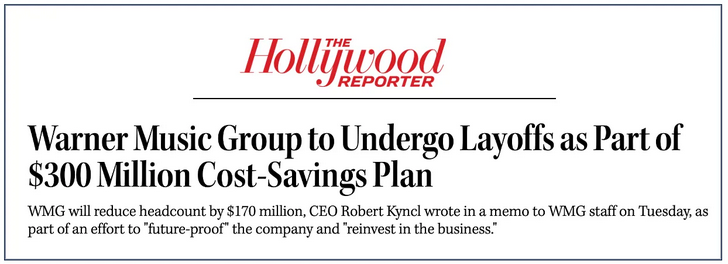
If you have any doubts about Warner’s priorities, here’s another headline — also from yesterday.
If you’re looking for a clear signal from a major record label, it won’t get any clearer than this.
This is exactly what a record label does when it no longer views music as a vital creative force in the current day. This is what happens when a major label morphs into a copyright and IP management business — which can be run by a small team of lawyers and accountants.
Yes, you can make money living off the past — but not for long.
I keep waiting to read a news story about a major label investing a billion dollars in developing new artists. But I never see that story.
I’ve written in the past about fans who prefer old music. But big record labels are even more obsessed with vintage and retro songs.
And it’s not just Warner Music. Universal Music is doing the same thing. So is Sony and Concord and other big labels.
That’s disturbing.
These are the same companies who should be creating the future of music. They should be convincing the public to listen to new songs and new artists. After all, if record labels don’t invest in the future of music, who will?
Maybe nobody.
A few years ago, investment firms started viewing old songs as investments. That didn’t work out very well. The most prominent song investment fund crashed and burned — as I predicted long in advance.
At that point, the smart money headed for the exits.
In the aftermath, the only enthusiastic buyers of old songs were the big record labels. They are the buyers of last resort.

NYC selects its own Justin Trudeau clone
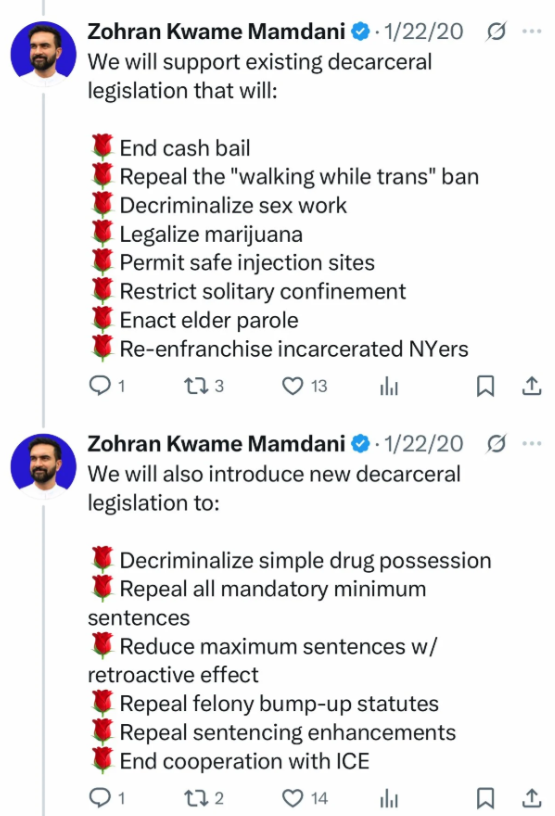
The winner of the Democratic primary is almost always subsequently elected as the mayor of New York City, so it’s fair to assume that Zohran Mamdani is going to be NYC’s next mayor. And he’s an American version of ultra-progressive former Prime Minister Justin Trudeau:

New York State Assemblymember Zohran Mamdani photographed in Assembly District 36, 10 February 2024.
Photo by Kara McCurdy via Wikimedia Commons.
American politics often seem to balance themselves out in the worst possible way. Even as the GOP sheds its last vestiges of affection for limited government and free markets, the opposition Democrats openly embrace bigotry and crazy economic nostrums. Case in point: the rise in New York City of Zohran Mamdani, an avowed socialist who flirts with antisemitism, to represent the Democratic Party in this year’s mayoral election.
The primary race in New York was a snapshot of the Democratic Party’s woes. Despite the presence of other candidates seeking the mayoral nomination, the race ultimately came down to two candidates: Mamdani and Andrew Cuomo, the disgraced former governor of New York.
Before resigning over allegations of sexual harassment, Cuomo, the 67-year-old son of another former governor, was best known for a “controversial directive that told nursing homes they couldn’t deny patients coming from hospitals admission based on a COVID-19 diagnosis”, according to StatNews. He then covered up the large number of ensuing deaths. He was the favoured candidate of the Democratic establishment and the early front-runner for the nomination.
Standing out from the pack of political hopefuls facing Cuomo was Zohran Mamdani, the 34-year-old son of an Oscar-nominated filmmaker and a Columbia University political science professor. Before being elected to the state legislature as a Democrat and a socialist, Mamdani tried his hand as a government employee and a rapper. His musical output included the song “Salaam”, which, as The Independent put it, “praised the ‘Holy Land Five’ — five men convicted in 2008 of donating over $12 million to Hamas”.
To say that New Yorkers are tired of Cuomo is a wild understatement. Like most Americans, New Yorkers are deeply sick of the old party establishment that rallied around Cuomo as well as the man himself. Yet, he was expected to walk away with the nomination and then cruise to victory in a largely one-party city.
But Mamdani sweetened the pot in the expensive metropolis with promises to freeze rent, make buses free, offer no-cost childcare, lower grocery prices with city-owned grocery stores, and use “public dollars” to build 200,000 apartments. He swears that he “knows exactly how to pay for it, too” with higher taxes on those making more than $1 million per year. Not explicitly part of his campaign, but on the record as his intention, is “the end goal of seizing the means of production”.
In the 2021 recording in which he advocated seizing the means of production, Mamdani endorsed BDS as an issue “that we firmly believe in”. The BDS movement — shorthand for “Boycott, Divestment, and Sanctions” — aims to economically pressure Israel into withdrawing from so-called “occupied territories” and allowing Palestinians to settle throughout Israel. At its extremes, BDS seeks to eliminate the world’s only Jewish-majority state. It’s inspired by the movement against South Africa’s old apartheid regime.
July 4, 2025
As they say, “you don’t hate the media enough”
In the National Post, Chris Selley points out that it was literally just the media who got their panties twisted up over flying the Canadian flag during and after the Freedom Convoy protests in 2022:

One of the stupidest arguments to emerge during Canada’s pandemic experience was the idea that by flying the Canadian flag, the Freedom Convoy types had ruined the Canadian flag for everyone else. And that Canadians, as a result, were hesitant to display the flag lest they be thought of as anti-vaxxers, COVID-deniers or outright Nazis.
It’s not true, and the idea was completely absurd. If you’re driving through, say, Vermont and see the stars and stripes flying on someone’s front lawn, do you assume they supported the Jan. 6, 2021 attack on the Capitol? When you see the St. George’s Cross waved at an English soccer game, do you assume the flag-waver supports the English Defence League? When you see the French tricolour do you instantly think of Marine Le Pen and the far-right Front National?
You don’t, because that would be stupid. People advancing causes that they feel to be of national importance tend to deploy national flags. Rarely are those causes universally supported. Few causes are.
At the time I ascribed the narrative mostly to COVID-induced hysteria. The Globe and Mail‘s and Toronto Star‘s comment pages always reflect a somewhat, shall we say, limited perspective on Canadian society. But the pandemic trapped opinion writers behind their keyboards and in their online echo chambers more than ever before. It was febrile. People across the political spectrum went just a bit nuts, and I don’t exclude myself.
But with the pandemic behind us, with the keyboard class mostly resigned-to-happy with how it went (better than America is all that really counts, right?) I was a bit surprised to see this narrative exhumed, dressed up in a Hawaiian shirt and dragged around town for Canada Day in triumph. The narrative: We have our flag back!
“The dissidents stole our flag,” Gary Mason wrote in the Globe. “They flew our flag from their trucks. They hung it over their encampments. By the end, many Canadians associated the red-and-white Maple Leaf with the so-called Freedom Convoy.
Everyone’s Mad About AI; Here’s What We Think
World War Two
Published 3 Jul 2025Is AI rewriting history? Indy, Anna, Sebastian, Sparty, and Iryna tackle some tricky questions about the future of history, our channels, and the world in general. We discuss our recent use of AI in the Rise of Hitler series, animating portraits, and the use of large language models in research. What risks and opportunities are there for TimeGhost in the future?
(more…)
July 3, 2025
“[T]he old Fleet Street … would not have foregone the pleasures of a story involving the words ‘prime minister’, ‘firebombings’ and ‘quartet of male models'”
Mark Steyn notes the amazing disinterest the British press has been showing for Prime Minister Keir Starmer’s recent firebombing “male model” troubles:

Sir Keir Starmer speaking to the media outside Number 10 Downing Street upon his appointment.
Picture by Kirsty O’Connor/ No 10 Downing Street via Wikimedia Commons.
Meanwhile, “Two-Teir Keir” gave an extraordinary interview to a friend from The Observer, in which he reveals that, other than his war on the remnants of UK free speech, he’s spent the last year getting everything wrong. It’s a weird and psychologically unhealthy confessional that one could not imagine from any of his predecessors, whether the wretched David Cameron or the Marquess of Salisbury. If you want the scoop, skip the lame-arse coverage from the decaying Spectator and go to my old chum Dan Wootton. The Speccie’s snoozeroo “gossip columnist” headlines his piece “Four lowlights from Starmer’s Observer interview“, yet fails to note the most intriguing lowlight of all.
Six weeks ago, Sir Keir gave a speech on immigration which, while being a statement of the bloody obvious two decades too late, nevertheless went further than anyone else of any consequence in British life has been prepared to go. Somewhat curiously, this speech came just a few hours after his car exploded and two houses of his were firebombed — for which three (at the time of writing) Ukrainian “male models” have been arrested. I would not wish to suggest the PM has a unique fascination with Ukrainian “male models”. A fourth man has since been arrested — a “male model” from Romania. Diversity is our happy ending! The words “male model” do not appear in The Observer‘s account:
In the small hours of 12 May this year, there was a firebomb attack on the Starmer family home in Kentish Town. His sister-in-law, who had been renting the house since he became prime minister, was upstairs with her partner when the front door was set alight. “She happened to still be awake,” Starmer says, “so she heard the noise and got the fire brigade. But it could have been a different story …”
The prime minister, who had arrived back from a three-day trip to Ukraine the night before, was due to unveil the government’s new immigration policy that morning. “It’s fair to say I wasn’t in the best state to make a big speech,” he says. “I was really, really worried. I almost said: ‘I won’t do the bloody press conference.’ Vic [Lady Starmer] was really shaken up as, in truth, was I. It was just a case of reading the words out and getting through it somehow …” – his voice trails off …
So Sir Keir has now disavowed the only non-bollocks thing he has ever said. He “deeply regrets” saying Britain risked becoming “an island of strangers”, but he only did so, he offers in mitigation, because he was stressed out by all the firebombing from the massed ranks of fetching Slav twinks congregated on his various doorsteps. Unlike the Speccie, my chum Dan Wootton has a nose for a story:
Lucy Connolly was fast-tracked into her gaol cell in nothing flat – because that was the priority of the British state. By comparison, the men who firebombed the Prime Minister’s car and houses will not appear in court until next April, because determining how a remarkable number of East European “models” with no English-language facility were sufficiently familiar with Sir Keir’s homes and car to firebomb them is not a priority. Presumably, by the time April rolls around, the boyish charmers will have been persuaded to do an Axel Rudakubana and cop a plea, so that no trial need be held at all.
Say what you like about the old Fleet Street, but they would not have foregone the pleasures of a story involving the words “prime minister”, “firebombings” and “quartet of male models”. The silence of The Spectator is very typical. If you subscribe to James Delingpole’s view that the increasingly bizarre individuals who make it to the top of the greasy pole — Starmer, Macron, Trudeau — are there because the people who really run the world have got kompromat on them (which is your basic Occam’s Razor), then terror cells of Donbass rent boys blowing up the PM’s motor is an obvious false-flag operation designed to discredit the general thesis …
Here’s the gist of it all, courtesy of another Bob Vylan crowdpleaser:
Heard you want your country back Ha! Shut the f*** up! Heard you want your country back
You can’t have that!
I’m Keir Starmer and I endorse this message. As I wrote
twenty years ago— whoops, no, thirty sodding years ago, a counter-culture has to have a culture to counter. And in Britain and elsewhere an old establishment has merely been supplanted by a new one with lousier tunes. It’s not “edgy” or “transgressive” if you’re live on the BBC’s biggest outlet at an event run by a bloke with a knighthood. The only true counter-culture is that identified by the pseudo-edgy ersatz-transgressive Sir Bob Vylan — the ones who want their country back. Ask Peter Lynch.Oh, wait, you can’t: He’s dead. Sir Keir Starmer and Jeremy Richardson KC killed him — because, in order to prevent you “harming” them, it is necessary for them to harm you.

July 2, 2025
“In short order, Trudeau was describing his own country with the kind of apocalyptic rhetoric one typically associates with, say, the Holocaust, Holodomor, or Rwandan Genocide”
In Quillette, Tristin Hopper provides some excerpts from his book Don’t Be Canada: How One Country Did Everything Wrong All At Once, published earlier this year:

Prime Minister Justin Trudeau holding a teddy bear in the proximity of a soil disturbance in a field at the site of a former residential school in Cowessess First Nation, Saskatchewan.
July 6, 2021.
This is the story of how, in 2019, Canada became the first (and, to this day, only) country to declare itself guilty of committing an ongoing genocide against its own citizens.
To outsiders, who (correctly) view Canada as a humane democracy, the tale will seem bizarre. But to Canadians, there was a certain twisted political logic to it — at the time, at least.
In the late 2010s and early 2020s, back when my country was still ruled by Justin Trudeau, Canada’s progressive elites bought into then-ascendant social-justice manias with a born-again fervour that was arguably unmatched in any other nation. This was a time, readers will recall, when college students were busily confessing their internalised white supremacy and racist thought crimes to one another on social media. Seeking to ingratiate his Liberal Party with this young demographic, Trudeau extrapolated their cultish movement on a national scale.
His rhetorical style became increasingly manic, as one social-justice slogan led to another; with each being rapturously liked and retweeted on social media. In short order, Trudeau was describing his own country with the kind of apocalyptic rhetoric one typically associates with, say, the Holocaust, Holodomor, or Rwandan Genocide.
In this regard, Trudeau’s first truly epic act of national self-incrimination took place at a 2019 women’s conference in Vancouver. The PM had just been handed the final report of the National Inquiry into Missing and Murdered Indigenous Women and Girls (MMIWG), a probe he’d authorised as a means to investigate the high rates of homicide committed against Canada’s female Indigenous population.
As it turned out, however, the MMIWG report authors’ most prominent demand had nothing to do with the technical details of criminal investigation. Instead, they were focused on language: They wanted homicides targeting Indigenous women and girls to be described as an ongoing “race-based genocide” perpetrated by Canadian society at large.
Murder wasn’t the government’s only instrument of genocide, the authors claimed. Higher rates of Indigenous heart disease and suicide attempts were also described as foreseeable results of Canadian policies that are “explicitly genocidal”.
Canadians tend to feel guilty about the genuinely shameful way their country treated Indigenous peoples at many historical junctures (more on this below). Because of this high baseline guilt level, it is often seen as taboo (especially among journalists) to push back against even the most obviously counterfactual claims made on behalf of Indigenous peoples. And the MMIWG report was a case in point: the inquiry’s insistence that Canada was in the midst of an active genocide was reported uncritically by most media outlets.
Some public figures did speak out against this hyperbolic use of language — such as Roméo Dallaire, the retired general who’d been in Rwanda during that country’s (actual) genocide in 1994. Yet Canada’s most important public figure — Trudeau himself — accepted the inquiry’s conclusions without reservation; even if this meant that he was now signalling his status as leader of a nation that, day in, day out, under his own watch, was committing a genocide against its own population.
“Earlier this morning, the national inquiry formally presented their final report, in which they found that the tragic violence that Indigenous women and girls experienced amounts to genocide,” he told his Vancouver audience. Trudeau then paused for nine seconds to accommodate his desired reaction — which consisted of cheers and applause.
July 1, 2025
Like a cheap suit, Canada folds under Trumpian pressure on the Digital Services Tax grab
A couple of days back, I characterized Prime Minister Mark Carney’s determination to push ahead with the Digital Services Tax “insane”, as it was overwhelmingly likely to trigger a strong reaction from the Trump administration. As it did. So, finally recognizing they were in a no-win situation, the federal government announced at the last minute that they wouldn’t be demanding the literally billions of dollars from the US “tech giants” after all. Michael Geist can legitimately say “I told you so” on this issue:

President Trump Attends G7 Summit in Canada by White House https://www.whitehouse.gov/gallery/president-trump-attends-g7-summit-in-canada/ CC BY 3.0 US
After years of dismissing the warnings of likely retaliation, the Canadian government caved last night on the digital services tax. Faced with the prospect of the U.S. suspending trade negotiations, Finance Minister François-Philippe Champagne announced that the government would drop the DST altogether, payments scheduled for Monday would be cancelled, and legislation will be forthcoming to rescind the legislation that created it in the first place. Over the weekend, I wrote about the repeated warnings that the DST was a serious trade irritant with the U.S. that cut across party and presidential lines. While ignoring the risks was bad enough, I argued that Canada played its DST card too early. Rather than delaying implementation in the hopes of incorporating it into a broader trade deal with U.S., it marched ahead, leading to an entirely predictable response from U.S. President Donald Trump. That left Canada in a no-win situation: stick with the DST but face the prospect of higher tariffs or embarrassingly drop the DST (and $7.2 billion in revenue over five years) with only restarting negotiations that were on until government overplayed its hand to show for it.
It is hard to overstate how badly the government managed the DST issue over the past five years. It alienated allies by pushing ahead with the DST despite efforts at an international deal at the OECD, stood alone in rejecting an extension of a moratorium on new DSTs, made the DST retroactive which solidified opposition, and continually downplayed the concerns of successive U.S. Presidents and Members of Congress from both sides of the aisle. Meanwhile, when companies began passing along the costs of the DST to Canadian businesses, it did nothing. And when they urged the government to delay implementation to at least allow for the issue to be incorporated into a broader trade pact, it ignored the advice.
At every step, there were better options. This year, the likelihood that the DST would come to a boil was obvious to anyone who was paying attention. But rather than following the UK strategy, which managed to salvage a smaller DST (2% rather than 3%) as part of a bigger agreement that includes a commitment to support UK digital access to the U.S. market and to negotiate a larger digital trade deal, Canadian officials seemingly assumed that the U.S. was bluffing and would not retaliate.
If this sounds familiar, it is because the Canadian government misreading the tech sector has become a hallmark of its policy. Talk tough, practically dare companies and foreign governments to respond, and then frantically seek an exit strategy when they do. This was the case with the Online News Act and Meta’s blocking of news links, with the government’s AI regulation which new Minister of AI Evan Solomon says will not be re-introduced, with the Online Harms bill, and now with the DST.
The Food Professor explains what Trump got right in his Trade War
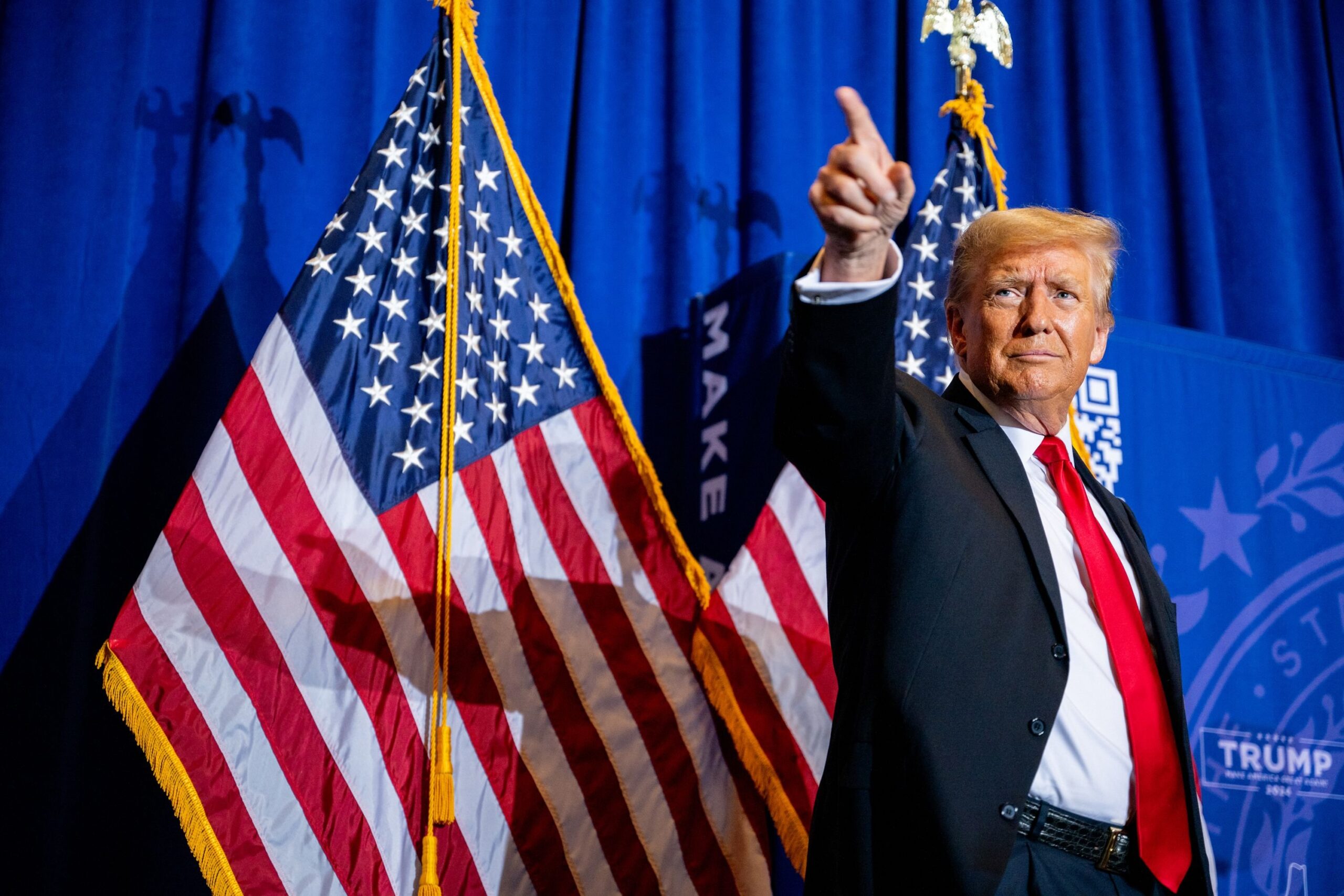
On the social media site formerly known as Twitter, Dr. Sylvain Charlebois, aka @FoodProfessor explains how Trump’s Trade War strategy is working out for US interests, in contrast to the Trudeau/Carney governments’ approach:
The Globalism Hangover: What Trump’s Trade War Got Right
“Trump’s bombastic style aside, his nationalist approach to trade and food policy is forcing global institutions to justify their existence — and that’s a conversation Canada can no longer afford to ignore.”
For the past six months, President Donald Trump’s trade policies have been widely mocked, criticized, and condemned. Some of it is certainly warranted. The Wall Street Journal, for instance, recently likened his tariff-heavy approach to global trade as a direct path toward another Great Depression. But data out of the United States tells a more nuanced story — one that challenges conventional wisdom.
Despite persistent headwinds, the U.S. economy continues to outperform expectations. The Federal Reserve Bank of Atlanta projects second-quarter GDP growth at 3.8%. In May, the U.S. economy added 139,000 jobs, outpacing forecasts, while inflation remained subdued at 0.1% month-over-month and 2.4% annually. The U.S. trade deficit has been cut nearly in half, pointing to stronger export performance and a rebalancing of trade relationships.
Canada, by contrast, is showing signs of economic strain. The national economy is shrinking, manufacturing is struggling under U.S. trade pressure, and food inflation is outpacing general inflation. In short, our economy is not keeping pace—despite our public criticism of the Trump administration.
To make matters worse, the Trump administration has now halted all trade negotiations with Canada, signaling that our bilateral economic relationship holds little strategic value for Washington. For the U.S., Canada is no longer a priority — especially under a Carney-led government that has visibly pivoted toward Europe, a market still heavily invested in maintaining close ties with the United States. From an agri-food standpoint, this shift is consequential: access to our largest trading partner is narrowing, while Ottawa appears more focused on diplomatic optics than on securing stable, competitive trade channels for the Canadian agrifood economy.
This is the one thing the ‘Elbows Up’ crowd never understood — and still doesn’t. We’re not in a trade war with the U.S. There’s no war to be won. For Trump, this is about a realignment of the global order, plain and simple — one centered entirely on American supremacy.
Love him or loathe him, Trump is not destroying the U.S. economy — not yet, anyway. His unapologetically nationalist agenda extends far beyond tariffs. He has withdrawn U.S. support from key global institutions such as the WHO and is threatening to sever ties with others, including NATO and several UN-affiliated agencies. Among them is the Food and Agriculture Organization (FAO), the UN’s most authoritative body on food security.
At a recent event in Brazil, a senior FAO official acknowledged that fundraising dynamics have shifted. In the Trump era, governments are asking harder questions: Why should we fund the FAO? What domestic benefit does it provide? What used to be assumed support is now conditional — and arguably, more accountable.
This shift isn’t unique to Washington. Many countries are quietly aligning with the U.S. position, scrutinizing globalist institutions with renewed skepticism. Transparency and accountability are byproducts of this anti-globalist sentiment — something not inherently negative.
For decades, globalism pushed the world to believe that trade liberalization was the only viable path to growth and prosperity. It became conventional wisdom. But globalism has made some nations — and some people — richer, while leaving others behind. In the process, domestic sectors, including agriculture, were often sidelined or sacrificed in the name of global efficiency.
The problem with globalism, particularly in agri-food policy, is its tendency to pursue uniformity over relevance. Canada, for example, adopted the carbon tax under a globalist climate agenda that often overlooks the vital role food producers play in feeding people. Instead of being supported, the sector is too often vilified as a problem. But agriculture is not a liability — it is a necessity.
Trump’s message — wrapped, of course, in provocative and often abrasive language — is that one-size-fits-all global policies rarely work. Nations have different socio-economic realities, and those should come first. While cooperation is essential, so is recognizing local and regional priorities. In this sense, his “America First” approach is not without logic — especially when it seems to be yielding short-term economic gains.
For Canada’s agri-food sector, the lesson is clear: striking a better balance between global commitments and national imperatives is overdue. We should not abandon multilateral cooperation, but we must stop anchoring policy to global agendas we have little influence over. Instead, let’s define what works for Canadians — what supports our farmers, protects our food security, and reflects our unique landscape — while keeping the broader global context in view.
We are not there yet. But if this moment of disruption sparks a more realistic and regionally attuned approach to food policy, we’ll be better for it.


