Feral Historian
Published 8 Sept 2023This film reminds me of several topics from nuclear deterrence to the impact of social media to that kid I went to high school with who tried to build a reactor in his momβs shed. Yeah, this is a rambly one.
00:00 Intro
01:02 Summary
02:25 Social Media
04:35 Deterrence
06:51 Radioactive Boy Scout
09:50 Modern Security StateπΉ Patreon | patreon.com/FeralHistorian
πΉ Ko-Fi | ko-fi.com/feralhistorian
November 29, 2025
The Manhattan Project (1986 film) and Deterrence
November 28, 2025
November 27, 2025
We’re not quite at the point that we get trigger warnings for trigger warnings, but …
On her blog, Sarah Hoyt discusses the continued expansion of trigger warnings in fan fiction, but not because the readers demand it:
… I’ve noticed a creep up of trigger warnings in fanfic. Some of these would be incomprehensible to non-Jane-Austen fans and are actually not so much trigger warnings as sub-genre warnings. There are subgenres some fans (sometimes I’m some fans) hate, like “Lizzy is not a Bennet” or “Bingley is evil” or … whatever. That’s fine. It saves me the trouble of reading a fanfic that’s going to annoy me. Unless I’m in the mood to be annoyed, in which case I will read it so I can grit my teeth and mentally yell at the writer. (Bingley is evil is a problem because it usually turns into a revenge-fest on EVERYONE. Everyone is evil. Etc. I don’t think there’s ever a time I want to read that. You find yourself wanting to take a shower for the soul. With a wire scrub brush.)
We make fun of trigger warnings, often, but it’s a real measure of how stupid things have gotten. When I’m having to read a trigger warning for say “kissing without consent.” or “violence against children” (Okay, you’ll think that last makes perfect sense, until you find out it’s because a kid gets slapped once in the novel) or “verbal violence” or β
And you start wondering, on the serious, if the ideal novel for these people has no plot at all, just people sitting around having a nice meal and talking.
This is disturbing, because the whole point of a novel is to make you feel emotions and experience things you either can’t in your real life, or which wouldn’t be safe to experience in your real life, followed by resolution and catharsis. That’s what a novel offers you. The opportunity to be the someone else far away experiencing “Adventure” (which as we all know is really a series of unpleasant events.)
Anyway, I’ve slowly come to the conclusion all this demand for warnings and screeching about offense isn’t by real readers.
No, seriously. Real readers know that no one can insulate them against all surprises in a book (or blog) and that in fact the point of reading is to get out of your head and experience different things, different events, different emotions and different points of view. You might disagree vehemently with them (I actually do with most of the really old science fiction. Really, scientists in charge? Who thinks that’s even safe? Oh, yeah, the Soviet Union. But even they didn’t DO IT. They just paid lip service. They might have killed a lot more people if they’d done it, at that.) but that forces you to think about why you disagree and how you’d do it differently. If you’re of a certain frame of mind, you [might] end up becoming a novelist and writing your response to what you disagree with. Though if you are worth spit, even then, your “response” will be less of a response and more of this whole new thing it became, with the response buried somewhere inside it. And if you’re not of that frame of mind, you’ll still end up a more considered and self-reflective thinker than you were before. For one, while you might think that the other POV is stupid, if you read a whole novel with it, you’ll be aware that thought went into it, and might even have to confront that the worst stupid takes a lot of thought and self deception.
Anyway, the point is, I don’t think the offense-monsters read. Because the whole point of their screeching is to shut down the thinking and prevent ANYONE ELSE from being exposed to the material, and maybe thinking.
That’s not what they say, of course. They say “I’m offended”. And “I’m hurt”. And “You’re mean because you offended me”.
But what they really mean is “this you cannot think” “This you cannot see” and “this you cannot read” and “this you cannot write”. And “this you cannot say”.
They have, you see, completely surrendered their very core to the herd. They have given up their right to think and feel and be, in favor of belonging completely to the herd. (They used to have a term for this and said it as though it were praiseworthy: “mind-kill”.) So being exposed to contrary things hurts, and they have no defense, because they have taught themselves not to think and/or reason through things.
The pain they feel at the slightest hint of disagreement is true. It is also a symptom of what they have done to themselves, and has nothing to do with being mentally or emotionally healthy.
Just like the pain of withdrawal of a chronic alcoholic denied alcohol is real, and continued and too fast withdrawal might kill him, however continuing to feed his drinking habit will also kill him, faster.
To give them trigger warnings, apologize for any offense and handle them with kid gloves is not only bad for them but bad for society in general.
Lack of talent is no obstacle to music success … even before Auto-Tune
One of the reasons I like Ted Gioia’s Substack is that even when I’m not overly interested in the topic of any particular post, I usually learn something:
I’ve tried to identify the turning point β the moment when the rules changed. By my measure it happened one night in 1958.
Let’s revisit that fateful day …
One Friday evening in 1958, record producer George Avakian sat down in front of his TV set, and watched an episode of the popular detective show 77 Sunset Strip. This chance incident would have surprising ramifications in the music business for decades to come.
A few minutes into the episode, the record producer decided that one of the actors on the show looked and talked like a rock star. His name was Edd Byrnes and he played a hipster character named Kookie.
Kookie parked cars at a Hollywood nightclub in the show, and acted very cool. He had the right look and said witty hipster-ish things. The TV audience loved him, especially younger viewers.
Check Kookie out and decide for yourself.
There was just one tiny problem. Byrnes wasn’t a musician.
But Avakian didn’t worry about this. “I was sure that kids would like his talk and his looks, especially a way he had of looking out of the corner of his eye,” he later recalled. “And β the real clincher for his popularity with kids β parents would loathe him.”
They didn’t have Auto-Tune back then, but studio engineers had a few tricks to fix vocal imperfections. They knew how to splice together different takes, or make slight alterations in tape speed.
But when Byrnes did an audition for the label, it was bad. It was scary bad. This promising rock star had no sense of pitch. He had no range. He couldn’t even stay in rhythm with his accompanist.
No technology could fix this mess.
Record producer Avakian was no fool. During an illustrious career, he worked with Louis Armstrong, Duke Ellington, Miles Davis, Dave Brubeck, Sonny Rollins, and Keith Jarrett, among others. He had collaborated with genius, and now he had someone on the opposite end of the spectrum.
Maybe this situation is commonplace nowadays, but back in 1958 the record business believed in something called musical talent. Avakian’s bold decision to ignore that variable marks a historic moment in our culture.
Anybody else would have walked away from this looming disaster. They would have feared not just commercial failure but a tainted reputation. You don’t want to be the exec to greenlight a recording by somebody with zero musical ability.
But in a moment of brilliant insight, Avakian decided that Kookie didn’t need to sing, he could just rap. Of course, rapping wasn’t even a concept back in those days. But it sorta existed without a name. Deejays at radio stations often introduced a song by speaking in a hip tone of voice over the intro to a song.
Kookie would do the same. He would speak or rap his part, while somebody else did the actual singing. Connie Stevens, another Hollywood talent with the right look β and a slightly better voice β could handle the actual vocals.
Carney – “Who cares?”
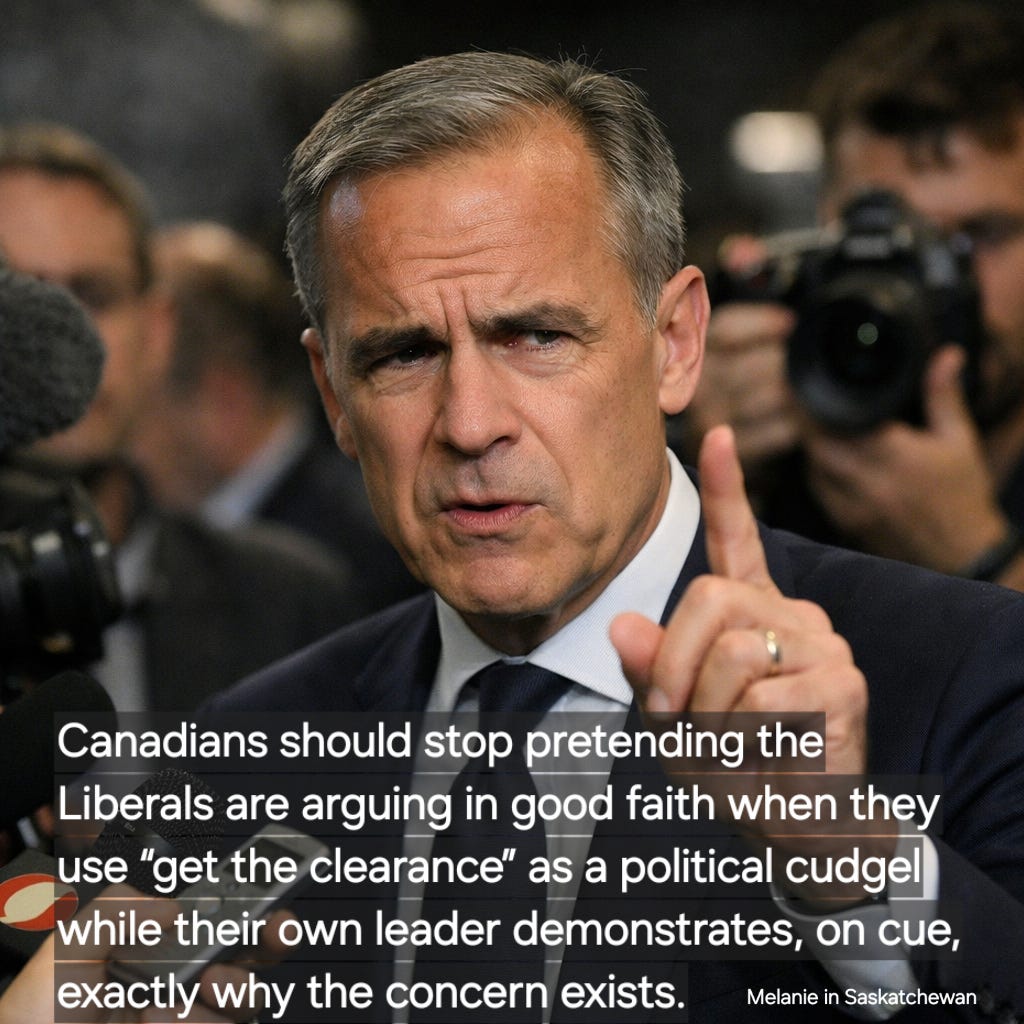
On the social media site formerly known as Twitter, Melanie in Saskatchewan reacts to Prime Minister Mark Carney’s shrugging-off the economic concerns of ordinary Canadians with a casual “Who cares?”
Dear @MarkJCarney
“Who cares?”
That’s what you actually said when asked when you last bothered talking to Trump about the tariffs that are currently body-slamming Canadian jobs.
“Who cares? … It’s a detail.”
Really Mark? Let’s meet some of those “details”, Prime Minister.
The single mom juggling three gig jobs because the factory that used to pay her mortgage “paused investment” and then paused her entire livelihood: she’s just a detail.
The Windsor autoworker whose night shift got cancelled forever while you were busy perfecting your thoughtful squint for the cameras: tiny detail.
The steelworker in Hamilton burning through EI while the mill runs skeleton crews and you call the carnage a “temporary adjustment”: just a little detail.
The small-shop owner deciding which of her three employees to fire this month because 25% tariffs turned her cross-border contracts into suicide notes: who cares, right? Detail.
The rail worker staring at empty tracks where trains full of Canadian auto parts and steel used to roll: super minor detail.
The Saskatchewan electrician watching Nutrien build its next billion-dollar terminal in Washington State instead of BC because at least the Americans aren’t at war with their own economy: I guess that’s barely worth mentioning.
The welders and millwrights being told the next big plants are going up in Ohio and Texas, not Ontario or Alberta, because Canada’s too busy arguing about jurisdiction to actually fight for work: pfft, details.
The family parked on gurneys in an ER hallway at 3 a.m. because we never trained enough doctors and now the ones we have are bolting: honestly, who has time for that detail?
All those kids with degrees doing DoorDash because private-sector job growth is wheezing and every company is frozen waiting for the next Trump tweet or Trudeau shrug: whatever, details.
You flew around the world taking heroic photos, sold us “Team Canada”, bragged you were the adult who could handle Trump, and the second a reporter asks when you last actually picked up the damn phone to fight for Canadian jobs, you smirk and say “Who cares?”
Message received, loud and clear.
Those people I mentioned above? They care.
Every single one of them cares when the shift vanishes, the mortgage renews, the mill goes quiet, the doctor quits, the plant gets built south of the border, and their kids ask why Mom’s crying at the kitchen table again.
But you don’t care.
And the worst part? You didn’t even bother to lie about it.
You lied to every single Canadian to get elected, yet you don’t care.
Well Mark … we sure as hell do care.
And you WILL care.
When your greasy grifting ass is voted to the curb and we undo all the harm you’ve caused Canadians to fatten your coffers. You cant stand living in Canada and can’t wait to move back to the UK … remember?
We sure will.
Just watch us.
Sincerely,
One of the millions of Canadians tired of being your rounding error.Melanie in Saskatchewan
Also published on her Substack.
Apparently even the most detached of politicians can occasionally be persuaded to acknowledge an unforced error:
QotD: Honor, homage, and fealty in Game of Thrones
What the above means is that if, say, Tywin Lannister wants his army, he only gets it if House Falwell, and Ferren and Foote and Clegane choose to come out and fight for him. If Tywin wants to administer the countryside, change a law, count his subjects, impose new taxes β he can only do these things if the houses under him follow through (remember, he has functionally no administrative apparatus of his own β that’s why he outsourced the job). But, Tywin’s options to coerce this cooperation are β because of those castles β extremely limited.
To refer to a distinction introduced in Wayne Lee’s talk [here] β Tywin cannot rely on force (do it because I will kill you if you don’t), he has to use power (do it because you think you ought). Because the apparatus of the state here is very limited, that power is largely generated through personal relationships β you ought to fight for your liege because you have a personal relationship with him. You see him fairly often, you swore loyalty to him (in person!!), he (or his ancestors) have helped resolve your problems in the past and most importantly, because he has kept faith with you in the past.
Which is a way of saying that this system runs on trust and reputation, and that runs both ways. Even as Tywin watches his vassals for signs of disloyalty, his vassals are watching him. Is he true to his word? Can I trust him? Because if the answer is no β I best start hedging my bets. And that bet-hedging is going to come in ways Tywin does not want β I might refuse to come out and fight, or redirect my efforts to fortifying my own holdings, or even switch over to another liege. And in the very early seasons, key characters β most notably Tywin and Tyrion β know this and act accordingly. Tywin talks a good game about lions and sheep, but when it comes down to it, he knows his reputation matters β what the sheep say about the lion matters a great deal, it turns out. Robb Stark’s failure to handle the Karstarks, Tullys and Freys is his eventual undoing. Tyrion berates Cersei on returning to King’s Landing for her actions which might call the Lannister reputation into question (“that bit of theatre will haunt our family for a generation”.)
What is unusual here is how frequently key characters deviate from the norms these societies need to function β Westerosi nobles are stunningly treacherous for people who rely on systems based in trust for survival. In a system which runs on trust and reputation, elites tend to value trust and reputation. They produce literature extolling it (as, indeed, do most “mirrors for princes” β guidebooks on how to be a good ruler β from the Middle Ages do; see, for instance, Book 3 of Dhouda’s Liber Manualis (9th cent.), which goes on and on about trustworthiness) and refine its practice. The sort of eye-popping treachery so common in Game of Thrones was far rarer in the actual historical Middle Ages for exactly the reason Game of Thrones would lead you to believe: it is almost always self-defeating.
The problem here comes in the later seasons and how they re-contextualize all of this concern. That problem has a name, and it is Cersei. Cersei breaks all of these rules. Even early on, she has her soldiers (who recall β are not paid mercenaries, but likely vassals of her house who can very much take their skills elsewhere if they don’t like their current employer) demonstrate her own capricious untrustworthiness on Lord Baelish (she has also, I will note, mistaken violence for power). She humiliates Barriston Selmy in court, a spectacle her own future vassals might have remembered. She incinerated her own family β by blood and marriage β along with her erstwhile allies. Cersei is endlessly treacherous, often foolishly and obviously so, and yet …
And yet it doesn’t matter. The Lannister bannermen in the penultimate episode mount the walls to fight a doomed battle for her anyway. Not only is that behavior inexplicable, it hardly seems possible. Who, after all, is raising and leading these men? Who is coordinating supplies and grain shipments to the capital? Remember, the reason for this distributed system of political leadership is that the central state does not have the administrative apparatus to raise armies or feed cities on its own β it has to outsource that to vassals. Vassals that Cersei has murdered or alienated, almost to a man. Cersei is defeated because dragons are unstoppable monsters, but she should have been defeated because she would have simply been incapable of raising an army at all.
Bret Devereaux, “New Acquisitions: How It Wasn’t: Game of Thrones and the Middle Ages, Part III”, A Collection of Unmitigated Pedantry, 2019-06-12.
November 26, 2025
The importance of “a bicycle shop in Bermuda” to Mark Carney’s financial affairs
It’s no secret that Prime Minister Mark Carney is a rich man. When he entered politics, he put his financial holdings into a blind trust to satisfy the federal government’s ethical and conflict of interest rules. But through this arrangement, he still owns significant positions in companies whose fortunes can (and are) affected by the actions of his government. On Monday, this was discussed at some length by a Parliamentary committee in Ottawa, as reported on his Substack by Dan Knight:
On November 24, in a basement room of West Block, MPs spent two hours asking a very simple question that everyone in Ottawa is suddenly pretending is complicated:
If Mark Carney gets richer when Brookfield does better, and Brookfield is running big climate and infrastructure funds out of what one MP described as a bicycle shop in Bermuda, how on earth is that not a problem for the Prime Minister of Canada?
The man in the hot seat was Justin Beber, Chief Operating Officer of Brookfield Corporation. His job was to calm everyone down. Instead, under oath, he calmly confirmed just about everything the government would rather you didn’t think about too hard.
He started with the corporate biography. Brookfield, he reminded the committee, is a massive global investor headquartered in Toronto. It has more than 600 direct employees in Canada, more than 15,000 workers in its operating businesses, and it paid over $750 million in federal tax last year, not counting provincial and local taxes. All of that is true. None of it changes the basic conflict: the sitting Prime Minister still has long-term compensation that rises when Brookfield, and certain Brookfield funds, succeed.
Conservative MP Michael Barrett went straight there. He asked Beber whether, when Brookfield’s value increases, the value of stock options and deferred share units also increases. Beber said yes. Then Barrett asked whether that changes if those options and units are placed in a blind trust. Beber said no. It does not. The economic reality is exactly the same: if Brookfield’s share price goes up, those instruments are worth more, whether they are in Mark Carney’s brokerage account or parked with a trustee behind frosted glass.
[…]
Cooper spelled out why it matters. Carney, he said, knows what kind of public policy could improve the success of the fund. The fund’s success determines his future bonus pay. Without knowing who the investors are or all of the fund’s positions, Canadians have no way to see where those incentives may line up β or collide β with the national interest. These are not theoretical conflicts. They are simply invisible ones.
Eventually, after some confusion over terminology, Beber did confirm that Transition Fund I has invested in 20 companies and that their names are listed in the ethics annex. Only one of those firms, Entropy, is in Canada. The rest of the portfolio, and the roster of big-money investors behind it, sits offshore, beyond any serious public scrutiny, while the Prime Minister’s upside rides on how well those bets pay off.
The tax side of the story is just as revealing. Bloc MP Luc ThΓ©riault put it bluntly: tax avoidance is not a conspiracy theory, it is a business model so widespread that the OECD and G20 built an entire 15 percent global minimum tax regime to deal with it. He cited Canada Revenue Agency estimates of tens of billions of dollars in lost federal revenue each year, including billions attributable specifically to tax avoidance. He asked Beber whether Brookfield engages in tax avoidance. Beber refused to use the term. “We practice tax planning”, he said, like “any other company”. He repeated that Brookfield pays all taxes that are “due and payable” in the jurisdictions where it operates.
That phrase sounds reassuring until you remember who writes the rules that decide what is “due and payable”, and who benefits when the system can be routed through Bermuda via something that, on paper, looks like a bicycle shop.
[…]
At some point, the pattern becomes impossible to ignore. The Prime Minister of Canada left a giant global investor with standard executive incentives, kept his vested long-term instruments, retained a carried interest in a $15 billion Bermuda-run climate fund that will operate into the 2030s, and knows exactly which sectors that firm is betting on. His government is now pouring public money and regulatory support into many of those same sectors. The firm uses structures justified as “tax transparent” that just happen to run through low-tax jurisdictions, including one address a Conservative MP described as a bicycle shop in Bermuda. The man running the firm’s operations will not say the Prime Minister’s potential upside is small. He will not say the global minimum tax is being met in practice. He will not disclose who the fund’s other investors are.
You do not need to be an expert in securities law to see the conflict. You do not need to be an expert in global taxation to see why a bicycle-shop registration in Bermuda is not about cycling. You just need to watch what they are desperate not to talk about directly: the hard link between public power in Ottawa and private profit offshore, wrapped in legal jargon, buried in annexes, and shielded from sunlight by a blind trust and a lot of very careful answers.
November 25, 2025
“So what?”
Spaceman Spiff makes the case for the two simple words in the title being the most powerful words in the English language:
The two most powerful words in the English language are, so what? We do not use them enough.
A “so what?” is a rebuff, a rejection of some cherished belief. It confronts the promoter of an idea with the worst form of disagreement, indifference.
In a narcissistic world where attention is often the goal of agitators, genuine disinterest is difficult to manipulate. It disarms anyone intent on destroying established norms.
A “so what?” forces a reconsideration. It has the strongest effect on the issues we care most about.
Nobody enjoys their precious cause being dismissed. That is why we must use it more.
Who cares?
Many of today’s moral crusades are imposed on us against our will. We are told we must attend to issues most of the world ignores.
Here are a few to consider.
Racism and diversity
Accusations of racism are now endemic in Western nations. The underlying drive is one of punishment. Natural wariness of alien peoples is recast as a moral failing, the antidote to which is enforced mixing to demonstrate the backwardness of one’s social inferiors. A policy unique to Western countries.
The promotion of diversity quotas rests upon tacit acceptance of the idea that homogeneity is undesirable. This requires our participation to succeed, especially the consequence of this belief, that the mass importation of foreigners is needed to improve society.
The response to accusations of a lack of diversity should be, so what? It needs to be laughed at. Who cares if we are too homogenous? Says who?
No rational group seeks to dilute their numbers. This is a perverse affectation confined to a handful of ethnomasochists who think racism is unique to Western societies.
A robust rejection of this helps recalibrate to the global norm, a useful reminder to anyone steeped in woke catechisms. Much of the world views out-group preference as either treason or mental illness, a perspective easily observed simply by travelling.
Sexism and gender equality
There is a mismatch between the sexes. Men win the prizes, dominate their fields and invent the inventions.
We are told this is a disgrace. Such patriarchal domination will not do.
A key flashpoint is the “gender wage gap” that unwittingly illustrates the insincerity of feminism. There is no wage gap. There is a lifetime earnings gap. This is a consequence of decisions women voluntarily make such as spending more time with family or choosing less risky employment closer to home.
This is firmly established and supported with unimpeachable data, often produced by the very governments pursuing gender pay gap legislation.
Polite counterarguments against feminist talking points like this fail despite their thoroughness because facts are dismissed as they are inconvenient to a lucrative narrative.
Therefore the response to accusations of gender imbalances should be met with a robust so what? If they don’t care about engaging with established facts why should we care about the issue at all? Energetic indifference is the only way to deprive feminism of its momentum.
Much of the “argument” for gender equality is emotional manipulation. It abuses men’s protective instincts in a shameless way.
A firm “so what?” arrests this natural urge in men. It provides a small space for us to escape manipulation and examine the facts.
Who cares if women are underrepresented or have less money? This is a result of decisions women themselves make, so solve the problem yourself. Stop begging men for special favours.
Update, 26 November: Welcome, Instapundit readers! Please do have a look around at some of my other posts you may find of interest. I send out a daily summary of posts here through my Substack β https://substack.com/@nicholasrusson that you can subscribe to if you’d like to be informed of new posts in the future.
You might as well watch Guru Nanak Jahaz, since you’ve already paid for it
The Canadian government loves handing out money — they hand out a lot of money — so it shouldn’t be surprising to find out that Canadian taxpayers funded the creation of a movie about a Sikh terrorist who assassinated a Canadian official … or that the assassin is the hero of the movie. After all, isn’t that the heart and soul of multiculturalism? Celebrating other cultures and traditions as being superior to those of ordinary Canadians? The feds seem to believe it.
If you can find a way to watch the recently released Khalistani propaganda film Guru Nanak Jahaz, you might as well watch it. You paid for it, after all.
The film, which depicts the assassination of a Canadian civil servant by a Sikh terrorist as a heroic act of justice, has a “Funded by the Government of Canada” credit at the end. It was also supported by the B.C. government and gives special thanks to Conservative MP Tim Uppal and Liberal MP Sukh Dhaliwal. While the Liberals didn’t return a request for comment, a spokesperson for Uppal told me that he was not involved in the film and that the filmmakers did not communicate with him about the credit at any point.
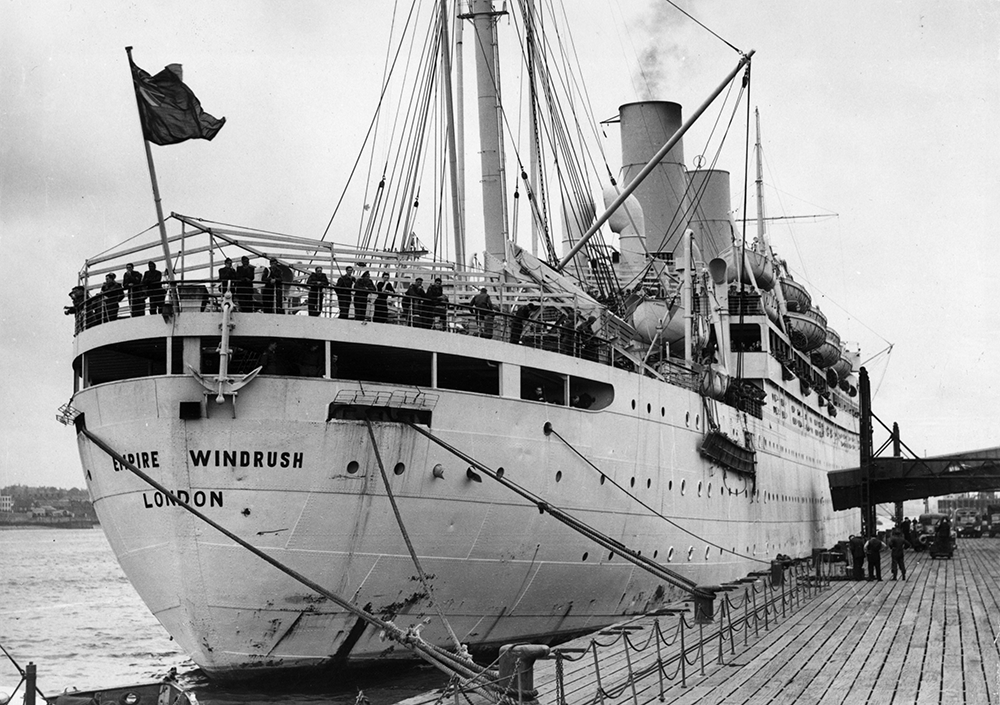
Set in 1914, the plot follows the assassin, who you likely never heard about, and the voyage of the more familiar Komagata Maru, a ship which carried nearly 400 Indian passengers from Hong Kong to Vancouver, only to be denied entry to Canada. It was screened in some Cineplex theatres earlier this year.
The official narrative that you’ll find on government websites explains that this was purely a matter of baseless Canadian racism, and it’s been wholeheartedly adopted by politicians today: as prime minister, Justin Trudeau apologized for the incident in 2016, and the Conservative party releases annual statements commemorating the event, praising the bravery of the passengers and their craving for freedom.
That’s the whitewashed version, however. It leaves out that the Komagata Maru voyage was organized by the Indian Ghadar movement β the word literally means “revolution” β which advocated for violent resistance against the British Empire. (India was a British possession at that time and would continue to be until 1947). Its members were primarily Sikhs who lived in North America. And while they did experience racism, and while changes to Canada’s immigration laws in 1908 indirectly restricted Indian immigration, there were also reasons for the Canadian government to be apprehensive.
Ghadar members dreamed of a return to India, but wanted to rid that land of the British first. They remembered the Indian Mutiny of 1857 with regret β that bloody event saw many British-Indian regiments unsuccessfully take up arms against the Empire; Sikh Punjabis were among the exceptions, largely siding with the British. Decades later, the mostly Sikh Punjabi Ghadarites proposed another 1857-like uprising while applauding anti-British terrorism.
When rumblings of war with Germany began to brew in 1914, the Ghadarites grew excited β now was the time to strike. In August 1914, after the war broke out, the movement’s newspaper advocated, “Go to India and incite the native troops. Preach mutiny openly. Take arms from the troops of the native states and wherever you see the British, kill them. … There is hope that Germany will help you.” Expats in the Orient organized ships to return home and revolt.
The Komagata Maru was part of this movement. Organized by Ghadarites before the breakout of the First World War, it attempted to bring more movement adherents into Vancouver to settle. Canada was right not to let it dock because the entire envoy was a security threat.
November 24, 2025
Fairy tales for Canadian boomers – “we have the best healthcare system in the world”
Older Canadians, especially the Baby Boom generation, have a huge blind spot when it comes to any discussion about healthcare … because they believe what they were told as children about Canada’s healthcare system being the “envy of the world” and other such comforting notions. (It’s not just Canada, as British belief in the quality of their National Health Service is very much at odds with the evidence.) This rose-coloured nostalgic faith makes it very difficult to address some of the very real problems that beset Canada’s hospitals and doctors. The media are understandably reluctant to publish anything that goes against this, as Peter Menzies explains:
About the same time as William Watson’s outstanding book Globalization and the Meaning of Canadian Life was being published in the late 1990s, the newspaper I worked for was sending a journalist to Europe to research a series of articles on how health care systems work in some of those countries.
I mention Bill’s book, which was runner-up for a public policy Donner Prize, because it exquisitely details many of the things Canadians believe about themselves that simply aren’t true. Which was the same reason why the Calgary Herald sent its health reporter (yes, there used to be such a thing), Robert Walker, to Europe — to expose its readers to the fact that there are more than two health care systems: our “defining” one and America’s, both of which are extremes. To the best of my knowledge, that remains the only time a Canadian news organization has taken on that task.
In every country examined in Walker’s reports, as is the case with almost every country in the world, public and private health care and insurance systems maintained a peaceful coexistence and the public’s needs were being met. Almost 30 years later, that remains the case. Also almost 30 years later, neither Bill’s book nor the Herald‘s reporting has had the slightest impact on the prevailing media narrative in Canada. It remains determined to perpetuate the fear that any move to increase the role of private health providers or even allow doctors to work in both systems (as was proposed this week by Alberta Premier Danielle Smith) is the first step on the slippery slope to “American-style” health care. This line has been successfully used for decades — often hyperbolically and occasionally hysterically — by public monopoly advocates for Canada’s increasingly expensive and difficult to access systems. We have known for 40 years that once Baby Boomers like your faithful servant turned bald and grey that the system would be unsustainable. But that single, terrifying “American-style” slur has halted reform at every turn.
The Tyee responded with a “Danielle Smith’s secret plan to Destroy Public Health Care” column while the Globe and Mail‘s Gary Mason, a Boomer, challenged my thesis here by suggesting it was time for open minds because “the reality is, the health care system in Canada is a mess”.
It is. And at least some of the blame — a lot, in my view — belongs at the door of Canadian news organizations that for decades have failed to fully inform readers by making them aware that there are a great many alternatives to just “ours” and “US-style”.
I was reminded of this in a recent Postmedia story concerning the perils of private health care provision. Referencing a study on MRIs, the story, right on cue, quotes the part of a study that states “It’s a quiet but rapid march toward U.S.-style health care”.
One would not want to suggest that those clinging to that parochial view should be denied a platform. But at the same time, readers have every right to demand that journalists push back and ask advocates for state monopolies simple questions such as “Why do you say that? Could it not be the first step towards UK-, German-, Dutch-, French-, Portugese- or Swedish-style health care?” and open the debate.
The Canadian paradox – “settlers” will never belong but “migrants” and “refugees” instantly belong
In the National Post, Mark Milke and Tom Flanagan outline one of the major issues dividing Canadians — the state and state-funded propaganda demonizing “settlers” that also lionizes much more recent arrivals as if they’re automatically better than non-Indigenous Canadians:

A depiction of Samuel de Champlain’s first encounter with the Iroquois (Mohawks) in 1609, a forest skirmish on future Lake Champlain, including fanciful rowboats, rather than canoes.
Caption from the National Post, image from the National Archives of Canada
If Canadians care to understand why our country is increasingly fractured, one key driver is the notion that non-Indigenous Canadians β “settlers” as they are called β should be grateful to live anywhere in the Americas.
The “settler” label is mostly directed at those of British and European ancestry. But it can apply to anyone whose families arrived from anywhere β Africa, Asia, the Levant, the Pacific β who were not part of the prior waves of migration to the Americas.
According to the most recent scientific knowledge, human settlement in the Americas began about 15,000 to 20,000 years ago. These pioneers of settlement must have arrived from Asia by boat and hopscotched along the Pacific coast because the interior land was glaciated. They migrated as far south as modern-day Chile, but it is unknown how far inland they penetrated and whether they survived to merge with later migratory settlers.
Another wave of migration started around 13,000 years ago when an ice-free corridor opened through Alberta between the two great glaciers covering North America. This made it possible for people from the now submerged land of Beringia to move south through Alaska, Yukon and Alberta across North America.
Later, but at an unknown date, came the movement of the Dene-speaking peoples now living mostly in Alaska and Canada’s North (though the Tsuut’ina got to southern Alberta and the Navajo to the southwestern United States). Their languages still show traces of their relatively recent Siberian origins.
The Inuit migrated from Siberia across the Arctic to Greenland around AD 1000. Another group inhabited the Arctic starting around 2500 BC, but their relationship to the Inuit is uncertain.
In short, the Americas were settled in waves from Asia. Everyone alive today is descended from settlers. The latest “Indigenous” settlers arrived barely ahead of the first European settlers, the Vikings, who settled in Greenland and Newfoundland, and of Christopher Columbus, who started Spanish settlement in the Caribbean.
Singling out Europeans as “settlers” drives land acknowledgments, as well as demands for compensation and reconciliation. It plays on guilt about the actions of actors long since dead, while the concurrent demands for land, decision-making power and financial settlements occur on an open-ended basis. Internationally, the United Nations Declaration on the Rights of Indigenous Peoples (UNDRIP) also assumes the Indigenous vs. settler-colonial divide is valid.
Why does this matter? Because peaceful, relatively prosperous nation-states are not guaranteed to last. In fact, they’re the exception, not the rule. To make actual progress in unifying Canada as opposed to watching it break down and fragment into hundreds of inconsequential principalities (a separate Quebec, a separate Alberta, and multiple First Nations with state-like powers, of which there would be up to 200 in British Columbia alone), it is overdue to dissect these assumptions, and the related belief that Canadians have done little to make up for some of the wrongs done in history.
November 23, 2025
John Cage’s 4’33” meets the anti-clanker protest song
Ted Gioia on Paul McCartney’s latest single — his first in several years — and what he’s protesting against … clankers in music and the arts:
Paul McCartney is releasing a new track. It’s his first new song in five years β so that’s a big deal. But there’s something even more significant about this 2 minute 45 second release.
The song is silent. It’s a totally blank track β except for a bit of hiss and background noise.
What’s going on? Has Paul McCartney run out of melodies at age 83? Is he nurturing his inner John Cage. Did he simply forget to turn on the mic?
No, none of the above.
Macca is releasing this track as a protest against AI.
His new “music” is part of an album entitled Is This What We Want? It’s already available on digital platforms, and is now coming out on vinyl. All proceeds will go to the non-profit organization Help Musicians.
“The album consists of recordings of empty studios and performance spaces,” according to the website. In addition to McCartney, more than a thousand musicians are participating, including:
Kate Bush, Annie Lennox, Damon Albarn, Billy Ocean, Ed O’Brien, Dan Smith, The Clash, Mystery Jets, Jamiroquai, Imogen Heap, Yusuf / Cat Stevens, Riz Ahmed, Tori Amos, Hans Zimmer, James MacMillan, Max Richter, John Rutter, The Kanneh-Masons, The King’s Singers, The Sixteen, Roderick Williams, Sarah Connolly, Nicky Spence, Ian Bostridge, and many more.
I keep hearing that protest music is dead β and has been losing momentum since the Vietnam War. But there’s now a new war, and it’s stirring up creators in every artistic idiom.
They are fighting for their livelihoods and IP rights. And, so far, it’s been a losing battle.
You can see the new battle lines across the entire creative landscape.
Vince Gilligan, one of the most brilliant minds in TV, admits that he “hates AI”. He calls it the “world’s most expensive plagiarism machine”. For his new show Pluribus, he has added this disclaimer to the credits:
This show was made by humans.
AI represents the exact opposite of creativity, Gilligan warns. It steals the work of others. So any attempt to legitimize it as a creative tool is built on lies. A bank robber might just as well pretend to be a financier. Or an art forger claim to be Picasso.
[…]
This is the new culture war.
And it’s very different from the old culture war β which was a dim reflection of politics. This new battle is happening inside the culture world itself, and threatens to cut off artists from their own longstanding partners and support systems.
This new culture war will only escalate. The stakes are too high, and artists can’t afford to stay on the sidelines. But they face heavy odds, with the richest people on the planet opposed to their efforts.
How will this battle get decided? It really comes down to the audience. If they prefer AI slop, we will witness the total degradation of arts and entertainment.
I’d like to think that people are too smart to fall for this crude simulation of human creative expression. Who wants to hear a bot sing of love it has never experienced? Who wants a nature poem from a digital construct that exists outside of nature? Who wants a painting made by something with no eyes to see?
Will the public find this charming. Or even plausible? Maybe a few twelve year olds and fools, but not serious people. That’s my hunch.
In any event, we will soon find out.
Do older Canadians really hate their children and grandchildren? The fiscal evidence says “yes”
As I posted a few days back, the real political divide in Canada is no longer the left versus the right: it’s the old financially parasitizing the younger generations. At The Line, Ben Woodfinden discusses how the smug, comfortable boomers are being confronted by, for lack of a better term, a “new right” of far less comfortable younger voters:
The specific complaints from people like d’Entremont and other grumbling voices are less about ideology and more the tone and style of Pierre Poilievre (though perhaps the two are connected). Poilievre’s temperament and style rubs certain people, including some Conservatives, the wrong way. Now, full disclosure, I worked for Poilievre for a few years, and I can confirm he’s a demanding boss. But so is the prime minister, reportedly. And Poilievre is also in my experience the hardest working person I’ve ever met.
The tone battle is not a revival of Red vs. Blue. It’s not clear those terms are even relevant today. “Red Tory” is often used pejoratively to describe a “Liberal Lite” voter who identifies as a conservative but is indistinguishable from a Liberal β those who fit the “social progressive, fiscal conservative” moniker. This is not what Red Toryism historically meant; it’s actually the opposite of this. Red Toryism is a distinctly Canadian tradition of conservatism that was focused on the preservation of Canada contra a liberal United States, and emphasized the role of the state in this. It blended conservatism and elements of socialism in a distinctly anti-liberal synthesis that rejected radical individualism β that’s what the “red” part actually means, not liberalism but socialism. This kind of Toryism β “conservatism with a conscience” β is committed to public institutions and is pro-market but not entirely libertarian.
But Red Toryism is no longer a dominant force in Canadian conservatism; today it’s a remnant, largely in Atlantic Canada. What we’re really looking at here is a generational fault line that cuts right through the heart of Canadian conservatism.
Many older Canadians are conservative, and these older Tories are (in general) fairly well off. They are retired, or well advanced into their careers. They own homes that are paid off, or will be in the near future, and worth a lot more than what they paid for them. Many of them have been able to help their children get started in their own careers, or with down payments on homes of their own. They value stability β it is essential if they are to continue enjoying their prosperous lives. These people have long enough memories to remember the political battles that led to the creation of the modern Conservative Party of Canada in 2003 β some of them were no doubt even participants, and may still identify with one faction or the other.
Now contrast this with many of the leading voices on the other side of the debate. They call themselves “the new right”. In the absence of a better term, I’ll use that. Canada’s new right tends to be younger, and this matters not just because the old PC/Reform divide means very little to them, it matters because they are much angrier with our general state of affairs, and for good reason.
The emerging flagship publication for this collection of young conservatives is the Substack Without Diminishment. In some ways, the emerging conservative opposition in Ontario to Premier Doug Ford centred around an organization called Project Ontario (discussed in last week’s On The Line podcast here) is also a good representation of it.
The voices and figures involved in this movement are younger, often very online, and eager to pick fights with this older generation of conservatives. For some of the writers at Without Diminishment, the archnemesis of their conservatism is Globe and Mail columnist Andrew Coyne. He represents, for them, an outdated kind of “Boomer conservatism” that does not speak to them or the issues they care about. New conservatives have also recently written, after Ford ran ads featuring Ronald Reagan in America, that it’s time for “the gatekeepers of the Canadian right … to move on from 1984” β namely Reagan-era conservatism.
Twenty years ago, I’d often quote Andrew Coyne’s columns, but at some point he had a significant change of heart and one of the first Without Diminishment articles I linked to was what I characterized as “The Anti-Coynist Manifesto“.