Those are the givens. It doesn’t matter how ludicrous they are, so long as you don’t break your own rules.
Note that the rules can be broken from either side, the spectacle’s or the audience’s. Movies these days are most often guilty of the former, while rasslin’ bankrupted itself doing the latter. The last Star Wars movie I saw, for instance, was the first one with Girl Luke. It broke its own in-universe rules by having Girl Luke do everything Luke did, minus the training and effort and self doubt. She was just instantly awesome at everything, because grrrl power, and now that franchise is in the process of bankrupting (oh God, let it be so, and soon!) the entire Disney empire. Rasslin’ first tried to fool the “smart marks,” then went the nudge-nudge wink-wink route — both fatal to the suspension of disbelief for the majority of fans, who were still operating under the old contract.
Under the old contract, “wrestling fan,” like “Star Wars fan” or “Schwarzenegger movie fan” or what have you was a temporary identity. You went to the spectacle to put your real self aside for a few hours. You buy the ticket, and cease being Joe Schmoe the mechanic or the plumber or the customer service rep or the shmuck who still lives at home because he just can’t catch a break. Instead you’re transported to a galaxy far, far away, where bodybuilders are time-traveling robots and men in spandex come back from the dead to body slam their rivals.
For that kind of person, breaking the fourth wall, as the lit-crit types call it, is a slap in the face. Ha ha, fuck you, you loser! You don’t get to enjoy a few hours in a galaxy far, far away from your normal life, because we’ll be constantly reminding you that all of this is fake fake fake fake fake! You can watch the body slams and light saber fights, but every time you’re just starting to get into it and forgetting yourself, we’re gonna pop back up with an in-your-face aside! You’re a loser, and the very fact that you’re here watching this proves you’re a waste of oxygen! Take that!
In other words, loser is the fixed identity on which Postmodern entertainment is parasitic. This is just aces for the dorks-with-big-microphones who write the Tweets, since nudge-nudge wink-winking each other about what losers those other fans are is what keeps them, the Postmodern ironists, from feeling like losers themselves. But see above, with wrestling. Or Star Wars, or now sportsball, or pretty much anything else. The Postmodern ironists don’t buy tickets. They don’t go to the show in person, because they know that bringing their Postmodern ironic act into the theater would likely end with them getting their asses kicked.
Severian, “Rasslin'”, Rotten Chestnuts, 2020-07-26.
November 4, 2020
QotD: The dangers of breaking the “fourth wall”
November 2, 2020
Federal government to web giants: “BOHICA!”
Michael Geist provides an unauthorized backgrounder on the Canadian government’s quixotic attempt to shakedown the likes of Netflix for money to give to “struggling” Canadian media companies:
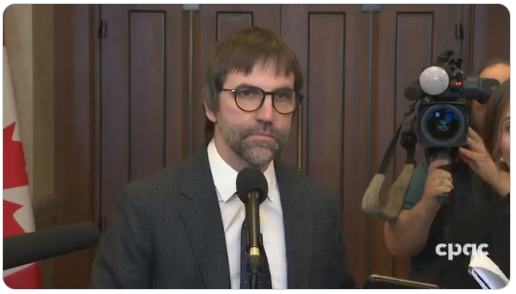
Canadian Heritage Minister Steven Guilbeault, 3 February 2020.
Screencapure from CPAC video.
Canadian Heritage Minister Steven Guilbeault is set to introduce his “Get Money from Web Giants” Internet regulation bill on Monday. Based on his previous public comments, the bill is expected to grant the CRTC extensive new powers to regulate Internet-based video streaming services. In particular, expect the government to mandate payments to support Canadian content production for the streaming services and establish new “discoverability” requirements that will require online services to override user preferences by promoting Canadian content. The government is likely to issue a policy direction to the CRTC that identifies its specific priorities, but the much-discussed link licensing requirement for social media companies that Guilbeault has supported will not be part of this legislative package.
These reforms mark the culmination of a dramatic reversal in government digital policy. After then-Heritage Minister Melanie Joly unveiled her 2017 digital cancon strategy that focused on market-based solutions and emphasized exports of Canadian culture, extensive lobbying gradually let to a major policy flip flop. The CRTC reversed its prior position on Internet streaming regulation in 2018 with a regulate-everything approach, the deeply flawed Yale report released earlier this year provided the blueprint for CRTC-led regulation, and Guilbeault jumped on board with a declaration that his top legislative priority was to “get money from web giants.”
On Monday, the government will undoubtedly line up the lobby groups that supported the reform to provide positive quotes, suggest reforms will lead to billions in new revenues, and claim the bill ensures regulatory fairness by requiring that everyone contribute. Yet much of the policy is based on fictions: that this levels the playing field, that there is a Cancon crisis, that discoverability requirements respond to a serious concern, that this will result in quick payments to the industry, that this is consistent with net neutrality, or that consumers will not bear the costs of reform.
None of this is true. But beyond those issues – each discussed in further detail below – this most notably represents a significant new source of speech regulation. We do not require government authorization to publish newspapers, blog posts, or to simply voice our views in a public forum. That we require governmental authorization in the form of licensing for broadcasters was largely justified in furtherance of cultural policies on the grounds of limited access to scarce spectrum. That justification simply does not apply to the Internet, no matter how many times Guilbeault refers to the inclusion of Internet companies within the “broadcast system.” This is not a matter of Internet exceptionalism. Laws and regulations such as taxation, competition, privacy, and consumer protection are all among the rules that apply regardless of whether the service is offline or online. But speech regulation by the CRTC should require a far better justification than the lure of “free money” from Internet companies.
QotD: The Patriarchy
Thus it is okay to hate all men – they are all infected by the canker of patriarchy which, unlike individual thoughts and motivations, is a kind of all-powerful super-organism, a hive mind controlling its male worker bees. Men as individuals are simply tokens of something deeper – structural misogyny embedded in institutional power. If you’re a man who thinks you are not a misogynist, who in fact thinks you like women perfectly well, you are deluding yourself. For such men, their sexism is simply unconscious, just as in classical Marxism the “good” bourgeois was unconscious of the fact that he could not avoid exploiting his workers or employees, even though he might be providing them with a decent wage, good working conditions, and health and pension benefits.
This analysis, given a moment’s thought, doesn’t make a lot of sense. Even if you accept that all the ills of the world are down to patriarchy and the dominance of men, you have to concede the corollary – that all the triumphs of humankind are down to the patriarchy also, from medicine and science to the highest reaches of art and culture.
Women may point out that they have been excluded from these fields until now, and that’s largely true, although biology – the lack of control women have historically had over their own fertility and the greater physical strength of men – might be a far more simple and plausible explanation than the existence of a hypothetical, all-powerful super-organism. However, the very act that men hold the balance of power is proof of the existence of patriarchy, according to this belief system.
Tim Lott, “Why It’s Not OK to Hate Men”, Quillette, 2018-08-14.
November 1, 2020
QotD: Trumbo
And it was. Needless to say, the movie made villains of the conservatives who opposed the Marxist infiltration: people like John Wayne and Hedda Hopper in particular, Wayne because Wayne, and Hopper because she had a son serving in the U.S. Navy during the Korean War. Of course Wayne was made out to be a bully and Hopper a vindictive bitch — and the Senators and Congressmen who haled the Commies in front of the Senate and House Un-American Committee (HUAC) were depicted as ideological purists who saw Communists behind every bush — even though, in the case of Hollywood, there were Commies behind every bush at the time.
Of course, much was made of the fact that being a Communist wasn’t actually illegal (then, and now), and Trumbo made a great show of this being a First Amendment issue — which it was — and how these Commies all wanted to improve America, but of course there were evil right-wingers like Wayne, Joe McCarthy and HUAC harassing them at every turn.
The execution of the traitors Julius and Ethel Rosenberg got a little puff piece in the movie, which didn’t — couldn’t — actually say they weren’t guilty of
treasonespionage, so it was brushed over with the throwaway that it was the first execution for espionage in peacetime, as though peacetime should give espionage a pass. And if that wasn’t enough, the Rosenberg children were paraded around as sympathy magnets — as they still are — because Communists have no problem using children to serve their own purposes.Kim du Toit, “Blacklists Matter”, Splendid Isolation, 2020-07-28.
October 31, 2020
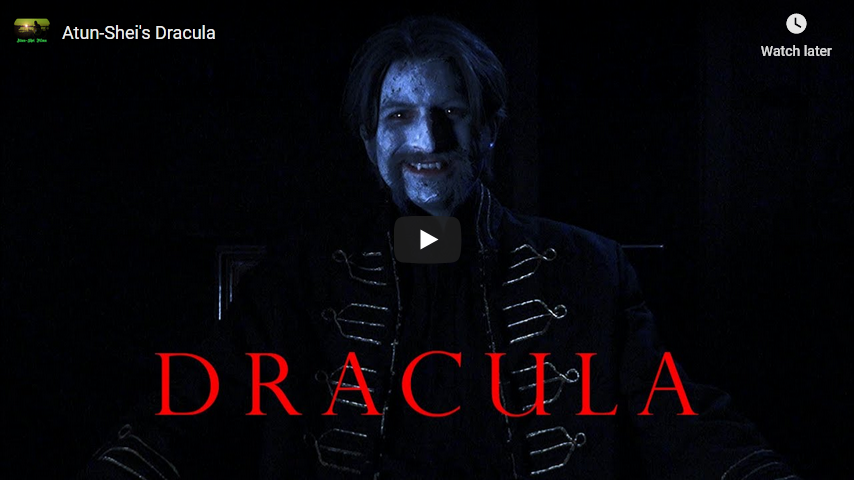
Atun-Shei’s Dracula
Atun-Shei Films
Published 30 Oct 2020🎃 Get 50% OFF 👉🏻 your first 6 months of Babbel 🕰 limited time only! HERE: http://bit.ly/AtunSheiFilms
An in-depth analysis of Dracula, the original 1897 book by Bram Stoker, possibly the most influential horror novel ever written. Why has the Count enjoyed such longevity in popular culture? What made Dracula so scary for Victorian readers? And what – pray tell – makes vampires so attractive?
Support Atun-Shei Films on Patreon ► https://www.patreon.com/atunsheifilms
Leave a Tip via Paypal ► https://www.paypal.me/atunsheifilms
Buy Merch ► teespring.com/stores/atun-shei-films
#BramStoker #Dracula #Analysis
Reddit ► https://www.reddit.com/r/atunsheifilms
Twitter ► https://twitter.com/atun_shei~REFERENCES~
[1] “Dracula Movies” (2016). IMDB https://www.imdb.com/list/ls058255047/
[2] Leslie S. Klinger. The New Annotated Dracula (2008). W.W. Norton & Company, Page xvi
[3] Klinger, Page xxi
[4] Dr. Andrzej Diniejko. “Slums and Slumming in Late-Victorian London.” The Victorian Web http://www.victorianweb.org/history/s…
[5] Gill Davies. “London in Dracula; Dracula in London” (2004). Literary London: Interdisciplinary Studies in the Representation of London, Volume 2 Number 1 http://www.literarylondon.org/london-…
[6] Klinger, xxxii-xli
[7] “An 1897 Review of Bram Stoker’s Dracula” (2019). Literary Hub https://bookmarks.reviews/an-1897-rev…
[8] “The Spectator‘s Review of Dracula, 1897″ (2012). The Spectator https://www.spectator.co.uk/article/t…
[9] olly Furneaux. “Victorian Se•ualities” (2014). British Library https://www.bl.uk/romantics-and-victo…
[10] Klinger, Page xvii-xviii
[11] Greg Buzwell. “Daughters of Decadence: The New Woman in the Victorian Fin De Siécle” (2014). British Library https://www.bl.uk/romantics-and-victo…
Modern Halloween costumes show us how wealthy we have become
Richard Lorenc looks back at the “costumes” for Halloween from the 1970s and 1980s to help illustrate how much our general economic picture has improved since those dark days:
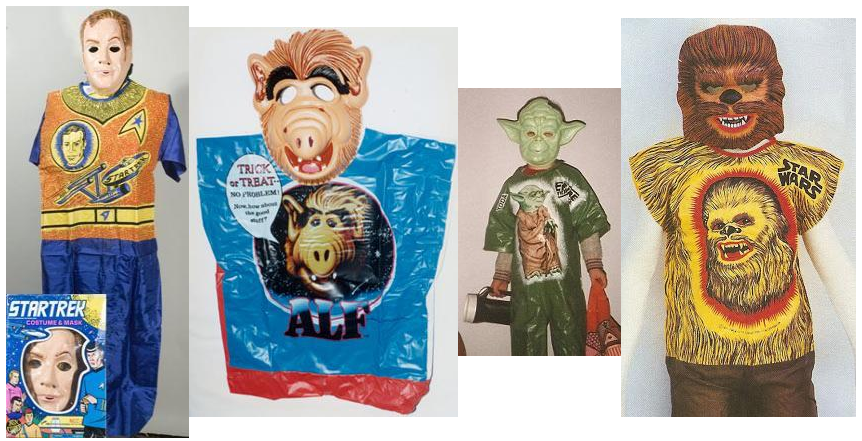
While my husband and I were recently struggling to figure out our costumes for this Halloween (and we still don’t have any idea), he pulled up some old commercials on YouTube. The off-the-shelf options that trick or treaters had were, in a word, pitiful.
Basically, costume makers thought it was ok to make a front-only plastic mask (in any color, really) of a character and top it off with a plastic smock featuring an illustration of said character with either its name or the name of the show or movie it comes from. There was no attempt to dress in the character’s actual attire. If you wanted that, you’d either have to know a professional costumer or cobble together something from your closet.
Take a look for yourself at just how costume-poor we used to be:
Obviously, every costume is an opportunity to generate interest in a brand or franchise, and slapping on a logo is an easy way to get a name out there, but these costumes truly heralded a dark time for Halloween. Some may even argue that it demonstrated crass consumerism at its worst, with cynical companies taking the easiest route to grabbing a couple of bucks from desperate parents.
The truth of the tragedy of terrible old Halloween costumes has to do with a simple idea: specialization.
[…]
The next time you compare our screen-accurate store-bought costumes of Darth Vader and Mr. Incredible to those of yesteryear, remember that we enjoy them today not because previous generations didn’t care for accurate costuming, but because growing trade across the globe has generated so much wealth for each of us that we can now demand things we may have only imagined previously.
I only realized as I got ready to schedule this post that it was an article I’d blogged a couple of years back, but the point of the story is still relevant even in our pandemic-wracked economy of 2020.
October 30, 2020
“We Burn” – The Road to Srebrenica – Sabaton History 091 [Official]
Sabaton History
Published 29 Oct 2020Srebrenica in the summer of 1995. The road to the bloodiest massacre since the end of the Second World War was paved by the violence that followed the breakdown of Yugoslavia. A series of wars and brutal atrocities accompanied the individual struggles for independence as old ethnic and nationalist hatred resurged. The Bosnian Serbs who followed the leadership of politician Radovan Karadžić and General Ratko Mladić sought to separate themselves within Bosnia. However their views soon radicalized and Kradazic began to advocate for a Serbian ethno-state utopia, free of the Muslim Bosniaks. And he was willing to use extreme violence to achieve it.
Support Sabaton History on Patreon: https://www.patreon.com/sabatonhistory
Listen to “We Burn” on the album Attero Dominatus: https://music.sabaton.net/AtteroDomin…
Listen to Sabaton on Spotify: http://smarturl.it/SabatonSpotify
Official Sabaton Merchandise Shop: http://bit.ly/SabatonOfficialShopHosted by: Indy Neidell
Written by: Markus Linke and Indy Neidell
Directed by: Astrid Deinhard and Wieke Kapteijns
Produced by: Pär Sundström, Astrid Deinhard and Spartacus Olsson
Creative Producer: Maria Kyhle
Executive Producers: Pär Sundström, Joakim Brodén, Tomas Sunmo, Indy Neidell, Astrid Deinhard, and Spartacus Olsson
Community Manager: Maria Kyhle
Post-Production Director: Wieke Kapteijns
Editor: Karolina Dołęga
Sound Editor: Marek Kaminski
Archive: Reuters/Screenocean – https://www.screenocean.comVisual Sources:
– Library of Congress
– Portrait of Slobodan Milosevic courtesy of Stevan Kragujevic with the approval of daughter Tanja Kragujevic
– Icons from The Noun Project: Arrow by Dolly Holmes
– Pictures from Siege of Sarajevo, Portrait of Mladić & Karadžić and more courtesy of Mikhail Evstafiev
– Photograph of execution in Brcko in 1992 – Photograph provided courtesy of the ICTY
All music by: SabatonAn OnLion Entertainment GmbH and Raging Beaver Publishing AB co-Production.
© Raging Beaver Publishing AB, 2019 – all rights reserved.
October 29, 2020
War, Cinema, and Cheese! | BETWEEN 2 WARS: ZEITGEIST! | E.01 – Harvest 1918
TimeGhost History
Published 28 Oct 2020War, poverty, and disease continue to pummel the word in the wake of the Great War. But still, humanity carries on, not only surviving but creating a host of futuristic opportunities in the arts, the economy, and … cheese.
Join us on Patreon: https://www.patreon.com/TimeGhostHistory
Hosted by: Indy Neidell
Written by: Indy Neidell, Francis van Berkel, and Spartacus Olsson.
Director: Astrid Deinhard
Producers: Astrid Deinhard and Spartacus Olsson
Executive Producers: Astrid Deinhard, Indy Neidell, Spartacus Olsson, Bodo Rittenauer
Creative Producer: Maria Kyhle
Post-Production Director: Wieke Kapteijns
Research by: Indy Neidell, Francis van Berkel, and Spartacus Olsson.
Archive Research: Daniel Weiss
Edited by: Daniel Weiss
Sound design: Marek KamińskiColorizations:
Daniel Weiss – https://www.facebook.com/TheYankeeCol…
(BlauColorizations) – https://www.instagram.com/blaucolorizations
Dememorabilia – https://www.instagram.com/dememorabilia/Sources:
From the Noun Project:
iron cross By Souvik Maity, IN
poverty By Phạm Thanh Lộc, VN
Skull_51748Soundtracks from Epidemic Sound:
– “One More for the Road” – Golden Age Radio
– “Dark Shadow” – Etienne Roussel
– “Not Safe Yet” – Gunnar Johnsen
– “Rememberance” – Fabien Tell
– “Last Point of Safe Return” – Fabien Tell
– “Steps in Time” – Golden Age Radio
– “What Now” – Golden Age Radio
– “Sunday Worship” – Radio Night
– “Astray” – Alec Slayne
– “Break Free” – Fabien TellArchive by Screenocean/Reuters https://www.screenocean.com.
A TimeGhost chronological documentary produced by OnLion Entertainment GmbH.
From the comments:
TimeGhost History
1 day ago
Welcome back to Between Two Wars! Strap in for what is going to be an exciting ride through the massive cultural, social, economic, and technological shifts that take place after the Great War. We can’t guarantee this will always be a positive tale. These changes entail plenty of fear and suffering, and even ‘fun’ things like the Jazz Age have their darker sides.But that doesn’t alter the fact that the interwar era is a time of promise where people envision modern futures to replace old pasts. There is everything to play for in this brave new world and a vision of progress all around in politics, culture, food, and more.

How to fix the CBC
… aside from cutting off the massive subsidies from the federal government, which would be my preferred solution if “nuke it from orbit” isn’t a viable choice. Let it sink or swim as a purely private media entity — I’d be betting on the “sink”, personally because they don’t currently have to compete thanks to their funding from the feds and are not noted for their quick adaptation skills. However, Peter Menzies isn’t quite as anti-CBC as I am:

In a recent piece here at The Line, I lamented the current status of the CBC. That’s easy enough to do, but it’s fair to ask what can actually be done to fix it. These ideas don’t provide all the answers but, implemented with conviction and speed, here’s where to start. Because there are some things that can be done, and relatively quickly, to revitalize the institution: the CBC may well be hell-bent on its own destructive dualism but clarifying its role and purifying its soul are still possible by getting it out of the advertising business and turning it into a proper public media.
Right now, the CBC is neither fish nor fowl. Sometimes, as with radio, it is a popular public broadcaster. At others, with its television channels, it fancies itself a commercial broadcaster, albeit a publicly-funded and relatively unpopular one. It plows both of those personalities into its commercial online operations and supplements them with reportage of the kind traditionally associated with newspapers. Like a creature of mythology, it shape-shifts through all of these roles as best suits its needs and moods.
On top of that, its OMG obsession with Trump’s America has drawn it far away from its content mandate to ensure Canadians learn about each other wherever they live in this vast and beautiful country. While its performance indicates otherwise, CBC’s purpose is not to secure a large audience share in the GTA or, in French, in Montreal, in order to earn more revenue. Nor is CBC News Network’s mandate to compete with CNN. The Corp’s raison d’etre, as defined in legislation, is to tell Canadians each other’s stories — even if the GTA and Montreal don’t care.
The only way to purify the CBC then, is to ban it — once and for all — from collecting advertising revenue from domestic consumption of its product. As its radio operations are already advertising-free this means no more ads on its TV or websites. Done. Finished.
October 27, 2020
Conspiracy theories grow thanks to mistrust of public officials and media
It’s commonplace to say that such-and-such a conspiracy theory is merely an intellectual playground for the paranoid and the gullible, but conspiracy theories don’t spontaneously generate — at least not the ones that gain wide audiences. Daniel Miller looks at some of the reasons these theories become attractive and gain adherents:

QAnon alleged clues about the NYC bombing, 10 December 2017.
Wikimedia Commons.
In the wake of six months of mixed-messages and baffling government policies, following four years, if not twenty years, of mystifying imponderables, the concept of a “conspiracy theory” has recently reentered the lexicon of semi-criminalized thought.
In August The New York Times stigmatized anti-lockdown protesters in Berlin as a worrying admixture of “neo-Nazi groups, conspiracy theorists as well as Germans who said they were fed up with the restrictions” and similar language was used about the protesters in London, as social media companies began purging accounts linked to the QAnon conspiracy theory, which conjectures that the world is controlled by a secret global cabal of blood-drinking sex criminals.
Believing conspiracy theories, evidently, is a Bad Thing, but any concept capacious enough to incorporate both the tens, even hundreds of millions of people skeptical about the global political response to SARS-2, and the much smaller number entertaining more involved explanations demands a careful analysis.
Really the first question is who you can trust. One answer is the official authorities, as represented by the esteemed New York Times, but the news website which welcomed the 45th US President to office with three years of spurious coverage of what turned out to be the Russiagate hoax, before pivoting to the historical phantasmagoria of the 1619 Project, no longer strikes everyone as the impeccable source which revealed the existence of Saddam Hussein’s WMD stockpile and links to Al-Qaeda before the 2003 invasion of Iraq, or whose Pulitzer Prize winning journalist Walter Duranty discounted rumours of a 1933 famine in the Soviet Union as “an exaggeration or malignant propaganda.”
This leaves individuals only to their own wits and devices in the face of a puzzling world in which information is everywhere, much of it questionable, not all the facts are available, and many are ultra-politicized, and meanwhile, unknown agendas are being continually carried out.
What’s really going on? As with any speculative enterprise, the problem is to construct a plausible hypothesis by using various models to interpret limited data. There is no question that, at different moments in history, individuals and groups have worked together in secrecy to launch conspiratorial exploits and there is no obvious reason for thinking this practice has now totally ceased. “People of the same trade seldom meet together,” observed Adam Smith in 1776, “even for merriment and diversion, but the conversation ends in a conspiracy against the public.” Still, this is not in itself evidence of any specific plot happening now.
October 26, 2020
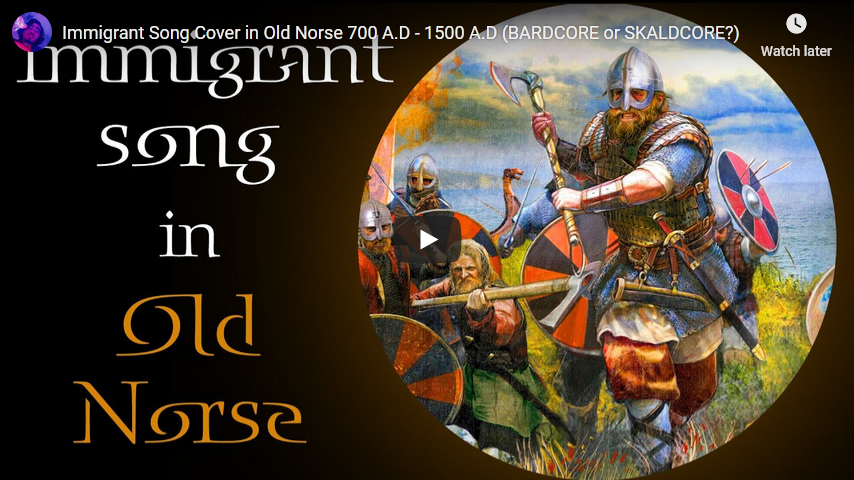
“Immigrant Song” cover in Old Norse 700 A.D – 1500 A.D
the_miracle_aligner
Published 13 Oct 2020“Get in virgin, We’re raiding England”
Original by @Led Zeppelin: https://www.youtube.com/watch?v=RlNhD…
First off, apologies if I screwed this up because this was probably one of the hardest covers I have ever attempted (One does not simply try and emulate Robert Plant). If there were any mistakes in the pronunciations or translation too please do let me know 🙂 Thank you so much for watching guys, leave a like if ya liked it. And if you haven’t subbed yet, please consider doing so. Help me get to 100k Subs 🙂
Consider supporting the channel, I know what I do ain’t much but its honest work ❤: https://www.patreon.com/the_miracle_a…
Wanna follow me?
https://twitter.com/KholeJa
https://www.instagram.com/the_miracle…Big thanks to @Constantine for the instrumentals, PLEASE for the love of God go support his channel too 🙂 https://www.youtube.com/channel/UCoHA…
Big thanks to Angus Bolton for the translation and training. Twas truly a pleasure.
Source of the BG: https://in.pinterest.com/pin/29885612…
Lyrics, Courtesy of Angus (Its in Icelandic btw, I bet you don’t wanna be reading runes XD)
ís ok snœrs landi frá Komum
Af miðnótts boði,laugar vellar
Æsa hamarr
Vil drifum draka vár til noyer landum
Að vega hjrøða ok að hlakka ok söngr
Valhøl ver komumFram sveipum með bitinn øra
vestr strandi einn sœkjumís ok snœrs landi frá Komum
Af miðnótts boði, laugar vellar
Hvo mýkr síns grænar bjoðar
blóðs sögur susa megar
Af hvé dolgsstormi þegdum
síns bardgisherrar ver erumFram sveipum með bitinn öra
vestr strandi einn sœkjumSvo nu fallaðyrka létta ok simða síns betra
Þvi at and-fang mega daginn vinna þar allr#LedZeppelin #Norse #Bardcore #Skaldcore
Kathy Shaidle tells the story of Hamilton’s 1970s cult children’s TV show
I still have fond memories of CHCH TV’s Hilarious House of Frightenstein and Kathy Shaidle clearly does too:
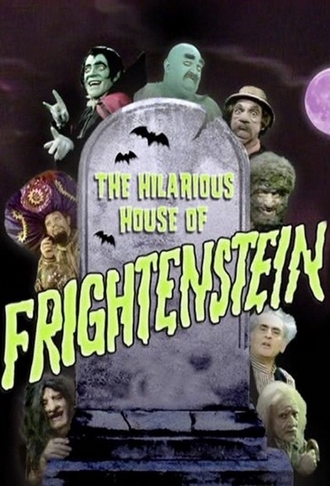
The Hilarious House of Frightenstein was produced in 1971 by our one and only TV station, CHCH. This hour-long, 130-episode kids’ show combined the mid-century sensibility of Famous Monsters of Filmland with the then-hip look and sound of psychedelia: kaleidoscopic “special effects” plus Top 40 hits spun by “The Wolfman,” an affectionate rip-off of legendary DJ Wolfman Jack.
The show’s “plot” concerned a banished count’s attempts to revive his comatose monster, Brucie, but that was just a flimsy excuse to mount a fast-paced series of corny sketches, semi-serious “educational” segments, and — years before The Simpsons and Pixar — “over the kids’ heads” jokes aimed at adults who might find themselves awake at dawn, or earlier.
The part that always puzzled me as a kid was that a local southern Ontario low-budget TV show for kids had international movie star Vincent Price in it. Kathy explains how it happened:
Older and “uncool” (despite receiving the imprimatur of another rising Hollywood director, Roger Corman), Price was out of fashion.
At the same time, CHCH had a limited budget, but wanted and needed some star power for their single camera kid’s show.
Who better to host this “monster mash” than Vincent Price, still one of the all-time great horror-movie icons?
Frightenstein‘s producer tracked down Price, who agreed to work for $3000 a day, one quarter of his usual per-diem appearance rate.
He loved children, he explained simply. And the gig sounded like fun.
CHCH checked their tiny budget. They could only afford Price for four days, tops.
Four days it would have to be.
Everyone signed on the dotted line.
I’ve heard the story of what happened next from different sources, and it never ceases to warm my heart:
Price arrived at the modest TV studio, got into makeup and costume and was handed reams of doggerel poems about some crazy characters he’d never heard of before.
He’d read each piece once, put his head down, then look up at the camera’s red light and utter his lines perfectly in one take.
Next!
New makeup, new costume, same perfect delivery, hour after hour.
Finally, it was time for a break. The weary yet exhilarated crew turned off the cameras and lights.
Then they looked around and realized that Vincent Price had disappeared.
Oh well, they said to each other, what do you expect? He’s a big star and all. Plus he’s, like, 60 years old, so he probably went for a nap…
The studio door opened a few minutes later.
It was Vincent Price and a cab driver, hauling “two-fours” of beer from the nearby Brewer’s Retail.
He handed cold stubbies out to the cast and crew and regaled them with tales of old Hollywood, his days working with Karloff and Peter Lorre and Gene Tierney and Cecil B. DeMille and all the other greats he’d known.
QotD: Living in the modern world
Zack Stentz, Twitter, 2018-07-16.
October 25, 2020
Canada’s broken [REDACTED] to [REDACTED] [REDACTED]
In The Line, a look at the failings of the federal government’s promises to fix the badly broken Access to Information system:

Sometimes, Line readers, though we always strive to be fair, we cannot deny that certain politicians are just fun to skewer. Because some of them are just terrible, terrible people, and while we polite Canadians don’t normally report too much on the personal lives of our elected leaders, well, what can we say? When you can, within responsible journalistic bounds, give a dirtbag a hard time for falling down on the job, hey. Life is good!
Patty Hajdu, the federal minister of health, is actually … perfectly pleasant. This isn’t unheard of in our politicians, but it’s rare enough to mention here, all to make very clear that we take no particular pleasure in reporting on her pathetic performance this week. But report it we must. And pathetic it surely was.
Under sharp questioning by Tory MP Michelle Rempel Garner, Hajdu very carefully and deliberately aimed a soon-to-be-banned .44 Magnum revolver at her foot, waited a dramatic second for effect, and then figuratively blew her poor extremity to smithereens. Rempel Garner had been asking about the abysmally broken state of the federal access-to-information systems, and Hajdu, with all-too-Liberal scorn, stood up and declared:
Mr. Speaker, I have spoken to hundreds, if not thousands, of Canadians since the pandemic was first announced, when COVID-19 arrived on our shores. In fact, not once has a Canadian asked me to put more resources into freedom of information officers. What they have asked me for is to ensure that all the resources of Canada are devoted to one thing, and that is the health, safety and economic prosperity of our country. We are going to continue to make sure that Canada has the most robust response possible.
There are two gigantic problems with Hajdu’s answer there.
The first is that Canada’s access-to-information regime is notoriously dysfunctional, and her government has long admitted that. Indeed, fixing this disgrace was a major plank in the party’s 2015 platform.
In the years since, the government has effectively accomplished the square root of zero.

October 23, 2020
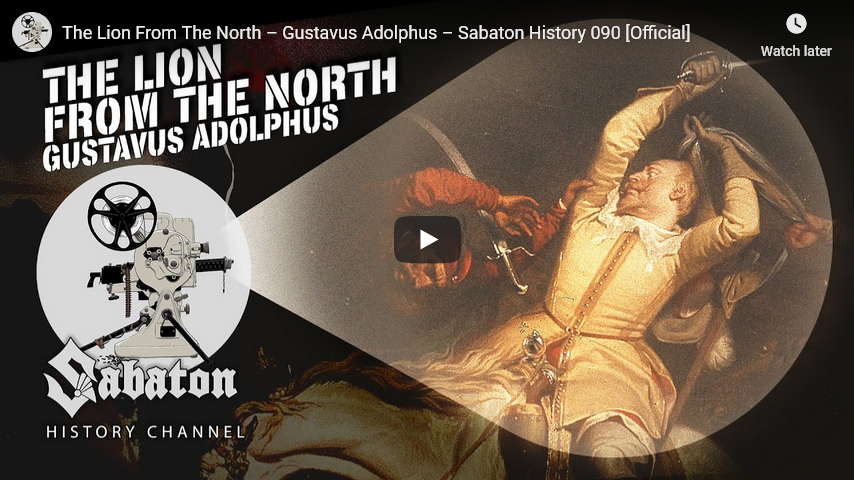
“The Lion From The North” – Gustavus Adolphus – Sabaton History 090 [Official]
Sabaton History
Published 22 Oct 2020It was a time of religion and war. Legends tell the tale of a mighty Swedish King, a Lion from the North, who arrived in the German Empire with a mighty host to save Protestantism. Beyond the legends, Gustavus Adolphus was a warrior king who sought to create a Swedish empire through hegemony on the Baltic Sea. Once, Sweden’s involvement in the 30 Years War had begun out of sheer necessity, but soon send her armies on a path of glory and fame. But would this path lead the Swedish King to victory or his inevitable demise?
Support Sabaton History on Patreon: https://www.patreon.com/sabatonhistory
Listen to “The Lion From The North” on the album Carolus Rex: https://music.sabaton.net/CarolusRexEN
Watch the Official Music Video of “The Lion From The North” here:
https://www.youtube.com/watch?v=T1gvN…Listen to Sabaton on Spotify: http://smarturl.it/SabatonSpotify
Official Sabaton Merchandise Shop: http://bit.ly/SabatonOfficialShopHosted by: Indy Neidell
Written by: Markus Linke and Indy Neidell
Directed by: Astrid Deinhard and Wieke Kapteijns
Produced by: Pär Sundström, Astrid Deinhard and Spartacus Olsson
Creative Producer: Maria Kyhle
Executive Producers: Pär Sundström, Joakim Brodén, Tomas Sunmo, Indy Neidell, Astrid Deinhard, and Spartacus Olsson
Community Manager: Maria Kyhle
Post-Production Director: Wieke Kapteijns
Editor: Karolina Dołęga
Sound Editor: Marek Kaminski
Maps by: Eastory – https://www.youtube.com/c/eastory
Archive: Reuters/Screenocean – https://www.screenocean.comVisual Sources:
– Nationalmuseum
– Arms of Vasa courtesy of Sodacan from Wikimedia
– Nils Forsberg Gustav II Adolf courtesy of Nils Forsberg, Swedish painter from Wikimedia
– Death of King Gustav II Adolf of Sweden by Carl Wahlbom courtesy of Osama Shukir Muhammed Amin FRCP (Glasg) from Wikimedia
– Icons from The Noun Project: Cannon by Graphic Nehar, Man by Milinda CoureyAll music by: Sabaton
An OnLion Entertainment GmbH and Raging Beaver Publishing AB co-Production.
© Raging Beaver Publishing AB, 2019 – all rights reserved.