
… despite showing acres of pallid flesh in the fetish-bondage garb of urban prostitution, Lady Gaga is far less sexy than Stefani Germanotta used to be. In fact, Gaga isn’t sexy at all — she’s like a gangly marionette or plasticised android. How could a figure so calculated and artificial, so clinical and strangely antiseptic, so stripped of genuine eroticism have become the icon of her generation? Can it be that Gaga represents the exhausted end of the sexual revolution? In Gaga’s manic miming of persona after persona, over-conceptualised and claustrophobic, we may have reached the limit of an era.
In 1933, the critic I.A. Richards, writing about “The Waste Land”, spoke of T.S. Eliot’s “persistent concern with sex, the problem of our generation, as religion was a problem of the last.” After the first world war, sexual experimentation and titillating smart talk became the hallmark of the emancipated new woman, who smoked, drank, bobbed her hair and danced the antic Charleston. Hollywood discovered that sex was great box office — leading to pressure from civic and religious groups for a production code, which movie-makers found ingenious ways to evade.
We are approaching the 100-year anniversary of Hollywood sex: Theda Bara’s incarnation as The Vamp in A Fool There Was (1915), a lurid femme fatale who slew overnight the lingering Victorian ideal of the pure, saintly woman-child, portrayed on screen by Mary Pickford and Dorothy and Lilian Gish. Theda Bara, like Lady Gaga, was a manufactured personality; although the studio publicity department claimed she was born in the Sahara to a French artist and Arabian princess, she was actually Theodosia Goodman, the daughter of a Jewish tailor in Cincinnati.
The sexual icon of 1920s Hollywood was Clara Bow, a madcap flapper who was probably falsely rumoured to have bedded the entire University of Southern California football team. Lithe Louise Brooks, with her signature bobbed hair, made landmark films of decadent eroticism in Germany. Wicked Mae West and lushly buxom Jean Harlow began the tradition of the sex bomb, which continued through Hedy Lamarr to Jane Russell and Marilyn Monroe, whose influence endures around the globe. But the cardinal sexual pioneer was Marlene Dietrich, who exploded on the international scene in 1930 as the heartless cabaret singer of The Blue Angel. In her subsequent films with the director Josef von Sternberg, Marlene toyed with transvestism (based on the drag balls of Weimar Berlin) and created the sophisticated look of hard glamour that remains a staple of fashion magazines.
Marlene was Madonna Louise Ciccione’s idol; the seductive, commanding Marlene permeates Madonna’s brilliant videos of the 1980s and the early ’90s, with their dominatrix, transvestite and bisexual motifs. Madonna wanted to play Marlene on film, but the idea was overruled by Marlene herself, who (as the proud daughter of a Prussian officer) decreed Madonna “too vulgar”.
Weimar cabaret was recreated in the 1972 film Cabaret, based on Christopher Isherwood’s Berlin stories. Bob Fosse’s dazzlingly aggressive choreography in that blockbuster film was adopted by Madonna for her videos and stage shows — all of which have been doggedly imitated by Lady Gaga. Gaga has borrowed so heavily from Madonna (as in her latest “Alejandro” video) that it must be asked, at what point does homage become theft? But the main point is that the young Madonna was on fire. She was indeed the imperious Marlene Dietrich’s true heir. Madonna’s incandescence is still on view in videos like “Open Your Heart”, “Vogue” and “Express Yourself”. However, for Gaga, sex is mainly decor and surface; she’s like a laminated piece of ersatz rococo furniture. Alarmingly, Generation Gaga can’t tell the difference. Is it the death of sex? Perhaps the symbolic status that sex had for a century has gone kaput; that blazing trajectory is over.
Camille Paglia, “Lady Gaga: The Death of Sex”, Sunday Times, 2010-09-12.
November 17, 2021
QotD: From Theda Bara to Lady Gaga
November 16, 2021
Mike Solana interviews Chris Best, the co-founder and CEO of Substack
Not long after I started hearing about Substack, some of my favourite writers and bloggers began to move their work to the new platform. I now subscribe to more than a dozen Substack authors, although being a penniless blogger, I’m restricted to the free offerings in each case. Thus far I’m definitely seeing Substack as a positive influence in the online world, so this Mike Solana post was of some interest to me:

MIKE SOLANA: In your and Hamish McKenzie’s recent essay, “The internet needs better rules, not stricter referees”, you say Substack is changing the publishing model. Before we get into all that, how would you characterize the publishing landscape before Substack?
CHRIS BEST: My general story on this is we’re coming out of an age of attention-monster social media. People used to get bored. People used to have this problem of like, I don’t know what to do with my time. Then the internet, and especially the mobile internet, took over ALL of our time and attention. It filled up every crevice in our life.
In the first phase of that — the attention suck — it was like this giant land grab. If you were making something that competed for attention space, you wanted to grab as much as possible, as quickly as possible, because there’s only so much. You were competing for people’s 10 minutes while they were waiting in line at the grocery store or whatever. So publishers made content free, and they made it as broadly-compelling as possible. The goal was to grab as much attention as possible in the lowest friction way possible, and to turn that attention into money through advertising.
And listen, none of that was nefarious. None of that was like, people with tented fingers going, “Aha! This will create something bad!” But when you create a system like this, you end up with a certain incentive structure. Then, if you build your algorithms to serve your business model, the incentive structure you create for people participating in your network drives a certain sort of behavior.
The platforms all optimized for things that brought cheap engagement at all costs, that interaction weighed to some of the worst aspects of human nature, and drove emergent behavior that gave us many of the things we see today. The legacy media just got totally steamrolled by all of this, and lives in the world created by these platforms.
SOLANA: Do you really feel that Substack is completely protected from this scaled advertising dynamic with its subscription model? There are a lot of legacy media institutions that have subscriptions, and have had subscriptions for the last 10 or 20 years, in addition to running ads. Personally, I’m also getting requests to run ads on Pirate Wires fairly often. I’m not biting, which maybe answers my question before I’ve asked it, but … do you really see this all changing?
BEST: I think the subscription model is necessary, but not sufficient, right? First of all, as a writer, that you can actually make real money doing this is by itself a big deal. I’ve convinced a lot of people to do subscription instead of ads, and usually they come back to me later like, “Thank you, you changed my life. I can’t believe I was ever thinking the other thing.”
People tend to think about this like, “I could make money with ads. I could make money with subscriptions. Two moneys is better than one money.” But when you’re making the best possible product to drive subscriptions, what you end up having to write is qualitatively different — and better — than the thing you’d have to do to drive the most ad revenue.
If you want to earn and keep the trust of a relatively small number of people who value your writing really deeply, deeply enough to pay for it, and you want that number to grow, the work you do in that world is different than the work you do if you’re like, “I need to get as many people to hear my Casper mattress ad read as possible.”
However, to your point, it’s not enough. One of the big problems with Substack now is people are like, “Great, we’ve got this place where the incentive structure works differently, and I want create this better product to earn and keep the trust of my subscribers … but the way that people find out about my stuff is still on Twitter.”
So we’re kind of downstream from this, you know, attention sewage factory of incentives. I think for Substack to live up to the idea of letting readers take back their mind, and their attention, and helping us all create this kind of alternate universe of content with different laws of physics … we need to do more on that front.
Bettie Page: The Queen of Pinup
Biographics
Published 4 Mar 2019Visit our companion website for more: http://biographics.org
Credits:
Host – Simon Whistler
Author – Shannon Quinn
Producer – Jennifer Da Silva
Executive Producer – Shell HarrisBusiness inquiries to biographics.email@gmail.com
Source/Further reading:
https://www.youtube.com/watch?v=MJhop…
https://www.pbs.org/video/history-det…
https://nces.ed.gov/pubs93/93442.pdf
http://news.bbc.co.uk/2/hi/americas/7…
https://www.biography.com/news/bettie…
https://www.celebritynetworth.com/ric…
https://www.forbes.com/sites/zackomal…Secondary Sources/Photos/Videos:
(Hey guys- You technically can’t see any of her private parts in these videos, so it’s not really porn, but I still would not call this safe for work. Your wives, co-workers, or people on public transportation may give you really dirty looks if they see these over your shoulder. You have been warned.)
https://en.wikipedia.org/wiki/Bettie_…Dancing video
https://www.youtube.com/watch?v=_Pndr…
The “Striporama” scenes with Bettie Page
https://youtu.be/ZDypKx8c1TM
November 15, 2021
“That is what I like about you Canadians … you are so ready to admit fault. It is a fine, if dangerous, national characteristic. You are all ashamed.”
John E. MacKinnon on the world’s first admittedly genocidal, terminally apologetic, “post-national” state … the entity that used to be known as the Dominion of Canada:

During one broadcast, [late CBC Radio host Peter] Gzowski recalled an incident that had occurred at the annual invitational golf tournament he hosted to benefit adult literacy programs across Canada. As one participant, standing next to Gzowski, leaned thoughtfully on his club, another drove a golf cart over his toes. Although it was unclear from the telling whether the cart-driver was American, the first golfer was obviously Canadian, since, shifting gingerly from foot to aching foot, he could only plead, “sorry”. Gzowski shared this anecdote with evident delight, since it struck him as so endearingly, because emblematically, Canadian.
But Gzowski’s soaring contentment with this view of his country and countrymen was no less emblematic. To Canadian nationalists of Gzowski’s era and ilk, the representative Canadian is no hewer of wood or carrier of water, no builder of bridges, roads and railways, no stormer of barricades or keeper of the peace, but a hobbled guest on a verdant fairway, eagerly apologizing for the pleasure of having his toes crushed. “That is what I like about you Canadians,” says Dr. Gunilla Dahl-Soot in Robertson Davies’s novel The Lyre of Orpheus, “you are so ready to admit fault. It is a fine, if dangerous, national characteristic. You are all ashamed.”
Over the past 200 years, notes Hungarian-born Canadian writer George Jonas, “we have been misled by science. Medicine became our hubris. Having learned to fix appendices, we thought we could fix history.” Today, in Canada, there is no clearer manifestation of this urge to renovate and repair the past than the vogue for apology. And no one has struck this posture of national self-abasement with quite the alacrity of Prime Minister Justin Trudeau. Just months after taking office, he apologized for the Komagata Maru incident in 1914, in which a ship carrying Sikhs, Muslims, and Hindus was sent back to Calcutta, where 20 died in a riot. In 2017, he apologized to Indigenous residential-school survivors in Newfoundland and Labrador, and, just days later, to LGBT Canadians for decades of “state-sponsored, systemic oppression.” A year later, he apologized for the execution, in 1864, of six Tsilhqot’in chiefs over a road-building dispute, and for a government refusal, in June, 1939, to allow into the port of Halifax the MS St. Louis, an ocean liner carrying more than 900 Jews fleeing Nazi Germany. In March, 2019, he apologized for the inhumane manner in which Inuit in northern Canada were treated for tuberculosis in the mid-20th century. Two months later, he exonerated Chief Poundmaker of the Poundmaker Cree, apologizing for the Chief’s conviction for treason more than 130 years before. Still at it in the spring of 2021, Trudeau issued a formal apology in the House of Commons for the internment of Italian-Canadians during the Second World War, even though many, it was subsequently revealed, were indeed hardcore fascists, loyal to an enemy in a time of war. Two weeks later, he lowered the Canadian flag for five months to mark the discovery of the remains of Indigenous children who died at residential schools.
In the midst of this flurry of breathy performances, the BBC asked, with more than a touch of arch obviousness, whether the Canadian Prime Minister might not perhaps apologize too much. And yet, in Trudeau, we simply have the apotheosis of that habit of abject contrition celebrated by Gzowskian nationalists. Under his government, it has become fashionable, even necessary, to apologize, not just for egregious historical episodes or policies, but for the existence of Canada itself. In an interview with the New York Times, Trudeau witlessly described the country that had so favoured him through a lifetime of privilege as “post-national”, suggesting that Canada as we know it had somehow served its purpose, extended itself beyond any warrantable use. And recently, not to be outpaced by more current styles of denunciation, he described Canada, “in all our institutions,” as “built around a system of colonialism, of discrimination, of systemic racism.” When China, responding to criticism of its brutal treatment of Muslim Uyghurs, lashed out at Canada for committing “genocide” against its own Indigenous population and subjecting Asian-Canadians to “systemic racism”, Canada’s political class was in no position to quibble — as its prime minister had already muttered his agreement to the claim that he presided over a genocide state.
This note of cringing repentance now echoes in the pronouncements of all of our institutions. No matter how admired our country may remain internationally, no matter how ardently people around the world long to immigrate here for a chance at a better life, our presumptive leaders are eager to scorn Canada as a meagre and regrettable conceit. That the confessional mode they favour has become so prevalent confirms what Christopher Lasch long ago diagnosed as the strain of narcissism that courses through contemporary culture, lending ready appeal to all such facile gestures of self-reproach. There is, indeed, no cagier career move for any Canadian academic, journalist, bureaucrat, or politician these days than to repudiate Canada, and with feeling.
QotD: Britain at war
George Orwell, “The Lion And The Unicorn: Socialism and the English Genius”, 1941-02-19.
November 14, 2021
The Media — declining to report the news and instead depleting the strategic reserve of Narrativium
This week’s excerpt from Andrew Sullivan’s Weekly Dish explores the many, many ways that the mainstream media have been actively abandoning any semblance of informing their audience and instead now concentrate almost exclusively on propagandizing them:
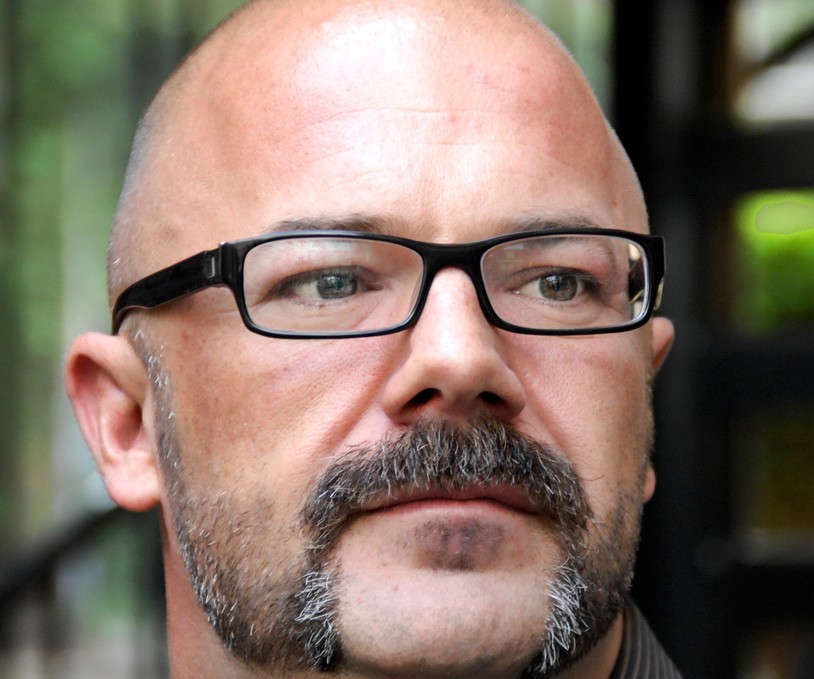
The news is a perilous business. It’s perilous because the first draft of history is almost always somewhat wrong, and needs a second draft, and a third, and so on, over time, until the historian can investigate with more perspective and calm. The job of journalists is to do as best they can, day by day, and respond swiftly when they screw up, correct the record, and move forward. I’ve learned this the hard way, not least in the combination of credulousness and trauma I harbored in the wake of 9/11.
But when the sources of news keep getting things wrong, and all the errors lie in the exact same direction, and they are reluctant to acknowledge error, we have a problem. If you look back at the last few years, the record of errors, small and large, about major stories, is hard to deny. It’s as if the more Donald Trump accused the MSM of being “fake news” the more assiduously they tried to prove him right.
You know the situation is bad when Andrew Sullivan references Donald Trump without a sneer!
We found out this week, for example, that a key figure in the emergence of the Steele Dossier, Igor Danchenko, has been indicted for lying to the FBI. He is also charged with asking a Clinton crony, Charles Dolan Jr: “Any thought, rumor, allegation. I am working on a related project against Trump.”
The evidence from another key source for the dossier, Sergei Millian — touted across all media, including the Washington Post — has also been exposed as potentially fake. What has the Post done? As their own indispensable Erik Wemple notes, instead of a clear retraction, the Post has just added editors’ notes to previous stories, removed sections and a video, and altered headlines retroactively. This is a bizarre way of correcting the record: “No such case comes immediately or specifically to mind, at least no historical case that stirred lasting controversy,” said W. Joseph Campbell, a professor and journalism historian at American University.
This doesn’t mean that Trump wasn’t eager for Russian help. But Trump was right, in the end, about the dodgy dossier; he was right about the duped FBI’s original overreach; and the mass media — Rachel Maddow chief among them — were wrong. And yet the dossier dominated the headlines for three years, and the “corrections” have a fraction of the audience of the errors. Maddow gets promoted. And the man who first published it, Ben Smith, was made the media columnist for the NYT.
Think of the other narratives the MSM pushed in recent years that have collapsed. They viciously defamed the Covington boys. They authoritatively told us that bounties had been placed on US soldiers in Afghanistan by Putin — and Trump’s denials only made them more certain. They told us that the lab-leak theory of Covid was a conspiracy theory with no evidence behind it at all. (The NYT actually had the story of the leak theory, by Donald McNeil, killed it, and then fired McNeil, their best Covid reporter, after some schoolgirls complained he wasn’t woke.) Wrong. Wrong. Wrong.
The MSM took the ludicrous story of Jussie Smollett seriously because it fit their nutty “white supremacy” narrative. They told us that a woman was brutally gang-raped at UVA (invented), that the Pulse mass shooting was driven by homophobia (untrue) and that the Atlanta spa shooter was motivated by anti-Asian bias (no known evidence for that at all). For good measure, they followed up with story after story about white supremacists targeting Asian-Americans, in a new wave of “hate”, even as the assaults were disproportionately by African Americans and the mentally ill.
As Greenwald noted, the NYT “published an emotionally gut-wrenching but complete fiction that never had any evidence — that Officer Sicknick’s skull was savagely bashed in with a fire extinguisher by a pro-Trump mob until he died.” The media told us that an alleged transgender exposure in the Wi Spa in Los Angeles was an anti-trans hoax (also untrue). They told us that the emails recovered on Hunter Biden’s laptop were Russian disinformation. They did this just before an election and used that claim to stymie the story on social media. But they were not Russian disinformation. They were a valid if minor news story the media consciously kept from its audience for partisan purposes.
November 13, 2021
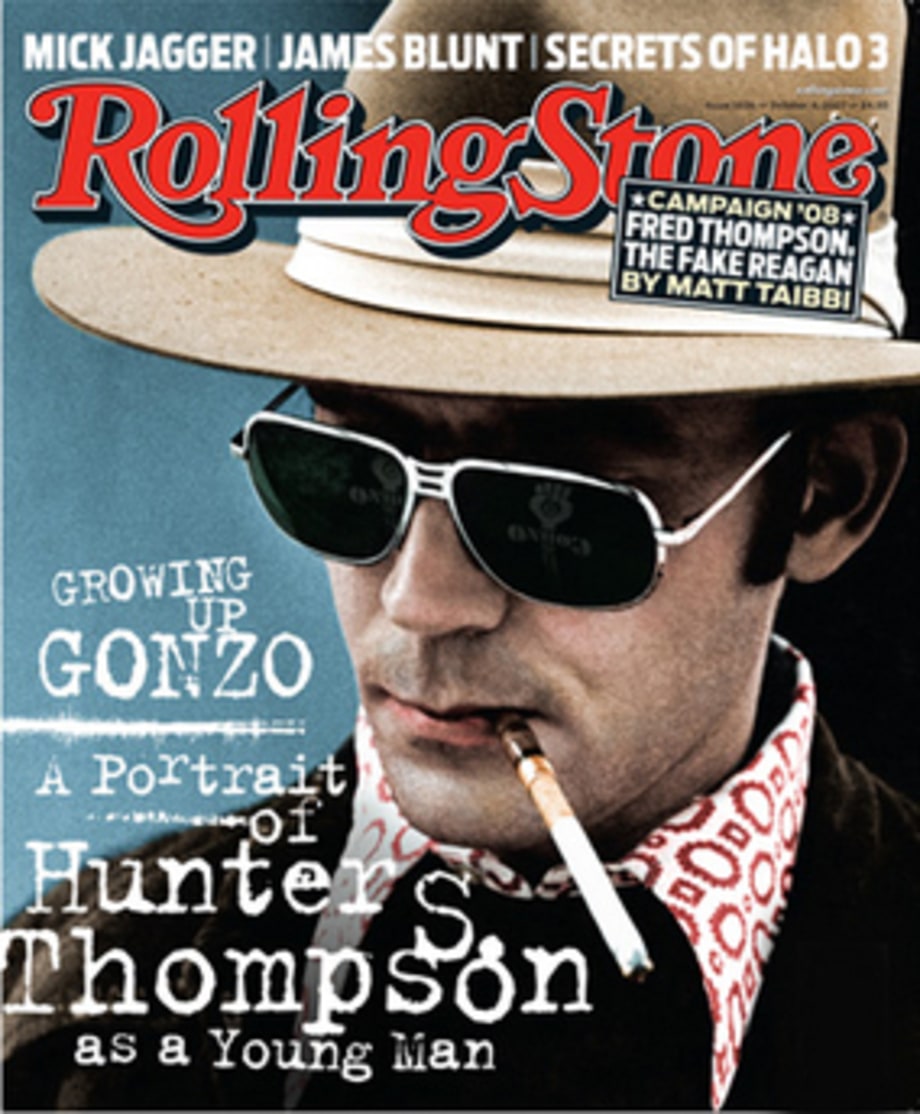
The patron saint of “Gonzo” journalism was a pretty cruddy human being
As I mentioned in an earlier post on one of Hunter S. Thompson’s famous early books, I discovered the writer at a particularly susceptible age … teenagers of my generation were generally suckers for counter-culture heroes (being too young to be actual hippies because we were in primary school when the Summer of Love flew past, and therefore feeling we’d missed out on something Big and Important and Meaningful). As a gullible teen, I believed Fear and Loathing in Las Vegas was mostly factual with some obvious-even-to-me embroideries for dramatic or comedic effect. I could easily forgive the guessed-at 10% fiction, but Thompson eventually admitted that the majority of the story was bullshit. Entertaining bullshit, but bullshit.
Which, as it happens, turns out to have been Thompson’s life-long modus operandi, as Kevin Mims repeatedly highlights in his Quillette review of David S. Wills’ biography called High White Notes: The Rise and Fall of Gonzo Journalism:
In High White Notes, his riveting new biography of Hunter S. Thompson, journalist David S. Wills describes Thompson as America’s first rock star reporter and compares him to Mick Jagger. But by the time I finished the book, I’d decided that Thompson bore a closer resemblance to Donald Trump. The two men were born nine years apart, during white American masculinity’s golden age. Both were obsessed with politics without possessing anything that could be described as a coherent political philosophy. Both men longed for some mythical American paradise of the past. Both men screwed over multiple friends and business partners. Both men would have gone broke if not for the frequent intervention of helpful patrons. Both men were egomaniacs fond of self-mythologizing and loath to share a spotlight with anyone. Both men enjoyed making disparaging remarks about women, minorities, the disabled, and other disadvantaged people. Both men were frequently disloyal to their most loyal aiders and abetters. Thompson’s endless letter writing and self-pitying 3am telephone calls to friends and colleagues were the 20th century equivalent of Trump’s late-night Twitter tantrums. Both men generally exaggerated their successes and blamed their failures on others. Both men mistreated their wives. Both men nursed a constant (and not entirely irrational) sense of grievance against perceived enemies in the government and the media. Both men had a colossal sense of entitlement …
The list could go on and on. Trump actually fares better than Thompson by various measures. For instance, Trump has never had a drug or alcohol problem, as far as I know. Thompson was a drug and alcohol problem. The first US president in living memory without a White House pet seems to have no interest in animals. Thompson enjoyed tormenting them. Rumors have circulated since 2015 that a recording exists of Trump using a racial slur but since the evidence has never surfaced, it might be fairer to conclude (at least provisionally) that this is not one of his many character failings. Thompson’s published and (especially) unpublished writings are full of such language.
All of which may lead you to conclude that High White Notes is not a favorable account of Hunter S. Thompson’s life and work. To the contrary, David S. Wills is a Thompson devotee who considers his subject to have been a great writer and, at times, a great journalist. But Wills is an honest guide, so his endlessly entertaining biography manages to be both a fan’s celebration and unsparing in its criticism of Thompson and his work.
Though impressive, the book is not without faults. Wills relies too heavily on cliché (“This book will pull no punches”; “breathing down his neck for the final manuscript”; “women threw themselves at him” etc.), and has a tendency to find profundity in unnaturally strained readings of Thompson’s prose. For instance, Wills describes a scene from a 1970 profile Thompson wrote of French skier Jean-Claude Killy, in which three young boys approach Thompson and ask if he is Killy. Thompson tells them that he is, then holds up his pipe and says, “I’m just sitting here smoking marijuana. This is what makes me ski so fast.” This sounds to me like standard Thompson misbehavior, but Wills infers something more complex: “On the surface, it appears to be comedy for the sake of comedy but in fact it is a comment on the nature of celebrity and in particular Killy’s empty figurehead status.” And when Thompson describes Killy as resembling “a teenage bank clerk with a foolproof embezzlement scheme,” Wills remarks, “Thompson has succeeded mightily not just in conveying [Killy’s] appearance but in hinting at his personality. He has placed an image in the head of his reader that will stick there permanently. It was something F. Scott Fitzgerald achieved, albeit in more words, when he had Nick Carraway describe Jay Gatsby’s smile.” (The book, by the way, takes its title from Fitzgerald, who used the phrase to describe short passages of writing so beautiful that they stand out from the larger work of which they are a part.)
[…]
Thompson’s big break as a writer came in 1965 when he was hired to write an article about the Hell’s Angels motorcycle gang for the Nation. The piece was so popular that Thompson found himself besieged by publishers who wanted him to expand it into a full-length nonfiction book. The Thompsons moved into the Haight-Ashbury district of San Francisco and Thompson set about writing Hell’s Angels, the 1967 book that would make him famous. Even in that first book, written before he had fully formulated the concept of Gonzo journalism, Thompson was already tinkering with the truth and engaging in the kind of self-mythologizing that would become a hallmark of his work. And that didn’t sit well with the Hell’s Angels themselves. According to Sonny Barger, a founding member of the Angels, Thompson “would talk himself up that he was a tough guy, when he wasn’t. When anything happened, he would run and hide.” Barger’s assessment of the book was terse: “It was junk.”
Wills notes that Thompson “tended to write about himself in ways that built his legend … to prove his machismo on paper. The back cover [of Hell’s Angels] describes him as ‘America’s most brazen and ballsy journalist’ and in the book he tells the story of first meeting the Angels and trying to impress them by shooting out the windows of his own San Francisco home. Such moments of bravado tend to enter the story very briefly and seem to serve little purpose beyond this self-mythologizing.”
But it was exactly this kind of self-mythologizing — the bragging about his drug use and general misbehavior — that editors of American magazines found so exciting about Thompson’s work, so it’s no wonder that he engaged in so much of it. It was his wild man persona that made Warren Hinckle of Scanlan’s Monthly want to unleash him among the socialites of Louisville. Still, Thompson didn’t fully emerge as a countercultural hero until he began to write for a small start-up publication in San Francisco called Rolling Stone.
November 12, 2021
QotD: The looming quantum computing apocalypse
Even the national academy of sciences has taken note that there might be a problem here. They put together 13 actual quantum computing experts who poured cold water on all the hype. They wrote a 200 page review article on the topic, pointing out that even with the most optimistic projections, RSA is safe for another couple of decades, and that there are huge gaps on our knowledge of how to build anything usefully quantum computing. And of course, they also pointed out if QC doesn’t start solving some problems which are interesting to … somebody, the funding is very likely to dry up. Ha, ha; yes, I’ll have some pepper on that steak.
Scott Locklin, “Quantum computing as a field is obvious bullshit”, Locklin on Science, 2019-01-15.
November 9, 2021
Led Zeppelin IV, fifty years on
In Monday’s NP Platformed newsletter, Colby Cosh helps a lot of “late Boomers” and Gen X’ers to feel even older:

This very day, friends, marks the 50th anniversary of the release of Led Zeppelin’s fourth studio album, whose title is technically a series of glyphs representing the band’s four members. Frustrated writers and editors usually just call it Led Zeppelin IV, and will have to go on doing so until the Unicode Consortium comes to its senses.
Zep IV is generally considered the band’s strongest LP, and it contains the song “Stairway to Heaven”, which has been played so often over 50 years of life that it is now somewhat divisive. It’s possible the species can be split into people who are sick of “Stairway” and those of us who still have to let it play all the way through, every time, even though it has nothing left to disclose and no remaining power to surprise. (How could it? We all know every note, every overtone of every chord, every syllable of incomprehensible Robert Plant doggerel.) NP Platformed is cheered by the thought that there are babies being born every day who will, at some time or other, get to hear “Stairway” for the first time. It’s not like they’ll get very far without hearing it.
“Stairway” makes for a hell of a cleanup hitter, but on Zep IV the lineup is immense from top to bottom. There are those who would argue that other Zeppelin studio LPs are stronger on the whole. If you like the heavy-blues side of the group, you might be tempted to vote for Zeppelin II (1969); folkies appreciate Zeppelin III (1970).
The fifth record, Houses of the Holy (1973), was once called “Zeppelin’s best record” by Chuck Klosterman, an undoubted authority in such matters … but please note that Klosterman wrote this in a listicle about the greatest metal albums that had Zeppelin IV No. 2 overall, with Houses of the Holy altogether omitted. Later, when trendsetting music-review site Pitchfork.com did a listicle of the top 100 albums of the 1970s, they ranked Zep IV seventh and spent a couple hundred words apologizing for not putting it first. (“We must be lying to ourselves …”) Zep IV: too big to ignore.
QotD: Hollywood in the late Golden Age
The main difference between then and now is that in the old days, such films were mass-produced on the assembly lines of the major studios. Americans of all ages went to the movies at least once a week, and they expected to see something different every time they went. Hence the studio system, which ground out product fast enough to meet the omnivorous demand. Except for the occasional Gone With the Wind, the modern Spielberg-style “event” movies that now dominate Hollywood filmmaking didn’t exist. You went to the movies not to see Spider-Man or Lord of the Rings, but simply to see a show. If the show in question was a Western or a mystery, that was good; if it starred John Wayne or Robert Mitchum, that was better. But nobody went out of his way to see a Wayne Western directed by Howard Hawks, much less a Mitchum mystery directed by Jacques Tourneur. You took what you got, and if what you got happened to be a Red River or Out of the Past, then you got lucky.
That’s why so many of the best films made in Hollywood in the Forties and Fifties were Westerns and mysteries. Precisely because they were commodities, their makers tended to be ignored by the front office. So long as your last picture turned a profit, however small, you got to make another one. If the movies in which you specialized were low-budget genre pictures for which demand was more or less constant, all that mattered was that you stay more or less within the accepted conventions of the genre, and the conventions of the Western and the mystery happened to be wonderfully well-suited to the artful telling of serious stories that were both entertaining and cheap to produce. The art, of course, was optional, and most such movies were as forgettable as a Law and Order rerun, but some of them were as good — and as serious — as a movie can be.
Terry Teachout, “What Randolph Scott Knew”, American Cowboy, 2005-12-23.
November 7, 2021
Prime Minister Look-at-my-socks loves the limelight at COP26
Jen Gerson on Canada’s fundamentally unserious Prime Minister Photo-Op grandstanding at the climate love-in in Glasgow:
In a rare moment of unity, both Alberta Premier Jason Kenney and NDP opposition leader Rachel Notley objected to Trudeau’s announcements.
“I don’t know why they would make an announcement like this without consulting with the province that actually owns the overwhelming majority of Canada’s oil and gas reserve,” said Kenney.
I mean, yeah. He’s right.
When asked for actual details about this brave new plan at COP26, Environment Minister Steven Guilbeault didn’t have much to share … because the plan doesn’t exist yet. It’s a plan to make a plan.
“We will need to be developing this, and that’s exactly what we will be doing in the coming months,” Guilbeault said, according to the CBC. Both he and Natural Resources Minister Jonathan Wilkinson have asked the net-zero advisory board to help them come up with a plan. “Specifically, we seek your advice on key guiding principles to inform the development of quantitative five-year targets,” they said in a letter sent on Monday.
There’s no path, here. There’s been no discussion; no consultation, nothing. There’s not even a draft of an idea.
So why is Trudeau getting on a stage in front of the world’s leaders half-cocked with ambitious promises for an emissions cap before he’s worked out the details at home?
To quote Line co-founder Matt Gurney during our weekly meeting: “To ask that question is to answer it.”
Trudeau is signalling what he cares about and what he doesn’t. He’s more concerned with how the audience abroad perceives him than he is about the finer points of governing. It’s about getting back-pats by the Davos set, not actually running our embarrassing, open-pit G7 backwater.
It was hard to avoid the sense during the last election that Trudeau didn’t have his heart in the fight; that he’s more invested in acting the part of prime minister than being it.
I put little stock in rumours that the Liberal leader will soon leave his role — if you’re going to act a part, after all, there are few better. And what a great platform it provides for a launch to better things. But I do wonder: If someone offered him a ranking job at the UN or the WEF or something else with a suitably impressive acronym and a travel expense account, how long would he stick around?
November 5, 2021
“There is nothing to debate anymore. The climate catastrophe is coming. Now is the time for action”
Unlike all the other (dozens? scores? hundreds?) times since the 1970s we’ve been warned about imminent climatological disaster unless we gave up on industrial civilization, heating our homes, and all the other white supremacist, racist, colonialist, transphobic, etc., exploitations we have been enjoying up to now, we’re finally out of time and we must act NOW:
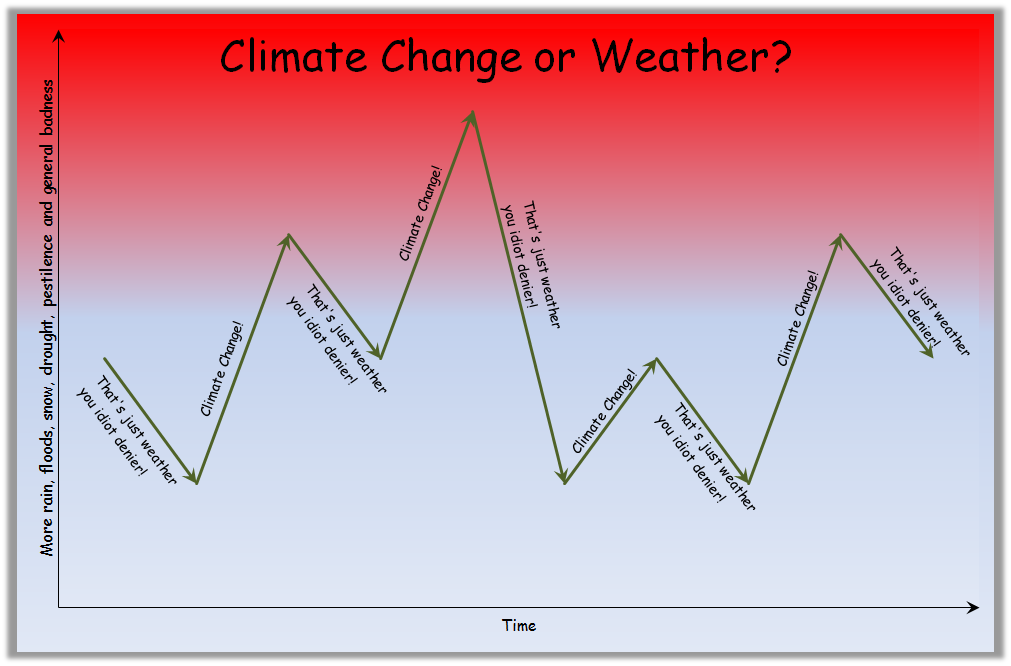
COP26 is an extravaganza of ideological conformity. From the 30,000 delegates and heads of state sequestered in the “blue zone” to the NGOs, academics and green businesses exhibiting in the public “green zone”, the message is the same. There is nothing to debate anymore. The climate catastrophe is coming. Now is the time for action.
Similar sentiments abound outside COP26, where the protesters are gathered. There the likes of young eco-millenarian Greta Thunberg also claim that the end is nigh, that the time for debate is over. Or as the Swedish teenager herself put it during a protest on Sunday, there’s no need for any more of this “blah, blah, blah”.
This is essentially what all those in and around COP26 are saying. That, in effect, there is nothing to debate anymore. And so, over the next few days, Western-led policymakers, angrily cheered on by protesters, will try to decide our futures for the next few decades. They will regulate, restrict and limit. And they will be able to do so without dissent or debate.
How have we got here? How have we ended up at a point where debating climate change has become nigh-on impossible? The answer lies principally in the use and abuse of the authority of science. The standard justification for shutting down those challenging the alarmist climate-change narrative amounts, effectively, to saying “the science has spoken”.
This was clear in the run-up to COP26, when Mark Lynas, a long-time environmentalist campaigner and now a visiting fellow at Cornell University, published a widely reported-on study asserting that the scientific consensus that humans are altering the climate is now agreed upon by 99.9 per cent of scientists. That’s how certain The Science now is. Not just 97 to 98 per cent certain, as it used to be, but 99.9 per cent certain. “It is really case closed”, said Lynas. “There is nobody of significance in the scientific community who doubts human-caused climate change.”
“Case closed.” No “doubts” and no appeal. These are revealing words. Climate change has long since ceased to be an issue to be addressed, or a set of challenges to be overcome. It is now the revealed truth, the God-like judgement around which we must organise the entirety of societal life. To question this truth is tantamount to apostasy. Hence Lynas calls for any remaining heretics to be censored, urging Facebook and Twitter “to look at their algorithms and policies” to root out “climate misinformation”.
Indeed, those daring to question any aspect of the alarmist narrative are now routinely dismissed not as heretics, but as “deniers” – a term which morally equates those who question, say, certain decarbonisation policies with anti-Semites who deny that the Holocaust happened.
The New York Times identifies the next big threat to humanity – “Muskism”
In Thursday’s NP Platformed newsletter, Colby Cosh outlines the “evidence” amassed in a recent New York Times essay blaming Elon Musk for, well, everything:
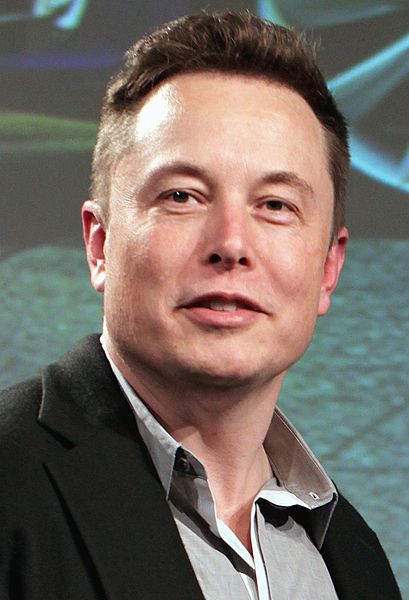
Elon Musk at the 2015 Tesla Motors annual meeting.
Photo by Steve Jurvetson via Wikimedia Commons.
Lepore commences by describing Bill Gates’s 66th birthday party, for which a bunch of rich people — including Amazon’s Jeff Bezos — were helicoptered to a private beach from a nearby yacht. Neither Elon Musk, thought to be the world’s richest person, or Mark Zuckerberg, founder of newly rebranded Facebook, were present at the party. Zuckerberg was busy illuminating plans for his “metaverse”, which Lepore describes as “a virtual reality,” wherein you wear “a headset and gear that closes out the actual world.”
Here’s where Lepore goes from this: “The metaverse is at once an illustration of and a distraction from a broader and more troubling turn in the history of capitalism. The world’s techno-billionaires are forging a new kind of capitalism: Muskism.”
In literally the next sentence, Lepore admits that the subject of her essay, Elon Musk, immediately and publicly made fun of the Facebook “metaverse” plans. We are on the third paragraph of the essay, and Lepore has already: a) blamed Elon Musk for an A-hole billionaire party he didn’t attend, because he was busy with his engineering and manufacturing projects; and b) applied the new coinage “Muskism” to a virtual reality project that actual Musk loudly criticized. Somehow this essay has severed its own hydrocephalic head twice over, within 500 words.
It gets worse from there as Lepore attempts to complete her mission of denouncing Muskism, which she describes as an “extreme extraterrestrial capitalism.” She quickly has to admit that Bill Gates, who is mostly spending a computing fortune on global philanthropy these days when he’s not lifting off from yachts in choppers, doesn’t have one single freaking thing to do with absolutely any of this. NP Platformed was an editor back in the day, so we notice that the intro of Lepore’s essay is at this point not only detached from its body, but has been left to rot several miles away. Gates-Musk-Bezos-Zuckerberg: they’re all tentacles of the same menacing Muskist octopus here, as in so much newspaper and magazine commentary, and abuse flung in their general direction will suffice to condemn all.
Lepore’s accusation against Musk turns out to be … that he likes some classic science fiction but doesn’t always concur with the politics of its authors. Musk has called himself a “utopian anarchist of the kind best described by Iain Banks,” but Banks was “an avowed socialist.” Gasp! Banks (1954-2013), the Scottish science fiction author best known for the Culture series, was a particular kind of U.K. “libertarian socialist” who believed strongly in spacefaring as a step toward post-scarcity life for sentient beings. His politics are easily misunderstood by Americans, who don’t have this particular kind of weirdo, and the interstellar “Culture” he envisioned was never intended to be admired unironically. In other words, that part of Lepore’s essay is as mangled and obtuse as the rest.
November 3, 2021
Casablanca had a small but significant historical error
And it’s not Captain Renault’s throwaway line about the Americans marching into Berlin (which, of course, did not happen in 1918). The error that Michael Curtis points out is very easy to miss:
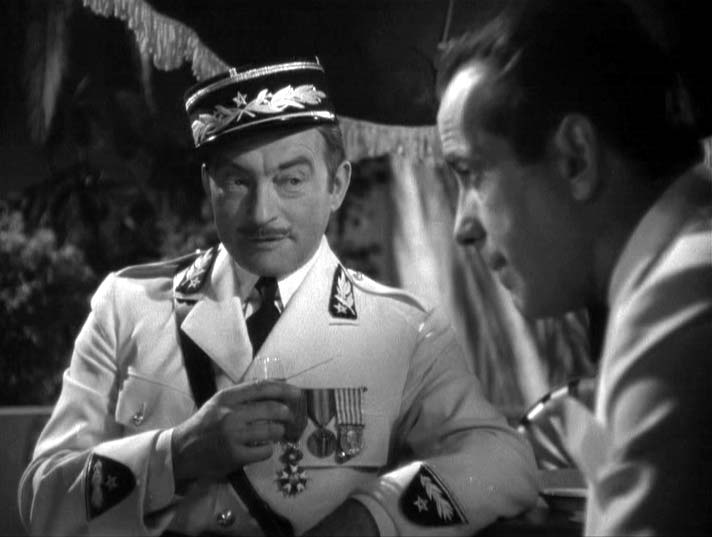
Still from Casablanca (1942), with Captain Renault (Claude Rains) asking Rick Blaine (Humphrey Bogart) why he came to Casablanca.
As time goes by, there is a consensus that Casablanca, the story of the cynical hard drinking American expatriate night club owner choosing between his love for a woman or helping her and her husband, a resistance hero escape from the town of Casablanca, a complex town controlled by the Vichy state under Nazi occupation, is one of the greatest films of all time. Its characters, dialogue, theme song, have become iconic. We’ll always have Casablanca. It is a film of moral ambiguity, that can be seen either as a theme of love and sacrifice, or as a political allegory about resistance against Nazism.
However, this brilliant film has a flaw. In one scene the camera focuses on the prefecture of the corrupt chief of police on the wall of which is the motto of the French Third Republic, “liberty, equality, fraternity”, inherited from the 1789 French revolution. But the Third Republic had been ended in May 1940, and its motto had been officially replaced by the slogan, “work, family, homeland”, of the new French State, popularly known as Vichy. The differences between the two mottos are still pertinent in French politics and culture today.
Some political and cultural problems are easy to solve, even if costly. Scotland recently spent seven months of research and $162,000 to create a new slogan that would increase tourism. It finally came up with a banal slogan, “Welcome to Scotland”. There is no easy solution for France which has been and remains a sharply divided society still confronting its history of the World War II years, the defeat of the French army by the Germans in June 1940, the end of the Third Republic and its replacement by the French State headed by 84 year old Marshall Philippe Petain, regarded as a hero of Verdun in World War I, located in Vichy, a spa in the Auvergne.
The Vichy régime participated in persecution and discrimination of the Jewish population, by aryanisation of property, propaganda, antisemitic ideology, anti-Jewish legislation, roundups, deportation to death and concentration camps. In view of this antisemitic attitude, it is a paradox that after the War, 75% of the Jewish population in France remained alive, the result of complex religious, cultural, and international factors. This can be compared to extermination of 80% of Jews in the Netherlands, and 45% in Belgium.
Nevertheless, 75,721 Jews were deported from France, and fewer than 2,000 survived. Persecution was extensive. Jews were banned from professions, civil service, journalism, business, entertainment, refugee Jews were held in concentration camps under French control, antisemitic legislation affected all Jews, and the tragedy of Vel d’Hiv occurred. French police carried out the first mass arrests of Jews in Paris in May 1941, and the first French deportation train left on March 12, 1942. The most infamous event, the roundup by French gendarmes, using batons and hoses, of 13,000 Jews took place on July 16-17, 1942 when the victims were taken to the Vel d’Hiv indoor bi-cycling stadium in Paris before being deported to Nazi camps. They included 7916 women, 1129 men and 4115 children.
By the so-called National Revolution, France would be rescued from the decadent Third Republic, and returned to purer values. The controversy continues. Was France guilty of contributing to the Holocaust, and who was responsible? First, were collaborators and sympathizers with the Nazis only a minority of the population and was Petain the “shield”, protecting France and the French people as much as it could within the country, while General de Gaulle abroad was the “sword”. A second defense was that Vichy could do little while the Germans occupiers were responsible. A third point is that Vichy tried to protect French national Jews by collaborating in the persecution, the deportation and ultimately extermination of foreign Jews in France.
November 2, 2021
QotD: The foreign journalist’s best local source, the cabbie
I was a three-day man in that period of my life when newspapers would occasionally ask me to report on some revolution, civil war, social upheaval or other unusual event (I once went on a daytrip to India from Europe).
Given the circumstances, I gathered much of my information from the taxi-driver from the airport to the hotel where all the other journalists were staying. They did likewise, and in many an article, even in serious publications, a journalist has acted as a mere amanuensis for a taxi-driver.
I am far from decrying this genre of journalism: in my experience, taxi-drivers are exceptionally sensible and level-headed men, intelligent and well-informed but not educated, or rather not indoctrinated into believing the most obvious nonsense by having attended western-type establishments of supposedly higher learning.
Knowing that a journalist is a bird of passage, they did not fear, even in dictatorships, to speak the truth as they saw it: and generally they had seen a lot. With the advent of the mobile phone that hears everything and erases nothing, they may since have become more cautious. I don’t know: no one sends me anywhere these days.
Theodore Dalrymple, “On Taxi Cab Drivers, Barbers, and Learning the Truth”, The Iconoclast, 2021-06-21.


