
World War Two
Published 19 Apr 2025Today Indy and Sparty answer questions on the French colonies, Pykrete and iceberg aircraft carriers Japan’s invasion of India, and they talk about Britain’s misguided strategic bombing strategy.
(more…)
April 20, 2025
Did Britain Bomb The Wrong Targets in WW2? – Out of the Foxholes Live
Comments Off on Did Britain Bomb The Wrong Targets in WW2? – Out of the Foxholes Live
April 19, 2025
Dambusters – Part 2 – The Countdown to the Raid
HardThrasher
Published 17 Apr 2025The speed with which a theory had to be put into practice, and the opening phase of the raid itself.
(more…)
Comments Off on Dambusters – Part 2 – The Countdown to the Raid
Downfall: The Battle of Berlin 1945
Real Time History
Published 6 Dec 2024April 1945. After nearly six years of war, the Red Army stands massed on the banks of the Oder River in eastern Germany. The Nazi capital and Hitler’s bunker are just 60km away, but the Nazi Party and the Wehrmacht are preparing to fight to the bitter end in the final struggle of WW2 in Europe – the Battle for Berlin.
(more…)
Comments Off on Downfall: The Battle of Berlin 1945
QotD: Allied air and sea operations won WWII
In [How the War Was Won author Phillips Payson] O’Brien’s methodology, we should look at what the Axis spent its productive effort making and consider what Allied actions slowed that productive effort. In both theaters, the answer is shocking. The Germans spent relatively little productive effort on tanks, focusing far more on aircraft, submarines, and vengeance weapons (i.e., proto-cruise missiles and rockets). The Japanese spent heavily on aircraft as well, but also a tremendous amount on freighters and oil tankers.
The Allies won the war by using air power to destroy the German and Japanese capacity both to produce military equipment and to transport it to the battlefield. By 1944-45, the Germans and Japanese could not use their economies to arm and supply their armies on the battlefield, leading to their inevitable defeat.
In the European war, American and British airpower: (a) directly destroyed a significant amount of productive capacity, (b) rendered remaining capacity far less efficient, (c) made it impossible for the Germans to defeat western ground forces, and (d) compelled the Germans to waste tremendous resources on air defense and exorbitant, ultimately ineffective vengeance weapons.
In the Pacific, the United States used carrier-based airpower, submarines, and bomber-deployed mines to isolate Japan from the resources of the empire it conquered in 1941-42. American bombers also directly destroyed factories and transportation systems, leading to similar levels of economic dysfunction as in Germany.
Anonymous, “Your Book Review: How the War Was Won“, Astral Codex Ten, 2024-08-09.
Comments Off on QotD: Allied air and sea operations won WWII
April 18, 2025
QotD: Literature in (and after) the late Western Roman Empire
Well, no.
Here I think the problem is the baseline we assess this period against. Most people are generally aware that the Greeks and Romans wrote a lot of things and that we have relatively few of them. Even if we confine ourselves only to very successful, famous Greek and Roman literature, we still only have perhaps a low single-digit percentage of it, possibly only a fraction of a percent of it. In our post-printing-press and now post-internet world, famous works of literature do not simply vanish, generally and it is intuitive to assume that all of these lost works must have been the result of some catastrophe or intentional sabotage.
I am regularly, for instance, asked how I feel about the burning of the Library of Alexandria. The answer is … not very much. The library burned more than once and by the time it did it was no longer the epicenter of learning in the Mediterranean world. Instead, the library slowly declined as it became less unique because other libraries amassed considerable collections. There was no great, tragic moment where countless works were all lost in an instant. That’s not how the chain of transmission breaks. Because a break in the chain of transmission requires no catastrophe – it merely requires neglect.
The literature of the Greeks and Romans (and the rest of the ancient iron age Mediterranean) were largely written on papyrus paper, arranged into scrolls. The problem here is that papyrus is quite vulnerable to moisture and decay; in the prevailing conditions in much of Europe papyrus might only last a few decades. Ancient papyri really only survive to the present in areas of hard desert (like Egypt, conveniently), but even in antiquity, books written on papyrus would have been constantly wearing out and needing to be replaced.
Consequently, it didn’t require anyone going out and destroying books to cause a break in the chain of transmission: all that needed to happen was for the copying to stop, even fairly briefly. Fortunately for everyone, Late Antiquity was bringing with it a new writing material, parchment, and a new way of putting it together, the codex or book. The transition from papyrus to parchment begins in the fourth century, but some books are still being produced in papyrus in the 7th century, particularly in the Eastern Mediterranean. Whereas papyrus is a paper made of papyrus stalks pressed together, parchment is essentially a form of leather, cleaned, soaked in calcium lye and scraped very thin. The good news is that as a result, parchment lasts – I have read without difficulty from 1200 year old books written on parchment (via microfilm) and paged through 600 year old books with my own hands. Because making it requires animal hide, parchment was extremely expensive (and still is) but its durability is a huge boon to us because it means that works that got copied onto parchment during the early middle ages often survive on that parchment down to the present.
But of course that means that the moment of technological transition from short-lived papyrus to long-lasting parchment was always going to be the moment of loss in transition: works that made it to parchment would largely survive to the present, while works that were not copied in that fairly narrow window (occupying Late Antiquity and the Early Middle Ages) would be permanently lost. And that copying was no simple thing: it was expensive and slow. The materials were expensive, but producing a book also required highly trained scribes (often these were monks) who would hand copy, letter by letter, the text for hundreds of pages. And, for reasons we’ll talk about later in this series, the resources available for this kind of copying would hit an all-time-low during the period from the fifth to the seventh centuries – this was expensive work for poor societies to engage in.
And here it is worth thus stopping to note how exceptional a moment of preservation this period is. The literary tradition of Mediterranean antiquity represents the oldest literary tradition to survive in an unbroken line of transmission to the present (alongside Chinese literature). The literary traditions of the Bronze Age (c. 3000-1200 BC and the period directly before antiquity broadly construed) were all lost and had to be rediscovered, with stone and clay tablets recovered archaeologically and written languages reconstructed. The Greeks and Romans certainly made little effort to preserve the literature of those who went before them!
In that context, what is actually historically remarkable here is not that the people of Late Antiquity and the Early Middle Ages lost some books – books had always been being lost, since writing began – but that they saved some books. Never before had a literary tradition been saved in this way. Of course these early copyists didn’t always copy what we might like. Unsurprisingly, Christian monks copying books tended to copy a lot more religious texts (both scriptures but also patristic texts). Moreover, works that were seen as important for teaching good Latin (Cicero, Vergil, etc.) tended to get copied more as well, though this is nothing new; the role of the Iliad and the Odyssey in teaching Greek is probably why their manuscript traditions are so incredibly robust. In any event, far from destroying the literature of classical antiquity, it was the medieval Church itself that was the single institution most engaged in the preservation of it.
At the same time, writers in the fifth, sixth and seventh centuries did not stop writing (or stop reading). Much of the literature of this period was religious in nature, but that is no reason to dismiss it (far more of the literature of the Classical world was religious in nature than you likely think, by the by). St. Augustine of Hippo was writing during the fifth century; indeed his The City of God, one of the foundational works of Christian literature, was written in response to the news of the sack of Rome in 410. Isidore of Seville (560-636) was famous for his Etymologies, an encyclopedia of sorts which would form the foundation for much of medieval learning and which in its summaries preserves for us quite a lot of classical bits and bobs which would have otherwise been lost; he also invented the period, comma and colon. Pope Gregory I (540-604) was also a prolific writer, writing hundreds of letters, a collection of four books of dialogues, a life of St. Benedict, a book on the role of bishops, a commentary on the Book of Job and so on. The Rule of St. Benedict, since we’ve brought the fellow up, written in 516 established the foundation for western monasticism.
And while we’ve mostly left the East off for this post, we should also note that writing hardly stopped there. Near to my heart, the emperor Maurice (r. 582-602) wrote the Strategikon, an important and quite informative manual of war which presents, among other things, a fairly sophisticated vision of combined arms warfare. Roman law also survived in tremendous quantities; the emperor Theodosius II (r. 402-450) commissioned the creation of a streamlined law code compiling all of the disparate Roman laws into the Codex Theodosianus, issued in 439. Interestingly, Alaric II (r. 457-507), king of the Visigoths in much of post-Roman Spain would reissue the code as past of the law for his own kingdom in 506 as part of the Breviary of Alaric. Meanwhile, back at Constantinople, Justinian I (r. 527-565) commissioned an even more massive collection of laws, the Corpus Iuris Civilis, issued from 529 to 534 in four parts; a colossal achievement in legal scholarship, it is almost impossible to overstate how important the Corpus Iuris Civilis is for our knowledge of Roman law.
And it is not hard again to see how these sorts of literary projects represented a continuing legacy of Roman culture too (particularly the Roman culture of the third and fourth century), concerned with Roman law, Roman learning and the Roman religion, Christianity. And so when it comes to culture and literature, it seems that the change-and-continuity knight holds the field – there is quite a lot of evidence for the survival of elements of Roman culture in post-Roman western Europe, from language, to religion, to artwork and literature. Now we haven’t talked about social and economic structures (that’s part III), so one might argue we haven’t quite covered all of “culture” just yet, and it is necessary to note that this continuity was sometimes uneven. Nevertheless, the fall of Rome can hardly be said to have been the end of Roman culture.
Bret Devereaux, “Collections: Rome: Decline and Fall? Part I: Words”, A Collection of Unmitigated Pedantry, 2022-01-14.
Comments Off on QotD: Literature in (and after) the late Western Roman Empire
April 17, 2025
The Declaration to Save Us All – W2W 21 – 1948 Q2
TimeGhost History
Published 16 Apr 2025The world has seen unspeakable horror and senseless death in excess over the past half-century. Now, the failures of the past give way to a hopeful declaration on the rights of humankind in the future, to ensure that these mistakes never repeat themselves. However, in a world as tumultuous as ours, how much power can such a declaration really have?
(more…)
Comments Off on The Declaration to Save Us All – W2W 21 – 1948 Q2
Why TOG II was BETTER Than You Think
The Tank Museum
Published 20 Dec 2024It was rejected and ridiculed for years — but TOG II is actually much better than you think.
In 1939, the UK Ministry of War issued the spec for a heavy assault tank. This hefty brief included the requirements to cross a 16ft gap, climb over anti-tank obstacles and enough firepower to penetrate 7 inches of concrete. Enter “The Old Gang”, a group of expert engineers, responsible for most of the tanks created during the First World War.
Two vehicles were created during this process — TOG I and TOG II. While the TOG projects have often been rejected as tanks out of time — relics of thinking from trench warfare — Content and Research Officer, Chris Copson, argues that these vehicles were highly innovative in terms of their mobility, armour and firepower.
Despite fulfilling their brief, TOG was sidelined in favour of other projects, and the lone survivor — TOG II — arrived at The Tank Museum in the 1950s. This lumbering beast that never saw active service, sat sidelined whilst surrounded by WW2 legends like the Churchill, Sherman, and the infamous Tiger 131.
But in 2012, a miracle happened. World of Tanks included the super heavy tank in their online video game — launching TOG II into viral popularity. Since then, interest in this unique vehicle has skyrocketed, and now more than ever people want to see TOG II in real life and find out more about its interesting history.
Shop TOG II merch at our online shop: https://tankmuseumshop.org/
00:00 | Introduction
01:24 | An Innovative Spec
05:00 | Innovations in Mobility
10:11 | Innovations in Armour
11:49 | Innovations in Firepower
16:21 | Would TOG II Have Worked?
18:46 | The Legend Lives OnIn this film, Chris Copson unpicks the misconceptions surrounding TOG II — that it was a ridiculous super-heavy tank built for a war from 30 years ago. Instead, this is a vehicle that was highly innovative and represented a significant engineering achievement. Thanks to videos games such as World of Tanks, TOG II is now celebrated as the goofiest super heavy tank in history, and lives on as an internet legend for a whole new generation of tank nuts.
(more…)
Comments Off on Why TOG II was BETTER Than You Think
QotD: Explaining mid-century American support of Chiang Kai-Shek and the Republic of China
PR: Because the missionaries in China had decided that it was going to become their great project, channeling that global do gooder impulse that had lain dormant since the end of the Civil War as their Great Cause — the missionaries were the grandchildren of the abolitionists and they took their fanaticism straight from that movement. China was to be “saved” from paganism, Catholicism and colonialism and they formed some kind of proto-NGO, ensuring that their views were made the policy of the government. It is not a coincidence that both Chaing and his wife were Protestant Christian converts (at least nominally) That impulse to “nation build” China into a facsimile of Progresssive Christian America (excluding, of course, the Old Confederacy) is the source of the drive to make their fantasy real, like that Utopian impulse we described the other day that is a bedrock of the Juggalo mindset. To find the roots of the China obsession you have to understand the power of the missionary movement. Nothing to me sums it up better than Kenneth Wherry, who became a big player in the China Lobby, with his mix of naivety, pathological altruism, and religious fervor-
With God’s help, we will lift Shanghai up and up, ever up, until it is just like Kansas City …
[…]
That’s an important point — the Protestants never had the same fervor to make Vietnam or Cuba or even the Philippines (even though it was OUR colony) into Kansas City, because they were either already Catholic or had a minority Catholic elite. China, however, gave them that sweet Protestant fix in making a new China with the “right” kind of Christianity. It’s also why they hated Japan so — Japan had slammed the door on Protestant missionaries pretty hard and their Christian minority (in Nagasaki, ironically) was Catholic.
From the comment thread on “WNF: A Twofer”, Founding Questions, 2025-01-15.
Comments Off on QotD: Explaining mid-century American support of Chiang Kai-Shek and the Republic of China
April 16, 2025
The Korean War Week 43 – Truman Dismisses MacArthur! – April 15, 1951
The Korean War by Indy Neidell
Published 15 Apr 2025It’s finally happened, President Harry Truman has relieved Douglas MacArthur of command. If you’ve followed us lately you’ll know the why, but today you’ll see then how, when, and where. But the fight in the field goes on- this week fighting for control of the Hwacheon Reservoir.
(more…)
Comments Off on The Korean War Week 43 – Truman Dismisses MacArthur! – April 15, 1951
Food in the Japanese-American Internment Camps of World War 2
Tasting History with Max Miller
Published 3 Dec 2024Tuna noodle casserole made with spaghetti, and rice with canned apricots for dessert
City/Region: Topaz War Relocation Center, Utah
Time Period: 1943In 1942, anyone of Japanese ancestry in the United States was forcibly sent to live in incarceration camps. Food was often in the form of leftover military rations that was augmented by crops grown by the people living in the camps, but there were also canteens that sold food and sundries. These items were great luxuries as the Japanese Americans living in the camps made only about 1/5 of a typical wage and included things like Ovaltine, apple juice, and canned tuna.
This recipe, from a newspaper printed in the Topaz War Relocation Center, makes a tasty, if basic, tuna noodle casserole. I would add more of the paprika, or really some more spices in general, but I really like the lightly crunchy texture of the bread crumbs and the celery.
If you’d like to serve this forth with dessert, as I did, then you simply need some cooked white rice and some canned apricots with syrup.
(more…)
Comments Off on Food in the Japanese-American Internment Camps of World War 2
April 15, 2025
How the UN Plan Tore Palestine Apart – W2W 20 – 1948 Q2
TimeGhost History
Published 13 Apr 2025In 1948, the British departure from Palestine plunges the region into chaos. Amid bombings, massacres, and forced displacements, a brutal civil war escalates into the Arab-Israeli conflict, reshaping the Middle East forever. As Israel declares independence, Arab armies invade, and atrocities on both sides deepen hatred and tragedy. Can either side emerge victorious, or has the cycle of violence become unstoppable?
(more…)
Comments Off on How the UN Plan Tore Palestine Apart – W2W 20 – 1948 Q2
Learning from history can be helpful … if you learn the correct lessons
Tim Worstall explains why Donald Trump and his advisors pointing to the historical experience of high tariffs after the US civil war fails to take into account all the technological changes that happened during that time:
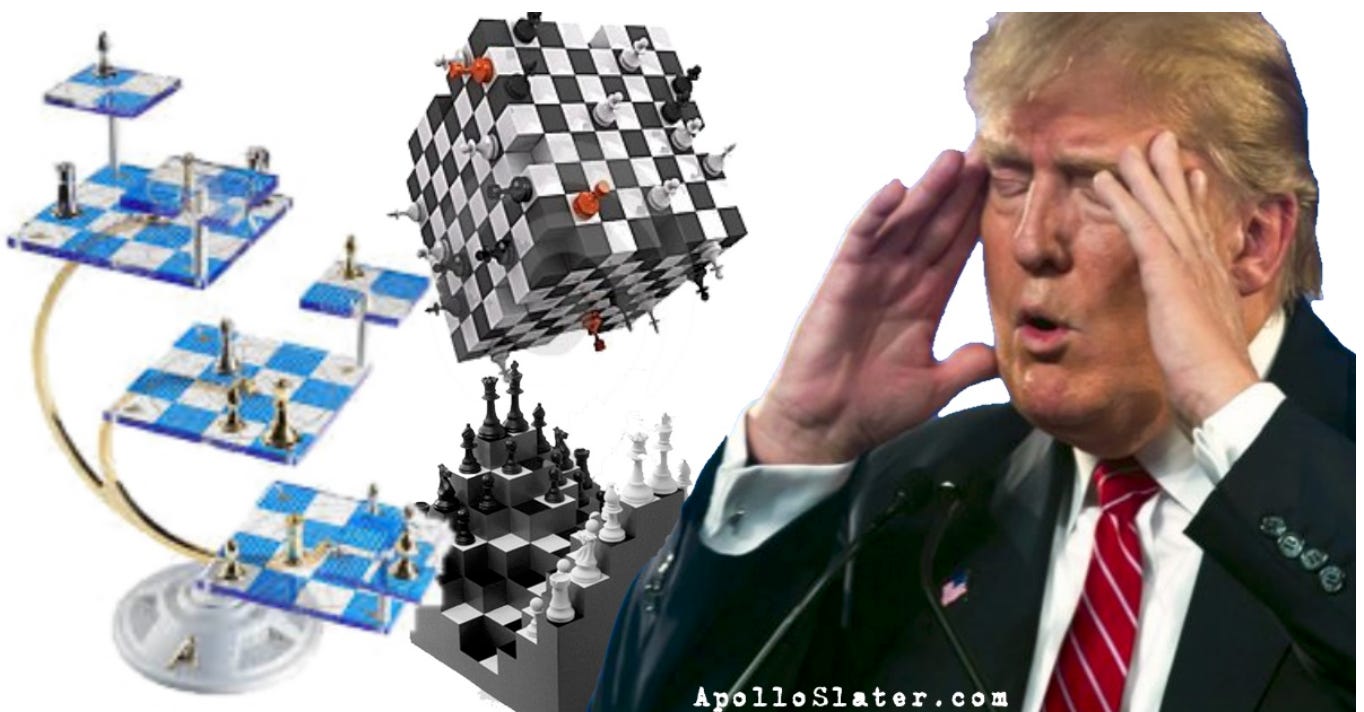
Trump and his economics team clearly believe that tariffs work (at least for certain values of “work”)
Post US Civil War tariffs rose strongly. Doubled and in some cases more than that. It’s also true that the US economy expanded remarkably in that period. Went from the exploitative frontier (and slave) economy to the world’s richest manufacturing one in fact. So, yay for tariffs, obviously.
Except US trade kept increasing over this period. So, tariffs were not reducing imports. Or rather, the total level of imports did not fall because tariffs even as tariffs obviously had an effect upon limiting imports — without tariffs there would have been more.
So, what happened here? The answer is the ocean going steamship.
Tariffs are only one barrier to trade, one cost of trade. Paperwork is another, local standards a third, the theft by rapacious dockside unions a fourth and, obviously enough, the cost of transport a fifth. And we can go on — the cost of information flow a sixth and soon enough we’ll be Richard Murphy shouting eleventhly.
The ocean going steamship reduced the total costs of trade by more than the tariffs raised it. Therefore trade carried on increasing.
Now forward a century, the 1970s and following. We’re told that there’s been some grand policy turn to free trade. That everyone decided to gut the rich world of real manly jobs and ship them off to sweating coolies who could be paid peanuts. The GATT, WTO, just proof of the contention and look, look, they lowered tariffs!
But the container ship (which did for those rapacious dockside unions in most places other than the US), the jet liner, the telephone and now the internet have lowered all those other costs of trade massively. The total costs of trade have dropped massively whatever we could have, should have, done about tariffs. Global trade was going to expand by multiples whatever GATT or WTO did that is.
Which is why these tariffs now have to be so large and bigly. Because to get back to that 1970s – let alone 1870s — it’s necessary to raise total costs of trade to where they were, not just tariffs.
Comments Off on Learning from history can be helpful … if you learn the correct lessons
April 14, 2025
Huế: Battle for the Heart of Vietnam
Army University Press
Published 22 Nov 2024The Battle of Huế is known for urban combat, destruction, and anguish. The city of Huế mattered to all the combatant forces. The city and its people paid the price. Interviews with noted subject matter experts Drs. Pierre Asselin, Gregory Daddis, James Willbanks, and Cpt. Wyatt Harper are augmented with archival audio and film, and detailed maps. This documentary places the Battle of Huế within the context of Hanoi’s 1968 Tet Offensive. How North Vietnam, South Vietnam, and the United States perceived the Vietnam War in 1967 and 1968 are central to this documentary. Covered are the key moments of the battle — including the People’s Armed Forces of Vietnam (PAVN) and People’s Liberation Armed Forces (PLAF) planning and assault on Hue. The responses of the Army of the Republic of Vietnam (ARVN), Vietnam Marine Corps (VNMC), the United States Marine Corps (USMC), and the U.S. Army (USA) are addressed to offer insight into an informative example of urban warfare.
0:02:39 – Why the Tet Offensive
0:10:53 – Why Huế
0:15:53 – Military Decision Making Process | Doctrine
0:26:51 – Warfighting Function | Doctrine
0:27:59 – Paralysis by analysis | Doctrine
0:33:15 – Courses of action | Doctrine
0:38:22 – Weather and operations | Doctrine
0:40:52 – Huế Massacre
0:41:18 – My Lai
0:46:05 – Huế and Modern Warfare
Comments Off on Huế: Battle for the Heart of Vietnam
QotD: Pax Americana replaces Pax Britannica
The British government spent most of the next century being dragged – reluctantly – into being arbitrators of conflicts they wanted nothing to do with. Finishing with being stuck with the Great War, and then responsibility for some of the most hopeless basket-case states handed over to “Mandate Powers” by the Versailles peace … as one British minister presciently pointed out, no one wanted Palestine, and it would be nothing but a disaster for whoever gets stuck with it … (Fortunately for the US, their Congress repudiated Wilson’s ridiculous League of Nations before the plan to lumber the US with the Mandate for places like Georgia – the Russian bit on the Black Sea that is! – could be put through.)
It is unsurprising that the British taxpayer spent the next 50 years trying to get out of international police-keeping obligations. With the sole exception of reluctantly agreeing to fight against the expansionary dictatorships in World War Two, British taxpayers voted for disarmament and de-colonisation whenever they could. (Abandoning some states – particularly in Africa – that might eventually have developed into safe and secure states, way before they were ready for independence … much to the cost of world peace and security since …)
The United States has had a similar experience more recently. Having inherited responsibility for maybe 50 years of the “Pax Americana” by the simple expedient of being the strongest economy standing after the Second World War. (Their only potential rival being the British Commonwealth of Nations — who between them had 5 of the next 10 biggest and healthiest post-war economies — being more than happy to let the dumb Americans have a go at being world policemen for a time, and see how they liked being blamed by everyone else for absolutely everything.)
The Americans discovered pretty quickly that the things they had been complaining about the British doing for the last 200 years were exactly what they had now signed up for, and finding even quicker that their taxpayers simply weren’t willing to carry the can, and take the blame, for very long at all.
Arguably the US’s fun with being world policeman was already pretty much over after Korea, and certainly after Vietnam. It is notable that the first Gulf War was NOT paid for by the US taxpayer … the US troops turned up but only if Saudi Arabia and Europe paid for them to do so (and preferably with a British Division on one flank, Australian warships on the other, and NATO fighters overhead …) none of this “we will carry the can and our taxpayers will just cope” crap for post-Vietnam American taxpayers.
Nigel Davies, “Types of Empires: Security, Conquest, and Trade”, rethinking history, 2020-05-02.
Comments Off on QotD: Pax Americana replaces Pax Britannica
April 13, 2025
The Most Pointless Battle of WW1? – Passchendaele 1917
The Great War
Published 11 Apr 2025For more than three long months in 1917, Allied and German soldiers fought tooth and nail over a battlefield churned into a sea of sucking mud and shellholes by the guns. Hundreds of thousands were killed and wounded, some of them drowning in the soupy ground — for Allied gains of just a few kilometers. So why did the Battle of Passchendaele happen at all, and was it the most pointless battle of the First World War? (more…)
Comments Off on The Most Pointless Battle of WW1? – Passchendaele 1917


