
Yorkshire Photo Walks
Published Jun 9, 2024In this video Tom outlines a five-step process for turning your landscape photos from flat, boring shots to professional looking images.
(more…)
December 8, 2024
Why your landscape photos are boring 🥱
Comments Off on Why your landscape photos are boring 🥱
QotD: Who invented the vending machine?
This one surprised me: the vending machine was invented not for Coca-Cola or cigarettes or snack foods, but for books.
Richard Carlile was a shit-disturbing English bookseller. He insisted on selling Thomas Paine’s The Age of Reason despite it being seditious and blasphemous for its attacks on organized religion, particularly the Church of England. Impressively stubborn, Carlile was arrested in 1819, imprisoned, and fined a massive £1,500 for selling Paine’s work. While a guest of the state, his wife, Jane, and other associates kept selling The Age of Reason, leading to more arrests.
Sometime around his release in 1822, Carlile came up with the idea of automating sales. His device was crude, but effective. A person inserted coins and pulled a lever that opened a compartment from which a copy of The Age of Reason could be retrieved without human intervention. Police had no one to arrest for selling seditious material.
The book vending machine didn’t keep Carlisle out of jail — he would spend nine years locked up for acts of political rebellion. Nor was he able to patent his device. I admire the hell out of him, tho.
Jump ahead to the early twentieth century and vending machines were being used in France and Germany to sell newspapers, postcards, maps, as well as books. The idea crossed the English Channel in 1937. Allen Lane, who single-handedly invented the modern paperback and founded Penguin Books with his brothers in 1935, launched the Penguincubator two years later. Based on the German machines, it was described by the Times as “an unfamiliar contraption of metal and glass”. Lane installed it at 66 Charing Cross Road, outside Collet’s bookshop.
Lane’s contraption was no more successful than Carlile’s. It got wheeled out of Collet’s shop at closing time every night and wheeled back in every morning when the shop opened. Another Charing Cross bookseller recalled seeing letters shoved under the shop’s door each morning complaining of coins lost in the machine. Customers also learned that you only had to pound the side of the box in order for it to disgorge about a third of its inventory. The Bookseller reported that when this was pointed out to the manager of Collet’s, he “gave his incontinent robot a terrific thrashing. As a result of this all the rest of the Penguin’s promptly fell out.”
That perhaps explains why I couldn’t find a mention of the Penguincubator in Stuart Kells’ otherwise excellent book, Penguin and the Lane Brothers: The Untold Story of a Publishing Revolution.
Ken Whyte, “Have I got a business for you!”, SHuSH, 2024-09-06.
Comments Off on QotD: Who invented the vending machine?
December 6, 2024
Victoria’s Canada through the eyes of British visitors
In UnHerd, Michael Ledger-Lomas considers what earlier British visitors to Canada after Confederation wrote about their experiences:
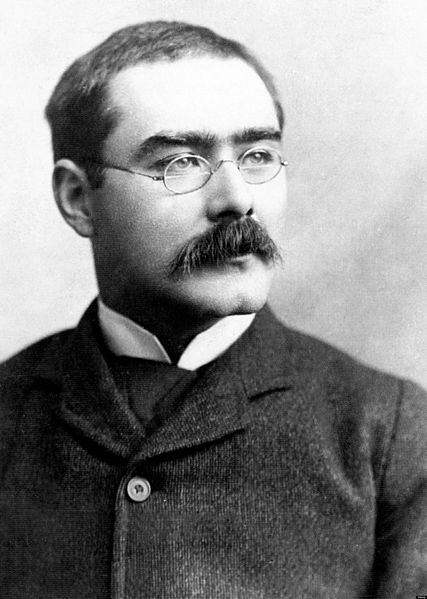
Portrait of Rudyard Kipling from the biography Rudyard Kipling by John Palmer, 1895.
Photo via Wikimedia Commons.
… The re-election of Donald Trump, who has already daydreamed about turning Canada into his 51st state, might even rekindle Tory patriotism. After all, their Victorian ancestors created the dominion of Canada in 1867 to keep British North America from the clutches of the United States.
A longer view shows that Canada has allured but also vexed British observers ever since its creation. The Edwardian era produced an especially rich crop of writings on Canada. In 1887, the year of Queen Victoria’s Golden Jubilee, the first train from Montreal pulled into Vancouver. This completion of the Canadian Pacific Railway (CPR) had persuaded the Crown colony of British Columbia to join in the new federation. In expanding Canada, the CPR also made it easier for British people to see the country. Having crossed from Liverpool to Montreal on a fast liner, they could visit most of its major cities, which were found on or near the railway.
Literary celebrities did so in enviable conditions. The CPR’s bosses loaned the poet Rudyard Kipling his own carriage in 1907, so he could travel in comfort and at his own speed. His impressions, which appeared in newspapers and then as Letters to the Family (1908), make for particularly resonant reading today. Although a man of strong prejudices, he had seen the country up close, rather than merely retweeting allegations about it, and was prepared to be surprised as well as disappointed by it.
Kipling’s contemporaries travelled with heavier and very different ideological baggage than we carry today. It was not wokery that worried them, but irreligion and greed, two poisons that had crept north from America. When the clergyman Hensley Henson steamed into Vancouver, in July 1909, he was horrified to see its beaches plastered with “vulgar advertisements”. The further [East] he travelled, the worse things became. The Anglican clergy were “weaklings” who made no dent on a materialistic society. Winnipeg was given over to “graft”. Young people in Ontario spoke like gum-chewing Yankees. Quebeckers were despoiling their province by setting up hydroelectric dams on its waterfalls.
Kipling did not share Henson’s churchy desire to scold his Canadian hosts. He was a cheerful freethinker who considered materialism a necessary part of nation-building. Canada had “big skies, and the big chances”: he admired its railway workers and lumberjacks for their insouciant and sometimes drunken swagger. Boom towns like Winnipeg excited him: he loved to see office blocks rise and streets flare with natural gas lamps; he lost considerable sums speculating on Vancouver real estate.
What worried him was rather Canada’s fading strategic commitment to the Empire. The modern Right understands Canada as a battleground for the values of “the West”. Kipling, who had married an American and lived for some years in Vermont, naturally believed in and did much to formulate the fervent if vague sense that English-speaking peoples share a civilisation. Yet this did not weaken his overriding concern for the political cohesion of the British Empire. Canada’s failure to join as enthusiastically in Britain’s recent war against the rebellious Dutch Boers of South Africa as he would have liked weighed on him — so much so that he kept calling the prairie the “veldt”. Kipling regarded the scepticism of Liberals and Socialists at home about whether the Empire offered value for money as a “blight”: now this “rot” seemed to be spreading like Bubonic plague, “with every steamer” to Canada.
The way to draw the dominion back to the motherland was to fill it with English settlers who shared his distaste for domestic Socialism. The dilution of English Canada worried Kipling. He allowed the Francophone Catholics of Quebec their differences — he found their basilicas romantic — but the policy of settling the prairies with hardy Slavs from the Habsburg and Russian Empires appalled him. These “beady-eyed, muddy-skinned, aproned women, with handkerchiefs on their heads and Oriental bundles in their hands” could never assimilate to English Canada. Nor did he care that many were fleeing oppression: people who renounce their country have “broken the rules of the game”.
Comments Off on Victoria’s Canada through the eyes of British visitors
December 5, 2024
Look at Life – The City’s for Living In (1968)
Classic Vehicle Channel
Published Apr 19, 2020Traffic was still an issue in the 60’s. Residents discuss how they can divert to traffic from the city. This film features great archive of city traffic in the late 60s
Comments Off on Look at Life – The City’s for Living In (1968)
QotD: Oscar Wilde
H.L. Mencken, “Portrait of a Tragic Comedian”, The Smart Set, 1916-09.
Comments Off on QotD: Oscar Wilde
December 4, 2024
Facing the Sphinx
Andrew Doyle provides a bit of historical context for the question currently convulsing Britain’s supreme court:
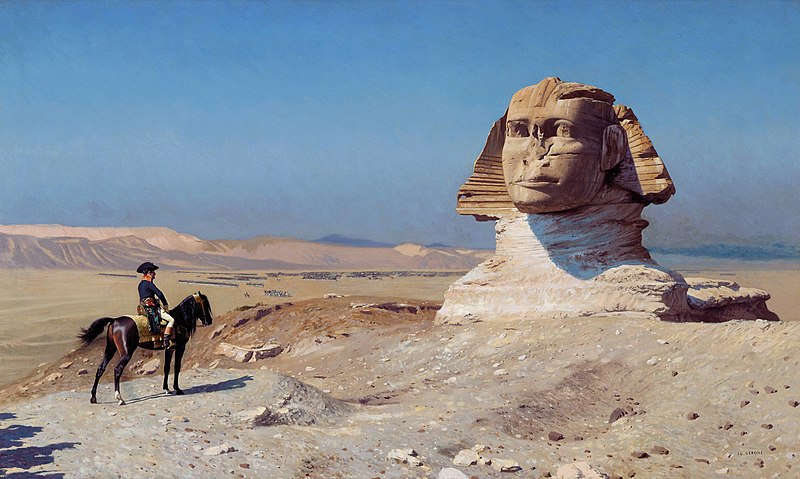
Bonaparte Before the Sphinx, 1886, by Jean-Léon Gérôme (1824–1904).
Painting from the Hearst Castle collection (Accession number 529-9-5092) via Wikimedia Commons.
It was known as the sphinx: a terrifying hybrid with a lion’s body and a human head. According to the legend, the sphinx was sent to guard the city of Thebes by the goddess Hera who wanted to punish the citizens for some ancient crime. It perched on a nearby mountain, and whenever anyone attempted to enter or leave the city it would pose a riddle. If the traveller failed to answer, he or she would be devoured, but the riddle was so confounding, so esoteric, so abstruse, that even the greatest intellectuals of the day soon found themselves reduced to snacks for the mighty sphinx.
And what was this riddle? What was the question that foxed even the sharpest of minds? It was simply: “what is a woman?”
And now, a hearing at the UK’s supreme court has taken place to solve the sphinx’s riddle once and for all. The campaign group For Women Scotland raised the case in order to challenge the Scottish government’s contention that the word “sex” in the Equality Act includes men who identify as female and hold a Gender Recognition Certificate. We can expect the results of this hearing over the next few months.
And yet I’m sure most of you are thinking to yourselves: “How will these judges possibly answer such a metaphysical conundrum?” And you’re not alone. Many valiant and learned individuals have fallen in the attempt.
[…]
Inevitably, activists tend to frame the entire question of “what is a woman?” as some kind of “gotcha”. Or they claim that to even broach the question of sex differences is “transphobic” and “hateful”, a means to bully the most marginalised. But of course, the transgender lobby wields incredible power in our society; it can see people silenced, harassed and even arrested for speaking truth, and all in the name of “progress”. Genuinely marginalised groups do not enjoy this kind of clout.
Others will say that all of this is a distraction from the “real issues”. But gender identity ideology has a deleterious impact on everyone, and has proved to be a major factor in political change. In its post-election analysis in November 2024, entitled “How Trump won, and how Harris lost”, the New York Times singled out an advertising campaign by Trump’s team which drew attention to Kamala Harris’s statement that all prison inmates identifying as transgender ought to have access to surgery. The tagline was: “Kamala is for they/them. President Trump is for you”.
Although the New York Times considered this a “seemingly obscure topic”, its writers were forced to admit its efficacy. Even Trump’s aides had been astonished at how popular the campaign had proven. According to the political action committee Future Forward, a group established to support the Democratic Party, this advertisement actuated a 2.7 point shift in favour of Trump among those who saw it. Inevitably, the New York Times misclassified the message as “anti-trans”, a ploy guaranteed to exacerbate the very resentment that made the campaign so effective in the first place.
To ask a politician the question “what is a woman?” isn’t some kind of cruel test. It’s a way to ensure that those in power are being honest with us. We know that they know the answer. And they know that we know that they know the answer. It isn’t that they can’t define it, it’s that they are too frightened to do so. It’s one thing for politicians to lie and hope they get away with it, but quite another for them to lie when they know that we are all fully aware that they are lying. It suggests a degree of contempt for the electorate that is unlikely to translate to success at the ballot box. And it hasn’t escaped the attention of feminists that the question “what is a man?” mysteriously never seems to be asked.
Comments Off on Facing the Sphinx
The Korean War Week 024 – Marines Attacked at Chosin Reservoir – December 3, 1950
The Korean War by Indy Neidell
Published 3 Dec 2024On and around the frozen waters of the Chosin Reservoir, the US Marines and the Chinese Communist forces fight out a brutal battle. In the west, the Chinese offensive continues. For the UN forces, there is no chance of victory, but living to fight another day may yet be possible.
Chapters
00:00 Intro
00:48 Recap
01:11 Chosin Reservoir Prelude
03:58 Yudam-ni
06:32 Task Force Faith
08:25 Hagaru
12:58 The Aftermath of Chosin
14:49 The Tokyo Conference
15:56 Wawon and Kunu-ri
20:30 Summary
20:42 Conclusion
(more…)
Comments Off on The Korean War Week 024 – Marines Attacked at Chosin Reservoir – December 3, 1950
QotD: What caused the (western) Roman Empire to fall?
An analogy, if you will. Imagine I were to build a bridge over a stream and for twenty years the bridge stays up and then one day, quite unexpectedly, the bridge collapses. We can ask why the bridge fell down, but the fundamental force of gravity which caused its collapse was always working on the bridge. As we all know from our physics classes, the force of gravity was always active on the bridge and so some other set of forces, channeled through structural elements was needed to be continually resisting that downward pressure. What we really want to know is “what force which was keeping the bridge up in such an unnaturally elevated position stopped?” Perhaps some key support rotted away? Perhaps rain and weather shifted the ground so that what once was a stable position twenty years ago was no longer stable? Or perhaps the steady work of gravity itself slowly strained the materials, imperceptibly at first, until material fatigue finally collapse the bridge. Whatever the cause, we need to begin by conceding that, as normal as they may seem to us, bridges are not generally some natural construction, but rather a deeply unnatural one, which must be held up and maintained through continual effort; such a thing may fail even if no one actively destroys it, merely by lack of maintenance or changing conditions.
Large, prosperous and successful states are always and everywhere like that bridge: they are unnatural social organizations, elevated above the misery and fragmentation that is the natural state of humankind only by great effort; gravity ever tugs them downward. Of course when states collapse there are often many external factors that play a role, like external threats, climate shifts or economic changes, though in many cases these are pressures that the state in question has long endured. Consequently, the more useful question is not why they fall, but why they stay up at all.
And that question is even more pointed for the Roman Empire than most. While not the largest empire of antiquity, the Roman empire was very large (Walter Scheidel figures that, as a percentage of the world’s population at the time, the Roman Empire was the fifth largest ever, rare company indeed); while not the longest lasting empire of antiquity, it did last an uncommonly long time at that size. It was also geographically positioned in a space that doesn’t seem particularly well-suited for building empires in. While the Mediterranean’s vast maritime-highway made the Roman Empire possible, the geography of the Mediterranean has historically encouraged quite a lot of fragmentation, particularly (but not exclusively) in Europe. Despite repeated attempts, no subsequent empire has managed to recreate Rome’s frontiers (the Ottomans got the closest, effectively occupying the Roman empire’s eastern half – with a bit more besides – but missing most of the west).
The Roman Empire was also, for its time, uncommonly prosperous. As we’ll see, there is at this quite a lot of evidence to suggest that the territory of the Roman Empire enjoyed a meaningfully higher standard of living and a more prosperous economy during the period of Roman control than it did either in the centuries directly before or directly after (though we should not overstate this to the point of assuming that Rome was more prosperous than any point during the Middle Ages). And while the process of creating the Roman empire was extremely violent and traumatic (again, a recommendation for G. Baker, Spare No One: Mass Violence in Roman Warfare (2021) for a sense of just how violent), subsequent to that, the evidence strongly suggests that life in the interior Roman Empire was remarkably peaceful during that period, with conflicts pushed out of the interior to the frontiers (though I would argue this almost certainly reflects an overall decrease in the total amount of military conflict, not merely a displacement of it).
The Roman Empire was thus a deeply unnatural, deeply unusual creature, a hot-house flower blooming untended on a rocky hillside. The question is not why the Roman empire eventually failed – all states do, if one takes a long enough time-horizon – but why it lasted so long in such a difficult position. Of course this isn’t the place to recount all of the reasons why the Roman Empire held together for so long, but we can focus on a few which are immediately relevant to our question about diversity in the empire.
Bret Devereaux, “Collections: The Queen’s Latin or Who Were the Romans, Part V: Saving and Losing and Empire”, A Collection of Unmitigated Pedantry, 2021-07-30.
Comments Off on QotD: What caused the (western) Roman Empire to fall?
December 3, 2024
David Starkey’s view of history
At the Daily Sceptic, James Alexander summarizes how historian David Starkey’s views of history — British history specifically — provide a useful way to analyze British political issues today:
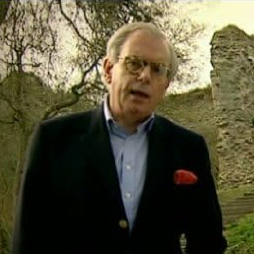
David Starkey, 2004.
Screenshot via IMDB.com
What David Starkey is trying to do is deliver to the British (or English) public a jeremiad informed not by moral posturing or theoretical commitment but by a sense of history. This is so valuable it should almost come without criticism. I think that Starkey’s vision of history is so arresting it deserves to be expressed in short form and so I will attempt a summary of the position. Starkey is an admirably entertaining speaker, and offers a vision that is several dimensions more complicated than we hear from anyone else at the moment. He is full of prepared lines, and has a ready mind: “Niall Ferguson, the good Niall Ferguson, not the bad Neil Ferguson …”; “All bad ideas begin with the French”; “The Union of England and Scotland made the modern world”; “The monarch changes religion as he crosses the border: he begins Anglican, and becomes Presbyterian”; “The Labour party is the equivalent of the Nomenklatura of Soviet Russia: a privileged class”; etc.
I have some criticisms. But first, his vision of our history.
Let me begin by summarising Starkey’s view of history as it conditions the present. He argues the following:
1. On the nature and relevance of history. History is fundamental. We cannot understand ourselves using theory. Avoid abstraction. Use history instead. It is concrete. He suggests that we have always studied history for the sake of the present, though in recent centuries we have also studied it for its own sake. He adds that we should make analogies between past and present.
2. On English history. Starkey says that we were first part of Greater Scandinavia, then, from 1066, were part of an Anglo-French order. The third stage of our history began with the Reformation. Starkey likens the Latin Christendom of the Papacy to the European Union: and so calls Henry VIII the first Brexiteer. The consequence of the Reformation was that Britain and Europe become antagonists. For the first time the sea was reconfigured as a barrier, defended by the navy: and this happened at the same time that energies were thrown outward to the rest of the world. What the English managed to do, along with the Scots, was build something out of the strong language that rises from Chaucer to Shakespeare: the two home countries united to make it impossible to be invaded; they united to make an empire in the world; and they united to make use of remarkable innovations in finance and later industry.
One of Starkey’s great themes is this Union of England and Scotland: first by King in 1603 and second by Parliament in 1707. Starkey says England is not a nation. It lacks a ridiculous national dress (since its national dress, of coat and trousers with tie, was given to the world as universal official dress). And the Union was wholly original, as it subjugated Scotland to England’s Parliament, abolishing the Scottish Parliament, while leaving Scottish law, religion, military tradition and heraldry alone. England and Scotland are politically united, but only politically united. Starkey’s point about all this is that it was never about “identity”. There was no such thing as a “Briton”. There was no national system of education. So there was no nonsense of any modern-style post-French Revolution nationalism. Instead, we were natural liberals, able to take in immigrants without difficulty. However, throughout all this England is politically dominant in Great Britain and in the Empire.
3. On the present time. Starkey has two points of reference. One is the 1970s, when things went wrong, with a short reversal under Thatcher, and in the 1990s, when things went even more wrong, and perhaps permanently wrong, because constitutionally wrong. The 1970s was the culmination of the Labour politics of welfare, accepted weakly by Macmillan and Heath, but the 1990s was worse because political and constitutional. Labour took things in the wrong direction by making the Bank of England independent and by enabling a new Scottish Parliament to emerge: also by bringing about the Equality Act of 2010 (actually an innovation of Gordon Brown); also by creating a Supreme Court. Then, finally, Charles III removed Parliament from the Coronation, and there was no mention of politics: whereas, since 1688, the Coronation had been a political act. Political power has been fragmented and dispersed from the King-in-Parliament to the quangos, to the Bank of England, to the lawyers. The principle of balance is lost, as every institution has become an interest group, pursuing single issues: an entire raft of Anti-Corn Law Leagues.
Starkey suggests that England will remain an idea, much as the idea of Rome survived the decline and fall of the Roman Empire. This is pessimistic judgement. His optimistic judgement, or hope, is that some sort of “restoration”, like the Glorious Revolution, can be enacted. As far as I have heard, he has not yet sketched the form of his restoration, though it has been promised.
Is this clear? Henry VIII broke the monasteries, threw out the Papists, built Oxford and Cambridge in new form, fortified the coast and began the story of Greater England. If we fill the gaps, there were difficulties with the consequences, religious and political, through the reigns of Mary, Elizabeth, James and Charles, but these were resolved in 1688 and then 1707. Then Great Britain became a great power. This remarkable creation was politically and constitutionally destroyed by the theorists and politicians of the late 20th century, since they demoted England within Britain, unleashed petty nationalisms in political form, and, in passing, did not do enough to restrain the welfare state or, we might add, enough to prevent English tolerance being twisted to accommodate net immigration of 700,000 people of fairly antagonistic cultures per year. Britain is now ruled not by Government-in-Parliament but by delegated arbitrary powers and influences which offer sops to partial interests and mean that nothing can be done. No one has an adequate conception of the entire state.
Comments Off on David Starkey’s view of history
Evolution of Airborne Armour
The Tank Museum
Published Jul 19, 2024Lightly armed airborne troops are at a huge disadvantage when faced with regular troops with heavy weapons and armour. In World War II this led to huge losses for paratroops on Crete and at Arnhem. Since then, many attempts have been made to level the playing field, to give airborne soldiers a fighting chance.
From the Hamilcar gliders of World War II to the C17 Globemaster, we look at how to make a tank fly.
00:00 | Intro
00:47 | The Origins of Airbourne Operations
02:34 | Gliders
07:20 | A Tank Light Enough to Fly?
09:02 | Success & Failure
14:24 | Post-War Solutions
17:41 | Better Aircraft – Better Tanks?
20:15 | Strategic Deployment
21:39 | ConclusionThis video features archive footage courtesy of British Pathé. This video features imagery courtesy of http://www.hamilcar.co.uk/
#tankmuseum
Comments Off on Evolution of Airborne Armour
December 1, 2024
“Huntziger must be shot!” – WW2 Commentary 1939-1940
World War Two
Published 30 Nov 2024Today Indy and Spartacus sit down to answer all kinds of questions about the first year of WW2. How phony was the Phony War? How do you go around the Maginot Line? And much more! Also, Indy sings a song about Charles Huntziger.
(more…)
Comments Off on “Huntziger must be shot!” – WW2 Commentary 1939-1940
QotD: Recording and codifying the land that William conquered
[…]
In brief, Scott argues that the process of making a society “legible” to government officials obscures social reality, to the point where the government’s maps and charts and graphs take on a life of their own. It’s recursive, such that those well-intentioned schemes end up first measuring, then manipulating, the wrong thing in the wrong way, to the point that the social “problem” the process was supposed to address drops out entirely — all you have, at the end, is powerpoint girls critiquing spreadsheet boys because their spreadsheets don’t have enough animation, and vice versa.
Scott doesn’t use the Domesday Book as an example (IIRC from a graduate school class 20-odd years ago, anyway), but it’s one we’re probably all familiar with. The first thing William the Conqueror needed to know is: what, exactly, have I conquered? So he sent out the high-medieval version of spreadsheet boys to take a comprehensive survey of the kingdom. Turns out the Duke of Earl’s demense runs from this creek to that rock. He has five underlings, and their domains run from etc.
The point of all this, of course, was so that Billy C. could call the Duke of Earl on the carpet, point to the spreadsheet, and say “You owe me a cow, three chickens, and two months in the saddle as back taxes.” It worked great, except when — as, it seems, is inevitable — the high-medieval equivalent of the spreadsheet boys did the high-medieval version of “ctrl-c”; just copying and pasting the information over. Eventually the tax situation got way out of whack, as it did for most every pre-modern government running a similar system — one of the reasons declining Chinese dynasties had such fiscal problems, for instance, is that the tax surveys only got updated every two centuries or so, such that a major provincial lord was still only paying 20 silver pieces in taxes, when he should’ve been paying 20,000 (and his peasants were all paying 20 when all they could afford was 2).
In other words: unless the spreadsheet boys periodically go out and check that the numbers on their spreadsheets actually correspond in some systematic, more-or-less representative way to some underlying social reality, government policy is being set by make-believe.
Severian, “The Finger is Not the Moon”, Rotten Chestnuts, 2021-09-14.
Comments Off on QotD: Recording and codifying the land that William conquered
November 30, 2024
Forgotten War Ep 5 – Chindits 2 – The Empire Strikes
HardThrasher
Published 29 Nov 202402:00 – Here We Go Again
06:36 – Perfect Planning
13:16 – Death of a Prophet
14:51 – The Fly In
18:56 – Dazed and Confused (in the Monsoon)
20:40 – Can’t Fly in This
31:54 – Survivor’s ClubPlease consider donations of any size to the Burma Star Memorial Fund who aim to ensure remembrance of those who fought with, in and against 14th Army 1941–1945 — https://burmastarmemorial.org/
(more…)
Comments Off on Forgotten War Ep 5 – Chindits 2 – The Empire Strikes
$7 BILLION – Is Ajax Worth It? | Tank Chats #177
The Tank Museum
Published Aug 2, 2024This is how the UK’s newest armoured fighting vehicle, Ajax, has been described time and time again by the British media. With repeated delays and continual bad press, the Ajax programme has been subject to much scrutiny over the course of its procurement and development. Public opinion of this vehicle is, in a word, poor.
But is this perception wholly accurate, or is there more to the Ajax story?
In this video, David Willey guides us through the problematic history of the Ajax family, discusses its reconnaissance capabilities on the modern battlefield and hears from members of the British Army who have had a chance to put this vehicle to the test.
Comments Off on $7 BILLION – Is Ajax Worth It? | Tank Chats #177
November 29, 2024
Why the Communists subjugated half of Europe
World War Two
Published 28 Nov 2024From the Bolshevik Revolution to post-war dominance, Stalin’s plans forever changed Europe’s political landscape. Discover how the Soviet Union used ideology, diplomacy, military power, and ruthless suppression to control Eastern Europe and establish a new world order.
(more…)
Comments Off on Why the Communists subjugated half of Europe


