Quotulatiousness

June 24, 2015

Nathan Rothschild did as much to defeat Napoleon as Wellington

Filed under: Britain, Economics, Europe, History — Tags: , , — Nicholas @ 04:00

Matt Ridley decries his own taste in reading (too many cavalry charges and panzer tanks) and declares that we should honour the man who propped up the Duke of Wellington financially for making Wellington’s battlefield and diplomatic efforts meaningful:

Galloping bravely against an enemy, in however good a cause, is not the chief way the world is improved and enriched. The worship of courage as a pre-eminent virtue, which Hollywood shares with Homer, is oddly inappropriate today — a distant echo of a time when revenge and power, not justice and commerce, were the best guarantee of your security. Achilles, Lancelot and Bonaparte were thugs.

We admire achievements in war, a negative-sum game in which people get hurt on both sides, more than we do those in commerce, where both sides win.

The Rothschild skill in trade did at least as much to bring down Napoleon as the Wellesley skill in tactics. Throughout the war Nathan Rothschild shipped bullion to Wellington wherever he was, financing not just Britain’s war effort but also that of its allies, almost single-handedly. He won’t get much mention this week.

So I ought to prefer books about business, not bravery, because boring, bourgeois prudence gave us peace, plenty and prosperity. It was people who bought low and sold high, who risked capital, set up shop, saved for investment, did deals, improved gadgets and created jobs — it was they who raised living standards by ten or twentyfold in two centuries, and got rid of most child mortality and hunger. Though they do not risk their lives, they are also heroes, yet we have always looked down our noses at them. When did you last see an admirable businessman portrayed in a movie?

Dealing is always better than stealing, even from your enemies. It’s better than praying and preaching, the clerical virtues, which do little to fill bellies. It’s better than self-reliance, the peasant virtue, which is another word for poverty. As the economic historian Deirdre McCloskey put it in her book The Bourgeois Virtues: “The aristocratic virtues elevate an I. The Christian/peasant virtues elevate a Thou. The priestly virtues elevate an It. The bourgeois virtues speak instead of We”.

June 23, 2015

A Genius and A Madman – Fritz Haber I WHO DID WHAT IN WW1?

Filed under: Europe, Germany, History, Military, Science, WW1 — Tags: , , , , — Nicholas @ 05:00

Published on 22 Jun 2015

Fritz Haber is one of the most famous German scientists. His inventions made it possible to feed an ever growing human population and influence us till this day. But Fritz Haber had a dark side too: His research made the weaponization of gas and the increased production of explosives possible. Find out more about the life of Fritz Haber in our biography.

Richard Blake reviews ten films set in the Roman empire

Filed under: Europe, History, Media — Tags: , , , — Nicholas @ 03:00

Wandering a bit off his usual (Byzantine empire) era, Richard Blake looks at how Hollywood has portrayed Rome in film:

My purpose in this article is to describe and compare and judge ten films set in the Roman Empire. I will apply two criteria. The first, and most obvious, is how these films stand as works of art in their own right — narrative structure, acting, general production values and so forth. The second, and for me almost equally important, is how well they show that the Ancients lived in a moral universe fundamentally different from our own.

Now, for the avoidance of doubt, I will say at once that I have no time for any of the neo-Marxist claims about Antiquity. Karl Polanyi and Moses Finlay were wrong in their belief that the laws of supply and demand have only operated since the eighteenth century. Michel Foucault was more than usually wrong when he denied that the Ancients had any notion of the individual. In all times and places, human nature is the same. All people are motivated by some combination of sex, money, status, power and the fear of death. The laws of Economics apply just as well in Ancient Rome as they do in Modern England.

What I do mean, however, is that these basic motivations showed themselves in often radically different ways. The Ancients were not Christians. They were not universalists. They had no concept of human equality. The establishment of chattel slavery among them normalised attitudes and behaviour that would have been thought outrageous in Ancien Régime Europe, and that every religious denomination would have been mobilised to denounce in the ante bellum American South.

The Ancients lacked technologies and scientific and moral concepts that we have taken for granted for five or six or even eight centuries. A modern secularist has more in common with a twelfth century theologian than with a Greek rationalist. He probably has more in common with a sixth century Bishop than with a pagan philosopher.

One of the main, though seldom noticed, differences between virtually everyone in the past and us is that they lived under the continual shadow of death. I have reached the age of fifty five. I might fall dead tomorrow, but the insurance tables tell me I have a long way yet to go before I need to start thinking hard about the inevitable end of things. I put off begetting children until I was in my forties. I only took up a serious study of the piano last year. Catullus was dead at thirty, Horace and Vergil in their fifties. Constantine the Great was an old and dying man when he was younger than I am now. Shorter time horizons must have an effect on almost every approach to life.

Any fictional recreation must show these differences, and show them without vexing readers or viewers with endless asides. I try to show them in my series of thrillers set in seventh century Byzantium. Without more elaboration, let me see how well they are shown in the ten films I have selected.

June 22, 2015

“Because economic growth is a dead end. The greens present the only way out”

Filed under: Britain, Environment, Politics — Tags: , , — Nicholas @ 05:00

J.R. Ireland pokes fun at the UK Green Party manifesto for the last general election:

All around the world our cultures might be different, our languages might be different, and we may think differently and act differently, but there is one fact which is true in every country on the face of planet Earth: The local Green Party will always be completely and irredeemably insane. From Australian pundit Tim Blair I’ve been made aware of the manifesto for the United Kingdom Green Party, a ludicrous amalgamation of wishful thinking, happy talk, and a total unwillingness to consider the unintended consequences of their proposed policies. From the absolutely bugfuck bonkers Youth Manifesto:

    Because economic growth is a dead end. The greens present the only way out.

Vote Green because they’re the only party courageous enough to promise voters that they will end economic growth. If there’s one way to win elections, it’s to tell the good people of Britain that you promise them an eternity of poverty and absolutely guarantee they will never get any richer.

Furthermore:

    We would introduce the right to vote at 16 because we believe that young people should have a say, as proven by the Scottish Independence Referendum in 2014.

Indeed. Who wouldn’t want to have their country governed by the preferred candidates of middle teenagers? Why, the average 16 year old is so incredibly knowledgeable about the world and completely understands such complex topics as economics, immigration, and that hot chick Kristy’s red panties that he accidentally saw when she was uncrossing her legs in homeroom. With those sorts of brilliant minds choosing the leaders of the future, what could possibly go wrong?

[…]

But the real crazy, the high-end crazy, the crazy with a ribbon on top was saved not for their youth manifesto but for the manifesto allegedly meant for the big boys and girls who have hit puberty biologically, even if they never quite made it intellectually. The Green Party, you see, promises to give you infinite happiness without any negative consequences whatsoever:

    Imagine having a secure, fulfilling and decently paid job, knowing that you are working to live and not living to work. Imagine coming home to an affordable flat or house, and being valued for your contribution and character, not for how much you earn. Imagine knowing that you and your friends are part of an economy that works with the planet rather than against it. Imagine food banks going out of business. Imagine the end of poverty and deprivation. The key to all this is to put the economy at the service of people and planet rather than the other way round. That’s what the Green Party will do.

Imagine there’s no countries. It isn’t hard to do. Nothing to kill or die for and no religion too.

Indeed. Now if only John Lennon lyrics were a governing philosophy, by Jove the Greens might be onto something! Unfortunately for the Green Party, our actions often have consequences we could not have foreseen and, unsurprisingly, if you declare war on business with massive taxes, anti-trade legislation and the nationalization of banks and the housing industry, it’s awfully difficult to ‘end poverty and deprivation’ since you’ve completely eliminated the way by which people have the opportunity to lift themselves up. But don’t worry — the Greens will just sprinkle some fairy dust around and negative consequences will magically be done away with! Supply and demand is simply a filthy conspiracy perpetuated by the bourgeoisie!

June 21, 2015

QotD: Getting into trouble in Imperial Germany

Filed under: Books, Europe, Germany, Humour, Law — Tags: , — Nicholas @ 01:00

All three of us, by some means or another, managed, between Nuremberg and the Black Forest, to get into trouble.

Harris led off at Stuttgart by insulting an official. Stuttgart is a charming town, clean and bright, a smaller Dresden. It has the additional attraction of containing little that one need to go out of one’s way to see: a medium-sized picture gallery, a small museum of antiquities, and half a palace, and you are through with the entire thing and can enjoy yourself. Harris did not know it was an official he was insulting. He took it for a fireman (it looked like a fireman), and he called it a “dummer Esel.”

In German you are not permitted to call an official a “silly ass,” but undoubtedly this particular man was one. What had happened was this: Harris in the Stadgarten, anxious to get out, and seeing a gate open before him, had stepped over a wire into the street. Harris maintains he never saw it, but undoubtedly there was hanging to the wire a notice, “Durchgang Verboten!” The man, who was standing near the gates stopped Harris, and pointed out to him this notice. Harris thanked him, and passed on. The man came after him, and explained that treatment of the matter in such off-hand way could not be allowed; what was necessary to put the business right was that Harris should step back over the wire into the garden. Harris pointed out to the man that the notice said “going through forbidden,” and that, therefore, by re-entering the garden that way he would be infringing the law a second time. The man saw this for himself, and suggested that to get over the difficulty Harris should go back into the garden by the proper entrance, which was round the corner, and afterwards immediately come out again by the same gate. Then it was that Harris called the man a silly ass. That delayed us a day, and cost Harris forty marks.

I followed suit at Carlsruhe, by stealing a bicycle. I did not mean to steal the bicycle; I was merely trying to be useful. The train was on the point of starting when I noticed, as I thought, Harris’s bicycle still in the goods van. No one was about to help me. I jumped into the van and hauled it out, only just in time. Wheeling it down the platform in triumph, I came across Harris’s bicycle, standing against a wall behind some milk-cans. The bicycle I had secured was not Harris’s, but some other man’s.

It was an awkward situation. In England, I should have gone to the stationmaster and explained my mistake. But in Germany they are not content with your explaining a little matter of this sort to one man: they take you round and get you to explain it to about half a dozen; and if any one of the half dozen happens not to be handy, or not to have time just then to listen to you, they have a habit of leaving you over for the night to finish your explanation the next morning. I thought I would just put the thing out of sight, and then, without making any fuss or show, take a short walk. I found a wood shed, which seemed just the very place, and was wheeling the bicycle into it when, unfortunately, a red-hatted railway official, with the airs of a retired field-marshal, caught sight of me and came up. He said:

“What are you doing with that bicycle?”

I said: “I am going to put it in this wood shed out of the way.” I tried to convey by my tone that I was performing a kind and thoughtful action, for which the railway officials ought to thank me; but he was unresponsive.

“Is it your bicycle?” he said.

“Well, not exactly,” I replied.

“Whose is it?” he asked, quite sharply.

“I can’t tell you,” I answered. “I don’t know whose bicycle it is.”

“Where did you get it from?” was his next question. There was a suspiciousness about his tone that was almost insulting.

“I got it,” I answered, with as much calm dignity as at the moment I could assume, “out of the train.”

“The fact is,” I continued, frankly, “I have made a mistake.”

He did not allow me time to finish. He merely said he thought so too, and blew a whistle.

Recollection of the subsequent proceedings is not, so far as I am concerned, amusing. By a miracle of good luck — they say Providence watches over certain of us — the incident happened in Carlsruhe, where I possess a German friend, an official of some importance. Upon what would have been my fate had the station not been at Carlsruhe, or had my friend been from home, I do not care to dwell; as it was I got off, as the saying is, by the skin of my teeth. I should like to add that I left Carlsruhe without a stain upon my character, but that would not be the truth. My going scot free is regarded in police circles there to this day as a grave miscarriage of justice.

But all lesser sin sinks into insignificance beside the lawlessness of George. The bicycle incident had thrown us all into confusion, with the result that we lost George altogether. It transpired subsequently that he was waiting for us outside the police court; but this at the time we did not know. We thought, maybe, he had gone on to Baden by himself; and anxious to get away from Carlsruhe, and not, perhaps, thinking out things too clearly, we jumped into the next train that came up and proceeded thither. When George, tired of waiting, returned to the station, he found us gone and he found his luggage gone. Harris had his ticket; I was acting as banker to the party, so that he had in his pocket only some small change. Excusing himself upon these grounds, he thereupon commenced deliberately a career of crime that, reading it later, as set forth baldly in the official summons, made the hair of Harris and myself almost to stand on end.

German travelling, it may be explained, is somewhat complicated. You buy a ticket at the station you start from for the place you want to go to. You might think this would enable you to get there, but it does not. When your train comes up, you attempt to swarm into it; but the guard magnificently waves you away. Where are your credentials? You show him your ticket. He explains to you that by itself that is of no service whatever; you have only taken the first step towards travelling; you must go back to the booking-office and get in addition what is called a “schnellzug ticket.” With this you return, thinking your troubles over. You are allowed to get in, so far so good. But you must not sit down anywhere, and you must not stand still, and you must not wander about. You must take another ticket, this time what is called a “platz ticket,” which entitles you to a place for a certain distance.

What a man could do who persisted in taking nothing but the one ticket, I have often wondered. Would he be entitled to run behind the train on the six-foot way? Or could he stick a label on himself and get into the goods van? Again, what could be done with the man who, having taken his schnellzug ticket, obstinately refused, or had not the money to take a platz ticket: would they let him lie in the umbrella rack, or allow him to hang himself out of the window?

To return to George, he had just sufficient money to take a third-class slow train ticket to Baden, and that was all. To avoid the inquisitiveness of the guard, he waited till the train was moving, and then jumped in.

That was his first sin:

(a) Entering a train in motion;

(b) After being warned not to do so by an official.

Second sin:

(a) Travelling in train of superior class to that for which ticket was held.

(b) Refusing to pay difference when demanded by an official. (George says he did not “refuse”; he simply told the man he had not got it.)

Third sin:

(a) Travelling in carriage of superior class to that for which ticket was held.

(b) Refusing to pay difference when demanded by an official. (Again George disputes the accuracy of the report. He turned his pockets out, and offered the man all he had, which was about eightpence in German money. He offered to go into a third class, but there was no third class. He offered to go into the goods van, but they would not hear of it.)

Fourth sin:

(a) Occupying seat, and not paying for same.

(b) Loitering about corridor. (As they would not let him sit down without paying, and as he could not pay, it was difficult to see what else he could do.)

But explanations are held as no excuse in Germany; and his journey from Carlsruhe to Baden was one of the most expensive perhaps on record.

Jerome K. Jerome, Three Men on the Bummel, 1914.

June 19, 2015

Cavalry, Spies and Cossacks I THE GREAT WAR Week 47

Filed under: Europe, France, Germany, History, Military, Russia, WW1 — Tags: , — Nicholas @ 04:00

Published on 18 Jun 2015

The war seems like a romantic novel this week: In the East the Russians are saved by Cossack Cavalry while August von Mackensen’s artillery is plowing through Galicia. In the meantime, the British discover a German spy ring in London and the French gain a few miles in the west.

QotD: There is a lot of ruin in a nation … but not an infinite amount

Filed under: Americas, Economics, Europe, Greece, Quotations — Tags: — Nicholas @ 01:00

Over the years, I’ve had many arguments about economic policy with my statist friends. I put them into three categories.

  • The completely unreasonable statists blindly assert, notwithstanding all the evidence around the world, that bigger government and more intervention are actually good for growth.
  • The somewhat unreasonable statists acknowledge that bigger government and more intervention might have some minor “efficiency” costs, but those costs are acceptable and affordable in the pursuit of more “equity.”
  • The semi-reasonable statists admit that bigger government and more intervention hurt growth, but they argue that “libertarian types” must somehow be wrong because our predictions of economic chaos never materialize.

The folks in the last category have a point. For decades, advocates of limited government and free markets have warned about the economic cost of bad policy, yet where’s the collapse?

Why hasn’t Atlas shrugged, as libertarians have warned? Why have predictions of economic dystopia (examples here and here) been wrong?

I have two responses to these questions.

First, the economic damage caused by an expanding welfare state has been offset by improvements in other types of economic policy.

Second, maybe dour libertarians have been right, but got the timing wrong because it takes a long time and a lot of bad policy to destroy an economy.

And that’s today’s topic, because it certainly looks like both Greece and Venezuela have finally reached the end of the road. Let’s call it the Thatcher Inflection Point.

Dan Mitchell, “Atlas Is Shrugging in Greece and Venezuela: Two Case Studies of Statist Failure”, International Liberty, 2015-05-27.

June 17, 2015

Bernard Cornwell talks about his recent book on Waterloo

Filed under: Books, Britain, Europe, France, History, Military — Tags: — Nicholas @ 05:00

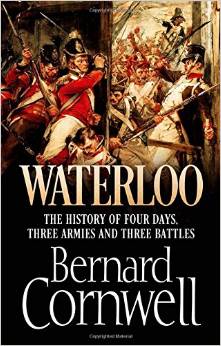
Novelist Bernard Cornwell wrote a history of the battle of Waterloo and talks to John J. Miller about the book and the battle it describes here.

Waterloo by Bernard Cornwell

Africa: Zulu Empire IV – Last Stands and Changing Fortunes – Extra History

Filed under: Africa, Britain, History, Military — Tags: , — Nicholas @ 02:00

Published on 6 Jun 2015

BONUS! Learn about the Boer Wars and what happened in South Africa during World War I thanks to our friends at the Great War Channel!
THE GREAT WAR Special: http://bit.ly/1HQxP9x

Lord Chelmsford, the British officer who commanded during the Anglo-Zulu War, vastly underestimated the power and aggression of the Zulu people. He split his army into three separate columns and left one of them stationed at Isandlwana while he searched for Zulu armies on the field. Meanwhile 20,000 Zulus were already flanking his force, but because Lord Chelmsford had not even ordered them to fortify the camp, the Zulu force swept through the ranks and destroyed the British army at Isandlwana. A small group of survivors fled to the hospital at Rorke’s Drift where officer James Dalton organized a desperate defense. Cetshwayo’s half-brother, ignoring orders to halt his pursuit, stormed the hospital with his small force and lost disastrously. Despite this, the main Zulu army continued to hand defeats to the British army until finally the British government stepped in to reinforce them with artillery and extra soldiers. Finally, Great Britain succeeded in capturing both the Zulu capitol at Ulundi and King Cetshwayo himself. They divided Zulu territory into 12 small kingdoms that quickly fell into civil war. Out of desperation, they returned Cetshwayo to the throne, but too late: a rival attacked and killed him. His son Dinuzulu allied with the Boers in an attempt to regain power and independence, but the British seized this excuse to finally annex Zulu land for good in 1887.

June 16, 2015

The Author of All Quiet on The Western Front – Erich Maria Remarque I WHO DID WHAT IN WW1?

Filed under: Books, Europe, Germany, History, Military, WW1 — Tags: , , — Nicholas @ 06:51

Published on 15 Jun 2015

All Quiet On The Western Front is surely the most prominent anti-war book and book about World War 1 of all time. The German author Erich Maria Remarque fought on the Western Front until he got wounded. During his recovery he collected stories from his comrades and started writing the book. Just one year after publication, a movie was made in the US where Remarque later emigrated to.

QotD: The Young Adult fiction of Ronald Welch

Filed under: Books, Britain, History, Quotations — Tags: , — Nicholas @ 01:00

I’d already been tinkering with the idea of writing a YA story, something for Ranger’s Apprentice fans to move on to.

Commercially, the idea was, “They’re going to read Bernard Cornwell when they are older; let’s take some money off them now.” However, my main motivation was wanting to write something my son could read — the magnum opus my agent was shopping owed too much to the War of the Powers (Am I the only person who remembers that series?). I also wanted to follow in the footsteps of Ronald Welch, the YA writer I read when I was a kid.

Welch was a WWII veteran turned grammar school teacher. He wrote what we would now call YA books about young officers finding their place, and he did it in just about every major conflict involving English combatants from the Horns of Hattin, through Marlborough’s campaigns, to his chronologically last book, Tank Commander, which is an utterly awesome tale of World War One, culminating in the Battle of Cambrai, the first modern tank assault.

We’re not talking trash here. Each book was well researched, the writing is good — he even won a Carnegie Medal for Knight Crusader, which puts him in the same ballpark as Rosemary Sutcliff. As far as I can see, his star faded after his death, not because of his quality as a writer, but because he became unfashionable:

  • His books simply have boy cooties. They are about young men learning leadership and responsibility while being shot at and shooting back without qualms … doing their job in adverse circumstances.
  • He’s not an anti-imperialist. I don’t think he’s pro-imperialist either. He just tells things as they were with people accepting the ethos of the time. His characters generally show matter-of-fact respect for other cultures, but don’t question their own right to be in Palestine or India or wherever, or question very much at all.
  • He’s not anti-war. His fight scenes also go all the way up to 11 on the Conan Scale. I don’t think he likes war, but — having fought in WWII — he sees it as necessary, and the experience itself as worthy of writing about.

This last, bears further examination.

Modern war books aimed at younger people tend towards:

    OMG my best friend just got killed. Look at that dying horse. War is Hell. At least I and my friends will (drum roll) Preserve Our Humanity.

Ronald Welch, who pulls absolutely no punches, by the way, is more:

    OMG my best friend just got killed. You there, put that dying horse out if its misery. War is Hell. Watch the left flanks chaps and some of us will get to live through it. I said WATCH THE DAMNED LEFT FLANK!!

It’s all about taking responsibility, keeping presence of mind, in just about the most hostile human environment.

Very few young readers will grow up to be soldiers. Many of them, however, will face crappy situations. At work when a project implodes. Socially when people turn on them. In a family when a child is very sick, or when a marriage breaks down or turns abusive…

In all those circumstances, there are points neither for maintaining a personal moral hygiene nor for being sensitive. If everybody is going to get through this thing, somebody has to watch the left flank. That person may well be you.

And that’s the kind of book I wanted to write.

M Harold Page, Shieldwall: Barbarians! Writing and self-publishing an old school boy’s young officer story set in Attila’s invasion”, Charlie’s Diary, 2015-06-03.

June 15, 2015

The Key To Success Is Artillery I THE GREAT WAR Week 45

Filed under: Britain, Europe, Germany, History, Military, Russia, WW1 — Tags: , , , — Nicholas @ 05:00

Apologies for presenting this one out of order, but last week was a bit disordered. The next Great War video will be week 47, probably on Friday.

Published on 4 Jun 2015

When Przemysl falls for the 2nd time and when the British and ANZAC troops fail at Gallipoli again, one thing becomes clear: Artillery is the key for future battles. August von Mackensen had used it with great success at the Gorlice-Tarnow-Offensive and the French even diverted one million men to shell factories. Meanwhile German Zeppelins bombed London and the US sent submarines for aid.

June 14, 2015

From SOE to Hammer horror to LOTR, Christopher Lee’s remarkable career

Filed under: Britain, Media — Tags: , , , , , — Nicholas @ 05:00

Mark Steyn looks back at the real life and cinematic exploits of Sir Christopher Lee:

Before he was an actor, he was an intelligence officer, and had, as they used to say, a good war, attached to the Special Operations Executive, or the “Ministry of Ungentlemanly Warfare”, responsible for espionage and sabotage in occupied Europe. Afterwards, Lee stayed on to hunt down Nazi war criminals. Back in London in 1946, he lunched with a Continental cousin, now the Italian Ambassador to the Court of St James’s, and confessed he had no idea what to do next, except that he had no desire to return to his pre-war job as a switchboard operator at the pharmaceutical company Beecham’s. “Why don’t you become an actor?” suggested the Ambassador. So he did. Two years later he was a spear carrier in Laurence Olivier’s Hamlet, in which he met another up-and-comer playing Osric, Peter Cushing.

It took Hammer horror films to make both men stars, albeit B-movie stars. Lee was a very suave and seductive Dracula trying to stay one step ahead of Cushing’s van Helsing while leaving a trail of blood-drained totty behind. As a teenager, I loved the Hammer movies, although I had a mild preference for the lesbian-vampire ones with Ingrid Pitt, Pippa Steel, Yutte Stensgaard et al. The bottom seems to have dropped out of the whole lesbian-vampire genre. No doubt, in these touchy times, it would be a fraught business reviving it. But Sir Christopher’s count holds up pretty well. Aside from bloodshot eyes and stick-on fangs, there weren’t a lot of special effects: Today you’d do it all with CGI, but back then there was nothing to make the horror but lighting and acting. You can see, in middle age, all the techniques that would give Lee an enduring cool well into the Nineties: the mellifluous voice; the flicker of an eyebrow — and then suddenly the flash of red in the eyes and the bared fangs, the ravenous feasting on some dolly bird’s neck, and all the scarier for emerging from Lee’s urbane underplaying.

He was upgraded to Bond nemesis Francisco Scaramanga, The Man With The Golden Gun — and a supernumary papilla, which is to say a third nipple. Lee was a cousin of Ian Fleming, who’d offered him the chance to be the very first Bond villain in Doctor No twelve years earlier. It would have been fun to see Lee and Sean Connery together, but, role-wise, he was right to wait. He’d known Roger Moore almost as long as cousin Ian: They’d first met in 1948. Golden Gun is a mixed bag for Bond fans, what with the somewhat improbable presence in Thailand of redneck sheriff J W Pepper and the other Roger Moorier elements. But Britt Ekland runs around in a bikini, and Lee’s Scaramanga is a rare opponent who is (almost) the equal of 007. Landing at Los Angeles to promote the film on Johnny Carson’s Tonight Show, Sir Christopher had his golden gun seized by US Customs and never returned — a reminder that these guys were pulling this nonsense long before the TSA came along.

His own favorite film was Jinnah, in which he played the title role of Pakistan’s ascetic founder. It’s very credible, but it’s not why audiences loved him. Lee redeemed almost anything he was in, but had his work cut out when George Lucas signed him for the Star Wars prequels. By then Lucas was a director without peer when it comes to getting bad performances out of great actors. Once upon a time Ewan McGregor was one of the sexiest actors on the planet. Then George Lucas cast him as Obi-Wan Kenobi, and turned him into a souvenir action-figure with no private parts and a flat monotone voice. As Princess Amidala, Natalie Portman couldn’t be Aniduller. The kid who plays Anakin seems like he should be the shy fellow in the back in some passing boy band but instead his agent stuck him with some lousy movie gig in a language not his own. He and Miss Portman roll in the grass like it’s a contractual obligation. The most fully realized characters are the computer-generated ones, like Yoda, the wrinkly midget with the inverted word order that nevertheless sounds less unnatural than the rest of the inert, stilted dialogue.

Belgium’s new Waterloo coin “is not designed to annoy the French”

Filed under: Europe, France, History — Tags: , — Nicholas @ 03:00

It is, as the Reg‘s Jennifer Baker puts it, “just a happy side effect”:

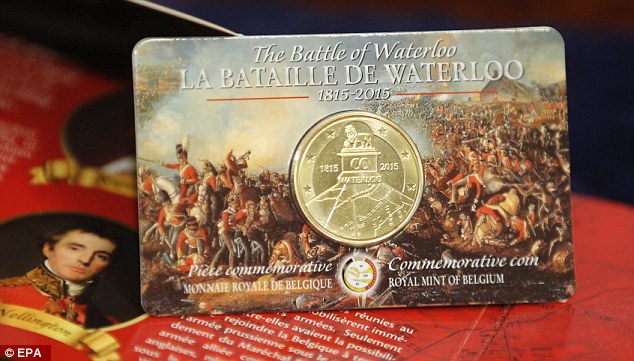
Belgium has taken international trolling to the next level by minting a €2.50 coin to celebrate the Battle of Waterloo.

France had objected to the plan to mint a €2 coin to mark the 200th anniversary of Napoleon’s defeat and Belgium duly scrapped 180,000 coins. France said the battle “has a particular resonance in the collective consciousness that goes beyond a simple military conflict”.

But the plucky Belgies didn’t take the French manoeuvre lying down and unearthed an obscure piece of legislation which allows EU countries to unilaterally mint new coins, provided that they are in an unusual denomination.

The new Belgian coin in its decorative holder. Click to see the original image at the Daily Mail.

The new Belgian coin in its decorative holder. Click to see the original image at the Daily Mail.

QotD: The law-abiding Germans

Filed under: Europe, Germany, Humour, Law, Quotations — Tags: , — Nicholas @ 01:00

Another excellent piece of material for obtaining excitement in Germany is the simple domestic perambulator. What you may do with a “kinder-wagen,” as it is called, and what you may not, covers pages of German law; after the reading of which, you conclude that the man who can push a perambulator through a German town without breaking the law was meant for a diplomatist. You must not loiter with a perambulator, and you must not go too fast. You must not get in anybody’s way with a perambulator, and if anybody gets in your way you must get out of their way. If you want to stop with a perambulator, you must go to a place specially appointed where perambulators may stop; and when you get there you must stop. You must not cross the road with a perambulator; if you and the baby happen to live on the other side, that is your fault. You must not leave your perambulator anywhere, and only in certain places can you take it with you. I should say that in Germany you could go out with a perambulator and get into enough trouble in half an hour to last you for a month. Any young Englishman anxious for a row with the police could not do better than come over to Germany and bring his perambulator with him.

In Germany you must not leave your front door unlocked after ten o’clock at night, and you must not play the piano in your own house after eleven. In England I have never felt I wanted to play the piano myself, or to hear anyone else play it, after eleven o’clock at night; but that is a very different thing to being told that you must not play it. Here, in Germany, I never feel that I really care for the piano until eleven o’clock, then I could sit and listen to the “Maiden’s Prayer,” or the Overture to “Zampa,” with pleasure. To the law-loving German, on the other hand, music after eleven o’clock at night ceases to be music; it becomes sin, and as such gives him no satisfaction.

The only individual throughout Germany who ever dreams of taking liberties with the law is the German student, and he only to a certain well-defined point. By custom, certain privileges are permitted to him, but even these are strictly limited and clearly understood. For instance, the German student may get drunk and fall asleep in the gutter with no other penalty than that of having the next morning to tip the policeman who has found him and brought him home. But for this purpose he must choose the gutters of side-streets. The German student, conscious of the rapid approach of oblivion, uses all his remaining energy to get round the corner, where he may collapse without anxiety. In certain districts he may ring bells. The rent of flats in these localities is lower than in other quarters of the town; while the difficulty is further met by each family preparing for itself a secret code of bell-ringing by means of which it is known whether the summons is genuine or not. When visiting such a household late at night it is well to be acquainted with this code, or you may, if persistent, get a bucket of water thrown over you.

Also the German student is allowed to put out lights at night, but there is a prejudice against his putting out too many. The larky German student generally keeps count, contenting himself with half a dozen lights per night. Likewise, he may shout and sing as he walks home, up till half-past two; and at certain restaurants it is permitted to him to put his arm round the Fraulein’s waist. To prevent any suggestion of unseemliness, the waitresses at restaurants frequented by students are always carefully selected from among a staid and elderly classy of women, by reason of which the German student can enjoy the delights of flirtation without fear and without reproach to anyone.

They are a law-abiding people, the Germans.

Jerome K. Jerome, Three Men on the Bummel, 1914.
« Newer PostsOlder Posts »

Powered by WordPress