
Y’all know I love the 15th century. Not “the Renaissance”, although “the Renaissance” — insofar as that’s a useful concept of historical analysis, which is not very — was in full swing in Italy by 1400, and soon enough north of the Alps, too. The professional periodization and terminology can be confusing here — the “Northern Renaissance” can refer to different things, sometimes a hundred or more years apart, depending on whether you’re talking about visual arts or poetry or what have you. So I prefer to confine the term “Renaissance” to Italy. Unless I’m talking specifically and exclusively about Italy, I’ll refer to the period as “the 15th century”.
I love it because it’s clearly a watershed moment in human thought. I don’t mean the rediscovery of the classical past; I mean the shift between a more cyclical orientation towards life, versus an orientation around linear time. Time as the regular procession of the seasons, vs. time as a stream or river.
Some examples will help. The 15th century saw not just the creation of archives-based history, but the techniques in various fields that make archival work possible. For instance, the Donation of Constantine was definitively proved to be a forgery in the 15th century, on the basis of philological evidence. Before that point, the people using the Donation – both ways — wouldn’t have cared too much if they knew it was a fake. Not because they were opportunists (although they were), but because “factual accuracy”, to use one of my favorite of the Media’s many Freudian slips, just didn’t matter much back then.
When they said “the Donation of Constantine” they meant “hallowed by tradition”, and if you’d proved to them that the Donation was fake, they’d just keep on keepin’ on — ok, then, “hallowed by tradition” it is, everyone update your style books accordingly.
Severian, “The Ghosts (II)”, Founding Questions, 2022-05-18.
February 19, 2026
QotD: The Donation of Constantine
February 18, 2026
QotD: Defending the borders of the Roman Empire
The thing is, approximately none of this logic applied in the Roman situation. First of all, as we’ve already noted, a huge fraction of the threats the Romans faced were “low-intensity”: border skirmishes, slave raids, pirates and brigands, that sort of thing. Static fortifications, walls and towers, are often more than sufficient for dealing with these problems. Paradoxically, that actually increases the mobility and responsiveness of the main forces. If they aren’t constantly running back and forth along the border dealing with bandits, that means they can respond with short notice to “high-intensity” threats (like major invasions and rebellions) that pop up, and are probably better rested and better provisioned when the emergency arrives. So, far from diluting their strength, a lightly-manned series of linear fortifications actually enabled the Romans to concentrate it.
Secondly, those linear fortifications can also be very useful when that major invasion shows up, even if they are overrun. A defense system doesn’t have to be impenetrable in order to still be very, very useful. One thing it can do is buy time, either for the main army to arrive or for some other strategic purpose. The defenses can also act to channel opposing forces into particular well-scouted avenues of attack, or change the calculus of which invasion routes are more and less appealing. Finally, in the process of setting up those defenses, you probably got to know the terrain extremely well, such that when the battle comes you have a tactical advantage.
[…]
The third, and perhaps most important, reason why the Roman frontier fortifications were actually very smart is that they were carefully designed to double as a springboard for invasions into enemy territory. Luttwak coins the term “preclusive defense” to describe this approach. The basic idea is that an army can take bigger risks — pursue a retreating foe, seize a strategic opportunity that might be an ambush, etc. — if it knows that there are strong, prepared defensive lines that it can retreat to nearby. Roman armies were constantly taking advantage of this, and moreover taking advantage of the fact that the system of border fortifications was also a system of roads, supply lines, food and equipment storage depots, and so on. The limes were not a wall that the Romans huddled behind, they were a weapon pointed outwards, magnifying the power that the legions could project, helping them to do more with less.
John Psmith, “REVIEW: The Grand Strategy of the Roman Empire by Edward Luttwak”, Mr. and Mrs. Psmith’s Bookshelf, 2023-11-13.
- I, an ignoramus, assumed this was all downstream of the Maginot line’s bad reputation, but Luttwak says it’s actually the fault of Clausewitz.
February 17, 2026
QotD: Britain treats asylum seekers significantly better than their own citizens
The page continues: “You’ll get extra money to buy healthy food if you’re pregnant or a mother of a child aged three or under”. The payment is £5.25 per week for pregnancy, £9.50 for a baby under one, £5.25 for children aged one to three, plus a one-off £300 maternity grant for anyone expecting a child or with a baby under six months. Even when asylum is refused, support continues: “You’ll be given somewhere to live and £49.18 per person on a payment card for food, clothing and toiletries”. Only those who decline the accommodation lose the card.
Medical care is covered in full. “You may get free National Health Service healthcare,” the Government states, including “free prescriptions for medicine, free dental care, free eyesight tests and help paying for glasses”. Children are guaranteed a place in a state school and “may be able to get free school meals”. The terms are so generous that the NHS issues a dedicated HC2 certificate for people on asylum support, giving them automatic exemption from all prescription and dental charges, free eye tests and optical vouchers, and even help with wigs and fabric supports.
Compare this to the treatment of the people who pay for it. A British worker who loses his job must apply for Universal Credit, then wait at least five weeks before receiving a payment. Any advance must be repaid out of later instalments. He must show that he is seeking work, accept appointments and interviews, and risk sanctions if he misses them. He is scrutinised as a potential cheat. An asylum claimant is treated as a recipient of moral debt, requiring no proof of worthiness.
When the native taxpayer falls ill, he must pay £9.90 per prescription unless he qualifies for a limited exemption. He may buy a “pre-payment certificate” to spread the cost, but the charge remains. Dental treatment on the NHS costs £27.40 for a check-up, £75.30 for a filling, £326.70 for a crown or denture, and many cannot find an NHS dentist at all. Asylum seekers, by contrast, present their HC2 certificate and pay nothing. If the citizen asks the council for housing, he is told that the waiting list is full, that he is not a “priority case”, and that the private rental market is his problem. The asylum applicant, by the State’s own words, is “given somewhere to live if you need it”.
None of this is accidental. The cost of asylum support in 2023–24 was about £4.7 billion, according to the Home Office’s own figures, of which £3 billion went on hotel accommodation. In 2024–25, the bill fell slightly to £4 billion, but £2.1 billion of this was still for hotels — an average of £5.7 million every day. The National Audit Office has found that the ten-year accommodation contracts, first priced at £4.5 billion, are now projected to cost £15.3 billion. Between April and October 2024 alone, £1.7 billion was spent on housing and managing asylum seekers. The Financial Times has estimated the total annual cost of the asylum system at roughly £4.8 billion. The number of people receiving asylum support — housing, cash or both — now stands at over 100,000.
The figures expose a transfer of resources on a colossal scale. What is presented as “humanitarian duty” has become a domestic welfare state for foreigners, sustained by British workers who receive less support in return for greater taxation. The British State can house every migrant but not every nurse, find free dental care for the undocumented but not for the elderly, provide optical help for those who have just arrived but not for those who have paid into the system all their lives.
Marian Halcombe, “Britain’s Welfare Empire: A State that Feeds Strangers and Starves Its Own”, The Libertarian Alliance, 2025-11-05.
February 16, 2026
Unsung Heroes of the Eastern Front – Soviet Fighter Aces – WW2 Gallery 08
World War Two
Published 15 Feb 2026We’re back with another helping of fighter ace tales, this time taking us to the USSR. From the personal brilliance of Ivan Kozhedub, to the cerebral genius of Alexander Pokryshkin, come with us as we explore five more individual stories of skill, determination, self-sacrifice, and tragedy, who defined a generation of Soviet aviation in a theatre of WW2 where the aerial campaign is so often overlooked in favor of the ground war.
Check out Sabaton History‘s episode about the Night Witches: • Night Witches – Female Soviet Pilots – Sab…
(more…)
The destruction of Dresden, February 1945
If you’ve watched the two-part video on the bombing of Dresden by LordHardThrasher (Part 1, Part 2), much of this will already be familiar to you, as Ed West discusses the history of the city up to the point the RAF bombs began to fall on Shrove Tuesday in 1945:
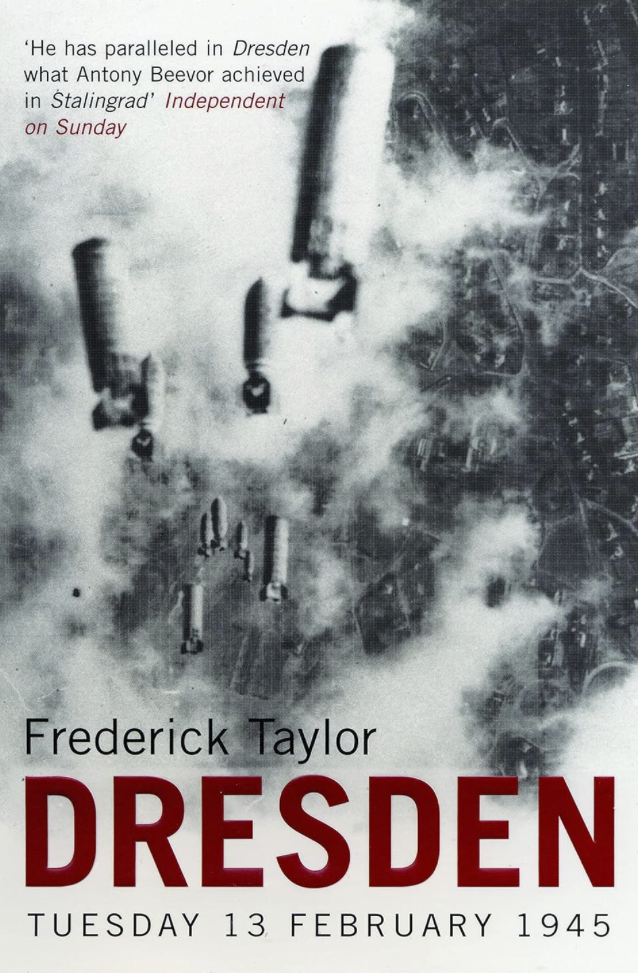
… Just over six years later the city of Dresden would be reduced to ashes by hundreds of bombers from the RAF and US Air Force, a horror that began on the evening of Shrove Tuesday, February 13, 1945, lasting until Thursday morning. Griebel would survive, but all his art went up in the blaze.
Dresden is perhaps, after Hiroshima, the name most synonymous with slaughter from the air, and in Britain at least the most controversial. Last year, while visiting this incredibly beautiful city — much of it now rebuilt — I reread Frederick Taylor’s account of the bombing, published back in 2005 on the 60th anniversary of the event.
Dresden’s destruction was extensive. Almost no buildings in the centre or its inner suburbs survived the bombs, and the death toll was immense, although difficult to assess in a city packed with refugees from the east. Anything between 20,000 and 80,000 fatalities is possible, although the consensus seems to be around 25,000.
That night was to be the worst of many wartime firestorms, a meteorological event in which the heat of the blaze becomes so intense, up to a thousand degrees centigrade, that the oxygen is sucked out of the surrounding air. More died in Dresden from asphyxiation than fire, and even those who thought they had found shelter in fountains were boiled alive. Many more drowned in the city’s reservoir, where they had gone to seek protection, their energy sapped by the soaring temperatures, unable to climb out. The bombers, thousands of feet above, could feel the warmth of the thousand fires below.
[…]
As everyone in the 1930s was well aware, the new war would bring aerial destruction on a hideously greater scale, and when it came again, it was the Luftwaffe who first put these ideas into practise, first in Poland and then Rotterdam.
After failing to destroy the Royal Air Force over the summer of 1940, the Nazis switched to aerial bombing of British cities. Between September 7, 1940 and New Year’s Day 1941, London was attacked on 57 consecutive nights, killing 14,000 inhabitants, a rate of 250 fatalities for each day of bombing. The German air force went on to kill an estimated 43,000 British civilians over the course of the war, with V-1 attacks continuing until the last weeks of the war.
On November 14, 1940, over 500 German bombers took off for a mission that would gift their language a new verb: Coventrated. Five hundred tons of high explosives, 30,000 incendiary bombs, fifty landmines and twenty petroleum mines were dropped on the target, and the medieval city went up in flames.
Like the blitz on other British cities, morale was not crushed in Coventry, but something dawned on the British high command. The destruction of Coventry’s infrastructure, utilities and transport had proved far more damaging than the destruction of any purely “military” target. Furthermore, bombers were notoriously inaccurate, and one survey showed that only 2 per cent of bombs fell within even one thousand feet of their intended point. Aerial bombardment of cities would prove far more effective than any hopeless targeting of particular coordinates.
They also learned that a large enough bombing raid would result in a firestorm, in which air currents are drawn in from the surrounding area, causing the fire to burn far more intensely. Indeed, a major attack on the City of London on December 29, 1940 might have become another firestorm but for the bad weather.
The British had been initially reluctant to take the war to Germany. While Poland was left to endure hell, leaflets were dropped over Berlin in October 1939 claiming that Nazi leaders were secretly profiting from the war, leading Noel Coward to suggest that it looked like we were trying to bore the Germans to death. There is even the apocryphal story about British official Sir Kingsley Wood refusing to bomb industrial targets in the Black Forest because it was private property. Indeed, our attempts to bomb Germany in 1940 were so feeble that Goebbels had to fake British “atrocities” to rouse the German public
With the entry of the United States and Soviet Union into the war in 1941, and with the German defeat at Stalingrad, the shoe was now on the other foot. The British invested more resources in Bomber Command and its head, Air Marshall Arthur Harris. “Bomber” Harris would become representative of the entire policy of destroying Germany’s cities, and a figure of controversy; the unveiling of his statue in 1992 attracted protests and has been repeatedly vandalised, but like many architects of wartime destruction, he was motivated by a desire to prevent a repeat of what he saw in 1914-18. The son of a colonial official who might have spent the rest of his life as a farm manager in Rhodesia were it not for war, he had joined the Royal Flying Corp in the first conflict and from his plane saw the horror of trench warfare and became determined that this sort of stalemate should never be repeated.
Having stuck to targeted industrial centres, in February, 1942 Allied command issued the Area Bombing Directive authorising the wide scale destruction of enemy cities. On 28 March the Hanseatic town of Lübeck was destroyed in a firestorm, and its most famous son, the anti-Nazi novelist Thomas Mann, appeared on BBC radio saying that while he regretted the destruction of his native city, “I think of Coventry, and have no objection to the lesson that everything must be paid for. Did Germany believe that she would never have to pay for the atrocities that her leap into barbarism seemed to allow?”
After the Lübeck bombing, Goebbels approached a state of panic for the first time, describing the damage as “really enormous”. He responded, in April 1942, by saying that he would “bomb every building in England marked with three stars in the Baedeker Guide” – Exeter was now hit in retaliation.
On May 30 the Allies launched what Harris called “the Thousand Plan”, the first thousand-bomber raid. Cologne and Hamburg were singled out for destruction, but on last-minute meteorological advice only the Rhineland city was chosen. Hamburg’s citizens would never know how fate had saved them – if only for another year.
So shocked were the Germans by the attack that the authorities forced the city’s fleeing citizens to sign a pledge of secrecy about what they saw, which ended with the sinister line “I know what the consequences of breaking this undertaking will be”.
Things would only get worse, and the Allies were getting both more destructive and more skilled. In faraway Utah, the Americans were now busy testing the destruction of German-style buildings, even hiring German refugee architect Erich Mendelssohn to recreate a German apartment block.
QotD: How nuclear weapons were viewed right after WW2
At the same time, US strategists (particularly associated with the RAND Corporation) were beginning to puzzle out the long term strategic implications of nuclear weapons. In 1946, Bernard Brodie published The Absolute Weapon which set out the basic outlines of deterrence theory; he did this, to be clear, three years before the USSR successfully tested its first nuclear weapon in 1949 (far earlier than anyone expected because the USSR had spies in the Manhattan Project). Brodie is thus predicting what the strategic situation will be like when the USSR developed nuclear weapons; his predictions proved startlingly accurate, in the event.
Brodie’s argument proceeds as a series of propositions (paraphrased):
- The power of a nuclear bomb is such that any city can be destroyed by less than ten bombs.
- No adequate defense against the bomb exists and the possibilities of such are very unlikely.
- Nuclear weapons will motivate the development of newer, longer range and harder to stop delivery systems.
- Superiority in the air is not going to be enough to stop sufficient nuclear weapons getting through.
- Superiority in nuclear arms also cannot guarantee meaningful strategic superiority. It does not matter that you had more bombs if all of your cities are rubble.
- Within five to ten years (of 1946), other powers will have nuclear weapons. [This happened in just three years.]
All of which, in the following years were shown to be true. Consequently, Brodie notes that while nuclear weapons are “the apotheosis of aggressive instruments”, any attacker who used them would fear retaliation with their enemy’s nuclear weapons which would in turn also be so destructive such that “no victory, even if guaranteed in advance – which it never is – would be worth the price”. Crucially, it is not the fact of retaliation, but the fear of it, which matters and “the threat of retaliation does not have to be 100 per cent certain; it is sufficient if there is a good chance of it, or if there is a belief that there is a good chance of it. The prediction is more important than the fact.” [emphasis mine]
This does not “make war impossible” by any means, but rather turns strategy towards focusing on making sure that nuclear weapons are not used, by making it clear to any potential aggressor that nuclear weapons would be used against them. And that leads to Brodie’s final, key conclusion:
Thus, the first and most vital step in any American security program for the age of atomic bombs is to take measures to guarantee to ourselves in case of attack the possibility of retaliation in kind. The writer in making that statement is not for the moment concerned about who will win the next war in which atomic bombs are used. Thus far the chief purpose of our military establishment has been to win wars. From now on its chief purpose must be to avert them. It can have almost no other useful purpose.
To sum that up, because both the United States and its key enemies will have nuclear weapons and because their destructive power is effectively absolute (so high as to make any “victory” meaningless) and because there is no effective defense against such weapons, consequently the only rational response is to avoid the use of nuclear weapons and the only way to do that is to be able to credibly threaten to retaliate with nuclear weapons in the event of war (since if you cannot so retaliate, your opponent could use their nuclear weapons without fear).
That thinking actually took a while to take hold in actual American policy and instead during the 1940s and 1950s, the United States focused resources on bomber fleets with the assumption that they would match Soviet superiority in conventional arms in Europe with American nuclear superiority, striking military and industrial targets (“precision attacks with an area weapon”, a notion that is as preposterous as it feels) to immediately cripple the USSR in the event of war, or else aim to “win” a “limited” nuclear exchange.
Bret Devereaux, “Collections: Nuclear Deterrence 101”, A Collection of Unmitigated Pedantry, 2022-03-11.
February 15, 2026
The smartphone as a tool to create a real-life Idiocracy
Not being much of a film fan, I’d never seen the movie Idiocracy, but based on the description in Christopher Gage’s rant against the smartphone, I might not need to watch it as it’s happening all around us:

Transport for London, the mythical entity alleged to manage the city’s Tube, has revealed its campaign to tackle the smartphone scourge: sickly posters splashed in kindergarten colours.
The campaign targets the “disruptive behaviour” of passengers who were evidently raised by a pack of snarling hyenas. They blast reels, videos, music. They FaceTime their cackling friends. Not so long ago, a fellow passenger revealed to us — her captive audience — that someone named Sarah had caught the clap from someone named Travis. Syphilis? How literary.
Miraculously, researchers at Transport for London discovered a rare tribe thought to be long extinct: Londoners who communicate with their fellow human beings by making noises with their mouths — one thousand of them, in fact.
Researchers approached these strange beings with a mixture of wonder and trepidation. They prodded them with a stick. That didn’t work. After jabbing them with a cattle prod, they looked up from their phones. Several members landed in Accident and Emergency, complaining of neck strain injuries.
Seventy percent of those surveyed said the constant noise screaming out of smartphones drove them crazy. One responder suggested offenders receive forty lashings in public. That is a bit much. Ten should do the trick.
TFL wavered from such brutal and effective methods. Campaign posters politely ask passengers to wear headphones.
I’m afraid that TFL’s well-meaning campaign hasn’t quite restored sanity on the London Underground.
Last week, I sat next to a grown man grinning at his phone like a Hindu cow. On the screen was a captivating spectacle. Someone, somewhere, makes it their daily business to buy gigantic, waist-height glass bottles of soda. This clearly well-adjusted person then rolls the bottles down a flight of concrete steps. Our friend dissolved the journey between Hammersmith and Leicester Square in a trance. Bottle. Roll. Smash. Bottle. Roll. Smash.
This reminded me of the satirical film, Idiocracy. The plot follows U.S. Army librarian Luke, and prostitute Rita.
After signing up for a hibernation experiment, the two awake in America, year 2500. Mountains of trash litter the landscape. Planes fall out of the sky. The citizens drag their gormless faces between Starbucks (which is now a coffee-serving brothel) and shopping malls even more dementing than those today. Over centuries, the dumb have biologically outgunned the smart.
The citizens of this moronic inferno drain their days glued to hyperactive screens. Their favourite content includes the Masturbation Channel and a reality TV show called “Ow! My Balls!” That show follows a hapless man as he gets whacked in the testicles.
They cultivate high culture, too. The profound film, Ass, zooms in on a pair of bare bum cheeks. The sophisticated audience fizzes with laughter as the bum, for two hours, passes wind.
Back in 2006, Idiocracy was a well-done satire which stretched logical extremes. Today, I’m not so sure it is as ridiculous as it once seemed. Just spend ten minutes on the Tube, inhaling the noxious TikTok fumes spewing from smartphones.
Transport for London has a point. But it is far too late. We are a nation of dopamine addicts. Those dopamine crack pipes stitched to our palms are quite literally designed to suck away as much of our time and attention as possible. An intervention, at this late hour, must be drastic.
How about a campaign outlining the terrifying effects of watching brain-rot content for hours and hours each day? A growing body of research suggests today’s smartphone is tomorrow’s lobotomy. Am I rioting in hyperbole? No.
One study found that watching short-form video is more harmful to our brains than soaking them in booze. At least, the latter indulgence might get you laid.
Several studies link smartphone culture with declines in comprehension, literacy, and the ability to reason. Others link smartphones with rising narcissism and collapsing social capital. And then there’s the nascent research suggesting that smartphone addiction may trigger ADHD and Autism-like symptoms in the addicted.
How to Make The Economy Look Better Than It Is – Death of Democracy 03 – Q3 1933
World War Two
Published 14 Feb 2026Death of Democracy returns to Nazi Germany in Q3 1933. See Hitler enforce one‑party rule, sign the Reichskonkordat, tighten propaganda and press control, and expand work programs that feed rearmament. From July to September, follow the legal and cultural Gleichschaltung that normalizes terror and reshapes Europe’s future in this episode.
(more…)
WW1: The Siege of Przemyśl: Austria-Hungary’s Horror Story | EP 6
The Rest Is History
Published 11 Sept 2025After endeavouring to wreak their revenge on Serbia, what would be the greatest hammer blow to the Austro-Hungarian Empire during the First World War? With Leviv having fallen apocalyptically to the Russian hordes, what had gone so wrong? How might the war have been brought to an end before Christmas of 1914? And, with the darkness gathering around the Austrian defences, could the great fortress of Przemyśl hold out against the Russian barrage for a second time?
Join Dominic and Tom as they discuss the fall of the Austro-Hungarian Empire and the Russian advance, on the brutal Eastern front, as the first year of the First World War grinds bloodily on…
Alexander Watson’s The Fortress, the book heavily referenced in this episode, is available to purchase here: http://bit.ly/41NKRrq
______00:00 – Cold open: “intricacies of war” reading
01:13 – Adobe
01:51 – Nick Lloyd & the Tyrolean Kaiserjäger
03:26 – Austria-Hungary’s coming unraveling: setting the stakes
06:50 – Why Przemyśl is a fortress; garrison & geography
08:31 – August 1914: Conrad’s plan and its unraveling
17:48 – Catastrophe for the Habsburg army
18:32 – The siege begins
24:50 – Pendulum swings back; Russians advance again
27:01 – Civilian exodus chaos; encircled again (8 Nov)
28:10 – Uber
28:50 – Folio Society
30:17 – Russian occupation & pogroms in Galicia (1914)
31:39 – War aims: Russification under Count Bobrinsky
33:00 – Russian antisemitism context; pogroms & deportations
37:05 – Second siege strategy: starve them out; General Kusman
38:04 – Early aerial bombing of civilians (Dec 1)
39:10 – Christmas Eve gestures; brief humanity, then darkness
41:04 – Conrad’s Carpathian rescue bid (23 Jan): campaign from hell
42:02 – Carpathian horrors; Tyrolean memoir; morale collapses
47:10 – POW fate: officers vs men; camps & Murmansk railway
49:01 – Austria-Hungary reels from the disaster
50:17 – Germany’s opinion of Austria Hungary
51:13 – Italy cuts a deal, joins war; the Italian Front beckons
53:38 – Tsar’s visit; enforced Russification in Przemyśl
55:14 – Mackensen’s offensive; Germans “liberate” Przemyśl; Austria eclipsed
56:10 – Foreshadowing WW2?
(more…)
February 14, 2026
Former First Lady suffers unplanned mingling with the plebs in Germany
eugyppius offers some news from Germany, one of the many western nations eagerly plunging toward cultural suicide in a race with Canada, Australia, the UK and other formerly “first world” nations:
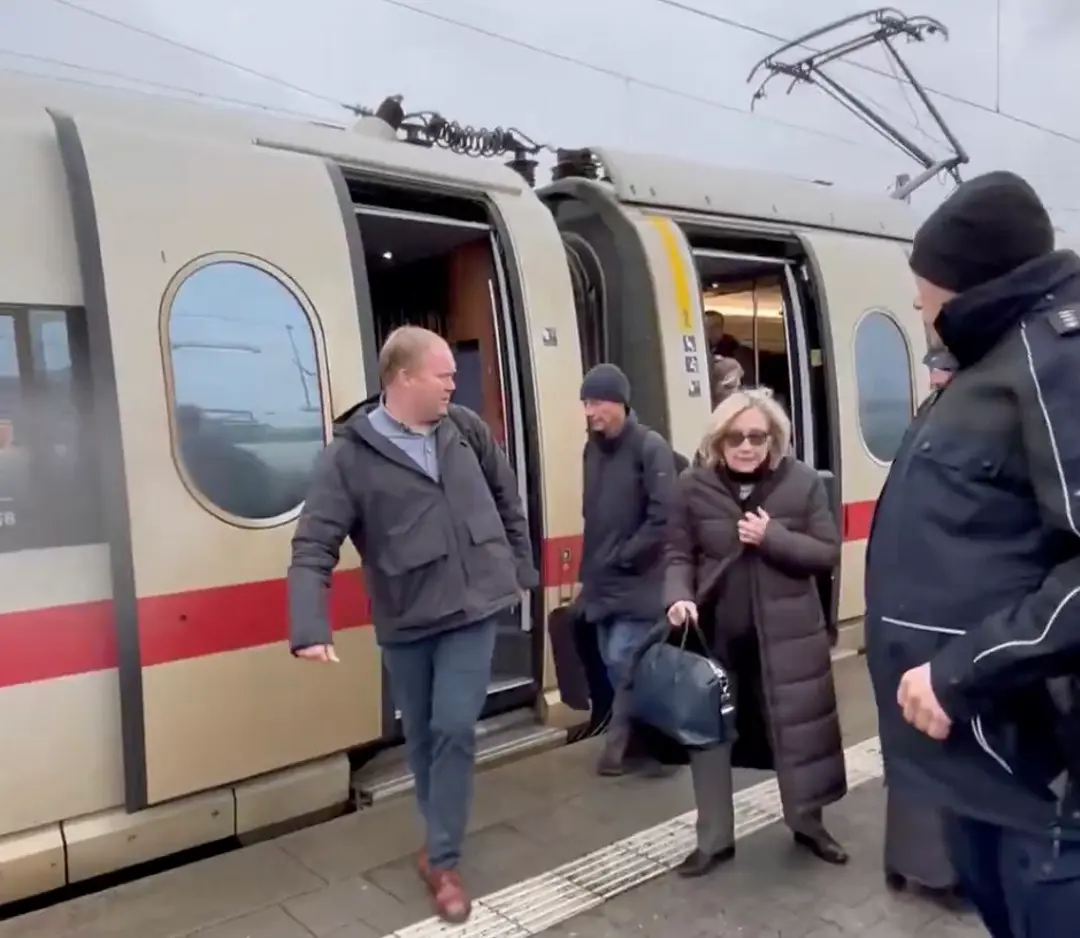
Yesterday Lufthansa pilots and cabin crews went on strike, forcing Hillary Clinton to slum her way on the train to the Munich Security Conference.
[…] you can see the former First Lady and U.S. Secretary of State disembarking from her filthy Deutsche Bahn Intercity Express from Berlin, which had naturally suffered an electrical fault that disabled the restaurant car and with that, all possibility of coffee. Munich Central Station is one of the worst train stations in all of Germany; the place is awash in trash and smells always of urine and french fries. It is a very minor pleasure, watching political elites being forced to navigate the very same dysfunctional landscape all of us have to deal with every day.
“eugyppius,” said absolutely nobody ever, “why has it been so long since you last updated us on Germany? Is nothing going on? Tell us something please.”
The problem is that German politics have degenerated so much in the past year that it is becoming very hard to write abut them.
In the post-Merkel era under Olaf Scholz, insane new crazy bad inadvisable unbelievable stuff would happen almost every day; in the post-post-Merkel years under Friedrich Merz, absolutely nothing can happen no matter how bad things get. After an unstable period comprising the second half of Covid and the pious afterglow of St. Greta (before the latter took up her charitable sailing initiatives), we have settled into a new order. Imagine an airplane piloted by heedless methed-out lunatics. For a brief time they enjoyed aerobatics well exceeding the engineering specifications of their craft, until they snapped a few flight control cables, and now they have become the prisoners of their own recreations as the altimeter ticks down and the ground rushes up at them.
Metaphors are fun but specifics are healthier. As everybody knows, the centre-right Christian Democrats are in a coalition with the newly hard-left Social Democrats, and the latter are determined to block every last initiative, reform and legislative proposal, however mundane or plainly necessary or routine. A little over a year ago, I wrote that German politics had become stuck, and that was true enough back then. What is true right now, is that they have achieved a stage well beyond stuck. The federal government is in a coma, an indefinite vegetative state, on life support – totally paralysed and neither dead nor alive.
We’ve gone over the reasons so much, I hesitate to recite them again, but I will. At the root of our present crisis is a shift within the German left that has had cascading consequences for the party system as a whole. Basically, the left has become both more scattered and more extreme in the last five years. They have become more scattered, because climatism is decaying and this process of ideological unravelling means that leftists have lost a crucial focal point used to rally activists and moderates alike. They have become more extreme, because the general rightward shift in politics is depriving the Social Democrats of their traditional moderating, working-class constituents. These are migrating steadily to the Christian Democrats and ultimately to Alternative für Deutschland.
As the left slowly boils down to their activist base, they become more radicalised. The Social Democrats are no longer the family-friendly centre-left party of Gerhard Schröder. They want to fight, they want to burn things down, they want hell. The very same rightward shift, meanwhile, has had a nearly opposite effect on the CDU. They have lost many of their most engaged constituents and no few members to the AfD. What remains is a husk of dull, uninspired careerists, eager to maintain their good regard with polite society and their regular schedule of polite evening talk show appearances. To break the present impasse, Merz or those around him must act decisively and make facts. He needs to fire all his SPD ministers, form a minority government and achieve some kind of rapprochement with the AfD. Alas, neither Merz nor anybody else in CDU leadership has the mettle for that kind of fight, which would also set off a series of catastrophic revolts within the CDU itself. Thus everything must remain frozen and broken indefinitely, while things get worse and worse and our ability ever to fix them decays.
The EU’s plans to drain the “wine lake” … again
Canada isn’t the only place with rigidly governed agricultural cartels … the European Union has always been a big fan of governing agricultural markets by fiat rather than allowing the markets to sort out how much of which product should be produced. One of the biggest markets actively distorted by EU regulation is the wine industry, where faulty regulations ended up paying for a vast over-supply of wine in the 1980s and 90s. Rather than eliminating the regulatory structures, the EU continues to prefer letting bureaucrats dictate to producers:

When the Common Agricultural Policy was established, it was quickly determined that one of its core objectives would be the protection of farmers, ensuring stable incomes and food security. In the wine sector, this logic translated into strong interventionism aimed at expanding and stabilizing production.
For decades, Brussels subsidized vineyard planting, protected minimum prices, and absorbed producers’ economic risk, disconnecting production decisions from signals of demand. Producing more ceased to be an economic choice and became a politically safe decision.
This approach created a structural market distortion. As wine consumption began to decline across Europe for demographic, cultural, and economic reasons, the artificially incentivized productive structure remained intact and unable to adjust.
It was in this context that, during the 1980s and 1990s, the first major shock occurred, known as the wine lake: massive wine surpluses with no outlet. Even then, Brussels treated this episode as an isolated and temporary phenomenon, ignoring the fact that it was the direct consequence of existing policies. By persisting with the same strategies, the problem ceased to be episodic and became structural.
In the early 2000s, the European Union was finally forced to recognize that the wine crisis was not temporary. However, instead of removing production incentives and restoring the market’s adjustment function, it opted for a new form of intervention: subsidizing the voluntary uprooting of vineyards. The decision to destroy productive capacity ceased to be economic and became administrative, decreed from the European political center, with profound effects across several countries.
This model, presented as temporary, set a dangerous precedent. Rather than allowing less viable producers to exit the market through prices and economic choice, the state began paying for withdrawal, subsidizing the costs of adjustment and normalizing the idea that the correction of public policy errors should be financed with more public money.
This policy did not solve the underlying problem. It merely reduced cultivated area temporarily, while leaving intact the regulatory architecture which had created the initial distortion. The sector became trapped in a cycle of incentivized expansion, predictable crisis, and administrative correction.
It is within this framework that the Wine Package emerges as the European Union’s latest set of measures for the wine sector. The package relies on an administratively planned reduction of supply through financial incentives for vineyard uprooting, complemented by regulatory adjustments, temporary support measures, and crisis management instruments. Instead of allowing the market to adjust to declining consumption, Brussels once again opts for the destruction of productive capacity as a policy tool. Although the package includes support measures and environmental framing, its central axis remains the administrative reduction of supply.
The impact of these decisions is not marginal. The European wine sector represents a significant share of the European Union’s economy, sustaining approximately 2.9 million direct and indirect jobs and contributing more than €130 billion to EU GDP.
Voltaire & Rousseau’s Best Friend Breakup – Valentine’s Day Special
Overly Sarcastic Productions
Published 14 Feb 2025Watch as two of the smartest men in French history bravely push the bounds of being the pettiest, most toxic idiots possible.
(more…)
February 13, 2026
To be accepted as a true European, you must performatively hate Trump
In Spiked, Frank Furedi explains why European elites and the poseurs who aspire to be counted among the elites must now ostentatiously and performatively hate US President Donald Trump (even more than they hated George Bush, if possible). Comment on dit “eLbOwS uP”?

AI-generated image from AndrewSullivan.substack.com
In recent months, anti-Americanism has emerged yet again as a respectable prejudice in Europe. It is widely promoted through the mainstream media and enthusiastically endorsed by the continent’s cultural elites. There are now even numerous campaigns to boycott American goods – most respondents to a survey in France said they would support a boycott of US brands like Tesla, McDonald’s and Coca-Cola. As a piece in Euractiv put it, anti-Americanism is “in vogue across Europe”.
This has become all too clear at the Winter Olympics, currently being held in northern Italy. At the opening ceremony for Milano Cortina 2026, Team USA and vice-president JD Vance were booed by a crowd of over 65,000 people. Someone I know who attended the event told me that the booing was spontaneous and quickly became widespread. According to the European Union’s foreign-policy chief, Kaja Kallas, those booing were displaying “European pride“. It seems that for the Brussels elites, anti-Americanism bolsters Europe’s self-esteem.
The explicit target of this resurgent anti-American animus is, of course, US president Donald Trump. But it’s implicitly aimed at all those who voted for him, too. In a piece on boycotting American goods in the normally sober Financial Times, published last March, the author gave the game away. While saying it is “wrong to conflate Americans and their president”, he argued that “it’s [also] wrong to disentangle them entirely … Trump reflects half of America. He reflects a society where a democratic majority is prepared to tolerate mass shootings and a warped political system”.
Certain politicians are being boosted by this wave of anti-Americanism. Canadian prime minister Mark Carney, in particular, has been turned into the unexpected hero of the European political establishment. His defiance of Washington has turned him into the posterboy for this new brand of anti-Americanism. “Europe has a lot to learn from Mark Carney”, was the verdict of the New Statesman. The Guardian echoed this sentiment: “Europe must heed Mark Carney – and embrace a painful emancipation from the US”.
Expressing anger against America appears to be the one emotion that binds the European political establishment. As one Financial Times commentator explained earlier this month, “Trump is Europe’s best enemy yet”. He has apparently provided Europe with the “common foe” it needs. It appears that anti-Americanism is now the glue holding together otherwise disoriented and divided European elites.
The reason usually given for this turn against the US is Trump’s behaviour towards Europe, specifically his threats to annex Greenland, impose tariffs and downgrade America’s NATO commitments. No doubt these policies have played an important role in putting Europe’s ruling classes on the defensive. However, they are not the leading cause of this wave of anti-Americanism. Rather, they have merely brought to the surface pre-existing prejudices deeply entrenched within Western Europe’s elite culture.
In his fascinating study, Anti-Americanism in Europe (2004), Russell Berman linked the growth of anti-Americanism during the 1990s and 2000s to the project of European unification. Berman claimed that, in the absence of an actual pan-European identity, anti-Americanism “proved to be a useful ideology for the definition of a new European identity”. He noted that the main way Europe defines itself as European is precisely by underscoring its difference from the United States.
Lines of Fire: Operation Husky – The Invasion of Sicily 1943 – WW2 in Animated Maps
TimeGhost Cartographic
Published 12 Feb 2026July, 1943. With the German summer offensive in the East well underway, and Allied operations in North Africa wrapped up, a decision is made to strike Axis Europe on the ground for the first real time. Sicily shall be their battleground, and the omens are good. Still, landing and commanding a huge multinational force in hostile territory is a challenge the Western Allies have not had to face head-on before, but one they must overcome if they wish to have any shot of defeating Hitler and Mussolini once and for all.
00:00 Intro
01:13 Background
04:42 Disposition
07:32 The Landings & Initial Fighting
09:34 Fighting Across the Island
11:56 Aftermath
16:38 Conclusion
(more…)
Hovea M44: Husqvarna Makes a Submachine Gun
Forgotten Weapons
Published 22 Sept 2025The Hovea M44 was tested by the Danish and Swedish militaries in 1945, competing against the Carl Gustaf M45. It was designed and produced by Husqvarna (yes, the chainsaw company) and just 10 of them were made for testing. It was designed around the Suomi quad-stack magazine, which was also originally a Swedish design. Sweden chose the Carl Gustaf, but Denmark preferred the Hovea — but with a couple modifications. Specifically, they wanted the grip and stock from the Carl Gustaf, and that ended up becoming the Hovea M49 which was adopted into Danish service.
Hovea M49 video: • Denmark’s Post-WW2 SMG: the Hovea m/49
(more…)


